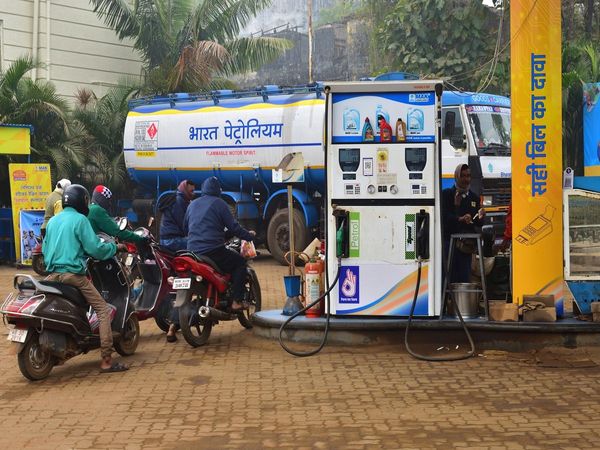
Petrol price rise swirl gets all in its wake in Karnataka

KEY STORY

  • The governments at the Centre and State may be trying to reason out the rise in prices across the board, but on the ground, it is the common man, who has already been hit by the effects of the Covid-19 pandemic, who is bearing all the brunt.
  • The pandemic forced people inside; private companies, hit by the economic fallout of lockdowns and restrictions, cut jobs and salaries; the education sector and children’s learning abilities took a massive hit; medical expenses became a nightmare; the elders suffered medically and financially; systems were paralysed and the general social frustration levels rose like never before in our lifetimes – not to mention the 38,061 who died from Covid-19 in the state so far, many who were the sole bread-winners of the families.
  • With both petrol and diesel prices going over Rs 100 per litre, people solely dependent on private transport are having to deal with increased expenses, while the cascading effect has pushed up prices of essentials, making daily life more expensive. Besides automotive fuels, the price of liquified petroleum gas (LPG) cylinders has inched closer to the Rs 1,000-mark, affecting home budgets.
  • Many among the middle and upper-middle-class sections, with aspirations influenced by possessions and lifestyle of higher income groups, are struggling with loan repayments amid severe salary cuts, or even job losses. The lower-middle income groups are the worse hit.
    IMPACT ON FARMERS
    When the effect of price rise is not passed on to customers, it is the producers and service providers who suffer. For instance, Subhash Atiwadkar, a farmer, brings fodder for his cattle and sells vegetables at the Agricultural Produce Market Committee (APMC) in Belagavi, regularly. “We are completely dependent on tractors and two-wheelers to bring green fodder for cattle. The huge jump in fuel prices this year has left us in a lurch. The expenses incurred in rearing and milching cattle is skyrocketing while there is no such rise in the price of milk for the customers (to protect profit margins). Our expenses for transporting vegetables to wholesale markets has increased due to skyrocketing diesel prices. While we fight for fair prices for our produce in the market, if things continue this way, we will be forced to give up farming,” he says.
    Karnataka Rajya Raitha Sangha vice-president K Narayana Gowda says fuel price hike is causing additional burden on farmers. For transporting a 15-kg box of vegetables from Hosamattana Halli in Kolar taluk to the APMC, a distance of 15 km, the transportation cost has jumped from Rs 10 Rs 13. Moreover, hiring a tractor costs Rs 4,500-5,000 per acre as against Rs 2,500-3,000 earlier. This is an additional burden on farmers who are already facing losses due to various issues like heavy rains damaging standing crops, he points out.
    NO AUTO CORRECT FOR PRICE HIKE
    Madikeri-based Santosh Cariappa, a taxi driver, often takes commuters to Bengaluru and parts of Kerala. “The taxi drivers’ association in Kodagu district charges Rs 9 per km and this rate has remained the same over many years. However, with the diesel price crossing Rs 100 per litre, we are unable make any profits. Commuters refuse to pay extra and, if we do not agree to their demands, we will lose out on the little that we were saving,” he says.
    He earns about Rs 1,800 for a trip between Madikeri and Bengaluru. “This is after deducting fuel charges and includes the minimum Rs 300 driver tip. We have to spend on our food and other expenses during the travel and are left with a bare minimum after driving such long distances,” he says.
    Giridhar (56), an autorickshaw driver from Tanniru Halla Extension in Hassan, rues that passengers often lodge complaints with the traffic police if drivers charge extra fare.
    “They have no patience to listen to our problems and insist on the old fares fixed decades ago,” he says, adding that he is the sole earning member of his family, and the entire family’s expenses including house rent, domestic gas, electricity bills, groceries, vegetables, children’s school fees and festival expenses have to be borne by him.
    Coming down heavily on successive governments for often increasing prices of essential commodities, including fuel, Devaraj, a mason, says special packages should be announced for poor families and those in the unorganised sectors as they cannot save from earnings for emergencies, including health. “We dream of buying new clothes, a motorcycle and electronic gadgets till the end of our lives. Increasing fuel prices leads to increase in prices of essential commodities, diminishing whatever savings we have,” he says.
    A HARD LIFE
    Probably the worst affected are those who are completely powerless in the face of price hikes – like Rajesh S, a parking attendant on MG Road in the heart of Bengaluru. With vehicle parking fees streamlined with automated systems brought in, people like him have to survive on what they get while having to contend with a heap of problems back home. He is increasingly burdened with the cost of cooking gas going up even as his physically challenged mother requires constant medication.
    “Getting rations is very difficult for us with high food prices. Everything has become expensive in Bengaluru. Due to lack of employment options, I can’t get a better job. Rain or shine, I have to stay here and take care of customers, but they don’t bother about people like us.”
    Amol Kademani, who sells vada-pav at a roadside mobile food stall in Belagavi, says, “The increasing price of LPG and petrol/diesel is very disturbing. I sold vada-pav for Rs 10 a piece three months ago. I was forced to increase the price to Rs 15 as I am unable to match the expenses incurred on cooking. Now, I have decided to increase the price to Rs 20 as I am unable to tackle the increasing prices of LPG, cooking oil and transporting my mobile food stall,” he says.
    Akshay, a food delivery agent in Bengaluru, says, “I work about 15 hours a day riding around the city on my bike. Our company gives us fuel allowance of Rs 250 a day; but every day, I have to dip into my own salary and shell out an extra Rs 100, thanks to the rising petrol price. For a full tank of fuel, it costs over Rs 500, so I don’t even get enough to ensure a full-tank. My company refuses to raise the petrol allowance, so now I’m struggling because even at home, the price of food and water has gone up.”
    Jenson V P, a retired travel manager, says, “In my experience of working with people from different backgrounds, I notice the middle and lower income people struggling a lot due to price hikes. Some are pushed to the brink of suicide because they can’t support their families anymore and feel ashamed. Upper class people are able to cope, but we don’t think about the people starving.”
    INDUSTRIALISTS HIT TOO
    Ramesh Hegde, chairman of Machenahalli Industrial Area, says, “We industrialists are compromising on our profit margins. Micro and small industrialists, whose monthly turnover is less than Rs 5 lakh, are losing more as they have to compromise on profit margins. Neither the raw material supplier nor the end user will take the responsibility”.
    He points out that when most of the industrialists announced bonuses for their staff for Dasara, the workers demanded an increase in allowance instead of bonus. This shows how much they have been impacted by price hike.

    (With inputs from Ramu Patil & Donna Eva in Bengaluru; Prajna G R in Madikeri; Sunil Patil in Belagavi; Udaya Kumar BR in Hassan & Ramachandra V Gunari in Shivamogga)

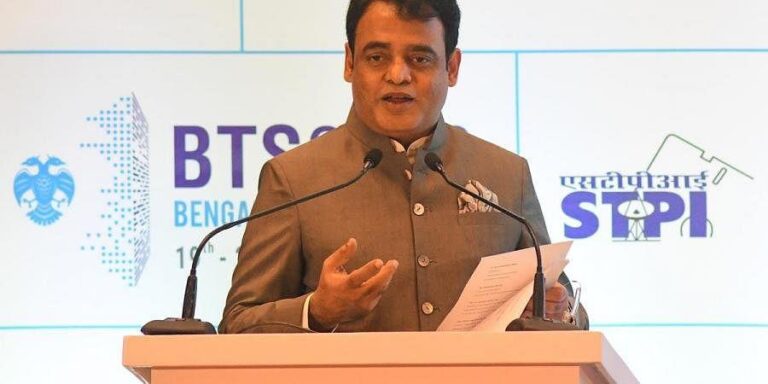
Karnataka colleges to have 15 minutes every hour for internal assessment

KEY STORY

  • To upgrade the quality of higher education in the state, the Karnataka Higher Education Department on Thursday decided to dedicate 15 minutes from each hour of a regular class at colleges towards internal assessment purposes.
  • Karnataka Higher Education Minister Dr CN Ashwatha Narayana on Thursday said, “Actions have been taken to upgrade the quality of higher education. One hour of regular class will be divided into 45 minutes of teaching and 15 minutes of internal assessment.
  • Karnataka Minister was speaking at the inauguration of the National Education Policy (NEP) 2020 supplementary programs charted out by Vijayanagara Sri Krishnadevaraya University and Bellary Institute of Technology & Management in association with Bharatiya Shikshana Mandala (Ballari North Division).
  • “In engineering, marks for Internal assessment have been increased to 50 marks in each subject and the same will be introduced for other degree courses also,” Narayana said
  • He further said that every year 2,000 teachers will be given offline training and 10,000 teachers will be provided online training.
  • “Higher Education Academy, Dharwad will train 2,000 teachers physically every year and Infosys will train 200 teachers in each batch on regular basis on its’ Mysuru campus. In addition to this, the Universities of Gulbarga and Mysuru also will involve in training the teachers. This is in addition to 10,000 teachers of higher education being trained through online mode,” he explained.

CONCLUSION

  • Later in the interaction held with faculty and students, Narayana said that the government had entered into an agreement with ‘Unacademy’ to facilitate students of the state to better prepare for All India level competitive examinations and training would be given in colleges free of cost.
  • As part of the event an MoU between Vijayanagara Sri Krishnadevaraya University and NASSCOM/IT-ITeS sector skills council, NASSCOM was inked for undertaking skill development training in emerging technologies.

Karnataka govt issues new guidelines for 2021 Diwali celebrations; check details here

KEY STORY

  • On October 30, the Karnataka government released new Diwali guidelines for 2021. Starting November 1, only dealers who have gained permission will be allowed to sell green crackers in specific designated places for a limited period of time, according to the state government.
  • According to ANI, according to the Karnataka government’s new Diwali guidelines, “only merchants with authorization can sell green crackers at designated spots outside residential zones between November 1 and November 10.” A minimum of six metres must be maintained between the stores throughout this period.”
  • The Karnataka government instructions came a day after the Supreme Court reiterated that it has not put a blanket ban on the sale and usage of firecrackers, instead banning just those containing Barium salts, chemical crackers, and those judged to be harmful to health this year.

CONCLUSION

  • While most governments have curtailed the usage of green firecrackers during Diwali to protect the environment, certain states, such as West Bengal, have enforced a blanket ban on bursting crackers. In light of the poor air quality and ongoing epidemic, the Uttar Pradesh government has put a similar ban on the sale and usage of firecrackers in the National Capital Region.

Customized winter skincare tips – Dos and don’ts for dry skin

KEY STORY

 Skin types are broadly divided into five categories – Normal, dry, oily, sensitive, and combination. Each skin type requires customized care, unavailability of which can lead to damaged skin. Simply following a skincare regime will not fetch you the results you need if you are not focusing on the skin type. With winters around the corner, the subtle dryness in the air has gradually commenced with its wily tactics on the skin. People with dry skin need to be extra careful as this skin type is the most vulnerable during this time of the year. Read on to know about some dos and don’ts for people with dry skin.
Dos and don’ts for dry skin
Dos: Here is what you should do to take care of your dry skin:
  1. Stay hydrated: Drink sufficient fluids to keep your body hydrated throughout the day. This is essential to retain the moisture in the skin to prevent flaking and cracking due to dryness.
  2. Use face oils and moisturizers: Pick the appropriate moisturizer that suits the needs of your dry skin. This can help keep the flakiness at bay and help moisturize and nourish the skin.
  3. Customize your skincare accounting to the season: A change in seasons calls for a change in the skincare as the regime for humid summers may not be appropriate for the dry winters. This is important to help the skin adapt to the change in weather and stay healthy and glowing throughout the season.
Don’ts: Here is what you should avoid doing if you have dry skin:
  1. Avoid over-exfoliation: Exfoliating the skin can help get rid of dead skin cells, impurities, and unclog pores. However, it can also cause the skin to dry. If you have dry skin, avoid over-exfoliation as it can lead to redness, inflammation, and irritation.
  2. Refrain from using products with alcohol: It is important to check the ingredients before picking your skincare products because a variety of skin care products such as toners and cleansers may contain alcohol. Application of such products can cause irritation and excessive dryness of the skin.
  3. Step away from hot showers: If you have a habit of taking long and hot showers, it is time to stop right away if you wish to avoid damaging the skin’s surface. This habit can cause the skin to dry and put it at risk of eczema and inflammation.
Disclaimer: Tips and suggestions mentioned in the article are for general information purpose only and should not be construed as professional medical advice. Always consult your doctor or a dietician before starting any fitness programme or making any changes to your diet.


Delhi unlock: Cinema halls, multiplexes to reopen with 100 per cent capacity; Covid-19 cap relaxed on marriage, funerals

KEY STORY

  • As daily COVID-19 cases remain below 50 in Delhi, the Department Of Delhi Disaster Management Authority on Friday allowed cinema halls, theatres, multiplexes to reopen in the national capital with 100 per cent seating capacity from November 1.
  • As part of the unlock process in view of the downward trend of coronavirus infections in the national capital, the DDMA allowed marriage/wedding ceremonies, funeral and last rites-related gatherings with a ceiling of up to 200 people from November 1.
  • The Chhath Puja celebrations will be allowed at designated sites in Delhi except for the Yamuna river bank, the DDMA said in its order.
  • The DDMA categorically stated that owners of cinema halls, theatres and multiplexes should strictly follow all the standard operating protocols (SOP) in regards to the COVID pandemic.
  • The authorised weekly markets in Delhi have also been allowed to reopen from November 1.
  • “In case any violation is found, strict penal, criminal action shall be taken against the owner of the restaurant, bar, cinemas, theatres and multiplexes,” said the order.
  • All classes in schools have been permitted to resume from November 1.

CONCLUSION

  • Meanwhile, the high court registry announced that the Delhi High Court and the district courts will resume complete physical hearings from November 22.
  • “The Hon’ble Full Court has been pleased to order that the existing mechanism of hearings in this Court shall continue till November 18, 2021. There shall be a complete resumption of physical courts w.e.f. November 22, 2021. The Courts shall, however, permit hybrid/video conferencing hearing where a request to such effect is made by any of the parties and/order their counsel,” said the official order.
  • Delhi recorded 37 new COVID-19 cases, taking the overall caseload to 14,39,788. Fortunately, there were no deaths and the fatality count remained unchanged at 25,091. Forty-eight patients were discharged in the last 24 hours. The positivity rate was recorded at 0.06 per cent.

Karnataka: After putting survey of churches on hold, govt seeks information on religious conversions in 25 yrs

KEY STORY

  •  The Karnataka government has instructed the Department of Minorities Welfare to provide information about people who have converted to another religion in the past 25 years.
  • News agency IANS has mentioned sources as saying that the Committee on the Welfare of Backward Classes and Minorities, which held a meeting on October 13, has asked for the information and the Joint Secretary of Legislative Assembly has sent a letter to the Department of Minorities Welfare.
  • It has been recommended that the Department of Minorities Welfare should gather information about religious conversions in coordination with the Police Department, Revenue Department, Social Welfare Department, district commissioners, and chief executive officers.
  • An order has been issued to make sure authorised churches are not troubled while getting information about religious conversions. In the letter, it was stated that additional information could be gathered from the Revenue, Social Welfare, Internal Administration, and Law departments, and submitted within 30 days.
  • In addition, an update on 36 cases of forceful conversions between 2016 and 2021 has been requested, as well as information on punishment. The Department of Minorities Welfare has also been requested to collect detailed information about Bethel Baptist Church in Hosadurga, Chitradurga district.
  • It was reported on October 28 that the Karnataka government has put on hold a proposal to survey official, unofficial churches and bible societies aimed at preventing alleged religious conversions. Sources in the Department of Minorities Welfare also said that the BJP is waiting for the High Court verdict on PIL in this regard.

CONCLUSION

  • For the uninitiated, the Committee on the Welfare of Backward Classes and Minorities deliberated over the survey on October 13 and then asked the deputy commissioners to carry out the exercise. Acting Chairman of the Committee, Goolihatti Shekar, backed the survey. The Hosadurga BJP MLA also raised the matter in the Monsoon Assembly Session. “Even my mother has been converted and missionaries got those who questioned conversions booked under atrocity and rape charges,” he had claimed.
  • Sources said that the recent letter requesting information on religious conversions was written to prepare grounds for prohibiting forceful conversions in the state.

Centre to launch ‘Har Ghar Dastak’ door-to-door Covid-19 vaccination programme for one month on Dhanteras

KEY STORY

  •  In an attempt to achieve at least first-dose vaccination of as many people as possible before the end of this calendar year, the central government is planning to launch an initiative called ‘Har Ghar Dastak’ for the next one month, starting Dhanteras.
  • “The ‘Har Ghar Dastak’ door-to-door vaccination campaign will run over the next one month for full vaccination in poor performing districts and will be launched on November 2 on the occasion of Dhanwantari Diwas,” official government sources told news agency ANI.
  • The sources have also informed that India will have 30 crore doses of Covid-19 vaccines in November, including 6 crore of Covaxin, 22 crore of Covishield and 2 crore doses of Zydus Cadila’s ZyCoV-D.
  • Union Health Minister Mansukh Mandaviya had announced the campaign on Wednesday to motivate people towards achieving complete vaccination against the virus.
  • “No district should be without full vaccination. ‘Har Ghar Dastak’ campaign to start soon in the poor-performing districts to enthuse and motivate people towards full Covid vaccination. Let us aim to cover all eligible with the first dose of COVID-19 vaccine by end-November 2021,” he said during a national review meeting with health ministers of all states and Union Territories (UTs).
  • It was Mandaviya’s suggestion to initiate the campaign on the occasion of Dhanwantri Jayanti.

CONCLUSION

  • About 48 districts have been identified across India where the first dose coverage among the eligible populace is below 50 per cent.
  • Mandaviya highlighted the need to fast-track the coverage of vaccination, stating that there are more than 10.34 crore people in India at present who have not yet taken the second shot even after their prescribed interval lapsed.
  • State health ministers have been requested to ensure continuous oversight on the progress of the national vaccination programme.

Karnataka’s third Covid sero survey next week, to include children

KEY STORY

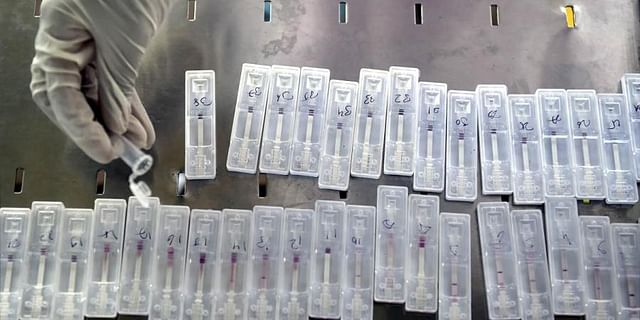
  • Karnataka will conduct its third Covid sero survey in another week following advice from the Covid Technical Advisory Committee (TAC), confirmed state Health Commissioner Randeep D. Though the protocol will be the same as the last two sero surveys, children will be included this time, said Dr Pradeep Banandur, head of the epidemiology department at the National Institute of Mental Health and Neurosciences (NIMHANS) and member of TAC.
  • A sero survey is used to estimate the prevalence of antibodies against a specific infectious pathogen as an indicator of immunity. “The protocol has been laid out and a go-ahead has been given to the procurement committee as we need reagents. This time, some portion of the population to be sampled will have received the Covid vaccination, so we have to take that bias into account. Antibodies detected may be due to natural infection or vaccination,” Randeep said. Dr Banandur, however, said that there is no need to know if the immunity is derived from vaccination or natural infection.

    Antibody prevalence after second survey in Karnataka just 15.6%


  • “We have suggested to the government that there be no exclusion of any age group this time. All districts will be part of the survey, where RT-PCR tests will be used for detection of active infection,” he said. In the state’s second Covid sero survey, lower levels of Immunoglobulin G (IgG) seroprevalence due to antibody waning were revealed.
  • The IgG is the most common type of antibody found in the blood. The estimated IgG prevalence at the end of the second survey was just 15.6 per cent and was markedly lower than the estimated total infection of 27.7 per cent at the end of the first serosurvey.
  • However, The New Indian Express exclusively reported in November 2020 that nearly half of Karnataka’s population was infected by Covid-19 by August 2020, not just in urban areas, but in the villages too, according to a private sero survey conducted between mid-June and August.

Afghanistan spinner Rashid Khan becomes fastest player to scalp 100 T20I wickets

KEY STORY

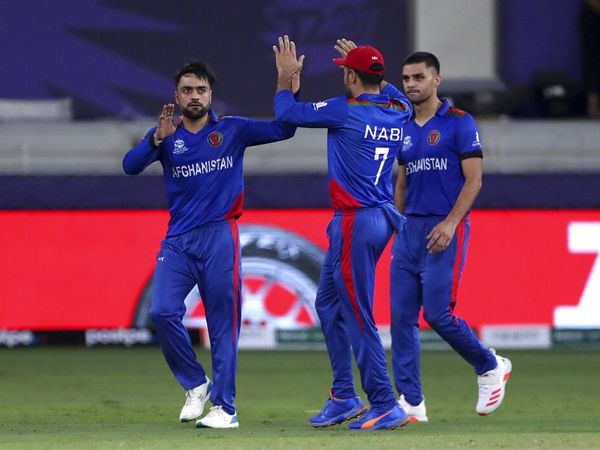
  • Afghanistan star spinner Rashid Khan on Friday became the fastest bowler to take 100 T20Is wickets. Rashid achieved the feat during the match against Pakistan in the ongoing T20 World Cup.\
  • The Afghanistan spinner dismissed Pakistan all-rounder Mohammad Hafeez to reach the milestone. Shakib Al Hasan, Lasith Malinga and Tim Southee are the players who have 100 T201 wickets.
  • Rashid picked his 100th wicket in his 53rd match as he broke Malinga’s record. The Sri Lanka bowler had picked his 100th wicket in the 76th game.\
  • The Afghanistan Pakistan game was set to have fans coming in from across Dubai, but not many would have expected a near stampede situation as groups of Afghanistan fans tried to get into the Dubai International Cricket Stadium without tickets.
  • Fans had started coming in for the Friday evening game in large numbers from as early as the afternoon, but the trouble started when some fans tried to enter the stadium minus tickets.
  • One of the Pakistan fans who came down all the way from London for the game wasn’t able to enter the stadium in time as the gates had been closed. “We are going to watch a T10 game here because people without tickets were jumping over the gates and we couldn’t get in the fan rued pointing at his young kids who had their bags checked. While the security cordon tried its best to keep non-ticket holders away from the entrance, the large number of fans seemed hell-bent to enter the ground to witness the Afghanistan players in action against Pakistan. In fact, the worst part was that some of the fans who had tickets were forced to skip the game.

Houses of D.K. Shivakumar’s aides searched by Income Tax sleuths in Dharwad

KEY STORY

  • Sleuths from the Income Tax Department, Goa, conducted searches at the residences of Congress leader and civil contractor U.B. Shetty and his brother Seetaram Shetty in Dharwad on Thursday.
  • A team of I-T officials visited the residence of PWD contractor Mr. Seetaram Shetty located at Vinayak Nagar and the posh bungalow of Mr. U.B. Shetty at Dasankoppa Circle in Dharwad. The searches were carried out from dawn to dusk.
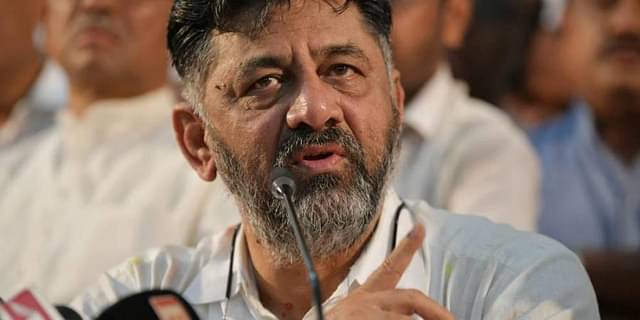
  • The siblings reportedly have close contacts with KPCC president D.K. Shivakumar. Sources said that the searches were extended part of the exercise carried out by I-T officials at the residences and offices of contractors in Bengaluru recently. Around 50 officials and personnel from Goa, Bengaluru, and Belagavi were part of the searches.
  • A native of Byndoor in Udupi district, Mr. U.B. Shetty owns several educational institutions in this region and is said to be a key aspirant for the Legislative Council ticket from Udupi-Mangaluru region.
  • Mr. U.B. Shetty returned to Dharwad from Bengaluru on Thursday morning and minutes later, the I-T teams reached his residence.

CONCLUSION

  • Congress leaders have taken exception to the searches. Belagavi MLA Laxmi Hebbalkar has said that this was nothing but “a ploy to harass Congress leaders ahead of the bypolls”. However, there was no question of any fear over such politically motivated searches and it would have no impact on the bypolls, she said.
  • KPCC member Robert Daddapuri also alleged that the raid was politically motivated but truth would prevail.