NEP execution: Karnataka’s Gulbarga University to furnish understudies with ‘industry-prepared abilities’

KEY STORY

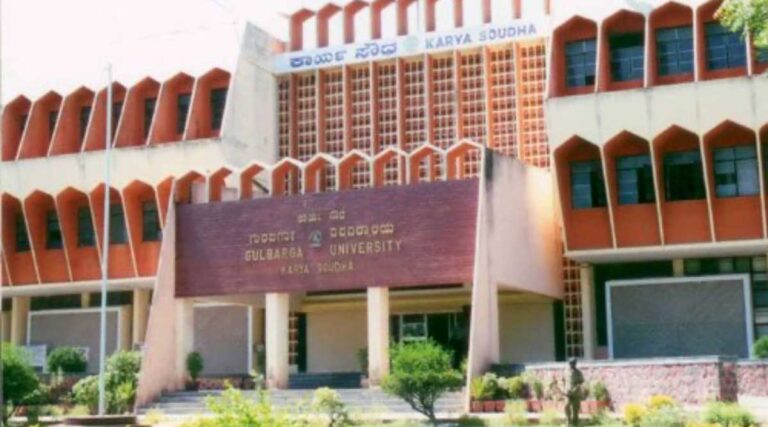
  • As state-run varsities are developing and restructuring curriculum to enable implementation of the new National Education Policy (NEP 2020) in Karnataka from this academic year, Gulbarga University has focussed on making students “industry-ready” during their undergraduate study in various domains.
  • According to vice-chancellor Dr Dayanand Agsar, experts behind restructuring the new curriculum as per NEP for the varsity have focussed on skill development based on local industries.
  • Each student will be equipped with a set of skills required for the job he (or she) is going to do by the time the undergraduate course is completed. Further, NEP enables students to attend classes in other colleges in case the college where they are at lacks a specific facility,” he explained.
  • Dr Asgar added that students will be graded on completing each year of the four-year course. Those completing the four-year course will get degrees with honours, he said, claiming Gulbarga University was ahead of other universities in the state as preparations of the curriculum for the first two semesters of four-year undergraduate degree courses were already completed. “Approved by the academic council and syndicate of the university, this updated curriculum will be implemented from this academic year,” he announced.

CONCLUSION

  • Dr Asgar said more than 40,000 students have taken admissions to various undergraduate courses at the varsity so far as the process had begun only for the four-year degree course as per NEP 2020.
  • Further, the department noted that 2,500 classrooms in the state higher educational institutions were upgraded to smart classrooms. “An additional funding of Rs 98 crore has also been sought from the government to enable conversion of 6,000 more classrooms to smart classes,” a senior department official said.

Mid-day meal scheme to be now called PM POSHAN, to cover students of pre-primary classes also

KEY STORY

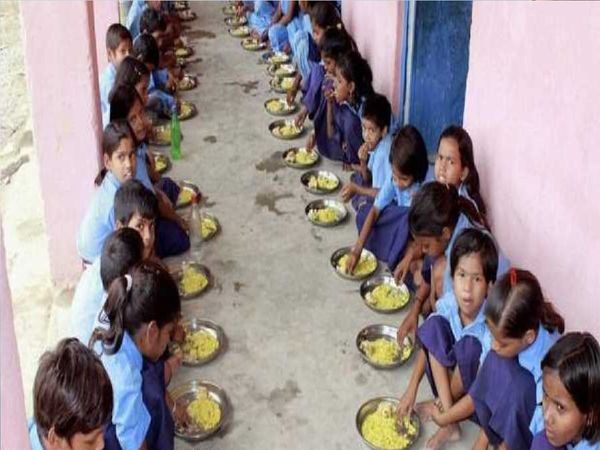
  • The national mid-day meal scheme in government and aided schools will now be known as PM POSHAN Scheme and will also cover students of balvatikas or pre-primary classes, the government announced Wednesday.
  • Encouraging “Tithi Bhojan” to allow people from the community to provide special food to children on occasions and festivals, using the harvest from “school nutrition gardens” for cooking mid-day meals, cooking competitions to promote ethnic cuisine and innovative menus and involvement of Farmers Producer Organizations (FPO) and Women Self Help Groups in implementation of the scheme, are among the features which have been added in the new scheme.
  • The Union Cabinet on Wednesday approved the roll-out of the ‘PM POSHAN in Schools’ scheme that will provide hot cooked meal to students of elementary classes in government and government-aided schools across the country. The decision was taken at a meeting of the Cabinet Committee on Economic Affairs (CCEA) chaired by Prime Minister Narendra Modi.
  • “Today the CCEA cleared the PM POSHAN (POshan SHakti Nirman) Scheme for providing one hot cooked meal in government and government-aided schools from 2021-22 to 2025-26, earlier known as ‘National Programme for Mid-Day Meal in Schools popularly known as Mid-Day Meal Scheme. This is a centrally-sponsored scheme which covers all school children studying in classes 1 to 8 in government, government-aided schools,” Union Education Minister Dharmendra Pradhan told reporters.
  • “Under the new scheme, mid-day meals have been extended to students studying in pre-primary or Balvatikas in addition to children studying in classes 1 to 8 in government and government-aided schools across India. This will benefit about 11.80 crore children studying in 11.20 lakh schools,” he added.
  • The CCEA has approved the continuation of the national scheme of PM POSHAN in schools for the five-year period 2021-22 to 2025-26 with the financial outlay of 2 54061.73 crores from the central government and 31733.17 crore from state governments and union territory administrations.
  • “Central government will also bear additional cost of about Rs 45000 crore on food grains. Therefore, the total scheme budget will amount to 130794.90 crore. The concept of Tithi Bhojan will be encouraged extensively. Tithi Bhojan is a community participation programme in which people provide special food to children on special occasions and festivals.
  • “Government is also promoting development of ‘School Nutrition Gardens’ in schools to give children first-hand experience with nature and gardening. The harvest of these gardens is used in the scheme providing additional micro nutrients. School Nutrition Gardens have already been developed in more than 3 lakh schools,” he said.
  • While a social audit of the scheme is made mandatory in all the districts, special provision is made for providing supplementary nutrition items to children in aspirational districts and districts with a high prevalence of Anemia.
  • “Cooking competitions will be encouraged at all levels right from village level to national level to promote ethnic cuisine and innovative menus based on locally available ingredients and vegetables. Involvement of Farmers Producer Organizations (FPO) and Women Self Help Groups in the implementation of the scheme will be encouraged. Use of locally grown traditional food items for a fillip to local economic growth will be encouraged,” Pradhan said.
  • “Field visits for progress monitoring and inspections will be facilitated for students of eminent universities and institutions and also trainee teachers of Regional Institutes of Educations (RIE) and District Institutes of Education and Training (DIET).
  • The mid-day meal scheme was launched in 1995 with the aim to provide at least one nutritional meal to elementary students. It had later become instrumental in improving enrollments in schools.
  • Explaining the structural changes in the scheme, Pradhan said that the Centre has directed the states and the UTs to switch to Direct Benefit Transfer (DBT) system for providing an honorarium to the cooks and helpers working under the scheme.
  • “The government has made some structural changes to ensure transparency. Earlier, there were instances of leakages (of money)… In the coming years, the Centre might directly transfer funds to the schools according to their requirements,” he said.
  • Earlier, the central government would allocate the funds to the states which include their share and transfer them to the mid-day meal nodal officers at the district or tehsil level. The officers then transfer them to the schools.

CONCLUSION

  • A senior Ministry official said that under the new scheme if states want to include their local vegetable or any other nutritional food or anything else such as milk or fruit, they can do so with the centre’s approval.
  • “However, it should fall within the allocated budget. Earlier, states had to bear the cost if they include any extra item,” the official said.
  • The government did not announce anything on the provision for adding breakfast in the mid-day meals which was outlined in the new National Education Policy (NEP) notified last year.

IPL 2021: RCB captain Virat Kohli says they are slowly but surely getting in groove after win over RR

KEY STORY

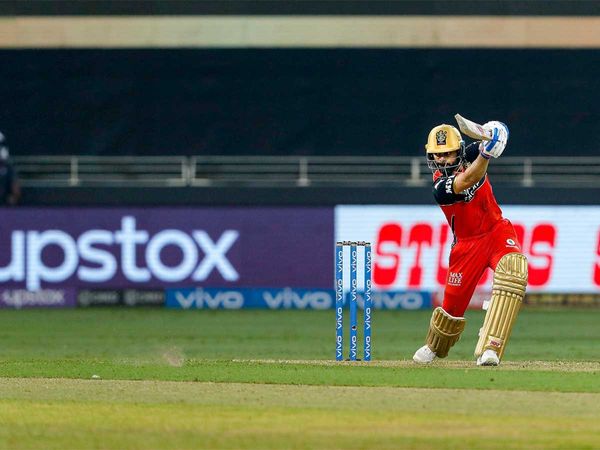
  • Dubai, Royal Challengers Bangalore captain Virat Kohli on Wednesday expressed his delight over his team’s thumping win over Rajasthan Royals, saying the Red Army is “slowly but surely getting in groove”
  • The win now strengthens Bangalore’s chances of making to the IPL 2021 playoffs.
  • “The break was tough as you saw initially. We were blown away in game 1. That defeat gave us confidence though. The second game we were not quite there either, left 25-30 out there with the bat. But the last two games we are going in the right direction. Slowly but surely, we are getting in groove,” Kohli said after the match.
  • All-rounder Glenn Maxwell starred for Bangalore on Wednesday’s win. He stitched an important stand with KS Bharat after Virat Kohli and Devdutt Padikkal were dismissed. Bharat got out by Mustafizur Rahman for 44 but Maxwell smashed Chris Morris for 22 runs in the next over to finish off the chase.

CONCLUSION

  • “We’ve got a few good opening starts. Devdutt and I have focused on giving the team good starts so that the middle-order with AB, Bharat and Maxwell can make more. Boys have stepped up, so that’s been key for us,” Kohli added.

Another cyclone ‘Shaheen’ to form over Arabian Sea by Oct 1, IMD cautions fishermen of Gujarat, Maharashtra

KEY STORY

  •  After Cyclone Gulab, another cyclonic storm ‘Shaheen’ is likely to form over Arabian Sea by October 1, the India Meteorological Department (IMD) said on Wednesday while cautioning the fishermen of Gujarat and Maharashtra.
  • “The low-pressure area created due to Cyclone Gulab is now in the Gujarat coast, northeast Arabian sea and will intensify into a depression by September 30. From Oct 1, it will become a new cyclone named ‘Shaheen’,” said RK Jenamani, senior scientist, IMD.
  • He advised fishermen not to venture into north and adjoining central Arabian Sea and along and off Gujarat and north Maharashtra coasts from September 30 till October 2.
  • “Fishermen and ships are advised not to venture into the north and adjoining the central Arabian Sea and along and off Gujarat and north Maharashtra coasts till October 3,” he added.
  • The remnant of Cyclone Gulab is likely to emerge into the Arabian Sea on September 30 and intensify into a cyclonic storm on Friday and then move towards Pakistan, the IMD said in a press release.
  • “The remnant of the Cyclonic Storm ‘Gulab’ is very likely to move west-northwestwards, emerge into northeast Arabian Sea and intensify into a depression by September 30, morning. Then it is very likely to move further west-northwestwards and intensify into a cyclonic storm during the subsequent 24 hours. Thereafter, it is likely to continue to move west-northwestwards towards Pakistan – Makran coasts, moving away from the Indian coast,” the MeT Department said.
  • Several aeas in Gujarat are likely to receive rainfall on Thursdaydue to the remnant of Cyclone Gulab, it added.

CONCLUSION

  • “Light to moderate rainfall at most places with heavy to very heavy falls at isolated places very likely over Saurashtra and Kutch and heavy falls at isolated places over Gujarat region and north Konkan,” the weather office said.
  • Meanwhile, Gujarat Chief Minister Bhupendra Patel chaired a meeting with senior officers and NDRF officials to review the situation.
  • In view of the cyclone 18 NDRF and SDRF teams have been deployed in 17 districts of the state.

Classes 1-5 may reopen in Karnataka after Dasara vacation

KEY STORY

  • The Education Department is getting ready to reopen offline classes for Standards 1-5 after the Dasara holidays, though there is a mixed response to the decision. Primary and Secondary Education Minister BC Nagesh told The New Indian Express that they are making preparations to reopen primary schools, but are waiting for approval from the Covid Technical Advisory Committee.
  • The Department of Public Instructions had in June declared 11-day Dasara holidays from October 10 to 20. The minister had earlier announced that classes 6-12 will start functioning at full capacity from October 1 in districts that have less than 1 per cent Covid-positivity rate.
  • The schools will open five days a week, while Saturdays and Sundays will be set aside to clean and sanitise the premises. The department is formalising a plan to resume the mid-day meal scheme, but the final decision will be taken after October 1.

Students cheer school reopening

While students are excited to be back in school, some parents are worried. Quincy, a Class 5 student from a private school at Koramangala, said, “I want to go back to school. I can meet my friends and my teachers.” But this excitement is not shared by other stakeholders.
The Registered Unaided Private Schools Management Association (RUPSA), Karnataka, wrote to Minister Nagesh to allow the shift-wise reopening of classes. “I don’t understand what is the hurry to start offline classes for small children, who are yet to be vaccinated. It is not easy for anyone! We can’t take a risk at this time,” posted Suman Jain after it was reported that a Covid cluster was emerging at a PU college in Anekal.
‘No hike in fees for engineering this year’
The Higher Education Department has convinced private engineering colleges not to increase the fee this year. Though the institutions had sought a hike of 30 per cent, the department cited the Covid situation to put it off. While a college association representative claimed that the department has agreed to a 10 per cent annual hike from next year, an official denied it.
Govt increases income limit of differently abled dependents for family pension

KEY STORY

  • The Ministry of Defence has decided to enhance the income criteria for granting family pensions to children and siblings suffering from any disability.
  • In a statement on Tuesday, the ministry said that such dependents shall be eligible for family pension for life, given that “their overall income from sources other than family pension remains less than the entitled family pension at the ordinary rate, i.e 30% of the last pay drawn by the deceased government servant or pensioner concerned plus the dearness relief admissible thereon.”
  • At present, a differently-abled child or sibling of a dead pensioner is eligible for family pension if the individual’s income from sources other than the family pension is not more than Rs 9,000 along with the dearness allowance component.
  • The financial benefit in such cases will be effective from February 8, 2021.

TAC: NK districts more susceptible to third wave due to poor vaccination

KEY STORY

  • With several north Karnataka districts continuing to lag in vaccination, the State’s COVID-19 Technical Advisory Committee (TAC) has warned that the third wave, as and if it happens, is likely to hit this region the most.

  • Expressing concern over the poor vaccination coverage in NK districts, especially Bidar, Vijayapura, Kalaburagi, Raichur, Haveri, and others adjoining Maharashtra, the TAC has recommended that vaccination in these districts needs to be ramped up on a war-footing through special outreach community campaigns.
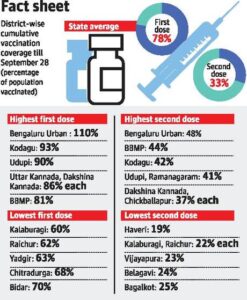
  • At its 126th meeting on September 26, the TAC discussed the poor vaccination in these districts adjoining Maharashtra from where there is a possibility of infection spillover into Karnataka. On the variants of concern (VoC), the TAC report said: “Delta is infectious but not virulent. The sub-lineages of Delta have not shown any serious public health consequences. The absence of a surge post Ganesha Chaturthi could be largely due to good vaccination progress (78% for first dose and 33% for the second).”
  • Incidentally, NK districts have recorded a low seroprevalence rate (in the second sero survey) and are also consistently showing a low rate of infection over the last one month.
  • But, public health experts warned that the low vaccination rate and low seroprevalence in these districts could prove costly if and when a third wave hits the State.
  • Last week, Chief Minister Basvaraj Bommai, who chaired a high-level pandemic review meeting with experts, said that Revenue Minister R. Ashok and Health and Medical Education Minister K. Sudhkar will visit north Karnataka districts and monitor measures on ramping up vaccination coverage there on a campaign mode.
  • Dr. Sudhakar admitted that the region of concern is Kalyana Karnataka. “Half the districts in Karnataka have vaccinated more than 80% of the people with the first dose. Majority of the remaining districts have coverage of over 70%. However, the region of concern is Kalyana Karnataka. Three districts in the region are lagging in vaccination coverage with less than 65% coverage,” he said.

CONCLUSION

  • Stating that the district health officials attribute it to vaccine hesitancy, the Minister said: “We are trying to understand reasons for vaccine hesitancy and address them.”
  • District Health Officers (DHOs) of the districts with poor coverage said the vaccine hesitancy is mainly because the people are worried that they will lose out on their daily wages if they develop fever, pain at the injection site, or any other adverse event following immunisation.

Instagram puts kids version of app on hold

KEY STORY 

  • Instagram is stopping work on an adaptation for kids more youthful than 13, called “Instagram Kids”, the Facebook Inc-claimed photograph sharing application said on Monday.
  • U.S. officials and promotion bunches have gone against the dispatch of “Instagram Kids”, encouraging the web-based media goliath to drop its arrangements and expressing that it had neglected to “make significant responsibilities to securing kids on the web.”
  • “We believe building ‘Instagram Kids’ is the right thing to do, but we’re pausing the work,” Instagram said in a blog post, adding it would continue building on its parental supervision tools.

CONCLUSION

  • “The reality is that kids are already online, and we believe that developing age-appropriate experiences designed specifically for them is far better for parents than where we are today.”

Akshay Kumar’s ‘Bachchan Pandey’ to hit screens on March 4, 2022

KEY STORY

  • It has been announced that Akshay Kumar’s Bachchan Pandey will hit the big screens on March 4, 2022. Bachchan Pandey is directed by Farhad Samji.
  • The film reportedly has Akshay Kumar playing a gangster who aspires to be an actor, while Kriti Sanon plays a journalist who wishes to be a director.  The film also features Arshad Warsi, Jacqueline Fernandez, Pankaj Tripathi, and Prateik Babbar in prominent roles.
  • Meanwhile, release dates of several projects are being announced following the Maharashtra government’s decision to reopen theatres from October 22.Sooryavnashi, Jersey, Bhool Bhulaiyya 2, Mayday, Heropanti 2, ‘83, Prithviraj, Jayesh Bhai Jordaar, and Shamshera are some of the films whose release dates have been announced.

WHO’s green signal for Bharat Biotech’s COVID-19 vaccine COVAXIN may take ‘few more weeks’

KEY STORY 

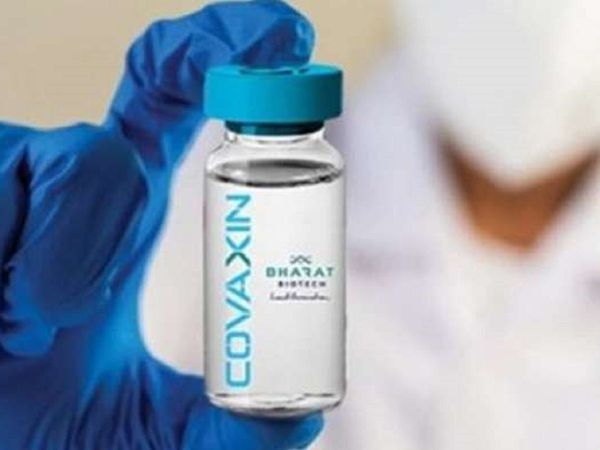
  • The approval by World Health Organisation (WHO) for India’s indigenously-developed Covid-19 vaccine Covaxin, is expected to be delayed as the world body has sent more technical queries to its manufacturer Bharat Biotech for clarifications.
  • A report published in News 18 quoted a source saying that there was nothing to worry about as the queries raised by the WHO is a routine affair and the Emergency Use Listing by the world body would come soon thus helping the Covaxin recipients to travel abroad without mandatory quarantine.
  • The source, however, said that the approval is likely to be delayed for few more weeks.
  • Notably, Dr NK Arora, chairman of the Covid-19 working group of National Technical Advisory Group on Immunisation (NTAGI), had recently expressed hope that the WHO is likely to give its approval for Covaxin in September itself.
  • In August, Union Health Minister Mansukh Mandaviya had met WHO Chief Scientist Dr Soumya Swaminathan and discussed the WHO approval of Bharat Biotech’s Covaxin.
  • Meanwhile, the WHO Strategic Advisory Group of Experts on Immunisation (SAGE) is likely to meet for granting the emergency use licence to Covaxin on October 5.
  • It may be noted that Covaxin has been authorised for emergency use in India and the vaccine doses have also been exported to several countries.

CONCLUSION

  • Currently, Covaxin, Covishield, Sputnik V vaccine doses are being administered in India. The Drugs Controller General of India has also given its approval to Zydus Cadila’s needle-free Covid-19 vaccine ZyCoV-D for emergency use authorisation (EUA) to inoculate children in the age group of 12-18. ZyCoV-D is expected to hit the market in October.
  • Meanwhile, India’s COVID-19 vaccination coverage crossed 86 crore on September 27.
    India’s COVID-19 vaccination coverage has crossed 86 crore (86,93,79,970). More than 88 lakh (88,98,560) vaccine doses have been administered till 7 pm on September 27, the health ministry said in its official statemeent.