KEY STORY
-
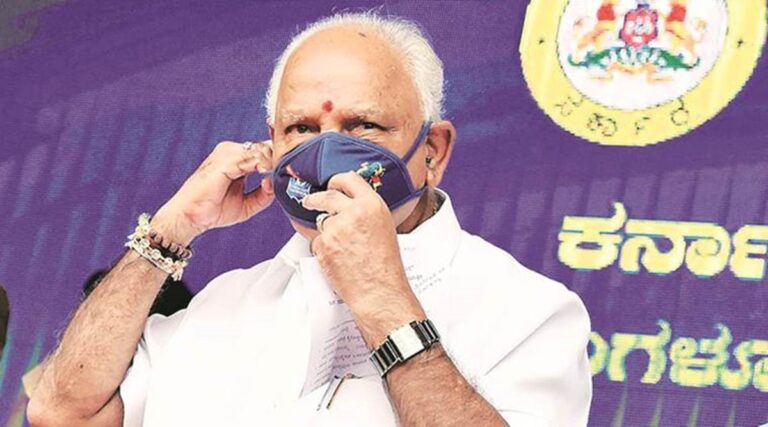
Karnataka chief minister BS Yediyurappa on Friday worshiped a cow here in Bengaluru a few days after the state assembly passed the Karnataka Prevention of Slaughter and Preservation of Cattle Bill-2020 on December 9.
-
The Karnataka chief minister said that 90 per cent of people are happy with the anti-cow slaughter bill.
“Cows are considered a sign of wealth in Indian tradition. Today, we have offered ‘gau pooja’. We will provide facilities for abandoned cows. I think 90 per cent of people are happy with this bill,” said CM Yediyurappa.
-
The anti-cow slaughter bill was passed in the Karnataka assembly on Wednesday amid uproar and walkout by opposition parties, Congress and the JD(S).
-
Under this bill, three and seven years jail and (or) a fine up to Rs 5 lakh will be imposed. Subsequent offences can invite fines up to Rs 10 lakh and a jail term of up to seven years.
CONCLUSION
-
Explaining the provisions of the bill, Karnataka minister JC Madhuswamy had said: “The slaughter of cows and calves are not allowed while the slaughter of buffaloes above 13 years is allowed. Illegal selling, transportation or culling of cows has been made punishable. If a cow has contracted a disease, which can spread to other cattle, then it can be culled or slaughtered.”
Meanwhile, the opposition parties have alleged that the bill was not discussed for tabling in the Business Advisory Committee meeting.
KEY STORY
-
The Karnataka government passed a crucial bill — Bruhat Bengaluru Mahanagara Palike bill, 2020 — without the opposition parties’ participation in the Assembly session on Thursday.
-
Piloting the BBMP bill, law and parliamentary affairs minister J C Madhuswamy said the Bill is not only aimed at increasing the wards from 198 to 243 but also including all local bodies situated on the fringes of the 816 sq. km boundary of the BBMP.

-
The BBMP bill is aimed at the inclusion of at least a one km area beyond the existing BBMP limits to bring in IT pockets from outside the existing limits like parts of Electronics City and some IT parks outside Mahadevapura. This is expected to boost the civic body’s revenues.
-
Taking umbrage over the ruling Bharatiya Janata Party (BJP) tabling and passing the Karnataka Prevention of Slaughter and Preservation of Cattle Bill – 2020, popularly known as the Anti-Cow Slaughter Bill, without mentioning it in their agenda, the Opposition Congress boycotted the Legislature session while the Janata Dal (Secular) staged a walkout from the Assembly.
“We have not fixed any limit though the report tabled on Wednesday maintained one km as a limit, though in the Act there is no limit but we are fixing the local body as a unit to be merged into the BBMP limits,” Madhuswamy said.
-
Madhuswamy disclosed that the terms of the mayor and deputy mayor have been increased from one year to two-and-a-half years.
-
The main reason behind increasing the number of wards is to simplify administration and each Assembly constituency should have only three or four wards instead of six to eight wards as at present, he added.
CONCLUSION
-
The minister said the number of zones would be increased from eight to 15.
-
The bill also aims at the inclusion of gram panchayats and taluk panchayats into the new larger BBMP.
-
When this BBMP Bill was tabled in March, it was referred to a joint committee after several city MLAs, including those from the BJP, opposed it. The committee decided to refer it to the 20-member joint select committee in August headed by BJP MLA S. Raghu.
-
The panel which has recommended 243 wards tabled its report in the Assembly on Wednesday.

HIGHLIGHTS
-
Online food aggregator Swiggy on Thursday announced the expansion of its “Street Food Vendors” programme to 125 cities under the Prime Minister Street Vendor’s Atmanibhar Nidhi (PM SVANidhi) scheme.
-
“Good news! Swiggy will be delivering food from 36k Street Vendors in 125 cities all over India, thanks to the PM SVANidhi scheme. Swiggy is now delivering Street food in Delhi NCR, Indore, Varanasi, Ahmedabad, Chennai and coming soon to more cities!” said the company in a statement today.
-
The expansion comes after the successful launch of the pilot programme with 300 street vendors in Ahmedabad, Varanasi, Chennai, Delhi and Indore in partnership with the Ministry of Housing & Urban Affairs (MoHUA).
What is PM SVANidhi scheme?
Launched by MoHUA on June 1, 2020, PM SVANidhi scheme, which aims to cover more than 50 lakh street vendors across the country, is primarily a micro-credit facility aimed at economic upliftment of street vendors. It was launched with the objective of economic betterment of lakhs of street vendors and daily wage labourers who migrated from cities back to their villages during the nationwide lockdown.
The scheme intends to facilitate collateral-free working capital loans of up to Rs 10,000 of one-year tenure, to approximately 50 lakh street vendors, to help resume their businesses in the urban areas, including surrounding peri-urban/rural areas.
Swiggy first to partner MoHUA to utilise PM SVANidhi scheme
Swiggy said its customers can now find a dedicated section on its app to discover their favourite street food on the platform.
“By updating the app, customers in Ahmedabad, Chennai, Delhi, Indore and Varanasi can find ‘Street Vendor’ under the restaurant category. The app homepage also has banners that lead users directly to a range of street vendor listings,” it added.
Swiggy COO Vivek Sunder said the company was working to ensure doorstep delivery of people’s favourite street food. “Even as we go through more stages of unlock, there has been a long-term change in consumer behaviour regarding continued social distancing and heightened demand for online services, like food delivery…We’re delighted to bring them their favourite street food which they have been missing for many months now,” he said.
KEY STORY
-
New Delhi: For the first time this season, the minimum temperature in Delhi dropped below 10 degrees Celsius on Wednesday. The national capital’s minimum temperature settled at 9.1 degrees Celsius and the maximum was recorded at 27 °C.

-
As per the India Meteorological Department (IMD), Delhi is likely to witness dense fog on December 11. The weatherman has also predicted thunderstorm accompanied with lightning for the national capital on December 11 and 12.
-
Meanwhile, Delhiites continue to breathe toxic air as the quality of air was categorised in the ‘very poor’ category on Thursday morning. According to the Ministry of Earth Science’s air quality monitor, System of Air Quality and Weather Forecasting And Research (SAFAR), the overall Air Quality Index (AQI) was recorded at 356.
-
Delhi’s temperature could witness a fall as IMD has issued a forecast of rain and snowfall in Jammu and Kashmir, Ladakh, Himachal Pradesh and Uttarakhand. While Jammu, Himachal Pradesh and Punjab are likely to experience thunderstorm accompanied with lightning and hail on December 11, Uttarakhand Haryana, and Chandigarh may receive the same on December 12.
-
The temperatures in Haryana and Punjab have witnessed a significant drop. In Haryana, Sirsa recorded a low of 11.2 °C, Bhiwani 9.6 °C, Ambala 9.2 °C, Karnal 9 °C and Hisar 8.7 °C on Wednesday.
CONCLUSION
-
In Punjab, Ludhiana recorded a minimum temperature of 12.4 °C and Amritsar recorded 11.3 °C. Patiala recorded a low of 11.2 degrees Celsius, Pathankot 12.4 degrees Celsius, Gurdaspur 11.5 degrees Celsius and Bathinda 11.2 degrees Celsius.
-
According to Shimla Met centre director Manmohan Singh, snowfall occurred in Himachal Pradesh’s Udaipur, Keylong and Gondla. Rainfall was reported from Tissa, Udaipur, Kothi, Dalhousie, Manali and Chamba. Meanwhile, Keylong continued to be the coldest place in the state at minus 1.4 degrees Celsius on Wednesday.
-
While Shimla recorded a low of 8.6 degrees Celsius, Kinnaur recorded °C, Dalhousie 5.4 °C, Manali 6 °C and Kufri 7.3 °C.
KEY STORY
-
New Delhi: Delhi Transport Minister Kailash Gahlot on Wednesday inaugurated an online bus pass delivery facility for commuters of DTC and cluster buses and said it will allow them to avoid long queues at depots amid the coronavirus pandemic.

-
As part of the service, all types of general passes can be booked and downloaded instantly. The concessional pass will be sent to the registered mobile number and email address within the next working day, the Transport Department said in a statement.
“As a first-hand user of this service today, I can assure the citizens of Delhi that this is the next huge step in the smart, cashless and contactless transport revolution that Delhi is currently undergoing under the leadership of Chief Minister Arvind Kejriwal,” Gahlot said.
-
With this facility, regular commuters will not have to wait in long queues at depots, which is of great significance in the time of the coronavirus pandemic, he said.
-
The online delivery facility is a 24×7 service system that supports cashless transactions for the issuance of all types of bus passes for DTC and cluster buses, according to the statement.
CONCLUSION
-
An applicant can visit www.dtcpass.delhi.gov.in to download the bus pass after furnishing personal details and making an online payment.
-
For the cancellation of a DTC bus pass, an applicant will have to return the original bus pass at any of the DTC pass section counters. The refund amount will be credited directly into the applicant’s bank account, the statement said.
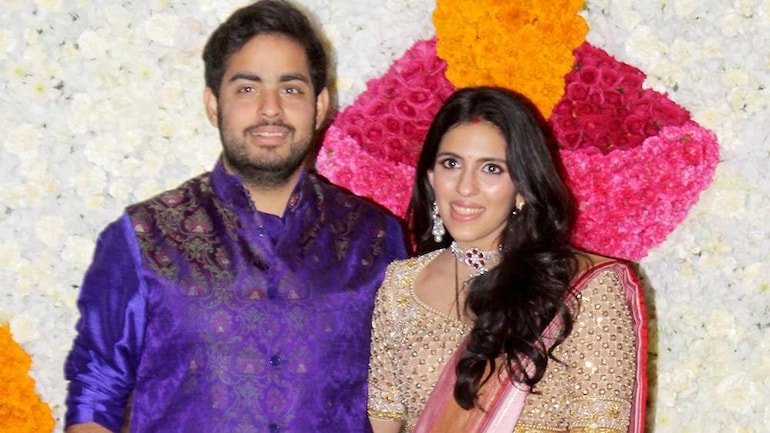
Akash Ambani and Shloka Mehta Ambani, son and daughter-in-law of Mukesh Ambani and Nita Ambani, have welcomed their first child together. Akash and Shloka have been blessed with a baby boy.
AKASH AMBANI AND SHLOKA MEHTA WELCOME BABY BOY
On Thursday, Reliance Industries Chairperson, Mukesh Ambani and Nita Ambani announced that they have become grandparents for the first time, as Shloka gave birth to a baby boy.
A statement from the Ambani family read, “Nita and Mukesh Ambani are delighted to have become grandparents for the first time, as they welcome the great-grandson of Dhirubhai and Kokilaben Ambani. Shloka and Akash Ambani became proud parents of a baby boy today (December 10) in Mumbai. Both mother and son are doing well. The new arrival has brought immense joy to the Mehta and Ambani families.”
AKASH AMBANI AND SHLOKA MEHTA’S LOVE STORY
Akash Ambani and Shloka Mehta got married on March 9, 2019 in a grand ceremony in Mumbai. Shloka Mehta is the daughter of diamantaire Russell Mehta and Mona Mehta. For their wedding ceremony at Jio World Centre, many A-listers from politics, showbiz and business were part of the celebrations. From Shah Rukh Khan and wife Gauri to former UK Prime Minister Tony Blair and wife Cherie, many big names were at the wedding venue to bless the couple.
KEY STORY
-
Indian skipper Virat Kohli continued his dominant run in the newly released One Day International (ODI) batting rankings by the International Cricket Council (ICC) on Thursday.
-
Widely regarded as one of the greatest batsmen in the modern era of the gentlemen’s game across all formats, Kohli has once again consolidated his No.1 spot in the latest ICC Men’s ODI Batting Rankings.

-
The Indian skipper had a fruitful run with the willow in the recently concluded ODI series between India and hosts Australia.
-
The Indian skipper notched up two gritty half-centuries in the three-match ODI series which India ended up losing with a 2-1 margin. While run-machine Kohli cemented his spot at the top of the ODI batting rankings, his deputy Rohit Sharma, who was rested for the twin limited-overs series between the two cricketing superpowers managed to retain the second spot.

-
Kohli scored 89 and 63 in the last two ODIs to take his ICC batting points tally to 870 points. Recovering from a hamstring injury ahead of the high-profile Test series between India and Australia, Rohit retained his second spot with 842 points.
-
The Indian opener across all formats is followed by Pakistan skipper Babar Azam. The premier Pakistani batsman is third with 837 points.
-
Indian pacer Jasprit Bumrah, who recorded a series of forgetful spells against Australia in the ODIs has secured the third spot in the ICC Men’s Bowlers Rankings.

-
While Indian bowlers were sent on a leather hunt by Australian batsman Aaron Finch, Steve Smith, David Warner, and Glenn Maxwell, Aussie bowlers Adam Zampa and Josh Hazlewood made significant gains in the bowlers’ rankings following their superlative efforts in the three-match ODI series.
-
Hazlewood has climbed to the sixth spot after taking six wickets in the ODI series between Australia and India.
KEY STORY
-
Karnataka’s controversial new cow protection act – which replaces legislation from 1964 that also prohibited the slaughter of cows – has been red-flagged for both tougher punishments and provisions that many are calling “undemocratic”.
-
The new act defines “cattle” as including cows, calves, bulls, bullocks, and male and female buffalos below 13 years. “Beef” is defined as the flesh of cattle in any form.

-
Punishment for a first-time conviction ranges from a prison term of three to seven years and fines between ₹ 50,000 and ₹ 5 lakh.
-
Subsequent convictions could invite fines of up to ₹ 10 lakh and a jail term of up to seven years. The sale and transport of cattle for slaughter (within the state and across its border) is also prohibited.
Many have expressed concern over the new act.
“Muslims do not drink alcohol. But they have never requested any government to ban alcohol because it is against our religion. We have never requested Christians not to eat pork,” a Bengaluru restaurant owner told NDTV.
“Those animals that have stopped giving milk. Farmers who have buffaloes they cannot sell in the market – what will happen to them?” the restaurant owner asked.
The ruling BJP has never hidden its plan made to introduce legislation on this issue.
KS Eshwarappa, the state’s Rural Development minister, told NDTV: “The BJP government was there earlier and banned cow slaughter. But the Congress cancelled that and made cow slaughter possible. Now our life has become blessed. The dream of those who love cows has been realised.”
-
The Congress, which says the new bill also hurts the interests of farmers, has accused the BJP of trying to polarise communities by targeting beef and its consumers ahead of local elections to be held later this month.
-
The entire bill is against farmers. They are trying to polarise (people). The farming community which has been breeding cattle has been affected. They did not discuss… they brought it urgently because of gram panchayat (local body) elections… trying to saffronise things,” DK Shivakumar, the chief of the Congress’s state unit, said.
-
The opposition party also boycotted Thursday’s Assembly session – despite an appeal from Chief Minister BS Yediyurappa – to protest what former Chief Minister Siddaramaiah said was the “murder of democracy”.
“Last time itself, cow slaughter bill was passed. There were some amendments which were presented in Assembly and approved. Congress people always oppose. I don’t want to react to such things. I request them to come and attend Assembly,” Chief Minister BS Yediyurappa said.
-
The Janata Dal Secular also opposed the bill, with former Chief Minister HD Kumaraswamy pointing out provisions that force farmers to feed and nurture certain breeds – that he said were “absolutely of no use” – would cost a minimum of ₹ 200 per day and increase farmers’ burdens.
Among other criticisms mounted by Mr Kumaraswamy was a “fear that provision to allow police and other officials to inspect premises may lead to harassment and fear psychosis”.
-
The former Chief Minister also criticised the government for passing the bill in “a tearing hurry” and said that although the bill appears to protect cattle, “in the long run it is bound to affect cattle”.
-
Mr Kumaraswamy warned the BJP that “if you try to make the sector unviable through such impractical clauses, then the trend of farmer suicides is bound to increase”.
-
It doesn’t stop with this bill. The ruling BJP is also planning legislation targeting “love jihad” – the right-wing conspiracy theory that Muslim men enter into relationships with Hindu women to forcibly convert them – for a future Assembly session.
KEY STORY
-
Reserve Bank of India on Wednesday announced that the Real Time Gross Settlement System (RTGS) will be operational 24×7, all throughout the year from 14 December, 2020. This comes within a year of operationalising NEFT 24×7 by RBI.
“India will become one of the few countries in the world to operate its RTGS system round the clock throughout the year,” the central bank said in a statement.
-
The announcement comes days after RBI governor Shaktikanta Das had announced the change in the recently held conducted Monetary Policy Committee meeting.
-
The RTGS system is primarily meant for high-value transactions. It happens on a real-time basis.
-
The minimum amount to be remitted through RTGS is ₹2 lakh with no maximum limit. In this transfer, the beneficiary bank receives the instruction to transfer funds immediately when you carry out the transaction, and the transfer is instantaneous.
-
From July 2019, RBI stopped levying charges on transactions through NEFT and RTGS, with an aim to promote digital transactions in the country.
-
RTGS, which began its operations on March 26, 2004 with a soft launch involving four banks, presently handles 6.35 lakh transactions daily for a value of ₹4.17 lakh crore across 237 participant banks.
CONCLUSION
-
The average ticket size for RTGS in November 2020 was ₹57.96 lakh making it a truly large value payment system.
-
RTGS uses ISO 20022 format which is the best-in-class messaging standard for financial transactions. The feature of positive confirmation for credit to beneficiary accounts is also available in RTGS.
“Round the clock availability of RTGS will provide extended flexibility to businesses for effecting payments and will enable introduction of additional settlement cycles in ancillary payment systems. This can also be leveraged to enhance operations of Indian financial markets and cross-border payments,” RBI further stated.
KEY STORY
-
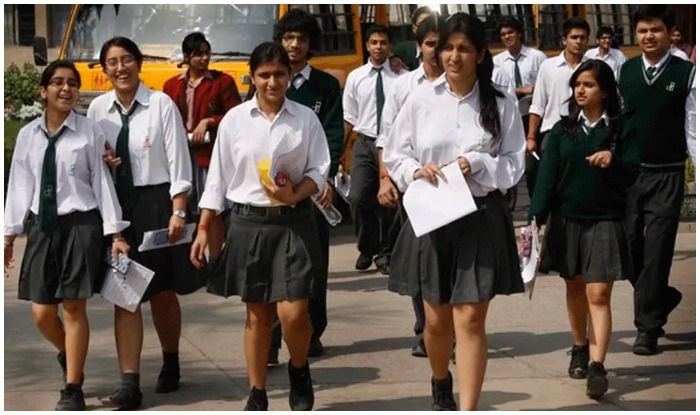
Education Minister Ramesh Pokhriyal had invited queries and concerns regarding the upcoming board and competitive examinations from students.
-
Of the many requests and responses received, most of them are for postponing CBSE Board Examinations 2021 from their usual Feb-Mar schedule to May 2021.
-
From concerns over reopening of schools to the more pertinent questions on practical examinations, the responses are myriad.
-
Experts and teachers have also shared concerns and requested for the schools to be reopened for students of classes 10 and 12 so as to ensure students are prepared for the board examination.
-
However, in a recent interview, Sanyam Bhardwaj, CBSE Controller of Examinations shared that there was no plan to defer the board examinations.
-
He has also shared that the boars is open for options as well. As we wait, here is a look at top 5 reasons why CBSE Board Exams 2021 should be postponed till May.
CBSE Board Exams 2021: 5 Reasons why exams should be postponed
1. Schools still closed in many states
Schools in India were closed in March 2020 at the onset of the pandemic. Following the lockdowns and consequent unlock guidelines, the schools were allowed to reopen from October. Even then, many states have decided to keep the schools closed and ordered the schools to remain closed till December 31. Closed schools raise concerns over opening centres for conducting examination to the actual classroom teaching, which has been missing this year.
2. Not 100 per cent access to online learning
Academic year 2020-21 started virtually in March 2020 and has continued to be largely online for most of the students. The Governments of various states have also launhed TV channels to ensure continued learning. However, the fact remains that not every student has access to online learning. In a CBSE survey, the board has acceded that while most of the students in urban areas have had access to online learning, the number from rural areas still is very low. With no classes – conducting board examinations before schools reopen may simply be unfair to all such students.
3. Conducting practical exams without practical classes not possible
Many experts and academicians have raised questions over the rationale of conducting practical examination without actually conducting practical classes. “Showing a student how a chemical reacts is not the same as students actually doing the experiment. The colour of the smoke, the smell…the amount of acid to pour – these require physical instructions. If we have not done that, how can students be assessed on the same?” asks Ms. Aarti, a Chemistry PGT in a leading school in Faridabad.
Similar objections have been raised and teachers have asked for a minimum of 2 month period of classroom coaching before the board examinations are conducted.
4. Many State Boards have already postponed the exams
Maharashtra, Gujarat and Andhra Pradesh have postponed their SSC and HSC or Class 10 and 12 board examinations 2021 to the month of May. Other states too have shared their willingness and possibility of delaying the board examinations. While the state board and central board examinations do not follow the same date sheet, they are usually conducted around the same time to ensure that all students would have access to similar opportunities with higher education. Furthermore, the board examination schedule also determines the national level competitive examinations, where students from all states appear. With the precedent set, postponing CBSE Board Exams 2021 to May would ensure equal opportunity to all.
5. Students not prepared for Offline Exams
Many teachers and experts along with students have shared concerns over appearing for an examination just yet. “Our syllabus is complete and we have been taking online assessment and started revision. But a one hour online examination cannot replicate a three hour examination. Students are simply not used to writing for so long!” shared Ms. Parul, a senior accounts teacher.
“Examination is an experience; it is not merely about what a student knows and does not know. It is also the ability of a child to recall what he has learnt in a specific setting. Schools make sure that the pre-board examinations simulate an actual board exam to the nearest possible manner. With schools till shut, students have no idea how and why and where. It’s almost essential that students be first brought back to classrooms physically before they can be ushered into examination halls!” she adds.
With arguments in place, the final decision now remains with Education Ministry and CBSE. As for the reason why the examinations should be conducted in March, the only one available is to bring back the academic year within its usual ‘normal’. And yet, what’s normal now?
1...723724725...883Page 724 of 883