Rajyotsava should be Nityotsav, says Minister

KEY STORY

  • Taking exceptions to pro-Karnataka concerns expressed in November, Agriculture Minister and Koppal in-charge B.C. Patil has said that the fight for the protection and the development of Karnataka and Kannada should continue throughout the year.
“As we have been witnessing, concerns for Kannada and Karnataka are overwhelmingly shown in November only when the State observes Rajyotsava to mark the formation of a linguistic State. We need to continue the same zeal and commitment throughout the year,” he said.
  • He was addressing a gathering at the Rajyotsava celebrations after hoisting the national flag at the district stadium in Koppal on Sunday.
  • Strongly holding that the use of a language in daily life was the only way to protection it and to ensure its development, Mr. Patil urged Kannadigas to use Kannada among themselves as well as with others in the State.
  • He also expressed concerns over the increasing influence of other languages in different parts of the State.
“Kannadigas have big hearts. They wholeheartedly welcome people with other linguistic backgrounds. They need to develop love towards Kannada by passionately using it even with people who speak other languages. They should show more interest in using Kannada than they show interest in using other languages. They should collectively stand up and fight for Kannada when it faces threat from other languages,” he said.
  • The Minister recalled the consistent efforts by those who fought for a State for Kannada-speaking people such as Alur Venkata Rao and hailed the former Chief Minister D. Devaraj Urs for his efforts to rename Mysore State as Karnataka on November 1, 1973.
  • Mr. Patil released a leaflet containing information about insurance for rabi crops. Tableaux prepared by the departments of Health and Family Welfare, Horticulture, Women and Child Development, Agriculture, Transport, among others, on various topics to spread awareness among people were displayed.
  • Tableaux on COVID-19 prepared by the Transport Department and Health Department bagged the first and second prizes, respectively. The Agriculture and Horticulture departments got the third prize.

CONCLUSION

  • Earlier, contingents of the Civil Police, the District Armed Reserve Police, the Home Guards, the Bharat Seva Dal, NCC and Scouts and Guides participated in a parade.
  • Koppal MLA K. Raghavendra Hitnal presided over the celebrations.
  • Zilla Panchayat president K. Rajashekhar Hitnal, Lok Sabha member Karadi Sanganna, Zilla Panchayat vice-president Beena Gause, Deputy Commissioner Vikas Kishore Suralkar, Zilla Panchayat Chief Executive Officer Raghunandan Murthy, Superintendent of Police T. Sridhar and Additional Deputy Commissioner M.P. Maruthi and others participated in the event.

World Vegan Day 2020: Expert Busts 6 Common Myths About Veganism

Highlights

  • World Vegan Day: Only link between vegetarian, vegan is – avoiding meat
  • While veganism is a lifestyle, organic is a method of farming
  • To adapt to veganism, major challenge for Indians is to cut dairy product
To say that the discourse around veganism is often rife with misinformation or even pre-conceived notions is an understatement. For many, a lot of information obtained – whether fully incorrect or partially presented – serves as a major hurdle towards adopting, or even attempting to adopt a vegan diet. And so, World Vegan Day – observed annually on 1st November is perhaps the most fitting day of all to highlight some of the more commonly held notions about the diet, as well as paint a clearer picture as to what veganism actually entails.
Myth 1: Veganism and Vegetarianism are “basically” the same.
Perhaps one of the most common misunderstandings surrounding veganism is due to it being conflated with vegetarianism. The only commonality between the two is a shared avoidance of meat products. Both vegans and vegetarians categorically do not consume. However, the similarity ends here – to be vegan is to avoid all animal based products (meat is just one animal based product) – including dairy (milk, cheese, ghee, butter) and products like honey. This does not apply to vegetarians as many vegetarians in India have a heavy dairy inclusive diet. Hence, these people are often called Lacto-vegetarians, precisely for this reason.

Myth 2: Vegans only eat organic produce

While veganism is a lifestyle/diet, organic is a method of farming/producing. These are in no way linked. Eating only organic is certainly not a requirement to be vegan. To eat organic fruits and vegetables is entirely a preference. Many vegans consume traditionally grown fruits and vegetables as well. And the science on which is ‘better’ is still evolving and mixed, in terms of consensus.

eho5ekeo

Myth 3: The Indian diet is not suited to veganism

Interestingly enough, Indian diet is perhaps even more suited to veganism than most across the world. Not only does India have a significantly large amount of vegetarians, but as such the culture for many is already primed to include veggies, fruits, dals, legumes, grains and cereals in their diets – all of which are plant-based by default. To adapt to veganism, the major challenge for Indians is to cut dairy products – we love our ghee coated rotis, curds and raitas (as part of bigger meals) as well as our ice creams and lassis. But alternatives are now available, with comparable taste to boot.

Myth 4: Veganism can lead to poorer nutrition

A common misconception around the diet is that pursuing it leads to overall poorer nutrition. This is only true if one doesn’t do cursory research before committing to a diet change – be it vegan or not. Diet change is often a significant decision that warrants at least some research about the diet in question.
In the case of a vegan diet, once all animal products are left out, there is the possibility of a reduced consumption of protein, iodine, calcium, Vitamin B12, Vitamin D, and omega 3 fatty acids. Each of these nutrients has a viable alternative (especially protein) that is either based on food substitutes or simple supplements.
Myth 5: Vegan food alternatives are hard to find, and expensive
Actually, plant based alternatives are quite easy to find/obtain, and are becoming more and more affordable due to the rising vegan community in India. Plethora of alternatives exist – for protein, soya products are often widely consumed; with lentils and beans being another good source. There’s actually a host of plant-based dairy products to choose from – even a simple staple like milk can be substituted with soya milk, almond milk, cashew milk, and so forth. Hemp milk can serve as a great source of omega 3, too. A healthy portion of leafy vegetables takes cares of vitamins, and as for Vitamin D – it can be tackled by (socially distant for now) exposure to sunlight.

Myth 6: Veganism is a mere trend that will fade eventually

But perhaps the myth with the most longevity of all is the assertion that people pursuing a vegan diet are doing so as part of a social trend, in order to gain societal clout. As abstract a claim as this is, it’s also hard to ‘disprove’ – how do you prove the genuine intentions of every single vegan on earth? There will be a few who view it as fashionable! But for the vast majority of vegans, the diet is one that aligns with their values of stopping their share of unabridged animal cruelty done in the name of producing food items for consumption. It also objectively takes a lesser toll on the environment, an outcome that is collectively favourable (or at least should be) to all of us.
And so, ironically the longest running misconception about veganism is one that critiques its very longevity, something that has only been growing as the years roll by, and the affordable alternatives roll in. Perhaps, then, on World Vegan Day, it is better to contemplate not how long veganism will ‘last’; but how long we can make it last, to the day it is akin to the new normal.

Aishwarya Rai celebrates 47th birthday. Anushka to Sonam, celebs pour in wishes

Aishwarya Rai Bachchan is celebrating her 47th birthday today. While the actress is celebrating her special day with her family, her colleagues from the film industry have flooded social media with best wishes for her.

ANUSHKA’S SPECIAL WISH FOR AISHWARYA

Anushka Sharma shared a picture of Aishwarya as her Instagram story and wrote, “Happy birthday Ash. May you keep spreading your radiance all around.”

SONAM WISHED AISH WITH A GORGEOUS PIC

Sonam posted a picture with Aishwarya. She wrote, “The most beautiful woman in the world. My dear Ash, happy birthday to you. May you continue to shine as bright, as ever for years to come. Love you, gorgeous.”

BOLLYWOOD CELEBS POUR IN WISHES

Jacqueline Fernandez, Bipashu Basu and Shilpa Shetty also wish Aishwarya with beautiful pictures.
Take a look

WHAT’S ON WORK FRONT

Aishwarya was last seen in 2018 film Fanney Khan. The film also starred Rajkummar Rao and Anil Kapoor. She will next be seen in Tamil film Ponniyin Selvan.

AirPods Pro Earbuds With Sound Issues to Be Replaced by Apple for Free

HIGHLIGHTS

  • Few AirPods Pro units may have problems with noise cancellation
  • Some users may also be experiencing crackling or static sound
  • Apple notes that the charging case is not a part of this programme
AirPods Pro Earbuds With Sound Issues to Be Replaced by Apple for Free
  • AirPods Pro earbuds will be replaced by Apple for free following sound issues. The tech giant has confirmed that a small percentage of AirPods Pro units may be faulty and could be experiencing audio problems.
  • These affected units are said to have been manufactured before October 2020, meaning all AirPods Pro units sold all through last year and this year fall in this bracket. Apple has introduced a specific service programme for these affected users, wherein it will offer free replacement of the earbuds or fix it, whichever is applicable.
  • Apple has published a dedicated page on its support site announcing the new programme specifically for the AirPods Pro.
  • This programme covers affected AirPods Pro for two years after the first retail sale of the unit. It is applicable worldwide but doesn’t extend to the standard warranty coverage of the earbuds. This service programme will tend to AirPods Pro units that emit crackling or static sounds.
  • These sounds are reported to increase particularly in loud environments, during exercise, or while talking on the phone.

  • Furthermore, affected AirPods Pro units may experience faulty Active Noise Cancellation functionality. There may be loss of bass, or an increase in background sounds such as street or airplane noise. These affected AirPods Pro units will be serviced free of charge. If a replacement is required, that will also be done at no extra cost.
  • Apple notes that the AirPods Pro case is not affected, and is not covered in this programme. If you’re experiencing any of the above-mentioned issues, the tech giant advises users to head to an Apple Authorised Service Provider, make an appointment at an Apple Retail Store, or contact Apple Support. AirPods Pro will be examined prior to any service to verify that they are eligible for this programme. Once the technician confirms the issue, the AirPods Pro will be replaced. Apple noted that no other AirPods models are part of this programme.

Ratan Tata delivers a deeply poignant and timeless message in his closing keynote

KEY STORY

Closing keynote at TechSparks 2020 by Ratan Tata, Chairman, Tata Trusts: Full message

  • It is a privilege to have this opportunity to express both hope and credit for what is happening in the tech world in India.
  • We have the largest startup population in the country, and in the world, actually. And we need to recognize that this element, this segment needs, on the one hand, self-contained creativity and innovation, but on the other hand, guidance based on the changing needs of the country as it grows.

Ratan Tata Instagram : Ratan Tata makes Instagram debut, wants to exchange  stories & create something special

  • So, as we stand today, we have witnessed a set of speakers who have talked about the opportunities, the challenges, the dangers and the advent of failures, which inevitably also accompanies success.
  • And we have before us, a mix of the good and bad, the excellent and the not-so-good, the hopeful but unsuccessful.
  • And we mesh it into a salad, if you might, of young, credit-worthy entrepreneurs who have by their creativity, made successes of themselves, or are going to be successful.
  •  The needs of the country are going to differ and change, and the creativity needs to adapt itself to meet those needs in the way no other segment can.
  • We have to realise that we have a greater need for humanitarian challenges, healthcare, deliveries.
  • We have great challenges before us on clean technology and green-based articulation of the challenges that are before us. We also have an issue of hunger and shortages; food is going to continue to be an issue that will have to meet the needs of the people.
  • We have technologies relating to agriculture, while on the other hand, we have advanced electronics and space-age technologies, travelling around the gamut of the earth that we know today. So, it’s a very mixed and complex set of innovations, some very small but very successful, others big, calling for large amounts of capital.
  • To put it all together, we must ask ourselves, can we make a difference? Can we be innovative and creative? And not just after the money value of what we’ve done, but the contribution it has made to our humanity, our human population in India. So, we should be humble, at the same time, attentive to the needs, looking for opportunities.
  • And once again, I think TechSparks is an excellent way to voice this creativity to challenge and also register and recognise what has happened.

CONCLUSION

  • I wish this group great success, and this success will only be measured in what one does for the country or for the universe. So, with it will go a lot of recognition to the young, creative entrepreneurial workforce, while at the same time demanding recognition on a global basis to young people – where age doesn’t matter, where creativity and innovation is the call of the day.
  • All of you have a great world before you and great opportunities. Many of you are going to be tremendously successful and it’s a pleasure to be with you today.
  • All the best, and we look forward to this being the most dynamic segment of India’s future.
  • Let’s make it dynamic and make a difference at the same time. When we are not doing it for ourselves, we are doing it for the enjoyment of doing something that hasn’t been done before, but more importantly, meeting the needs of the country or the planet as such.
Thank you again for the excitement that you collectively provided me, and I wish you again, all success.


1000’S OF JOBS | JOIN IMMEDIATELY | M. GHEEWALA HR CONSULTANTS, GULBARGA BRANCH

FOR JOB DETAILS CLICK THE LINK BELOW:
JOB POSTINGS ON 1ST OF NOVEMBER 2020 BY M.GHEEWALA GLOBAL HR CONSULTANT GULBARGA BRANCH.
CALL : 8310 346 473 | 9606 36 9009 VISIT: ASIAN BUSINESS CENTER, F 01-02, GULBARGA.
HURRY UP: CLICK THE LINK BELOW:

REQUIRED FOR A REPUTED COMPANY IN UAE-converted


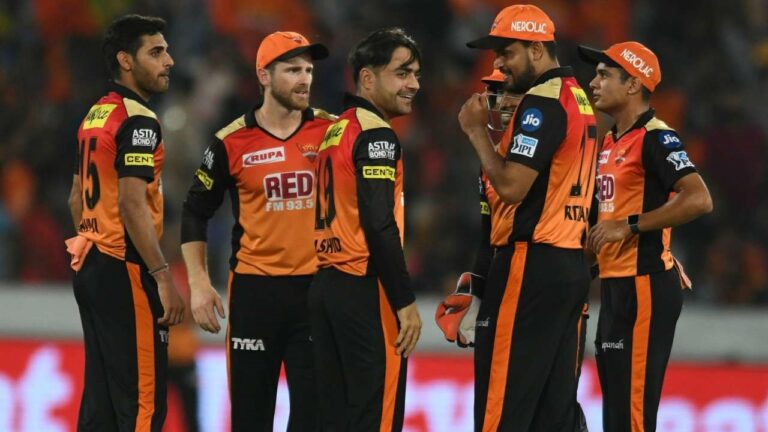
IPL 2020, SRH vs RCB: Orange army bolster playoffs chances with 5-wicket win over Virat Kohli-led RCB at Sharjah

KEY STORY

  • Match 52 of the ongoing IPL 2020 edition saw the Virat Kohli-led Royal Challengers Bangalore (RCB) lock horns with the 2016 champions David Warner-led Sunrisers Hyderabad (SRH) at Sharjah Cricket Stadium, Sharjah on Saturday evening (October 31).

  • While RCB were eager to secure a spot in the playoffs with a win, SRH were adamant to maintain their winning run and bolster their chances to qualify further.
  • Eventually, the SRH camp romped past the 2016 runners-up by a convincing five-wicket margin, with 35 balls to spare, to improve their NRR further and dent RCB’s run.
  • Being asked to bat first, the Kohli-led RCB never got going. In-form opener Devdutt Padikkal got removed early whereas skipper Kohli once again fell prey to Sandeep Sharma, who dismissed him for the seventh time in the tournament history. While Josh Phillipe got a start, AB de Villiers never managed to accelerate.

  • The former South African captain came in with the score 28 for 2 and managed a run-a-ball 24. However, he joined Chris Gayle, Kohli, Aaron Finch, Brendon McCullum, etc. to enter the 9000-run club in T20s.
  • Following him, RCB were restricted for a paltry 120 for 7 as all of the SRH bowlers stood tall.
  • In reply, SRH lost their captain Warner for cheap (8) of Washington Sundar, who continued to bamboozle batters and keep them under check in the Powerplays.

RCB vs SRH, IPL 2020

  • However, Manish Pandey’s 19-ball 26 gave his side’s innings a much-needed impetus and put them in the driver’s seat in the 121-run chase at Sharjah. SRH’s last match’s star, Wriddhiman Saha continued to keep the scoreboard ticking before falling for a 39-ball 32.
  •  The writing was on the wall for RCB, who fell flat and have to blame their batters for their poor show.
  • SRH eventually bolstered their chances of making it to the playoffs with a comprehensive win. Holder’s cameo led his side home despite some late blows.

  • Riding on a convincing win over RCB, SRH have now moved to the top four on account of 14 points and a positive NRR.
At the post-match presentation, Kohli stated,
“It was never enough. We thought 140 might be a good total to sort of get into the game on that kind of wicket. Things changed drastically in the second innings. There was a lot of dew which we didn’t quite predict, they got it right at the toss eventually. In the end, it was very difficult to hold the ball. Strange one. In between, we thought the weather has become pleasant and there wasn’t any dew, but last few games in Dubai and here as well there has been dew. The pattern keeps changing but regardless you need to have runs on the board. We weren’t brave enough with the bat throughout the innings and credit to them – they used the pitch well and the change of pace.”
  • With this loss, RCB will now fight hard to ensure a top-two finish versus DC, who will have the same agenda in the upcoming face-off.

Delhi allows intra-state buses with full capacity on trial basis, 200 people allowed at marriage functions

KEY POINTS

  • In closed spaces, a maximum of 50 per cent of the hall capacity with a ceiling of 200 persons allowed at marriage functions
  • Intra-State movement of buses (DTC & Clusters) shall be permitted with full seating capacity on trial basis
  • No passenger shall be allowed to travel in a standing position & without mask

KEY STORY

New Delhi: Delhi government has allowed intra-state movement of buses, both DTC and clusters, with full seating capacity on a trial basis with effect from 27 October to 8 November with a condition that no passenger shall be allowed to travel in a standing position and without a mask.
In closed spaces, a maximum of 50 per cent of the hall capacity with a ceiling of 200 persons allowed at marriage functions in Delhi, as per government order.
“In open spaces, keeping the size of the ground/space in view, and with strict observance of social distancing, the mandatory wearing of face masks, provision for thermal scanning and hand wash or sanitizer,” the new directive said.

‘Maximum of 50 per cent of the hall capacity with a ceiling of 200 persons’

This comes after Delhi transport minister Kailash Gahlot said that interstate bus services and ISBTS in Delhi are likely to reopen from November 1.
According to a report by HT, Gahlot had said that the decision to resume interstate buses and reopen the city’s three ISBT’s was approved by the Delhi Disaster Management Authority (DDMA) in a meeting held on October 23.
The resumption of inter-state bus services means that all three ISBTs in Delhi– Anand Vihar, Kashmere Gate, and Sarai Kale Khan — will also reopen.

5,000 COVID-19 cases reported in Delhi for fourth consecutive day

The three ISBTs had been closed for more than seven months after the coronavirus pandemic wreaked havoc in the country.
Meanwhile, the national capital recorded 5,062 fresh COVID-19 cases on Saturday, taking the infection tally to over 3.86 lakh amid festivities and rising pollution in the city.
These fresh cases came out of the 44,330 tests conducted the previous day which also coincided with a festival, reported PTI.
This is the fourth consecutive day when over 5,000 cases have been reported in a day in the city.

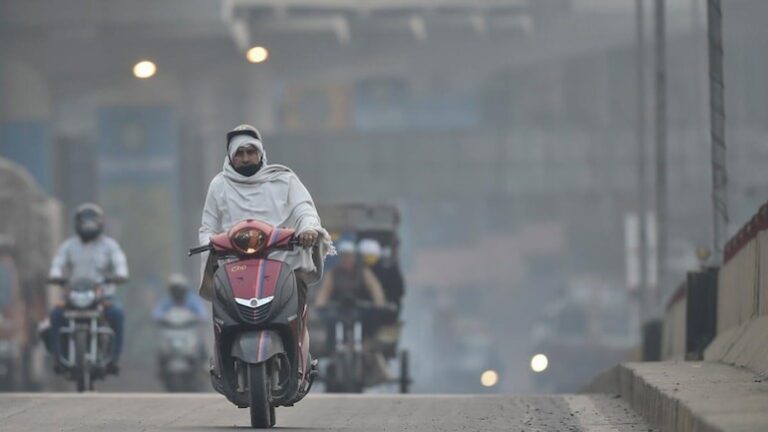
Delhi records coldest October since 1962, minimum temperature falls to 17.2 degrees Celsius

KEY STORY

  • Delhi witnessed its coldest October in 58 years in 2020, data from the India Meteorological Department (IMD) suggests. With winters slowly approaching, the national capital is gearing up for what seems, at least now, unusually cold winter months.
  • According to the IMD, the mean minimum temperature recorded in Delhi this year was 17.2 degrees Celsius.
  • This is the lowest mean minimum temperature recorded in Delhi in the month of October since 1962 when it was 16.9 degrees Celsius.
  • On average, Delhi records a mean minimum temperature of 19.1 degrees Celsius in the month of October each year.
  • The IMD said the normal minimum temperature in October is usually 15-16 degrees Celsius.

CONCLUSION

  • In 2019, Delhi recorded a minimum temperature of 19.8 degrees Celsius on October 4.
  • For the first time in October since 1994, Delhi recorded a minimum temperature of 12.5 degrees Celsius on Thursday.
  • Data made available by the IMD has October 31, 1994, listed as the day when Delhi last recorded temperature as low as 12.3 degrees Celsius.
  • Head of the IMD’s regional forecasting center, Kuldeep Srivastava told news agency PTI that the absence of cloud cover can be identified as one major reason for Delhi witnessing such low minimum temperatures this year. Calm winds allowing the formation of mist and fog is another reason, Srivastava added.
  • Kuldeep Srivastava also said that Delhi recorded its all-time low temperature of 9.4 degrees Celsius on October 31, 1937.
  • Earlier this month, Regional Meteorological Centre (RMC) data had revealed that minimum temperatures are lower than normal in other parts of northwest India, including Haryana’s Karnal and Kanpur in Uttar Pradesh.

NMC releases new regulations for MBBS admissions, establishment of medical colleges

KEY STORY

New Delhi: In a significant step towards affordable medical education, the new medical education regulatory, National Medical Commission (NMC), has notified its first major regulations, government said on Saturday.
“Titled as “Minimum Requirements For Annual MBBS Admissions Regulations (2020)”, the notification issued today replaces the “Minimum Standard Requirements for Medical Colleges, 1999 (for 50/100/150/200/250 Annual Admissions)” of the erstwhile Medical Council of India (MCI),” said Ministry of Health and Family Welfare.
  • The new regulations shall be applicable to all new medical colleges proposing to be established, and to the established medical colleges proposing to increase their annual MBBS intake from the academic year 2021-22.
  • During the transitory period, the established medical colleges will be governed by the relevant regulations existing prior to the current notification.
“The new standards have been defined keeping the functional requirements of the institution(s). These allow optimization and flexibility in utilizing available resources, and harnessing modern educational technology tools to facilitate moving towards quality education, even when resources are relatively scarce,” the ministry said.

The key changes:

  • The new regulations have deleted the quantum of land required for setting up a medical college and its affiliated teaching hospitals (all buildings are expected to conform to existing building bye-laws).
  • The notification defines the minimum requirements of space for all student centric areas in the institution and the functional areas required.
  • The standards outline the sharing of all available teaching spaces by all departments (compared to the inflexibility in the regulations so far) thereby mandating all teaching spaces to be enabled for e-learning and also digitally linked to one another (it was only desirable earlier).
  • Under the new regulations, a well-equipped “Skills Laboratory” for training students is essential now.
  • It also defines a Medical Education Unit for training medical teachers in educational pedagogy.
  • The space required for library and the number of books and journals have been rationalized and reduced.
  • Student counselling services has been mandated recognizing the increasing stress observed amongst medical students and residents in recent times.
  • Recognizing that a well-functioning hospital is at the core of medical training, the new regulation now mandates the availability of a fully functional 300 bed multi-speciality hospital for at least 2 years at the time of application for establishing a new medical college (the earlier regulations did not specify the period of functionality).
  • The beds required in the various departments of the teaching hospital have been rationalized to align with the annual student intake, teaching time to be spent in the clinical specialties and the minimum clinical material required for undergraduate medical training which has resulted in about 10% reduction in teaching bed needs compared to the earlier regulations.
  • The human resource of teaching faculty has also been rationalized in the new regulation. Over and above the minimum prescribed faculty, provision for “visiting faculty” has been made to enhance quality of training,” the ministry said
  • Two new teaching departments have now become mandatory in all medical college hospitals for the training of undergraduate medical students.
  • These include the Department of Emergency Medicine (which has replaced the earlier Casualty Department) and will ensure access and prompt, appropriate response to emergencies particularly trauma; and the Department of Physical Medicine and Rehabilitation which shall fill a large gap for those in need of comprehensive rehabilitative care.
  • The regulations have also outlined “desirable” and “aspirational” goals beyond the minimum requirements stated in the standards so as to stimulate medical institutions to strive for excellence.

CONCLUSION

  • Last month, NMC had replaced the Medical Council of India (MCI) as the apex regulator for medical education in India.
  • Professor Suresh Chandra Sharma, former head of the ENT department at the All India Institute of Medical Sciences (AIIMS), New Delhi, has been appointed the chairman of NMC and Rakesh Kumar Vats, secretary general, BoG, MCI, has been appointed the secretary by the appointments committee of the cabinet