
HIGHLIGHTS
-
Walking can be good for your heart health
-
It can prevent weight gain
-
Walking for 30 minutes can help in reducing stress and anxiety
Walking benefits: We have said it before and we will say it again. Walking has multiple health benefits to offer and you are going to love each one of them. While walking may not be considered equivalent to exercise or a workout, it is still going to offer physical health benefits that can help you stay strong, fit and healthy in the long run. Walking for as less as 30 minutes a day can help in preventing weight gain. It can be beneficial for your heart health, reduce the risk of diabetes, improve your mood and strengthen your bones and muscles.
The aforementioned health benefits of walking have been sourced from the American Heart Association, National Institutes of Health and National Institute of Diabetes and Digestive and Kidney Diseases.
1. To walk more throughout the day or to increase your number of steps, you can set several reminders on your phone for to leave your work desk and walk another 500 steps.
2. What’s more, the time for some extra walking can easily be taken out in early hours of the day or just after you are done with your work schedule.

3. Some walking can easily be squeezed in during your lunch hour, after your meal. You can listen to your favourite music, or make an important work call, all while you are walking more steps and moving closer towards the goal of 10,000.
4. Track your steps every day. It may not seem like it but it can definitely be an effective way to reach a particular goal that you have set for your own well-being. 20 minutes of walking breaks spread throughout the day are enough to complete 10,000 steps.
5. Walk briskly and walk in spaces that are in your reach. Do not set your goal of walking in spaces that are difficult to reach on a packed day. Walk in your room or the terrace outside.
6. For every 30 minutes of sitting, stand straight on both your feet for 3 minutes. This can help in preventing long hours of sitting. Also, to break long hours of sitting, you can also take walking breaks. It will serve the dual purpose of increasing your number of steps and walking more as well.
All in all, it is important to understand that walking is a great activity for your physical and mental health. It can relax and calm you mind, while strengthening you, reducing risk of back pain, knee pain, etc.

KEY STORY
-
Security researchers Talal Haj Bakry and Tommy Mysk have published a blog post detailing the security risks that link previews can pose. Almost all messaging apps out there offer link previews and these researchers have explained how this feature can be a serious privacy loophole if not handled properly. They’ve detailed how Instagram and Facebook Messenger have serious loopholes that need to be fixed. In their case study, they found several bugs like leaking of IP addresses, exposing of links sent in end-to-end encrypted chats, and unnecessarily downloading gigabytes of data quietly in the background.
-
In a blog post, Mysk and Bakry detail how chat apps use different approaches to generate link previews. They detailed that Reddit generates link previews by opening the link automatically even before you tap it. Users only need to see this message on Reddit to trigger this backend programming. This approach could result in malicious attackers getting your IP address that indirectly leads to your location details. The report says that Reddit has already fixed this problem after the researchers contacted them.
-
Apps like Discord, Facebook Messenger, Google Hangouts, Instagram, Line, LinkedIn, Slack, Twitter, and Zoom use another approach that involves sending the link to an external server to generate a preview. The server will send the preview back to both the sender and receiver. With this approach, the server will need to make a copy of what’s in the link to generate the preview, and that copy could be saved on the server and be misused later.
-
This approach could be violating the privacy of their users by sending links shared in a private chat to their servers. These links may contain private information intended only for the recipients. This could be bills, contracts, medical records, or anything that may be confidential. Line app was found to be sending end-to-end encrypted (e2ee) links to servers for generating previews, defeating the purpose of e2ee entirely.
-
While some apps have limitations on the amount of data collected and stored, Instagram and Facebook Messenger do not have any limitations and can download anything no matter the size. The researchers show that Instagram was able to download a link that was 2.7GB in size on multiple Facebook servers. This link was downloaded on eight Facebook servers and roughly 24.7GB of data was downloaded just through that one link shared on Instagram. This is alarming given that most apps have download limitations. Facebook and Instagram both have not yet responded to the notice sent to them by these researchers.
-
Slack has a download limit of 50MB, while LinkedIn has capped it at 30MB. Even with these limitations, it could lead to privacy breach if these servers are hacked. The researchers mention that an aggregable approach is used by WhatsApp, Signal, iMessage, and Viber where the “app will go and download what’s in the link. It’ll create a summary and a preview image of the website, and it will send this as an attachment along with the link. When the app on the receiving end gets the message, it’ll show the preview as it got from the sender without having to open the link at all. This way, the receiver would be protected from risk if the link is malicious. This approach assumes that whoever is sending the link must trust it, since it’ll be the sender’s app that will have to open the link.” The approach used by most apps of sending links to servers can be misused by threat actors to run potentially malicious code on link previews. WeChat, Threema, and TikTok don’t generate link previews at all, and even Signal has the option to turn it off if you wish to.

KEY STORY
-
State Bank of India (SBI) now allows customers to make cash transactions for more than Rs 10,000 daily across all its ATMs. The country’s largest lender offers seven different types of ATM-cum-debit cards that have a wide range of cash withdrawal limit starting from Rs 20,000 to Rs 1 lakh.
-
The transaction limits were revised in July this year. As per latest order, customers will get an OTP on their registered mobile numbers for transacting more than Rs 10,000. They will have to enter the OTP along with the debit card PIN to complete their withdrawal each time.
-
SBI allows up to eight free transactions in a month to each of its customers. The new OTP-based cash withdrawal came into effect on September 18.
Here’s a range of SBI debit cards with different cash withdrawal limits:
1. SBI Classic and Maestro Debit Card
ATM withdrawal limit: Rs 20,000
2. SBI Global International Debit Card
ATM withdrawal limit: Rs 40,000
3. sbiINTOUCH Tap & Go Debit Card
ATM withdrawal limit: Rs 40,000
4. SBI Mumbai Metro Combo Debit Card (Valid only for Mumbai customers)
ATM withdrawal limit: Rs 40,000
5. SBI My Card International Debit Card
ATM withdrawal limit: Rs 40,000
6. SBI Gold International Debit Card
ATM withdrawal limit: Rs 50,000
7. SBI Platinum International Debit Card
ATM withdrawal limit: Rs 1,00,000

KEY STORY
-
People flouting social distancing norms in small gatherings amid festival season, change in weather and no restrictions on border movement — these factors may cause Delhi’s Covid cases to shoot up two-three times, health experts said.
-
For the last three days, Delhi has been reporting over 4,000 cases daily. On Monday, 2,832 people tested positive after authorities conducted 34,411 tests. With 54 deaths in the last 24 hours, the capital also reported the highest casualties since July 7, taking the total toll to 6,312.
-
Over the last one week, the daily positivity rate — the percentage of people who test positive for the disease versus those who were tested — has also increased. Monday saw a daily positivity rate of 8.23%.
-
Experts across the city said the coming months are going to be challenging and people need to be extra cautious.
-
Dr S K Sarin, head of the Institute of Liver and Biliary Science and chief of the first expert committee formed by the Delhi government, said “I can’t say it is the second wave because we never saw the first wave subsiding… However, daily numbers will increase in the coming days… may go up to two-three times of what we are seeing right now — from 4,000 daily cases, it can go up to 8,000-10,000 cases per day, especially in November.
-
We need to stay extra cautious because those exposed in the first week will develop symptoms by the end of November.
-
Those exposed on Diwali will show symptoms two weeks later. So, the whole of November, we need to stay extra cautious. People should continue wearing masks else the disease will spread.”
-
A revised containment strategy prepared by an expert committee, led by NITI Aayog member Dr V K Paul, has suggested a series of measures for containment zones, testing, management of home isolation cases, contact tracing and overall preparedness of hospitals.
-
It said city hospitals should be prepared for a surge of 15,000 positive cases a day with the change in season and movement of patients from other states.
CONCLUSION
-
Dr Sujeet Singh, member of the expert committee and director of the National Centre for Disease Control, said the surge in cases will continue to fluctuate depending on the seasons and activities in each state and district.
-
There is a possibility of rise in cases, based on what we know from previous experiences and the surge we are witnessing in Europe and other countries.
-
The waves will fluctuate. In the beginning, we were in a controlled atmosphere. As the gradual unlock happened, the percentage of susceptible population increased.
-
Whenever the load of susceptible population gets added, it may lead to a surge. It can be called a second surge or a third surge. The surge will not be across the country but will depend on states and districts.”
KEY STORY
-
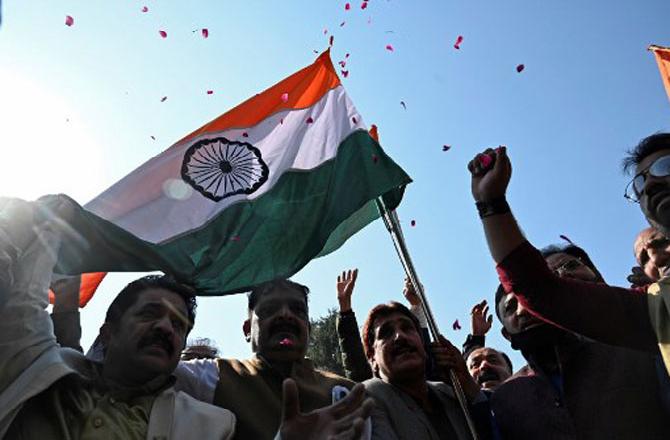
In a significant move, the Centre has notified the new Land Laws for Jammu & Kashmir. In a gazette notification, the union home ministry has notified this on Monday. It paved way for any Indian to buy land in the Union Territory (UT) of Jammu & Kashmir.
-
The MHA notified what it calls UT of Jammu and Kashmir Reorganisation (Adaptation of Central Laws) Third Order, 2020. The order comes into force with immediate effect.
“With immediate effect, the Acts mentioned in the Schedule to this Order shall, until repealed or amended by a competent Legislature or other competent authority, have effect, subject to the adaptations and modifications directed by the said Schedule, or if it is so directed, shall stand repealed,” read the order.
CONCLUSION
-
The General Clauses Act, 1897 applies for the interpretation of this current Order since it applies for interpretation of laws in force in India, said the order. Meanwhile 12 state laws have been repealed as a whole.
-
Meanwhile those legislations which are being repealed as whole include the Jammu and Kashmir Alienation Of Land Act (V of Samvat 1995), the Jammu and Kashmir Big Landed Estates Abolition Act (XVII Samvat 2007).
-
The Jammu and Kashmir Common Lands (Regulation) Act, 1956, the Jammu and Kashmir Consolidation Of Holdings Act, 1962, among others.
KEY HIGHLIGHTS
-
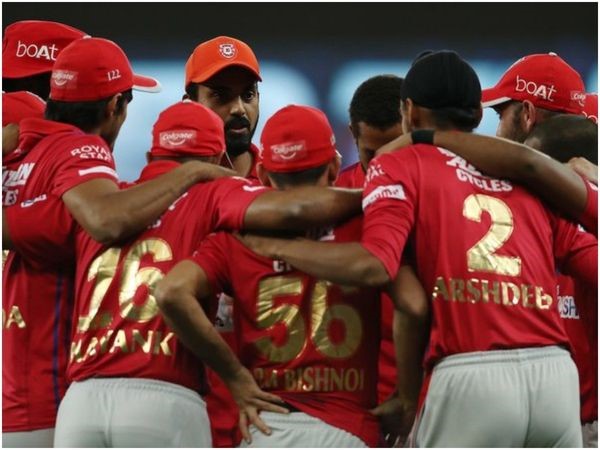
On Monday (October 26), the resurgent KL Rahul-led Kings XI Punjab (KXIP) locked horns with inconsistent Eoin Morgan-led Kolkata Knight Riders (KKR) in match 46 of the ongoing IPL 2020 edition in Sharjah.
-
With both teams in desperate need of a win as the playoff battle intensifies, it was another emphatic performance from KXIP as they romped past the two-time winners to win by 8 wickets.
Opting to bowl first in Sharjah, Rahul & Co. were rewarded soon as the likes of Nitish Rana, Dinesh Karthik and Rahul Tripathy perished quickly.
-
While Rana got out off Glenn Maxwell in the first over itself, Tripathy and Karthik were troubled by Mohammed Shami’s seam and movement with the new ball.
-
Being reduced to 10 for 3 in no time, KKR were dependent on their captain Eoin Morgan and youngster Shubman Gill.
-
Gill and Morgan did take some time but started the counterattack effortlessly. While Gill was brave enough to take on Shami, Morgan also accelerated to keep the scoreboard ticking. Soon, KKR were progressing at a good run-rate, near 10, but Morgan’s fall changed the complexion of the game.
-
Ravi Bishnoi — who has accounted for some key wickets in this season so far — removed the KKR skipper for a 25-ball 40 as Gill soon ran out of partners.
-
Chris Jordan pushed KKR on the back foot with his twin strikes as Gill’s 57 and a late flourish from Lockie Ferguson took KKR to 149-9 in 20 overs.
-
In reply, KXIP started on a positive note. India’s newly-appointed limited-overs vice-captain KL Rahul was on song whereas he got good company from Mandeep Singh.
-
Against the run of play, Varun Chakvarathy — who got a maiden India call-up for Australia T20Is — removed in-form opener Rahul for 28.
-
Nonetheless, KXIP didn’t make the same mistakes which they had made in their earlier face-off with KKR. Chris Gayle came in at No. 3 and switched gears effortlessly, slamming Sunil Narine and Chakravarthy with ease.
-
Mandeep, on the other hand, continued to find gaps as Punjab moved ahead in the run-chase without dropping much sweat.
-
Despite losing Gayle for a 28-ball 51, KXIP went ahead by 8 wickets to take the fourth spot with five wins on the trot.
-
Meanwhile, KKR are now out of the top four and will have to play really well, and also depend on net run-rate, to progress ahead in the ongoing competition.
KEY HIGHLIGHTS
-
The national capital recorded 54 Covid-19 deaths on Monday, the highest in over three months, while the infection count rose to 3.59 lakh, according to Delhi government data.
-
The case positivity rate stood at 8.23 per cent, a slight improvement from 8.43 the previous day. The cumulative positivity rate was 8.17 per cent.
-
Authorities recorded 2,832 Covid-19 cases on Monday. The number of new cases was 4,136 on Sunday, 4,116 on Saturday and 4,086 on Friday.
-
According to the Delhi government’s health bulletin, 54 fatalities, the highest in around 100 days, took the number of deaths to 6,312.
-
The last time the city reported such a high number of deaths was on July 16 (58).
KEY STORY
-
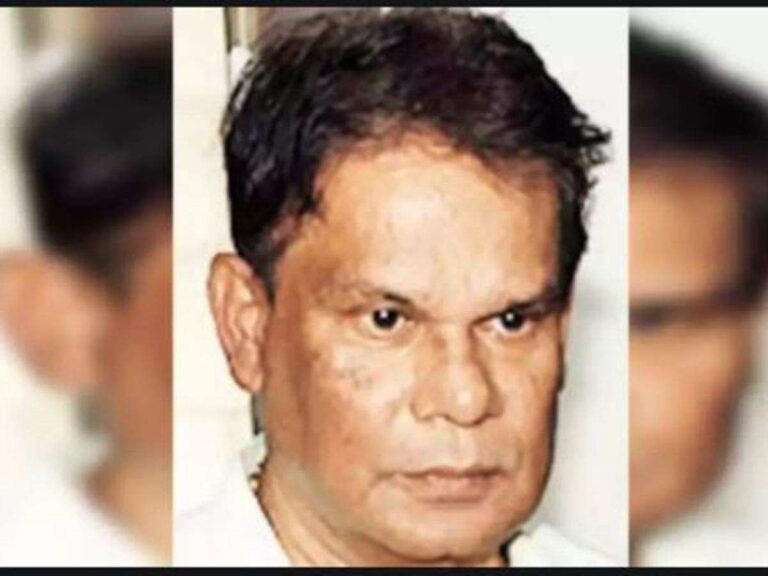
Ray was then a minister of State in the Atal Bihari Vajpayee government in 1999.The court also awarded 3-year jail term to two former officials of the Ministry of Coal.
-
The case pertains to the alleged irregularities in allocation of Brahmadiha coal block in Giridh in Jharkhand to Castron Technologies Limited in 1999.
-
A founder member of BJD, 64-year-old Ray became a Union minister when BJD was an NDA ally. He was a Rajya Sabha member then.
-
The BJD expelled him from the party in 2002 after he defied party’s dictate and re-contested for a second term in the upper house as independent. He had managed to win.
-
The hotelier-politician was elected to the state assembly thrice, as Janata Dal candidate in 1985 and 1990 and as BJP nominee in 2014.
-
Ray had joined BJP in 2009 but resigned from the party in 2018, speculated as a reaction to charges being framed against him the central probe agency.
-
A close aide of Biju Patnaik, he was a minister in Biju’s cabinet in Odisha from 1990-1995. Currently, he is not active in any party politics.
-
Castron Technologies Ltd (CTL) had applied to the coal ministry for allotment of Brahmadiha coal block in May 1998 for extracting coal and use for washery and power generation.
-
The Coal India Limited (CIL) gave an adverse opinion against the allocation in August 1998.
-
The CIL told the coal ministry that mining in the abandoned Brahmadiha area filled with water would pose a threat to nearby other coal mining areas of Central Coal Fields where underground mining were being done.
CONCLUSION
-
The file was then sent to Ray’s office on April 23, 1999. The CTL made a representation to Ray for speedy consideration of their application on May 12, 1999.
-
A day later on May 13, Ray sent the file to then coal ministry officials with an endorsement to re-examine it.
-
The officials gave their nod to the file after which the 14th screening committee recommended the allocation. After that Ray gave his final approval.
-
The government allotted the block to CTL on September 1, 1999. Following Supreme Court direction on alleged irregularities in coal block allocations, CBI registered an FIR against Ray in September 2012. Charges were framed against Ray in April 2017.
KEY STORY
-
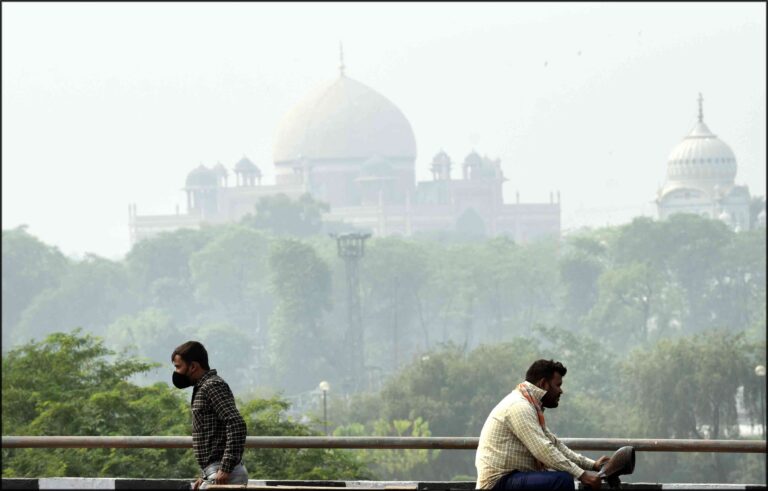
NEW DELHI: A layer of toxic haze lingered over the national capital on Monday as the city recorded its air quality in the ‘very poor’ category for the fourth consecutive day.
-
A central government air quality monitoring agency said the air quality was likely to remain ‘very poor’ till October 31.
-
The city recorded a 24-hour average air quality index (AQI) of 353 on Monday. It was 349 on Sunday, 345 on Saturday and 366 on Friday.
-
Most of the air quality monitoring stations in the city recorded the air quality in the ‘very poor’ category, while pollution levels rose to ‘severe’ levels at Vivek Vihar (AQI 414), Wazirpur (404) and Anand Vihar (418).
-
An AQI between 0 and 50 is considered ‘good’, 51 and 100 ‘satisfactory’, 101 and 200 ‘moderate’, 201 and 300 ‘poor’, 301 and 400 ‘very poor’, and 401 and 500 ‘severe’.
-
According to the Ministry of Earth Sciences’ air quality monitor, SAFAR, the wind direction and wind speed were favourable for the transport of pollutants from the farm fires in Punjab, Haryana and neighbouring regions.
-
The share of stubble burning in Delhi’s PM2.5 concentration was 16 per cent on Monday. It was 19 per cent on Sunday and nine per cent on Saturday.
-
NASA’s satellite imagery also showed a very dense cluster of fires in Punjab, Haryana and nearby regions.SAFAR said the farm fire count was 1,275 on Sunday.
-
According to Punjab Pollution Control Board, the state has recorded 14,461 incidents of stubble burning between September 21 and October 25 as compared to 9,796 during the corresponding period last year.
-
Haryana has recorded around 4,284 incidents of stubble burning this season so far.
-
The central government’s Air Quality Early Warning System for Delhi said the predominant surface wind direction is northwesterly with wind speed up to 12 kmph, favourable for transport of pollutants from farm fires.
-
A large number of farm fires were observed over Punjab, Haryana and Uttar Pradesh, which is likely to impact Delhi-NCR’s air quality, it said.
-
“The very poor air quality is likely to persist till October 31,” it said.The air quality warning system said the ventilation index – a product of mixing depth and average wind speed – was around 12,500 meter square per second on Monday – favourable for dispersion of pollutants.
-
Mixing depth is the vertical height in which pollutants are suspended in the air. It reduces on cold days with calm wind speed.
-
Ventilation index lower than 6,000 sqm/second, with average wind speed less than 10 kmph, is unfavourable for dispersal of pollutants.
-
Earlier in the day, Delhi environment minister Gopal Rai said air pollution was not a problem of the Aam Aadmi Party alone and everyone, irrespective of their party affiliations, should join efforts to tackle it.
-
According to an analysis by the council on energy, environment and water, a Delhi-based think tank, transportation contributes the most – 18 to 39 per cent – to Delhi’s air pollution.
-
Road dust is the second largest source of air pollution in the city (18 to 38 per cent), followed by industries (2 to 29 per cent), thermal power plants (3 to 11 per cent) and construction (8 per cent).

KEY STORY
-
To the satisfaction of those who have been advocating for sustainable transport in Bengaluru, the union government has asked for the dedicated suburban rail connection between the city to the airport to be completed ready within three years.
-
The Railway Board and Ministry of Railways has issued a sanction letter to the K-RIDE (Karnataka Rail Infrastructure Development Company, implementing rail department) and state Chief Secretary to this effect earlier this month.
-
This means that if all goes according to plan, as per the original timeline of the project, one can hop on a train from the city to the airport by end of October 2023, Amit Garg, Managing Director of K-RIDE, confirmed . Notably, the Bengaluru City (Majestic/KSR)-Devanahalli (Airport) line is connected with the metro at Yeshwantpur and Majestic.
-
Sources said that the work would not be delayed much given there is very less land to be acquired for the project.
-
Currently the airport can be reached only through the existing road networks and BMTC (Bangalore Metropolitan Transport Corporation) being the only mode of public transport for people, other than taxis.
-
Once this suburban rail corridor is ready, it will be the cheapest and the fastest mode of transport to the airport, especially during peak traffic hours. This corridor is also touted to free up Bengaluru’s escalating vehicular traffic.
-
The three year deadline is significant as many activists were fearing that vested interests would want to delay work on this corridor.
-
Rajkumar Dugar, convenor of Citizens for Citizens (C4C), explained, “Out of all the four corridors, the one from City to Devanahalli (including Airport) must be taken up on a war-footing because it is the most-needed corridor and will have a significant impact on Bengaluru’s traffic congestion.
-
This corridor has the least private land acquisition, which obviously means it can be completed faster.”
He added, “The peak hour demand on this corridor will be the highest of the four corridors, mainly because footfalls at airport are set to double in a year when Terminal 2 becomes functional.”
-
He argued that even if metro to Airport work starts now, it will take at least six years to complete the 60 km from Silk Board Junction to K R Puram to Hebbal to Airport Terminal. “Bengaluru cannot afford to wait so long,” he said.
CONCLUSION
-
The rest of the three corridors of the dedicated suburban rail project namely a) Byappanahalli-Yeshwantpur- Chikkabanavara b)Kengeri-Cantonment-Whitefield c) Heelalige-Byappanahalli- Rajanukunte should be made ready within six years, the same sanction order said.
-
It may be recalled that the union government earlier in October did not officially announce the approval of the much delayed suburban rail project, due to the model code of conduct put in place due to the November 4 byepolls.
-
A rail connection using the existing rail infrastructure of South Western Railway has been recently made ready as a stop-gap measure by the Kempegowda International Airport authorities by setting up a halt station.
-
The station which is 5 km away from the airport terminal will be serviced by shuttle buses. This rail connection will primarily benefit the hundreds of staff working in the airport round the clock. While the station is ready, train operations from the city to the airport halt station did not start operating awaiting a nod from the Railway Board.
1...759760761...882Page 760 of 882