
KEY STORY
-
Flipkart is seeking students who can work in its supply and logistics chain as interns for 45-days as the company ramps up its operations for the upcoming festive season sale.
-
This is a paid internship opportunity from Flipkart with interns being paid around Rs 500 per day, though the remuneration will be based on the local state and labour laws and can be as high as Rs 600 per day. The offer is part of Flipkart’s Launchpad programme.

-
“Students from tier-II cities and beyond will get an opportunity to work across key supply chain functions at Flipkart’s facilities across India,” Flipkart said in a statement. “Launchpad will help students gain critical skills in supply chain management and create an ecosystem of trained professionals for the e-commerce industry.”
-
The programme will also help Flipkart manage its supply logistics chain effectively during the festive season sale when it is holding Flipkart Big Billion Days sale.
-
Flipkart says that it is working with “educational institutes across 21 locations including Binola (Haryana), Bhiwandi (Maharashtra), Uluberia and Dankuni (West Bengal) and Malur (Karnataka), Medchal (Telangana) and many more to identify meritorious students and engage the selected students at its fulfilment centres.”
-
The company said that apart from money, the interns will also get a chance to learn new skills. “Upon joining, students will be trained in various aspects of supply chain management while following strict practices that prioritise their health and safety,” said the company.
-
Talking of the programme, Amitesh Jha, senior vice-president, Flipkart, said, “We introduced Launchpad internship program last year to offer students hands-on experience of working in a state-of-the-art modern supply chain and inculcate necessary skills to succeed in this industry We are confident of providing an engaging and immersive working experience to our interns during the upcoming festive season, which will help generate more interest towards the supply chain.”
-
Last year the internship program saw the participation of over 2,000 students during The Big Billion Days.

KEY STORY
New Delhi: AIMIM president Asaduddin Owaisi on Saturday lashed out at RSS chief Mohan Bhagwat and said that your ideology wants to make Muslims second class citizens in the country.
He slammed Bhagwat after the RSS Chief remarked that Indian Muslims are the most content in the world.
In a series of tweets, Owaisi asked Bhagwat that what is the measure of Muslim’s happiness while criticizing him for his statement and emphasized that there’s not a competing among Muslims in different parts of the world to be the happiest. However, Indian Muslims just want their fundamental rights.
Tweeting from his verified account he said,
Most content Muslims are only in India: RSS chief
While asserting that people from all faiths have stood together whenever it has been about the essence of India, the RSS chief on Friday remarked that “Most content Muslims are only in India.” He also said any kind of bigotry and separatism are spread only by those whose self-interest gets affected.

This year’s World Mental Health Day, on 10 October, comes at a time when our daily lives have changed considerably as a result of the COVID-19 pandemic.
The past months have brought many challenges: for health-care workers, providing care in difficult circumstances, going to work fearful of bringing COVID-19 home with them; for students, adapting to taking classes from home, with little contact with teachers and friends, and anxious about their futures; for workers whose livelihoods are threatened; for the vast number of people caught in poverty or in fragile humanitarian settings with extremely limited protection from COVID-19; and for people with mental health conditions, many experiencing even greater social isolation than before. And this is to say nothing of managing the grief of losing a loved one, sometimes without being able to say goodbye.
Here are the 9 Tips for how to look after your Mental Health
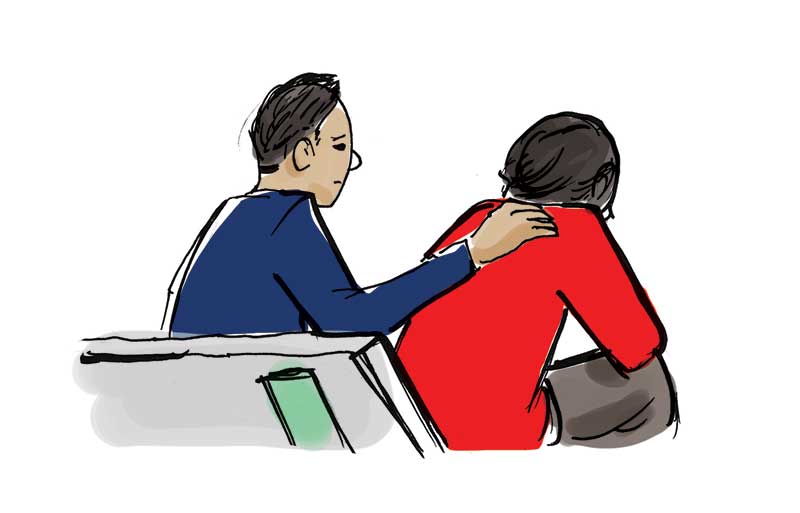
1. Talk about your feelings
-
Talking about your feelings can help you stay in good mental health and deal with times when you feel troubled.
-
Talking about your feelings isn’t a sign of weakness. It’s part of taking charge of your wellbeing and doing what you can to stay healthy.
-
Talking can be a way to cope with a problem you’ve been carrying around in your head for a while. Just being listened to can help you feel supported and less alone. And it works both ways. If you open up, it might encourage others to do the same.
-
It’s not always easy to describe how you’re feeling. If you can’t think of one word, use lots. What does it feel like inside your head? What does it make you feel like doing?
-
You don’t need to sit your loved ones down for a big conversation about your wellbeing. Many people feel more comfortable when these conversations develop naturally – maybe when you’re doing something together.
-
If it feels awkward at first, give it time. Make talking about your feelings something that you do.
2. Keep active

-
Experts believe exercise releases chemicals in your brain that make you feel good. Regular exercise can boost your self-esteem and help you concentrate, sleep and feel better.
-
Exercise also keeps the brain and your other vital organs healthy.
-
Exercising doesn’t just mean doing sport or going to the gym. Walks in the park, gardening or housework can also keep you active.
-
Experts say most people should do about 30 minutes’ exercise at least five days a week.
-
Try to make physical activity that you enjoy a part of your day.
3. Eat well

-
There are strong links between what we eat and how we feel, for example, caffeine and sugar can have an immediate effect.
-
But food can also have a long-lasting effect on your mental health. Your brain needs a mix of nutrients to stay healthy and function well, just like the other organs in your body.
-
A diet that’s good for your physical health is also good for your mental health.
A healthy balanced diet includes:
-
lots of different types of fruit and vegetables
-
wholegrain cereals or bread
-
nuts and seeds
-
dairy products
-
oily fish
-
plenty of water.
-
Eat at least three meals each day and drink plenty of water. Try to limit how many high-caffeine or sugary drinks you have, and avoid too much alcohol.
4. Keep in touch

-
Strong family ties and supportive friends can help you deal with the stresses of life. Friends and family can make you feel included and cared for.
-
They can offer different views from whatever’s going on inside your own head. They can help keep you active, keep you grounded and help you solve practical problems.
-
There’s nothing better than catching up with someone face-to-face. But that’s not always possible. Give them a call, drop them a note or chat to them online instead. Keep the lines of communication open. It’s good for you!
-
If you’re feeling out of touch with some people, look back at our section on talking about your feelings and get started!
-
It’s worth working at relationships that make you feel loved or valued. But if you think being around someone is damaging your mental health, it may be best to take a break from them or call it a day completely. It’s possible to end a relationship in a way that feels ok for both of you.
It can be hard to cope when someone close to you dies or you lose them another way. Counselling for bereavement or loss can help you explore your feelings.
5. Ask for help

-
None of us are superhuman. We all sometimes get tired or overwhelmed by how we feel or when things go wrong. If things are getting too much for you and you feel you can’t cope, ask for help.
-
Your family or friends may be able to offer practical help or a listening ear. Local services are there to help you.
For example, you could:
-
join a support group to help you make changes to your life
-
find a counsellor to help you deal with your feelings or make a fresh start
-
call the council about noise nuisance
-
visit a Citizens Advice Bureau if you want advice on debt.
-
Your GP may be able to refer you to a counsellor. You should consider getting help from your GP if difficult feelings are:
-
stopping you getting on with life
-
having a big impact on the people you live or work with
-
affecting your mood over several weeks.
-
Over a third of visits to GPs are about mental health. Your GP may suggest ways you or your family can help you. Or they may refer you to a specialist or another part of the health service.
6. Take a break

-
A change of scene or a change of pace is good for your mental health. It could be a five-minute pause from cleaning your kitchen, a half-hour lunch break at work or a weekend exploring somewhere new.
-
A few minutes can be enough to de-stress you. Give yourself some ‘me time’.
-
Taking a break may mean being very active. It may mean not doing very much at all.
-
Take a deep breath… and relax. Try yoga or meditation, or just putting your feet up.
-
Listen to your body. If you’re really tired, give yourself time to sleep. Without good sleep, our mental health suffers and our concentration goes downhill. Sometimes the world can wait.
7. Do something you’re good at

-
What do you love doing? What activities can you lose yourself in? What did you love doing in the past?
-
Enjoying yourself helps beat stress. Doing an activity you enjoy probably means you’re good at it and achieving something boosts your self-esteem.
-
Concentrating on a hobby like gardening or the crossword can help you forget your worries for a while and change your mood.
-
It can be good to have an interest where you’re not seen as someone’s mum or dad, partner or employee. You’re just you.
-
An hour of sketching lets you express yourself creatively. A morning on the football pitch gets you active and gives you the chance to meet new people.
8. Accept who you are

-
Some of us make people laugh, some are good at maths, others cook fantastic meals. Some of us share our lifestyle with the people who live close to us, others live very differently.
-
We’re all different. It’s much healthier to accept that you’re unique than to wish you were more like someone else.
-
Feeling good about yourself boosts your confidence to learn new skills, visit new places and make new friends.
-
Good self-esteem helps you cope when life takes a difficult turn.
-
Be proud of who you are. Recognise and accept what you are not good at, but focus on what you can do well.
-
Work out if there’s anything about yourself that you still want to change. Are your expectations realistic? If they are, work towards the change in small steps.
9. Care for others

-
Caring for others is often an important part of keeping up relationships with people close to you. It can even bring you closer together.
-
Why not share your skills more widely by volunteering for a local charity? Helping out can make us feel needed and valued and that boosts our self-esteem.
-
It also helps us see the world from another angle. That can help to put our own problems in perspective.
-
Caring for a pet can improve your wellbeing too. The bond between you and your pet can be as strong as between people. Looking after a pet can bring structure to your day and act as a link to other people. Lots of people make friends by chatting to fellow dog walkers.
KEY STORY
-
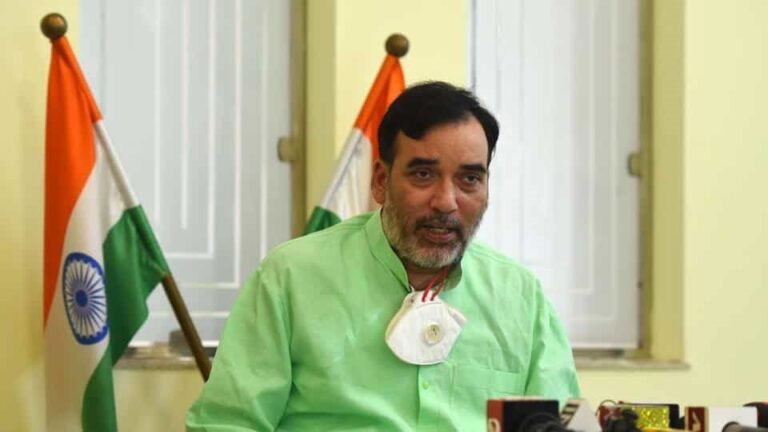
The AAP government will soon issue directions allowing the sale and purchase of only “green” firecrackers in the national capital, Environment Minister Gopal Rai has said.
-
In 2018, the Supreme Court had banned the use of polluting firecrackers and allowed the sale of “green” firecrackers in a bid to control air pollution.
“Guidelines are being prepared for the sale and purchase of only green firecrackers in Delhi. Soon, we will issue the directions to departments concerned,” Rai told PTI.

-
The ‘green crackers’ are not as polluting as the conventional types of firecrackers and they contain at least 30 percent less particulate matters such as Sulphur Dioxide and Nitrogen Oxide.
-
The CSIR-National Environmental Engineering Research Institute was tasked with the job of developing ‘green crackers’. But only a few varieties were available in the market last year due to licensing requirements.
-
The minister also said the exercise for reconstitution of the Ridge Management Board has been initiated. The RMB is a high-powered body formed on the directions of the Supreme Court in 1995 to protect the ridge — the green lungs of the city, spread across 7,784 hectares.
-
Its clearance is required before taking up any development activity in the ridge area. The minister recently said the AAP government was taking the lead in the fight against air pollution in Delhi-NCR, but neighboring states were still “not serious” about the issue despite it becoming “more dangerous” due to the Covid-19 pandemic.
-
He said the Delhi government wants cooperation not confrontation with other states on the issue of air pollution.
“The land has been divided into states but the sky is one.” Rai also questioned why the Centre was not taking any action against the 11 coal-fired power plants within 300 kilometers of Delhi, which have missed two deadlines to meet new emission norms.
CONCLUSION
“We had two thermal power plants and we shut them. Why have these 11 power plants not been able to reduce emissions? What’s the reason? Why action is not being taken against the brick kilns operating in nearby areas using outdated technologies,” he said.
-
There are more than 1,640 such brick kilns in Uttar Pradesh,161 in Haryana and 164 Rajasthan within 300 kilometers of Delhi.

KEY STORY
-
New Delhi: In a shocking incident reported from the national capital, an 18-year-old tuition teacher was beaten to death by a group of people over his alleged relationship with a girl from a different community.
-
The incident took place in Adarsh Nagar area of northwest Delhi on Wednesday night. The girl’s family was reportedly against the relationship between the two. The victim has been identified as Rahul Rajput.
-
According to a report in Times of India, the girl’s relatives met the boy and thrashed him with sticks and rods. After the thrashing, the boy fell unconscious. Later, he was taken to the hospital where he succumbed to his injuries during the treatment. The hospital authorities informed police about the youth’s death.
-
After the incident, additional forces were deployed to the area to maintain law and order situation since the youth and the girl belonged to different communities.
-
Cops said they have arrested five persons including the girl’s brother Mohammad Raj, her relative Manwar Hussain and three other minors for the murder.
-
The victim was pursuing his studies from open schooling while giving English tuitions to children in the locality.

KEY STORY
-
A Judicial Magistrate First Class (JMFC) in Karnataka’s Tumakuru district on Friday directed the police to register a First Information Report or FIR against actor Kangana Ranaut.
-
This after the court was approached by an advocate named Ramesh Naik L who alleged that the authorities had failed to take action against the actor over her tweet against farmers.
-
Ramesh had taken objection to Kangana’s tweet on September 21 on farmers opposing the Farmers Bills (now Acts) from the Twitter account ‘@KanganaTeam’ on 21st September. “People who spread misinformation and rumours about CAA that caused riots are the same people who are now spreading misinformation about Farmers bill and causing terror in the nation, they are Terrorists. You very well know what I said but simply like to spread misinformation,” the tweet said.
-
Ramesh had contended that the same tweet amounts to provoking with the intentions to spark riots and had moved the petition under Section 156(3) of the CrPC or Code of Criminal Procedure which says that any Magistrate empowered under Section 190 may order an investigation by a police officer.
-
He had demanded that the magistrate order than an FIR be registered under Sections 153A (creating disharmony or feelings of enmity, hatred or ill-will between different by words), 504 (intentional insult with intent to provoke breach of the peace) and 108 (a person abets an offence) of the Indian Penal Code against the actor.
CONCLUSION
-
It may be recalled that many farmers and farmer groups across the country including in Karnataka had staunchly opposed the three laws — Farmer’s Produce Trade and Commerce (Promotion and Facilitation) Bill, 2020; the Farmers (Empowerment and Protection) Agreement of Price Assurance and Farm Services Bill, 2020l and the Essential Commodities (Amendment) Bill 2020.
-
Notably, the Shiromani Akali Dal (SAD), the BJP’s oldest ally had quit the National Democratic Alliance (NDA) over these controversial legislations after party MP Harsimrat Kaur Badal first quit as a minister from the union cabinet.
-
However, the government went ahead with these legislations despite the opposition and got it passed in the Rajya Sabha controversially through a voice vote when the government was seemingly short of numbers.

KEY STORY
-
University Grants Commission (UGC)recently released a notice on its official website stating that classes for all the affiliated colleges and universities is likely to resume for odd semesters from November 18.
-
UGC had also informed all the affiliated universities earlier that the classes for all the students for the academic session 2020-2021 will most likely start in November. The institutes will have to complete the admission process for this session by October 31.
-
It has been instructed by UGC that all universities must start their classes from November 1 if the admission process is complete by October 30.
-
If there is a delay in the admission process, colleges can start the classes from November 18. As per the notice, the universities have to conduct classes for six days in a week to make up for the academic loss due to the pandemic.
CONCLUSION
-
The universities will have the liberty to conduct blended mode of learning – online or offline classes, as per the convenience of the students and teachers. Universities will also have to refund the full fees in case of the cancellation of admission.
-
UGC has also instructed that the merit-based admissions in all affiliated colleges must be complete by October 31, so that there is no further loss of the academic year for the students as well as the faculty.

KEY STORY
-
In a major relief to passengers amid the festive season, Indian Railways has allowed booking and cancellation of tickets till 5 minutes before departure of the train.
-
The new rule will come into effect from tomorrow i.e October 10 onwards as the Indian Railways has decided to restore the pre-COVID system of preparing the second reservation chart half an hour before the departure time.
-
While the first reservation chart will be prepared 4 hours before the departure of the train, the second reservation chart will be prepared between 30 minutes to 5 minutes before departure of the train just like pre-COVID times.
-
Until the second reservation chart is prepared, passengers can book train tickets. Tickets can also be cancelled during this time, as per the provisions of the refund rules.
-
If seats become vacant owing to cancellation, they can be booked through PRS counters and online till the preparation of the second chart.
CONCLUSION
-
The new rule will be applicable for all special trains being run by Indian Railways, along with Tejas Express, which will start from October 17th.
STORY HIGHLIGHTS
-
New Delhi: Transferring funds will get easier from December onwards. RBI governor Shaktikanta Das on Friday said that the Real-time gross settlement (RTGS) system of fund transfer will be available round-the-clock from December.
-
RTGS can be defined as the continuous (real-time) settlement of funds individually on an order by order basis (without netting).
What is RTGS?
-
RTGS refers to a funds transfer system that allows for the instantaneous transfer of money and/or securities.
-
RGTS is the continuous process of settling payments on an individual order basis without netting debits with credits across the books of a central bank. Under RTGS, the minimum transfer amount is Rs 2 lakh.
-
‘Real Time’ means the processing of instructions at the time they are received rather than at some later time.’Gross Settlement’ means the settlement of funds transfer instructions occurs individually (on an instruction by instruction basis). Considering that the funds settlement takes place in the books of the Reserve Bank of India, the payments are final and irrevocable.
-
At present RTGS facility is available only during working hours of banks. Interbank transfer enables electronic transfer of funds.
-
There are two systems of Inter Bank Transfer – RTGS and National electronic funds transfer (NEFT), both maintained by Reserve Bank of India.
-
In RTGS system, the beneficiary bank branch receives the funds in real-time as soon as funds are transferred by the remitting Bank meaning the beneficiary Bank has to credit the beneficiary’s account within two hours of receiving the funds transfer message.
RTGS Limit:
-
The RTGS system is primarily meant for large value transactions. The minimum amount to be remitted through RTGS is Rs 2 lakh with no upper or maximum ceiling.
RTGS Charges:
-
In a bid to promote digital transactions in the country, the Reserve Bank stopped levying processing charges on transactions through NEFT and RTGS from July 2019.
-
The central bank had said that with effect from July 1, 2019, processing charges and time-varying charges levied on banks by RBI for outward transactions through the RTGS, as also the processing charges for transactions processed in NEFT will be waived off by RBI.
-
With a view to rationalize the service charges levied by banks for offering funds transfer through RTGS system, a broad framework of charges has been mandated by RBI
-
Inward transactions: Free, no charge to be levied.
-
Outward transactions: Rs 2 lakh to Rs 5 lakh – Not exceeding Rs 24.50 (exclusive of tax, if any), Above Rs 5 lakh – Not exceeding Rs 49.50 (exclusive of tax, if any)
CONCLUSION
-
The RTGS system is primarily meant for large value transactions. The minimum amount to be remitted through RTGS is Rs 2 lakh with no upper or maximum ceiling.
-
Banks may decide to charge a lower rate but cannot charge more than the rates prescribed by RBI.

KEY STORY
-
Delhi airport’s duty free store has started a ‘click and collect’ service that allows international passengers to book products online and collect them from the store on the day of their travel, an official statement said on Friday.
-
“Passengers wanting to avail this facility will first have to register themselves on DDFS website www.delhidutyfree.co.in. For online shopping of liquor, they will have to accept a disclaimer that they are above 25 year of age,” Delhi International Airport Limited (DIAL) statement said.
-
The duty free store at the Delhi airport is run by Delhi Duty-Free Services Pvt Ltd (DDFS), a joint venture of the DIAL, Aer Rianta International and GMR Airports Limited.
-
All you need to know about the ‘click and collect’ service:
1. Once the passenger is registered on the website, he/she can enter their travel and passport details. “After this, they can select their choice of product from liquors, tobaccos, make up and skin cares, perfumes, confectionary and other travel retail exclusives on DDFS website,” the DIAL stated.
-
2. The passengers can place their order well ahead of their scheduled travel by making online payment in advance, for which they will be issued a receipt.
3. They can then collect their product from DDFS store at Delhi Airport on the day of their travel, after showing the receipt.
1...772773774...882Page 773 of 882