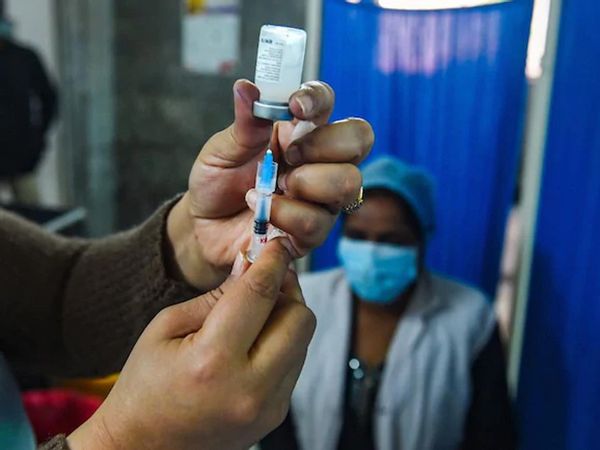
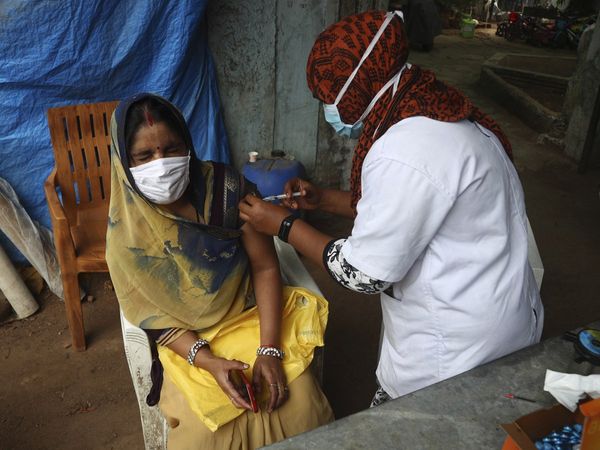
Covaxin Phase 3 Trial Analysis Conclude: Vaccine 77.8% Effective Against Covid, 65.2% Against Delta Variant

KEY STORY

  • Bharat Biotech has released the results from the phase 3 clinical trials of Covaxin after evaluation of 130 confirmed cases. Covaxin’s demonstrated an overall efficacy of 77.8% against symptomatic COVID-19 and 65.2% against the Delta Plus variant.
  • The vaccine also showed to be 93.4% effective against severe symptomatic Covid-19, the company claimed. “Efficacy analysis demonstrates Covaxin to be 93.4% effective against severe symptomatic COVID19. Efficacy data demonstrates 65.2% protection against the SARS-CoV-2, B.1.617.2 Delta variant,” Bharat Biotech said.
  • Further, the safety results showed no cases of anaphylaxis or vaccine-related deaths were reported among those who took Covaxin. The company said that the vaccine was well tolerated with minimal adverse events after immunisation.
  • “No cases of anaphylaxis or vaccine-related deaths were reported. Interpretation: BBV152 was immunogenic and highly efficacious against symptomatic and asymptomatic COVID 19 variant associated disease, particularly against severe disease in adults,” it said.

Earlier, the National Institute of Health (NIH) in the United States said that Covaxin generates antibodies that effectively neutralise both Alpha and Delta variants of coronavirus. National Institute of Health further asserted that the results from two studies of blood serum from people who had received COVAXIN suggest that the vaccine generates antibodies that effectively neutralize the B.1.1.7 (Alpha) and B.1.617 (Delta) variants of SARS-CoV-2.
Notably, Covaxin comprises a disabled form of SARS-CoV-2 that cannot replicate but still stimulates the immune system to make antibodies against the virus.

Karnataka: Vaccination Centre Denies Shots To Menstruating Women, Asks Them to Come After 5 Days

KEY STORY

  • Several menstruating women in the vaccinations centre of north Karnataka were denied Covid-19 shots on the pretext of post-covid-19 vaccination complications. If reports are to be believed, health workers in Raichur, Belagavi and Bidar districts told women to wait for their periods to end as taking a jab might lead to heavier bleeding and fatigue.
  • Speaking to Times of India, Activist Vidhya Patil asserted that some health workers asked menstruating women to come back for the jab after 5 days post the completion of their monthly cycle. However, Raichur deputy commissioner R Venkatesh Kumar asserted that women are being vaccinated in the district as the government has not issued any such direction.
  • Earlier, several women had raised concerns over taking the Covid-19 vaccine during periods after post claiming that women should not take the Covid-19 vaccine five days before and after their menstrual cycle was widely circulated on social media.
  • However, this rumour was quashed by the government stating that women can take Covid-19 vaccines during their periods without any worries.
  • Terming the post fake, the government’s fact-checking arm Press Information Bureau (PIB) tweeted, “Fake post circulating on social media claims that women should not take Covid19 Vaccine 5 days before and after their menstrual cycle. Don’t fall for rumours! All people above 18 should get vaccinated after May 1.

Rs 103 crore Covid relief package for Karnataka private school staff

KEY STORY

  • The Karnataka government has released Rs 103.47 crore under the Covid-19 special package for teaching and non-teaching staff of unaided private schools in the state.
  • This follows the recent decision by the department of primary and secondary education to provide a Rs 5,000 Covid-19 relief package for teaching and non-teaching staff working with unaided schools.

CONCLUSION

  • According to the order issued by the Education department, a total of 2.06 lakh teaching and non-teaching staff from 22,065 schools in the state are eligible to avail of the benefit.
  • Those who have registered in the Students Achievement Tracking System portal will be eligible to get the benefit and the amount will be directly credited into their bank accounts.

Karnataka education department looks to revive ‘Vidyagama’

KEY STORY

  • The Karnataka government is likely to resume the ‘Vidyagama’ programme with some fine-tuning. Under the revitalised programme, teachers will meet students in small batches, instead of resuming offline classes in a full-fledged manner.
  • Highly-placed sources in the Department of Primary and Secondary Education said they have arrived at two options and decide on one after receiving the report from a task force to be constituted to look into the possibility of reopening of offline classes.
  • “At the department level, we are preparing ourselves with two options. Conducting classes on the lines of ‘Vidyagama’ is one of them,” an official source said.
  • “We are bringing in some changes to the ‘Vidyagama’ programme and planning to implement in a more effective and safer way,” the official mentioned.
  • The department’s Plan B is the result of uncertainty over getting approval for resuming offline classes from the Health Department. “We are not sure if we will get clearance from the Health Department to resume classes in a full-fledged manner. Even if they permit, that will definitely be for upper grades. Considering all these aspects, we are planning to start ‘Vidyagama’ for primary level,” explained the official.

CONCLUSION

  • Meanwhile, the department has decided to vaccinate all teachers before going ahead with offline or ‘Vidyagama’ classes. “One of the main reasons for withdrawal of ‘Vidyagama’ programme last year was the reports of students and teachers contracting Covid-19 virus. This time, we do not want to give room for any such incidents this year,” the official added.
  • ‘Vidyagama’ has also become a necessity considering the lack of accessibility of gadgets to students. As per the recent survey conducted by the Department of State Educational Research and Training, 61% of students have access to one or the other gadget and 39% have no access to any gadget.

Team India make most out of their day off post quarantine under ‘head coach’ Rahul Dravid in Colombo – WATCH

KEY STORY

  • The BCCI has done the unthinkable as it is set to field two Indian teams parallelly when Shikhar Dhawan-led India will take on a depleted Sri Lanka for a limited-overs tour in Colombo, from July 13. While Virat Kohli & Co. remain put in the United Kingdom for the five Tests versus England, from August-September, the white-ball specialists will showcase their credentials versus the Lankan side.
  • Ahead of the white-ball fixtures in Colombo, the Rahul Dravid-coached Team India is out of quarantine and are enjoying their time in training sessions.
  • The star-studded Indian team was seen involved in a series of fun activities (including some bonding sessions, pool and football sessions at the volleyball court) under the guidance of the 48-year-old former Indian captain Dravid.
    Team India shared the video on Instagram and captioned the post, “Out of quarantine Fun activities 
    #TeamIndia made the most out of their day off post quarantine before they headed to the nets in Colombo #SLvIND”

In the video, head coach Dravid can be seen explaining the idea behind India’s training session in Colombo. He stated, “Just a little bit of fun. Guys getting together after being couped up in the room for 18 days. It is not easy so just nice to be out.”
  • Dhawan-led India left for the island nation last month, on June 28 (Monday) and will lock horns with Sri Lanka in three ODIs and as many T20Is. All the matches will be held at the R Premadasa Stadium, Colombo.
  • Despite being a second-stringed side, India have a good mix of youth and experienced campaigners such as Bhuvneshwar Kumar, Hardik Pandya, Suryakumar Yadav, Devdutt Padikkal, Prithvi Shaw, Chetan Sakariya, Yuzvendra Chahal, Krunal Pandya, etc.
Indian Squad: Shikhar Dhawan (Captain), Prithvi Shaw, Devdutt Padikkal, Ruturaj Gaikwad, Suryakumar Yadav, Manish Pandey, Hardik Pandya, Nitish Rana, Ishan Kishan (Wicketkeeper), Sanju Samson (Wicketkeeper), Yuzvendra Chahal, Rahul Chahar, K Gowtham, Krunal Pandya, Kuldeep Yadav, Varun Chakravarthy, Bhuvneshwar Kumar (Vice-captain), Deepak Chahar, Navdeep Saini, Chetan Sakariya
Net bowlers: Ishan Porel, Sandeep Warrier, Arshdeep Singh, Sai Kishore, Simarjeet Singh

Dry scalp vs dandruff: Understand the difference for better haircare, 5 home remedies that can help

KEY STORY

  • Hair adds to the aesthetics of a person’s appearance and the want for beautiful, shiny hair is universal. But with want comes the responsibility of caring for the hair which is often a difficult process because just like skin, the composition of hair is complex and requires a consistent and carefully structured haircare approach.
  • There are various problems associated with hair problems. Some common problems include lice, hair fall, greying of hair, dandruff, and dry scalp. Several factors contribute to the issues, while some can be treated at home with care, some may require dermatological attention.

    Dry scalp: What is it? – Symptoms, causes

    The lack of moisture or lubrication in the skin can lead to a dry scalp. This moisture deficiency causes the skin to get flakey and irritated. Common symptoms of a dry scalp include small, dry flakes, itchiness in the scalp, and dry skin on other body parts. The causes and risk factors of the dry scalp may include ageing, exposure to cool and dry air, and contact dermatitis.

    Dry scalp – Home remedies

    Follow these home remedies to get rid of a dry scalp:
    1. Applying aloe vera in form of getting or raw can help get rid of dry scalp. Do not forget to wash the aloe vera if you are applying it raw.
    2. Application of olive oil and baking soda mixture can help eliminate dry scalp. You can apply this paste by mixing equal parts of the above-mentioned ingredients and leaving it on for five minutes before washing the hair thoroughly with shampoo.
    3. Apply jojoba oil, an effective conditioner, by mixing a few drops of it in your shampoo for a healthy scalp.
    4. Utilize the conditioning and moisturizing properties of banana to get rid of a dry scalp by mashing a banana and applying it on your scalp after adding few drops of olive or coconut oil.
    5. Apple cider vinegar is a miraculous ingredient and has several health benefits. Applying a mixture of apple cider vinegar and water (mixed in 1:2 ratio) on the scalp and leaving it on for five minutes before

    Dandruff: What is it? – Symptoms, causes

    The shedding of dead, flakey skin cells by the scalp leads to dandruff. The frequency of this shed determines the intensity and severity of dandruff. Common symptoms of dandruff include large flakes, oily scalp, greasy hair, and itchiness of the scalp. The risk factors and causes that contribute to the development of dandruff may include oil secretion by the scalp, skin reactions, and fungal infection.

    Dandruff – Home remedies

    Follow these home remedies to get rid of dandruff:
    1. Apply tea tree oil mixed with carrier oil on the scalp. This can help get rid of dandruff and it also has anti-inflammatory and antimicrobial properties.
    2. It’s easy to find coconut oil or nariyal ka tel in almost every Indian household. You can massage your head with pure coconut oil for anti-dandruff effects.
    3. Stress can contribute to the development of stress by aggravating itching and dryness of the scalp. Try stress minimising methods for healthier hair.
    4. The deficiency of Omega 3 fatty acids can contribute to dandruff, therefore, include foods such as seafood, nuts, and chia seeds in your diet to fulfil your body’s omega-3 requirements.
    5. Consuming foods Irish in probiotics such as yoghurt, tempeh, buttermilk, and kimchi can help reduce the severity of dandruff.
Disclaimer: Tips and suggestions mentioned in the article are for general information purpose only and should not be construed as professional medical advice. Always consult your doctor or a dietician before starting any fitness programme or making any changes to your diet.

E-comm rules: Fight between Amazon, Flipkart vs Reliance, Tata to intensify

KEY STORY

  •  As ecommerce regulations are tightened, fight between foreign companies Amazon, Flipkart and Indian companies Reliance, Tata Group is set to intensify.
  • Foreign brokerage, Jefferies said in a note, “The proposed rules now target indirect ownership in vendors, own label, flash sales. Fight between foreign cos (Amazon, Flipkart) & Indian cos (Reliance, Tata Grp) is set to intensify”.
  • India’s e-commerce industry faces complex regulations, the note said. While B2B & single brand retail have a stable framework, FDI in inventory-led e-comm. is prohibited. 100% FDI is allowed in marketplace but regulations are evolving – 2018 rules pushed Amazon to reduce stake in a key seller.
  • In July-2020, new regulations were enacted with an intent to protect customer interest. However, in 2021, there have been amendments to those rules, still at a draft stage and open to public comments until 6-July — these are applicable to both Indian and foreign backed platforms, but seem more relevant for Amazon & Flipkart, based on our reading, Jefferies said.
  • Increase in the scope of related parties to now include common chain of directors, more than 10% common ultimate shareholders, 5% shareholding in related entities etc.
  • Related party, as defined above, cannot become a seller on the platform and also cannot do anything that e-commerce entity itself cannot do.
  • Marketplace cannot sell goods or services to any vendor on its platform. “Marketplace name or brand cannot be used for the product – ‘Amazon’ Alexa for example, in our view; Marketplace subject to fallback when vendor fails to perform; flash sale favouring certain vendors only is not allowed etc”, the note said.
  • Amazon started in 2013 as a marketplace but faced issues on FDI. In 2014, Amazon entered into a partnership with Catamaran Mgmt. Services (promoted by Infosys co-founder Narayana Murthy), which owned 51% while Amazon owned 49% in Prione Business which owned Cloudtail India, the key vendor on Amazon India platform. However, the 2018 regulation pushed Amazon to reduce its stake to 24% with Catamaran now at 74%.

CONCLUSION

  • FDI in any form of retail was banned in India until 1996. However, 100% FDI was allowed in wholesale cash & carry in 1997 which was also extended to B2B e-commerce in 2000.
  • In 2006, 51% FDI was allowed in single-brand retail which was made 100% in 2012 with some restrictions (30% local sourcing etc.).
  • Single brand retailers have been also been allowed to run B2C e-commerce from 2015. In 2013, FDI was allowed in multi-brand retail (with some restrictions). However, the final approval was left to individual states and today, around 11 states and 1 Union Territory allow FDI, while rest do not. E-commerce models.
  • In 2016, the e-commerce policy allowed 100% FDI in marketplace but banned the Inventory-led model. Over the years, the marketplace regulations have evolved covering aspects like control over inventory and direct/ indirect investments in vendors. 2018 regulations.
  • The industry managed to create alternate structures in order to adhere to the regulations until 2017. This prompted lawmakers in 2018 to tighten their grip by restricting: a) control over inventory which covered cases where a vendor buys more than 25% of its products directly or indirectly (group firms of marketplace); b) direct or indirect ownership in vendor; c) level playing field & no preference to any vendor; d) no exclusive partnerships with vendors.

Aamir Khan And Kiran Rao Announce Divorce After 15 Years of Marriage

KEY STORY

  • Bollywood star Aamir Khan has announced a divorce with wife Kiran Rao. The couple recently celebrated their 15th wedding anniversary.
  • Aamir Khan and Kiran Rao issued a joint statement announcing the news and mentioned that they will co-parent the son Azad Rao Khan. “In these 15 beautiful years together we have shared a lifetime of experiences, joy and laughter, and our relationship has only grown in trust, respect and love. Now we would like to begin a new chapter in our lives – no longer as husband and wife, but as co-parents and family for each other,” the statement read.
  • Aamir and Kiran also mentioned that they had decided to separate sometime back and now are comfortable to formally announce the same. “We began a planned separation some time ago, and now feel comfortable to formalise this arrangement, of living separately yet sharing our lives the way an extended family does.
  • We remain devoted parents to our son Azad, who we will nurture and raise together. We will also continue to work as collaborators on films, Paani Foundation, and other projects that we feel passionate about,” the statement further read.

CONCLUSION

  • “A big thank you to our families and friends for their constant support and understanding about this evolution in our relationship, and without whom we would not have been so secure in taking this leap. We request our well-wishers for good wishes and blessings, and hope that – like us – you will see this divorce not as an end, but as the start of a new journey,” the joint statement concluded.
  • Aamir Khan married film director Kiran Rao in 2005. He was previously married to Reena Dutta for fifteen years. However, they decided to part ways in 2002.

Pregnant women eligible for COVID-19 vaccine, can register on CoWIN or walk-in: Health Ministry

KEY STORY

  •  In a significant development, the Union ministry of health and family welfare on Friday announced that pregnant women can get themself vaccinated against COVID-19 with the four approved vaccines in India.
  • The health ministry stated that pregnant women, who want to get themselves vaccinated against coronavirus, may now register on CoWIN or walk-in to the nearest COVID vaccination centre to get themselves vaccinated.
  • “Based on recommendations from National Technical Advisory Group on Immunization (NTAGI), the MoHFW today approved the vaccination of pregnant women against COVID-19,” the statement of the health ministry read.
  • Operational guideline for vaccinating pregnant women, counselling kit for medical officers and frontline workers and IEC material for general public have been shared with states/UTs for its implementation, the government said.
  • The government gave the green signal to the vaccination of pregnant women following the recommendations of the National Technical Advisory Group on Immunization (NTAGI).
  • “Studies have shown that COVID-19 infection during pregnancy may result in rapid deterioration of health of pregnant women and they are at an increased risk of severe diseases and it might affect fetus too. The matter has been examined by domain knowledge experts based on the evidence that indicate that pregnant women are at an increased risk for severe illness from COVID-19 compared to non-pregnant women in case they get infected.
  • Further, pregnant women with COVID-19 infection are at an increased risk for preterm birth and other adverse pregnancy outcomes including higher chances of neonatal morbidity. Additionally, the experts have also highlighted pre-existing co-morbidities, advanced maternal age, and high body mass Index as factors for severe COVID-19 in pregnancy,” the health ministry said.
  • The Union Health Ministry has already prepared a factsheet to guide frontline workers and vaccinators on counselling pregnant women in regards to COVID vaccination.

CONCLUSION

  • Symptomatic pregnant women appear to be at an increased risk of severe disease and death. In case of severe disease, like all other patients, pregnant women shall also need hospitalisation. Pregnant women with underlying medical conditions like high blood pressure, obesity, age over 35 years are at a higher risk of severe illness due to COVID-19, a fact sheet released by the ministry said.
  • On June 29, Niti Aayog member Dr VK Paul had announced that Covishield, Covaxin, Sputnik V and Moderna vaccines are safe for pregnant women and lactating mothers.
  • While addressing the press briefing of the health ministry, Dr Paul had said that the government would be announcing the COVID vaccination guidelines for pregnant women soon.

Covid relief fund: Karnataka to modify guidelines for registration

KEY STORY

  • The Labour Department on Thursday informed the Karnataka High Court that it will modify the guidelines to register domestic workers for availing the one-time Covid-19 relief fund of Rs 2,000.
  • The Secretary of the Labour Department, who appeared before the court through video conferencing, submitted that stringent action has been taken against all involved in collecting ‘commission fee’ from unorganised sector workers to register the details online.
  • The Karnataka State Legal Services Authority had filed a report on these instances of collection of ‘commission fee’, ranging between Rs 150 and Rs 250, before the court in a PIL on the issue of domestic workers.
  • A division bench headed by Chief Justice Abhay Shreeniwas Oka was hearing an application moved in the PIL seeking directions to ensure that the compensation is paid to all those domestic workers who are registered or whose applications for registration are pending.
  • The Secretary of the Labour Department, who appeared before the court through video conferencing, submitted that stringent action has been taken against all involved in collecting ‘commission fee’ from unorganised sector workers to register the details online.
  • The Karnataka State Legal Services Authority had filed a report on these instances of collection of ‘commission fee’, ranging between Rs 150 and Rs 250, before the court in a PIL on the issue of domestic workers.

CONCLUSION

  • A division bench headed by Chief Justice Abhay Shreeniwas Oka was hearing an application moved in the PIL seeking directions to ensure that the compensation is paid to all those domestic workers who are registered or whose applications for registration are pending.
  • During the hearing, the bench pointed out that with required documents listed by the Labour Department it is too cumbersome a process for domestic workers to register the details.
  • The secretary submitted that the guidelines /procedure will be modified and it will be ensured that those who are entitled to benefit will get the same if they have an Aadhar card, a certificate signed by the employer and particulars of their bank account.