
KEY STORY
-
Amid speculations of leadership change in Karnataka, Bharatiya Janata Party (BJP) MLC AH Vishwanath on Thursday attacked Chief Minister BS Yediyurappa saying that he is not in a condition to run the state government as CM.
-
He also urged the party’s national general secretary in-charge, Arun Singh, to replace CM Yediyurappa as the public opinion about the Karnataka government and the saffron party is negative.
-
“Public opinion about government and party is negative. It’s not good. Mr Yediyurappa’s age, health; he’s not in spirit to run govt as CM. Under his guidance, accommodate someone else in that place. Family intervention in administration is becoming worst, I spoke to Arun Singh about this,” ANI quoted Vishwanath as saying.
-
He also claimed that Yediyurappa’s son BY Vijayendra and his friends were collecting money and sending it to Delhi. “BY Vijayendra and his friends were saying that we collecting money and it goes to Delhi. Bad propaganda is also here. I told the General Secy (Arun Singh) too. In Irrigation Dept, tender of Rs 20,000 cr is set without clearance or resolution of Irrigation Board,” the BJP leader said.
Karnataka min downplays Vishwanath’s remarks
-
Meanwhile, Karnataka Minister B Sriramulu downplayed the remarks made by Vishwanath against CM Yediyurappa and alleged that Congress is doing political conspiracy to destabilise the BJP government.
-
“We had discussions with Arun Singh. Congress is doing political conspiracy, Siddaramaiah wants to be the CM. But he doesn’t know there’s ‘Kattappa’ behind him. Arun Singh said our CM is Yediyurappa. What AH Vishwanath said, he said in his personal capacity,” said B Sriramulu.
-
This comes amid several BJP MLAs and ministers demanded that Yediyurappa should step down as chief minister. State Tourism Minister CP Yogeeshwara in a statement had said that instead of the Chief Minister, his son has been ruling and controlling the Ministries of Karnataka.

KEY STORY
-
WhatsApp is working on a number of features for both Android and iOS. The company recently confirmed that it will be expanding the Disappearing messages feature and will also add a ‘View Once’ option.
-
It is also expected to add the calling feature to the Web version of WhatsApp. The company’s head Will Cathcart just recently revealed that the multi-device support will be arriving on the platform soon. Read on to know more about the upcoming WhatsApp features.
Disappearing mode
-
WhatsApp already offers a Disappearing Messages feature, and it is now planning to expand this ability. In an interview with WaBetaInfo, Facebook’s CEO Mark Zuckerberg confirmed that WhatsApp will introduce a disappearing mode, which will let you enable disappearing messages across all chat threads.
-
Currently, you need to turn on the disappearing feature manually (for each chat). Once you enable it, it allows messages to be deleted after a set period of time. The company hasn’t provided details on whether users will get the timer option with the new disappearing mode.
View Once feature
-
Zuckerberg also confirmed that WhatsApp has plans to add a ‘view once’ feature, which will allow users to share media such as photos and videos that can be seen just once. This is similar to Instagram’s disappearing photo or video feature. So, when you send a photo to anyone and it will disappear from the chat when the recipient has seen it. This feature will not be turned on by default.
Multiple device support
-
WhatsApp has been testing multiple device support for months, and it finally confirmed it will be arriving soon. As per a report by WaBetaInfo, the support will be entering public beta “in the next month or two.” Facebook’s CEO also confirmed that the multi-device feature will not compromise the end-to-end encryption that the messaging app is offering all for personal chats.
-
Once you receive this feature, it will let you log in to your WhatsApp account on more than one device at the same time. Once the same account is logged into another device, it automatically logs out of the first device, as per previous reports. Currently, users can log in to their WhatsApp account on a single device.
Missed group calls
-
WhatsApp is also said to be working on a feature that will let you join group calls that you might have missed. In simpler terms, if someone invites you to join a group call and you aren’t able to join in at that moment, then you will get the option to join later if the call hasn’t ended. The same feature was previously spotted on the beta version of Android in October 2020 and now, WhatsApp is testing it for iOS users.
WhatsApp Read Later
Lastly, the Facebook-owned company is also working on a ‘Read Later’ feature, as per a recent report by WaBetaInfo. The feature will replace the existing Archived Chats feature and will not bring back the archived chats on the top of the messaging app.
Currently, when you archive any chat in WhatsApp, the app hides it in the archive section, and you don’t see it on the top of all the chats. However, when a new message arrives, the archived chat automatically pops up on the top of the screen. With the new Read Later feature, WhatsApp wants to eliminate these interruptions.
KEY STORY
-
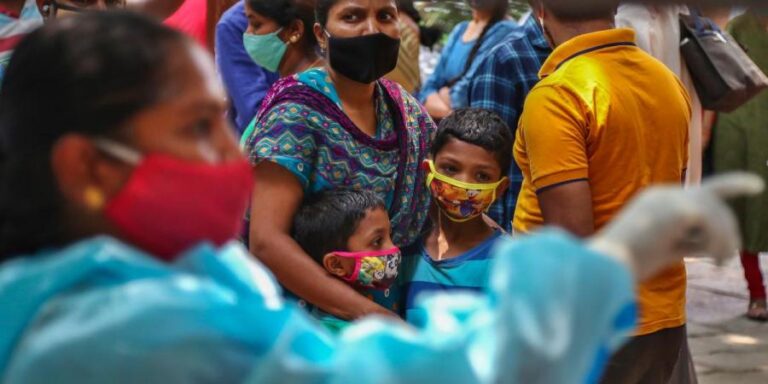
Drugs such as ivermectin, hydroxychloroquine, favipiravir and antibiotics like doxycycline and azithromycin prescribed for adult COVID-19 patients have not been recommended for treating children, according to a government guideline issued on Wednesday.
-
In anticipation of likely intermittent surges in the number of COVID-19 cases, the government has come out with guidelines for operationalising Covid-care services for children.
-
The recommendations include augmenting existing Covid care facilities to provide care to children with acute coronavirus infection.
-
According to it, once vaccines are approved for children, those with comorbid conditions having more severe manifestations of COVID-19 and poorer outcomes should be a priority group for immunisation.
-
About the treatment of children, the guidelines by the Union Health Ministry said most drugs used in adults such as ivermectin, hydroxychloroquine, favipiravir and antibiotics such as doxycycline or azithromycin have not been tested on children for prevention or treatment of Covid infection among them.
-
“Therefore, these are not recommended in children.” The guidelines stated it is anticipated that there may be intermittent surges in the number of coronavirus cases.
-
“A combined effort from the private and public sector is needed to handle any surge (in cases) in the future after the withdrawal of the lockdown, school reopening or as a third wave over the next three to four months. The basic principles of equity and dignity of care should be followed,” it said.
-
The guidelines said estimates for additional bed capacity for pediatric care may be calculated based on peak daily cases in different districts during the second wave of the COVID-19 infections. From this, projections for pediatric cases and the number of admissions required can be derived, it said.
-
“It is desirable to augment the existing Covid-care facilities to provide care to children with acute Covid. This will need additional pediatric-specific equipment, infrastructure and pediatric formulations.
-
“Also, an adequate number of trained manpower — both doctors and nurses — should be provided. The health authorities should initiate capacity building programmes for appropriate pediatric care. In standalone paediatric hospitals, separate arrangements, for example, separate beds for paediatric Covid care need to be set up,” the guidelines said.
-
It is desirable to designate specific areas in the Covid facilities for pediatric care and parents should be allowed to accompany the child there. “For children with Multisystem Inflammatory Syndrome who test negative for acute Covid, care has to be provided by the existing pediatric facilities. These facilities also need augmentation especially HDU and ICU services,” it said.
-
The document provides guidance about additional requirements for infrastructure, equipment and manpower. Noting that a majority of children have asymptomatic or mild illness and can be managed at home by parents, it said treatment for symptomatic patients include paracetamol for fever and monitoring conditions such as measuring respiratory rates, difficulty in respiration, oral intake and oxygen saturation.
-
“In a community setting, ASHA and MPW should be involved for management of children at home and also monitor to assess the need for referral and admission,” the guidelines said.
-
The document stressed on imparting training to community health workers for picking up the red flag signs.
-
Also, all stakeholders, including the community, should be educated by the information education communication.
-
For improving the quality of care and for capacity building, the guidelines recommended hand-holding of district hospitals and other facilities by medical colleges.
-
“A few centres may be designated as regional centres of excellence for Covid care and research. These centres can provide leadership in clinical management and training. Telemedicine could be harnessed for reaching out to a large number of facilities,” it said.
-
To ensure data collection at all levels and transmission from community to higher centres, the document recommended that a national registry be launched for pediatric Covid.
-
“There is a need to encourage and facilitate research in the area of pediatric Covid and this could cover various aspects of management. Similarly, issues of optimal treatment for MIS-C need to be addressed by clinical trials, such as comparison of low dose with high doses steroids, comparison of steroids with IVIG and others,” it added.
CONCLUSION
-
The guidelines said that based on sero-surveillance reports, COVID-19 infection in children above 10 years of age occurs in a similar frequency to that of adults, even though among the confirmed cases less than 12 per cent are individuals less than 20 years of age.
-
“Children have less severe disease than adults. In the majority, the infection is asymptomatic or mildly symptomatic. It is uncommon to have moderate to severe Covid among healthy children,” it noted.

KEY STORY
-
After a cycle of almost two years, where India and New Zealand played 6 and 5 series respectively, it will be the result of just one fixture, the World Test Championship final, which will decide the winner of the inaugural ICC event.
-
The likes of Ravi Shastri, R Ashwin, Yuvraj Singh and a few others have shared their take on the format of WTC and said that the winners should be decided by playing the best-of-three series.
-
“Ideally, in the long run, if they want to persist with the Test Championship, a best-of-three final will be ideal. As a culmination of two-and-a-half years of cricket around the globe. Going forward, best of three will be ideal, but we have got to finish it as quickly as possible because the FTP will start all over again,” Shastri had said before leaving for the UK.
-
Ashwin and Yuvraj had too echoed the same sentiment. While the rules are set for the upcoming final, they can surely be altered for the next event if the ICC wants.
-
Amid this, India great Sachin Tendulkar has proposed a unique way to decide ‘Test Champions’. In an exclusive conversation with Times Now, Tendulkar highlighted that unlike the white-ball World Cups, the teams have made it to the WTC final after winning the Test series. Hence, a WTC final series should have been staged to adjudge the winners.
-
“Because you look at T20 or even for that matter 50-over World Cup, you just play each opposition once and then you get to the finals. And it’s only one match in the finals. And here, you have played four-match Test series in Australia, you have played a four-match Test series in India against England. So you have played these series which had 3 or 4 Test matches, and suddenly you get to finals and it’s only one game,” Tendulkar told Times Now.
-
“So this could have been WTC final Test series. That should have been the case. But I know its challenges. That means you gotta have all Test nations frequently for quite some time to accommodate 3 Test matches.
-
So it’s a challenge but I think over a period of time, we will come up with a solution which is appreciated by everyone. And look at even Test cricket – earlier days Test cricket was played till the end. So there were Test matches which went on for 6, 7, 8 days. And then there was a period when there used to be a rest day. I have been a part of that.”
-
With present and former players asking to change the current format, it remains to be seen if ICC amends the rules for the next event.
CONCLUSION
-
But the board has hinted at continuing with the same format for now. Addressing a news conference, Geoff Allardice, the acting CEO of ICC, said: “The reality of the international cricket schedule is that we’re not going to have that month or so, blocking out a month or so for all the teams in the tournament for a final. That’s why (a) one-match final was decided upon.”
-
Meanwhile, both teams have named the 15-member squads for the summit clash. While India have benched Axar Patel, Washington Sundar, Shardul Thakur, KL Rahul and Mayank Agarwal, NZ have dropped Daryl Mitchell, Rachin Ravindra, Jacob Duffy, Doug Bracewell and Mitchell Santner.
KEY STORY
-
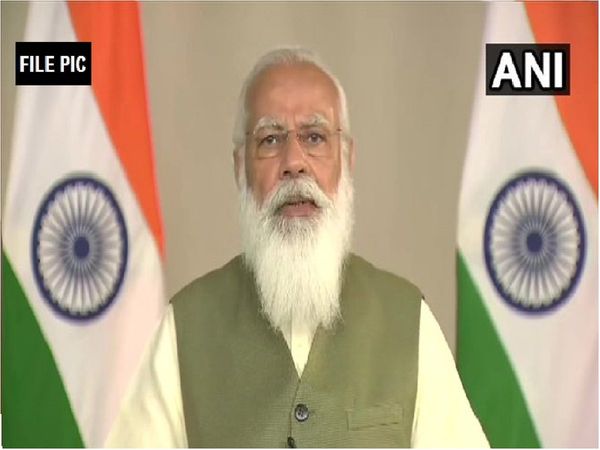
Prime Minister Narendra Modi would be launching an online crash course for training and upskillin Covid frontline workers. The program called ‘Customized Crash Course programme for Covid 19 Frontline workers’ would be launched on June 18, 2021 at 11 am. PM Modi would be launching the program via video conferencing.
-
The programme aims to create skilled non-medical healthcare workers to fill the present and future needs of manpower in the health sector. Over 1 lakh COVID frontline workers would be prepared by means of the programme.
-
The training programme would be for six customized roled. These include Home Care Support, Basic Care Support, Advanced Care Support, Emergency Care Support, Sample Collection Support, and Medical Equipment Support. The programme would be available at 111 training centres across 26 states in the country.
CONCLUSION
-
Designed under the Central Component of Pradhan Mantri Kaushal Vikas Yojana 3.0, the programme has a total financial outlay of Rs. 276 crore.Earlier today, Delhi CM Arvind Kejriwal also announced the decision to recruit 5000 Healthcare Assistants to prepare them as Covid care workers.
-
‘The launch will commence the programme in 111 training centres spread over 26 states. The launch will be followed by the Prime Minister’s address. Union Minister of Skill Development and Entrepreneurship will also be present on the occasion,’ reads the official notification.
KEY STORY
-
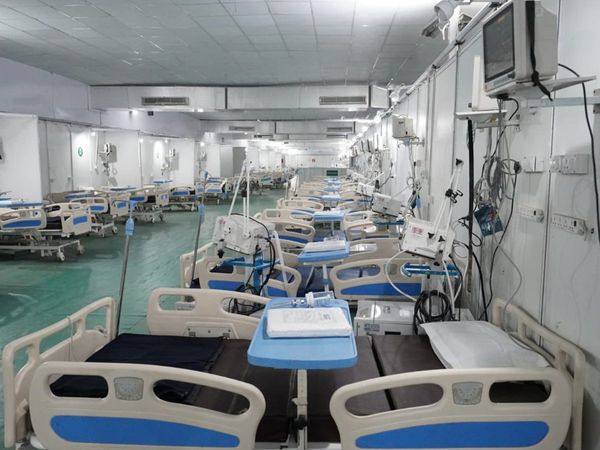
Two 250-bed makeshift Covid hospitals will be established in West Bengal’s Murshidabad and Kalyani and a sum of Rs 41.62 crore has been allocated from the PM CARES fund for it, the Prime Minister’s Office (PMO) said on Wednesday.
-
The Prime Minister’s Citizen Assistance and Relief in Emergency Situations (PM CARES) Fund trust had, in its endeavour to support the augmentation of health infrastructure, helped establish Covid hospitals in Bihar, Delhi, Jammu and Srinagar also, the PMO said.
-
The PM CARES Fund trust has decided to allocate Rs 41.62 crore for establishment of two 250-bed makeshift Covid hospitals by the Defence Research and Development Organisation (DRDO) at Murshidabad and Kalyani, West Bengal, it said.
CONCLUSION
-
For this, certain infrastructural support would also be provided by the state government and the Union health ministry.
-
This proposal will augment health infrastructure in West Bengal to effectively manage the Covid situation, the statement said.
KEY STORY
-
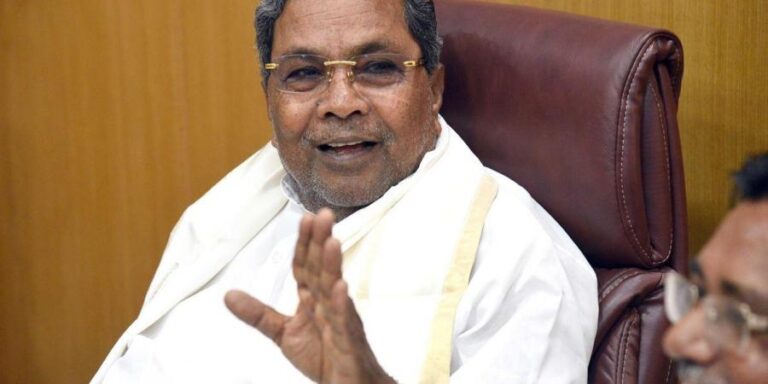
Opposition leader in the Karnataka legislative assembly and Congress Legislature Party chief Siddaramaiah on Tuesday wrote to Chief Minister BS Yediyurappa, urging the government to ease the tension between private school management and parents over term fees.
-
In his two-page letter, Siddaramaiah has urged the government to decide on subsidised term fees that parents can pay this academic year to bring the tussle over fee payment to an end.
-
The former Chief Minister also insisted that the government should devise methods to lessen the burden of loan interests on private school managements, in consultation with banks. “Salaries of teaching and non-teaching staff that have been withheld by various schools should also be directed to be released immediately,” Siddaramaiah said in his letter.
-
Pointing out that last year, the government had announced 30 per cent subsidy on school fees owing to the pandemic, Siddaramaiah said the initiative never came into practice and schools continued to charge full fees, including bus and sports fees.
CONCLUSION
-
“Many teachers have not been paid and are taking up jobs under MGNREGA or are selling vegetables. Private schools are forcing parents to pay up full fees this year too and are threatening to hold back students whose fees haven’t been paid.
-
Non-action in such circumstances shows the government has succumbed to lobbying,” Siddaramaiah alleged. He insisted that the government announce subsidised fees and ensure that the announcement in implemented.

KEY STORY
-
The State Government has dropped the idea of making the Common Entrance Test scores a criterion for admissions to BSc. It asked vice-chancellors of universities to consider starting a four-year undergraduate course under the National Education Policy (NEP) this academic year to accommodate a higher number of Pre University-II (PU-II) students who have been passed as their board exams were recently declared cancelled due to the Covid situation.
-
Deputy Chief Minister and Higher Education Minister Dr CN Ashwath Narayan on Tuesday said the idea of considering CET for BSc admissions has been dropped. The earlier decision had been taken as the second PUC examinations were cancelled, he added.
-
He said that this year, the number of students seeking admission to undergraduate courses will significantly increase as the 2nd PUC examination is cancelled and all students have been declared “passed”.
CONCLUSION
-
“If universities start four-year undergraduate courses, that will help accommodate more students and it is also an opportunity for varsities to initiate this,” he added, after a meeting with vice-chancellors on Tuesday.
-
‘E-office’ software trial .The Unified University College Management System, a web portal-based software developed by the department of E-Office, has been given permission to go on trial from June 25. The software covers every aspect of a university’s work flow and integrates all processes with an user-friendly interface, including the calendar of events.
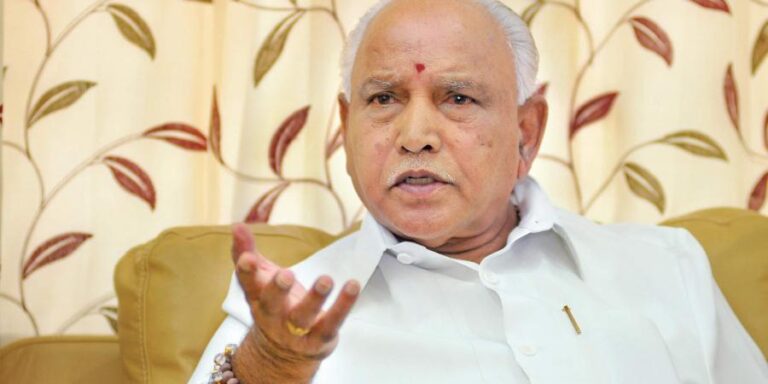
KEY STORY
-
Chief Minister BS Yediyurappa on Tuesday hinted at further relaxations in the lockdown restrictions in the state from next week as the Covid-19 cases and the case positivity rate are coming down.
-
After analysing the situation on Tuesday and Wednesday, they will decide on what needs to be done and what further relaxations can be given, the CM said. He was responding to questions from the media on relaxation of lockdown restriction with cases going down.
-
Last week, the government extended the lockdown till June 21 in 11 districts – Chikkamagalur, Shivamogga, Davanagere, Mysuru, Chamarajanagar, Hassan, Dakshina Kannada, Bengaluru Rural, Mandya, Belagavi and Kodagu – which have a high case positivity rate.
-
Some relaxations are given in other districts including Bengaluru Urban. In a positive sign, the number of cases in the districts that continue to be under lockdown restrictions too are coming down over the last few days.
CONCLUSION
-
The CM had earlier stated that more relaxations will be introduced if people follow Covid-appropriate behaviour and the case positivity rates drop further. The decision on relaxations is likely to be taken after consulting the Technical Advisory Committee (TAC) members, who had suggested to the government to initiate the unlock process in a phased manner.
-
Health and Medical Education Minister Dr K Sudhakar said they will continue to be extra vigilant even after the lockdown restrictions are relaxed in several districts from Monday and they will continue with the aggressive testing strategy. On Tuesday, 1.32 lakh tests were conducted in the state.

The study published online in BMJ in early 2020, is a follow-up and extension of a 2018 study, which found that following these habits increased overall life expectancy. https://news.harvard.edu/gazette/story/2020/01/5-healthy-habits-may-offer-years-free-of-chronic-diseases/
What are the 5 precious habits?
-
Eating a healthy diet: To some extent, when it comes to healthy aging, we become what we eat. According to the Centers for Disease Control and Prevention (CDC), one in four deaths results from heart disease, the leading cause of death in the United States. Among the top risk factors are obesity, high cholesterol, high blood pressure, and poor diet — with the first three often tied to the last. So it is important that we eat sensibly, mindfully, healthy, and happily.
-
Exercising regularly: Exercise helps people lose weight and lower the risk of some diseases; it can help keep your body at a healthy weight. and help a person age well.
-
Keeping a healthy body weight: According to the National Institutes of Health (NIH): A BMI of less than 18.5 means that a person is underweight. A BMI of between 18.5 and 24.9 is ideal. A BMI of between 25 and 29.9 is overweight. If you are overweight or obese, you are at higher risk of developing serious health problems, including heart disease, high blood pressure, type 2 diabetes, gallstones, breathing problems, and certain cancers.
-
Not drinking too much alcohol: A glass a day may not harm your overall health. But if the habit grows or if you find yourself having a hard time stopping after just one glass, the cumulative effects can ruin your health on all parameters.
-
Not smoking: The US CDC says smoking causes cancer, heart disease, stroke, lung diseases, diabetes, and chronic obstructive pulmonary disease (COPD), which includes emphysema and chronic bronchitis. Smoking also increases the risk for tuberculosis, certain eye diseases, and problems of the immune system, including rheumatoid arthritis.
Warding off Type 2 diabetes, cardiovascular disease, and cancer:
“Previous studies have found that following a healthy lifestyle improves overall life expectancy and reduces risk of chronic diseases such as diabetes, cardiovascular disease, and cancer, but few studies have looked at the effects of lifestyle factors on life expectancy free from such diseases,” said first author Yanping Li, senior research scientist in the Department of Nutrition. “This study provides strong evidence that following a healthy lifestyle can substantially extend the years a person lives disease-free.”
How was the study conducted?
The participants were part of Nurses’ Health Study and the Health Professionals Follow-up Study
34 years of data from 73,196 women and 28 years of data from 38,366 men participants were looked into
A healthy diet was defined as “a high score on the Alternate Healthy Eating Index”
Regular exercise as “at least 30 minutes per day of moderate to vigorous activity”
Healthy weight as a body mass index of 18.5-24.9 kg/m2; and
Moderate alcohol intake as up to one serving per day for women and up to two for men.
At least 80 per cent compliance worked:
They found that women who practised four or five of the healthy habits at age 50 lived an average of 34.4 more years free of diabetes, cardiovascular diseases, and cancer, compared to 23.7 healthy years among women who practised none of these healthy habits.
Men practising four or five healthy habits at age 50 lived 31.1 years free of chronic disease, compared to 23.5 years among men who practised none.
Men who were current heavy smokers, and men and women with obesity, had the lowest disease-free life expectancy.
“Given the high cost of chronic disease treatment, public policies to promote a healthy lifestyle by improving food and physical environments would help to reduce health care costs and improve quality of life,” said senior author Frank Hu, Fredrick J Stare Professor of Nutrition and Epidemiology and chair, Department of Nutrition.
Would you rather not strive to comply with the five healthy habits and draw the benefits of living longer and healthier than abusing your health to regret later – when there won’t be much you can do to turn things around?
Disclaimer: Tips and suggestions mentioned in the article are for general information purposes only and should not be construed as professional medical advice. Always consult your doctor or a professional healthcare provider if you have any specific questions about any medical matter.
1...552553554...883Page 553 of 883