What’s the connection between your diet style and the cancer risk? Here’s what to eat and what foods to avoid

KEY STORY

  • Over the many decades of research in the field of cancer prevention and treatment, scientists have been able to make a database on how cancer rates varied between countries and have also been able to identify that specific dietary patterns have correlations with certain types of cancer.
  • For example, according to the World Cancer Research Fund and the American Institute of Cancer Research, the highest cancer rate for men and women together was in Australia, at 468 people per 100,000 population. The rate for men alone was much higher at 580 per 100,000 population and 363 for women by the same measure. The countries in the top 12 come from Oceania, Europe and North America. The top 50 (worst-affected) has only two Asian countries (Israel and Japan) and India does not figure in the list of 50s. https://www.wcrf.org/dietandcancer/global-cancer-data-by-country/
  • But when it comes to the rates of lip and oral cavity cancers: in both sexes, 4 countries of the subcontinent are in the top 5 (worst-affected). Papua New Guinea had the highest rate of cancer of the lip and oral cavity in 2018, followed by Pakistan.
    Rank    Country        Age-standardised rate per 100,000
    1. Papua New Guinea    20.4
    2. Pakistan                     12.2
    3. Bangladesh                 9.5
    4. India                            9.1
    5. Sri Lanka                     7.6
    How is it then that the world’s “better” countries, with greater access to healthcare, experience much higher rates of cancer incidence than the world’s “worse off” countries, as noted by new research from the University of Adelaide? According to the publication Sciendaily.com, this is the result of relaxed “natural selection. The explanation is that because modern medicine is enabling people to survive cancers, and their genetic backgrounds are passing from one generation to the next.
    So, how is it that the Mediterranean countries seem to have a low incidence of cancer? The risk factors in cancer incidence are mainly linked with:
    1. Individual and environmental characteristics such as heredity, particular exposure to noxious substances, or clinical conditions as hormone imbalance or with
    2. Peoples’ lifestyle such as physical activity, sedentary lifestyle and diet which play a crucial role.
    5 most important risk factors:
    1. A high body mass index
    2. A low intake of fruit and vegetables
    3. The lack of physical activity
    4. The use of alcohol and
    5. Smoking or use of tobacco
    The Mediterranean diet is considered one of the most worldwide healthy dietary patterns thanks to a combination of foods rich mainly in antioxidants and anti-inflammatory nutrients. The Mediterranean diet was recognized as an “intangible cultural heritage of France and Italy, Greece, Spain and Morocco, respectively” by the United Nations Educational, Scientific and Cultural Organization (UNESCO) in 2010.
    A research paper published in the US National Library of Medicine says: “Many studies have demonstrated a strong and inverse relationship between a high level of Mediterranean diet adherence and some chronic diseases (such as cardiovascular diseases, diabetes, etc.) and cancer. Given its protective effects in reducing oxidative and inflammatory processes of cells and avoiding DNA damages, cell proliferation, and their survival, angiogenesis, inflammations and metastasis, the Mediterranean diet is considered a powerful and manageable method to fight cancer incidence.”
    The positive relationship (beneficial effects) between the Mediterranean diet and cancer is due to the high contents of antioxidants and anti-inflammatory nutrients contained in many foods of MD (legumes, fresh fruit or nuts, vegetables, fish, and olive oil, especially extra-virgin olive oil), which have a protective effect in the fighting cell degeneration and proliferation of cancer cells, it says.
    Here is the result of the study on what to eat (recommended diet) and what to avoid to defeat cancer’s march:
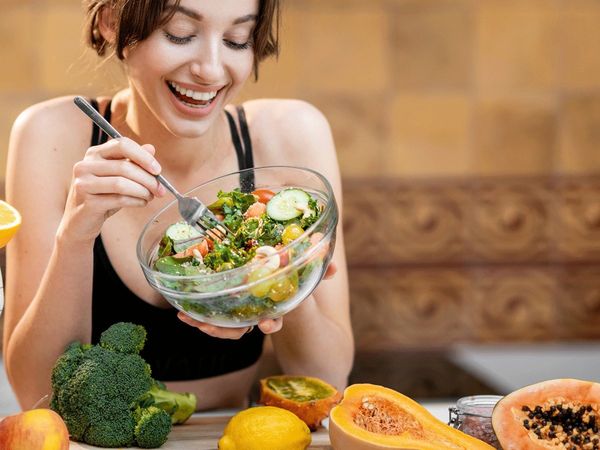
    1. Raise intake of fruits, vegetable, & vitamins: Dietary patterns based on regular intake of fruit, vegetables (especially garlic and cruciferous vegetables, as cabbages, broccoli, brussels sprout and wasabi) and by consequence the intake of aliments rich in selenium, folic acid, vitamins (B-12 or D), and antioxidants (e.g., carotenoids and lycopene) play a protective role in cancer onset so to reduce risk of breast cancer, colorectal cancer and prostate cancer of 60–70% and of lung cancer; 40–50%.
    2. Have more fibre and dairy products: A high intake of products rich in fibre (e.g., whole grains) and a moderate intake of milk and dairy may reduce the incidence of different types of cancer (e.g., colorectal cancer, lung cancer, stomach cancer, breast cancer, colorectal cancer, oesophagus cancer and oral cancer).
    3. Reduce meat and processed foods, eat more fish: Vice versa, meat and animal products, rich in animal fats and oils and often cooked at high temperatures, may increase cancer incidence, especially for colorectal cancer, stomach cancer and prostate cancer. The omega-3 polyunsaturated-rich fish oils appear protective. But the intake of salted, pickled or smoked foods should be reduced.
    4. Alcohol in moderation if unavoidable: no unanimity among studies: The jury is still out on whether alcohol intake has a positive r negative effect on overall health. The study paper recommends that a moderate alcohol intake (until 30 g a day) could have a protective effect against the onset of kidney cancer, while an excessive intake surely is a risk factor in the onset of many cancers (oral cavity cancer, oesophagus cancer, breast cancer, colorectal cancer, stomach cancer and liver cancer).
    5. Reduce excessive intake of salt: According to the Cancer Council of Australia, one should try and eat no more than 5g of salt (2000mg sodium) each day. This is about 1 teaspoon of salt (sodium chloride or sodium). Salt is used to flavour foods and as a preservative. Diets high in foods preserved by salting (such as pickled vegetables and salted or dried fish) have been linked to an increased risk of stomach and nasopharyngeal cancer.
    Disclaimer: Tips and suggestions mentioned in the article are for general information purposes only and should not be construed as professional medical advice. Always consult your doctor or a professional healthcare provider if you have any specific questions about any medical matter.

PM CARES funded 850 oxygen plants being set up in various districts of country to fight COVID-19: DRDO chief

KEY STORY

  • Defence Research and Development Organisation (DRDO) chief Dr G Satish Reddy on Monday announced that as many as 850 oxygen plants are being set up in various districts of the country from the PM CARES Fund for catering to the needs of the country to fight the coronavirus pandemic.
  • According to a statement by the Ministry of Science and Technology, the DRDO chief reiterated that the agency was prepared to provide all kinds of support when the need arises, and more flying hospitals would be ready, as was provided during the second COVID-19 wave to help the people.
  • “We established temporary hospitals specific to COVID 19 in many cities. These are modular hospitals, we call it flying hospitals, and these have been made in a way that the virus does not go out of hospitals. If there is any third wave, all the hospitals will be taking the load, and the government is discussing these aspects with various stakeholders,” said Dr Reddy.
  • During the second wave, the country faced an acute shortage of oxygen supply and hospital beds which led to massive criticism of Prime Minister Narendra Modi-led BJP government at the Centre. The Opposition had blamed the Modi government over its handling of the COVID-19 crisis.

    COVID situation in India

  • Continuing with its downward trend in daily infections, India has recorded as many as 70,421 new COVID-19 cases in the last 24 hours. The new cases pushed the overall tally in the country to 2,95,10,410, while the count of active cases fell below 10 lakh after over two months.
  • According to the Union Health Ministry, the COVID-19 death toll in the country climbed to 3,74,305 with 3,921 fatalities recorded in a span of 24 hours, the data updated at 8 am showed.
  • The count of active cases has further declined to 9,73,158 which is 3.30 per cent of the total infections, while the national COVID-19 recovery rate has improved to 95.43 per cent.

CBSE Evaluation Criteria for class 12 Result 2021 on June 16: Should Class 10, 11 marks be included? Poll

KEY STORY

  • Central Board of Secondary Education, CBSE would be releasing the evaluation criteria for CBSE Class 12 Results 2021 on June 16. As per the information, the panel has requested for two more days for submitting the evaluation criteria. The report would be made live on June 16 on the official website cbse.gov.in.
  • As we wait for CBSE Class 12 evaluation criteria, there are reports and recommendations of including Class 10 or Class 11 or even looking at the historical data as done by CBSE for Class 10 Results. Many academicians have raised the point of using Class 10 marks as a standardization parameter, insisting that it is the only ‘standardized’ result available with the board.
  • On the use of school’s historic result like in Class 10, experts are divided. Many have raised the concerns of students, suggesting that it is not fair to judge a child’s performance with school’s overall performance. As for Class 11, many are against the idea of including Class 11 marks.
  • Manish Sisodia, on the other hand, has suggested that both Class 10 and Class 11 marks should be included in the evaluation criteria. Some school principals have also suggested that CBSE should do away with marks altogether and ‘grade’ students on the basis of their year’s performance. Do you agree?

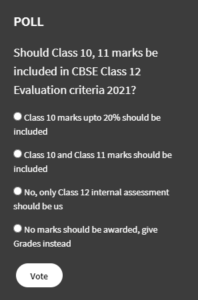
Should Class 10, 11 marks be included in CBSE Class 12 Evaluation criteria 2021?

  • In another 48 hours, we would know what the final decision is. As the 13-member panel finalizes the decision, tell us if you think Class 10 or Class 12 marks should be included.
  • Should Class 10, 11 marks be included in CBSE Class 12 Evaluation criteria 2021?
    In another 48 hours, we would know what the final decision is. As the 13-member panel finalizes the decision, tell us if you think Class 10 or Class 12 marks should be included.

  • Students and parents may note that as per the Supreme Court, CBSE is required to submit the evaluation criteria by June 17. The board’s panel committee was to share the criteria by today. This, however, has been deferred due to some panellists loosing family members to Covid. The panel has sought extra time and would now submit the criteria by June 16.

80% vaccine doses given in walk-in mode, 3rd party integration of CoWIN soon: RS Sharma

KEY STORY

  • Highlighting that more than 80 percent vaccine doses in India have been given in walk-in mode, the Centre today said the vaccination drive in rural part of the country will face no hiccups.
  • “We have made the system more inclusive, the Walk-in Vaccination have increased; more than 80 percent people took the vaccination through walk-in so far; this according to the complete time line till now,” COWIN chief RS Sharma told Mirror Now.
  • On being asked behind the reasons of limiting the search and generation of one time password on COWIN platform, Sharma said the portal is for registration and search and not for ‘robots and machines’.
  • “It is important that the platform continues to be used and the users do not face any problem. So this is a step to stop the mischief,” the CoWIN Chief said.
  • Responding on reports that big tech companies like Infosys have taken initiative to tie up with CoWIN, Sharma said in future third party applications can integrate with the vaccine registration portal.
  • “This is something like you book your railway or plane ticket from a private platform. Similarly, we have received interests from about 125 entities, which includes private & state govt’s as well,” he said.

CONCLUSION

  • “Think of it in such a way that you do not need to download Arogya Setu. CoWin is the platform. If you want, you can also book with the help of Pay-Tm. Booking will be made easy with the various interface,” he added.
  • When asked on reports of data leaks, the CoWIN chief said the investigation found that it was a bogus claim.

Karnataka to give Rs 1L for BPL family that lose an earning adult to Covid-19

KEY STORY

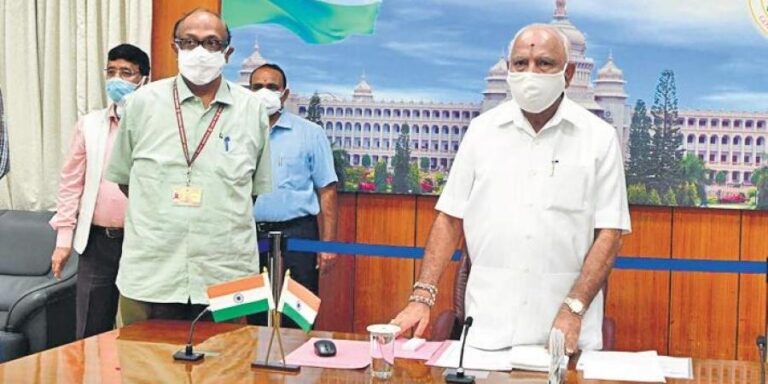
  • Karnataka Chief Minister BS Yediyurappa on Monday announced a compensation of Rs 1 lakh to BPL families whose breadwinners succumb to Covid19. Yediyurappa said this was the first such initiative by any Indian state.
  • “Several families are in distress due to the death of earning members. Many families have come on the streets. Keeping this in mind, it has been decided to provide Rs 1 lakh compensation to any BPL family where an adult dies due to Covid-19. This will be given to one member per family,” Yediyurappa told reporters after a meeting with the Finance department, which he heads.
  • The CM said this would cost the state exchequer Rs 250-300 crore. “We’re giving this (compensation) for the first time in India. It shows that the financial situation is good and that’s why we’re able to provide this,” he said, adding that this would benefit the families of 25,000-30,000 adults who died due to Covid-19.
  • CID to probe milk scam
    Yediyurappa said the CID will probe the allegations of milk adulteration at the Mandya Milk Union Ltd (Manmul). “A preliminary inquiry has been ordered. A new managing director has been appointed there. Five erring officers have been kept under suspension. In all likelihood, the CID will probe this,” he said.
    The irregularities, amounting to crores of rupees, were being done allegedly with the help of Manmul employees. One lakh litres of adulterated milk were supplied to Manmul every day. The adulterated milk was packed and sold to gullible customers under the Nandini brand name.

Ravindra Jadeja slams unbeaten fifty, BCCI shares Day 3 clip of intra-squad game – WATCH

KEY STORY

  • Ravindra Jadeja smashed an unbeaten half-century on the third day of India’s intra-squad match simulation in Southampton. The seasoned all-rounder scored 54 not out from 74 balls in the practice game.
  • Ahead of the much-awaited ICC World Test Championship final, the Virat Kohli-led Indian team is working hard to acclimatize to the English conditions. The side is gearing up to lock horns with New Zealand in a high-voltage clash that kickstarts from Friday at the Ageas Bowl.
  • The BCCI on Sunday shared a video clip featuring several highlights from Day 3. Jadeja was seen playing a classy cover drive off Ishant Sharma, who had pocketed 3 wickets on the second day of the practice game.
  • “@imjadeja gets to his half-century (54* off 76) as play on Day 3 of the intra-squad match simulation comes to end. @mdsirajofficial is amongst wickets with figures of 2/22,” the BCCI tweeted.

  • Young pacer Mohammed Siraj also had a productive day with the ball. The Hyderabad speedster returned with figures of 2 for 22. The right-arm quick has been in a rich vein of form which adds to the dilemma of team selection for the WTC final. While Jasprit Bumrah and Mohammed Shami are almost certain to get the spot, tussle for the third pacer would be between Ishant and Siraj.
  • Earlier on day 2, KL Rahul and Wriddhiman Saha looked in great touch as they smoked sixes during the game. Rahul chipped down the wicket to Jadeja and smashed Jadeja over the ropes while Saha pulled Shardul Thakur over the square leg boundary for a maximum.

CONCLUSION

  • On day 1, wicketkeeper-batsman Rishabh Pant had taken his senior bowling colleagues to the cleaners with an unbeaten 121 off 94 balls while opener Shubman Gill also warmed up with a polished 85 during the Indian team’s intra-squad match simulation over the last two days.
  • Kohli & Co are leaving no stones unturned to nullify New Zealand’s advantage of being in the UK longer than them. The Kiwis would enter the contest on the back of a historic series win against the hosts on Sunday which took them to the top spot on the ICC Test Rankings.

Rhea Chakraborty says ‘please come back’ in emotional note for Sushant Singh Rajput: ‘I wait for you everyday’

KEY STORY

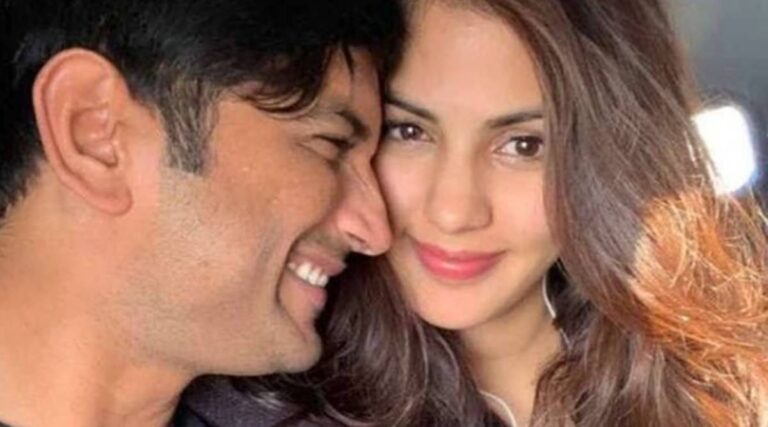
  • Rhea Chakraborty says she doesn’t believe that Sushant Singh Rajput is no more. Remembering the late actor on his first death anniversary, Rhea wrote a moving post and mentioned how Sushant was her life and without him there is a void which cannot be filled.
  • “There isn’t a moment where I believe that you aren’t here anymore. They said that time heals everything but you were my time and my everything. I know that you are my guardian angel now -watching me with your telescope from the moon and protecting me. I wait for you everyday to come pick me up, I look for you everywhere – I know you’re here with me. It breaks me everyday, then I think of you saying –“ you’ve got this bebu” and I carry on to the next day,” Rhea’s post read.

https://www.instagram.com/p/CQGK6hgHldL/?utm_source=ig_embed&ig_rid=3cc67a82-aa3f-4724-b70e-c4c32a9d7452

“A barrage of emotions cross my body every time I think of you not being here. My heart aches to write this , my heart aches to feel anymore,” she continued.
Concluding the post, referring to Sushant as “sweet sunshine boy,” Rhea promised that she will give, “‘Malpua everyday and read all the quantum physics books in this world – please come back to me.
“I miss you my best friend, my man ,my love. Bebu and putput forever. Infinity plus one,” Rhea signed off.
The post comes days after she dropped a post for her fans that “from great suffering, comes great strength.” She asked her fans to “hang in there.”

Jio launches new plans with no daily data limit starting at Rs 127, check all offers

KEY STORY

  • Jio earlier this week launched new prepaid plans which the telco notes have ‘no daily limit.’ These plans start at Rs 127 and go up to Rs 2397. The telco has also introduced a new monthly prepaid plan that has a validity of 30 days, unlike other plans that fit into the monthly bracket which gives 28 days validity.
  • The new prepaid plans are also giving access to Jio’s information and utility apps that include JioTV, JioCinema, JioNews, and others. All plans give access to unlimited calls along with Jio apps.
  • As the name suggests, these prepaid plans have no daily data limit, which means users can use as much data as they would require in a day. Let us have a look at these new prepaid plans in detail:
  • Jio Rs 127 prepaid plan: The most basic plan in this category is priced at Rs 127 and comes with 15-day validity. This plan gives 12GB data for 15 days along with access to unlimited calls and Jio apps.
  • Jio Rs 247 prepaid plan: The next plan in this category is priced at Rs 247 that gives 25GB data and comes with 30 days validity, unlimited calls and Jio apps.
  • Jio Rs 447 prepaid plan: The Rs 447 prepaid plan gives 50GB data for 60 days, unlimited calls and Jio apps.
  • Jio Rs 597 prepaid plan: This plan gives 90 days validity with 75GB data, unlimited calls and Jio apps.
  • Jio Rs 2397 prepaid plan: This is an annual plan that gives 365GB data for 365 days with unlimited calls and Jio apps.
  • Jio has reintroduced the Rs 98 prepaid voucher that gives short-term validity of 14 days. The short-term prepaid voucher gives 1.5GB daily data, unlimited voice calls and access to Jio apps.

CONCLUSION

  • Jio also recently launched new all-in-one prepaid plans under Rs 100 for JioPhone users shortly after announcing the ‘Buy 1, Get 1 free’ offer for JioPhone prepaid plans. These plans will give users one complimentary plan of the same value for a JioPhone user.
  • These JioPhone plans have a validity of 14 days and offer data and calling benefits. The plans are priced at Rs 39 and Rs 69. The Rs 39 prepaid plan offers 100 MB of high-speed data, unlimited calling and 14 days validity. The plan thus offers 1400 MB data spread for 14 days with speed reduced to 64 Kbps after exhaustion of high-speed data.

Women’s safety upped, 340 CCTVs installed across South Western Railway Zone stations

KEY STORY

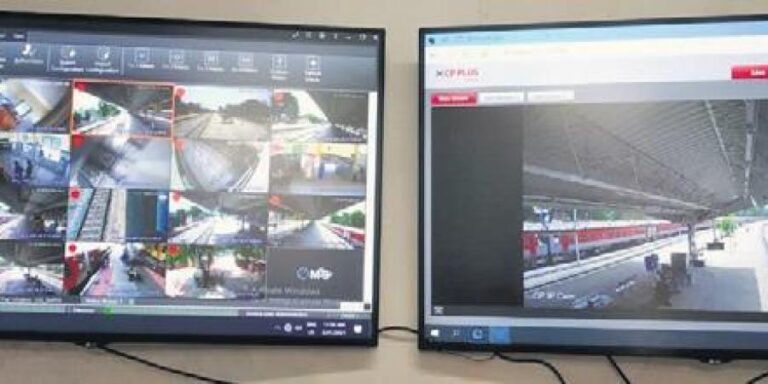
  • In a major boost to safety of women passengers, the South Western Railway Zone has put in place 340 CCTVs across railway stations. The upgraded security apparatus has been commissioned at a cost of Rs 8.17 crore under the Nirbhaya Fund.
  • This Internet-based Video Surveillance System (IVSS) envisages using CCTV cameras which are connected by optical fibre cables. Aneesh Hegde, Chief Public Relations Officer, SWR, said Shivamogga, Hassan, Davanagere, Bangarpet, Kengeri, Bangalore Cantonment, Sathya Sai Prashanti Nilayan, Hubballi, Vasco da Gama, Hosapete, Belagavi and Ballari railway stations have installed the facility in February 2021.
  • “An Integrated Security Command and Control Centre was set up simultaneously,” he said. The process of installing them in Gadag, Bijapur and Mysuru stations are under way, Hegde added.
  • “The advantage this system offers is that of remote monitoring of all locations covered by it. The video feed from these new cameras can be monitored from one central place, the divisional or zonal control office. In the earlier CCTV system, the feed was localised to the particular station where the camera was installed,” Hegde said.

CONCLUSION

  • The Railway Protection Force would be responsible for monitoring them inside the station and the Government Railway Police would do it outside the station limits, the CPRO said. Alok Kumar, Inspector General and Principal chief Security Commissioner, RPF, SWR, told TNIE,
  • “The IVSS system of surveillance has been adopted in all major stations/junctions of SWR keeping in sync with technological development. This will be helpful in keeping a watch on known criminals, habitual offenders if and when they move to railway stations.” Railway public sector unit RailTel in a statement said that the IVSS system can store footage for upto 30 days.

19 districts in Karnataka partially reopen today, 11 others to wait

KEY STORY

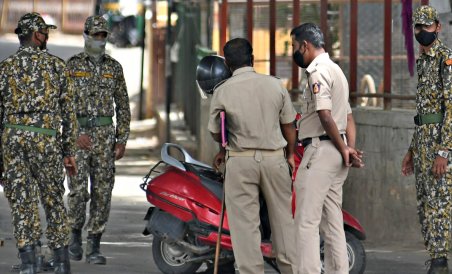
  • After an eight-week lockdown, 19 districts in Karnataka will see some relaxations starting Monday while 11 districts with high positivity rate have to wait longer.
  • Over the past one week, job capital Bengaluru, where restrictions are being eased, has seen an influx of people. National highway authorities said the traffic is set to increase. “We had opened only three gates due to low number of vehicles. From Monday, we need to open all the 10,” sources at Nelamangala toll plaza said.
  • The government has allowed industries and establishments to operate, but with a restricted staff strength of 50 per cent; for garment factories, it is 30 per cent.
  • The timings of 6 am to 2 pm for establishments and weekend curfew from 7 pm on Friday to 5 am on Monday are likely to affect business transactions.
  • Karnataka Small Scale Industries Association said even if the government implements full unlock measures, industries across the state will hardly recover. “Many employees depend on public transport, which has not been allowed,” it said, stressing the need for a “conducive atmosphere”.
  • Sampath C, general secretary of Adarsh Auto Union, said the easing of restrictions has not raised much hope for auto and taxi drivers. “For people whose daily bread depends on the movement of others, finding work is still a gamble.
  • Within our association, only 20 per cent worked during the 6 am to 10 am relaxation hours as most couldn’t get any passengers. Half of the 1.45 lakh auto rickshaws are driven by people who do not own them but rent them to make a living. They won’t survive in this condition,” he said.

CONCLUSION

  • Daily wage labourers, domestic workers and garment workers said transportation will be a major problem. “I have to give up Rs 2,000 of my monthly earning because I can’t find a bus to reach Basaveshwarnagar,” said Padma B, a domestic worker and resident of Gayatrinagar.
  • Meanwhile, the 11 districts, including Bangalore Rural, Mysuru, Dakshina Kannada, Mandya, Belagavi, Chikkamagalur, Shivamogga, Davangere, Chamarajanagar, Hassan and Kodagu, will continue to be under lockdown.