Children falling seriously ill in third Covid wave unlikely: Experts

KEY STORY

  • As the second wave of Covid-19 continues to wreak havoc in the country, speculation is rife that the possible third wave will impact children more. Paediatricians and the Indian Academy of Paediatrics (IAP), however, don’t seem to agree.
  • The sero-survey of December 2020-January 2021 showed that the percentage of infected children in the age group of 10-17 was around 25%, which is the same as adults. “This indicates that while children are being infected like adults, they are not contracting the severe form of the disease.
  • It is highly unlikely that the third wave will predominantly or exclusively affect children,” the IAP had stated last month, even as it reiterated that it has developed a management protocol for disease categories in kids, and there was no need to panic.
  • “Children have less expressed ACE2 receptor that results in lesser attachment of the SARS-CoV-2 virus to the respiratory passage. There is no scientific evidence of them falling seriously ill in large numbers in the possible third wave.
  • More children may fall sick if the adults are not vaccinated, and don’t follow Covid-19 appropriate behaviour,” said Dr Sanwar Agrawal, director and DNB coordinator at Ekta Institute of Child Health, Raipur.
  • “The review of available literature from third waves around the world and our hospital’s comparative two wave data doesn’t suggest that we will have large numbers of ICU admissions of children with severe Covid-19, or those requiring hospitalisation. The large unimmunised adult population will still drive the third wave, especially those with comorbidities,” said chief medical officer and professor, paediatrics, St John’s Medical College & Hospital, Dr Sanjiv Lewin.
  • He  cautioned about Multisystemic Inflammatory Syndrome-Children (MIS-C). “We had 33 such children following the first wave, and 15 so far in the second wave. This is what we need to be prepared for through education and strong referral systems. Delaying the third wave and intensive, massive accelerated vaccination campaigns are vital,” he  said.
  • “There is no data from across the countries that the third wave has been devastating to children. In Mumbai, children constitute around 6% of the total Covid infections. Children fell sick because adults in the family were stepping out and were not vaccinated,” said Dr Sanjay Prabhu, senior consultant paediatrician, BJ Wadia Hospital, Mumbai.
  • Professor, paediatrics, Subbaiah Institute of Medical Sciences, Shivamogga, Dr Vikram S Kumar concurred with his fellow paediatricians, and said those not vaccinated will remain susceptible, including children. “But there is a difference between getting infected and falling seriously ill. There is no scientific data yet on children falling seriously ill in the third wave,” he said. Regarding pneumonia and MIS-C, he said they are treatable conditions if diagnosed early.

Defence Ministry approves construction of six advanced submarines for Indian Navy

KEY STORY

  • The Defence Ministry on Friday cleared a mega project to build six conventional submarines for the Indian Navy at a cost of around Rs 43,000 crore, a decision aimed at narrowing the gap with growing naval prowess of China, government sources said.
  • The decision was taken at a meeting of the Defence Acquisition Council (DAC) chaired by Defence Minister Rajnath Singh.
  • The DAC is the Defence Ministry’s highest decision-making body on procurement.

CONCLUSION

  • The sources said the Request for Proposal (RFP) for the make-in-India project named ‘P-75 India’ will be issued soon.
  • The sources said the groundwork like specifications of the submarines and other critical requirements for issuance of the RFP for the mega project has been completed by separate teams of the Defence Ministry and the Indian Navy.

Incentives for banks to 24×7 NACH availability: Key measures announced by RBI

KEY STORY

The Reserve Bank of India on Friday announced several key financial, economic measures amid the pandemic. The central bank based on its continuing assessment of the macroeconomic situation and financial market conditions, announced additional measures to help stressed sectors during the current challenging times.
Key measures announced by RBI:
1. On-tap Liquidity Window for Contact-intensive Sectors: In order to mitigate the adverse impact of the second wave of the pandemic on certain contact-intensive sectors, a separate liquidity window of Rs 15,000 crores is being opened till March 31, 2022, with tenors of up to three years at the repo rate.
Under the scheme, banks can provide fresh lending support to hotels and restaurants; tourism – travel agents, tour operators and adventure/heritage facilities; aviation ancillary services – ground handling and supply chain; and other services that include private bus operators, car repair services, rent-a-car service providers, event/conference organizers, spa clinics, and beauty parlours/saloons.
By way of an incentive, banks will be permitted to park their surplus liquidity up to the size of the loan book created under this scheme with the Reserve Bank under the reverse repo window at a rate which is 25 bps lower than the repo rate or, termed in a different way, 40 bps higher than the reverse repo rate.
2. Special Liquidity Facility to SIDBI: In order to nurture the still nascent growth impulses and ensure the continued flow of credit to the real economy, the Reserve Bank had extended fresh support of Rs 50,000 crore on April 7, 2021, to All India Financial Institutions (AIFIs) for new lending in 2021-22. This included Rs 15,000 crore to the Small Industries Development Bank of India (SIDBI).
To further support the funding requirements of micro, small and medium enterprises (MSMEs), particularly smaller MSMEs and other businesses including those in credit deficient and aspirational districts, it has been decided to extend a special liquidity facility of Rs 16,000 crore to SIDBI for on-lending/ refinancing through novel models and structures. This facility will be available at the prevailing policy repo rate for a period of up to one year, which may be further extended depending on its usage.
3. Placement of Margins for Government Securities Transactions on behalf of FPIs: The Reserve Bank has been taking several measures to encourage investments by Foreign Portfolio Investors (FPIs) in the Indian debt market. With a view to easing operational constraints faced by FPIs and promoting ease of doing business, it has been decided to permit Authorized Dealer banks to place margins on behalf of their FPI clients for their transactions in Government securities (including
State Development Loans and Treasury Bills), within the credit risk management framework of banks.
4. Facilitating Flexibility in Liquidity Management by Issuers of Certificates of Deposit: In December last year, Regional Rural Banks (RRBs) were permitted to access the liquidity windows of the Reserve Bank as well as the call/notice money market in order to facilitate more efficient liquidity management by the RRBs at competitive rates.
To provide greater flexibility in raising short-term funds by RRBs, it has now been decided to permit RRBs to issue Certificates of Deposit (CDs). It has also been decided that all issuers of CDs will be permitted to buy back their CDs before maturity, subject to certain conditions. This will facilitate greater flexibility in liquidity management.
5. Availability of National Automated Clearing House (NACH) on all days of the week: NACH, a bulk payment system operated by the NPCI, facilitates one-to-many credit transfers such as payment of dividend, interest, salary, pension, etc., as also collection of payments pertaining to electricity, gas, telephone, water, periodic installments towards loans, investments in mutual funds, insurance premium, etc.
NACH has emerged as a popular and prominent mode of direct benefit transfer (DBT) to large number of beneficiaries. This has helped transfer of government subsidies during the present COVID-19 in a timely and transparent manner. In order to further enhance customer convenience, and to leverage the 24×7 availability of RTGS, NACH which is currently available on bank working days, is proposed to be made available on all days of the week effective from August 1, 2021.
6. Enhancement of the Exposure Thresholds under Resolution Framework 2.0: The Resolution Framework 2.0 announced by the Reserve Bank on May 5, 2021 provides for resolution of COVID-19 related stress of MSMEs as well as non-MSME small businesses, and loans to individuals for business purposes.

CONCLUSION

With a view to enabling a larger set of borrowers to avail of the benefits under Resolution Framework 2.0, it has been decided to expand the coverage of borrowers under the scheme by enhancing the maximum aggregate exposure threshold from Rs 25 crore to Rs 50 crore for MSMEs, non-MSME small businesses and loans to individuals for business purposes.
As per the central bank statement, the relevant instructions /circulars for all these measures will be issued separately.
WhatsApp could soon add multi-device support, disappearing mode and ‘view once’

KEY STORY

  • WhatsApp will soon allow support on multiple devices at the same time. This was confirmed by Facebook CEO Mark Zuckerberg and WhatsApp chief Will Cathcart to WABetainfo, a website which is known for revealing information about upcoming features on the messaging app. Zuckerberg also confirmed plans to add a new ‘disappearing mode’ across all chat threads along with a ‘view once’ option as well. Zuckerberg also shared screenshots showing how the features will look once they are rolled out.

    Multi-device support for up to 4 devices

  • Zuckerberg confirmed to WABetaInfo that the multi-device support will be arriving on the platform soon. Although an exact release date was not disclosed, multi-device support elements have been spotted in WhatsApp’s private Beta versions for quite a while now.
  • “It’s been a big technical challenge to get all your messages and content to sync properly across devices even when your phone battery dies, but we’ve solved this and we’re looking forward to getting it out soon!” Zuckerberg said.
  • WhatsApp head Will Cathcart had earlier said that users will be able to connect to up to four devices simultaneously using WhatsApp’s multi-device feature. Further, Cathcart also suggested that a dedicated WhatsApp app for the iPad is also in the works.

    Disappearing mode, view once for some messages 


  • WhatsApp introduced a seven-day timer on sent messages last year also known as the disappearing messages features. Now it wants to expand this ability and will add a disappearing mode, which will let users enforce disappearing messages across all of their WhatsApp chat threads.
  • So once a user turns on disappearing mode, all WhatsApp threads will become disappearing threads and their chats will be gone after a fixed time period.
  • It is not clear if WhatsApp plans to give more flexibility with regard to timer options as to when messages should disappear. Currently WhatsApp messages disappear after seven days. Other apps such as Signal and Telegram offer more flexibility on when a message gets automatically deleted ranging from a few seconds to hours to a fixed number of days.

CONCLUSION

  • The platform also plans to add a ‘view once’ feature to let users share media such as photos and videos that can be seen just once, similar to sending photos on Instagram, also owned by parent company Facebook. Basically after the recipient has seen the photo or video, it will disappear from chat.
  • The ‘view once’ feature will start rolling out soon as well. The new features will be available to users in a public beta “in the next month or two,” said Zuckerberg and Cathcart, according to the report.

Ahead of Sushant Singh Rajput’s death anniversary, Ankita Lokhande hints at taking social media break

KEY STORY

  • On Thursday, actor Ankita Lokhande shared a cryptic post on her Instagram account, hinting that she might have decided to take a break from social media.
    “It’s not a goodbye, it’s a see you later,” Ankita’s post read. Strangely, her post comes just a few days before Bollywood actor Sushant Singh Rajput’s (SSR) first death anniversary.

ANKITA POST

  • Ankita’s post has received mixed reactions from social media users. Some even slammed her for taking a breaking ahead of Sushant’s death anniversary.
  • “You are doing it just for sympathy. You are a good actor. You have taken advantage of SSR’s death,” a user commented.
  • “What’s the need of this post ahead of our Sushant’s death anniversary. This is weird,” another one commented.
  • However, several fans have also extended their support for her decision.
  • “Ma’am, you really deserve this break. Please ignore hatred comments,” a fan responded. “Love and blessings for you. Take care,” another fan posted.
  • Ankita and Sushant had dated each other for nearly six years before parting ways in 2016. They both met on the sets of ‘Pavitra Rishta’, which recently completed 12 years. Ankita even posted about it a few days ago.
  • Speaking of Sushant, he breathed his last on June 14, 2020. Early investigations by the Mumbai Police concluded that he had died by suicide. The case is still under investigation.

Karnataka CM extends lockdown till June 14, announces additional economic relief package

KEY STORY

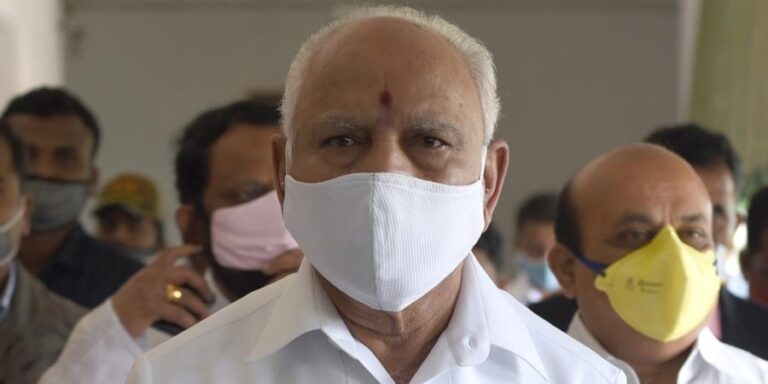
  • Karnataka Chief Minister BS Yediyurappa on Thursday announced an extension of the existing lockdown in the state by one week. In a press conference, Yediyurappa said the same restrictions will continue till 6 am on June 14.
  • He also announced additional schemes under the economic relief package that was announced earlier in May. Cash incentives for fishermen, weavers, Anganwadi workers, teachers etc and electricity bill subsidies for MSMEs and other industries etc estimated to cost Rs 500 crore were announced by the Chief Minister.
  • “Cases have reduced but the infection rate is still high. As per expert advice, it has been decided to extend the current lockdown by a week,” Yediyurappa said reiterating that the same regulations along with all addendums will continue. The state government on Wednesday passed an order allowing export-oriented companies to function at 50% capacity.
  • “An additional Rs 500 crore package is being announced today. Rs 3000 financial assistance to weavers in power loom with a cap of two persons will be given. Registered but unorganised sector workers in the film and teleserial industry will receive Rs 3000 per person as aid. Rs 3000 assistance will be given to fishermen registered under union government’s savings and relief scheme, Rs 3000 assistance to inland boat owners will be given,” the Chief Minister said.

CONCLUSION

  • Rs 3000 each has been announced for ASHA workers, priests, cooks and staff in ‘C’ category temples under Muzrai department, while Rs 2000 has been announced for Anganwadi workers.
  • Rs 50 crore will be deposited into the bank account of the advocates welfare fund. Fixed charges on electricity for May and June for MSMEs have been waived. Industries other than MSMEs have been given extended time till the end of July for electricity bills of May and June.

Why junk food is so addictive: How to overcome temptation to achieve weight loss

KEY STORY

  • Have you ever wondered why a bowl of the humble Dalia is simply not as inviting as a Black Forest gateau that consists of several layers of chocolate sponge cake sandwiched with whipped cream and cherries? Or that fluffed packet of chips that promise an ‘onion and cream’ taste? Dalia is what the nutritionist advises you to eat for its nutritive and fibre content. The other foods we mentioned are termed junk food or empty calories that make you gain unhealthy weight.
  • The reason lies within our brains. The makers of junk food use the programming that your brain has undergone to full effect. They literally engineer the junk food to make you eat it, overeat it and want more of it more often.
  • Most of us struggle to say no to junk foods because they are just so addictive. Stephanie Kay, the celebrated food and nutrition blogger, says that there are many reasons why junk food is so addictive, but knowledge is power and when you know better you can do better.
    Junk Food is Actually not “Food”
  • Although these junk foods are referred to as “food” they are in fact not food at all. Stephanie Kay says, junk foods are food-like products that resemble food and may contain food, but they are not food themselves. In her opinion, real food comes from one of two places; plants or animals, and that’s it.
  • “Real food is from Mother Nature, it grows on the land, grazes on the grass, flies in the skies, or swims in the waters. Real food does not have a barcode, nor does it have ingredients, because real food is ingredients. On the contrary, “junk food”, just as the name implies, is junk. It is defined as “pre-prepared or packaged food that has low nutritional value” and is also referred to as processed food. The catch? It often tastes great.
    Chemically engineered to make you crave:
    Nutrition expert Stephanie Kay explains that the chips, cookies, or candies we salivate after are processed items that resemble food and are chemically engineered to make you want more of it. “When you eat these foods you are not only up against the food itself, you are up against food science experts, brands and companies whose sole purpose is to create foods that people will love, and want more of, so they can make a profit… The time and energy that companies put into creating junk food are about more than just creating something that tastes good, it is a precise science that considers addictive behaviours, large studies, marketing practices and finding the exact combination of taste, texture, colour and design to get you to eat more,” Kay says.

    The “Bliss-Point” Concept:
    She highlights the fact that food manufacturers spend millions of dollars to create products that reach the “bliss point”. This is the point at which the ingredients are optimised to deliciousness to keep you coming back for more. “The bliss point of food is the exact balance of salt, sugar, fat and flavours that isn’t too much but isn’t too little and leaves your brain craving more. In fact, this is just one of the many tools that food engineers use to create highly addictive forms of processed food,” says Stephanie Kay.

    Junk Food rewires your brain’s natural responses:
    You may have noticed that when left to ourselves and when we are following a normal routine, our body lets us know when we are thirsty, hungry, tired etc. Our bodies are equipped with natural built-in systems that tell us when to eat more and when to stop eating. Now, look at what junk food does to this natural programming. It overrides all of those built-in systems as eating junk food can bring a great deal of pleasure, and it can stimulate your body’s reward system. “This system was designed to “reward” you when you do things that encourage survival, including eating, and when this happens your brain releases feel-good chemicals, including dopamine. The brain is hardwired to seek behaviours that stimulate the reward system, however, the problem with junk food is that it can stimulate this system in a way that is far more powerful than the one you would get from whole foods,” Kay says.
    Why potato chips are more fun than plain boiled potatoes:
    Stephanie Kay gives the comparison of Potatoes – a whole food that is grown in the dirt on the land, while potato chips – a junk food version of potatoes are made in a factory and come in a bag. When offered a choice of one of the two, most people could easily eat an entire bag of potato chips but would struggle to eat multiple plain potatoes, Kay bets. “As we eat junk food, the brain neurons pump out more and more dopamine, giving us a feeling of pleasure. When released, dopamine fits into a receptor in the brain, much like a key fits into a lock, and when the fit is right the pleasure is sensed. However, when you consume junk food a strange thing happens; the body’s nervous system curbs the activity of the receptors, a form of protective physiological reaction to an abnormal level of dopamine activity, meaning you need more junk food (to produce more dopamine) to stimulate this same level of reward. So, while eating a chicken breast and salad might stimulate a moderate release of dopamine, eating a pint of ice cream will release massive amounts of dopamine making it seem more rewarding.”

    What’s the harm in eating junk food?
    Junk food messes with our hormones. Let me explain how by talking about three hormones: Ghrelin, leptin, and insulin.
    Normally, ghrelin levels go up dramatically before you eat; this signals hunger. They then go down for about three hours after the meal. Another hormone – Leptin — the appetite suppressor — appears to be the bigger player in our body’s energy balance. Some researchers think that leptin helps regulate ghrelin.
    “Leptin is known as the gatekeeper of our appetite whose role is to signal to the body when it is full, while ghrelin and insulin also influence how much you eat and when. Unfortunately, junk food works to override all these natural systems making it very difficult for the body to recognize when you are actually hungry or actually full,” says Stephanie Kay. We overeat empty calories and become obese – inviting diseases that go with the condition.

    The era of marketing and how we are fooled:
    The junk manufacturing companies, as well as their advertising and marketing teams, play on our emotions and feelings. The junk food makers package those junk foods in an enticing way, create associations between certain foods and certain activities, like popcorns and fizzy drinks when you are at the multiplex for a film screening, etc. Some of these patterns become so hardwired that when you do see these specific foods, or even think about them, your brain begins to trigger the memories and emotional response that came along with it, encouraging you to do it again. This is the psychology of junk food.
    https://www.timesnownews.com/health/article/why-junk-food-is-so-addictive-how-to-overcome-temptation-to-achieve-weight-loss/765794
    What are our options of healthy food as against junk?
    Fruits: apples, bananas, oranges, and berries
    Vegetables: Leafy greens, sweet potato, carrots, broccoli, and cauliflower
    Whole Grains: Dalia, Sooji-Dalia idlis, Cereals, oats, brown rice, quinoa, and wheat
    Seeds and Nuts: Almonds, walnuts, flaxseeds and sunflower seeds
    Legumes: Beans, peas, and lentils
    Lean Protein Sources: Fish, eggs and poultry
    Dairy: Milk, buttermilk, chaach, curd, yogurt, cheese, and fermented dairy products like kefir
    Healthy Fats: Sarso (mustard) oil, olive oil, nut butter, avocados, and coconut
    Healthy Beverages: Water, green tea, and herbal teas, kahwa, chaach, jaljeera, kokum sherbet

    Why choose Real and Healthy food:
    We give you just a few virtues of healthy foods below that explain why you must say no to greasy, sugary, cheesy delicacies and choose wholesome nutrition that gives you healthy calories, saves you from obesity, helps you lose unwanted weight, and retain good health.

    1. Loaded with important nutrients. Unprocessed animal and plant foods provide the vitamins and minerals you need for optimal health. …
    2. Low in sugar.
    3. Heart-healthy.
    4. Better for the environment. …
    5. High in fibre. High fibre foods release energy slowly, whereas sugar-laden foods offer you a sudden burst of energy. Helps control blood sugar. High fibre foods release energy slowly, whereas sugar-laden foods offer you a sudden burst of energy.
    6. Good for your skin.
    7. Helps lower triglycerides. No more cholesterol trouble.. The lesser the threat of heart attacks, stroke etc.
    Disclaimer: Tips and suggestions mentioned in the article are for general information purposes only and should not be construed as professional medical advice. Always consult your doctor or a professional healthcare provider if you have any specific questions about any medical matter.

UK tour: Indian players can’t meet each other for first 3 days in quarantine at Southampton

KEY STORY

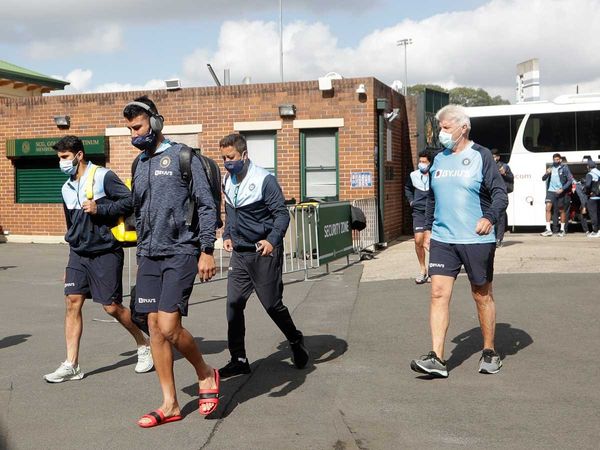
  • The Indian men’s and women’s team landed in London on Thursday and then headed to the Ageas Bowl in Southampton to start their quarantine. And the players are looking forward to finishing off their hard quarantine and then start training.
  • While the men’s team will gear up for the World Test Championship final against New Zealand, the women’s team will take on the English team in a one-off Test before playing ODIs and T20Is.
  • Taking to Twitter, BCCI posted a video of the travel from Mumbai to Southampton and wrote: “Excitement is building up as #TeamIndia arrive in England.” Speaking in the video, spinner Axar Patel said: “It has been wonderful. First two hours watched a movie, and then slept for six hours. Now having breakfast. Planning to get into quarantine after reaching. As of now we are told we cannot meet each other for three days.”
  • Batsman Cheteshwar Pujara said both him and his daughter slept really well in the flight. The video showed almost all the members of the contingent as they moved around inside the charter.
  • The World Test Championship final has now been granted an exemption by the UK government as outlined in The Health Protection (Coronavirus, International Travel, and Operator Liability) (England) Regulations 2021, released on May 17.

CONCLUSION

  • “As per the bio-safety protocols established for the event, in line with UK government and Public Health England requirements, the Indian Men’s team will arrive in the UK on 3 June 2021 via a charter flight and carrying evidence of a negative PCR Test,” ICC had said in an official release.
  • At the Hampshire Bowl, the players were tested again before commencing a period of managed isolation. Regular tests will be conducted during the period of isolation. Players’ activity will be allowed in a gradually increasing manner after each round of negative testing, moving from exercise in isolation to small group and then larger squad activity, whilst always remaining within the bio-secure venue.

Our scientists aiding global fight against COVID-19, says PM Modi; lauds them for ‘Made in India’ vaccine

KEY STORY

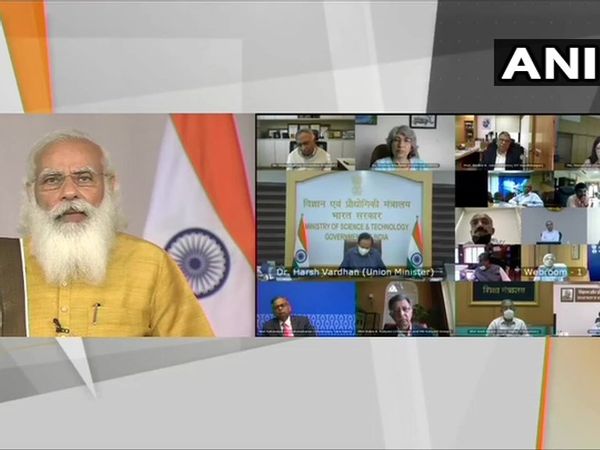
  •  Lauding Indian scientists for aiding the global fight against coronavirus pandemic, Prime Minister Narendra Modi heaped praises on them for making the ‘Made in India’ COVID-19 vaccine in a year.
  • The PM was speaking at the Council of Scientific & Industrial Research Society meeting while giving this statement.
  • COVID-19 crisis may have slowed down a bit, but even today our resolve is ‘self-reliant India, strong India’, he added.
  • India used to wait for years to get hold of innovations achieved outside, now our scientists working at the same quick pace, the PM said.

    ‘India aspires to become self-reliant and empowered in every direction’


  • Stressing on self-reliance, the PM said that from agriculture to astronomy, disaster management to defence technology, vaccine to virtual reality, India aspires to become self-reliant and empowered in every direction.
  • India is leading the world in the fields of sustainable development and clean energy, he said.
  • Earlier today, US President Joe Biden’s top medical adviser Anthony Fauci said that India’s contribution to global scientific knowledge is well known to all and the knowledge is already helping in COVID-19 prevention and care.
  • Speaking at the US-India Strategic Partnership Forum (USISPF) webinar on health cooperation, Fauci said: “India’s contribution to the global scientific knowledge are well known to all, with strong government support and a vibrant biopharma private sector, this knowledge is already yielding solutions to COVID-19 prevention and care.”

    Another ‘Made-in-India’ vaccine in pipeline 


  • On Thursday, US President Joe Biden announced that India will receive COVID-19 vaccines directly from its stockpile following which Vice President Kamala Harris spoke to PM Modi about the distribution.
  • Meanwhile, NITI Aayog CEO Amitabh Kant has said that there may be a slight demand-supply imbalance in vaccines during June-July but from August onwards, there will be an adequate number of doses available.
  • The Union government has also reserved 30 crore doses of another Made-in-India vaccine to be manufactured by Hyderabad-based Biological-E’s Covid vaccine, which is still in the final phase of clinical trials.
  • The government has made an advance payment of Rs 1,500 crore to the firm. This will be the second made-in-India vaccine manufacturer after Bharat Biotech’s Covaxin.

Karnataka SSLC Exams 2021 in 3rd week of July, 2nd PUC Exam Cancelled: S. Suresh Kumar

KEY STORY
  • Karnataka SSLC Examinations 2021 have not been cancelled. Putting to rest the speculations, Karnataka State Education Minister S. Suresh Kumar today said that the SSLC 10th Examinations would be conducted in the 3d week of July. He, however, did states that the Class 12 or 2nd PUC Exams 2021 stand cancelled.

    Karnataka SSLC Exams 2021 in July – students to appear for only 2 papers


  • As for the SSLC Examinations, the minister shared that students would have to appear for only two papers. The first would be a language examination while the second paper would be a multiple choice examination on science, maths and social sciences. The objective paper would be of 120 marks and have 40 questions each.
  • As for the safety of the student, the government he shared, would allocate more than 6000 centres for the examination. Only 1 student would be seated on a desk, he shared. Furthermore, all the invigilators or teachers on duty would be vaccinated before the examination.

    Karnataka 2nd PUC 2021 Cancelled


  • As for Karnataka 2nd PUC Examinations, the minister shared that the government has decided to cancel the Class 12 examinations in the state. The decision comes after students demanded that the state follow CBSE’s decision to cancel the Class 12 Board Examinations, so as to save their year.
  • The decision comes after much speculation over the Class 10, 12 Board Examinations in the state. The Minister also shared that the state was prepared to conduct both SSLC and PUC examinations. However, since most of the students are not in favour of the examinations, the state has decided to cancel the 2nd PUC Examinations. Evaluation criteira for the examinations, however, has not been shared.