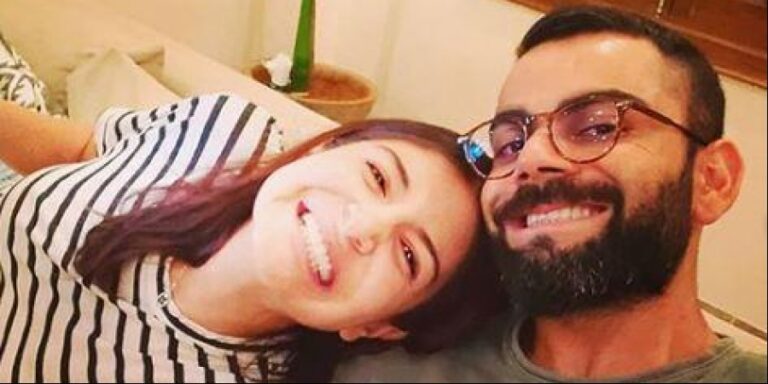
Bollywood actor-producer Anushka Sharma, on Friday shared a heartwarming glimpse of her last year’s lockdown memories spent with husband Virat Kohli, on social media.
From the looks of it, Virushka had created a special world for themselves during last year’s lockdown and it was filled with love, laughter and, of course, lots of dogs! In the short clip, Virat and Anushka are seen being chased by Anushka’s dog Dude and they are also seen feeding and playing with the super friendly stray puppies and dogs.
Anushka captioned the video as, “Some special, priceless moments from last year,” and added red hearts to it.
Her husband and Indian skipper Virat has openly credited Anushka for making him more conscious towards animal rights.
He had said, “Looking after the welfare of animals is a cause very close to my heart now as Anushka is very passionate about this issue. Her vision to help stray animals across India is truly inspiring for me and since I have met her, I have tried to understand more about animal rights and the urgent need for medical assistance for strays. It is our dream to create a safer space for the stray animals of our city.”
The recently posted video clearly shows how sensitive the duo is about dogs. Meanwhile, Anushka is looking to open her animal shelter next year in the outskirts of Mumbai, as per an official press release.
On the work front, Anushka recently resumed shooting while embracing motherhood after welcoming her first child with Virat. The couple was blessed with a baby girl named Vamika earlier this year.
The actor has largely been away from the limelight for the past two years. She was last seen in ‘Zero’ with Shah Rukh Khan and Katrina Kaif. She has recently produced two acclaimed projects – Amazon Prime Video web series ‘Pataal Lok’ and Netflix movie ‘Bulbul’.
Frankly, who needs reasons to eat chocolate! This highly treasured food dates back to 2000 BC. At that time, the Maya from Central America, the first connoisseurs of chocolate, drank it as a bitter fermented beverage mixed with spices or wine.
Why do you feel your mood lift after eating chocolate?
What happens next is that the psychoactive ingredients of the chocolate enter the bloodstream. The most prominent of these is theobromine, a caffeine-like molecule, which behaves as a mild stimulant. Chocolate also contains cannabinoids, which are the molecules responsible for the high experienced from smoking dope. However, the doses are tiny and are certainly not enough to cause the kinds of addiction to chocolate that many people experience. Nevertheless, the presence of stimulants may be one of the reasons why chocolate is often included in soldiers’ rations, the use of which goes back 200 years.
But for the health-conscious, the key is portion control, and yes, it must be dark chocolate. Also, dark chocolate is not the same as regular sugary chocolate in many ways and those eating it may have developed a taste for the same.
Dark chocolate is rich in:
Iron
Copper
Magnesium
Zinc
Phosphorus
Flavanols
Know the different chocolates:
Dark chocolate contains 50-90% cocoa solids, cocoa butter, and sugar; pure dark chocolate should not contain milk.
Milk chocolate contains anywhere from 10-50% cocoa solids, cocoa butter, milk in some form, and sugar.
There may be traces of milk in some dark chocolates from cross-contamination during processing, as the same machinery is often used to produce milk and dark chocolate.
Lower quality chocolates may also add butterfat, vegetable oils, or artificial colours or flavours.
White chocolate does not contain any cocoa solids and is made simply of cocoa butter, sugar, and milk.
Dark chocolate contains flavanols that may help to protect the heart. That is because its source – Cocoa is rich in flavanols – a healthy plant chemical.
Dark chocolate contains up to 2-3 times more flavanol-rich cocoa solids than milk chocolate. Flavanols have been shown to support the production of nitric oxide (NO) in the endometrium (the inner cell lining of blood vessels) which helps to relax the blood vessels and improve blood flow, thereby lowering blood pressure.
Flavanols in chocolate can increase insulin sensitivity in short term studies; in the long run, this could reduce the risk of diabetes.
Kuna Indians, an isolated tribe who live on the Caribbean Coast of Panama, (despite their high consumption of salt) seems to have averted hypertension due to their daily intake of cocoa beverage. They consume more than five cups daily of either home-grown or Colombian cocoa powder rich in flavanols.
A Harvard study notes that the urinary levels of flavanols in the island-dwelling Kuna were significantly higher and their rates of death from heart disease, cancer, and diabetes significantly lower than their counterparts living in urban centres.
But the paper also warns against excessive consumption of Dark chocolate. Dark chocolate is high in calories (150-170 calories per ounce) and can contribute to weight gain if eaten in excess.
Burning off the calories in a 170-calorie bar would require that you to:
either walk for 44 minutes
or jog for 19 minutes
or swim for 14 minutes
or cycle for 23 minutes
It also contains a moderate amount of saturated fat, which can negatively affect blood lipid levels.
The flavanols appear to outweigh the risk, yet doctors advise that eating dark chocolate in modest quantities may offer the greatest health benefits.
Disclaimer: Tips and suggestions mentioned in the article are for general information purposes only and should not be construed as professional medical advice. Always consult your doctor or a professional healthcare provider if you have any specific
MS Dhoni-led Chennai Super Kings (CSK) romped past KL Rahul-led Punjab Kings (PBKS) in match 8 of the ongoing IPL 2021 edition, at the Wankhede Stadium, Mumbai.
After a 7-wicket defeat at the hands of Rishabh Pant-led Delhi Capitals (DC), in defense of 189, the Yellow Army had a lot on their shoulders but brought their A-game to dismantle a misfiring Rahul-led PBKS franchise on Friday evening (April 16) and take the two crucial points in their kitty with a 6-wicket win (after Punjab managed 106-8).
Everything clicked for the three-time champions to make the occasion more special for their talismanic leader in the form of Dhoni, who was representing CSK for the 200th time in T20 cricket (176 in IPL, 24 in CLT20). From Deepak Chahar’s 4 for 13 to Moeen Ali’s all-round blitz, here are some of the top moments from match 8 between CSK and PBKS:
1) Deepak Chahar rocks PBKS with 4/13:
Where there is swing, there is Chahar among wickets. While the elder of the Chahar brothers wasn’t in form coming into this fixture, he found some movement on a tough and sticky wicket to dismantle PBKS’ top-order in a flash. Rattling Mayank Agarwal’s stumps with beauty to removing Chris Gayle, Deepak Hooda, and Nicholas Pooran like nine pins, Chahar returned with 4/13; his best-ever IPL figures.
Deepak Chahar with the well-deserved Man of the Match award for his brilliant bowling figures of 4/13 as #CSK register their first win of #VIVOIPL 2021.
As a result of Chahar’s spell, CSK made a dream start and remained on top throughout the course of the game (despite tottering a bit in the end). He was lauded by Ravi Shastri, Irfan Pathan, Aakash Chopra, and the likes on Twitter.
Wonder why Deepak Chahar had fallen out of favour for Team India in the T20s…..in the squad but not in the playing XI. World record holder….achieved that not too long ago. #PBKSvsCSK#IPL2021
Smart bowling by Deepak chahar. Surprise Bouncer is always a good option from swing bowler,as batsman always thinking to play on front foot to negate the swing. #CSKvPBKS
While the game belonged to Deepak Chahar, for his swing and surprise bouncers, all-rounders Ravindra Jadeja and Moeen Ali weren’t far behind in terms of overall contributions. With pressure from the word go on PBKS, due to Chahar’s spell, Jadeja added onto their woes with his electrifying presence on the field, diving full stretch to get rid of Gayle and accounting for Rahul’s run-out. He also remained economical with the ball, 0 for 19 (4).
Meanwhile, Moeen continued to grow further under CSK to return with 46 runs (off 31 balls) along with 1 for 17 (3). Overall, CSK showed more intensity on the field after their forgettable outing vs DC.
Dhoni remains a legend of the game, be it for Team India or CSK in the IPL. On Friday, the 39-year-old came out on the field for the 200th time in CSK colours (176 in IPL, 24 in CLT20s) to register another milestone for the Yellow Army. He looked more involved than the previous game, attacked with slips, and relentlessly used his bowlers whereas was at his usual best behind the stumps, directing the play at all times.
After 206 games overall in IPL, Dhoni is eighth on the all-time IPL batting charts with 4,632 runs (4,058 for CSK) at 40.63 with a strike rate of 136.67. He also has 449 runs for the Yellow Army in now-defunct CLT20.
In addition, the three-time IPL-winning skipper Dhoni holds the record of most sixes among Indians in the IPL (216). On the other hand, he is also the most successful wicketkeeper in the tournament (with 148 dismissals).
The Railways has given a green signal for the transportation of liquid oxygen on trains to Maharashtra after state principal secretary wrote to Indian Railways, seeking help in the transportation of liquid oxygen in cryogenic tankers.
The same stands approved by the Railways under the Roll-on, Roll-off (Ro-Ro) service to various destinations across states. The state will have to, however, bear the charges.
On Friday, the Railways formulated a policy for the transportation of liquid medical oxygen to Maharashtra, which remains the worst affected state by the second wave of the coronavirus pandemic.
“The matter has been examined. The competent authority has approved the transport of liquid medical oxygen in cryogenic containers,” it said, adding details of the charges to be levied for the service.
The circular said the staff accompanying liquid oxygen trucks to be loaded on the Ro-Ro service will be charged second class ticket for the journey and only two persons will be allowed to accompany the truck. The empty flow direction of the containers will also be charged by the railways, news agency ANI reported.
Earlier this week, Chief Minister Uddhav Thackeray had said there was a shortage of medical oxygen in Maharashtra and had sought Prime Minister Narendra Modi’s intervention to address the issue.
CONCLUSION
The PM took a comprehensive review to ensure adequate medical grade oxygen supply in the country on Friday. According to Prime Minister’s Officer (PMO), inputs from ministries like Health, DPIIT, Steel, Road and Transport were shared with PM Modi. He stressed that it’s important to ensure synergy across ministries and state governments.
Meanwhile, amid shortage, Mumbai’s All Kurla Committee provided oxygen cylinders. “COVID patients are approaching us and other NGOs. We help as per stock availability. It’s a chargeable service, but we give it for free to the poor,” said a member of All Kurla Committee.
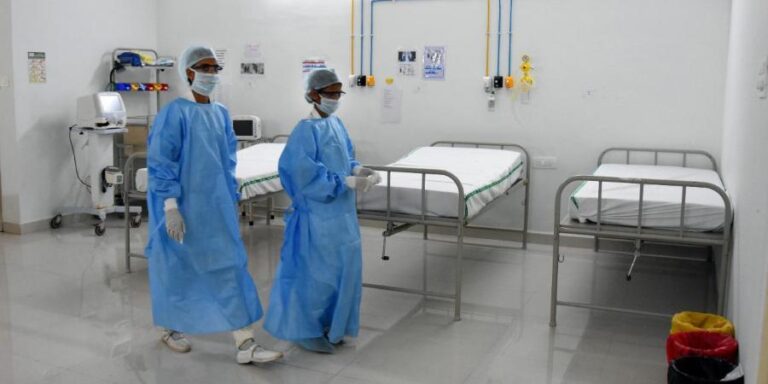
With many states and union territories (UT) across the country reporting a surge in the cases and deaths caused by COVID-19 for the past few weeks, the Union Health Ministry on Friday advised all central Ministries to issue instructions to the hospitals under their control or their PSUs to set-up exclusive dedicated hospital wards or separate blocks within the hospitals for COVID Care, as was done last year.
The ministry stated that this has been done as a significant measure to substantially augment the hospital infrastructure for effective clinical management of severe COVID-19 patients across the country.
These Hospitals/Blocks should have separate entry and exit points for the management of COVID19 cases, to provide treatment services including specialised care for the confirmed COVID19 cases, said the ministry.
It further stated that additionally, these dedicated hospital wards or blocks have to be equipped to provide all supportive and ancillary services including Oxygen supported beds, ICU beds, ventilators and specialised Critical Care Units (wherever available), laboratory services, imaging services, kitchen, laundry etc., along with dedicated health work force.
In the letter written to the Central Ministries, the Union Health Secretary had reiterated that the present situation of sudden surge in the COVID cases across the country calls for similar supportive action as last year from all such Central Ministries / Departments and their PSUs and the Hospitals under their control.
CONCLUSION
For the public to avail of the required treatment at these hospital wards/blocks, the Central Ministries have been also been advised that details of such dedicated hospital wards/blocks are provided to the public, duly coordinating with the respective health departments of States/UTs and the District Health Administration of the States/Districts wherever these hospitals are located, said the ministry.
As per the ministry, it has been suggested that a Nodal Officer may be nominated from the Ministry/Department for necessary coordination with the respective States/UTs for this purpose and their contact details be shared with the respective States/UTs as well as the Union Health Ministry.
Faced with an acute shortage of medical grade oxygen and vaccines in the wake of the massive second Covid wave that is nowhere near its peak, the Centre on Friday sought to ease all bottlenecks as part of its crisis management and step up their production.
Prime Minister Narendra Modi did a comprehensive review of the oxygen situation and urged Union ministries and state governments to build synergy to address gaps in the system.
The meeting came a day after the government decided to import 50,000 metric tonnes of oxygen after first claiming that there is enough production capacity within India to meet the demand.
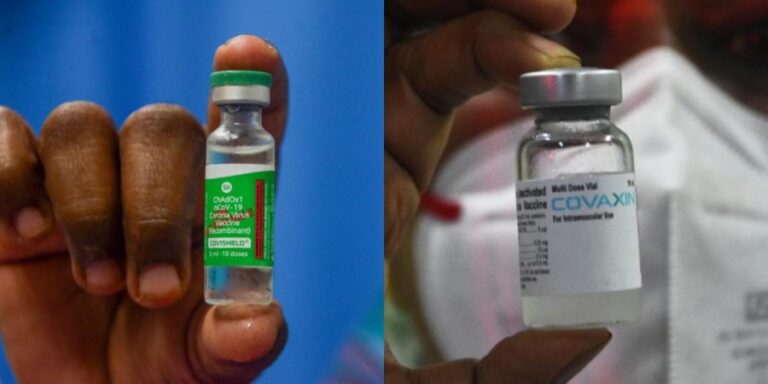
To address vaccine shortage, the government sought to scale up production of the indigenous Covaxin developed by Hyderabad-based Bharat Biotech, by providing `65 crore aid to the company’s unit in Bengaluru.
It has already allowed Mumbai-based Haffkine Institute to produce Covaxin on a technology transfer basis. Covaxin’s share in the current vaccine pool in just about 15%, as the present capacity of Bharat Biotech is about 1 crore doses a month.
The Centre plans to increase production to 2 crore doses by May-June and by 6-7 crore by July-August, for which talks are on with at least two more companies – Indian Immunologicals Ltd, Hyderabad and BIBCOL, Bulandshehar.
The meeting convened by the PM specifically took stock of the oxygen availability in 12 high burden states, including Maharashtra, Madhya Pradesh, Gujarat, Uttar Pradesh, Delhi, Chhattisgarh, Karnataka, Kerala, Tamil Nadu, Punjab, Haryana and Rajasthan. These states have already been allocated 4,880 MT, 5,619 MT and 6,593 MT for meeting their projected demand as on April 20, April 25 and April 30, respectively.
Union Home Secretary Ajay Bhalla on Friday wrote to the state chief secretaries, advising free inter-state movement of oxygen-carrying vehicles, saying no curb shall be imposed on oxygen manufacturers and suppliers to impose geographical limits on supplies.
Meanwhile, a section of the saints camping in Haridwar for the Maha Kumbh were agitated after an akhada claimed the mela would end on Saturday. A final decision will be taken by the Akhada Parishad, the apex body of 13 akhadas.
As of now, at least 50 seers have tested positive for Covid 19. They include Mahant Ravindra Puri of the Niranjani Akhada who on Thursday announced that his akhada will consider closure of the mega event on April 17.
Variants of concern
Of about 14,000 Covid samples whose whole genomic sequencing has been carried out, 1,189 tested positive for variants of concern, the Centre said on Friday
Maharashtra Aurangabad district administration has acquired the oxygen plant of R L Steel in Chitegaon of Paithan to produce nearly 500 medical grade oxygen cylinders per day
New Delhi IndiGo to waive fee to change time or date on domestic tickets that are booked between April 17 and April 30 due to Covid. However, cancellation fee will be chargeable
Uttar Pradesh Full lockdown across all UP districts this Sunday
Andhra Pradesh Vaccine stock exhausted, just 4,300 doses could be administered on Friday; CM writes to Modi for 60 lakh more doses
O2 status check
Madhya Pradesh Daily supply up from 130 MT to 295 MT. In 34 districts. 1,273 O2 concentrators installed till date. Air Concentrator Units are being installed in 8 districts
BIHAR Govt claims oxygen availability is sufficient for the next 7-10 days. But private hospitals complain of oxygen scarcity
JHARKHAND Govt claims there is no shortage, but patients are facing problems in getting oxygen support. A special task force has been formed to address it
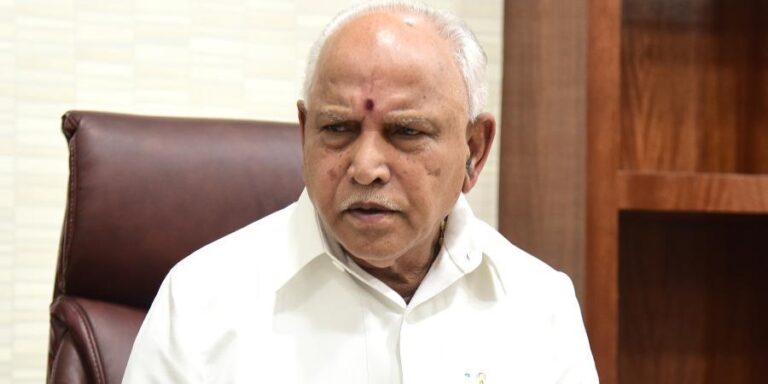
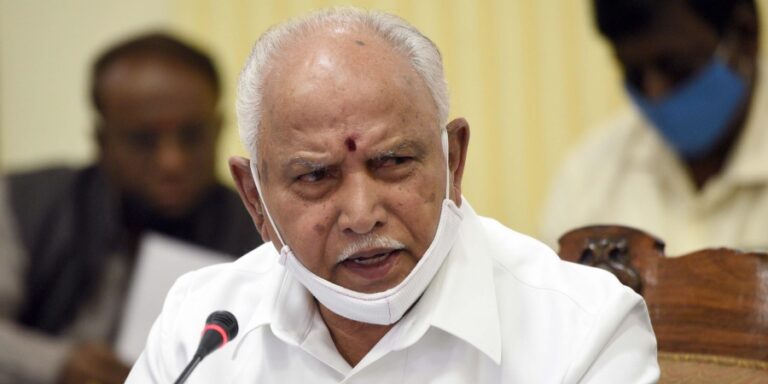
Despite having the symptoms of fever and fatigue, Chief Minister BS Yediyurappa had on Wednesday and Thursday attended political meetings in Gokak and Belagavi surrounded by many politicians and seers.
The CM met at least 70 Lingayat seers including Chandrashekhar Shivacharya Swamiji at Hukkeri Hiremath in Belagavi on Thursday morning before he left for the political meetings in Belagavi which is going to the bypolls.
The CM also attended the Dhanwantari Homa, a religious ritual at Hukkeri Hiremath, in the presence of Chandrashekhar Shivacharya Swamiji and a host of BJP leaders.
On Wednesday, the CM attended a public meeting at Arabhavi before holding a roadshow as part of the bypoll campaign. According to sources, Arabhavi MLA Balachandra Jarkiholi, who joined the CM at the campaign in Arabhavi, also has tested positive for Covid on Friday.
In the road-show held by him at the Belagavi South assembly segment, the CM was joined by Union Minister Pralhad Joshi, former CM Jagadish Shettar, Ministers Umesh Katti, and Murugesh Nirani, MLAs Abhay Patil and Anil Benake and Rajya Sabha member Iranna Kadadi, and BJP leader MB Zirli.
CONCLUSION
The CM abandoned the road-show midway after he felt uneasiness due to fever and fatigue. He left for the UK-27 hotel where he was staying since his arrival in Belagavi.
According to sources, at least 40 employees of the hotel were asked to undergo Covid testing and the entire hotel was sanitised.
Following the incident, Minister Umesh Katti decided to isolate himself for the next five days as he stayed close with the CM on both days.
Karnataka has issued new Coronavirus guidelines in the wake of the rising Coronavirus cases. As per the new directives, more than 200 people will not be allowed in open spaces while a limit of 100 people has been capped for enclosed spaces for wedding ceremonies.
The new COVID-19 guidelines bans the religious gatherings and caps political gatherings in open spaces at 200. Further, only 25 people will be allowed to attend last rites.
Meanwhile, Karnataka Chief Minister B S Yediyurapppa on Friday said that the night curfew in all the seven districts will continue as before and it will be reviewed only after April 20.
He took the decision after chairing a review meeting to assess the Covid situation in the state at his official residence. Chief Minister Yediyurappa also asserted that there was no need for enforcing any lockdown or weekend lockdowns.
“Yes, cases have increased, I have gathered all the information. But the situation in Karnataka is completely different and should not be compared with other states.
We have our own issues which need to be addressed. There is a need for appropriate action to be taken to curb the virus in the state. We need cooperation from people also, state machinery alone is not enough to battle the dreaded virus,” he said.
CONCLUSION
At present, Bengaluru, Mysuru, Mangaluru, Kalaburagi, Bidar, Tumakuru and Udupi-Manipal are under a night curfew between 10 p.m. and 5 a.m. till April 20. Notably, the curfew is limited to only these district headquarters but rural areas under these districts are exempted.
Karnataka today reported 14,859 new COVID-19 positive cases and 78 deaths in the past 24 hours. The state’s cumulative count stands at 11,24,509, with 1,07,315 active cases. A total of 10,03,985 have recovered from the disease in the state.
The Lancet Covid commission India Task Force, in a report titled ‘Managing India’s Second COVID-19 Wave: Urgent Steps’, has not recommended a blanket national or state lockdown.
It has instead suggested localised, phased restrictions or closures. It has recommended that the next two months can be used to prepare the education sector for a safe opening of schools, colleges in July 2021 for the next academic year.
It suggested a temporary ban on gatherings of groups larger than 10 for the next two months. They said the government should report regularly on the frequency of AEFIs post vaccine and also provide financial support for genomic sequencing to identify mutants and variants.
Experts in Karnataka largely agreed with the report. Dr Pradeep Banandur, member of the Covid Technical Advisory Committee and Additional Professor, Department of Epidemiology, National Institute of Mental Health and Neuro Sciences, said last year’s lockdown was to prepare for the impending number of cases, oxygen beds, ventilators, etc, while this year the country has facilities.
As government beds are not sufficient, the state is negotiating with private hospitals for beds which will be worked out in a day or two, he said, adding localised containment measures have already been followed in Karnataka.
The second wave is expected to last 2-3 months and schools and colleges can be reopened once the test positivity rate is below 2 to 5 percent, he opined. Financial resources should be allocated for treatment and genomic sequencing, he added.
The report recommended an aggressive vaccine coverage of priority population groups, followed by phased opening up to younger populations with specific focus on the urban poor especially in states (and districts) with high rates of infection.
Dr Giridhara R Babu, Professor and Head Lifecourse Epidemiology, Public Health Foundation of India who is also a member of TAC and author of this report, said Karnataka can tie up with private manufacturers to produce vaccines. “It is high time we do it,” he said.
SOME RECOMMENDATIONS
A mandatory seven-day institutional quarantine for all visitors arriving from other countries, with an RTPCR test conducted on day 8, and the option of completing another week in home isolation if the test is negative.
Seasonal migration of workers from urban areas to rural parts is about to commence with the start of the harvest season. The State Government should support migrant labourers equipping them with masks, options for testing and vaccination and by setting up quarantine centres in host districts.
Some users have reported getting banned on WhatsApp unexpectedly. The users had reported that they were logged out of their accounts when they tried to access the app.
The bans can be only be imposed if the user has breached the terms of conditions of the Facebook-owned messaging app but in most cases, no such thing ever happened. However, users can drop a mail to the company if they think they are wrongly banned by the company.
Users on WhatsApp can either face a temporary or a permanent ban depending on the situation. One of the prime reasons why you can lose access to your WhatsApp account is because you could be using the unauthorized version of the app.
This is called “WhatsApp mods” and using a modded version violates the terms and conditions of the company. To avoid such situations users should download the correct version of the app from either Google Play Store and Apple App Store. No downloads should be made from a third-party app store.
A user on Reddit reported that she was suddenly banned on WhatsApp and despite writing tons of messages to the company, she did not hear back from them. She did reveal that one of her WhatsApp contacts was involved in a hack.
This could have happened due to a latest vulnerability that lets cyberattackers suspend the account of any user using their phone number.
The researchers had discovered that the attackers first download WhatsApp on their phones and try to log in using the victim’s mobile number. When that is being done, WhatsApp’s two-factor authentication system immediately sends a code to the victim’s phone number.
This prohibits the attacker to gain access to the account, but he keeps repeating the process. Due to several failed login attempts, WhatsApp disables login for 12 hours. This stops both the victim and attacker to log in to their WhatsApp account for 12 hours.
CONCLUSION
WhatsApp often bans accounts that send bulk or automated messages. As per a report by Wabetainfo, WhatsApp bans over 2.5 million accounts per month because of bulk and automated messages.
You can also be permanently banned by the messaging app if your number has been used for suspicious activities. “WhatsApp bans accounts that use their service intensively, for example, if the account sends a lot of messages within a certain amount of time.
Don’t worry, WhatsApp introduced a limit that’s really impossible to reach for a human. If an account reached the limit, it means it’s not a human, but it’s an automated system,” the report states.
WhatsApp often fails to notify users before banning their account but advises users to write a mail to WhatsApp support if they have been banned wrongly.