New WhatsApp scam out, with just one OTP message criminals hacking into WhatsApp accounts

KEY STORY

  • If you use WhatsApp and get a text from one of your friends asking for a six-digit code, you should not send it out immediately. You should first confirm from your friend, if it is indeed them, and only then should you share the code, best if it is shared over a call.
  • If you send out the six-digit code to your friends or contacts without confirming first, you can fall prey to a scam and will end up getting your account hacked.
  • WhatsApp users are exposed to scams or phishing messages every now and then. More often than not, it is difficult to identify such messages.
  • A new scam message targets users by posing as one of their contacts asking them to send a code that they receive in their inbox.
  • The code is reportedly a confirmation code that WhatsApp sends to all its users if someone tries to sign in from a different device. As for the friend who is sending you the message asking for the code, it is very likely that his or her account has also been hacked.
  • Alexis Conran, a radio show host, shared about the scam on Twitter. In a series of tweets, Conran wrote, “It starts with this text message that arrives on your phone out of the blue. Immediately after you get a WhatsApp message from someone in your contacts. The message reads ‘Hello, sorry I sent you a 6-digit code by SMS by mistake, Can you transfer it to me, please? It’s urgent.”


  • He further explained that the WhatsApp account of the message sender is also hacked and that scammers will try and hack their contacts
  • “What has actually happened is your friend’s account has been hacked. Scammers are now trying to hack all their contacts. You are one of them. They are trying to set up WhatsApp on a new device with your number.
  • WhatsApp acknowledges this and sends a 6-digit authorisation code to your mobile phone by SMS. The scammers now try and get you to forward it to them by pretending to be a friend of yours. If you send them the code, your WhatsApp will be hacked.”
  • So how can you stop this from happening? The first step is to enable two-factor authentication or two-step verification on your WhatsApp account. Here is how users can enable two-step verification on WhatsApp.
  • The other step is to call your friends and verify if they indeed sent the message, and also to inform them that their WhatsApp account has been compromised. Once they log in to their accounts, spammers will not be able to get access.

World Health Day 2021: Significance, theme apart, here’s what doctors’ advice on what we need to focus on

KEY STORY

  • April 7 of each year marks the celebration of World Health Day.  The theme for World Health Day 2021 is “Building a fairer, healthier world for everyone”.

World Health Day 2021

  • World Health Day 2021 comes at a time when the Covid-19 pandemic has undercut recent health gains, pushed more people into poverty and food insecurity, and amplified gender, social and health inequities.

    Significance and History of World Health Day:


  • From its inception at the First Health Assembly in 1948 and since taking effect in 1950, the celebration has aimed to create awareness of a specific health theme to highlight a priority area of concern for the World Health Organization.
  • This World Health Day, our doctors are calling for action to eliminate health inequities, as part of a year-long global campaign to bring people together to build a fairer, healthier world.
  • Our health is the result of not merely our own wisdom and care. It is also synchronised with the wonderful advancements in medical sciences that our doctors utilise to incorporate with a human touch into keeping us healthy.
  • So we decided why not ask doctors on what should we – personally and as a society/nation, resolve this World Health Day to do for our personal and collective societal health, what are the sins that we commit with respect to health care and what should be our step one in the direction of correction?

    Women’s health needs more focus:


  • Dr Aswati Nair, Fertility Consultant, Nova IVF Fertility, New Delhi, told us, “Women’s reproductive health is one of the neglected aspects in the Indian healthcare system. According to a WHO report, maternal mortality is unacceptably high and about 2,95 000 women died during and following pregnancy and childbirth in 2017.
  • This worrisome data shows equal stress needs to be laid on reproductive health. We need to educate, both in the rural and urban setup, about the various reproductive health issues as the late diagnoses of the same might lead to serious issues and in most cases death also.
  • Just like people go for other health checkups, they should also get themselves scanned for reproductive health. Pregnant women and those who are planning to start their family must go for their reproductive health evaluation in a regular interval of time.”
  • Dr. Tanveer Aujla, Senior Consultant Obstetrics & Gynecologist, Motherhood Hospital, Noida shares similar thoughts. “Today’s multi-tasking women are so occupied in striking a balance between their personal and professional lives that they often ignore their health.
  • But such ignorance towards their health sometimes leads to serious reproductive disorders. Since most women in our country give their health little priority, they compromise on their health issues.
  • Conditions like endometriosis are quite common and it’s seen in atleast one in 10 women. For example diagnosis of endometriosis, which is popularly known as chocolate cyst, takes a long time almost a decade from symptoms to diagnosis because they generally consider the painful menstrual period which is a prominent symptom for this to be normal and delay seeking treatment for it.
  •   All such delayed decisions make women less productive at their work ,affect the quality of their life and can also affect both, social and sexual aspects of a woman’s life. We urge all the women to give precedence to their health over other responsibilities so that they live a good quality life,”

    Don’t take your kidneys for granted:

    “Care for the little kidneys. It’s worth an investment. Early pickup and prompt management of paediatric renal diseases lead to successful long term outcomes,” says Dr Kanav Anand, Consultant Pediatric Nephrologist, Sir Ganga Ram Hospital.

    Food is medicine:


  • A wise man once said that eat food (as judiciously and attentively) as medicine or in later life, you may have to eat medicine for food. Dr Geeta Grewal, Wellness Expert and Cosmetic Surgeon, 9Muses Wellness Clinic, Gurugram tells Times Now: “Most people are unaware of how food affects their health and go on abusing their bodies by consuming junk food till the disease is manifested in their body.
  • The onus of educating the public about the importance of healthy nutrition lies both with healthcare workers as well as the government. Each doctor has to play a role in it and talk about the importance of good food habits to each and every patient, irrespective of the malady he/she has come with.
  • The government must enforce some regulations on ads of soft drinks and junk food – these products are endorsed by celebrities and hugely impact impressionable minds. Shop-owners should not be allowed to stock sugar-loaded junk foods at the entrance as it acts as an enticement.”

    Your skin squeals about your inner health:


  • Dermatologist and Cosmetologist Dr Rajeev Suryawanshi of Phoenix Skin Hair Laser Clinic & Spa at Mittal Tower at Savedi in Ahmednagar, says, “Building a fairer, healthier world for everyone”, that’s the theme of World Health Day 2021. Equal and adequate healthcare for all is essential to achieve this goal.
  • Just providing equipment and medicines without trained individuals to the society will not fulfil the wish of  “Health for all”. When it comes to skin health care, it is essential to educate the population about the misuse of search engines like google, of fairness products and steroids. The biggest enemy is carelessness, ignorance as well as half baked knowledge. People should give up the habit of self-medication.”
  • World Health Day activities extend beyond the day itself and serve as an opportunity to focus worldwide attention on these important aspects of global health. So what is your health resolution this year?
    Times Now News wishes you a Happy World Health Day and a Healthy life ahead.

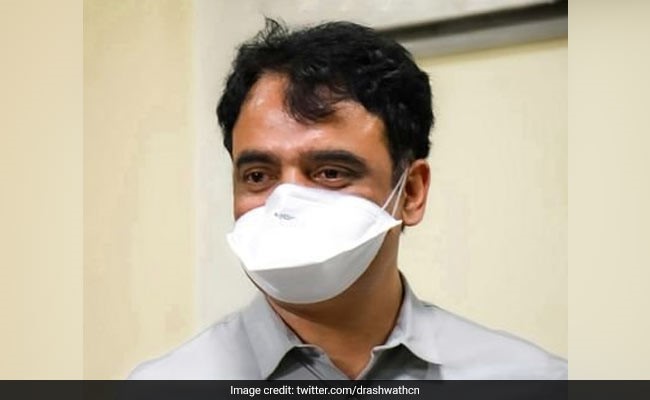
Govt to focus on e-vehicles: Ashwath Narayan

KEY STORY

  • The State Government is focussing more on logistics and electric vehicle adoption, said Deputy Chief Minister and IT-BT Minister Dr C N Ashwath Narayan, here on Tuesday. At a panel discussion on ‘Governing Goods on the Move’, organised by the World Economic Forum as part of the ‘Global Technology Governance Summit 2021,’ he said that the country, being a growing economy, needs to invest in robust logistics infrastructure and efficient supply chain.
  • The government has fast-tracked the long-pending Bengaluru suburban train project, expanded the Bengaluru Metro train network and assisted last-mile logistics companies in their operations, he added.

Covid 19: Private hospitals to reserve 50% beds for govt patients

KEY STORY

  • With cases rising rapidly, the Karnataka government instructed private hospitals and health facilities to reserve 50% of their beds for government-referred Covid-19 patients. Just a day ago, the government had directed private hospitals to reserve 20% of beds for Covid care.
  • On Tuesday, the government modified the rule to make it mandatory for them to set aside half their bed capacity — including high dependency units (HDU) and ICU beds with and without ventilator. The government also said that private establishments are free to use the remaining beds to treat Covid patients who come on their own.
  • These were the rules specified in the government order dated June 23, 2020, which has been invoked again. The order also restored the rates the government had specified last year for treatment of Covid patients. Requisitioning of hospitals for government patients will be done BBMP Chief Commissioner and Deputy Commissioners of districts.

CONCLUSION

  •  For patients referred by the government, charges for the general ward have been fixed at Rs 5,200, Rs 7,000 for HDU, Rs 8,500 for isolation ICU without ventilator and Rs 10,000 for isolation ICU with ventilator.
  • For private patients, rates have been fixed at Rs 10,000 for the general ward, Rs 12,000 for HDU, Rs 15,000 for isolation ICU without ventilator, and at Rs 25,000 for isolation ICU with ventilator.

Woman consumes poison in front of union minister Pralhad Joshi’s house in Hubballi

KEY STORY

  • A woman consumed poison in front of the union minister and local MP Pralhad Joshi’s house in Hubballi on Tuesday. She has been admitted to KIMS Hospital in the city where she is battling to survive.

Union Coal Minister Pralhad Joshi

  • Shridevi Veerappa Kammar lives with her ailing husband and two children at Garag village in Dharwad taluk. Her house collapsed last year but only got Rs 50,000 compensation which was not sufficient to repair the damages. Demanding more compensation she tried to meet MP Joshi and Dharwad rural MLA Amrut Desai several times, but failed.
  • Before consuming poison, she wrote a death note narrating her story. She could not meet Joshi in Hubballi despite trying for the last 5-6 months, the letter said. Even though she travelled to New Delhi to meet him, Shridevi was denied permission due to an ongoing parliament session.
  • When she contacted MLA Amrut Desai, he did not respond and asked her to meet MP. Finally, on Tuesday afternoon, she prepared a death note and visited Joshi’s house at Mayur Estate in the city. She consumed poison and approached the minister.
  • Veerappa Kammar, the victim’s husband said she consumed poison without alerting the family and asked Joshi to help her after revealing that she has consumed poison. The minister allegedly asked his staff to send her out and the police arranged an ambulance to shift her to KIMS hospital.

CONCLUSION

  • She is undergoing treatment at KIMS hospital and said to be critical. However, the case is not yet registered in the police station till late evening.
  • Meanwhile, Dharwad tahsildar has issued a press note saying Kammar’s house partially collapsed (less than 25 per cent) and comes under ‘C’ category compensation. The government has announced Rs 50,000 as compensation to the Kammar family.

After Devdutt Padikkal, RCB all-rounder Daniel Sams tests positive for COVID-19

KEY STORY

  • Australian all-rounder Daniel Sams has become the second Royal Challengers Bangalore (RCB) player to have tested positive for Covid-19. Sams joined the team hotel in Chennai with a negative coronavirus report on April 3rd but his subsequent test reports turned out to be positive.

RCB all-rounder Daniel Sams tests positive for COVID-19

  • Sams is reportedly asymptomatic but has been sent to the isolation facility. He would need multiple Covid-19 negative reports before being allowed to enter the RCB bio-bubble and start training with his teammates.
  • The RCB medical team is keeping a tab on Sams’ progress and ensuring that all protocols set by the Board of Control for Cricket in India (BCCI) are followed in the case.
    In its official statement, RCB said: “Official Statement: Daniel Sams checked into the team hotel in Chennai on April 3rd, with a negative COVID report on arrival. His report from the 2nd test on 7th April came positive. Sams is currently asymptomatic and he is currently in isolation at a designated medical facility. Royal Challengers Bangalore medical team is in constant touch with Daniel Sams and continue to monitor his health and abide by the BCCI protocols.


  • RCB open their account in the 14th edition of the T20 league on April 09 (Friday) against Rohit Sharma’s Mumbai Indians (MI). The franchise is already without Padikkal for the tournament opener and now Sams also becomes unavailable.
  • Padikkal had tested positive for the virus on March 22 and has since been in quarantine. Although some reports suggested that one of his Covid-19 tests has turned out to be negative, for him to be allowed to join the training camp, a string of negative Covid test results would be required.
  • The good news for the franchise is that both the players are doing well and do not have serious symptoms of the virus. They should be able to resume training and be available for selection as soon as a string of negative results is established.


COVID-19 spreading at fast pace, next 4 weeks ‘very very critical’; coronavirus vaccines safe: Centre

KEY STORY

  •  The Centre on Tuesday expressed serious concern over the increasing coronavirus cases in the country, saying that the next four weeks are very critical for India as the contagious disease is spreading faster in the country than during the last year.
  • Addressing a press conference along with Union Health Secretary Rajesh Bhushan, Niti Aayog member, professor Vinod K Paul, said the impact of the COVID pandemic has increased in India.
  • Warnings were given that the situation should not be taken for granted. The situation of the coronavirus pandemic has worsened and the speed of increasing coronavirus cases is higher than last time, he noted.
  • Paul asserted said that the next four weeks is very critical for the country.
  • He urged the eligible people to take the COVID vaccine doses without any hesitation as the vaccines available in India are completely safe. Paul asked the people to take the coronavirus situation seriously and wear masks and maintain social distancing at public places.
  • “The intensity of the pandemic has increased and it is spreading faster than last time. In some states, it (the condition) is worse than others but the upswing (in cases) can be observed across the country,” Paul said.

“People’s participation is vital to control the second wave. The next four weeks are going to very critical. The entire country has to come together and make efforts to fight the pandemic,” he added.

Increase percentage of RT-PCR tests: Centre to states

  • The Union Ministry of health and family welfare asked Maharashtra to increase the percentage of RT-PCR tests which has been reducing in the state in the last few weeks. It may be noted that Maharashtra has been reporting the maximum number of COVID-19 cases in the country.
  • Expressing concern over the fewer number of RT-PCR tests in Maharashtra, Union Health Secretary Rajesh Bhushan said that only 60 per cent of total tests were done through RT-PCR method in Maharashtra last week.
  • The Centre has suggested the states take the COVID testing (RT-PCR tests) to 70 per cent or above, Bhushan said.

‘COVID situation in Maharashtra, Punjab, Chhattisgarh cause of concern’

  • Addressing a press conference, Bhushan said that the coronavirus situation in Chhattisgarh is a cause of concern as despite being a small state is it reported 6 per cent of total coronavirus cases and 3 per cent of total deaths in the country.
  • The condition of Chhattisgarh has deteriorated in the second wave of infections, Bhushan asserted.
  • Maharashtra, Punjab, Chhattisgarh remain states of maximum concern on account of high daily COVID-19 cases and deaths, the health Ministry official asserted.
  • Of all the active cases in the country, 58 per cent are in Maharashtra. 34 per cent of the total deaths across the country have been reported in Maharashtra, he said.
  • Of the top 10 districts having most of active COVID cases, seven districts are from Maharashtra, one from Karnataka, Chhattisgarh and Delhi each, the Union health secretary said.
  • The 10 districts are Pune, Mumbai, Thane, Nagpur, Nashik, Bengaluru Urban, Aurangabad, Ahmednagar, Delhi and Durg.
  • Bhushan said the coronavirus death toll in Punjab and Chhattisgarh is a cause of extreme concern.
  • Urging the eligible people to get themselves vaccinated against coronavirus, the health ministry said that COVID-19 vaccination has to be ramped up in a scientific manner.

CONCLUSION

  • The Central government has constituted 50 high level multi-disciplinary public health teams and deployed them to 50 districts across Maharashtra, Chhattisgarh and Punjab in view of the recent very large numbers of daily new COVID-19 cases and daily mortality being consistently reported by these states.
  • The teams have been rushed to 30 districts of Maharashtra, 11 districts of Chhattisgarh and 9 districts of Punjab to assist the state health department and local authorities in COVID-19 surveillance, control and containment measures.

Delhi govt. imposes night curfew to check COVID-19 cases: Check out travel restrictions

KEY STORY

  • Delhi was one of the most affected cities in the country last year when the first wave of coronavirus hit the country. The viral transmission was so adverse in the national capital that it recorded over 9,000 fresh cases of COVID-19 in one day in November last year. The situation in Delhi has once again become worrisome as the NCT now grapples with the second wave of coronavirus and is registering a surge in the number of fresh cases.
  • Case in point; Delhi recorded 3,548 new cases yesterday, compelling the government to initiate some strict measures to check the spread of the viral disease.
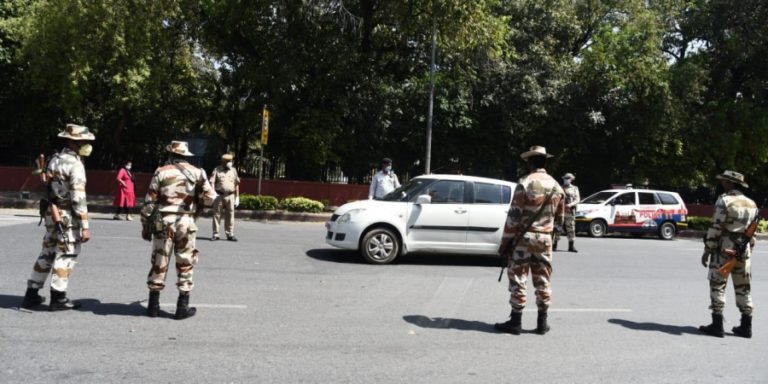
  • In a bid to reduce viral transmission, the Delhi government has decided to impose a night curfew in the city from 10 PM to morning 5 AM till 30 April, 2021. Along with this, the authorities have also decided to put in place some travel restrictions. Let’s take a look at the activities that are permitted in the national capital during the night curfew.
  1. Government officials related to ministries involved in providing emergency services (like Health and Family Welfare, Police, Prisons, Home Guards, Civil Defence, Fire, Public transport, Electricity, etc.) and other emergency services will be allowed to travel during the night curfew on the production of a valid identity card
  2. All private medical personnel like doctors, nursing staff, paramedical, etc. related to medical services like hospitals, diagnostic centres, clinics, pharmacies, etc. will be allowed to travel during the night curfew provided they have a valid I-card.
  3. Pregnant women and patients will be allowed to travel for medical and health services.
  4. People travelling to and from airports, railways stations, and ISBT (interstate bus terminal) will be allowed to travel on the production of a valid ticket.
  5. Intra and inter-state travelling of vehicles involved in the transportation of essential and non-essential goods will be allowed without an e-pass.
  6. People going for COVID-19 vaccination will also be allowed to travel during the night curfew only if they have a valid e-pass.
  7. The government has also made e-pass necessary for people involved with businesses like grocery shops, pharmacies, animal fodder, banks, insurance offices, ATMs, print and electronic media, telecommunications (internet services, broadcast, IT-enabled services, etc.), delivery of essential goods, power generation, private security services, manufacturing of essential commodities, production of units or services that require continuous process, fuel pumps and storage outlets, etc. to travel during the night curfew.
  8. Transport facilities like Delhi Metro, DTC, autos, taxi, etc. will be allowed only people in the above-mentioned categories (point 1 to 7) during the night curfew.
  9. Interstate travel of citizens only allowed with a valid e-pass if not for a medical emergency or essential activities.

Covid-19: Muslim leaders write to CM Uddhav Thackeray seeking relaxations in Maharashtra for Ramzan

KEY STORY

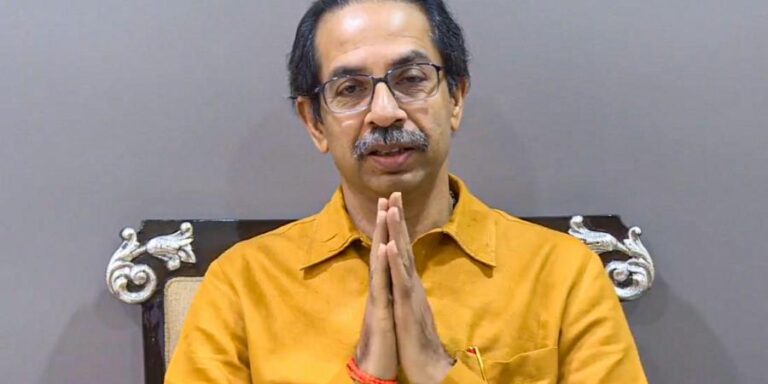
  • Muslim leaders have written to Maharashtra Chief Minister Uddhav Thackeray seeking relaxations in restrictions imposed to tackle the rising cases of coronavirus in the state.

Maharashtra: Raza Academy secretary criticises lockdown decision, requests  to allow Muslims to pray in Mosques during Ramzan

  • The Raza Academy, an organization of Indian Sufi Muslims that promotes Islamic beliefs through publications and research, met with government officials and have written to the CM, saying they want relaxations during Ramzan for the celebrations.
  • Last year as well, there was a demand from the community to gather for Iftar and other religious functions but it was not allowed and this time also, lockdown-like restrictions have been reimposed.
  • Religious functions have already been asked to be scaled down in the state as it remains the worst hit from the Covid-19 situation.
  • Maharashtra imposed curbs similar to a lockdown with the exception of transport services and essentials on Monday night. All non-essential shops, markets, and malls have been asked to remain shut until April 30.
  • The traders’ body has also given CM Thackeray an ultimatum to withdraw the shutdown. The Federations of Associations of Maharashtra (FAM), an umbrella body of more than 750 traders associations, with around 20,00,000 small businesses as members, has given Chief Minister Uddhav Thackeray a 24-hour ultimatum to open up non-essential shops in the state.
  • Maharashtra recorded 55,469 cases in the past 24 hours, prompting Leader of Opposition to appeal to CM Thackeray to ‘reconsider restrictions’. Fadnavis wrote a letter to the Maharashtra CM and requested him to reconsider restrictions to ‘save the lives of commoners’.

CONCLUSION

  • Meanwhile, the Maharashtra Cabinet is expected to also discuss the issue of Class 10 and 12 board exams today. New norms are likely to be brought in.
  • The education minister will likely come up with a plan if exams are to be positive or conducted at the same time.

Less sugar, please! New studies show why diabetics lose muscle mass faster

KEY STORY

  • Earlier, research by Ottawa Hospital Research had proved that people who keep their skeletal muscles toned tend to live longer, healthier lives. Now researchers from the Tokyo Metropolitan University have shown that skeletal muscle satellite cells, key players in muscle repair, proliferate better in low glucose environments.
    What are satellite muscle cells:

    essential for cellular growth

  • Satellite cells are a type of stem cell that, when they divide, produce either new satellite cells or myoblasts, which grow to become muscle cells. They can also go into a state of dormancy if the body deems them unnecessary due to a sedentary lifestyle. Skeletal muscle satellite cells reside between the two layers of sheathing, the sarcolemma and basal lamina and envelop myofiber cells in individual muscle fibres.
    The recent finding by the scientists at the Tokyo Metropolitan University team of researchers is contrary to the conventional wisdom that says mammalian cells fare better when there is more sugar to fuel their activities.
    The team now believes that since ultra-low glucose environments do not allow other cell types to proliferate, it could produce pure cultures of satellite cells, potentially a significant boost for biomedical research.
    How muscle repair works at the cellular level:
    1. With the wear and tear of everyday use, muscles continuously repair themselves to keep them in top condition.
    2. When myofiber cells are damaged, the satellite cells go into overdrive, multiplying and finally fusing with myofiber cells.
    3. This not only helps repair the damage but also maintains muscle mass.
    Medical science is still trying to understand how muscle loss happens due to illness, inactivity, or age, and what are the specific mechanisms involved.
    A team of scientists from Tokyo Metropolitan University led by Assistant Professor Yasuro Furuichi, Associate Professor Yasuko Manabe and Professor Nobuharu L Fujii have been studying how skeletal muscle satellite cells multiply outside the body.
    Looking at cells multiplying in petri-dishes in a growth medium, they noticed that higher levels of glucose had an adverse effect on the rate at which they grew. This is counterintuitive; glucose has, all along, been considered essential for cellular growth. It is converted into ATP, the fuel that drives a lot of cellular activity. Yet, the team confirmed that lower glucose media led to a larger number of cells, with all the biochemical markers expected for greater degrees of cell proliferation.
    Muscle cells are different:
    1. They also confirmed that this doesn’t apply to all cells.
    2. So was the amount of glucose in their original experiment somehow “just right?”
    3. The team added glucose oxidase, a glucose-digesting enzyme, to get to even lower levels of glucose, and grew the satellite cells in this glucose-depleted medium.
    4. Shockingly, the cells seemed to fare just fine and proliferated normally. The conclusion is that these stem cells seem to derive their energy from a completely different source. Their further research is to try and pin down what this is.
    Sugar levels in diabetics:
    The team notes that the sugar levels used in previous experiments matched those found in diabetics. This might explain why the loss of muscle mass is seen in diabetic patients and may have significant implications for how we might keep our muscles healthier for longer.
    Disclaimer: Tips and suggestions mentioned in the article are for general information purpose only and should not be construed as professional medical advice. Always consult your doctor or a dietician before starting any fitness programme or making any changes to your diet.