COMED-K exams on June 20, applications open on March 22, here’s the full timetable

KEY STORY

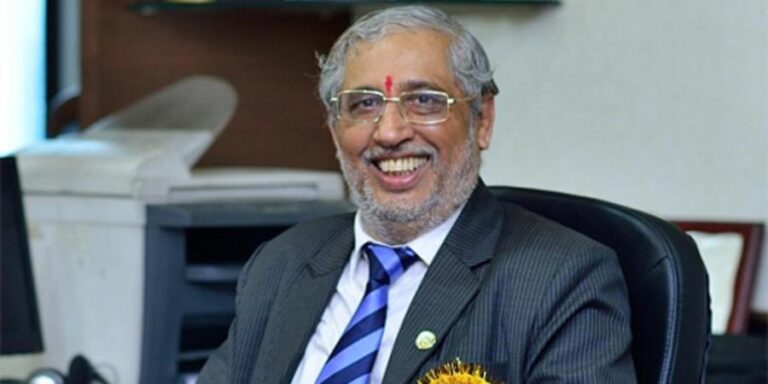
  • The Consortium of Medical, Engineering and Dental Colleges of Karnataka Under Graduate Entrance Test (COMED-K UGET) and Uni-GAUGE entrance examination will be held on June 20, Dr S Kumar, Executive Secretary of COMED-K, announced on Saturday.
  • The exams will decide on admissions to 180 self-funding engineering institutes in Karnataka associated with Karnataka Unaided Private Engineering Colleges Association (KUPECA) and 30 universities across India who are members of Uni-GAUGE.
  • The applications will start on March 22. The exams will be conducted online in 400 centres in 150 cities across India.
  • The consortium expects 80,000 candidates to write the examination this year, said Dr Kumar. More precautions will be taken for the examination compared to the previous year, he added.
  • The previous year saw a large number of engineering seats being left vacant after the delay in the start of the academic year, he said. The academic year that should have started in July was delayed to the end of December. Examinations were rescheduled thrice and held finally on August 19.
  • The average admissions under COMED-K is around 8,000 to 9,000 students. However, the pandemic year 2020-21 saw just 62,000 students register for COMED-K and just 44,000 write the examination. Adding to it, just about 4,900 seats were filled.
  • Dr Kumar said this year the consortium will work with the Karnataka Examination Authority, whose schedule they have to be in sync with, and ensure there is no delay in counseling.
  • We will need to find ways to help COMED-K students and go ahead with the schedule, he said.
    The consortium is planning to have four rounds of online counselling this year.
  • P Muralidhar, CEO, Era Foundation, a not for profit organisation that powers the Uni-Gauge exam, told The New Indian Express that the delay in the exams and start of academic year has caused several out of state students to opt for institutes in their state that started earlier.
  • About 65 to 70 percent aspirants for COMED-K are from outside the state, he said, adding that this year, the consortium plans to complete counselling in a month’s time, i.e. by August. Era will be abiding by the percentile marks through which students can apply to universities, he said.

    CONCLUSION

    Timetable at a glance

    March 22 – Application opens for COMED-K/Uni-GAUGE 2021
    April 15 – Mock test online
    May 20 – Last date for online payment and submission of application
    June 20 – COMED-K/Uni-GAUGE exam in two sessions 9 AM to 12 PM, 2 PM to 5 PM
    June 24 – Provisonal answer keys
    June 26 – Last day for objections to answer keys
    July 1 – Final answer keys
    July 6 – Test Score Card/ Rank Card
Maharashtra: Private offices, theaters asked to function at half capacity

KEY STORY

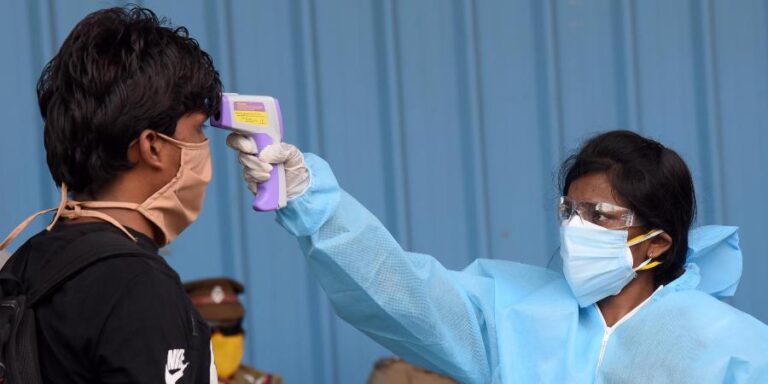
  •  With coronavirus cases rising at an alarming rate, the Maharashtra government on Friday asked private offices, except those related to health and other essential services, to function at 50 percent of their capacity.
  • A fresh notification said that drama theatres and auditoriums in thestate too should operate only at 50 per cent of theircapacity till March 31.
  • Government and semi-government offices can take their own decision regarding attendance while ensuring adherence to COVID-19 protocols.
  • The decision can be taken by concerned office heads. Chief Secretary Sitaram Kunte told PTI that offices can stagger their timings and encourage `work from home’.
  • Government and semi government offices have been given the permission to take their own decision as many of them are associated with COVID-19management, he said.
  • Cinema halls, drama theatres and auditoriums are already functioning at 50 percent capacity but the notification was issued to ensure the rules are followed strictly with a warning that the premises may be closed down if there are violations, said an official.
  • “We are not bringing fresh curbs, but only want to enforce the rules strictly,” he said.
  • On Thursday, the state saw a single-day rise of 25,833 coronavirus cases, the highest daily surge since the outbreak of the pandemic last year.
  • The notification also said that drama halls and auditoriums will not be used for religious, political, cultural or social gatherings.
  • If the order is violated, such establishments will be closed as long as the COVID-19 pandemic stays notified as a `disaster’ under the central government’s rules, it said.

CONCLUSION

  • The owner of the premises will also face legal action. On March 15, the state government had notified that cinema halls, hotels, restuarants and offices except those related to health and essential services will function at 50 per cent of their capacity.
  • Manufacturing sector is allowed to function at full capacity, but the workforce may be reduced and working shifts can be increased to ensure there is no crowding on shop floor, the notification said.
  • In case of violation of rules such as mandatory wearing of masks, the manufacturing unit will be closed as long as COVID 19 pandemic stays notified as a disaster.

Railways will never be privatised: Goyal

KEY STORY

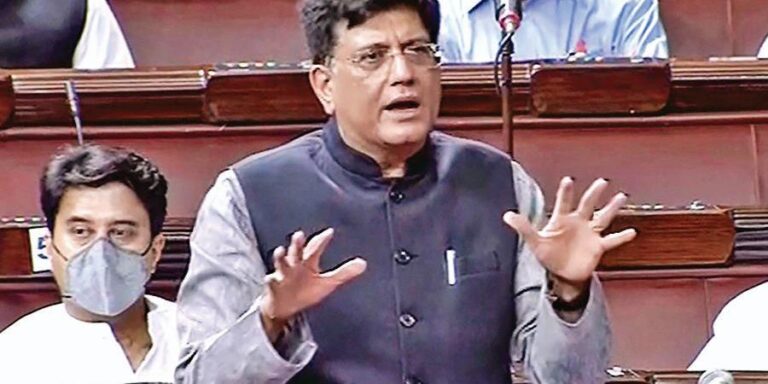
  • The government on Friday assured the Rajya Sabha that railways infrastructure will never be privatised, but it revealed plans to monetise railway assets to generate resources and boost growth.
  • Railways Minister Piyush Goyal said passenger train operations taken up through Public-Private Partnership (PPP) is aimed at bringing a total investment of about Rs 30,000 crore.
  • Speaking during the Question Hour, Goyal said the Railway Ministry has plans to monetise its assets, including through Eastern and Western Dedicated Freight Corridors, after commissioning, induction of 150 modern rakes through PPP, station redevelopment through PPP, railway land parcels, multi-functional complexes (MFC), railway colonies, hill railways and stadiums.
  • “Asset monetisation would help in generating more resources for infrastructure creation. Passenger train operations were taken up through PPP is targeted to bring a total investment of about Rs 30,000 crore,” Goyal said.
  • In response to a supplementary question asked by opposition leader Jairam Ramesh, the minister said the Congress leader seems to not understand the difference between privatisation and monetisation.
  • “When you privatise, you sell off the assets permanently, and it no more remains a part of the government ownership. In the railways, the plan is to monetise in terms of how it will generate resources, further investment and growth. The infrastructure of Indian Railways will never be privatised,” Goyal said.
  • The minister said dedicated freight corridors are a separate corporate entity and the railways is supporting them. “The railways is supporting but is not the owner of tracks that the DFC is laying. If we raise funds by leasing them, giving them out to the private sector to use in the interim period we are doing a service to the nation,” he said.

    Phone-tapping: BJP targets Rajasthan govt

  • BJP general secretary and Rajya Sabha member Bhupender Yadav hit out at the Congress government in Rajasthan on Friday over the phone-tapping case, accusing it of violating people’s constitutional rights to their privacy.
  •  Speaking to reporters, he said the state government has itself acknowledged that phones had been tapped and claimed that not only the common citizens but also Congress members were at the receiving end of the exercise.
  • Yadav said the Constitution provide every citizen rights to his or her privacy, and the government’s job is to protect those rights. What the state government has done violated the Constitution and constitutional norms.

Airtel and Vi may roll out indirect tariff hikes later this year, here is what it means

KEY STORY

  • Airtel and Vi could introduce indirect tariff hikes to boost average revenue per user (ARPU), an online report citing industry executives and analysts has stated. Indirect tariff hikes would mean that even the pricing of the plans would remain the same, their benefits would, however, be reduced.

  • Further, the telcos could count the current tariffs as pre-tax or exclusive of taxes and users would be subjected to pay extra. As of now, all prepaid mobile plans are priced inclusive of taxes.
  • Apart from the pre-tax, the indirect methods of tariff hikes could include reducing benefits from a plan like the validity period of postpaid plans or cutting down on data or voice allowances on existing prepaid plans without changing the pack value. This would lead customers to opt for a plan of a higher value, analysts told ET.
  • PhillipCapital told the publication that it expects Vi and Airtel could indirectly introduce tariff hikes by “maintaining their current prepaid plans at the same price, but making them pre-tax, which would translate into an effective tariff hike of 18 per cent”. Further, reducing validities from 28 days to 24 days could result in a 16 per cent effective tariff hike without hurting the customers.
  • Some analysts also noted that the indirect tariff hike could prove to be unpopular leading to a churn with price-conscious users migrating to less costly alternatives like Jio, which already gives its current tariffs priced at a 10-15 per cent discount. Kunal Vora, a senior telecom analyst said that tariff hikes could lead to unnecessary confusion amongst consumers.

CONCLUSION

  • While Airtel MD Sunil Mittal had last year noted that the telco will not be the first one to introduce tariff hikes and will follow other telcos when they do it. Reports have also noted that Vi is eyeing a higher market share for which it is expected to keep the plans at the current pricing. Vi is not likely to increase tariffs until Q3 of 2021.
  • Airtel is gaining more new subscribers month after month. In January 2021, Airtel added 58.92 lakh new subscribers January 2021, while Jio added 19.56 lakh new subscribers and Vi added 17.10 subscribers. The total subscriber base of Airtel, Jio, and Vi as of January 2021 is 34.46 crore, 41.07 crores, and 28.59 crores respectively.

World Sleep Day: 10 Point schedule that will help you get health-enhancing, restful sleep

Every year, 3rd week of Friday is celebrated as World Sleep Day with the theme to highlight the importance of the Right Sleep. This year World Sleep Day shall be celebrated on 19th March 2021. The slogan for the 14th annual World Sleep Day, which is this year, is ‘Regular Sleep, Healthy Future.’ This theme and slogan is a call to all sleep professionals to advocate and educate the world about the importance of sleep for achieving an optimal quality of life and improve global health.

Who created World Sleep Day?

  • There is no undermining the importance of sleep. The body needs rest just as it needs exercise, fresh air, good food, love, companionship, etc. Sleep deprivation causes illnesses of various kinds. Therefore, this annual awareness event was started by a group of dedicated healthcare providers and members of the medical community working and studying in the area of sleep medicine and research.
  • The goal of the first World sleep day was to bring together sleep healthcare providers to discuss and distribute sleep information around the world.
  • The first co-chairs of World Sleep Day were Liborio Parrino, MD, Associate Professor of Neurology at Parma University, Italy, and Antonio Culebras, MD, Professor of Neurology, Upstate Medical University, and Consultant, The Sleep Center, Community General Hospital, Syracuse, New York, USA.

Why was World Sleep Day created?

  • Sleep medicine professionals and researchers have been striving to impress upon all the importance of healthy sleep. By creating this day, the professionals working in this field could have a dedicated day to highlight the importance of sleep which is as important as activity and eating right. The creators of this event aimed to create awareness and to celebrate the role sleep played in building a healthy life.
  • Aprameya Rajput, a certified Sleep Coach, and Sleep Apnea Consultant who leads Morpheus Healthcare, a company that provides diagnostic, consultation as well as therapeutic services across all disorders related to Sleep and Respiratory Medicine, shared a few points on how the quality of life can be improved with healthy sleep. Rajput holds CCSH certification in Clinical Sleep Health.
  • “Sleep is one of the three pillars of a healthy lifestyle alongside healthy eating and regular exercise. Sleep disturbances may lead to poorer physical and mental health and are known to increase the risk of developing other chronic health issues such as heart disease, type 2diabetes, obesity, stroke, cancer, and mental health conditions. Inadequate sleep is also associated with a reduced life span. Therefore we need to have good and right sleep. On World Sleep Day, we are creating awareness amongst the masses about the right sleep and its benefit,” Rajput said.


10 point recommendations for health sleep worldsleepday-org

How can we have a regular sleep? 

Dr Lourdes DelRosso, Co-chair of the World Sleep Day 2021 Committee highlights why we need to remember the two processes that regulate both the timing and length of sleep:
  1. Circadian regulation (process C) and
  2. Homeostatic control (process S)
Although many other factors affect sleep, such as environment, stress, and medications; understanding these two processes will help us strive towards a consistent sleep schedule.
Process C:
  1. Refers to our internal clock.
  2. Is regulated by a part of our brain called the suprachiasmatic nucleus (SCN) of the hypothalamus.
  3. This clock regulates and controls the 24-hour sleep-wake cycle via the influence of light and melatonin.
  4. In the absence of light (as during the evening hours), melatonin is produced promoting sleep but in the presence of light, the production of melatonin ceases.
  5. Perception of light signals our brain that is daytime and we need to wake up.
  6. If we continue working on digital monitors till late in late, our behaviour can override these natural signals. Bright lights at night shut down the production of melatonin.
  7. As a result, we end up delaying sleep until late hours of the night.
Process S:
  1. Promotes sleep based on the previous amount of time that we spent awake.
  2. During wakefulness, our brain accumulates substances that promote sleep.
  3. When we sleep these substances are cleared up and we feel alert again.
  4. This process is particularly important when we take naps in the afternoon.
  5. That is because we deplete the sleep-promoting substances and we are not able to fall asleep at a reasonable time in the evening.
The best sleep is when we synchronize our sleep/wake times to our internal clock and our sleep propensity finding the perfect equilibrium between process C and process S.
  • Do not underestimate the value of sleep:
  • Sleep is involved with many physiologic systems.
  • Quality of sleep partly rules capacity such as memory consolidation, control of inflammation, hormone regulation, cardiovascular regulation, and many other important functions.
  • Insufficient sleep duration and poor sleep quality will be associated with several significant adverse health outcomes. Reduced sleep duration has been shown to cause impairments in cognitive and executive function.
  • Poor sleep has been associated with poor mental health.

Youngsters shouldn’t look like homeless beggars: Kangana Ranaut joins #Rippedjeans debate

KEY STORY

  • Actress Kangana Ranaut on Thursday joined the social media conversation that has followed Uttarakhand Chief Minister Tirath Singh Rawat’s controversial comment about women wearing ripped jeans.
  • However, unlike other celebrities, Kangana has not criticised Chief Minister Rawat. Instead she shared photographs of herself wearing ripped jeans on Twitter and offered a fashion tip to youngsters.
  • “If you want to wear ripped jeans make sure coolness quotient is of this magnitude as in these pics, so that it looks like your style not your state a homeless beggar who hasn’t got allowance from parents this month, most young people look like that these days,” Kangana tweeted, using the hashtag #RippedJeansTwitter.

  • The hashtag started trending on Twitter after Chief Minister Rawat commented on women wearing ripped jeans earlier this week.
  • He spoke about a female co-passenger on board a flight with him once, who was wearing ripped jeans and runs an NGO. Describing her attire, the Chief Minister questioned what kind of “sanskar” (values) the woman is going to give wearing ripped jeans and showing her knees.

India beat England by 8 runs in 4th T20 International, level series 2-2

KEY STORY

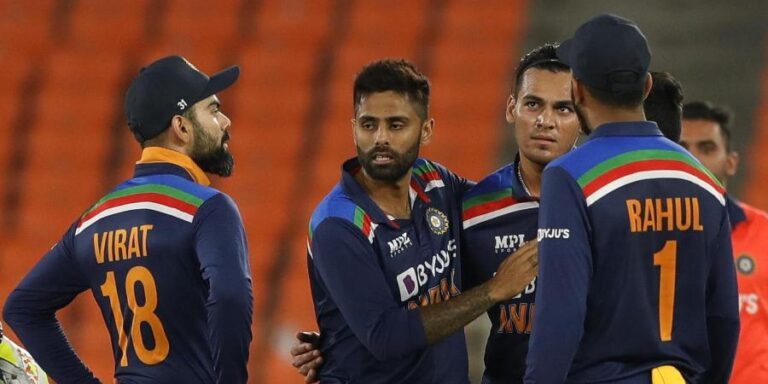
  • India survived some nervy late overs after Suryakumar Yadav’s blistering maiden fifty to register a series-levelling eight-run victory over England in the fourth T20 International here on Thursday.
  • Asked to bat, India posted 185 for 8, their highest total in the series, thanks largely to a 31-ball 57 from Suryakumar and then restricted England to 177 for 8 to win the match and level the five-match series 2-2.
  • The visiting side were in the hunt till Ben Stokes (46 off 23 balls) and Jonny Bairstow (25 off 19) were on the crease with the Indian bowlers leaking runs in the middle overs.
  • The dew also created problems for the bowlers to grip the ball.
  • But the home side made a fine recovery with Hardik Pandya and senior pacer Bhuvneshwar Kumar leading the way.
  • England needed 23 from the last over and Jofra Archer hit a four and a six but could not get the required runs in the end.
  • From 132 for 4 at the end of the 15th over, England could add just 45 runs in the last five overs.
  • India were led by Rohit Sharma in these anxious moments as Virat Kohli left the field.
  • Shardul Thakur ended with figures of 3 for 42 while Pandya got 2 for 16.
  • Rahul Chahar also got two and Bhuvneshwar Kumar one wicket.
  • Earlier, India kept England on a tight leash by giving away just two runs in the first two overs and removing the dangerous Jos Buttler (9) in the third over.
  • But Jason Roy (40) and Dawin Malan (14) began to pick up the pieces, with England reaching 48 for 1 after the powerplay.
  • Malan was dropped by Shardul Thakur when on 3 but he did not add too many runs as he was out for 14 in the eighth over with Rahul Chahar cleaning him up.
  • With the asking rate nearing 10 an over, England had to play the shots but Roy failed to have a complete control of his pull off Pandya in the ninth over for Suryakumar to complete an easy catch near the boundary.
  • At 71 for 3 at the halfway stage and the asking rate going past 11 runs per over, England had to take risks and Ben Stokes did just that with two huge sixes, one off Washington Sundar and the other off Chahar.
  • With the dew giving difficulties to the spinners, Stokes and Jonny Bairstow got the boundaries required to keep the asking rate near 10 an over.
  • Stokes was particularly in ominous form as he cleared the boundaries with ease.
  • But the dismissal of Bairstow in the 15th over and that of Stokes two overs later turned the match in India’s favour.
  • The duo had shared 65 runs for the fourth wicket. After sending Stokes back, Shardul Thakur took two in two.
  • Earlier, Suryakumar smashed a blistering maiden fifty and powered India to 185 for 8 after the hosts were asked to bat.
  • Suryakumar, who replaced an injured Ishan Kishan, struck six fours and three sixes in his 31-ball 57 to top score for India.
  • He debuted in the second T20I but did not bat in that match. India did not have a big partnership but quickfire knocks from Shreyas Iyer (37 off 18 balls) and Rishabh Pant (30 off 23) took the hosts to their highest total of the series.

CONCLUSION

  • England again opened the attack with leg-spinner Adil Rashid but Rohit Sharma (12) clobbered him for a six in the first ball of the match.
  • Rohit’s promising innings was cut short in the fourth over as he was caught and bowled by Jofra Archer, who took career-best figures of 4/33.
  • Suryakumar hit Archer for a six in the first ball he faced in international cricket, picked up the gaps and found the boundaries to keep the scoreboard moving, though the England bowlers were by no means wayward.

Union Road Transport Minister Nitin Gadkari announces vehicle scrappage policy in Lok Sabha

KEY STORY

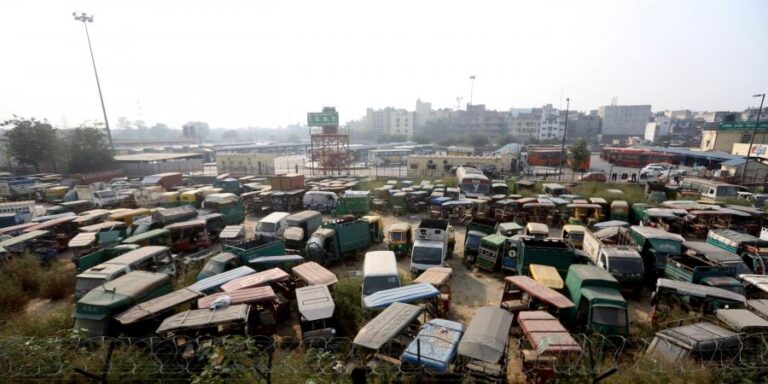
  • Union Road Transport and Highways Minister Nitin Gadkari announced the vehicle scrappage policy in Lok Sabha on Thursday.
  • In case of failure to get a fitness certificate, commercial vehicles will be de-registered after 15 years. Private vehicles will be de-registered after 20 years if found unfit or in case of a failure to renew registration certificates, the Minister said.
  • He added that under the new vehicle scrappage policy, owners of old vehicles will get strong incentives to scrap old and unfit vehicles.
  • “We have issued an advisory to all vehicle manufacturers to offer 5 per cent discount while selling a new vehicle against a scrapping certificate,” the minister said in Lok Sabha.
  • “In the interest of a clean environment and rider and pedestrian safety, the Ministry of Road Transport and Highways is introducing the ‘Voluntary Vehicle-Fleet Modernization Program’ or ‘Vehicle Scrapping Policy’, which is aimed at creating an eco-system for phasing out of unfit and polluting vehicles,” said the Union Minister in a suo-moto statement.
    “The objectives of the policy are to reduce the population of old and defective vehicles, achieve a reduction in vehicular air pollutants to fulfill India’s climate commitments, improve road and vehicular safety, achieve better fuel efficiency, formalize the currently informal vehicle scrapping industry, and boost the availability of low-cost raw materials for automotive, steel and electronics industry,” Gadkari added.


  • The criteria for a vehicle to be scrapped is primarily based on the fitness of vehicles through Automated Fitness Centres (AFCs) in case of commercial vehicles and non-renewal of Registration in case of private vehicles.

CONCLUSION

  • “The Ministry shall promote setting up of AFCs on a PPP model by state government, private sector, automobile companies etc.,” he said.
  • All vehicles of the central government, state government, municipal corporations, Panchayats, State Transport Undertakings, Public Sector Undertakings (PSUs) and autonomous bodies with the Union and state governments may be de-registered and scrapped after 15 years from the date of registration.
  • The tentative date for scrappage of government and PSUs vehicles above 15 years of age is April 1, 2022.
  • The new scrappage policy was proposed by Finance Minister Nirmala Sitharaman during her Budget speech last month.

Revised eligibility for engineering courses not binding on varsities, says AICTE chairman

KEY STORY

  • While Physics, Chemistry and Maths (PCM) at the school level have been made optional for engineering courses, it is not binding on the state or universities, said Anil Sahasrabuddhe, the chairman of the All India Council for Technical Education (AICTE) here on Thursday.
  • “Physics, Mathematics and Chemistry will remain crucial for engineering courses. Universities can still mandate students to pass these courses in order to be admitted into engineering courses,” he said. Sahasrabuddhe was speaking at an event held by the Education Promotion Society of India (EPSI).
  • He said that while PCM will remain crucial to engineering admissions, the decision was taken to allow students who picked allied subjects like computer science or information technology to still apply for engineering courses.
  • “A student picks between science and commerce streams when they are 14. They are not old enough to choose their career then,” he said. Even if some students, “skipped maths and chose computer science or information technology instead, they will still be able to pursue B.Tech computer science,” he explained.
  • AICTE’s approval process handbook 2021-22, which was released recently, said that in order to be admitted into engineering programmes, students should pass Class 12 with a combination of any three subjects of the following: Physics, Mathematics, Chemistry, Computer Science, Electronic Science, Information Technology, Biology, Informatics Practices, Biotechnology, Technical vocational subject, Agriculture, Engineering Graphics, Business Studies or Entrepreneurship.
  • This had created country wide confusion. The council chairman added that even if students have missed some course at the school level, colleges could offer bridge courses to compensate.
    No change in JEE for the next two years
  • After PCM was made optional, many students also wondered if it was a precursor to changing the pattern in which Joint Entrance Exams will be held. “There will not be any major changes in the JEE at least for a couple of years,” said Sahasrabuddhe. However, he added that the government was thinking of introducing an aptitude exam like the SAT, used abroad, to test if students have the aptitude for the courses they are choosing.
    Other key announcements made by the AICTE chairman
    1. A Higher Education and Research Commission of India to be set up soon comprising four verticals for setting standards, regulating, accrediting and funding.
    2. Multiple entry and exit points will be available in higher education.
    3. Uploading academic credentials in the digital National Academic Depository will be mandated for colleges.
    4. Foreign universities will be allowed to set up campuses in India.
    5. Approval will be given based on digital inspections and affidavits submitted by institutions. Penalty to be harsher if institutes are found flouting norms.
    6. As per the recommendations of the National Education Policy, the school system will be shifted from the 10+2 model to 5+3+3+4 model
    7. Students need not pick a stream in the last four years of schooling, but customise their choices from a range of courses.

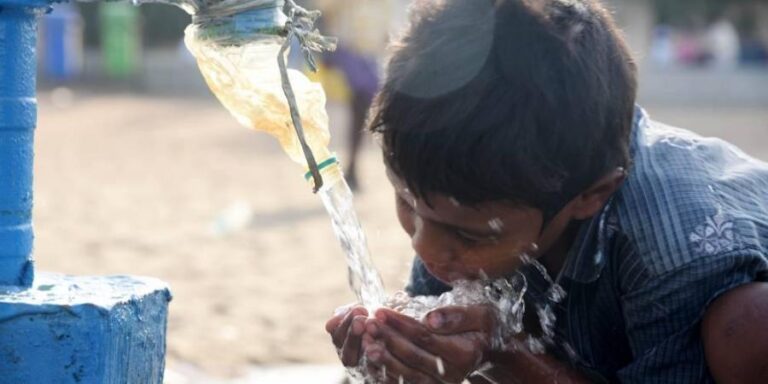
Over 2 crore children in India facing extremely high water vulnerability: UNICEF

KEY STORY

  • More than two crore children in India are experiencing extremely high water vulnerability, according to an analysis by UNICEF.
  • Extreme water vulnerability is the combination of the highest levels of physical water scarcity risks and lowest levels of drinking water service that affects a given population (surface water, unimproved or limited water service), it said.
  • The analysis, part of the water security for all initiative, identifies areas where physical water scarcity risks overlap with poor water service levels.
  • The communities living in these areas depend on surface water, unimproved sources, or water which can take more than 30 minutes to collect.
  • Of the 111,891,688 children facing water vulnerability, 20,478,554 are experiencing extremely high water vulnerability and 91,413,134 facing high water vulnerability, the study said.
  • UNICEF India Representative, Yasmin Ali Haque, said water scarcity makes everyday life very difficult for affected families, especially women and children and it exposes children to waterborne diseases and prevents them from adopting safe hygiene practices such as hand washing with soap.
  • “Women and girls are the most often burdened with fetching water long distances, which disrupts their education and opportunity for any work.
  • This is exacerbated by the fact that India is particularly vulnerable to climate change, which exposes women and children to increasing environmental hazards.
  • “The COVID-19 pandemic has underscored the crucial need to establish an access to clean water and sanitation, particularly for those living in the most vulnerable, water scarce conditions,” she said. Globally, over 1.
  • 42 billion people, including 450 million children, live in areas of high, or extremely high, water vulnerability which means that 1 in 5 children worldwide does not have enough water to meet their everyday needs.
  • The data shows that children in more than 80 countries live in areas with high or extremely high water vulnerability.
  • Eastern and Southern Africa has the highest proportion of children living in such areas, with over half of children – 58 per cent – facing difficulty accessing sufficient water every day.

CONCLUSION

  • It is followed by West and Central Africa (31 per cent), South Asia (25 per cent), and the Middle East (23 per cent).
  • South Asia is home to the largest number of children living in areas of high or extremely high water vulnerability – more than 155 million children, the study said.