Allahabad HC dismisses Delhi sisters’ plea claiming right on Ayodhya mosque land

KEY STORY

  • LUCKNOW: The Lucknow bench of Allahabad High Court on Monday dismissed a petition filed by two Delhi-based sisters claiming the ownership of the five-acre land allocated to the Uttar Pradesh Central Sunni Waqf Board (UPCSWB) for construction of a mosque in Dhannipur village in Ayodhya.
  • The division bench of Justice DK Upadhyaya and Justice Manish Kumar dismissed the petition while the petitioners had asked their lawyer to withdraw the plea.
  • Rani Kapoor Punjabi and Rama Rani Punjabi had moved the court on last Wednesday claiming their right on the land. They had claimed that their father Gyan Chandra Punjabi had purchased 28 acres of land in Dhannipur village under Sohawal tehsil `1,560 several years ago.
  • They had claimed that initially, their father’s name was part of the land records. However, the land itself continued to be in use by those who had possessed it earlier. Gradually, their father’s name was expunged from the local land records following which a dispute was filed before the local land consolidation officer.
  • The state opposed the petition saying that there were factual discrepancies in the petition in connection with the land records. The petitioners’ lawyer accepted the mistake and offered to withdraw the petition.

CONCLUSION

  • Notably, five-acre land was allocated by the Uttar Pradesh government to the UPSCWB in compliance of Supreme Court’s order delivered in connection with the Ayodhya title suit on November 9, 2019.
  • Meanwhile, the land for the proposed mosque complex in Ayodhya was given an all-clear by the local land consolidation officer who said that the petition did not relate to the land in Dhannipur at all. According to consolidation officer Rajesh Pandey, the issue was related to land in Shekpur Jafar —a village adjacent to Dhannipur.

Embassy in Abu Dhabi asks Saudi-bound Indians stranded in UAE to return home

KEY STORY

  • MANGALURU: With Saudi Arabia imposing a temporary suspension on air travel from 20 countries, the Indian Embassy in Abu Dhabi has asked Indians stuck in Dubai to consider returning and make their travel plans once the curbs are lifted.
  • Saudi Arabia, on February 2, had imposed a temporary suspension on the entry of citizens from 20 countries, including India, in order to curb the rise in COVID-19 cases.
  • People quarantining in Dubai and those who were en route to Saudi were left in the lurch because of this sudden announcement, and decided to stay put in the hope that the curbs on the travel will be lifted soon.
  • However, the recent advisory issued by the Indian Embassy in Abu Dhabi has come as a rude shock to them as it states that it is not possible for Indian nationals to transit via Dubai and Abu Dhabi to travel to Saudi Arabia and Kuwait.
  • “All Indian nationals are therefore advised to kindly ascertain the latest covid related travel guidelines of their final destination country before embarking on an outward journey from India. They are also advised to carry enough personal provisions and funds to cater to any emergency requirements. All those Indian nationals who are already in UAE en route to Saudi Arabia or Kuwait, are advised to consider returning to India and make their further travel plans only after the restrictions in the final destination countries are lifted.”
  • PA Hameed, a Riyadh-based activist, expressed disappointment over the Indian government’s response. Hameed, who had written to External Affairs Minister S Jaishankar to bail out Indians said, “India could do more than this.
  • A majority of those who are stranded in UAE are blue-collar workers who had returned to India several months ago after they were rendered jobless due to the pandemic. Now, they are risking their livelihoods to resume jobs and are in deep trouble because of this unexpected travel suspension.
  • While some are coming to Saudi on visiting visas, there are several others who are dependent on their work visas that are likely to expire within a few weeks.”

CONCLUSION

  • Hameed further stated that returning back to India is not a cakewalk, especially for blue-collared workers. “Problems for such people are piling on and on. They have spent every last penny, time, energy to get here in the middle of a pandemic by complying with the COVID-19 rules and regulations.
  • I am hereby requesting the Indian government to initiate the process of diplomatic talks with their Saudi counterparts and at least help out those who are stranded in Dubai and allow them to enter Saudi Arabia.
  • This will definitely bring a great amount of relief to close to 1000 NRIs and their families. In the worst case scenario, the Indian government should make repatriation arrangements for them,” he requested.

Karnataka anti-cow slaughter bill passed in Legislative Council

KEY STORY

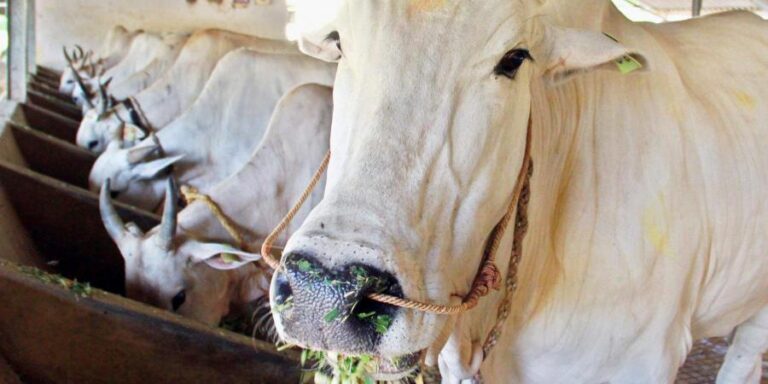
  • BENGALURU: Amidst protests from Congress and JDS members, the BJP government finally passed the Karnataka Prevention of Slaughter and Preservation of Cattle bill in the Upper House on Monday.
  • The bill was passed a day before the Council Chairman election where senior MLC Basavaraj Horatti is contesting as the BJP-JDS alliance candidate.
  • As Congress and JDS members came to the well opposing the bill, it was passed since BJP had the higher numbers in the House. According to BJP MLC Ravikumar, there were 27 BJP members, while Congress and JDS together had around 22 to 23 members. “As they came to well, their votes were invalid and BJP had majority votes. Also, there were more BJP members in the house while the bill was passed,” he added.
  • Prior to this, Congress members in the Upper House demanded that the State government withdraw the Anti-Cow slaughter law or send the bill to the Joint Select Committee. They said this was against farmers’ interests.
  • Congress MLC CM Ibrahim said Karnataka, “We are not like Maharashtra or UP. Do not bring communal colour to this bill. Give us time, I will invite all mosque heads. Let’s discuss. Refer this bill to the Joint Select Committee.”
  • He added that the government should think from the farmers’ angle.

CONCLUSION

  • Opposing the bill, Congress MLC BK Hariprasad said that this law will not help anyone, neither the farmers nor the common people. “You (State government) seems to be giving jobs to unemployed VHP and Bajrang Dal,” he said.
  • Naseer Ahmed too said 70 per cent of the people in this State who are nonvegetarians. “Take your bill back,” he demanded.
  • The anti-cow slaughter bill was passed in the Karnataka Assembly on December 9, 2020. It was not passed in the Legislative Council, forcing the government to take the ordinance route.

Vijayanagara’s emergence as 31st district fulfills decades-long demand of Hosapete people

KEY STORY

  • HUBBALLI: A two-decade-long fight came to an end on February 8, 2021, when the Karnataka government issued the notification to bifurcate Ballari, one of the largest districts in the state.
  • As Vijayanagara comes into existence as the 31st district housing six taluks, world heritage site Hampi and Tungabhadra Dam, people are thanking late politician and former deputy chief minister MP Prakash who was one of the first persons to raise the demands to bifurcate Ballari for better administration. Anand Singh, Haj and Wakf Board minister, was also one of the key persons behind this long-standing demand.
  • In 2019, Singh quit Congress that led to the collapse of the Congress-JD(S) coalition government. Later, he contested the bypolls and went on to become a minister in the BJP government. He and his alliance allegedly put pressure on the BSY government threatening to resign as a minister and quit the party if the Vijayanagara district is not carved out of Ballari.
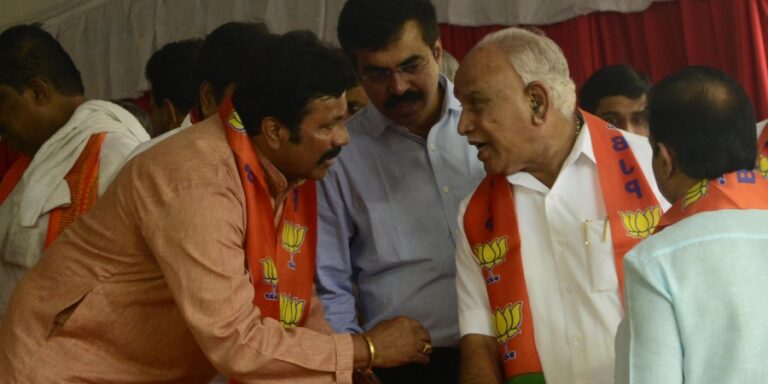
  • Some political pundits are of the opinion that the Yediyurappa government would have been in danger if it had not fulfilled this crucial demand. Even though some BJP MLAs opposed the new district, Yediyurappa kept his promise.
  • The state government approved the new district on November 18, 2020, and finally announced Vijayanagara as the 31st district in its gazette notification on Monday.
  • Political experts also point out that with this, Anand Singh has now become the unquestionable leader of the new district and Reddy brothers and minister Sriramulu, who are from Ballari, may not have a hold like Singh in the new district.
  • Calling it a historical day of justice for the people of the region, Y Yamunesh, a leader of the organisation fighting for the new district said few villages were about 170 km from Ballari, and people used to struggle to reach district headquarter for official work. “For effective administration, decentralisation is very important which is why people fought for bifurcation which turned fruitful today,” he said.

Mallikarjuna Kharge lashes out at PM Modi, gets threat call in minutes

KEY STORY

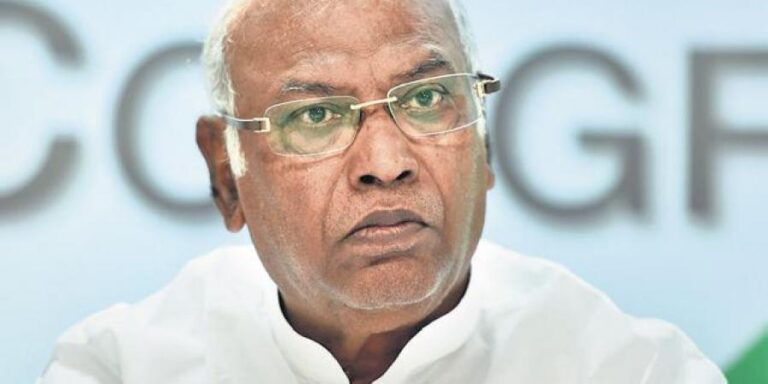
  • BENGALURU: Senior Congress leader and Rajya Sabha member M Mallikarjuna Kharge on Monday received a threat call, minutes after he spoke to the media in the national capital, criticising Prime Minister Narendra Modi’s speech in the Upper House of Parliament.
  • Congress Rajya Sabha member from Karnataka Syed Naseer Hussain said a Congress delegation led by Kharge spoke to the media, and reacted to the PM’s speech. Soon after, a call came through on Kharge’s mobile.
  • “It looked like the number was from Madhya Pradesh. The anonymous caller spoke in Hindi and accused him of always speaking against Modi and against the country,” the MP said, adding that the caller also threatened the senior Congress leader. The call was received by Kharge’s personal assistant.
  • Hussain was part of the Congress delegation with Kharge when he spoke to the media. Stating that the Congress is filing a police complaint, he said it was not the first time the veteran Congress leader was getting a threat call. In 2018, he had received a threat call, and an FIR (First Information Report) was also filed, but there was no investigation into it.
  • Kharge had also received a threat call when he was filing nominations to contest the Rajya Sabha polls from Karnataka, he said. “Imagine if a senior leader who has been in politics for 50 years is threatened for expressing their views, what is the situation in the country,” the Congress
    MP said.

Manoj Bajpayee begins filming for his next ‘Despatch’

KEY STORY

  • Manoj Bajpayee on Saturday commenced shooting for his next feature, “Despatch”.
  • Being directed by Kanu Behl of “Titli” fame, the film is an investigative thriller that unfolds in the world of crime journalism.
  • Bajpayee is essaying a character who finds himself sucked into the murky underbelly of business and crime.
  • The 51-year-old actor took to social media to share his excitement about being on the film’s set.
    “Back to where it feels like home #Despatch commences shoot,” Bajpayee wrote on Twitter.
  • To be produced by Ronnie Screwvala’s RSVP, the film will be a direct-to-digital release but a streaming platform has not been announced yet.
    “Get ready to look out for more clues as #Despatch starring @BajpayeeManoj commences shoot,” a post shared on RSVP’s official Twitter handle read.
CONCLUSION
  • The film also stars Shahana Goswami, who has worked on movies such as “Rock On”, “Ra.One” and “Firaaq”.
  • Besides “Despatch”, Bajpayee is currently awaiting the release of season two of his web-series “The Family Man”, directed by Raj Nidimoru and Krishna DK.

Vehicle scrappage policy could make new vehicles 30 per cent cheaper: Nitin Gadkari

KEY STORY

  • Buyers of new vehicles after opting for scrapping of their old and polluting vehicles will be offered benefits under the new policy to phase out old and polluting vehicles, Union minister Nitin Gadkari has said.
  • Terming the policy a boon, the road transport minister said it would lead to a 30 per cent boost to the Indian automobile industry turnover to Rs 10 lakh crore in the years to come.
  • The voluntary vehicle scrapping policy announced in the Union Budget for 2021-22 is touted as a major step to boost the Indian automobile sector, reeling under the adverse impact of the COVID-19 pandemic.
  • Under the voluntary vehicle scrapping policy, personal vehicles would undergo fitness test after 20 years while commercial vehicles would require it after completion of 15 years.
    “Those going for scrapping of their vehicles will get some benefits from the manufacturers. In fact, scrapping policy will prove to be a boon… not only it will boost economy, benefit automobile sector but also check vehicular pollution,” Gadkari, who also holds MSME portfolio, told PTI.
  • The minister said very soon the finer details of the policy will be unveiled by him and exuded confidence that the automobile industry will turn into one such sector that will offer maximum number of employments in the days to come.
  • Asked about disincentives for old and polluting vehicles not opting for scrapping since it will be a voluntary, the minister said there are provisions of green taxes, other levies and such vehicles will have to undergo strict fitness tests in automated facilities.
  • Secretary, Road Transport and Highways, Giridhar Aramane said incentives are worked out under the policy with discussions with stakeholders.
  • Asserting that scrapping has huge advantages, he said research has pointed out that an old four-seater Sedan will result in losses of Rs 1.8 lakh in five years while for a heavy vehicle it comes to Rs 8 lakh for a period of three years.
    “We want to give some incentives,” he said and added that the policy is mandatory, all vehicles will be required for automated fitness tests done without any human intervention, corruption or fudging of data.
  • He said automated fitness tests will be set up under PPP mode while for scrapping centres also private partners and state governments will be assisted.
    “Structure and framework of scrapping policy is under work and green tax has already been notified. Many states have notified in ineffective way ….We want to advise the state governments through notification under Motor Vehicles Act to consider imposing green tax on older vehicles which cause more pollution,” Aramane said.
  • Driving such vehicles that fail to pass automated tests will attract huge penalties and also be impounded.
  • Talking about the policy, Gadkari said: “This policy will boost buying of new vehicles besides generating huge employment. Automobile industry turnover which is 4.5 lakh crore at present is likely to swell to Rs 10 lakh crore in years to come with India becoming an automobile hub,” the minister said.
  • The export component of this which at present is 1.45 lakh crore will go up to Rs 3 lakh crore, he said and added that once the policy comes to practice availability of scrapped material like steel, plastic, rubber, aluminium etc will be used in manufacturing of automobile parts which in turn will reduce their cost by 30 to 40 per cent.
  • He said the policy will give a boost to new technologies with better mileage of vehicles besides promoting green fuel and electricity and cut on India’s huge Rs 10 lakh crore crude import bills.
    “One crore vehicles will go for scrap,” he said.
    Presenting the Budget for 2021-22 in Parliament, Finance Minister Nirmala Sitharaman on February 1 had said that details of the scheme will be separately shared by the ministry.
  • Gadkari had said the policy will lead to new investments of around Rs 10,000 crore and create as many as 50,000 jobs.
    “The policy would cover an estimated 51 lakh Light Motor Vehicles (LMVs) that are above 20 years of age, while another 34 lakh LMVs are above 15 years. It would also cover 17 lakh medium and heavy motor vehicles, which are above 15 years, and currently without valid fitness certificates,” Gadkari said.

CONCLUSION

  • These vehicles are estimated to cause 10-12 times more pollution than the latest vehicles, he said. Last month, the government had said it plans to impose green tax on old polluting vehicles soon in a bid to protect environment and curb pollution while vehicles like strong hybrids, electric vehicles and those running on alternate fuels like CNG, ethanol and LPG will be exempted. The revenue collected through the green tax will be utilised for tackling pollution.
  • Under the scheme, transport vehicles older than eight years could be charged green tax at the time of renewal of fitness certificate at the rate of 10 to 25 per cent of road tax, as per green tax proposal sent to states for consultations after cleared by the ministry.
  • Industry experts said the policy will provide a fillip to the Indian government’s efforts to position India as a global automobile manufacturing hub, as well as benefit global automakers with manufacturing industries in India, including Japanese giants Suzuki, Toyota, Nissan, amongst others.
  • On July 26, 2019, the government proposed amendments to motor vehicle norms to allow scrapping of vehicles older than 15 years in a bid to spur adoption of electrical vehicles. In May 2016, the government had floated a draft Voluntary Vehicle Fleet Modernisation Programme (V-VMP) that proposed to take 28 million decade-old vehicles off the road.

Zinc could help with fertility during the COVID-19 pandemic – Add these five zinc-rich foods to your diet

KEY STORY

  • New Delhi: The COVID-19 pandemic has taken a toll on the physical and mental health of people. As per reports, fertility among men and women has also been hugely affected due to the pandemic. While some studies have found that the disease can cause damage to the sperm, the rise in stress due to the virus has also contributed to fertility issues. A new study has now found a way to combat such ill-effects of the pandemic, on fertility.
    According to reports, researchers have said that zinc supplements for both men and women, who are attempting to conceive can assist in reproduction during the pandemic. Zinc may help prevent mitochondrial damage in young egg, and sperm cells.
    “According to the researchers, including Husam Abu-Soud from the Wayne State University in the US, zinc supplementation of up to a maximum of 50 mg per day for all adults could also be beneficial in enhancing immunity and fighting the viral disease process of Covid-19,” an IANS report said.

    Zinc-rich foods to add to your diet 

    While the study lays emphasis on supplements, you can also provide your body with the right amount of zinc it requires through the right foods. Here are some foods you should add to your diet, to ensure your body gets enough zinc. The RDI – required dietary intake for zinc stands at 11mg/day.
    1. Oysters – Oysters are popular seafood. 100 gm of oysters contain about 61 mg of zinc.
    2. Beef – Beef is popular meat eaten around the world. A 100 g of beef contains 11mg zinc.
    3. Chicken leg – Chicken is one of the most common meats consumed around the world. The leg piece from the chicken is a favourite of many. As per data, a 100 g chicken leg piece contains about 2 gm of zinc.
    4. Tofu – If you follow a vegan diet, it does not mean you cannot get your daily zinc intake. 100 g of tofu contains 2gm of zinc.
    5. Lentils – Lentils are another vegetarian or vegan source of zinc. 100 g of lentils contain 1 mg of zinc.

Disclaimer: Tips and suggestions mentioned in the article are for general information purpose only and should not be construed as professional medical advice. Always consult your doctor or a dietician before starting any fitness programme or making any changes to your diet.

India vs England, 1st Test Day 3: Rishabh, Pujara rescue India after early blows, England lead by 321 runs

KEY STORY

  • Rishabh Pant’s beautiful edge-of-the-seat hitting ended with his now customary indiscretion, putting India under the pump against a supremely confident England gunning for victory at the end of third day’s play in the opening Test here on Sunday.
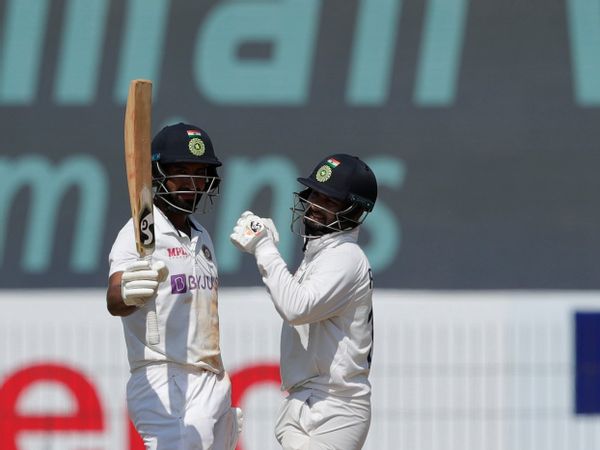
  • At stumps, India were 257 for 6 in reply to England’s massive first innings score of 578 with 122 runs still needed to avoid the follow-on after Pant (91 off 88 balls) and Cheteshwar Pujara (73 off 143 balls) added 119 runs for the fifth wicket.
  • Washington Sundar (33 batting, 68 balls), primarily a batsman converted into specialist off-spinner, was trying to make amends for his poor show with the ball in company of Ravichandran Ashwin (8 batting, 54 balls), who is never tired of a good on-field scrap, at stumps.
  • With a couple of days’ play still left, it will be interesting to see if England team management decides to give its bowlers some respite if it gets a chance to enforce the follow-on
  • The day belonged to the current toast of the Indian team, Pant, who smashed five towering sixes — all in the arc between long-on and deep mid-wicket off left-arm spinner Jack Leach (17-2-94-0). Leach didn’t exactly know what had hit him.
  • Sourav Ganguly treated left-arm spinners with disdain but what Pant showed on Sunday was more of pure, unadulterated contempt.
  • Leach wanted to target the rough outside Pant’s off-stump but every time he tossed it up, the stocky man from Rourkee came out like a raging bull who had been shown the red rag and hit the spinner with the turn into the Chepauk stands.
  • He dazzled with his brilliance and then in an annoying manner, forgot that discretion is always the better part of valour while trying to hit off-spinner Dom Bess (23-5-55-4) over extra cover against the spin. This was after dispatching England’s most successful bowler to the square leg boundary.
  • And he found the only man stationed at the deep extra cover — none other than Leach, who latched onto it as if his life depended on it.
  • It was an innings that can evoke different emotions depending on one’s own perception of Pant.
  • A Pant fan who loves his craft will feel an overriding sense of joy and exhilaration just seeing him hit Leach for four sixes few minutes after India were down and out at 73 for 4. Or just smack James Anderson through the cover region.
  • If one is talking about a Test cricket fan then exasperation can take over just thinking about the possibilities had he decided to exercise some caution. Pant has quite literally thrown away Test hundreds four times in his short career.
  • But then that’s Pant. There won’t be any middle path and perhaps the Indian team management will now try to mould itself rather than trying to change him which obviously didn’t work for both parties.
  • Just like they don’t want to change Cheteshwar Pujara, whose 73 off 143 balls over nearly four hours, was in complete contrast to Pant’s pyrotechnics.

CONCLUSION

  • The Indian team’s ‘PPP’ model — the ‘Pant-Pujara Partnership’ worked and even more so because the senior player was dispatching those boundary balls during their 119 runs stand in just over 24 overs.
  • But then Virat Kohli, who looked a touch dejected in the end, wouldn’t mind if Pant’s shot had sailed into the stands. Pujara’s pull had bounced off Ollie Pope stationed at forward short leg off Bess only to lob into the waiting hands of Rory Burns.
  • Bess easily impressed as he got the ball to dip and drift, something that worked for him while outfoxing Virat Kohli (11), who was caught at forward short leg.
  • Ajinkya Rahane (1) was brilliantly caught by Joe Root when a full toss dipped on him at the final moment. This was after Rohit Sharma (6) and Shubman Gill (29 off 28 balls) were dismissed by Jofra Archer (16-3-52-2).

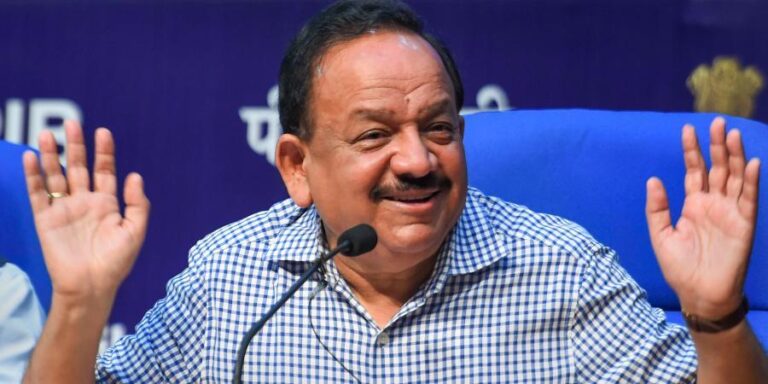
India developing seven more COVID vaccines: Union Health Minister Harsh Vardhan

KEY STORY

  • Union Health Minister Harsh Vardhan on Saturday said that the country is developing seven more COVID-19 vaccines and also working on further vaccine development to inoculate every citizen of India.
  • He said the Centre does not have any immediate plan to make the vaccines available in the open market and a decision will be taken as the situation demands.
  • The COVID-9 inoculation process for people aged above 50 will start in March, he told reporters.
    “We are not dependent only on the two vaccines as the country is working on seven more indigenous vaccines.”
    “Simultaneously, we are also working on the development of more vaccines because India is a huge country and we need more players and research to reach out to everyone,” he said.
  • Three of the vaccines are in the trial phase, two are in the pre-clinical stage, one is in phase 1 and another in phase 2, the Union health minister said.
    “The COVID-19 inoculation process for people above 50 years of age will start next month,” he said.
    “Presently, COVID-19 vaccines are being administered on an emergency basis, under full observation and in a controlled manner. If the vaccines are released in the open market, there won’t be any control over them. The decision will be taken as the situation demands,” he added.

CONCLUSION

  • Two COVID vaccines Covishield and Covaxin are being administered to healthcare and the frontline workers during the ongoing initial stages of the inoculation process.
  • Covishield, AstraZeneca’s COVID-19 vaccine, has been developed by the University of Oxford.
  • Covaxin is India’s first indigenous COVID-19 vaccine developed by Bharat Biotech in collaboration with the Indian Council of Medical Research (ICMR)-National Institute of Virology (NIV).