Covid-19 Vaccine: South African President Urges Rich Countries To Stop ‘Hoarding’ Vaccines

KEY STORY

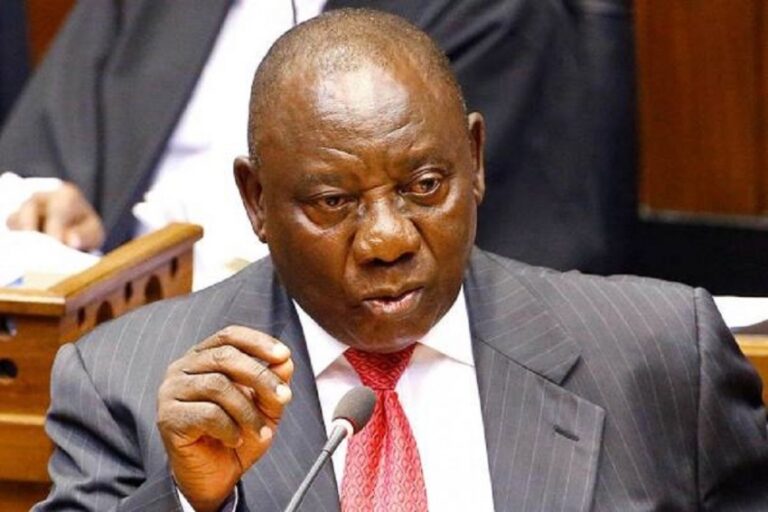
  • “Release the excess vaccines that you’ve ordered and hoarded,” South African President Cyril Ramaphosa said in a candid plea to rich countries to ensure vaccine distribution equity.
  • Ramaphosa claimed that rich countries are “hoarding” coronavirus vaccines and procuring large amounts of doses — leaving others vulnerable.
  • “The rich countries of the world went out and acquired large doses of vaccines from developers and manufacturers, and some countries have even gone beyond and acquired four times what their population needs,” he said.
  • “There’s just no need for a country, which perhaps has 40 million people, to acquire 120 million doses or even 160 million,” the president said, in a during a virtual State of the World Address at the World Economic Forum (WEF) Davos Dialogues.
  • We are all not safe if some countries are vaccinating their people and others are not, Ramaphosa said.
  • Ramaphosa lauded the efforts of the World Health Organization (WHO) to set up a COVAX facility because he said it was aimed at equity in the distribution of the vaccines.
  • “We, realising how all richest countries in the world are behaving in the acquisition of vaccines, set up a vaccine access task team in Africa and have been marginally successful.
  • “But we need those who have hoarded the vaccines to release (them) so that other countries could have them,” the president said.
  • Ramaphosa said all countries have to act together in combating coronavirus as it affects everyone equally.
  • “Therefore, our remedies and actions to combat it must also be equal and must be overarching for all of us and must not be something that special countries or certain countries have on their own to the exclusion of others,” Ramaphosa concluded.

Deputy CM to launch Karnataka Digital Economy Mission in Feb

HIGHLIGHTS

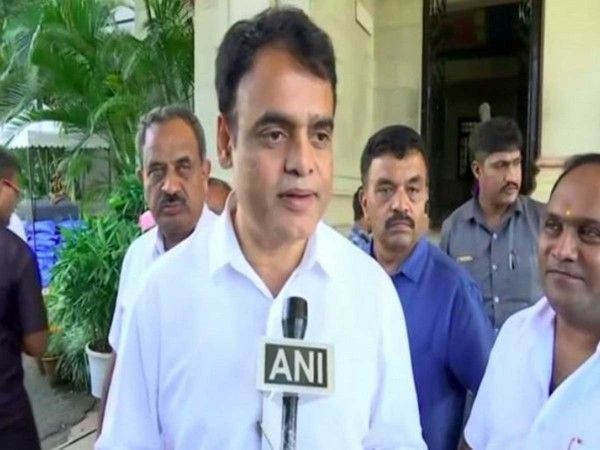
  • The Karnataka Digital Economy Mission which has the objective of facilitating and promoting more than 7,000 e-commerce firms, start-ups, and other big businesses of the state will be officially launched in February, said Dr C N Ashwatha Narayana, Deputy Chief Minister, who is also the minister for IT/BT and S&T, on Friday.
  • He said this after presenting awards and distributing cheques to winners of Elevate Unnati: 2020 in a ceremony held at Vidhana Soudha.
  • Elevate Unnati is a grant-in-aid program (maximum up to 50 lakhs) dedicated to startups promoted by SC/ST Entrepreneurs and 19 startups were felicitated and were given grants of up to Rs 30 lakh. This is funded by Social Welfare Department under the SCSP/TSP scheme, according to an official release.
  • Budding entrepreneurs should focus on finding novel solutions to the existing problem, to make their products market-fit, to build the right team, and have the mindset of continuous learning and grit to make their ideas a reality, Narayana suggested.
  • Karnataka state has an eco-system that helps startups to flourish. Recently, Bengaluru has been declared as a “Rapidly Growing Tech City” by the UK, and further, the state of Karnataka has been named as “Most Innovative State of the Country’ for the second time in a row by NITI Aayog. Entrepreneurs should make use of the existing ecosystem comprising incubators, accelerators, centres of excellence, mentors, TBIs, and academia to emerge as the champions of innovation, he said.
  • The state which is at present a 52 billion dollar digital economy aims to become a 300 billion dollar economy in the next five years. To achieve this the expected change needs to be seen in every village, he said.
  • Prashanth Prakash, chairman, Vision Group for Startups, suggested that entrepreneurs should share their stories with the community and focus to reinvent and rebuild their ideas according to the present developments and trends.

What is Radhe story? Salman Khan goes the South Korea route one more time after Bharat

KEY STORY

  • It is no secret that some of the top-grossing Bollywood films are inspired by movies that have been released in different parts of the globe. While Hollywood continues to be a major source of inspiration for Indian filmmakers, a new trend was also visible in the bygone decade, one that saw the Hindi film industry shifting its focus to the now sought-after South Korean film industry.
  • The fact that South Korean cinema shares Bollywood’s love for melodrama and heart-stopping action is what has brought the two industries closer, at least thematically, if not literally. Over the years, several Bollywood releases like Zinda (Oldboy), Awarapan (A Bittersweet Life), Murder 2 (The Chaser), Jazbaa (Seven Days), Ek Villain (I Saw the Devil), Te3n (Montage), Do Lafzon Ki Kahani (Always) and Rocky Handsome (The Man From Nowhere) have been, officially or unofficially, inspired by some of South Korea’s most appreciated feature films.
  • Even before the enormous success of the South Korean Bong Joon Ho directorial venture, Parasite, Bollywood had turned its head towards South Korea to quench its thirst for producing rock-solid mainstream dramas. It is not surprising then that superstar Salman Khan wasted no time in shifting his focus towards the South Korean films as well.
  • Salman Khan’s Bharat was released on Eid 2019 and turned out to be the biggest opener and one of the top-grossing movies of the actor’s career. This despite the fact that the Ali Abbas Zafar directorial venture had to face the onslaught of mixed reviews as well as that of the Cricket World Cup that coincided with its release. Also starring Katrina Kaif, Sunil Grover, Tabu, Disha Patani and Sonali Kulkarni in pivotal roles, the film was a major hit at the box office.

https://www.instagram.com/p/BwjRkqtlHfg/?utm_source=ig_web_copy_link

However, the story of this Salman Khan-starrer was inspired by one of South Korea’s most loved projects, Ode to My Father. Directed by Yoon Je Kyun, the family-drama went on to become the fourth highest-grossing film in the history of South Korean cinema by selling more than 14.2 million tickets. The drama traced the history of South Korea from the 1950s to the present day by showcasing events of historical significance such as the Hungnam evacuation of 1950 during the Korean war, the government’s decision to dispatch nurses and miners to West Germany in the 1960s, and the Vietnam War, respectively.
Its Indian adaptation, Bharat, promised to trace India’s post-independence history from the perspective of a common man named Bharat (Salman Khan) and followed his journey from the age of 8 to 70, all while attempting to cast light on events such as the partition of British India into independent nations of India and Pakistan in 1947, the discovery of oil in Saudi Arabia in the 70s and the significant policy shifts within India in the 1990s that ushered in the era of economic liberalisation and globalization. While Bharat couldn’t impress the critics, it did manage to become the fourth highest-grossing motion-picture of 2019.
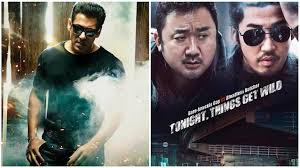
Post the success of Bharat, Salman found the inspiration that he needed to follow a lacklustre Dabangg 3 in the South Korean hit, The Outlaws, and thus comes Radhe. While The Outlaws features actors like Ma Dong Seok and Yoon Kye Sang in the lead, Radhe, its Bollywood remake, will be headlined by Salman Khan and Disha Patani.
If the storyline of The Outlaws follows a tenacious detective’s struggle to stop a turf war in Seoul, Radhe’s plot, on the other hand, will reportedly show Salman as an undercover cop who goes hammer and tongs to destroy a major drug cartel, apparently being run by actor Randeep Hooda’s character. As of now, the writers of the film are trying their best to Indianise the product to lessen the violent and sexual content, which is there in abundance in Radhe’s source material.
That being said, this is not the first time that Salman Khan will be seen playing Radhe on the big screen. The actor has headlined smash hits like Tere Naam and Wanted in the past in which he was called Radhe. However, while attending an event for Dabangg 3 in late 2019, the superstar had promised that his upcoming action-thriller, Radhe, has got nothing to do with either of the two aforementioned titles and that it will be a completely fresh project. Not only that, he even went on to add that Radhe will be the baap (father) of Wanted.
https://www.instagram.com/p/CF66NK3Fp0O/?utm_source=ig_web_copy_link
Radhe, which stars an ensemble cast headlined by actors like Disha Patani, Randeep Hooda and Jackie Shroff, will also mark the return of the actor-director duo of Salman Khan and Prabhudeva. While the actioner also stars South Indian actress Megha Akash in a crucial role, it has also been reported that Radhe’s action sequences are being choreographed by South Korea’s biggest martial arts’ star and stuntman, Kwon Tae Ho.
Earlier this month, cinema associations from across the country had written to Salman Khan requesting him to release Radhe in the theatres, hoping that it would help revive the movie business in India, after a dreary year at the theatres due to the ongoing novel coronavirus pandemic. In a response made out to the theatre owners on January 19, Salman Khan had promised to release Radhe in cinemas during Eid 2021 only.
V.K. Sasikala released from prison after serving 4-year jail-term

KEY HIGHLIGHTS

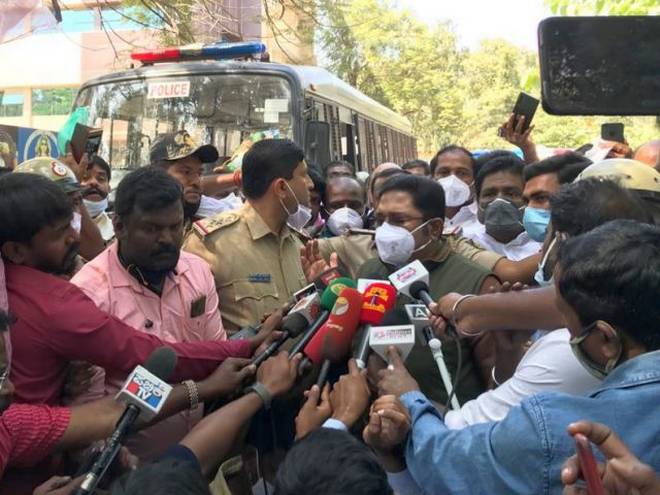
  • After completing a four-year sentence in a disproportionate assets case, expelled AIADMK leader V.K. Sasikala was formally released from Central Jail, Parappana Agrahara. Prison officials on Wednesday announced her release at Victoria Hospital, where she is being treated for COVID-19.
  • A team of officials on Wednesday morning visited Ms. Sasikala to complete formalities related to her release and hand over her belongings, said an official. While the prison escort has been withdrawn, over a hundred personnel the Bengaluru City Police have been deployed in and around Victoria Hospital for security, turning the COVID-19 ward into a fortress.
V.K. Sasikala, aide of former Tamil Nadu Chief Minister Jayalalithaa, waves to supporters as she is taken to Victoria Hospital in Bengaluru on January 21, 2021.
  • Her family members, relatives and party workers gathered outside are hoping to meet her, but the police are not allowing them citing security reasons, said a source.
  • However, she will continue to be in Victoria hospital for another four to five days, where she was admitted on January 21 after she tested positive for COVID-19, said a statement from the hospital.
  • Hospital Medical Superintendent Ramesh Krishna K said she would be discharged on the 10th day if she was asymptomatic and free of oxygen support for at least three days.
  • She was admitted to Bowring and Lady Curzon Hospital on January 20 after she complained of breathlessness and fever. From Bowring she was shifted to Victoria on January 21 after she was diagnosed of SARI. Subsequently, her chest CT thorax showed features suggestive of severe respiratory infection and she was tested for COVID-19 again and she tested positive the same day.
  • She was admitted to COVID-19 ICU at the Emergency and Trauma Care Centre, the designated COVID-19 facility on Victoria hospital premises.
  • She has been on treatment as per protocols since then.
  • Dr. Krishna said she had maintained oxygen saturation of 96/97 without oxygen support for the past 12 hours.
  • “As per protocols, she will be discharged on the 10th day if she is asymptomatic and free of oxygen support for at least three days,” he said.
  • The decision for her to continue treatment in Victoria hospital had been taken by the patient and family members, he said in the statement.

Big Boss contestant Jayashree Ramaiah ends life at ashram in Bengaluru

HIGHLIGHTS

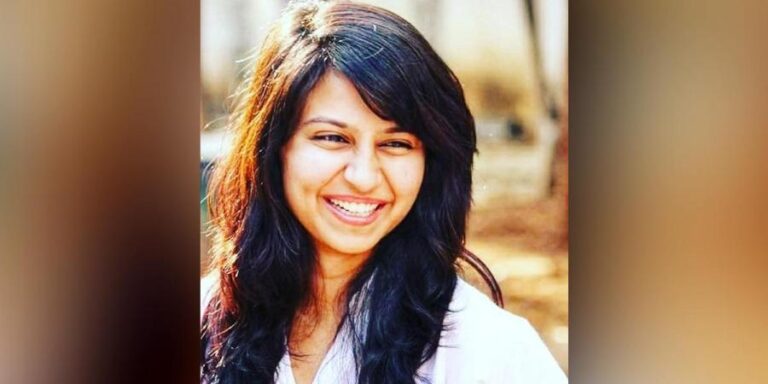
  • Jayashree Ramaiah, a small-time actress and contestant in the Big Boss Kannada version, died by suicide in Bengaluru in the wee hours of Monday. She had attempted suicide a few months ago after releasing a video on social media, stating that she was facing several problems.
  • A senior police officer said that Jayashree, a contestant in Bigg Boss Kannada season-3, was being treated at Sandhya Kirana Ashram in Bengaluru, where she was found hanging. She was reportedly unhappy about the lack of opportunities and had complained about it to her friends and it led her to fall into depression.
  • Early in the morning, her parents tried to contact her over phone but there was no response. Then they contacted the Ashram. The staff went to her room and found her hanging and alerted Madanayakanahalli police. A case of unnatural death has been registered and further investigations are on.
  • Earlier, on June 24, 2020, she had posted on social media that she was feeling suicidal. Later, she isolated herself from her friends and family.

TikTok and 58 other Chinese apps to be permanently banned in India

KEY HIGHLIGHTS

  • Government of India has reportedly decided to ban Tiktok and 58 other Chinese apps permanently. According to a report by LiveMint, the Ministry of Electronics and Information Technology (MeitY) has issued a new notification to TikTok, WeChat, Bytedance, UC Alibaba browser, and other apps to impose a permanent ban in India.
  • “The government is not satisfied with the response/explanation given by these companies. Hence, the ban for these 59 apps is permanent now,” LiveMint cited an unnamed source familiar with the development.
  • Amid India’s border tussle with China, the government had initially banned 59 Chinese apps, including TikTok, WeChat, citing data privacy and security concerns in June 2020. In the last six months, the total banned Chinese apps tally went up to 208.
  • TikTok had initiated the talks with the MeitY to resolve the issue, but now it seems there is no resolution. It also means that the Google Play and App Store will continue to suspended access to these apps in India.
  • “We are evaluating the notification and will respond if necessary. TikTok is one of the first companies to comply with the Government’s Government Directive issued on 29 June 2020. We continue to strive to comply with local laws and regulations and do everything possible. overcoming government problems. Ensuring the privacy and security of all users remains our priority,” report quoted a TikTok spokesperson.

Ayodhya: Dhannipur Mosque Project to begin today – All you need to know

KEY HIGHLIGHTS

  • Acting on Supreme Court’s orders, UP government allotted a 5-acre land in Dhannipur village in Sohaval Tehsil of Ayodhya for the mosque
  • The blueprint of the mosque was unveiled on December 19
  • The construction work of the much-awaited Dhannipur mosque project will finally begin in Ayodhya, Uttar Pradesh from today. According to reports, the project will commence with a tree sapling plantation drive and raising of the tricolour.
    As per the blueprint released by the Indo-Islamic Cultural Foundation (IICF), the mosque will be of the same size as that of the Babri Masjid, however, the shape of the structure will be very different from that of other mosques.
    Mosque project to begin on Republic Day
    The IICF, a trust formed by the Uttar Pradesh Sunni Central Waqf Board, confirmed that a ceremony will be held to mark the beginning of the project on January 26 i.e. Republic Day.
    During the ceremony, the national flag will be hoisted on the five-acre plot of the project at around 8.30 am. It will be followed by plantation of tree saplings by the chief trustee and the member trustees of the IICF.
    As envisaged in the project, a green area, which will have plants from all over the world – from the Amazon rainforest to areas in Australia that report bushfires – and from all different geographical regions of India will be developed to create awareness on the imminent threat posed by climate change.
    Blueprint of the mosque project
    The first pictures of the project were released on December 19 last year by the IICF. Following the release, secretary and spokesperson of the trust Athar Hussain had confirmed that the Dhannipur Mosque project includes a hospital, a museum, a library, a community kitchen, the Indo-Islamic Research Centre, a publication house and a mosque.
    A mosque measuring 15,000 square feet will be built in Ayodhya’s Dhannipur village. It will be of the same size as that of the Babri mosque. The shape of the mosque may be completely different from that of other mosques.
    Although the blueprint suggests a circular mosque with a unique minaret over it, project architect SM Akhtar hinted that it may be square-shaped like the Kaaba Sharif in Mecca, Saudi Arabia.

Farmers’ tractor rally: Delhi Traffic Police issues advisory, lists routes you should avoid

KEY  HIGHLIGHTS

  • Thousands of farmers, protesting against the three fresh farm laws, are all set to take out their tractor rally on Republic Day (Tuesday). The ‘Kisan Gantantra Parade’ will move into Delhi from three border points — Singhu, Tikri and Ghazipur (Uttar Pradesh Gate). Kisans, mostly from Punjab, Haryana and western Uttar Pradesh, have staged a sit-in at several Delhi border points since the last week of November, demanding a complete repeal of three farm laws and a legal guarantee on minimum support price for their crops.
  • According to Joint Commissioner of Police (Traffic) Meenu Chowdhary, the first tractor rally will start from Singhu Border to Sanjay Gandhi Transport Nagar, DTU, Shahabad Dairy, Barwala Village, Pooth Khurd Village, Kanjhawala T-Point, Kanjhawala Chowk, Kutubgarh, Auchandi Border and Kharkhoda Toll Plaza.
  • “The traffic going towards NH-44 and GT Karnal Road will be diverted from Singhu Shani Mandir, Ashok Farm/Janti Tall, Hamidpur, Sunderpur Majra, Zindopur Mukhmelpur, Kadipur, Kushak Colony, Mukarba Chowk and GTK Depot,” Chowdhary said.
  • Traffic going towards NH-44 GTK Road will be diverted from Singhu Shani Mandir, Ashok Farm/ Jaunti Toll, Hamidpur, Sunderpur Majra, Jindpur Mukhmelpur, Kadipur, Kushak Colony, Mukarba Chowk, GTK Depot.
  • Traffic going towards Bawana Road will be diverted from Jail Road, KNK Marg, G3S Mall, Madhuban Chowk, Rohini East Metro Station, Rithala Chowk, Pansali Chowk, Helipad T -Point, Utsav Road, DSIIDC Road Sector-4, Narela Bawana Road, Chitra Dharam Kanta, DSIIDC Round about, Jhanda Chowk.
  • Traffic going towards Kanjhawala Road will be diverted from Karala, Kanjhawala Village, Jaunti Toll, Qutabgarh- Garhi Road General public is advised to avoid NH-44-GTK Road, Sanjay Gandhi Transport Nagar, Badli Metro Station, Badli Bawana Road, Bawana Road upto Bawana Chowk, Bawana Kanjhawala Road, Kanjhawala Road upto Auchandi Border.
Second tractor rally to start from Tikri Border
The second rally of farmers will start from Tikri Border and pass through Nangloi, Baprola Village and Najafgarh, excluding Phirni Road, Jharoda Border, Rohtak Bypass (Bahadurgarh) and Asoda Toll Plaza.
Traffic will not be allowed to enter on Rohtak road from Kirari mor and will be diverted towards Mangolpuri.
Traffic will be diverted from Ghevra mor towards Khanjawala.
Traffic will be diverted from Peeragarhi chowk towards District Centre and Mangolpuri.
Commercial vehicles will be diverted from Jhatikra Mor to Najafgarh.
Dwarka mor at Najafgarh road: No commercial vehicles will be allowed towards Delhi Gate Najafgarh.
Goyla dairy point Najafgarh drain: No commercial vehicles will be allowed towards Najafgarh.
Shurakhpur road T- Point towards Dhansa road.
Najafgarh drain on old Kakrola road: No commercial vehicles will be allowed towards Najafgarh.
Avoid NH-10 (Rohtak Road)-Tikri Border, Nangloi Najafgarh Road and Najafgarh-Jharoda Border.
Third tractor rally: Routes you need to avoid
No commercial vehicles and buses will be allowed on NH-24 and DND from Ring Road.
Traffic on NH-24 from Nizamuddin Khatta side will be diverted on Pusta road near Akshardham and Mother Dairy Road.
No traffic will be allowed towards NH-24 from paper market near Nala cut and Kondli Light point.
No traffic towards Road No. 56 from Hasanpur Depot, Patparganj Industrial Area, Ashoka Niketan, Vivekanand Mahila College, ITI College, Ram Mandir Vivek Vihar etc.
No traffic towards Apsara Border from R/A Seemapuri Gol Chakkar, Chintamani. Commuters are advised to use Khajuri Pusta Road, Loni Road for UP.
Avoid Ghazipur Border, roads leading to NH-24, Road No. 56 and Apsara Border.

Had tears in my eyes when Virat Kohli handed me the trophy after India’s T20I series win: T Natarajan

KEY HIGHLIGHTS

  • Thangarasu Natarajan was a star turnout for Team India in their recent tour Down Under
  • After returning to India, Natarajan has recalled his ‘tear up’ moment in Australia
  • Natarajan became the first Indian to debut in all three formats during the same tour
Debutant Thangarasu Natarajan turned out to be a revelation for the Virat Kohli-led Team India in the twin limited-overs series against Australia. Natarajan, who raised his stocks by spearheading the bowling attack of the Sunrisers Hyderabad (SRH) in the Premier League (IPL) made an instant impact in his debut call-up for the Men In Blue. Interestingly, Natarajan became the first Indian to debut in all three formats during the same tour.
Reflecting on his memorable tour Down Under, Natarajan praised Indian skipper Kohli and his deputy Ajinkya Rahane. The Indian pacer said that he thoroughly enjoyed playing under the leadership of Kohli and Rahane as both captains supported and encouraged him a lot. Speaking about India’s charismatic leader, Natarajan talked about Kohli’s incredible gesture towards the Indian pacer after the T20I series win in Australia,
Following India’s emphatic series win in the T20I series against the Men from Down Under, skipper Kohli had handed Natarajan the winning trophy after the post-match press conference.”When Kohli handed over the trophy to me after the T20 series win, I had tears in my eyes,” T Natarajan was quoted as saying news agency PTI in Tamil.
“Having played in the IPL and played alongside many Indian and foreign players helped as that experience was useful. I could communicate with them and learn from them. First, it was tough but as things went on, I was able to pick up many things,” he added.

Budget 2021-21: Centre may give tax benefits to aam admi after all

KEY HIGHLIGHTS

  • Finance Ministry is mulling measures such as change in income tax slabs, extension of leave travel concession scheme, increased tax exemptions for health insurance among others
  • Centre is also looking at ways to reduce compliance burden on taxpayers
  • Upcoming Budget 2021-22 is being viewed as an opportunity to boost pandemic-hit discretionary spending by people
 The Finance Ministry is reportedly mulling changes to direct tax administration to ease the compliance burden and put more money into the hands of the taxpayer to boost pandemic-curtailed discretionary spending.
Other than changes in tax slabs, the North Block is mulling the extension of leave travel concession scheme, increased tax relief for health insurance and home loan repayments, as per reports. Several experts had demanded the above measures to give a flip to consumer confidence which has been severely hit in the wake of Covid-19 pandemic.
The Direct Tax Task Force had proposed some measures which are currently being looked at by the Finance Ministry, according to a report in Economic Times.
Tax disputes are frequent now owing to the different interpretation of tax laws by different tax officers which also leads to revenue loss for the exchequer. This has led to calls for a more transparent and easier compliance regimen.
A final decision on the matter will be taken after an assessment of the revenue loss to the exchequer if these sops are given to the aam aadmi (common man). The Budget 2021 will be presented in the Parliament by FM Nirmama Sitharman on February 1.
On the direct tax front, the Direct Tax Task Force had recommended the expansion of the tax slabs in August 2019 to the government.
It suggested a tax rate of 10% on those with the annual income of Rs 10 lakh, 20% for those with income in the range of Rs 10-20 lakh and 30% on incomes between Rs 30 lakh – Rs 2 crore and 35% for those earning above Rs 2 crore. Presently, the highest tax slab is 30% and it is applicable to everyone earring above Rs 10 lakh per annum.