First phase work of tech park to be over by 2023: Delhi CM Arvind Kejriwal

KEY STORY

  • NEW DELHI:  Taking into cognizance the delay of 10 months in construction work for the first phase of the city’s first-of-its-kind technology park in Rani Khera, Chief Minister Arvind Kejriwal on Friday held a meeting with the Delhi State Industrial and Infrastructure Development Corporation Limited (DSIIDC) officials.
  • Earlier, it was estimated that the first phase of the Rani Khera Technology Park work will be completed by August 31, 2022 but now the revised deadline is May 2023.
  • The new Rani Khera Technology Park, a new IT business project which will be constructed by the DSIIDC in seven phases and is being personally monitored by the CM.
  • Officials of the department gave a presentation to the CM on the construction work, which will commence from May 2021 onwards, Kejriwal also reviewed the status of the on-going maintenance works in other industrial areas of which come under DSIIDC. Delhi Minister of Industries Satyendar Jain was also present in the meeting.
    “The entire construction of the project should be completed within the stipulated timeline. It should be done in a time-bound manner” said Kejriwal in the meeting.

CONCLUSION

  • According to officials revised deadlines for many on-going maintenance works in industrial areas have been setup keeping in mind the coronavirus outbreak. “The first phase of the Rani Khera Business Park development project is expected to be completed by May 2023 and the second phase of the project is expected to be completed by May 2025,” said a government statement.
  • All the necessary approvals of the concerned government departments for the construction of the business park have been “duly completed”, it added. Setup across sprawling 150-acres of land, this technology park will be just 15 minutes away from the Delhi International Airport.  Kejriwal also directed the officials to complete the pending as well as ongoing re-development and maintenance works.
Budget 2021-22: 5 things common man expects from finance minister

KEY STORY

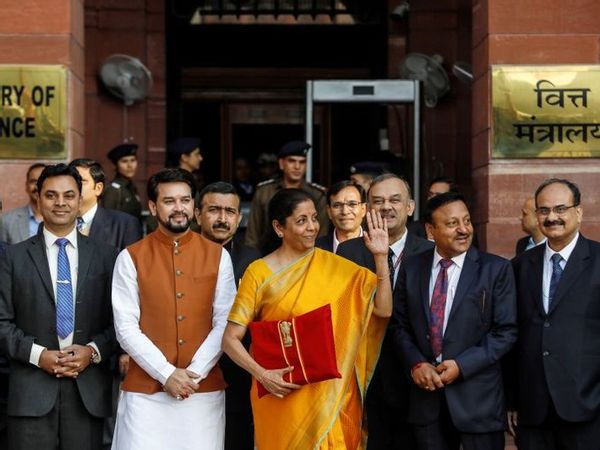
  • Finance Minister Nirmala Sitharman has promised a budget not seen in the past 100 years. So, naturally, the common man still reeling under the pandemic and subsequent economic stagnation expect a lot.
  • Although the finance ministry provided a swathe of relief measures with respect to taxation and subsidies, there are still measures especially on personal tax front that may a long way with millions of middle and low-income workers and boost income levels.

    Personal Tax, deduction 


  • In order to boost income in hands of the common man and thereby spending, tax experts suggest raising the tax exemption limit, below which income tax is not levied, from Rs 2.5 lakh to anywhere between Rs 3.5-Rs 5 lakh.
  • Kapil Rana, Founder & Chairman, HostBooks Ltd is of the view that the threshold tax exemption limit should be increased from Rs 2.5 to Rs 5 lakhs in the case of normal individual, Rs 3 to Rs 6 lakhs in the case of senior citizens and Rs 5 to Rs 8 lakhs in the case of super senior citizens.
  • He also suggests a revision of current tax slabs. He said, “tax rate should be 10% for income upto 10 lakhs, 20% for income more than 10 lakh but upto to 20 lakhs, 30% for income more than 20 lakhs”.

    Sops to boost spending, investments


  • The government may look at increasing capital gains tax on the sale of property or equities to boost revenues. However, certain relaxations in the same can go a long way in promoting investments and savings.   “The holding period of all long term capital asset which is currently at 36 months should be reduced to 24 or 12 months. The capital gain exemption should also be allowed in the cases where the asset is purchased in the situation where clubbing provisions are applicable.
  •  Short term capital loss (other than under Section 111A) which is presently allowed to be set off against short term or long term capital gain should be allowed to be set off against any other head of income (excluding special rate income) also as the tax rate on the both cases are same,” Rana said.

    Covid cess


  • Cost estimates of vaccinating 130 crore Indians are in the range of Rs 50,000-60,000 crore. The FM will have to find this money from sources other than borrowing owing to an already stretched fiscal deficit situation.
  • India’s fiscal deficit for the financial year (2020-21) ending March 31, 2021, is likely to be over 7% of gross domestic product (GDP), more than double of the 3.5% target that was set in the last budget.
  • The fiscal deficit could widen to as much as 8% of GDP, with the current expected economic contraction of 7.7% in 2020-21.


  • So, the bill for the vaccine is most likely to be borne by the people in the form of a cess. A cess is a tax with specific purpose and duration like Swachh Bharat Cess, education cess among others.
  • This is unavoidable a cess, preferably on higher income groups can be done, feels Sonu Iyer, Partner at EY LLP.

    Import duties


  • Economists are largely divided on the issue of import duties which are largely seen as detrimental even for local manufacturers. However, the government considers its responsibility to safeguard the local industry from the dumping of cheap foreign exports.
  • According to a latest Reuters report, the government is mulling to hike import duties on at least 50 items including smartphones, electronic components and appliances in the upcoming budget.
  • This is done to boost local manufacturing and reduce dependence on imports. However, in year when employment and income remain distressed, this might hit discretionary spending capabilities by the consumer.
  • This should also be seen in the light of increasing raw material prices globally which is pressuring consumer companies across categories to mull prices hikes to save margins. An import duty hike in such as a scenario will not bode well for the spending power of the common man.

Nine adverse events in Karnataka since vaccine launch

KEY STORY

  • BENGALURU: A 35-year-old Asha worker in Davanagere had to be hospitalised briefly after she was given a shot of Covishield on Thursday. This is the ninth instance of an adverse event following a jab of Covishield in the state.
  •  The Asha worker suffered anxiety after she was administered the dose, leading to a drop in blood pressure. She was taken to Chitageri Hospital where she was observed for about 20 minutes, and allowed to leave.
  • Two Adverse Events Following Immunisation (AEFI) were reported on Thursday. A 37-year-old woman in Bengaluru and a 32-year-old woman in Mysuru suffered anxiety and recovered.
  • Health Minister Dr K Sudhakar said, “Side-effects have appeared in around 2-3.5% of people, but there have been no casualties.”He said that the state had vaccinated 1.77 lakh people so far. “It will be a big challenge to vaccinate 1.5-2 crore people in the state in the next phase,” he added. 
  • While the number of vaccination sessions targeted on Friday was achieved, only 42,425 people, or 52% of the 81,519 supposed to be vaccinated on Friday were covered, Sudhakar said.While Chitradurga was the best performing district with 75% coverage, Koppal had the poorest coverage of 20%.
  • “Covishield has been administered to 1,36,882 and Covaxin to 1,774 people. As many as 8,47,908 lakh people have registered for vaccination in the first phase. Of this, 3,27,201 are government health warriors and 4,45,389 are private health warriors,” Sudhakar said. On Friday the state received 1,46,240 doses of Covaxin.
  • He said that some people are hesitating to take the vaccine due to rumours, but maintained that the shot would keep disease away.

    Side-effects

  • On January 20, 4 AEFI were reported: a 25-year-old woman in Bengaluru Rural, two 35-year-old women in Ramanagara, and a 35-year-old woman from Davangere. All of them experienced anxiety and recovered.
  • On January 18, a 58-year-old man in Shivamogga developed side-effects two days after he took the jab. He passed away. The government has said that his death too was not related to the vaccine.
  •  On January 16, the day of the vaccine launch, a 43-year-old man in Ballari took the jab and and developed side-effects two days later. He passed away and the government has said that his death was not related to the vaccine.

NEP from 2021-22 in Karnataka: DyCM

KEY STORY

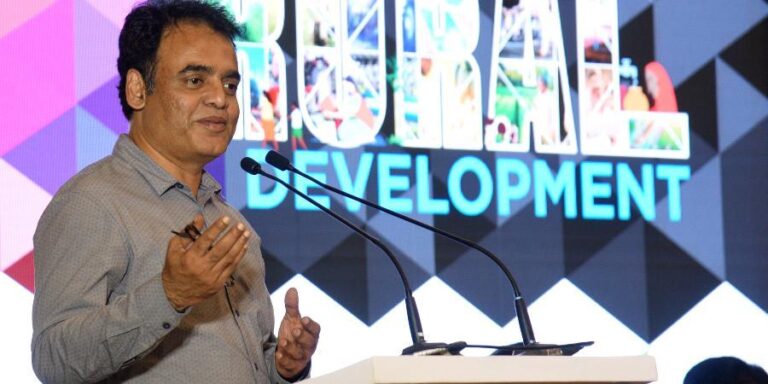
  • BENGALURU: The National Education Policy will be implemented in Karnataka from the academic year 2021-22 onwards, Deputy Chief Minister and Minister for Higher Education Dr C N Ashwath Narayan said on Friday.
  • Although implementation for the new policy would require time, the government intends to do it at a fast pace so that its benefits can be passed on to future generations, the minister said, during his address at the fourth convocation of Dayananda Sagar University.
  • The NEP will facilitate the transformation of the education system in India and pave the way for the concept of a New India, he said, adding, “The Karnataka government is focused on bringing in administrative reforms and amendments essential to implement the NEP. The implementation of NEP would provide great opportunities for the younger generation.”
  • He said the NEP is not just spending money but doing it the right way to address political, economic and social issues.

Karnataka man held for selling beef as cops file first case under cow slaughter Act

KEY STORY

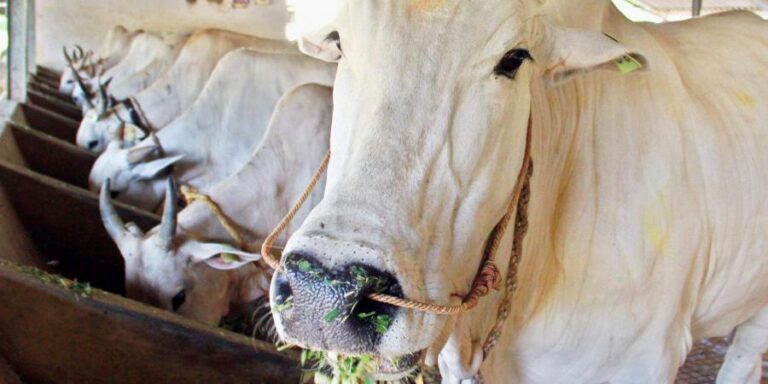
  • VIJAYAPURA: In a first, the Vijayapura district police in Karnataka registered a case under the recently notified Act on the prevention of cow slaughter and arrested a 35-year-old man for selling beef.
  • Acting on a tip-off, the police raided a slaughterhouse in Kudgi village, rescued a cow, and arrested one Sikandersab R Bepari on Thursday evening. He was booked under the Karnataka Prevention of Slaughter and Preservation of Cattle Act-2020.
“We received a tip-off from the locals that cows are being slaughtered and beef is being sold in a shop located near the railway line of Kudgi village. Immediately, we raided the shop and found beef and a cow that was being prepared for slaughter. The rescued cow has been sent to the local gaushala.” 
“This is the first case booked under the prevention of cow slaughter act after the notification was issued,” a police official said. 
  • SP Anupam Agrawal said, “As soon as we received the information, the cops swung in action and arrested the butcher. We are looking for two other men, who might be part of the crime. At present, they are at large and an investigation is underway. It is a bailable offence,” Agrawal said.

CONCLUSION

  • A week ago, a case was filed in Sringeri under the prevention of cow slaughter ordinance. However, the first case under the Act was registered in Kudgi village of Vijayapura on Thursday.
  • Reacting to the case, Minister of Animal Husbandry Prabhu Chauhan said if anybody comes to know about the illegal trafficking of cows and selling its meat, he /she must inform the cops at the nearest police station immediately instead of taking the law into their own hands. The timely action by the people can help save the lives of cattle, Chauhan said.

Petrol, diesel prices continue to rise, hit new high on Friday. Check today’s rates in top cities

KEY STORY

  • New Delhi: State-controlled oil marketing companies (OMCs) increased the pump prices of petrol and diesel again on Friday (January 22) across the country, after keeping rates static for two days. Following today’s rate revision, petrol prices were hiked by 22-25 paise a litre while the price of diesel was raised by 23-27 paise across major metro cities of the country.
  • In the national capital, petrol prices jumped to Rs 85.45 a litre as against Rs 85.20 per litre on Thursday while diesel is retailing at Rs 75.63 a litre, 25 paise more than yesterday’s price, as per data from Indian Oil Corporation website. Worth mention here is that this is the highest price for petrol in Delhi till date.

Rates in top cities

  • Citizens in Mumbai have to shell out Rs 92.04 for a litre of petrol after a 24 paise rise over Thursday’s rate. A litre of diesel costs Rs 82.40, 27 paise more than yesterday’s price of Rs 82.13 a litre. In Kolkata, the retail price of petrol price was increased by 24 paise to Rs 86.87 a litre, from Rs 86.63 recorded on Thursday. Diesel costs Rs 79.23 a litre, 26 paise more than Thursday’s rate.
  • Likewise, in Chennai, the retail prices of petrol and diesel are Rs 88.07 (22 paise increase) a litre and Rs 80.90 (23 paise more) a litre respectively. It is worth noting that the rates of auto fuels differ from state to state due to different local taxes and VAT imposed.
  • So far in this month, the prices of petrol and diesel have increased by Rs 1.74 and Rs 1.76 per litre respectively in the national capital with OMCs deciding to break an earlier longer period of pause hiking the rates for the first time on January 6.

Excise duty soars 48%

  • The excise duty rose by 48 per cent in the current fiscal on the back of a record increase in taxes on petrol and diesel. Excise duty collection during April-November 2020, was at Rs 1,96,342 crore, up from Rs 1,32,899 crore mop-up during the same period in 2019, as per data from the Controller General of Accounts (CGA).
  • On January 19, Union Minister for Petroleum and Natural Gas Dharmendra Pradhan had said that fuel prices had gone up due to lower production in oil-producing nations because of the pandemic, mentioning that the lower production had caused an imbalance in demand and supply.

Dynamic pricing

  • As per the daily pricing mechanism, the retail prices of p[retol and diesel in the country are dependent on the international crude prices and the rupee-US dollar exchange rate as India imports around 80 per cent of its crude requirements. On Thursday, the Indian rupee settled 6 paise more at a near five-month high of 72.99 against the US dollar.

Brent crude

  • On Friday, in the international market, Brent crude prices dropped on concerns over new Covid restrictions in China will pause fuel demand in the world’s biggest oil importer. International Brent crude oil futures were trading at $55.65 per barrel, down by 45 cents, or 0.8 per cent, from their last close. West Texas Intermediate (WTI) crude futures fell by 47 cents, or 0.9 per cent, to $52.66 per barrel.

COVID-19 vaccination drive: Healthcare workers hesitant to take India’s indigenous Covaxin jab, says report

KEY STORY

  • New Delhi: Hospitals administering the COVID-19 vaccine have reported a higher percentage of beneficiaries are willing to take the Covishield shot and not Covaxin.
  • According to hospitals administering the vaccine, a higher percentage of healthcare workers are opting for the Covishield shot.
  • A report by TOI said that Delhi doctors are more apprehensive in taking Covaxin due to lack of efficacy data.
  • On January 19, Bharat Biotech had released a factsheet advising people not to take Covaxin if they are immuno-compromised or on medication that affects their immune system. It further said that people taking the jab should disclose to their vaccination officer if they have any allergies or other serious health-related issues.

    Confusion, dissatisfaction among healthcare workers

  • The report further states that Covaxin is being administered in six central government-run hospitals in Delhi whereas Covishield is being given in all state-run and private hospitals. This has led to confusion and dissatisfaction among healthcare workers.
  • Many doctors and PG students in Bihar are not willing to take Covaxin as the third trial of this vaccine is in its initial stage.
  • On the second day of the immunisation drive against COVID-19, Delhi recorded around 17 per cent lesser vaccination than the previous session.

    RML hospital docs want Covishield


  • On January 16, resident doctors at Delhi’s Ram Manohar Lohia (RML) Hospital had expressed reservations over taking Covaxin developed by Bharat Biotech due to its incomplete clinical trial data and requested the hospital administration to vaccinate them with the Oxford Covid-19 vaccine ‘Covishield’.


  • In a letter to the medical superintendent, the doctors wrote, “The residents are a bit apprehensive about the lack of complete trial in case of Covaxin and might not participate in huge numbers thus defeating the purpose of vaccination. We request you to vaccinate us with Covishield which has completed all stages of the trial before its rollout.”


  • To allay the fears, Delhi Health Minister Satyendar Jain had to assure people that there is no need to be afraid and expressed confidence in the Indian experts and scientists.

England tour of India complete schedule, squads, match timings, telecast – All you need to know

KEY STORY

  • Four years after their previous tour to India, England will return to the Asian country for a full-fledged series starting February 5. Traditionally, the Three Lions tour India for a Test series towards the end of the year before returning home for a Christmas break. After the break, they return for white-ball series.
  • But that couldn’t be the case. As per the schedule, England were to tour India for only white-ball series last year but that had to be postponed due to COVID-19. The members of England’s Test team are in Sri Lanka and will land in India after the end of the ongoing second Test match.
  • The members of the Indian Test team only returned to the country on Thursday (January 21) and will have some time off.

    Schedule


  • England’s full-fledged tour of India consists of four Test matches, 5 T20Is and 3 ODIs. The first Test match of the series will kick off on February 5. Chennai’s MA Chidambaram Stadium will host the game. The same venue will host the 2nd Test match, starting February 13.
  • The third Test – pink-ball Test – will be played at the newly-built Sardar Patel Stadium, Ahmedabad. The match will start on February 24. It will be the first-ever international match at this venue. The same venue will host the 4th Test from March 4.
  • Following the Test series, the two teams will lock horns in a five-match T20I series. All the five matches will be played in Ahmedabad. The five T20Is will be played on March 12, 14, 16, 18 and 20.
  • Following the T20Is, the two teams will then lock horns in the three-match ODI series. All three ODIs will be played at Pune’s Maharashtra Cricket Association Stadium. The matches will be played on March 23, 26 and 28.

    Squads:

    India


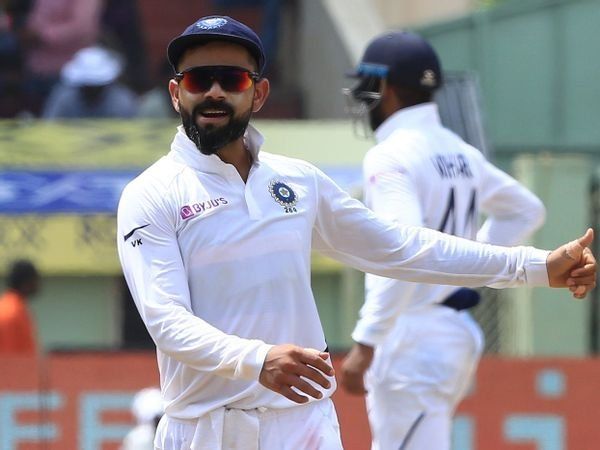
  • The BCCI has announced the Test squad for the first two matches. Virat Kohli, who missed the final three Tests against Australia, will lead the home team. Hanuma Vihari, Ravindra Jadeja, Umesh Yadav and Mohammed Shami are still not fit and will miss the series.
  • Ishant Sharma, who was ruled out of the Australia tour, is also back to lead the pace attack. Prithvi Shaw was dropped from the squad.
    Team India squad for first two Tests: India squad: Virat Kohli (Captain), Rohit Sharma, Mayank Agarwal, Shubman Gill, Cheteshwar Pujara, Ajinkya Rahane (Vice-captain), KL Rahul, Hardik Pandya, Rishabh Pant (wicketkeeper), Wriddhiman Saha (wicketkeeper), R Ashwin, Kuldeep Yadav, Axar Patel, Washington Sundar, Ishant Sharma, Jasprit Bumrah, Mohammed Siraj, Shardul Thakur

    England

    The Ed Smith-headed selection panel named the squad for the first two Tests on Thursday (January 21). Ben Stokes and Jofra Archer, who were rested for the Sri Lanka tour, were named in the team.
    England squad for first two Tests: Joe Root (C), Jofra Archer, Moeen Ali, James Anderson, Dom Bess, Stuart Broad, Rory Burns, Jos Buttler, Zak Crawley, Ben Foakes, Dan Lawrence, Jack Leach, Ben Stokes, Olly Stone, Chris Woakes.

    Telecast

    The India-England series will be live on various channels of Star Sports.

CBI files case against UK-based firms for alleged illegal use of Facebook users’ data

KEY STORY

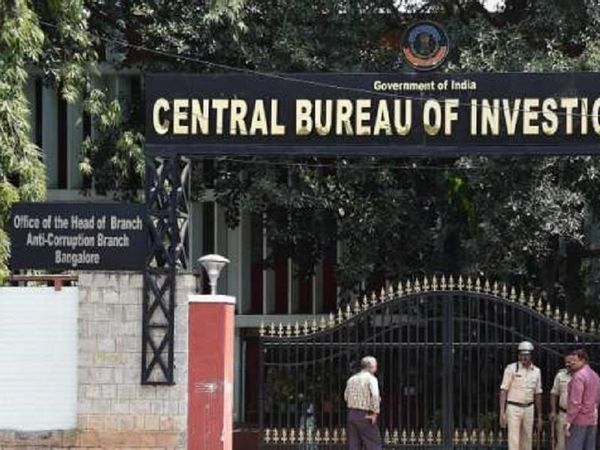
  • The Central Bureau of Investigation (CBI) has filed a case against two United Kingdom-based firms on allegations of the illegal and non-consensual use of data of Facebook users. M/S Global Science Research Limited (GSRL)  UK represented by Aleksandr Kogan and M/S Cambridge Analytica, UK represented by Alexander Nix have been accused of criminal conspiracy, dishonestly receiving digital info, failure to protect data and negligence in maintaining reasonable security practices under various provisions of the Indian Penal Code (IPC) and the Information Technology (IT) Act.
  • Collected data included likes and comments on Facebook, contents of private messages and demographic information; which was possibly used to influence elections in India.
  • A preliminary enquiry was conducted based on a complaint filed by Ministry of Electronics & Information Technology in July 2018, which had claimed the illegal harvest of personal data.
  • The enquiry revealed that an app ‘thisisyourdigitallife’ was created, which was authorized to collect specific data of its users on Facebook as per their platform policy. It was claimed that the app illegally harvested additional data of Facebook users and their friends.
  • It was also alleged that 335 Indians had installed the app and data of over 5.62 lakh Facebook friends of these users was harvested by the app without their consent.

CONCLUSION

  • The complaint claims that GSRL entered into a conspiracy with Cambridge Analytica in 2014 and gave rights to use this illegally harvested data for commercial purposes.
  • Upon enquiring from 6 of 335 users who had installed ‘thisisyourdigitallife’ app in India, the CBI found that they were unaware of their data being collected and were misled by the app. Further probe in the case is underway.

Amid discontent, portfolios of Karnataka Ministers re-allocated with immediate effect

KEY STORY

  • Bengaluru: After reports of discontent among newly sworn-in ministers, portfolios of Karnataka leaders have been re-allocated with immediate effect. Thus, some of the newly inducted ministers, who have been re-allocated portfolios include – Aravind Limbavali, who has been given Forest Department, K Gopalaiah, who has been made Excise Minister, N Nagaraj- Municipal Administration, R Shankar – Horticulture and Sericulture,  KC Narayana Gowda – Youth Affairs and Sports.
  • On Thursday, after allocating the portfolios, Chief Minister BS Yediyurappa had refuted reports of unhappiness among the ministers and said that there was no difference of opinion among the new ministers. He had, in fact, said that the newly-appointed ministers were happy and would be attending the Cabinet together.
    “All the ministers are together and will attend the Cabinet meeting. There is no difference of opinion among the new ministers, all are happy,” Yediyurappa had said, news agency ANI had quoted.

    Portfolios to MLCs was also a concern: Report


  • The BJP-led government had inducted 18 new ministers into the cabinet last week. The decisions regarding portfolio allocation were taken after CM Yediyurappa met home Minister Amit Shah and BJP chief JP Nadda.

  • Soon after the allotment of portfolios, however, reports emerged that the ministers were unhappy with the decisions. ANI reported that JC Madhuswamy was “threatening to resign” after he lost his cabinet and Parliamentary Affairs portfolio.
  • Some of the ministers were also slated to meet Yediyurappa to raise their concerns. Among other issues, some of the leaders also had concerns over portfolios being allocated to Members of Legislative Council (MLCs), instead of elected representatives.