Developed countries ‘enjoyed fruits of low-cost energy’, must aim to achieve ‘net zero’ target faster, says India

KEY STORY 

  • Ahead of the 26th session of the Conference of Parties (COP-26) on climate change in Glasgow in the United Kingdom on Monday, India said developed countries that have “already enjoyed fruits of low-cost energy” should strive to meet the ‘net zero’ emissions goal faster, so that developing nations can get some “carbon space” for their growth.
  • ‘Net zero’ emissions refers to a balanced situation wherein the emission of greenhouse gases (GHGs) will continue but will be balanced by the absorption of an equivalent amount from the atmosphere. Achieving the ‘net zero’ target is cited as a necessary measure to successfully tackle climate change and its devastating consequences.
  • After the conclusion of the G20 Leaders’ Summit in Rome, Union Minister Piyush Goyal told the media that what G20 nations decided “is global net zero, so all countries put together will be net zero, which means that developed countries that have already enjoyed the fruits of low-cost energy for several years, will have to go in for net zero much faster and possibly even for net negative, so that they can release policy space and some carbon space for the developing countries to pursue their development agenda.”
  • The minister said that before identifying the year by which the ‘net zero’  goal should be achieved, countries must work on technological solutions. The available technologies are not sufficient for absorbing huge amounts of clean energy into the grids and keeping up grid stability, he explained.

CONCLUSION

  • “We will have to look at more technology and innovation take an important role before we can identify a year,” Goyal said.
  • Goyal further stated nuclear energy is something that needs to be determined on the basis of the type of technologies that would be available for just handling the climate crisis.

LPG Price Hike November 1: Diwali shock for common man, commercial cylinder price up by Rs 265

KEY STORY

  • Ahead of Diwali, inflation bomb exploded yet again. After petrol and diesel, LPG prices were increased by Rs 265 per cylinder. However, the saving grace is that the price hike was made in commercial cylinders and not on cylinders for domestic use. There was no change in domestic LPG prices.
  • After this hike, commercial cylinder price in Delhi crossed Rs 2,000 mark. Earlier, it was being sold at Rs 1,733. In Mumbai, a 19 kg commercial cylinder, which was sold at Rs 1,683, now costs Rs 1,950 after today’s hike. In Kolkata, a 19-kg commercial cylinder now costs Rs 2,073.50 and in Chennai price of this product has increased to Rs 2,133.
Domestic cylinder price
  • LPG cylinders meant for domestic use witnessed no change in its value. In the national capital Delhi, a 14.2 kg without-subsidy LPG cylinder is sold at Rs 899.50. Worth mentioning here is that domestic LPG prices were increased on October 6. In Kolkata, a 14.2 kg domestic LPG cylinder costs Rs 926 while in Chennai it costs Rs 915.50.
  • Keeping in view the rising prices of crude oil, it is expected that domestic LPG cylinder prices may cross the Rs 1,000 mark soon.
  • In this year so far, domestic LPG cylinder prices have increased from Rs 694 in January to Rs 899.50 now after eight straight increases.
  • The two main factors that determine the prices of LPG cylinders in India are global crude oil prices and the dollar-rupee exchange rate as crude prices are denominated in US dollars. Brent crude prices are now hovering near $84 per barrel while the dollar-rupee exchange rate on Friday closed at 74.88 mark, putting pressure on LPG prices.

CONCLUSION

  • As per existing rules, households are eligible to get 12 cylinders of 14.2kg each at subsidised rates. Any quantity over this has to be bought at market price or non-subsidised rates.

Karnataka to issue guidelines for gyms on handling health emergencies

KEY STORY

  • Health Minister K. Sudhakar on Sunday indicated that the State Government could bring guidelines for gymnasiums and fitness centres to meet any health- related emergencies for their patrons.
  • “After the untimely demise of Kannada film star Puneeth Rajkumar, several people have been asking me if exercising in gyms was safe at all. It is not right to think so due to stray cases,” he told reporters in Chikkaballapur, near here, on Sunday.
  • He said that he was getting a summary prepared by renowned cardiologists that would be provided to gymnasiums and fitness centres across the State.
  • “The guidelines will be on the type of equipments to be used in the gym and training the trainers to handle an emergency with first aid training.”
  • The Minister said he had discussed the issue with leading cardiologists, including Dr. Vivek Jawali, Dr. C.N. Manjunath, and Dr. Devi Shetty here, and the U.S.-based Dr. Rangadhama over the last two days.

CONCLUSION

  • Dr. Sudhakar also recalled his association with the late actor, and said that both would go to the same gym about 15 years ago. “He was very close to me. The untimely death has shattered the family.”

Indira Gandhi created egalitarian society, say Karnataka Congress leaders

KEY STORY

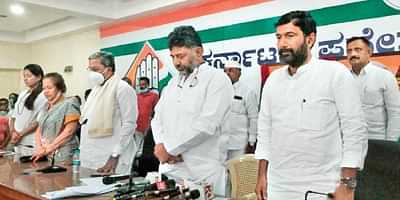
  • Paying rich tributes to former Prime Minister Indira Gandhi on her death anniversary on Sunday, Karnataka Congress leaders recalled her contributions to the country and her efforts towards social justice and upliftment of the downtrodden.
  • Opposition leader Siddaramaiah highlighted her 20-point programme and recalled how she fought for the oppressed classes through her ‘Garibi Hatao’ clarion call. The Congress leader also explained how the nation benefitted from the nationalisation of banks initiated by Gandhi.
  • Karnataka Pradesh Congress Committee (KPCC) president D K Shivakumar said if former Home Minister Sardar Vallabhai Patel is called the ‘Iron Man of India’, then Gandhi certainly is the ‘Iron Lady of India.’
  • In Davangere, Congress leaders termed Gandhi a crusader of social justice who worked for the upliftment of the oppressed classes of the society.

CONCLUSION

  • KPCC spokesperson D Basavaraj said, “By implementing several programmes, the former Prime Minister tried to uplift society and was successful. Most important of them was the historic decision of allotting lands to those who tilled them, which gave ownership to crores of farmers in the country”. She also gave a new dimension to women leadership, he said.

Bollywood Director Prakash Jha had made a movie JAI GANGAJAL staring Priyanka Chopra who played the character of new Gulbarga SP Isha Pant

⁶KEY STORY 

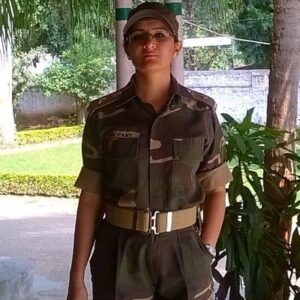
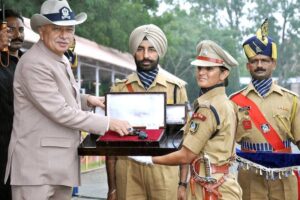
  • Jai Gangaajal, a movie based on the story of a tough woman police officer who abides by the rules, was recently released worldwide. Starring Priyanka Chopra in the lead role, the movie was acclaimed for portraying a very strong character. But did you know that the protagonist’s role in the movie was inspired by a real life woman? Meet IPS Officer Isha Pant – she is known for her amazing courage when it comes to fighting crime and for her commitment towards her duty.
  • According to reports, filmmaker Prakash Jha visited Isha and studied her style of work for several hours, recording the details of her daily activities on his phone, so it could help him while making the film.
Here are Six things to know about her:

1. An officer from the 2011 IPS batch, Isha Pant hails from Bhopal and joined the Madhya Pradesh cadre.

Initially, she was the additional superintendent of police in Jabalpur and is now posted in Gwalior.
 

2. She got an all India rank of 191 in the UPSC exams and completed her police training from Sardar Vallabhbhai Patel National Police Academy (SVPNPA) in Hyderabad.

3. In 2012 she was awarded as the best all-around Indian Police Service (IPS) probationer.

She also received the Prime Minister’s baton and Home Ministry’s revolver at the 64th Dikshant Parade at SVPNPA.
4. She solved many cases involving drug mafias and illegal alcohol sellers in Jabalpur.

5. Born on June 23, 1984, she is the youngest daughter among four sisters, all of whom are truly inspiring and amazing women.

Her eldest sister is an IFS officer. Another one of them is a human resource professional, while her third sister is a squadron leader in the Indian Air Force.

 

Will turn govt offices into ‘grain markets’, warns Tikait

KEY STORY

  • Bharatiya Kisan Union leader Rakesh Tikait on Sunday warned the Centre of converting the government offices into “grain markets” if it forcibly evicts the farmers from the protest site where they have been agitating against the three contentious farm laws for the past 11 months.
  • The warning came two days after the Delhi Police removed all the barricades from Tikri and Ghazipur borders for the smooth movement of traffic.
  • However, the farmers see it as “move” to displace them.
  • “If the farmers fail to sell their produce in mandis at a fair price, then, what better place to do so than the government offices?” Tikait said. He demanded that the Centre engage in dialogue with them and repeal the farm laws.
  • Earlier, the Samyukt Kisan Morcha had released a statement asserting that before opening all the roads, the Centre will have to open the avenues to fulfill their demands.
  • Whether the agitation continues or shift to the national capital is a collective decision to be taken at an appropriate time, he asserted.

CONCLUSION

  • Though the Government and the agitating farmers have met 11 times on the negotiating table, the talks remained inconclusive.
  • The Supreme Court, in its ruling last week, had held that though the farmers have all the freedom to protest, they cannot “block” the roads causing inconvenience to the public.

IMD issues ‘moderate’ to ‘very heavy’ rainfall alert in these 5 states and UT

KEY STORY 

  • The India Meteorological Department (IMD) has issued light to very heavy rainfall alerts in the country’s southern region for the next two days. According to the IMD, the rainfall is because a low-pressure area lying over the South-West Bay of Bengal off the Sri Lanka Coast and the associated cyclonic circulation (extending up to 3.1 km above mean sea level) is likely to move westwards during the next 48 hours.
  • On the other hand, most parts of Northwest, West, Central, and many parts of East and North-East India would witness dry weather for the next five days, the IMD added.
  • List of states/union territory where IMD has predicted rainfall till November 1 are:
    • Kerala
    • Andhra Pradesh
    • Tamil Nadu
    • Karnataka
    • Puducherry
    The IMD has predicted heavy rainfall at isolated places over Tamil Nadu, coastal Andhra Pradesh, coastal and south interiors of Karnataka, and Rayalaseema till November 31.
  • The weather monitoring agency said that thunderstorms and lightning would also occur over Kerala & Mahe, Tamil Nadu, Puducherry & Karaikal, and Andhra Pradesh during October 31 and November 1.
    Kerala rainfall
    The IMD has issued an orange alert for Thiruvananthapuram, Kollam, Pathanamthitta, Kottayam, and Idukki districts of Kerala for Sunday, October 31, and a yellow alert in Alapuzha Ernakulam, Thrissur, Palakkad, and Malappuram districts.
    The orange alert denoted heavy to very heavy rainfall, whereas the yellow alert denotes moderate to heavy rainfall.
  • For November 1, the weather forecasting agency issued an orange alert in Thiruvananthapuram, Kollam, Pathanamthitta, Kottayam, and Idukki districts, whereas a yellow alert was issued for districts of Alapuzha, Ernakulam, Palakkad, Malappuram, Kozhikode, and Wayanad.

CONCLUSION

  • For November 2, Pathanamthitta, Kottayam, Idukki, Palakkad, Kozhikode, and Wayanad districts are likely to receive heavy to very heavy rainfall. Whereas, districts like Thiruvananthapuram, Kollam, Ernakulam, Thrissur, and Malappuram will remain on yellow alert.
  • “Squally weather with wind speed reaching 40-50 Kmph is likely to prevail along and off Kerala coast. Fishermen are advised not to venture into sea,” the IMD said on its website.

Teachers & Staff without even 1 dose of COVID-19 vaccine won’t be allowed in Schools: DOE

KEY STORY

  • Teachers & Staff who did not receive even one dose of COVID-19 vaccination would not be allowed to enter schools in Delhi. The decision has been conveyed by the Directorate of Education Delhi after taking into consideration the COVID-19 situation. Schools in Delhi would reopen for physical classes from November 1, 2021. However, attendance is mandatory for students.
  • Thus, both online and offline classes would be conducted in the schools. As per the order released, the vaccination status of teachers and staffers would be verified by officials. Officials would be verifying the vaccination status with the help of the vaccination certificate or the Arogya Setu App.
  • As per the order issued by the Directorate of Education Delhi, teachers, staffers, and all other employees working in schools who did not get themselves vaccinated by October 15, 2021, would not be allowed to attain their respective educational institutions. Thus, till their first dose of vaccination, the teachers and other staff working in the educational institutions would be treated as “On Leave.”

Delhi School Reopening Date

Event Date
Delhi Schools to reopen November 1, 2021


The detailed official notification with regards to vaccination can be found on the official website. Before the reopening of schools, Delhi Disaster Management Authority or DDMA had issued the notification that all government employees working under the  Government of NCT of Delhi including teachers, other staff at educational institutions should get themselves vaccinated by October 15, 2021.
Schools in Delhi would reopen with proper COVID-19 protocols such as wearing masks, maintaining social distancing, reopening classes with 50% capacity, and others. The total number of active cases of COVID-19 in Delhi is 349 cases. The death ratio due to COVID-19 in Delhi is 1.74%.

Petrol price rise swirl gets all in its wake in Karnataka

KEY STORY

  • The governments at the Centre and State may be trying to reason out the rise in prices across the board, but on the ground, it is the common man, who has already been hit by the effects of the Covid-19 pandemic, who is bearing all the brunt.
  • The pandemic forced people inside; private companies, hit by the economic fallout of lockdowns and restrictions, cut jobs and salaries; the education sector and children’s learning abilities took a massive hit; medical expenses became a nightmare; the elders suffered medically and financially; systems were paralysed and the general social frustration levels rose like never before in our lifetimes – not to mention the 38,061 who died from Covid-19 in the state so far, many who were the sole bread-winners of the families.
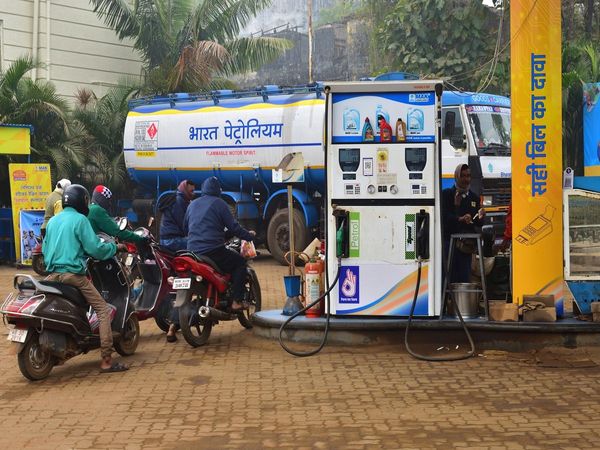
  • With both petrol and diesel prices going over Rs 100 per litre, people solely dependent on private transport are having to deal with increased expenses, while the cascading effect has pushed up prices of essentials, making daily life more expensive. Besides automotive fuels, the price of liquified petroleum gas (LPG) cylinders has inched closer to the Rs 1,000-mark, affecting home budgets.
  • Many among the middle and upper-middle-class sections, with aspirations influenced by possessions and lifestyle of higher income groups, are struggling with loan repayments amid severe salary cuts, or even job losses. The lower-middle income groups are the worse hit.
    IMPACT ON FARMERS
    When the effect of price rise is not passed on to customers, it is the producers and service providers who suffer. For instance, Subhash Atiwadkar, a farmer, brings fodder for his cattle and sells vegetables at the Agricultural Produce Market Committee (APMC) in Belagavi, regularly. “We are completely dependent on tractors and two-wheelers to bring green fodder for cattle. The huge jump in fuel prices this year has left us in a lurch. The expenses incurred in rearing and milching cattle is skyrocketing while there is no such rise in the price of milk for the customers (to protect profit margins). Our expenses for transporting vegetables to wholesale markets has increased due to skyrocketing diesel prices. While we fight for fair prices for our produce in the market, if things continue this way, we will be forced to give up farming,” he says.
    Karnataka Rajya Raitha Sangha vice-president K Narayana Gowda says fuel price hike is causing additional burden on farmers. For transporting a 15-kg box of vegetables from Hosamattana Halli in Kolar taluk to the APMC, a distance of 15 km, the transportation cost has jumped from Rs 10 Rs 13. Moreover, hiring a tractor costs Rs 4,500-5,000 per acre as against Rs 2,500-3,000 earlier. This is an additional burden on farmers who are already facing losses due to various issues like heavy rains damaging standing crops, he points out.
    NO AUTO CORRECT FOR PRICE HIKE
    Madikeri-based Santosh Cariappa, a taxi driver, often takes commuters to Bengaluru and parts of Kerala. “The taxi drivers’ association in Kodagu district charges Rs 9 per km and this rate has remained the same over many years. However, with the diesel price crossing Rs 100 per litre, we are unable make any profits. Commuters refuse to pay extra and, if we do not agree to their demands, we will lose out on the little that we were saving,” he says.
    He earns about Rs 1,800 for a trip between Madikeri and Bengaluru. “This is after deducting fuel charges and includes the minimum Rs 300 driver tip. We have to spend on our food and other expenses during the travel and are left with a bare minimum after driving such long distances,” he says.
    Giridhar (56), an autorickshaw driver from Tanniru Halla Extension in Hassan, rues that passengers often lodge complaints with the traffic police if drivers charge extra fare.
    “They have no patience to listen to our problems and insist on the old fares fixed decades ago,” he says, adding that he is the sole earning member of his family, and the entire family’s expenses including house rent, domestic gas, electricity bills, groceries, vegetables, children’s school fees and festival expenses have to be borne by him.
    Coming down heavily on successive governments for often increasing prices of essential commodities, including fuel, Devaraj, a mason, says special packages should be announced for poor families and those in the unorganised sectors as they cannot save from earnings for emergencies, including health. “We dream of buying new clothes, a motorcycle and electronic gadgets till the end of our lives. Increasing fuel prices leads to increase in prices of essential commodities, diminishing whatever savings we have,” he says.
    A HARD LIFE
    Probably the worst affected are those who are completely powerless in the face of price hikes – like Rajesh S, a parking attendant on MG Road in the heart of Bengaluru. With vehicle parking fees streamlined with automated systems brought in, people like him have to survive on what they get while having to contend with a heap of problems back home. He is increasingly burdened with the cost of cooking gas going up even as his physically challenged mother requires constant medication.
    “Getting rations is very difficult for us with high food prices. Everything has become expensive in Bengaluru. Due to lack of employment options, I can’t get a better job. Rain or shine, I have to stay here and take care of customers, but they don’t bother about people like us.”
    Amol Kademani, who sells vada-pav at a roadside mobile food stall in Belagavi, says, “The increasing price of LPG and petrol/diesel is very disturbing. I sold vada-pav for Rs 10 a piece three months ago. I was forced to increase the price to Rs 15 as I am unable to match the expenses incurred on cooking. Now, I have decided to increase the price to Rs 20 as I am unable to tackle the increasing prices of LPG, cooking oil and transporting my mobile food stall,” he says.
    Akshay, a food delivery agent in Bengaluru, says, “I work about 15 hours a day riding around the city on my bike. Our company gives us fuel allowance of Rs 250 a day; but every day, I have to dip into my own salary and shell out an extra Rs 100, thanks to the rising petrol price. For a full tank of fuel, it costs over Rs 500, so I don’t even get enough to ensure a full-tank. My company refuses to raise the petrol allowance, so now I’m struggling because even at home, the price of food and water has gone up.”
    Jenson V P, a retired travel manager, says, “In my experience of working with people from different backgrounds, I notice the middle and lower income people struggling a lot due to price hikes. Some are pushed to the brink of suicide because they can’t support their families anymore and feel ashamed. Upper class people are able to cope, but we don’t think about the people starving.”
    INDUSTRIALISTS HIT TOO
    Ramesh Hegde, chairman of Machenahalli Industrial Area, says, “We industrialists are compromising on our profit margins. Micro and small industrialists, whose monthly turnover is less than Rs 5 lakh, are losing more as they have to compromise on profit margins. Neither the raw material supplier nor the end user will take the responsibility”.
    He points out that when most of the industrialists announced bonuses for their staff for Dasara, the workers demanded an increase in allowance instead of bonus. This shows how much they have been impacted by price hike.

    (With inputs from Ramu Patil & Donna Eva in Bengaluru; Prajna G R in Madikeri; Sunil Patil in Belagavi; Udaya Kumar BR in Hassan & Ramachandra V Gunari in Shivamogga)

Karnataka colleges to have 15 minutes every hour for internal assessment

KEY STORY

  • To upgrade the quality of higher education in the state, the Karnataka Higher Education Department on Thursday decided to dedicate 15 minutes from each hour of a regular class at colleges towards internal assessment purposes.
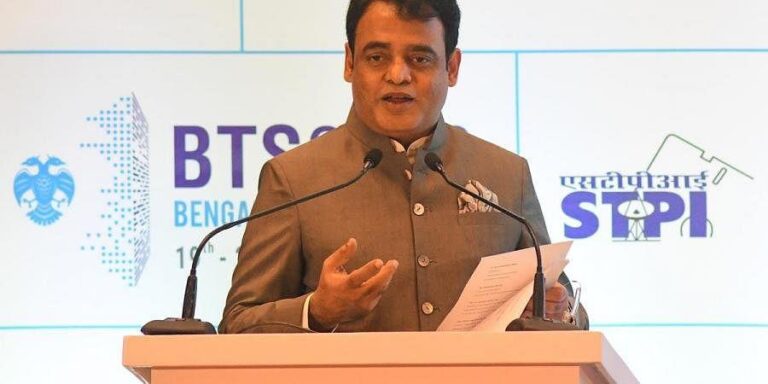
  • Karnataka Higher Education Minister Dr CN Ashwatha Narayana on Thursday said, “Actions have been taken to upgrade the quality of higher education. One hour of regular class will be divided into 45 minutes of teaching and 15 minutes of internal assessment.
  • Karnataka Minister was speaking at the inauguration of the National Education Policy (NEP) 2020 supplementary programs charted out by Vijayanagara Sri Krishnadevaraya University and Bellary Institute of Technology & Management in association with Bharatiya Shikshana Mandala (Ballari North Division).
  • “In engineering, marks for Internal assessment have been increased to 50 marks in each subject and the same will be introduced for other degree courses also,” Narayana said
  • He further said that every year 2,000 teachers will be given offline training and 10,000 teachers will be provided online training.
  • “Higher Education Academy, Dharwad will train 2,000 teachers physically every year and Infosys will train 200 teachers in each batch on regular basis on its’ Mysuru campus. In addition to this, the Universities of Gulbarga and Mysuru also will involve in training the teachers. This is in addition to 10,000 teachers of higher education being trained through online mode,” he explained.

CONCLUSION

  • Later in the interaction held with faculty and students, Narayana said that the government had entered into an agreement with ‘Unacademy’ to facilitate students of the state to better prepare for All India level competitive examinations and training would be given in colleges free of cost.
  • As part of the event an MoU between Vijayanagara Sri Krishnadevaraya University and NASSCOM/IT-ITeS sector skills council, NASSCOM was inked for undertaking skill development training in emerging technologies.