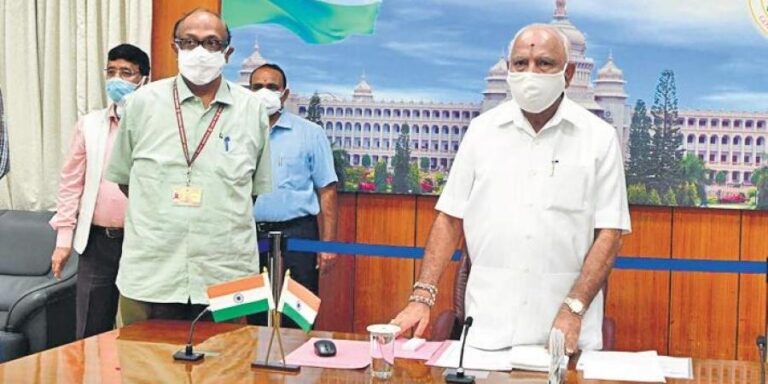
Chief Minister BS Yediyurappa on Thursday launched a DBT mobile application that will help transfer funds directly to beneficiaries of various government schemes. All packages announced by the government during the first and second wave of Covid-19 have been paid through this platform.
As announced in the budget, schemes which provide financial assistance in the state will be brought under the DBT platform, a press release from the Chief Minister’s Office (CMO) said.
The platform will identify the beneficiary through his or her Aadhaar number and use it as the financial address to directly transfer cash to the Aadhaar-linked bank account. As many as 120 schemes have been included in this platform.For the past two years, more than Rs 12,000 crore has been directly credited to Aadhaar-linked bank accounts of beneficiaries, the statement read, adding that this application will bring in transparency and prevent fund misuse.
Earlier, it was difficult for beneficiaries to check if their Aadhaar was linked to their bank account, as information regarding this was available only on the UIDAI website. If a bank account wasn’t linked to Aadhaar, it was not possible for the citizen to avail cash through the State government’s Aadhaar-based payment system. Most of them also do not have information about which of their bank accounts is linked to Aadhaar, making it difficult to know which account is credited with cash benefit. “With the DBT mobile app, all these issues will be resolved,” the statement added.
Know the app
The app can be downloaded from the Google Play Store and registered through e-KYC. The DBT mobile app will also provide scheme-wise information regarding instalments of transferred amount, date of payment, bank account number and UTR number.
Actress Urvashi Rautela recently informed on Instagram that she is pitching in with her bit to solve the oxygen crisis during the ongoing Covid pandemic.
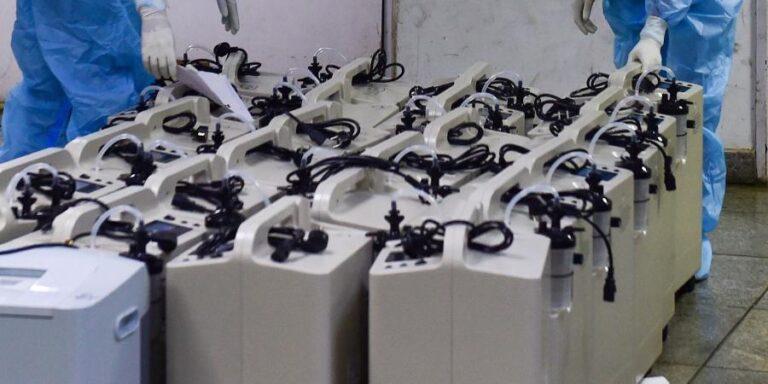
The Urvashi Rautela Foundation has donated 47 oxygen concentrators, she said in the social media post.
Opening up on the subject, the actress shared: “India is grappling with the Covid-19 pandemic, people out there are in agony running about to arrange life-saving medications, ICU beds, ventilators and, most crucial, oxygen to save their loved one. Arranging these essentialities is arduous today because the availability of all these things is way less than what the country actually requires to win this battle.”
CONCLUSION
“With Covid-19 infecting about four lakh people on a daily basis, these concentrators can really help the Indian healthcare system from disintegrating. To my knowledge, concentrators can operate and produce oxygen 24 hours a day continuously, and may last up to five years. I and my team hope to ensure that no one loses his or her life due to oxygen deficit,” the actress added.
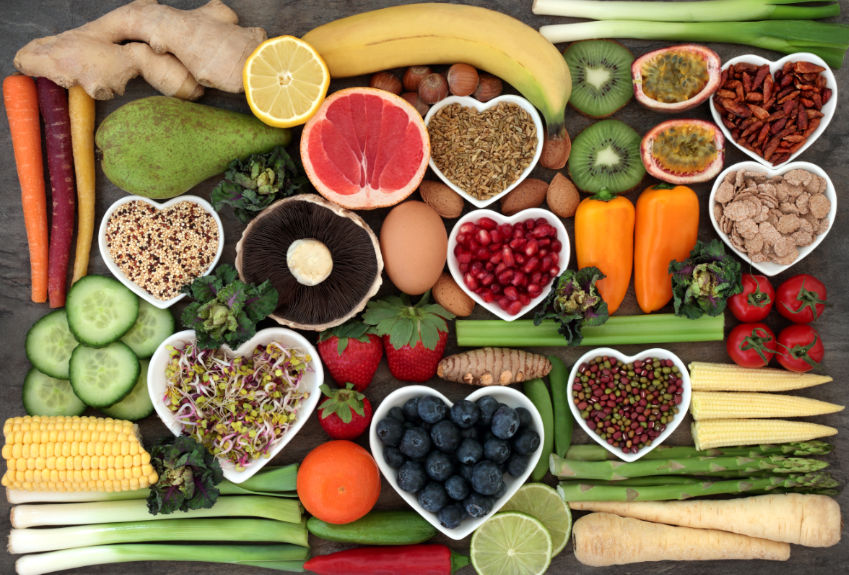
If we are asked what’s our favourite food, most of us would think of soft and creamy ice creams or calorie-rich pastries, pasta, doughnuts etc. Very few, if any, will say oats, Dalia, chia seeds, turnip etc. which are high fibre foods that help us fight the bloat, relieve us of constipations, and help fight obesity.
What is dietary fibre?
Dietary fibre helps us maintain a healthy weight while lowering our risk of diabetes, heart disease and some types of cancer. Dietary fibre is also called roughage or bulk. This is the part of the plant foods that we ingest but cannot pull into the bloodstream fully. We can’t digest it wholly or absorb it and so must allow it to pass through the digestive tract to eliminate it as a part of our bowel movement. Other food components, such as fats, proteins or carbohydrates get broken down by our body and absorbed into the bloodstream and from there to the entire body. The fibre that we cannot digest passes relatively intact through your stomach, small intestine and colon and gets eliminated from the body.
There are two types of dietary fibres: Soluble fibre: The soluble fibre in our food dissolves in the water and forms a gel-like substance that helps keep blood cholesterol and glucose levels in check. Oats, peas, beans, apples, citrus fruits, carrots, barley and psyllium etc contain soluble fibre. Insoluble fibre: This is the kind that does not fully dissolve in the water though it does absorb water to gain weight and bulk. In the process, it promotes the movement of material through your digestive system and increases stool bulk. No wonder then that when you include some of this kind of fibre in your diet, stool movement is relatively easy and one does not have to struggle with constipation or irregular stools. You can find insoluble fibre in whole-wheat flour (do not remove the chokar or bran from the atta), wheat bran, dalia, sooji, nuts, beans and vegetables, such as cauliflower, green beans, turnips, and potatoes, are good sources of insoluble fibre.
According to experts at Mayo Clinic, US, adding high fibre food items to your diet has several benefits:
https://www.mayoclinic.org/healthy-lifestyle/nutrition-and-healthy-eating/in-depth/fiber/art-20043983
Bowel movements become smoother: AS the dietary fibre adds to the weight and size of your stool and softens it, it becomes easy for the intestines to pass it out. That means goodbye to constipation. But it also helps when one suffers from loose motions. Fibre may help to solidify the stool because it absorbs water and adds bulk to the stools.
Helps maintain bowel health: A high-fibre diet is seen to have reduced the chances of developing colorectal cancer.
Lowers cholesterol levels: Adding beans, oats, flaxseed and oat bran helps the body gain some soluble fibre. This fibre helps lower total blood cholesterol levels by lowering low-density lipoprotein, or “bad,” cholesterol levels. By reducing blood pressure and inflammation, soluble fibre also adds to our heart health.
Helps control blood sugar levels: In people with diabetes, fibre — particularly soluble fibre — can slow the absorption of sugar and help improve blood sugar levels. A healthy diet that includes insoluble fibre may also reduce the risk of developing type 2 diabetes, informs the Mayo Clinic.
Helps fight flab, maintain good weight: Since one feels full and satiated after having fibre-rich food, it is quite a while before one feels hungry as the digestion process is prolonged. After eating the filling high fibre foods, one ends up eating relatively lesser food. That’s a plus for those trying weight loss.
Add to our longevity: Fibre intake — especially cereal fibre — is associated with a reduced risk of dying from cardiovascular disease and all cancers, mentions the Mayo Clinic article.
Make sure you have planned lots of fibre-rich foods for your week ahead. Do add whole-grain products, fruits, vegetables, beans, peas and other legumes, as well as nuts and seeds to your shopping list.
Lessen or avoid refined or processed foods — such as canned fruits and vegetables, pulp-free juices, white bread and pasta, and non-whole-grain cereals — which are low in fibre.
As per the Mayo Clinic report, the reason for that is “The grain-refining process removes the outer coat (bran) from the grain, which lowers its fibre content.
And finally, do not forget to drink plenty of water as fibre works best when it absorbs water.
Disclaimer: Tips and suggestions mentioned in the article are for general information purposes only and should not be construed as professional medical advice. Always consult your doctor or a professional healthcare provider if you have any specific questions about any medical matter.
Flipkart is holding a Big Saving Days sale for its customers, which will put up several offers across product categories. However, the sale is of specific interest for those looking to buy smartphones, as it will feature a range of choices at a discounted price.
For this, the e-commerce major has set up a microsite listing all the smartphones up for grabs at lower than usual prices during the sale. The on-sale phones include the makes of Realme, Xiaomi, Poco, Vivo, Oppo, Motorola, Samsung, Google and even Apple.
Due to go live later this week, the sale will hold offers on these smartphones, including discount prices, exchange bonus, bank discounts and no-cost EMI options. Here is a look at how you can avail of these offers.
Flipkart Big Saving Days details and offers
Flipkart will kick off the Big Saving Days sale for Flipkart Plus members at midnight on June 12. The following day, the sale will go live for regular customers, that is, on Sunday, June 13. This will be a four-day sale for regular buyers and will last till June 16.
Throughout the sale, Flipkart will offer an instant discount of 10 per cent to SBI credit card holders and those opting for EMI transactions. The discount will be applicable over and above other deals.
There are separate offers on smartphones as well. As mentioned above, many of the devices will be available for a discounted price. However, the discount might not turn out to be as much as Flipkart claims.
Keeping this in mind, we tried to select some of the top deals that you can grab during the Flipkart Big Saving Days sale.
Top deals on smartphones
– Flipkart will offer a whopping Rs 10,000 off on iQOO 3. The smartphone that is priced at Rs 34,990 at present will be up for sale for just Rs 24,990 during the sale.
– Apple iPhone XR will also observe a Rs 2000 discount with the Flipkart Big Saving Days sale. It will be available for Rs 39,999, down from its current retailing cost of Rs 41,999.
The big savings, though, are to be made on the iPhone 11 and the iPhone 11 Pro. Way below its lowest retailing price of around Rs 80,000 online at the time of writing, the iPhone 11 Pro will be available for Rs 74,999 during the Flipkart sale. A similar Rs 5,000 off can be availed on iPhone 11 too.
There will be a Rs 1000 off on iPhone SE, which is set to go on sale for Rs 31,999.
– Flipkart is Google’s partner for the Pixel lineup. Pixel 4a which retails for Rs 29,999 and still ranks among the best smartphones under Rs 30,000, will also be on discount during the sale. The smartphone will be listed with a price tag of Rs 26,999, which is Rs 3,000 less than its usual retailing price.
– A considerable discount will be held on Asus ROG Phone 3. The gaming smartphone will retail for Rs 41,999, way less than its usual price of Rs 46,999 for the base model with 8GB RAM.
– Poco X3 Pro has long been hailed as a very good smartphone for its starting price of Rs 18,999. This is largely because it is the only one with a Snapdragon 800 series processor at this price. The cost is for the base variant of the smartphone that offers 6GB RAM and 128GB internal storage.
During the Flipkart Big Saving Days sale, Poco X3 Pro will be available for the price of Rs 16,999. This is not as much as the Rs 7000 discount claimed by Flipkart but is still a considerable Rs 2000 saving for a very potent smartphone.
There is a Rs 500 off on Poco M3 as well, which will retail for Rs 10,499 during the sale.
– A Rs 1,000 discount can be availed on Realme 8. The smartphone will see a cut in its usual retailing price of Rs 14,999 and will be up for grabs for Rs 13,999 for the base variant.
Realme Narzo 30 Pro will also host a similar discount and will retail for Rs 14,999 during Flipkart Big Saving Days.
There are discounts on several other smartphones, and users can choose among the deals on Flipkart’s dedicated microsite for sale. However, you might want to be vigilant about the mentioned discounts vis-a-vis the current retailing prices of smartphones to grab the best deals.
Rohit Sharma has had a stellar run in the limited-overs format. Undoubtedly, he is regarded as a limited-overs legend. Being the sole player with 3 ODI double centuries and only Indian with 4 T20I tons to date, the 34-year-old is a big name in international cricket.
While it is a known fact that his career went uphill since he was promoted as an opener in 2013, Virat Kohli & Co. have applied the same formula to make the most of Rohit in Test cricket. The purest format hasn’t been the most kind to Rohit, but Hitman is slowly and steadily coming to terms with the demands of the longest format.
Rohit has had good success for Team India in the ongoing ICC World Test Championship (being their second-highest run-getter) and is set to open the innings in the forthcoming WTC final, versus New Zealand at The Rose Bowl, Southampton from June 18-22. Thus, Rohit is set to achieve a rare feat when he takes the field for Team India in the WTC final showdown versus the Black Caps.
For the unversed, Hitman is the only player from the 2007 T20 World Cup final who will also feature in the WTC summit clash, unless an injury rules him out. Here’s how the playing XI looked like for the eventual champions MS Dhoni-led India in the 2007 T20 World Cup finale, vs Pakistan:
Team India: Yusuf Pathan, Gautam Gambhir, Robin Uthappa, Yuvraj Singh, MS Dhoni (wk & c), Rohit Sharma, Irfan Pathan, Joginder Sharma, Harbhajan Singh, S Sreesanth, RP Singh
On the other hand, if India manages to win the inaugural WTC final and the maiden title, Rohit will become the first-ever to win it all: T20 World Cup (in 2007) and 2013 Champions Trophy (a major ICC title in 50-over format).
CONCLUSION
Thus, only a 50-over World Cup title will elude his trophy, which he will aim to grab hold of in the 2023 edition at home.
Kohli & Co. are currently preparing hard for the WTC final versus New Zealand. On the other hand, an injury-hit New Zealand are currently involved in the second and final Test versus England in the run-up to the WTC summit clash.
The Income Tax Department has asked the taxpayers to re-register their digital signature certificate (DSC) once again on the newly launched Income Tax e-filing portal (https://www.incometax.gov.in.) Taxpayers have been asked to re-register their DSC as the earlier digital signature on the old portal cannot be migrated.
The communication by the department said, “Please ensure that you re-register your current valid DSC on the new e-filing portal https://www.incometax.gov.in from June 7th onwards. The earlier DSC registration on the old portal cannot be migrated due to security and technical reasons.”
What is a Digital Signature Certificate?
Digital Signature Certificates (DSC) are the digital equivalent (that is electronic format) of physical or paper certificates. Few Examples of physical certificates are drivers’ licenses, passports or membership cards. DSC is a certificate that authenticates a digital message or document.
They have been given the same status as handwritten signatures under the IT Act, 2000. This means that if an individual’s DSC is present on any virtual or digital document, it indicates that the person has authenticated it. DSC can be presented electronically to prove one’s identity, to access information or services on the internet or to sign certain documents digitally.
These digital signatures are generally used at the time of e-filing income tax return as it is mandatory to sign the ITR at the time of submission.
How to obtain DSC?
These certificates are issued by Certification Authorities (CAs). DSCs are signed using the private key assigned to that Certification Authority and it contains:
Owner’s name
Owner’s public key
Expiry date of the public key
Name of Certification Authority that issued the DSC
Serial number assigned to DSC
Digital signature of the issuer
Digital Signature Certificate (DSC) applicants can directly approach Certifying Authorities (CAs) with original supporting documents, and self-attested copies will be sufficient in this case. DSCs can also be obtained, wherever offered by CA, using Aadhar eKYC based authentication.
A letter/certificate issued by a Bank containing the DSC applicant’s information as retained in the Bank database can be accepted. Such letter/certificate should be certified by the Bank Manager. The cost of obtaining a digital signature certificate may vary as there are many entities issuing DSCs and their charges may differ. Hence you are advised to check with Certifying Authority directly for charges.
Prerequisites for DSC registration:
For registering the DSC, the taxpayer must be a registered user of the e-Filing portal with valid user ID and password with downloaded and installed the emsigner utility. The USB token procured from a Certifying Authority Provider should be plugged into the computer, laptop. DSC USB token should be Class 2 or Class 3 Certificate and DSC to be registered should be active and not expired. The DSC should not be revoked.
How to register DSC on the new portal:
The authorized signatory or Individual would log into the E-filing website(www.incometax.gov.in) using the Login particulars such as the user ID which may be your Aadhar Number, PAN or any other ID and password of the company/firm/HUF/Individual etc.
Click on ‘My Profile’ from the Dashboard.
At the left side of the screen, click on the ‘Register DSC’.
Enter the linked mail id then select “I have downloaded and installed emsigner utility” and click on ‘Continue’
Select the Provider and Certificate. Enter Provider Password. Click on ‘Sign’
If the validation is successful then a message will be displayed with the option to go to the Dashboard.
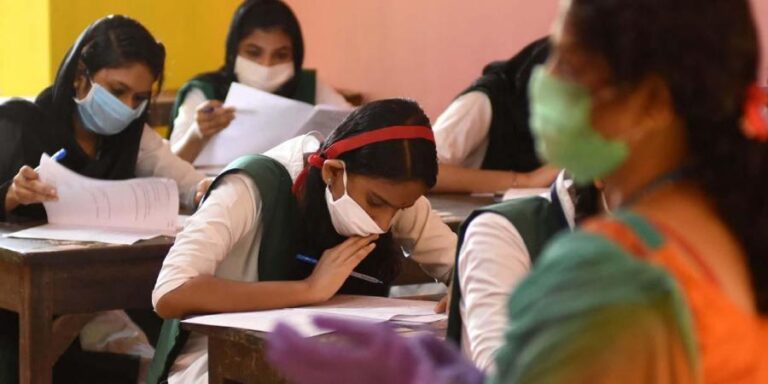
Students of first year PUC (batch of 2020-21) can now opt for an assessment to improve their grades. As their examination was cancelled, this open book exam system will add to their minimum marks. The department has already promoted students of PUC I.
The department website will carry links for the model question papers. “The questions are from their course work from the academic year,” Snehal R, Director of the department told TNIE.
Students will have to write two papers. One is between June 10 and 20 — a 10-day duration is given to students to write the answers. After a five-day gap, the second set of question papers will be released around June 26, she added.
Students have to send a soft copy of their answer sheets to their teachers. In case they can’t send a soft copy, they have to send the answer sheet by post, Snehal said and added that the last resort would be to directly hand over the papers to the teachers. The department looks forward to an objective assessment by July 20.
CONCLUSION
‘Start PU admissions only after SSLC exams, results’
Davangere/Chitradurga: The department of PU education on Thursday warned of taking action against colleges that defy directions and take up admission for PU I courses. In a circular issued, the department said there will be no admission for PU I course till SSLC examinations are held and results are out.
The State Bank of India (SBI) has issued a notice to its customers. The bank has intimated the account holders to link their PAN-Aadhaar card by June 30. The Bank has further said that if they fail to do so, they will face difficulty enjoying a seamless banking service.
“We advise our customers to link their PAN with Aadhaar to avoid any inconvenience and continue enjoying a seamless banking service,” SBI said in a tweet.
The tweet has further stated that the linking of PAN with the Aadhaar is mandatory. If PAN and Aadhaar are not linked, then PAN will be rendered inactive and cannot be quoted for conducting specified transactions. The last date for linking PAN with Aadhaar is June 30, 2021.
PAN is mandatory for a host of financial transactions including the opening of bank accounts, cash deposits in bank accounts, the opening of Demat accounts, transaction of immovable properties and dealing in securities. Aadhaar is biometric-based and cannot be obtained based on any other identification document, linking the two is considered crucial for tax administration.
The government has made several extensions to the deadline since July 2017 to facilitate the linking of the two identity numbers. And, now the last date to link these documents is June 30,
If you fail to link your PAN card with your Aadhaar card within the deadline, then the income tax department might impose a penalty on you. You will not only be liable to pay a fine of up to ₹1,000 but your PAN will also become invalid.
How to link PAN with Aadhaar card
1) Go to the income tax department’s e-filing portal.
2) Click on the Link Aadhaar section on the left.
3) You need to fill in PAN number, Aadhaar number and name.
4) Fill in the CAPTCHA.
5) Click at the ‘Link Aadhaar’ option and your PAN Aadhaar Linking will get complete.
6) The income tax department will validate your name, date of birth and gender against Aadhaar details after which the linking will be done.
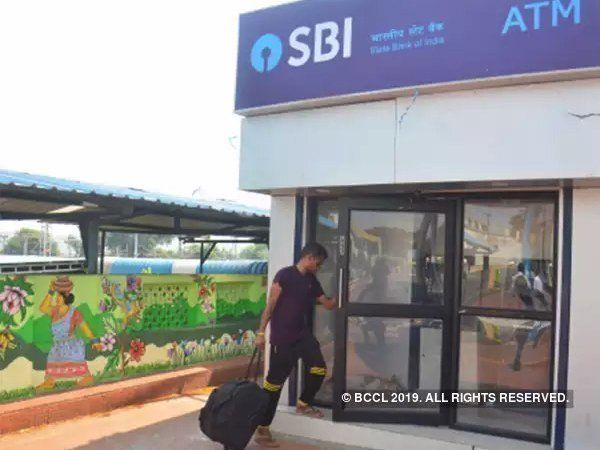
The Reserve Bank of India (RBI) has allowed banks to hike automated teller machine (ATM) transaction charges on the recommendations of a committee.
The central bank released a circular on Thursday, allowing banks to hike interchange fees per transaction through ATMs and non-financial transactions as well. Banks will be able to raise ATM transaction charges from August 1, 2021.
The RBI noted that the last change in interchange fee structure for ATM transactions was in August 2012, while the charges payable by customers were last revised in August 2014.
HIGHER CHARGES ON ATM TRANSACTIONS
Agreeing that a substantial time has passed since ATM transaction fees were last changed, RBI has given banks the green signal to allow an increase in interchange fee per transaction from Rs 15 to Rs 17 for financial transactions.
It may be noted that an interchange fee is an amount that a card-issuing bank pays to ATM operators in case its customer use an ATM that does not belong to it.
The central bank has also allowed an increase in non-financial transactions from Rs 5 to Rs 6 in all centres.
While customers are still eligible for five free transactions — inclusive of financial and non-financial transactions — every month from their own bank ATMs, they will be required to pay more for transactions conducted beyond the limit.
Meanwhile, customers have also been allowed three free transactions from ATMs of other banks in metro cities and five transactions in non-metro cities.
CONCLUSION
“Beyond the free transactions, the ceiling/cap on customer charges is 20 per transaction,” RBI said. This means customers can be charged up to Rs 20 for transactions at the arms of other banks beyond the free limit.
However, to compensate banks for higher interchange fee, banks have been allowed to increase the customer charges to Rs 21 per transaction, said RBI. This increase will be effective from January 1, 2022.
In addition to the aforementioned increase in rates, taxes — if any — shall be additionally payable by the customer.
With Bengaluru Urban, and 18 other districts in the state witnessing a downward curve in the cases and positivity rate gradually coming down, the Karnataka government on Thursday partially relaxed the lockdown rules.
The state went under lockdown on April 27, this only after cases touched an all-time high, which caught the government completely off guard.
Despite the technical advisory committee recommending the government to go on an early imposition of lockdown, the government sat on the recommendations. Nearly after 47 days, the government said that relaxations will come into effect from June 14, 6 am onwards.
WHAT THE RELAXATIONS ARE
Parks will be open for the public between 5 am and 10 am, group activities will be prohibited,
Shopping for essentials will be allowed between 6 am and 2 pm and street vendors can operate their business between 6 am to 2 pm.
The garment industry will be allowed to function with 30% capacity, while factories have been given a go-ahead to operate with 50% capacity.
The public can use auto and taxis provided. Vehicles allowed to operate with two maximum passengers.
Night Curfew will be imposed from 7 pm to 5 am.
Weekend curfew in place from Friday 7 pm to Monday 5 am,
However, the COVID-19 induced lockdown measures will continue in 11 districts of Karnataka. Chikkamagaluru, Shivamogga, Davanagere, Mysuru, Chamarajanagara, Hassan, Dakshina Kannada, Bengaluru Rural, Mandya, Belagavi, and Kodagu districts have been reporting very high positivity rate forcing the government to continue with the imposition of lockdown.
CONCLUSION
With the pandemic’s second wave declining, the state on Thursday logged 11,042 cases, 194 patients died due to the infection in a day, with the state recording a positivity rate at 6.58%.
While the relaxations are in place, after assessing the situation, the opening of economic and other activities be allowed in a graded manner.
A video clip of Anushka Sharma showing her 3 Idiots audition tape to Rajkumar Hirani and Aamir Khan has been doing the rounds on the internet. In the video, Anushka, who had auditioned for Rajkumar Hirani’s 3 Idiots (2009), is seen showing the video to Rajkumar Hirani and Aamir during the shooting of PK (2014). 3 Idiots starred Kareena Kapoor opposite Aamir while Anushka was the lead alongside the actor in PK.
As Anushka shows her audition tape to Hirani, the director is taken by surprise. “Anushka auditioned for 3 Idiots, no, she didn’t,” he replies, looking flummoxed. When she shows it to Aamir Khan, he is in splits.
In the audition video, Anushka was made to recreate Gracy Singh’s monologue from Raj Kumar Hirani’s Munna Bhai MBBS that starred Sanjay Dutt in the lead role.
The viral video features a younger Anushka Sharma dressed in a green top as she auditions for the film. 3 Idiots also starred actors like R Madhavan, Sharman Joshi and Boman Irani.
While Anushka didn’t get to work with Rajkumar Hirani and Aamir Khan in 3 Idiots, 5 years later the actor collaborated with the duo in the 2014 blockbuster PK.
Anushka Sharma made her film debut opposite Shah Rukh Khan in Rab Ne Bana Di Jodi (2008). She went on to show her mettle as an actor in several films such as Sultan, Band Baaja Baaraat, Dil Dhadakne Do and Ae Dil Hai Mushkil, Sui Dhaga, and more.
Under her production banner Clean Slate Films, which she launched in 2013 along with her brother Karnesh Sharma, Anushka has backed films like NH10, Pari and Phillauri. In the last two years, her production house has churned content for OTT like Paatal Lok and Bulbbul.
At present, Anushka has accompanied her husband, cricketer Virat Kohli along with their daughter Vamika to England for the ongoing World Test Championship series. The actor has not done a film after 2018’s Zero.
Reliance Jio is making it easier for customers to recharge their mobile number by simply sending a ‘Hi’ message on WhatsApp to initiate the process. All you need to do is save the Jio care number (7000770007) to your contact list and drop a message on WhatsApp.
In addition to this, you can also use this messaging app to enquire about other Jio services. Those who want a new broadband connection or have any query related to Jio Fiber can use the same WhatsApp number.
Once you send the ‘Hi’ message on WhatsApp, Jio will ask you about your query. Customers get a few options within WhatsApp, including “Jio SIM Recharge,” “Get new Jio SIM or Port-In (MNP),” “Support for Jio SIM,” “Support for JioFiber,” “Support for International Roaming,” and “Support for JioMart.”
CONCLUSION
When you select the recharge option, Jio will display some prepaid plans. Once you select your desired prepaid recharge plan, you will be redirected to the company’s official site for the payment purposes. If you have any issues with Jio, then you can register a complaint as well.
The bot by default chats with you in the English language. If you are not comfortable with this language, then you can change it to Hindi. You can this by simply sending a “Set language” text message on WhatsApp. The company said that the chat will soon be made available in more Indian languages.
One of the finest left-handed batsmen in white-ball setup, former Indian all-rounder Suresh Raina has opened up about the special bond he shared with legendary MS Dhoni during his international cricket career.
Raina shares a great camaraderie with former Team India skipper Dhoni. While Raina is the most successful batsman for Chennai Super Kings (CSK), Dhoni is the driving force of the three-time Indian Premier League (IPL) champions.
During their respective international careers, Raina and Dhoni rescued Team India on numerous occasions by playing marauding knocks and forging match-winning partnerships.
Despite bringing glory to Team India during his bitter-sweet white-ball career, Raina faced criticisms about being a part of the Indian national team only because of his friendship with former skipper Dhoni.
Addressing the constant criticism he faced during his international career, Raina spoke at length about his rapport with Dhoni in his autobiography.
The CSK all-rounder said that he worked hard to earn his place in the Indian national side. Raina also opined that ex-skipper Dhoni knew how to get the best performance out of him.
“Dhoni knew how to get the best performance out of me, and I trusted him,” Raina wrote in his autobiography. “When people equate our connection with a spot for me in the Indian team, it hurts a lot. I’ve always worked hard to win my spot in Team India, just as I’ve earned Dhoni’s faith and respect,” the former Indian all-rounder added.
CONCLUSION
Former Indian all-rounder Raina has known legendary cricketer Dhoni for years. Raina made his international debut only a year after Dhoni announced his arrival in 2004.
Interestingly, when Dhoni called time on his international career on August 15, 2020, the legendary skipper was joined by Raina who also bid farewell to world cricket on the same day. Though Raina and Dhoni had announced international retirements last year, both stalwarts of the game continue to play franchise cricket by representing CSK in the IPL.
With more people getting vaccinated every day and COVID numbers gradually going down, relaxations on travel and other activities are being imposed. The Ministry of Health and Family Welfare (MoHFW) issued standard operating procedures (SOPs)for the vaccination of people undertaking foreign travel for employment or education purposes.
Observing the trends, The US Centers for Disease Control and Prevention issued travel advice for over 120 countries on Monday. Travel health notices for countries was based on the following COVID-19 risk assessment levels:
Level Unknown: COVID-19 Unknown – 44 countries including Tonga, Ireland, Afghanistan, and Monaco fall under this category.
Level 1: COVID-19 Low – 33 countries including Singapore, Fiji, Greenland, and Iceland fall under this category.
Level 2: COVID-19 Moderate – 21 countries including Zambia, Bhutan, Angola, and Kenya fall under this category.
Level 3: COVID-19 High – 64 countries including France, Germany, Japan, and Russia fall under this category.
Level 4: COVID-19 Very High – 62 countries including India, North Korea, Sweden, and Saudi Arabia fall under this category.
CDC travel advice for India
CDC advises against travelling to India unless essential. In events of need for travel, passengers must be fully vaccinated and must follow all precautionary methods including maintaining appropriate social distance and wearing masks as vaccination does not eliminate the risk of contracting the COVID-19 virus absolutely. Sick, COVID-19 positive people or people exposed to COVID-19 positive patients will not be allowed to travel.
For fully vaccinated travellers:
The traveller must be vaccinated by an FDA or WHO authorized vaccine.
No prior testing required when leaving the United States unless required by the destination.
Following precautionary measures such as wearing masks over mouth and nose, washing hands and social distancing during travel and on arrival is mandatory.
When returning for travelling to the United States, a negative COVID-19 test result no more than 3 days before travel or documentation of recovery from COVID-19 in the past 3 months is required.
A viral test after 3-5 days of travel is required.
No self-quarantine required after arriving in the United States, however monitoring of the symptoms and taking required measures is advised.
For unvaccinated travellers:
A viral test 1-3 days before the trip is required.
Following precautionary measures such as wearing masks over mouth and nose, washing hands and social distancing during travel and on arrival is mandatory.
A viral test after 3-5 days of travel must be taken.
A 7-day self-quarantine is necessary despite testing negative.
In case of a positive test, immediate self-isolation must be undertaken.
In events of not being able to get tested, symptoms must be monitored and self-quarantine of 10 days must be undertaken.
People who recovered from a COVID-19 infection within a period of 3 months must carry out guidelines laid for fully vaccinated travellers. A test 3-5 days after travel is not required unless symptomatic.
New Delhi: The India Meteorological Department (IMD) has predicted “heavy to very heavy” rainfall in several parts of eastern and central India from June 10 onwards as southwest monsoon approaches states.
”Southwest Monsoon is likely to advance into remaining parts of the Arabian Sea and Maharashtra, some more parts of Gujarat and remaining parts of Telangana, Andhra Pradesh, some parts of Madhya Pradesh and East Uttar Pradesh, entire Odisha, West Bengal, Jharkhand, Chhattisgarh and Bihar during next 2-3 days,” the IMD noted.
The weather department has also warned that the southwest monsoon would become more intense, leading to heavy rainfall in the east and central India in the coming six to seven days.
Here are the states which will be impacted by the monsoon in the coming days:
Odisha: As predicted by IMD, under the influence of low pressure is likely to be formed over North Bay of Bengal and neighbourhood around June 11, 2021, widespread rainfall activity with isolated heavy to very heavy rainfall and extremely heavy rainfall very likely to occur over a large number of districts of Odisha during 10th to 14th June 2021.”
Maharashtra: Heavy rains lashed Maharashtra on Wednesday, and the weather department has forecast “extremely heavy” rainfall till June 15. The state’s Konkan region could be lashed by “isolated and extremely heavy” showers from June 12-15. The IMD has issued a ‘red alert’ for Mumbai, and neighbouring Thane, Palghar and Raigad districts, warning of very heavy to extremely heavy rainfall at isolated places there.
Kerala & Karnataka: Karnataka is likely to experience an increase in rainfall from June 12 onwards. An orange alert has been issued for June 12 and 13 for these areas, CS Patil of India Meteorological Department (IMD), Bengaluru said. Kerala is also very likely to experience heavy rainfall during June 11-15, while Konkan might experience the heavy falls again on June 12-15, the IMD said.
Amid a surge in the demand for supplemental oxygen during the second wave of the coronavirus pandemic, a Pune-based engineering firm has developed a do-it-yourself (DIY) design for an oxygen concentrator by tweaking open-source resources to Indian conditions.
Oxygen concentrators hired or purchased for home installation by coronavirus patients’ families at present are mostly made by foreign companies.
The government has a duty waiver on these machines given their importance in saving lives.
Karan Tarade, director of Anashwar Technologies, said oxygen concentrators, invented in the 1970s, aid in a patient’s breathing by concentrating ambient oxygen available in the air.
“We began by meeting doctors and medical equipment experts. Our company engineers found an open-source design called ‘Oxykit’ on the internet whose output oxygen levels were good, but trials showed us that the design was not suitable for Indian atmospheric conditions and high humidity,” Tarade said.
“We have made some necessary changes in the design like the use of silica gel for moisture separation and parallel compressors design to come up with an indigenous oxygen concentrator,” he said, speaking of the new design.
The company has also made an oxygen analyser, an important device which is very expensive and mostly out of reach of many, he said.
The design was developed using YouTube videos and a Github repository, he added.
“This whole project was developed in India, by Indians for Indians we are trying hard to make the design simple and as cheap as possible so that anyone with basic knowledge of tools would be able to do it,” he said.
CONCLUSION
The company has developed a design for a ‘do it yourself’ 15 litres per minute (LPM) oxygen concentrator, and is also working on a 20 LPM model which will deliver over 90 percent purity, he said, adding that the new machine will be a smart oxygen analyser which senses the oxygen levels in a patient and controls the oxygen flow and purity in real-time.
“Every human being is facing problems due to the pandemic, so we felt that instead of keeping this technology to ourselves, let us make it open for everyone,” Tarade said.
Tarade, a mechanical engineer, had won the first prize in the ‘Smart India Hackathon’ promoted by the Niti Ayyog in 2018, for his ultra-portable water disinfectant system project and will be working on presenting a paper on the design and implementation of the oxygen concentrator.
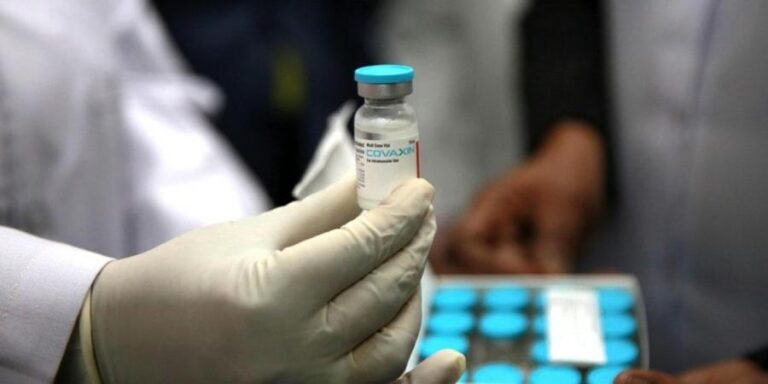
The wait for the published data related to phase 3 clinical trials of Covaxin is only getting longer despite a growing clamour to release the findings urgently amid new information that compared to Covishield this Covid-19 vaccine may be triggering lower antibody response.
On Wednesday, Bharat Biotech, which has developed Covaxin with support from ICMR, said that the final analysis of its efficacy trials that were carried out between November-January will be made public only in July, after it is submitted to the drug regulator and peer-reviewed journals with a timeline of about three months for publication.
While announcing the second interim analysis of its phase 3 trials on April 20, the company had said that “safety and efficacy results from the final analysis will be available in June, and the final report will be submitted to a peer-reviewed publication”.
In this statement, the company had claimed that the vaccine has shown a 78% efficacy against preventing infection while efficacy against severe Covid-19 disease was 100%, with an impact on reduction in hospitalizations after studying 127 symptomatic cases.
This efficacy was lower by 3% from the one claimed in another statement to the press, issued in early March, based on 87 symptomatic cases.
But a delay on the part of the company in coming up with the final data is bothering many — since phase 3 trials data of all other approved Covid-19 vaccines, including the Russian Covid-19 vaccine Sputnik V, were published within 4-6 weeks of interim analysis.
Also, Covaxin had been approved by the Central Drugs Standard Control Organisation for public use in “clinical trial mode” while still under efficacy trials on 25,800 people.
“It is unusual to have such a delay, particularly when the second analysis was so close to the sample size of 130 symptomatic cases,” said a top virologist who did not wish to be named.
Health systems and vaccine policy expert Chandrakant Lahariya said that while publication in a journal may take time, the company should at least release the findings on a pre-print server in the interim.
The voices demanding proof that Covaxin actually protects against Covid-19 are also growing because a recent comparative report on evaluation of immunogenicity responses to spike protein after the first and second doses of Covaxin and Covishield showed that the former may have lower immunogenicity.
Though some experts say that the low antibodies after Covaxin is expected given that it is an inactivated virus based vaccine known for triggering cellular rather than just antibody response, these doubts can be put to rest only when data is out for independent researchers to see and analyse.
“It would be really useful to see published phase 3 results of Covaxin,” said vaccinologist Shahid Jameel. “Peer-reviewed publications are globally considered to be the best way of judging science, and it would be a tribute to India’s vaccine effort. It will also help Covaxin to quickly get WHO qualification.”
Amar Jesani, a bio-ethics researcher and editor of the Indian Journal of Medical Ethics, said he was surprised that the final data has not been submitted even to the regulator yet.
CONCLUSION
“This is particularly surprising because the regulator recently approved Covaxin trials for kids and adolescents aged 2-17 years who should not be subjected to any experiment until the vaccine’s protection in adults is fully understood and analysed,” he said.
Jesani minced no words in saying that Indian drug regulator has been lax in the case of Covaxin.
“I think Bharat Biotech and ICMR are getting extraordinary privileges while science is taking a backseat. Such leniency would not have happened if this vaccine would have aimed to be marketed in developed countries,” he said.
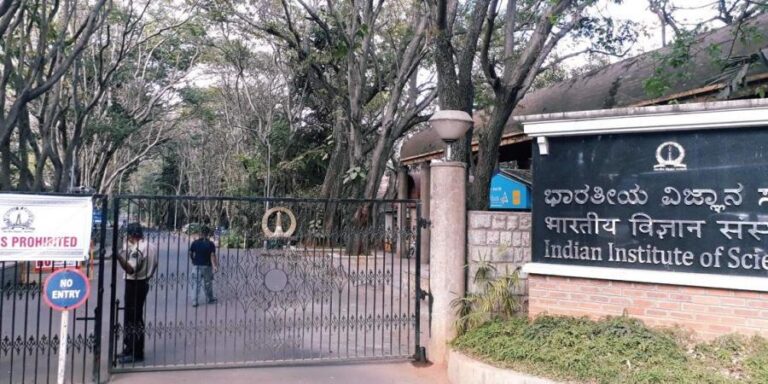
Karnataka Chief Minister BS Yediyurappa on Thursday congratulated the Indian Institute of Science (IISc) here for being ranked the world’s top research university by an international agency.
In a tweet, he said, “Congratulations to @iiscbangalore on being ranked the world’s top research university in the QS World University Rankings. Imparting world-class education & facilitating cutting- edge research in science, technology, and engineering, IISc makes every Indian proud.”
Congratulations to @iiscbangalore on being ranked the world's top research university in the QS World University Rankings. Imparting world-class education & facilitating cutting-edge research in science, technology, and engineering, IISc makes every Indian proud.
According to the coveted QS World University Rankings, the Indian Institute of Science was rated the world’s top research university as per the citations per faculty indicator.
The IISc secured a perfect score of 100 out of 100 for the citations per faculty (CPF) metric in the analysis by London-based Quacquarelli Symonds (QS).
For the QS World University Rankings, institutions and universities were judged on six indicators– academic reputation, employer reputation, citations per faculty, faculty/student ratio, international faculty ratio and international student ratio.
This year, rankings listed the world’s top 1,300 universities – 145 more than in the last year’s edition, which can be found in 97 locations.
CONCLUSION
Of 13,000 institutions, 6,415 were found eligible for the survey analysis, and 1,705 were assessed for the final table.
The results accounted for the distribution and performance of 14.7 million academic papers published between 2015 and 2019, and the 96 million citations received by those paper.
They also accounted for the expert opinions of over 1,30,000 academic faculty and over 75,000 employers.
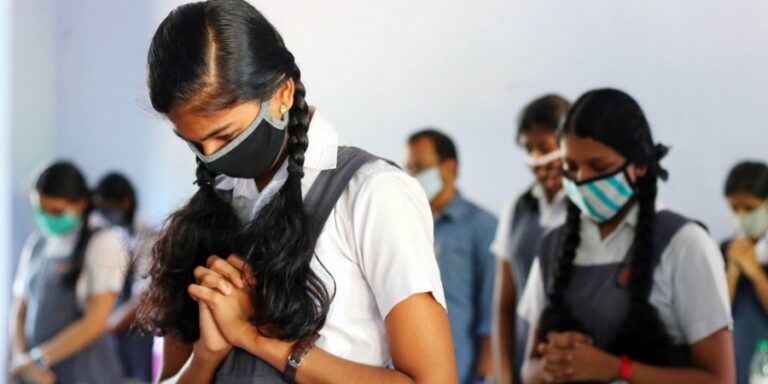
The department of primary and secondary education has started preparations for Class 10 SSLC Board examinations, scheduled to be held in the third week of July. The number of students enrolled for the examination has increased by 30,000 this year, Minister of Primary and Secondary Education Suresh Kumar S said.
He asked department officials to ensure they make the exam a success, and also take up confidence- building measures for students and parents.
The examinations will be held once the Covid-19 situation normalises, said the minister, who plans to visit all districts to oversee preparations. Deputy directors, BEOs and other officials from the 34 educational districts were present for a video conference with the minister, on measures to be taken in the run up to board exams.
Teachers have been given the responsibility to inform students about the method of holding the examination. Each paper will weigh 40 marks, and have objective questions where students will have to pick one of four options. Model question papers will be sent to schools via BEO offices this week, and teachers are to train students on answering questions using OMR sheets.
After schools open, four or five students will be called to school and guided on the exam. Kumar said that teachers and department officials in some districts have already begun reaching out to children in various ways, and instilling confidence in them about the examinations, and other districts should follow.
CONCLUSION
Extra precautions will be taken compared to last year, with more exam centres and vaccinated invigilators, and talks are on with the health department to vaccinate the teaching community.
Students have been asked to choose an examination centre close to their place of residence. The state Technical Advisory Committee will provide new protocol, an improvement over the previous year’s norms, which had received the appreciation of the High Court and Supreme Court, said Kumar.
Karnataka Health Minister K Sudhakar on Wednesday said there was a lack of evidence that children will be predominantly infected during the possible third wave of COVID-19.
“Although it has been predicted that the next wave might impact children predominantly, there is no such evidence from other countries which have already undergone the third wave,” Sudhakar said.
Even AIIMS, Delhi Director Dr Randeep Guleria had said there is no data, either from India or internationally, to show that children will be seriously infected in any next wave of COVID-19, he was quoted as saying by his office in a release.
The minister said 60-70 per cent of the children, who got infected and got admitted in hospitals during the second wave in India, had either co-morbidities or low immunity, and healthy children recovered with mild illness without need for hospitalisation.
CONCLUSION
“However, we are ensuring preparedness to protect our children,” he added. The Health Minister’s office had recently said that aimed at ensuring preparedness for a possible third wave of COVID-19, the state government has decided to set up pediatric wards in all district hospitals, and additional paediatricians and nursing staff will also be recruited wherever it is necessary.
On black fungus infections, Sudhakar said, 2,281 cases have been reported in the state.