Despite all the strides made by humankind over the last few months, the COVID-19 pandemic is far from over. It is common knowledge by now that the SARS-CoV-2 virus, which causes COVID-19, can be transmitted through a number of mechanisms.
The US Centers for Disease Control and Prevention (CDC) may still be unsure about airborne transmission, but respiratory transmission and surface transmission are possible routes of spread.
Direct inhalation of droplets containing the COVID-19 virus is likely and can be avoided by wearing masks when outdoors or in crowded places, surface transmission that could go undetected.
The virus enters the body via the mucous membranes in the nose, eyes and mouth, and it can easily get there if you touch a contaminated surface and then proceed to touch your face without washing your hands first.
SARS-CoV-2 on the skin
Your skin – especially the skin of your hands – may act as the biggest carrier of SARS-CoV-2. Research conducted at the United States Army Medical Research Institute of Infectious Diseases in July 2020 had indicated that SARS-CoV-2 can stay on the skin for eight hours to 14 days depending on the temperature.
This study said that the virus survives on the skin for eight hours at 37 degrees Celsius, for about four days at 22 degrees Celsius and up to 14 days at 4 degrees Celsius.
This clearly shows that using a potent, 80% alcohol-based hand sanitizer is the best way to kill the virus before it can enter your system
Hand sanitization should be done regularly to avoid COVID-19 infection.
SARS-CoV-2 on other surfaces
Your skin is a carrier and should be sanitized regularly, but you also need to keep other surfaces in mind – after all, we are all surrounded by high-touch surfaces, from door handles to remote controls and switchboards.
The study mentioned above shows that the survival time of the SARS-CoV-2 virus on other surfaces like borosilicate glass, stainless steel and polystyrene was about eight times more than that of the flu virus.
virus stays active on various surfaces and the following are some estimates to keep in mind.
Metal: Five days
Glass: Five days
Ceramics: Five days
Wood: Four days
Plastic: Two to three days
Stainless steel: Two to three days
Cardboard: 24 hours
Copper: Four hours
Aluminium: Two to eight hours
Paper: Depends on the type but usually lasts between a few minutes to about five days
Fabrics: Depends on the type but all fabrics can be easily disinfected if washed and dried properly
The best way to avoid surface transmission is to clean and disinfect all surfaces, especially high-touch ones, regularly.
The newest order in Karnataka by the state government now dictates that anybody refusing to get a COVID-19 test can be jailed and or heavily fined.
Amid the worsening Covid-19 outbreak in the state, the government on Tuesday invoked the Karnataka Epidemic Diseases Ordinance 2020 to crack down on people who refuse to get tested.
Invoking powers under section 4 of the Ordinance, the government issued an order stating, “All individuals who are identified for Covid-19 test by the government shall get tested so that the spread of the disease can be contained and lives can be saved.”
If a person refuses to get tested, he/she can face a jail term of up to three years and a fine up to Rs 50,000 as per the Ordinance.
Highlighting the problem, DH had carried a report Karnataka faces Covid contacts challenge’ in its Oct 6 edition, revealing that as much as 60 per cent of primary and secondary contacts of Covid patients in the state are refusing the calls to get tested.
Government officials said the problem, which was widespread across the state, was creating a serious impediment in the government’s efforts to control the pandemic.
“It has come to notice that certain individuals are refusing to get tested and thus hampering the efforts to stop the transmission of Covid virus.
The timely testing will only help the family members, co-workers etc of Covid positive patients to identify disease early and go for treatment,” said Dr Omprakash Patil, Director, Department of Health and Family Welfare, in the order.
Match 13 of Indian Premier League (IPL) 2020 saw Kolkata Knight Riders (KKR) lock horns with MS Dhoni-led Chennai Super Kings (CSK) from the United Arab Emirates (UAE).
Batting first, the openers gave KKR a fiery start, before Shardul Thakur dismissed Shubman Gill. Rahul Tripathi dazzled with a brilliant 81, but the other batsmen couldn’t get going, as CSK stifled the run-flow. Karn Sharma and Dwayne Bravo starred with the ball, as KKR were bowled out for 167 runs.
CSK lost Faf du Plessis in the powerplay, but Watson and Rayudu put CSK in control with a fine partnership. However, Rayudu’s wicket turned the game on its head, as KKR stifled the run-flow, and pulled of a stunning 10-run victory.
Chennai have only themselves to blame for this loss. They were 90-1 at the 10-over mark, and Sunil Narine’s advent just turned the game on its head.
Dinesh Karthik was being riled for not bringing on Narine in the powerplay, but boy, didn’t that move pay off! It did, and KKR have ended benefitting from it.
Rayudu’s wicket stifled the run-flow, and Dhoni getting castled unravelled the chase altogether. Chennai were cruising, and just threw the game away.
Karthik must be given a lot of credit for this performance. What a fine performance, overall, from the Men in Purple. Captivating game, indeed. Thanks for joining us folks, goodnight!
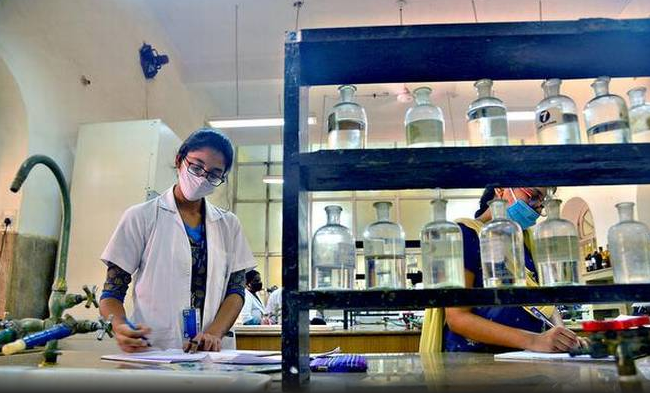
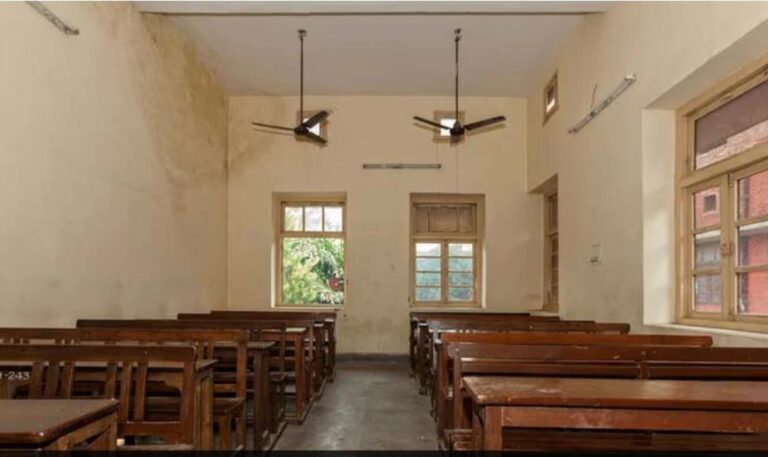
In an attempt to break away from the tedium of a digital class format where a teacher talks online while students take notes, several city schools and colleges are conducting practical classes by making use of ‘virtual labs’ and also organizing virtual field trips of museums and zoos
Virtual labs allow students to conduct experiments by testing formulae, clicking on icons and test tubes, etc.
While it is a far cry from the actual experience of conducting experiments in laboratories, teachers say it’s the best option available given that the government is not allowing schools to open this month.
Manila Carvalho, principal, Delhi Public School (Bengaluru East), said that science teachers in the school use these labs to help students visualise and understand concepts.
“Many of our teachers, besides using these virtual labs which are available online, also come to school and record the experiments they conduct. They then share the videos with students,” she said.
Many virtual labs conduct experiments that are aligned to the NCERT/CBSE and State board syllabus
Dakshayini Kanna, principal of Harvest International School, said that they have been conducting virtual field trips as well.
“We can book virtual tours of museums and zoos. We cannot continuously only conduct online classes. We are trying to do everything to make sure that online learning is attractive for the students,” she said.
Several enterprising teachers in government schools and colleges too are making use of these labs.
CONCLUSION
Visvesvaraya Technological University has tied up with National Institute of Technology Karnataka Surathkal to implement technology enabled learning through virtual labs for all institutions affiliated to the university.
The university said that these labs can be used to provide remote experiential learning of courses in engineering and applied sciences.
The move has received a mixed response from students. Karthik S., who studies in a government PU College, started using these virtual labs after his teacher recommended them. “Our college does not have a lab and I am glad that I found these tools to understand concepts better,” he said.
Tanya S., a class twelve student of a CBSE-based school says that the virtual labs do not provide them hands-on experience like the regular practical classes. “We understand that our schools have no option but to conduct virtual practical sessions. But if we do not get any practical exposure this academic year, we want CBSE to cancel our practical examination,” she said.
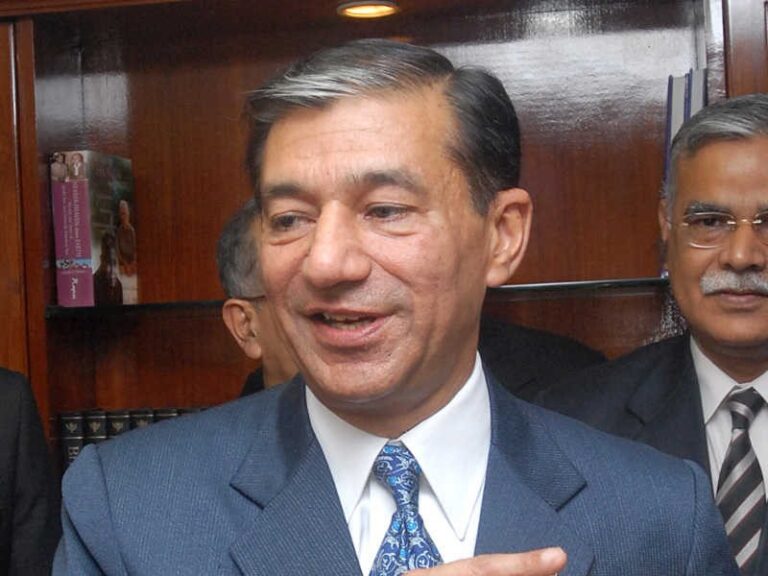
The central government on Wednesday has appointed M Rajeshwar Rao as deputy governor of the Reserve Bank of India, it said in a notification. He is currently the executive director of RBI.
The Appointment Committee of the Union cabinet has approved the appointment, the notification stated. Rao succeed NS Vishwanathan as the fourth deputy governor.
He has been associated with the Reserve Bank since 1984, holding various positions. He took charge as an executive director of the central bank in 2016.
At present, he is in charge of the internal debt management, financial markets operations, international and secretarial departments at the central bank.
Prior to taking over this position, Rao was the chief general manager, financial markets operations department. He has previously held charge of the risk monitoring department.
His vast experience makes him a front runner for the post. He has a Bachelor of Arts in Economics and a Master of Business Administration from University of Cochin. He is also a Certificated Associate of Indian Institute of Bankers.
Rao has experience of working as the Banking Ombudsman in New Delhi and in the Reserve Bank’s regional offices at Ahmedabad, Hyderabad, Chennai and New Delhi.
The central government on Tuesday appointed three external members Ashima Goyal, Jayanth R Varma and Shashanka Bhide to the Monetary Policy Committee (MPC) of the RBI.
The MPC of the RBI on Wednesday has started its three-day deliberations. There is a consensus that the central bank will maintain status quo on the benchmark lending rates in the view of inflation, scheduled to be announced on 9 October.
Rahul Gupta, head of research- currency, Emkay Global Financial Services said, “We expect the central bank to maintain a status quo on the back of rising inflation. The focus will be on growth projections, as since February 2020, the RBI has not given a solid economic projection.”
“This meeting of the MPC is the first with the new government nominees on the Committee. Considering that this is their first meeting and with the inflation consistently above 6, they are expected to retain the policy rates,” said Divakar Vijayasarathy, founder and managing partner, DVS Advisors LLP.
Former CBI director and Governor of Nagaland Ashwani Kumar on Wednesday allegedly committed suicide by hanging himself at his residence in Shimla.
Shimla Superintendent of Police Mohit Chawla confirmed the incident, according to news agency ANI, describing it as a shocking development. It is learnt that the former state Director General of Police was under depression for sometime.
Kumar was DGP of Himachal Pradesh from August 2006 to July 2008 and then the Director of CBI from August 2008 to November 2010.
After his retirement from the CBI, Kumar had settled down in Shimla. After his retirement, he worked briefly for a private university located near Shimla as its chancellor. A 1973-batch IPS officer, Kumar is survived by his wife and son.
BENGALURU: Bengalureans grappling with notorious traffic snarls got some relief when the Union cabinet on Wednesday cleared the long-pending 148-km Bengaluru suburban rail project, sources said.
However, no official announcement was made due to election Model Code of Conduct in place due to byelections to assembly constituencies Sira and Rajarajeshwarinagar on November 3. A formal announcement is likely later.
Sources say the project was on Wednesday’s agenda and was discussed and cleared. However, Union railway minister Piyush Goyal at the press meet in New Delhi said: “We can’t disscuss or give any information as Model code of Conduct is in force in Bengaluru”.
A source who spoke on condition of anonymity, said: “CCEA (Cabinet Committee on Economic Affairs) has given the nod for Bengaluru suburban rail project.
Bengaluru Central MP PC Mohan and Bengaluru South MP Tejasvi Surya told TOI the project will take off soon but refused to divulge details citing the poll code. Mohan said
He has been following up the project for several years. “I thank PM Narendra Modi for expediting the long-pending project. This will be a next-generation infrastructure facility surya ,said.
South Western Railway sources confirmed that CCEA has cleared the project but can’t speak on record due to the poll code. The project will be executed by Rail Infrastructure
Development Company (Karnataka) Limited (K-RIDE), an SPV of the Union ministry of railways and Karnataka government. “K-RIDE will soon float tenders for civil work.” they said
The 37-year-old proposal, announced in the 2018-19 Union Budget, was cleared by the railway board in November 2019. It was awaiting CCEA approval.
The project will comprise for corridors: KSR Bengaluru City-Devanahalli, Byappanahall-Chikkabanavara, Kengeri-Cantonment-Whitefield and Heelalige-Rajanukunte.
This will be the country’s first modern suburban train system. Commuter trains on the proposed network will be similar to that of the Metro.
There will be automated fare collection gates for smart card-based cashless travel. Fifty-three AC trains with automated sliding doors may be deployed in the first phase.
Railway sources said the minimuin fare could be Rs 13 for less than 3km. In Chennai and Mumbai, a train trip for the same distance now costs Rs 5. “For a 15 km trip, the fare will be rs 35 as apposed to RS 45 in the mertro,” an official said
A delegation of the National Restaurant Association of India (NRAI) had a follow-up meeting with the Delhi Chief Minister Arvind Kejriwal on Wednesday.
The delegation had earlier met the CM on September 28 to discuss key issues faced by the restaurant industry, like requirement of multiple licences, excise-related concerns, legal drinking age in Delhi and the requirement of multiple clearances from different departments by the restaurants.
The restaurant body also discussed with the CM how they can work together to promote tourism in the city.
Restaurateurs and trustee, NRAI, Rahul Singh and Riyaaz Amlani were part of the delegation. Talking about the Wednesday meeting, Rahul said, “The meeting was attended by officials from different departments and it helped us bring forward our issues and concerns that need to be addressed.
It was a meeting to help everyone involved understand the problems being faced by the restaurant industry and find solutions. We discussed various reforms required for the restaurant industry in Delhi.
I have directed the respective departments to remove unnecessary hassles in the smooth running of restaurants in Delhi. https://t.co/eIm6IgTSKo
One of the requirements is to reduce/rationalise the existing excessive licencing regime. Essential regulation that needs to be retained should relate to compliances for food safety, environment and pollution, taxes and safety/security of customers and workers.
The system should move from the present ‘licencing’ to ‘registration’ regime, with standard validity of approvals for a period of five years.”
He also added that the restaurant body highlighted that there should be an online single window platform for restaurants with time-bound approvals and the creation of restaurant-based tourism hubs are needed to promote tourism in the city.
“The response from the CM has been very encouraging and we are hoping that our issues will be addressed and we can work together to find solutions,” added Rahul.
Expressing concern over the menace of air pollution in Delhi during winters, the central pollution watchdog has asked the Arvind Kejriwal government to take immediate action on major pollution sources like construction and demolition activities and open garbage dumping.
Listing out a series of tasks to be accomplished across Delhi, the Central Pollution Control Board asked in a letter to the Delhi government on Tuesday to take early action on dumping of mixed municipal solid waste at three dump sites in Bhalswa, Ghazipur and Okhla.
“It is observed that construction and demolition activities and open dumping of waste/garbage continue to be the major concern in most of the areas and therefore, special efforts are needed to curb these activities, the CPCB said.
It said some tasks to curb air pollution in Delhi have been accomplished but “more needs to be done”.
Pointing out the shortcomings in action plans of 13 pollution hotspots in the capital, it said the updated status of Wazirpur hotspot has not been received while the target of greening and paving in the hotspot areas is not mentioned.
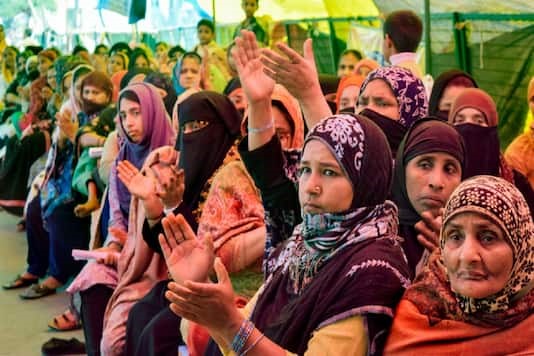
The Supreme Court on Wednesday ruled against the legality of the Shaheen Bagh protest, saying public spaces cannot be occupied indefinitely by protesters.
A bench, headed by Justice Sanjay K Kaul, held that occupation of public roads and public spaces in exercise of the right to protest is not permissible under the law.
Public spaces and places can’t be occupied indefinitely whether in Shaheen Bagh or elsewhere,” said the judge, reading out the operative part of the judgment.
The bench added that notwithstanding right to protest is a right guaranteed under the Constitution, protests have to be in designated areas after due approvals from the authorities concerned.
The bench was delivering its judgment on a petition by advocate Amit Sahni, who alleged inaction on the part of the Delhi Police and administration in clearing the public road along the Shaheen Bagh area in Delhi.
Sahni pointed out the sheer inconvenience faced by lakhs of commuters because of blocking of the arterial road that connected Delhi with other cities in the National Capital Region (NCR).
The bench, in its judgment, also pulled up the Delhi Police for not doing anything even after the High Court asked it to act within its authority to clear the road.
It said that administration must keep public spaces free from obstructions and that they cannot wait either for an order from the court or go on having endless talks with the protesters.
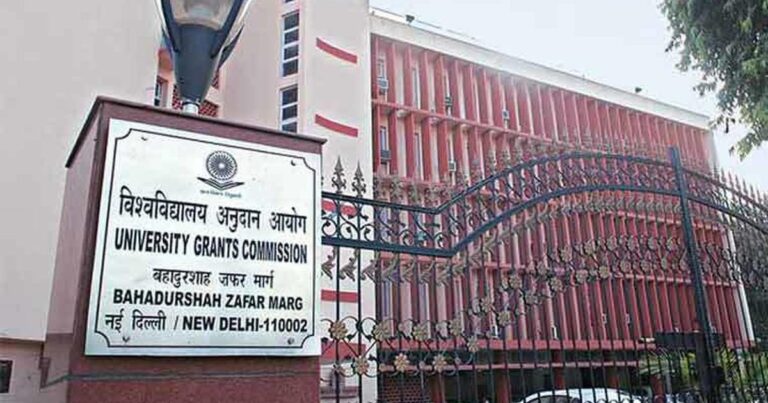
University Grants Commission has released the Fake Universities List 2020 having names of 24 universities that have been termed as fake.
These universities are not empowered to confer any degree, as per the Commission. A total of 7 universities in Delhi and 8 in Uttar Pradesh have been declared as fake Fake Universities List by the Commission.
As per the statement released by the commission, these 24 self-styled, unrecognized institutions are functioning in contravention of the UGC Act, which have been declared as fake universities and these are not empowered to confer any degree. The list of universities is given below in the table.
Fake Universities List
State
Name of the Universities
Delhi
Commercial University Limited, Daryaganj
United Nations University
Vocational University
ADR-Centric Juridical University
Indian Institution of Science & Engineering
Viswakarma Open University for self employment
Adhyatmik University
Uttar Pradesh
Varanaseya Sanskrit Viswavidyalaya
Mahila Gram Vidyapith/Viswavidyalaya
Gandhi Hindi Vidyapith
National University of Electro Complex Homeopathy
Netaji Subhash Chandra Bose University (Open University)
Uttar Pradesh Viswavidyalaya
Maharana Pratap Shiksha Niketan Viswavidyalaya
Indraprastha Shiksha Parishad
Karnataka
Badaganvi Sarkar World Open University Education Society
Kerala
St. John’s University
Maharashtra
Raja Arabic University
West Bengal
Indian Institute of Alternative Medicine
Indian Institute of Alternative Medicine and Research
Meanwhile, UGC has also directed the universities of India to begin with the new academic session from November 1, 2020. The first-year classes for undergraduate and postgraduate courses will be beginning in November 2020. The varsities have been asked to wrap up the admission schedule by November 30.
New Delhi: It was on this day 20 years ago when Prime Minister Narendra Damodardas Modi had begun his journey as the head of an elected government. Born on September 17, 1950, in Vadnagar, Narendra Modi became Gujarat Chief Minister for the first time in 2001.
Since then, he has not looked back. Narendra Modi served 12 years and 227 days as the Gujarat CM from 2001 to 2014. He was elected as the 14th PM of India in 2014 and then again in 2019.
On August 13, 2020, Narendra Modi became the longest-serving head of elected government among all Indian PMs when he completed 6,878 days in office.
PM Modi enjoys huge popularity among the masses, and election results are proof of that. The PM also finds ways to connect with the hoi polloi through various means, whether it is through his radio programme Mann ki Baat or his NaMo app.
What if you want to contact him? Here is the compilation of the ways and means of contacting PM Modi:
PM Modi’s contact numbers:
If you want to call PM Narendra Modi’s residence or office or fax him, you can do it at:
PMO: +91-11-23012312
PMO Fax: +91-11-23019545, 23016857
PMO helpline: +91-1800-110-031
Please note: The Prime Minister’s Office receives a lot of public grievances relating to issues which fall under the purview of various Ministries/Departments or the State Governments. Such grievances are forwarded by the Public Wing of this office to the concerned Ministry/Department or the State Government. Citizens can enquire about the status of their letters sent to the Prime Minister by dialing the facilitation number – 011-23386447.
PM Modi’s social media accounts
PM Modi is undoubtedly one of the most active State leaders in the world on social media. Since it is impossible for him to personally track all the tweets and messages on his own, there is a dedicated team for the purpose.
A NGO volunteer claims he was implicated in Padarayanapura violence: 5 officers booked
An Assistant Commissioner of Police (ACP)-ranked official and four police officers, including a woman officer, have
been booked for police excess in after volunteer alleged that he was implicated in the Padarayanapura violence of April 19 this year and also tortured in custody after he surrendered to the police Through a court.
The Jagjivan Ram Nagar police have registered an FIR based on a private complaint registered at the 1st ACMM court by Irfan Ahamad Z (32) (inset), a resident of west of adarayanapura and police officials named in the FIR are UD Krishnakumar, ACP Kengeri sub-division, Lingaraju, police inspector, Byatarayanapura police station, Naya from the ACP Squad. Venkatesh attached to JJ Nagar police station, and an unnamed woman officer.
I was doing relief work when I got a call from the ACP blaming me for the mob turning violent
-Irfan Ahamad
Ahamad, in his complaint to the court, said he is a national general secretary with organisations, Human Rights Foundation and People’s Union for Civil Liberties (PUCL) and runs a trust named Aayina Nursing Home and Diagnostic Centre that offers free treatment for kidney patients.
Ahamad said his team and he have been involved in the relief work during the pandemic.On April 19. Ahamad said that he had called up the JJ Nagar police inspector and informed him that there was a chance of a mob turning violent at Padarayanapura.”told them the situation is going out of control to which the inspector responded that the local MLA would come there and speak with the people.”
Ahamad said local goons identified as Glass Baba, Kabir and Moin who claimed they were supporters of the local MLA began breaking the police outpost and damaging tin structures meant for seal-down and vandalized public property. “I was volunteering with the policemen at the outpost distributing relief material when around 8.52 pm i got a call from the ACP blaming and abusing me for the mob turning violent. Soon afterLingaraju called up and abused me,” Ahamad said
The police team then went to Ahamad’s house and picked up his brother after which Ahamad decided to surrender along with his advocate before a local court on April 27.The court ordered that he be handed over to the JJ Nagar police, but Ahamad alleged he was taken into custody at the Rajarajeshwari Nagar police.
Here, he claims he was tortured by five officials, leading to injuries on his left wrist and also a fracture his little finger.
They also put a gun in my mouth and threatened me that I will be implicated in false cases. One of the officers kicked me, and the other took my digital account details and said if I complained against them, she would misuse my IDs,” Ahamad said.
Ahamad said this was politically motivated as he had filed PILs against political parties in Chamrajpet constituency, including the husband of. Jagjivan Ram Nagar corporator.Assistant Commissioner of Police UD Krishnakumar told Bangalore Mirror that all citizens have a legal right to challenge the system. In this case, the investigating officer will file a report and submit it to the honourable court,” he said
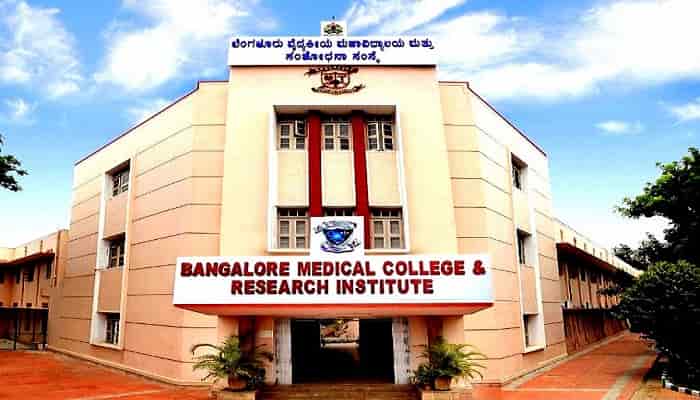
The skin bank at Bangalore medical college and Research Institute(BMCRI) ,is one of the few banks in the country setup in 2017.However, the pandemic has been a big blow to the hospital, which currently only has 3000 centimeters of skin remaining , sufficient only for a patient or two.
Skin is considered as the best biological dressing and anybody with less than 20 percent burn injuries has a chance to heal and survive.
Explaining how burn injuries work, Dr Gunasekar Vuppalapati a plastic surgeon from Human Healing Foundation and Rotary Bangalore Midtown ,explained .
“A patient with burn injuries loses 40 per cent water leading to dehydration. The body also losses heat, leading to hypothermia. There is also a high risk of infection. The convectional style of treating burn patients involves giving them IV Fluids to take care of water loss, but this is a temporary measure.”
Explaining the treatment with skin , Dr Gunaseakar Vuppalapati said , “skin helps protect water loss ,heat loss and and prevents infection prevents infection ,and this is more efficient way of treatment.
while I was studying in the UK , we used pig skin as it was easily available now, we can take skin from deceased, process it for two-three months, which can be preserved for up to five years.
There is a shortage
Despite a massive capacity, the skin banks are running dry. Dr Gunasekar Vuppalapati said, “Due to the pandemic, we have few donors. To save a patient with more than 50 per cent burn injuries, we would need skin from 10-20 dead bodies, as we only take skin from the thighs and back, and not the entire body.
Status at BMCRI skin bank
Nagaraj BN, in-charge of Skin Bank at BMCRI said, “We have resumed donations, but only if the patient has a report stating a negative for covid-19. Currently, we only have 3,000 centimeters of skin left at the bank, which is a case of extreme shortage and may only suffice one or two patients.
Dr Ramesh KT, Head of Department, Plastic Surgery department, at BMCRI said, “We have had no activity at the banks due to the virus and the staff at the skin bank was also involved in covid-related work. Now, at Victoria hospital, we have slowly started non-covid work and the skin bank is back and functioning too.”
How do you donate the skin?
To donate the skin, citizens can call the skin bank. Skin can be harvested within six hours of the donor’s death
Every year the applications carry out important updates to continue meeting the needs of their users. In this context, some devices become incompatible with the new versions of the apps and some of them even stop working.
For this reason, we share what smartphones iOS and Android in which WhatsApp will stop working, to the less correctly. It is important to note that the instant messaging application will continue to be available for devices Android with operating system 4.0.3 or later and iPhone with iOS 9 or later.
In this sense, some of the phones on which WhatsApp will stop working on Android are:
Samsung Galaxy S2
Motorola Droid Razr
LG Optimus Black
HTC Desire
While on iOS they are:
Iphone 4s
iPhone 5
Iphone 5c
Iphone 5s
Likewise, if you are an Android user and you want to check with which operating system you have, you can go to “settings”, then look for the option “about phone” (which may be in the “system” button) and check your version of Android .
Ahead of the festive season, the Karnataka government on Tuesday issued guidelines in the form of standard operating procedures (SOPs) to contain the coronavirus spread.
“As festivities during October-December draw large gatherings of people in public places for religious worship, fairs, rallies, exhibitions, cultural functions and processions, preventive measures have to be taken to contain the virus spread,” said the ministry in a statement here.
Senior citizens above 65 years of age, people with comorbidities, pregnant women and children less than 10 years are advised to stay at home.
Organizers of fairs, rallies, exhibitions, cultural functions, processions and plays/concerts associated with the fests have to ensure thermal screening of participants, physical distancing and sanitization.
Events that last for days or weeks like exhibitions, fairs, puja pandals, Ramlila pandals or concerts and plays should ensure a cap on the number of participants with staggered timings and restricted entry.
Organizers have to ensure sanitizers, thermal guns and physical distancing floor markings to prevent the infection.
In rallies and immersion processions, limited people should be allowed to participate to maintain social distancing and wearing of a mask is compulsory.
Close circuit cameras must be installed to monitor compliance of physical distance norms and wearing of masks at each venue.
Individuals must maintain six feet in public places and wear a mask all the time.
Respiratory etiquettes like covering mouth and nose while coughing or sneezing with a tissue or kerchief and disposing off them have to be observed. Spitting is prohibited in any place.
Festive events will be allowed only outside containment zones and people living in zones will not be permitted to visit the religious functions.
Event organizers can make provisions for contact less payment.
In religious places, touching statues, idols and holy books is prohibited. Recorded devotional music/songs be played to avoid choir or singing groups.
Community kitchens at event venues should follow physical distancing norms while preparing and distributing food.
Karnataka Medical Education Minister Dr K Sudhakar on Wednesday said that experts have advised against reopening schools in October. “Currently, the number of cases is high in the state but the recovery rate is also high. Considering that children are likely to get infected if schools reopen when cases are at its peak, experts have advised against the reopening schools and we will not allow schools to open at least in October,” Dr K Sudhakar said.
A member of the Technical Advisory Committee for COVID-19 said that in Tuesday’s meeting with the Health Department officials, several doctors expressed apprehension over reopening schools.
“We know the situation. Doctors, especially paediatricians are seeing two or three cases of children getting COVID-19 (referring to each paediatrician on COVID-19 duty). We fear this may increase if schools reopen. We fear there may be a shortage of resources to treat children,”
Stating that the standard operating procedure issued by the Union government is comprehensive, the expert said that reopening schools would inadvertently result in children turning positive for coronavirus and this is likely to create panic among parents.
“The academic year is almost coming to an end considering the Deepavali, Dasara and Christmas holidays. Some experts say it is better to pass all students for this year. But we have to think about Class 10 students as many in government schools have not even had classes. This is something that the committee should still decide on,” the expert added.
Sources in the Primary and Secondary Education Department said that they are mulling over reopening schools only for students from Classes 9 to 12 as it would be easier to ensure they follow physical distancing.
“Even private schools want this. We should see how parents take to this. The biggest concern is regarding SSLC students and we have to come up with a way to ensure they are able to perform well in board exams. But this too, we will decide once experts give us their report,” the source said.
Match 20 of the ongoing IPL 2020 edition saw defending champions Rohit Sharma-led Mumbai Indians (MI) take on the mid-table-placed Steve Smith-led Rajasthan Royals (RR) in Abu Dhabi on Tuesday (October 07).
The last time when MI got the better of the 2008 winners was when MS Dhoni was still Team India’s limited-overs captain, Jasprit Bumrah hadn’t even made his debut for the Men in Blue, Roger Federer was still dominating the tennis arena single-handedly, with Rafael Nadal being the only closest rival and Novak Djokovic still having a lot of distance to cover.
MI finally ended their five-year winless streak over the RR camp. Since their re-admission, RR had managed to beat MI on all four occasions but wasn’t the case in Abu Dhabi as Smith & Co. surrendered to MI in a tall 194-run-chase.
Opting to bat first, Rohit & Co. started off in an aggressive manner with the skipper and Quinton de Kock making full use of the powerplays.
Nonetheless, debutant and India’s U19 star Karthik Tyagi removed de Kock with a peach of a short-pitched delivery. While Rohit, who moved past Suresh Raina to become the second-most capped player in IPL, was looking in good form, he once again perished after a sublime start.
Twin strikes from ace spinner Shreyas Gopal changed the momentum towards the RR camp at the half-way stage.
MI’s batting depth bailed them out of a crisis. Suryakumar Yadav, at No. 3, single-handedly held the innings and smacked boundaries at will; shuffling wisely and toying with the field with aplomb. On the other hand, Hardik Pandya’s 19-ball 30* took MI to 193-4.
No prizes for guessing who the Man of the Match is for tonight's game.
In reply, RR innings got off to a disastrous start. Smith once again looked in a hurry and fell to a poor stroke off Jasprit Bumrah whereas Yaishasvi Jaiswal fell for a duck. MI’s solid pace unit struck at regular intervals as James Pattinson, Trent Boult and Bumrah removed the top-order in a flash.
Jos Buttler, who has been in no form whatsoever, tried to counterattack from his end. He was looking in great touch, as he applied himself in the middle and timed his strokes to perfection.
Striking at over 155, the right-hander looked set to take the game deep as he targetted the shorter boundaries and played the slower balls with ease. However, a freakish catch from Kieron Pollard, at the deep, ended his stay and thereby put an end to the contest.
From 98 for 4, RR succumbed to 136 all-out in just 18.1 overs as Bumrah returned with 4 for 20 along with able support from Boult, Pattinson, Rahul Chahar and Pollard. MI’s clinical performance takes them to the top of the points table with a healthy net run-rate, thanks to a 57-run win.
The 2020 Nobel Prize for physics has been awarded to Roger Penrose, Reinhard Genzel and Andrea Gheza for their research on black holes. A panel at the Karolinska Institute in Stockholm announced the recipients on Tuesday.
The Royal Swedish Academy of Sciences decided to award the 2020 Nobel Prize in Physics with one half to Roger Penrose and the other half jointly to Reinhard Genzel and Andrea Ghez.
Reinhard Genzel and Andrea Ghez were awarded the prize “for the discovery of a supermassive compact object at the centre of our galaxy.” Roger Penrose won the prize for showing “that the general theory of relativity leads to the formation of black holes”.
WATCH LIVE: Join us for the 2020 Nobel Prize in Physics announcement.
Hear the breaking news first – see the live coverage from 11:45 CEST.
“The prestigious award comes with a gold medal and prize money of 10 million Swedish kronor (more than $1.1 million),
courtesy of a bequest left 124 years ago by the prize’s creator, Swedish inventor Alfred Nobel. The amount was increased recently to adjust for inflation,” news agency PTI said.
The award has in the past honoured discoveries about the tiniest of particles and the vast mysteries of outer space.
The 2019 Nobel in Physics was awarded to Canadian-born cosmologist James Peebles for theoretical work about the early moments after the Big Bang, and Swiss astronomers Michel Mayor and Didier Queloz for discovering a planet outside our solar system.
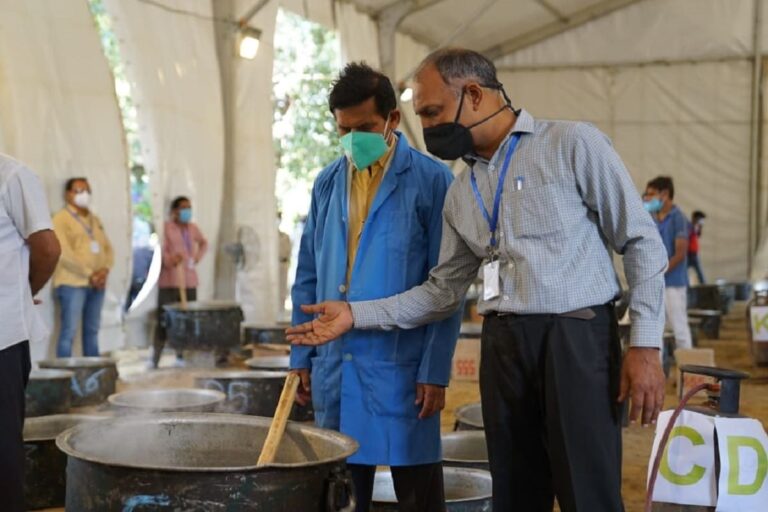
At the Kharkhari Nahar village in the South Delhi district, agricultural extension officers of the Delhi government under the guidance of Indian Agricultural Research Institute (IARI) scientists are hard at work in a makeshift tent, methodically preparing a mixture that, when sprayed over crop residue, will decompose the stalks and stubble, etc, in approximately twenty days and also leave the fields more fertile than before.
The setup looks very much like the provisional kitchens that spring up during weddings – large flat-bottomed pots and containers, large ladles, cardboard boxes containing ingredients, many smaller stoves, many cooks and the bustle of utensils and people.
What is cooking here is a possible solution to the stubble burning that has plagued farmers for decades and compounded the challenge of air pollution across the national capital and northern India.
At the heart of this promising breakthrough in the search of a cheap and viable alternative to stubble burning is the Pusa bio-decomposer capsule.
The department of biotechnology in the IARI has been carrying out experiments over the past five years. The head of the microbiology division, Dr K Annapurna, credits her team but particularly Dr Loveleen Shukla for the breakthrough.
“It is the research experimental result of the scientists of my division. Dr Loveleen Shukla who is the inventor of the capsule decomposer technology, and we have been working on this particular aspect for the past five years, and for the past one and a half to two years, we have come up with this decomposer capsule technology which we have validated for the past two years in different farmers’ fields in Punjab and Haryana,” says Dr Annapurna.
The technology has been validated only after field trials in Punjab and these would continue, she says.
“The science behind this is that this decomposer capsule is a microbial consortium of fungi; all these fungi are capable of producing enzymes which will be hydrolysing the various components in the plant cells like the lignins, celluloses and hemicelluloses,” she explains.
Farmers are compelled to burn their crop residue primarily to clear their fields on time for the next sowing season. Dr Annapurna points out that this bio-decomposer would reduce the time for the crop residue to decompose.
Dinesh Kumar, an agricultural extension officer says, “Our officials are going from door to door, speaking to people, getting forms filled…So far the response has been good. Hope that this will be successful…In the past days when we met union environment minister and environment ministers of neighbouring states, we had appealed to them…that if other states adopt this, one can get freedom from problems that arise due to stubble burning.” Rai also points out that this is a far cheaper alternative to the subsidy that was given by the central government to wean away farmers from setting their crop residue on fire. In Delhi, only 40 farmers had come forward to avail the approximately 3 crore rupees subsidy that was provided by the central government.