Seattle man beats coronavirus, then gets stunning $1.1 million hospital bill

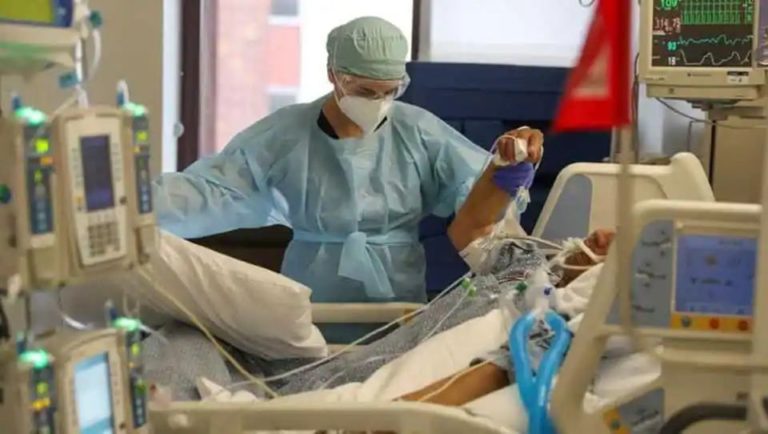
Seattle resident Michael Flor, known as the longest-hospitalised Covid-19 patient, has now been dubbed a million-dollar baby after he received the enormous bill from the hospital for his battle with coronavirus recently, the Seattle Times reported on Friday.

Not only did Flor survive the infection, he ran up a huge tab amounting to nearly $1.1 million– Rs 8.1411 crore and was saddled with a bill that resembled a book since it ran into an astounding 181 pages.

The 70-year-old, hospitalised for the longest time, nearly had a brush with death one night when he was suffering from the deadly pathogen.

A night-shift nurse was sympathetic and held a phone to his ear while his wife and children bid him goodbye. But Flor survived. His recovery prompted those around him to call him the miracle child.

But there was more in store for Flor as he found out when he got his hospital bill at his home in West Seattle. He says his heart almost failed a second time when he saw the amount that his healthcare sojourn had cost him.

The total tab for his bout with the coronavirus was $1.1 million—an estimated Rs 8.1411 crore. The bill also ran into 181 pages.

The bill is technically an explanation of charges, and because Flor has insurance he won’t have to pay the majority of it. In fact, because he had Covid-19, and not a different disease, he might not have to pay anything at all.

For now though Flor is stunned and his family and friends have been left wondering at the extreme expense and completely bizarre economics of the American healthcare system.

The elderly man was hospitalised at the Swedish Medical Center in Issaquah with Covid-19 for 62 days, so he knew the bill would be a lot. He was unconscious for much of his stay there, but once near the beginning of his illness, his wife Elisa Del Rosario remembers him waking up and saying, ‘You gotta get me out of here, we can’t afford this.’

Just the charge for his room in the intensive care unit was billed at $9,736 per day. Due to the contagious nature of the virus, the room was sealed and could only be entered by medical workers wearing plastic suits and headgear. For 42 days he was in this isolation chamber, for a total cost of $408,912.

He was also put on a mechanical ventilator for 29 days, with the use of the machine billed at $2,835 per day, for a total of $82,215. About a quarter of the bill is for the expenses incurred on drugs.

This list of expenses tells the story of Flor’s battle and the battle waged against the infection for many like him. Not all of whom can afford it.

For the two days when his heart, kidneys and lungs were all failing, indicating multiple organ failure—often the case in coronavirus– and he was closest to death, the bill runs for 20 pages and totals nearly $100,000. The doctors, it seems ‘were throwing everything at me they could think of,’ Flor says.

In all, there are nearly 3,000 itemized charges, about 50 per day. Usually hospitals get paid only a portion of the amount they bill, as most have negotiated discounts with insurance companies. The charges don’t include the two weeks of recuperating he did in a rehab facility.

Speaking about his feelings, Flor said he was surprised at his own reaction after being handed the hospital bill–which was guilt. The guilt of the survivor.

‘I feel guilty about surviving,’ he says. ‘There’s a sense of ‘why me?’ Why did I deserve all this? Looking at the incredible cost of it all definitely adds to that survivor’s guilt.’

Elderly daughter carries 120-year-old mother on cot to bank for pension

In a shocking incident, a daughter had to take her 120-year-old mother to a bank in Naupada district of Odisha to get the latter’s pension money after the bank demanded physical verification of the account holder.

The woman was dragged to the bank on a cot by her 70-year-old daughter.

The 120-year-old woman has been identified as Labhe Baghel. The incident, reported from Baragan village under Khariar block of Nuapada district, happened on Thursday (June 11).

According to the inputs, the elderly woman had sent her daughter, Gunja Dei, to the bank to withdraw Rs 1,500 from her pension account.

The bank official, however, denied to release the pension money and demanded physical verification of the account holder at the bank premises.

Gunja Dei, who is a senior citizen herself, was left with no other option but to drag her bedridden mother to the bank.

As soon as Gunja Dei along with her mother reached the bank, the bank official, seeing the condition of both the mother and the daughter, released the pension money.

As soon as the video of the incident went viral, Twitterati slammed the bank officials for calling two elderly women to the bank.

Notably, BMC Commissioner Prem Chand Choudhry has written to regional managers of all government, private, scheduled banks and RRBs, asking them to provide door-to-door service to elderly citizens.

Shahid Afridi tests positive for Covid-19, asks fans to keep him in prayers

Former Pakistan skipper Shahid Afridi has tested positive for Covid-19. Afridi, in a tweet, revealed that he had been feeling unwell since Thursday. He asked his fans and well-wishers to keep him in their prayers and ended his post with ‘hope not out’.

‘I’ve been feeling unwell since Thursday; my body had been aching badly. I’ve been tested and unfortunately I’m covid positive. Need prayers for a speedy recovery, InshaAllah,’ Afridi tweeted.

The Pakistan all-rounder is the third Pakistan cricketer to test positive for the novel virus after Taufeeq Umar and Zafar Sarfaraz. However, Umar recovered from coronavirus after going into a 14-day self-isolation at home. The former Pakistan opener tested positive last month. He then underwent a second test after 14 days which came out to be negative in the first week of June.

Scotland’s Majid Haq and South Africa’s Solo Nqweni are the other cricketers to have contracted the virus.

Afridi has been doing social work during the global lockdown to control the spread of Covid-19 via ‘Shahid Afridi Foundation’. He also asked Yuvraj Singh and Harbhajan Singh to tweet videos urging people to donate to his foundation.

Small business gets GST compliance relief

The Goods and Services Tax (GST) Council on Friday eased compliance burdens for pandemic-hit industry, particularly small businesses, but deferred taking a call on crucial issues such as resolving the inverted duty structure and paying timely compensation to cash-strapped states for their revenue shortfalls.

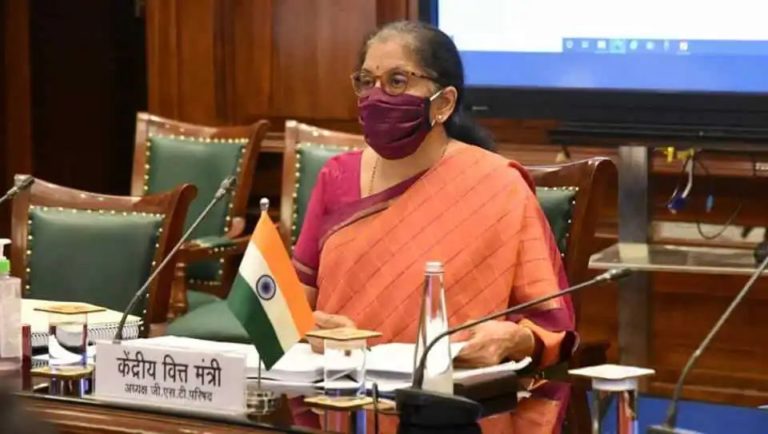
Taxpayers who could not file their GST returns between July 2017 and January 2020 can now file them after paying a reduced late fee of Rs 500 if they have tax liabilities. Taxpayers who do not have any tax liability and who missed filing returns will not have to pay any late fee, Union finance minister Nirmala Sitharaman said after the Council’s 40th meeting that took place through video conference.

The window to do this will be open from July 1, 2020 to September 30, 2020, she said. The council has also provided compliance-related concessions to small businesses that have faced problems due to the pandemic, she said. The Union finance minister is the chairperson of the apex federal body on indirect tax and finance ministers of states are its members. Normally, the council’s decisions are unanimous.

Sitharaman said the council has slashed the interest rate by half for non-compliance by small businesses having a turnover of up to Rs 5 crore. Small taxpayers who missed filing returns for February, March and April due to the pandemic will not be charged any interest till July 6; thereafter, they will pay 9% interest , she added. ‘In other words, for these months, small taxpayers will not be charged any interest till the notified date… up to July, there is nothing they have to worry about. They don’t have to pay the late fee, but thereafter it will be 9% [interest for late filing] instead of 18%… So reduction in the interest rate [for small taxpayers] is valid up to September 30,’ she said. For subsequent tax periods also—May, June and July—small taxpayers can avail a waiver of late fees and interest if returns for the period are furnished by September, the finance minister said. Besides, the Council has agreed to give a one-time extension for restoration of cancelled GST registration. The GST collection in March was Rs 97,597 crore. Revenue collections exceeded Rs 1 lakh crore for four consecutive months starting November 2019. On the GST revenue position, Sitharaman said, ‘We have given the picture to the council.’ She, however, declined to disclose the details.

SC imposes Rs 5 lakh cost on PIL petitioner for seeking ban on Coca-Cola and Thumbs Up

Ashish Tripathi,

The Supreme Court on Thursday imposed Rs five lakh as an exemplary cost on a social worker for abusing the process of law by filing a PIL for ban on soft drinks – Coca-Cola and Thums Up.

A bench of Justices D Y Chandrachud, Hemant Gupta and Ajay Rastogi noted that the petition has been filed without the petitioner having any technical knowledge on the subject.

“The source of his assertions has not been substantiated. No justification or explanation is forthcoming during the submissions of senior advocate S P Singh, on why two specific brands in particular are chosen to be the target of the proceedings,” the bench said.

The court said the petition has been filed for extraneous reasons and the invocation of the jurisdiction under Article 32 was an abuse of the process.

Peritioner, Umedsinh P Chavda sought an order, prohibiting the sale and use of Coca-Cola, Thumbs up, soft beverages and also apprising people at large not to drink claiming the drinks to be detrimental to the cause of health.

He also sought a direction to the Centre to submit complete analytical report and scientific approval by scientist in providing license of sale and use of liquid items like Coca-Cola, and Thumbs Up.

After petitioner’s counsel failed to explain his assertions, the bench said, “we have come to the conclusion that invocation of the jurisdiction under Article 32 is not a bona fide recourse to the jurisdiction in a public interest litigation. Consequently, besides dismissing the petition an order directing the imposition of exemplary costs is necessary.”

The court directed the petitioner to deposit cost of Rs 5 lakh within one month with the registry for disbursal to SC Advocates-on-Record Association.

Court Grants Bail to Amulya Leona in Sedition Case After 3 Months

Over 3 months after Bengaluru student and activist Amulya Leona was arrested and jailed on charges of sedition and creating communal disharmony, the 5th ACMM court granted her bail under the default provision CrPC 167(2) on 10 June.

She is expected to walk out of Parappana Agrahara jail after the release order is passed on Friday, 12 June.

On Wednesday, the same day that a sessions court rejected her bail application on the grounds that the accused “may abscond and involve herself in similar offences”, Amulya’s lawyers were able to get her bail by moving a simultaneous bail plea in a magisterial court in late May.

Amulya had been arrested in February for chanting ‘Pakistan Zindabad’ slogan at an anti-CAA event in Bengaluru, which was attended by AIMIM Chief Asaduddin Owaisi.

“There were multiple petitions initiated before different jurisdictional courts on different grounds. CRPC 167(2) defines the statutory time by when the chargesheet is filed based on the charges and time is between 60-90 days. In this case, since 90 days have passed, after expiry of 90th day, the 91st day accused is entitled to bail. So we moved a different court for default bail and the order came on Wednesday,” said R Prasanna, part of the team of advocates that has been arguing the case in court.

Almost half of India can’t survive more than a month sans income

New Delhi: Almost half of India`s population will not be able to survive more than a month without any job or income, just with the help of savings or family support.

With a protracted lockdown and dismal economy, job losses are mounting and concerns are going up for families as to how long they can hold out.

As per the latest IANS CVoter Economic Battery Wave survey, 28.2 per cent of males said they would survive less than a month without income, while 20.7 per cent said they could survive for a month. At the more comfortable end of the spectrum, 10.7 per cent said they could survive without income for more than a year.

For 2 months, the number is 10.2 per cent while for 3 months it is 8.3 per cent. It is 9.7 per cent for 4-6 months and 5.7 per cent for less than a year.

The numbers are concentrated for less than a month and a month, which is almost half the respondents.

The sample date is first week of June and the sample size is 1,397 and covers more than 500 Lok Sabha seats across the country. This is a weekly tracker of 1,000 plus new respondents.

For females, the numbers are similar in less than a month to a month of survival without income. However, in the case of females, the survival is more for a month as compared to less than a month.

For females, 19.9 per cent said they would survive less than a month without a job or income while 28.4 per cent said they could survive for a month. Broadly, this also adds up to half the numbers. A total of 11.5 per cent said they could survive for more than a year.

From the survey, it is clear that the senior citizens have the best survival rate without income and are leveraging their savings. For the senior citizens, 60 and above, 19.2 per cent said they could survive more than a year without any income.

The lowest survival rate is indicated by the young, in the 25-40 years age group, where the highest percentage of 28.6 said that they would survive less than a month sans income.

Understandably, the survival rate is longer for those with higher education and in the high-income group, although both may not necessarily follow.

The higher education group is the highest amongst all social groupings with 31.6 per cent saying they can survive for more than a year without income. For the high-income group, this number is 29.6 per cent.

Among the social groups, for Muslims the number is highest for less than a month with as high as 38.4 per cent while it is 30.2 per cent for a month, which makes it more than 68 per cent who would not be able to survive for more than a month.

Among the regions, the prosperous and industrialised Western region is the best performing, where only 17.2 per cent said they would survive for less than a month while 15 per cent said they would survive for more than a year.

The Eastern region is more vulnerable as 30.4 per cent said they would survive for less than a month. For the regions as a whole, more than 48 per cent said they would survive for a month or less without income or jobs.

Water supply to be disrupted in some areas of Bengaluru on June 11

0

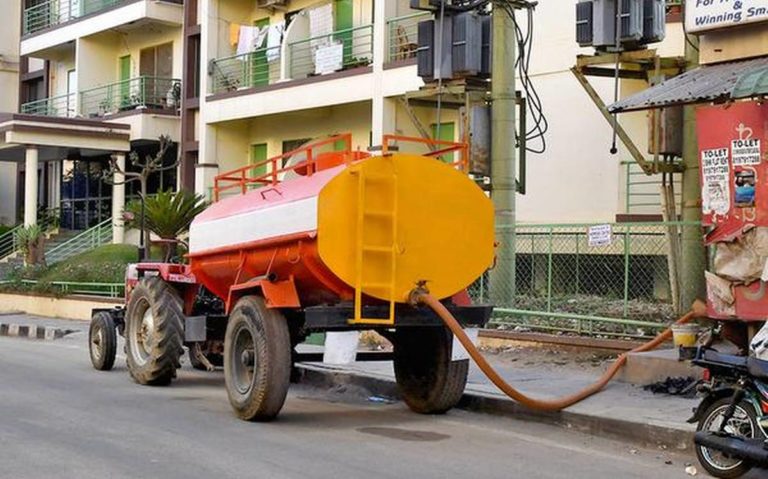
Water supply in Bengaluru will be disrupted on Thursday (June 11) in several areas in Bengaluru East and South zones, due to a pipeline-related work.

Confirming the same, the Bangalore Water Supply and Sewerage Board (BWSSB) notified that water supply will be disrupted from 6 am to 6 pm due to a linking work that needs to be undertaken below Bannerghatta Road in the city.

Full list: Areas in Bengaluru where water supply will be affected on June 11

The Bangalore Water Supply and Sewerage Board (BWSSB) has notified that water supply will be disrupted in the city from 6 am to 6 pm on Thursday (June 11) due to a linking work that needs to be undertaken below Bannerghatta Road.

Water supply will be affected in the areas mentioned below:

  • Vijaya Bank Layout
  • RBI Layout
  • Konanakunte
  • JP Nagar (Stages 4-8)
  • Puttenahalli
  • Jaraganahalli
  • Chunchunaghatta Main Road
  • Bilekahalli
  • Arakere
  • Mico Layout
  • Dollars Colony
  • Kodichikkanhalli
  • HSR Layout
  • Bommanahalli
  • Mangammanapalya
  • Somasundra Palya
  • Parangipalya
  • Agara
  • BTM Layout (Stages 1-2)
  • Madiwala
  • Venkateswara Layout
  • Guruppapnapalya
  • Bismilla Nagar
  • Sudeguntepalya
  • Jayanagar 4th T Block
  • BHEL Layout
  • NAL Layout
  • Krishnappa Garden
  • Bandepalya
  • Koramangala
  • Bellandur
  • Venkatapura

Jyotiraditya Scindia and mother test positive for coronavirus, admitted to Delhi hospital

BJP leader Jyotiraditya Scindia and his mother Madhavi Raje Scindia have tested positive for coronavirus and have been admitted at Max Hospital in south Delhi’s Saket.

Jyotiraditya Scindia and his mother Madhavi Raje Scindia both have tested positive for coronavirus. The BJP leader have been admitted to Max Saket for the last 4 days after Jyotiraditya Scindia developed symptoms of coronavirus.

While Jyotiraditya Scindia has showed symptoms of coronavirus, his mother remains asymptomatic. Both of them are now undergoing treatment at the private hospital in Delhi.

Earlier, BJP national spokesperson Sambit Patra had also showed symptoms of coronavirus and was admitted to the Medanta Hospital in Gurgaon.

Sambit Patra was discharged on Monday.

Meanwhile, Delhi CM Arvind Kejriwal has also developed fever and sore throat. Kejriwal underwent a coronavirus test on Tuesday morning. His test reports are being awaited now.

Schools in Karnataka will not reopen on July 1

0

Image Source : FILE

Schools in Karnataka will not reopen on July 1

The Karnataka government has said that the schools across the state will remain closed for some more time. “The schools in the state will not reopen on July 1,” Karnataka primary and secondary education minister S Suresh Kumar on Monday said.

“The HRD ministry has hinted that schools can reopen after August 15. Karnataka is in no hurry,” he added.

The education department has extended the date for seeking parents’ opinion from June 12 to June 20. Parents can give their opinion to schools, which, in turn, will update it on the Student Achievement Tracking System.

The ministry will hold meetings with officials after June 20 to form its opinion on school reopening.

Unlock 1.0 rules for Karnataka: What is allowed, what is not

0

Let us take a look at what will be allowed in Karnataka from June 8:

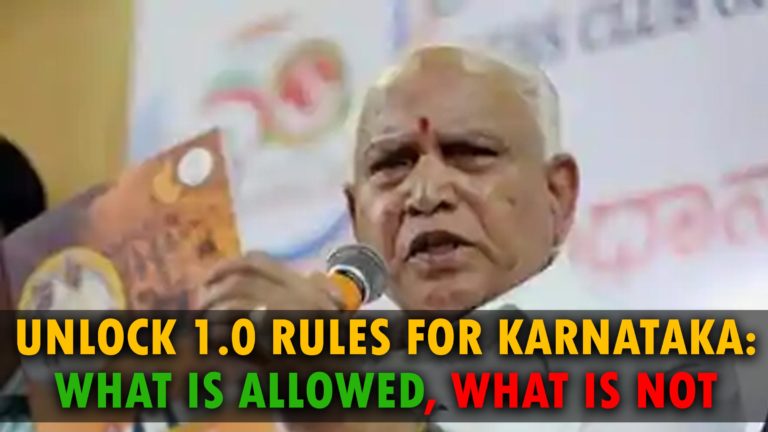
Karnataka Chief Minister BS Yediyurappa has lifted all restrictions on inter-state travel, while a separate order from the Department of Health and Family Welfare Services is awaited on the inflow of people to Karnataka.

> People will be allowed to travel by private cars and motorbikes without requiring an e-pass or any other special permit.

All places of worship will reopen, but only for darshan. The body temperature of all devotees entering the temple will be checked with an infrared thermometer and hand sanitisers should be available. Social distancing of six feet will be mandatory, with markings for devotees waiting in a queue. Those without face covers or masks will not be allowed to enter.

> Private offices can now reopen in non-containment zones, although companies have been advised to let employees continue working from home.

> Local, standalone shops and those inside shopping malls that sell essential and non-essential goods can reopen in non-containment zones from June 8.

Restaurants will be allowed to offer dine-in, while enforcing strict social distancing guidelines, mandatory temperature checks for all patrons and employees, reduced seating capacity, etc.

> Walking, cycling and exercising outdoors will be permitted in all zones from 5 am to 9 pm as a curfew continues to be in place. While indulging in such outdoor activities, strict social distancing must be maintained, while children aged below 10 years, senior citizens (aged above 65 years), pregnant women and people with co-morbidities have been advised to stay at home.

> Domestic helps and drivers can return to work in non-containment zones.

> Plumbers, carpenters, AC repair mechanics and other self-employed persons can also resume work in non-containment zones. However, the final decision on allowing their entry into gated societies would rest with the respective Resident Welfare Associations (RWAs).

> Salons have been allowed to reopen in non-containment zones while following strict social distancing.

> Weddings can be held, but with a maximum of 50 guests.

Funerals can be held with no more than 20 people present.

What is still not allowed in Karnataka?

> In containment zones, only essential services will be allowed. A strict perimeter will be enforced around such areas to regulate the movement of people in and out of them. Movement outside containment zones will be only be permitted for medical emergencies and to procure essential goods.


Karnataka CM Yediyurappa directs officials to work on plan for MPM revival

By Express News Service

SHIVAMOGGA: Chief Minister B S Yediyurappa has directed officials to initiate a plan to rejuvenate the Mysore Paper Mills Limited (MPM) which was closed two years ago due to heavy losses. Yediyurappa conducted a meeting in this regard with officials of Forest and Industries and others in Bengaluru on Saturday.

The CM said many families of employees who were dependent on the factory are struggling after its closure. The factory equipment are also on the verge of rusting, hence it is necessary for the government to restart the factory, he said.

Earlier, efforts were made to privatise the factory to revive it. But the public and workers opposed the move. The factory stopped production in 2015 citing losses. However, some of the employees took voluntary retirement as soon as the factory halted production and the rest of them were deputed to other departments.

Schools will reopen after August 2020: HRD Minister Ramesh Pokhriyal

HRD Minister Ramesh Nishank Pokhriyal in a June 3 interview revealed that schools and colleges which have remained closed since around March 16 will reopen after August 2020. Around 33 crore students have been waiting for school reopening news to dispel their doubts.

As per reports in the end of May, it was thought that schools and colleges would reopen in July with 30% attendance and with younger students till class 8 remaining at home.

It also stated that Green and Orange zones would reopen their educational institutes first and that to maintain social distancing norms and a smaller attendance, school would take place in two shifts.

But the Coronavirus scene in India wasn’t stable and in a week, the ministry came out with an official statement within a week that stated that no decision of this sort had been taken yet.

HRD Minister says schools to reopen after August

After weeks of confusion from students, teachers and parents, HRD Minister Ramesh Nishank Pokhriyal in an interview finally revealed that schools and colleges would be reopened after August 2020, possibly even after August 15, 2020.

“We are trying to get declared all the results from the examinations this session by August 15,” said the HRD Minister.

“This means those exams which have already taken place before and those which are taking place now,” Pokhriyal added in the interview.

The anchor asks again if that meant that schools and colleges would re-open after August, to which the HRD minister replied with an enthusiastic “absolutely”.

While CBSE board exams would be held from July 1 to July 15, ICSE/ISC exams will begin from July 1 till July 12.

NEET and JEE are also taking place in July while NEET will take place on July 26, JEE will take place from July 18 to July 23.

UGC, NCERT guidelines to be followed for safety when schools reopen

Safety guidelines are a must for education institutions to resume work again in the Covid-19 circumstances.

Thus, while UGC was deciding on safety guidelines for reopening colleges and universities, NCERT was doing the same work for schools.

The guidelines, which would be different in all three cases, will help students and teachers ensure safety while schools reopen amidst a coronavirus pandemic.

As per reports, teachers would need to wear masks and gloves, thermal scanners would be installed in schools, only two students would sit on three-seaters, CCTVs would observe if social distancing rules are being followed.

Moreover, the safety guidelines would be printed and put up in several locations in each school and the SDM and DM of each concerned area would further fine-tune the Covid-19 safety guidelines as required.

It remains to be seen what the updated guidelines would be if schools reopen after August.

Karnataka gets Rs 4,313 crore in GST dues, fuel tax trickles into coffers

0

By Express News Service

BENGALURU: In a huge relief to the State Government, which is facing a severe fund crunch due to the Covid-19-induced lockdown, the Central Government has released Rs 4,313 crore towards the Goods and Services Tax (GST) component for December 2019-February 2020. With Unlock 1.0, there has also been an increase in collection of taxes on petrol and diesel in the state.

The lockdown had badly affected the state’s economy and to overcome the crisis, the government has been pushing for economic revival even as it continues to take measures to fight the pandemic.

A CMO official said the GST component coming at this juncture will help the state shore up its finances. Also, the situation is slowly improving after restrictions were eased with industries and other businesses restarting, the official pointed out.

On Saturday, at a meeting chaired by Chief Minister B S Yediyurappa, Finance Department officials informed that Rs 4,313.13 crore has been released by the Central Government as the GST compensation for the December-February period. The officials also pointed out that there is an increase in collection of taxes on automotive fuel.

Sales tax on fuel is among the major sources of revenue for the state and, according to estimates, the government gets around Rs 1,200 to 1,300 crore per month from it. However, it had dropped significantly during the lockdown due to restrictions on movement of vehicles within and outside the state. State excise, motor vehicle tax and registration of properties are other major sources of revenue for the state.

Action to be taken against illegal transport of goods

Apart from the GST component, the State Government is also expecting Rs 5,495 crore in special grant, recommended by the 15th Finance Commission. The CM had earlier discussed this issue with the Union Finance Minister.

The Chief Minister on Saturday directed the Commercial Taxes Department officials to take strict action against illegal transportation of goods. Based on a similar directive by the CM during a meeting last month, the department has increased the number of road vigilance teams from 77 to 116.

The teams inspected 2.89 lakh transport vehicles and 7.46 lakh e-way bills. Of this, 300 unlawful cases were detected and Rs 6.21 crore in taxes and fine had been collected, according to a note issued by the Chief Minister’s Office. The CM also instructed the officers to conduct a survey of dealers conducting transactions of more than Rs 40 lakh and commercial complexes in big cities which collect monthly rent of more than Rs 20 lakh.

Telangana SSC Exams 2020: After parents demand cancellation, edu department comes up with relaxations

Telangana SSC Board Exams 2020: After Telangana High Court bench headed by Chief Justice Raghavendra Singh Chouhan pull up KCR Govt over the scheduled SSC examination from Monday, education department came up with relaxation.

The students who don’t want to appear in examination starting from Monday should be allowed to appear in the supplementary examination to be held on a later date.

The students appearing for supplementary examination will be treated as regular students only.

Parents demanding cancellation of exams

The pending Telangana SSC Exams 2020 for class 10 students are scheduled from June 8 to July 5 and parents as well as child rights organizations are demanding cancelation off examination amid the rising number of Covid-19 cases in Telangana, particularly in Hyderabad.

The High Court branch, headed by the chief justice, asked the state government to postpone the SSC examination in the Greater Hyderabad Municipal Corporation area, and the matter is still pending in front of the High Court as Advocate General BS Prasad seeks time to convey the decision to the state government.

He informed the government to consider the postponement of examinations either in the GHMC area only or in the entire state. The state government will submit a reply by 4 pm.

India now sixth worst-hit nation by COVID-19, Surpasses Italy with an infection tally of 2,36,657

India is now the sixth worst-affected nation in terms of coronavirus infection cases after the US, Brazil, Russia, Spain and the UK, according to Johns Hopkins University data. The number of active COVID-19 cases stood at 1,15,942, while 1,14,072 people have recovered and one patient has migrated, the Union Health Ministry said.
NEW DELHI: India went past Italy to become the sixth worst-hit nation by the COVID-19 pandemic with the country registering a record single-day spike of 9,887 cases which pushed the nationwide tally to 2,36,657.

India’s death toll due to COVID-19 rose to 6,642 with a record increase of 294 deaths in the 24 hours till Saturday 8 AM. India has registered over 9,000 cases for the third day in a row.

India is now the sixth worst-affected nation in terms of coronavirus infection

cases after the US, Brazil, Russia, Spain and the UK, according to Johns Hopkins University data.

The number of active COVID-19 cases stood at 1,15,942, while 1,14,072 people have recovered and one patient has migrated, the Union Health Ministry said.

“Thus, around 48.20 per cent patients have recovered so far,” a senior health ministry official said.
The total confirmed cases include foreigners.
Of the 294 deaths reported since Friday morning, 139 were in Maharashtra, 58 in Delhi, 35 in Gujarat, 12 each in Tamil Nadu and Uttar Pradesh, 11 in West Bengal, eight in Telangana, seven in Madhya Pradesh, five in Rajasthan, two in Andhra Pradesh and one each in Jammu and Kashmir, Odisha, Punjab Jharkhand and Uttarakhand.
The death toll reached 57 in Karnataka and 48 in Punjab.
Of the total 6,642 fatalities, Maharashtra tops tally with 2,849 deaths followed by Gujarat with 1,190 deaths, Delhi with 708, Madhya Pradesh with 384, West Bengal with 366, Uttar Pradesh with 257, Tamil Nadu with 232, Rajasthan with 218, Telangana with 113 and Andhra Pradesh with 73 deaths.

Private Jet Hired For Rs 9.06 Lakh To Fly Pets From Delhi To Mumbai

A private chartered jet is all set to fly six pets from Delhi to Mumbai in mid-June. The coronavirus-induced lockdown left a number of people stuck in different parts of the country. Several pets were also left stranded away from their owners due to travel restrictions imposed to curb the spread of the virus. According to Mumbai Mirror, entrepreneur and cyber security researcher Deepika Singh has now set in motion a plan to help some of these pets reunite with their owners.

The 25-year-old from Mumbai said the idea of an ‘all-pet’ private jet came to her when she was arranging a jet to fly relatives from Delhi, but some of them refused to travel with pets.

“Some people wanted to travel with their pets but when the others refused, I decided to arrange for another jet,” Ms Singh told ThePrint. She said the jet for dogs, birds and other animals left behind during the lockdown would help provide a safer ride home for pets who would otherwise be transported through cargo shipments.

The cyber security researcher got in touch with private jet aggregator Accretion Aviation for a six-seater aircraft exclusively for pets. The entire plane costs Rs 9.06 lakh, with the cost of each seat being Rs 1.6 lakh.

“I contacted a private company and they agreed to send the pets on a plane,” said Ms Singh, according to a report in Divya Bhaskar. So far, four people have signed up to have their pets travel from Delhi to Mumbai in the chartered plane. The passengers that have been signed up for the flight so far include two Shih Tzus, one Golden Retriever and one Lady Pheasant bird.

“The cost per seat stands at Rs. 1.6 lakh which is already a little steep and if we do not find six passengers it will be even costlier,” said Deepika Singh.

Rahul Muchhal, the owner of Accretion Aviation, said that necessary COVID-19 precautions will be followed for the animals as well as their handlers. The pets will be screened before boarding and their temperature will be taken. They will travel in cages during the flight.

UP Teacher ‘Earns’ Rs 1 Crore by Working at 25 Schools Simultaneously, Probe Ordered

A teacher, Anamika Shukla, was working in 25 schools for months and managed to withdraw a salary of Rs one crore despite a digital database.

May sound impossible but she was a full-time science teacher employed in the Kasturba Gandhi Balika Vidyalaya (KGBV), and was working simultaneously in multiple schools in districts such as Ambedkar Nagar, Baghpat, Aligarh, Saharanpur and Prayagraj, among others.

The matter came to light when a database of teachers was being created.

The digital database of teachers on the Manav Sampada portal required teachers’ personal records, date of joining and promotion.

Once the records were uploaded, it was found that Anamika Shukla, with the same personal details, had been listed at 25 schools.

Director general of school education, Vijay Kiran Anand, said a probe is underway to ascertain the facts about this teacher who has gone incommunicado.

“It is surprising that the teacher, Anamika Shukla, was able to do this despite real-time monitoring of teachers’ attendance in UP primary schools.

“How can a teacher mark her presence at several places even when they are supposed to mark their attendance online on the Prerna portal? It needs a thorough probe,” said the official who had first received a complaint about the teacher in March.

According to the records in all the schools, Shukla was on the rolls of these schools for over a year.

KGBV is a residential school for girls from weaker sections and teachers are appointed on contract. They are paid approximately Rs 30,000 per month. Each block in a district has one Kasturba Gandhi School.

Anamika has taken home Rs one crore as salary from these schools over 13 months till February 2020.

A native of Mainpuri, Anamika Shukla was last found working in Rae Bareli’s KGBV till February, when her forgery came to light.

The basic education officer in Rae Bareli, Anand Prakash, said that the Sarva Shiksha Abhiyan office had issued a letter to six districts to check about a teacher named Anamika Shukla.

“Though Rae Bareli was not named in the list, we did cross check and found the woman working at our KGBV also. A notice was issued to her but she did not report back. Her salary was immediately stopped,” he said.

He said that due to the lockdown, the inquiry could not proceed but now records will be verified. It is yet to be ascertained if Shukla was using the same bank account for salaries from different schools.

World Environment Day is celebrated on 5 June every year

0

World Environment Day (WED) is celebrated on 5 June every year and is the United Nations‘ principal vehicle for encouraging awareness and action for the protection of our environment. First held in 1974, it has been a flagship campaign for raising awareness on emerging from environmental issues to marine pollution, human overpopulation, and global warming, to sustainable consumption and wildlife crime. World Environment Day has grown to become a global platform for public outreach, with participation from over 143 countries annually. Each year, WED has provided a new theme that major corporations, NGOs, communities, governments, and all celebrities worldwide adopt to advocate environmental causes.

Source: Wikipedia

Earthquake of 4.0 Magnitude Hits Karnataka’s Hampi, Days After Two Tremors Jolt Haryana

A low-magnitude earthquake hit Hampi, an ancient village dotted with numerous ruined 7th-century temple complexes, in Karnataka on Friday morning.

“An earthquake with a magnitude of 4.0 on the Richter Scale hit Hampi in Karnataka today at 06:55 am,” the National Center for Seismology said.

Days ago, two earthquakes hit Rohtak in Haryana in the span of an hour on Friday, tremors of which were felt in the national capital, said the National Centre for Seismology. Rohtak is nearly 60 km from Delhi.

The first quake, a medium intensity one of 4.6 magnitudes, hit the Haryana city at 9.08 pm at a depth of 5 km.

Meanwhile, experts have warned that a major tremor may be witnessed in Delhi amid a range of low-intensity earthquakes reported in the national capital region over the last one-and-a-half months.

Source : News18 india