Covid-19 vaccine may be ready in 12-18 months: WHO chief scientist

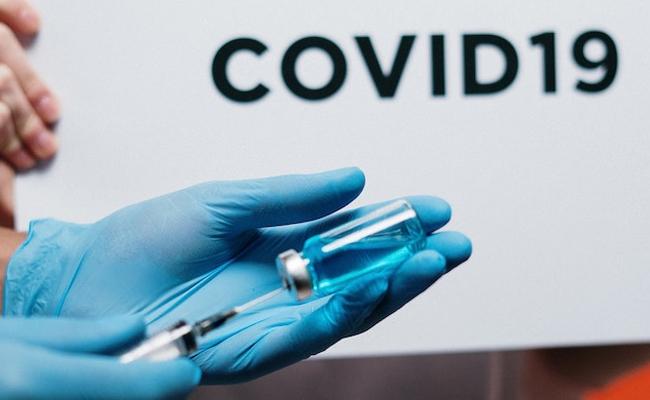
Developing a vaccine against Covid-19 is the most pressing challenge and by the current estimates, funding to the tune of $18.1 billion will be required to deliver two billion doses by the end of 2021, Dr Soumya Swaminathan, chief scientist of World Health Organisation, said on Friday.

Over 200 vaccine candidates are at different stages of development and 15 are in human clinical trials. ‘There is a hope that we can have a vaccine in 12-18 months’ time,’ Dr Swaminathan said while addressing a virtual media conference on Friday.

Dr Swaminathan presented the investment requirements to develop the vaccines as rapidly as possible, and manufacture at the right volumes without compromising on safety. She said that in addition to upfront investment in research and development and manufacturing, commitments from high-income and upper middle-income countries were needed to procure 950 million doses through the COVAX Facility, and to ensure that vaccines can be delivered at the greatest possible speed.

Responding to queries on leading vaccine candidates, Dr Swaminathan said AstraZeneca had the largest global commitment and was the leading candidate, in terms of timing . ‘They have advanced to Phase 2 trials and are planning Phase 3 in many countries. Moderna also has plans to go to Phase 3 of clinical trials by mid-July, but AstraZeneca has a more global scope where they are planning clinical trials,’ said Dr Swaminathan.

‘But until we see results from clinical trials, the efficacy and safety of these candidates remain unknown. That underlines the need to invest in clinical development of multiple vaccine candidates, thus maximising the chances of success,’ Dr Swaminathan told The Indian Express.

The University of Oxford and AstraZeneca ‘s experimental vaccine was the first to enter the final stages of clinical trials. The vaccine is also undergoing tirals in South Africa and Brazil, with Serum Institute of India investing $100 million to mass produce one billion doses for India, and other low and middle-income countries.

‘There has been tremendous commitment from the private sector as they do see it as their corporate social responsibility, and we are seeing a lot of practical steps being taken, where vaccine developers are tying up with generic companies, which can manufacture at scale, and we sincerely hope this unprecedented collaboration can lead to a vaccine in record time,’ said Dr Swaminathan.

‘The good news is that we have a globally diversified portfolio of vaccine candidates, with significant contributions from large pharmaceutical companies in the West and similar ones from China and India.. Also, a wide number of countries are at early stage of vaccine projects, and there will be one or two that will be at the front of the race but we need to be humble — we may be super lucky if we can make the world’s fastest vaccine with 12-18 months,’ said Sir Andrew Witty, Special Envoy for the Access to COVID-19 Tools Accelerator (ACT-Accelerator), while responding to queries at the virtual media conference.

The ACT-Accelerator, launched at the end of April, brings together governments, health organisations, scientists, businesses, civil society and philanthropists, who have joined forces to expedite an end to the pandemic. On Friday, at the webinar cum virtual press conference organised by the World Health Organisation, the ACT- Accelerator published its consolidated investment case.

According to Dr Bruce Aylward, WHO senior advisor and head of the ACT-Accelerator Coordination Hub, who coordinated the webinar, the plans called for US $31.3 billion in funding for diagnostics, therapeutics and vaccines, of which US $3.4 billion has so far been pledged.

The ACT-Accelerator is led by the work of partner organisations collaborating under four pillars. The ACT-Accelerator’s vaccines pillar has created a Global COVID-19 Vaccine Facility, through which countries can work together to share risks by accessing a wide portfolio of vaccine candidates.
CBSE, ICSE to announce class 10, 12 board exam results by July 15

PTI,

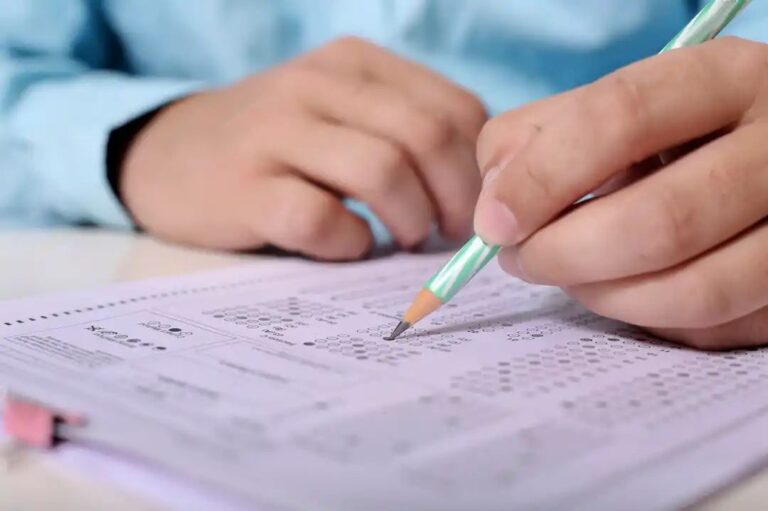
The Supreme Court on Friday permitted the Centre and the CBSE to cancel the remaining board examinations due to COVID-19 pandemic and gave a go-ahead to its scheme to award marks to students for the cancelled papers scheduled to be held in July.

A bench of Justices A M Khanwilkar, Dinesh Maheshwari and Sanjiv Khanna permitted the CBSE to issue a notification for the cancellation of the examinations.

Solicitor General Tushar Mehta, appearing for the Centre and the CBSE, said that the assessment scheme will consider marks achieved by students in last three papers of board exams.

Both CBSE and ICSE told the top court that the results of the class X and XII board exams can be declared by mid of July.

The top court was hearing pleas seeking relief, including scrapping of remaining exams of Class 12 scheduled from July 1-15, in view of increasing number of COVID-19 cases. Similar relief was sought by the ICSE Board also.

PAN Card-Aadhaar Card Linking Deadline extended till March 31; Check details

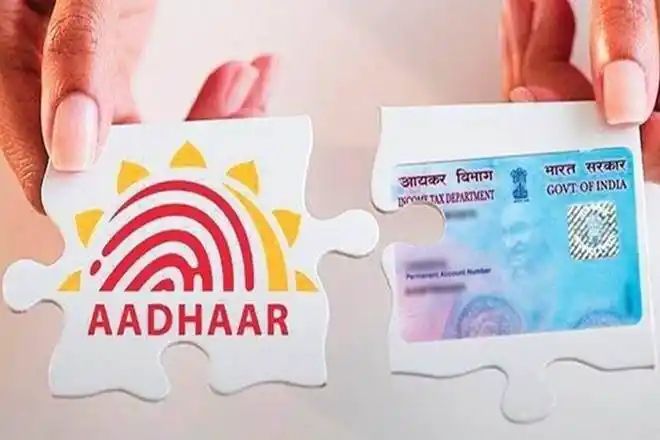
The last date for PAN-Aadhaar linking has been extended by the government. As per the notification, the PAN Card-Aadhaar Card linking last date has been extended till March 31, 2021. The previous deadline for linking PAN and Aadhaar was June 30, 2020. The extension in PAN-Aadhaar link deadline comes as good news for those PAN cardholders who have not yet reportedly linked their PAN with Aadhaar. They now get a few more months to complete the process, which takes just a few minutes.

If you already have the PAN card and are eligible to obtain Aadhaar number or you have already acquired one, then you are required to intimate the Aadhaar number to the Income Tax department.

Your PAN Aadhaar linking needs to be completed else the PAN will become ‘inoperative’.

Once the PAN becomes inoperative, one will not be able to undergo several transactions where PAN is required to be quoted mandatorily. The income tax department has specified 18 financial transactions where quoting of PAN is mandatory by the individual. In such cases, the transactions could be carried out only when the PAN and Aadhaar are linked thus making the PAN re-active.

To link Aadhaar with PAN card, one may go to the e-filing website of the income tax department. One may use log-in credentials or even without logging, the linking of Aadhaar and PAN can be done. The income tax department has made it clear that for filing of ITR, Aadhaar and PAN linkage is mandatory unless specifically exempted.

For PAN-Aadhaar linking, you must ensure that name, date of birth and gender mentioned by you are same on both PAN and Aadhaar. The Aadhaar number and the name on Aadhaar card should be exactly the same as printed on the Aadhaar card.

PAN and Aadhaar can also be linked through SMS to 567678 or 56161 through your registered mobile number. The format of the SMS is: UIDPAN<SPACE><12 Digit Aadhaar Number><SPACE><10 Digit PAN> For Example: UIDPAN 100023456789 XXYZ0123X.

As per income tax rules, PAN Aadhaar linking is mandatory. For new PAN seekers, the Income Tax Department allows the creation of Aadhaar-based instant PAN on the e-filing website. ‘Aadhaar-based instant PAN allotment service is to allot PAN in near-real time. You are required to quote a valid Aadhaar number issued by Unique Identification Authority of India (UIDAI) and is not linked with any PAN. The e-KYC data of that Aadhaar number is exchanged with the Unique Identification Authority of India(UIDAI). After due process of e KYC data in Income-tax database, you get a PAN,’ the Income Tax Department says on its website.

Karnataka minister K Sudhakar’s wife, daughter test positive for COVID-19

0

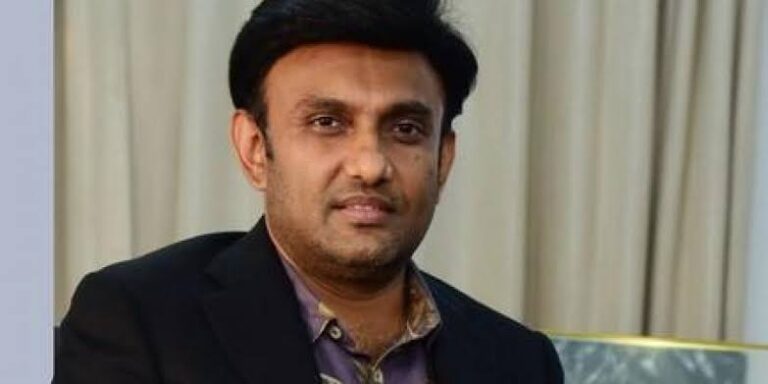
Bengaluru: Karnataka Medical Education Minister K Sudhakar’s wife and daughter have tested positive for COVID-19. Fortunately, the samples of the MLA and his two sons have returned negative for coronavirus.

“Test results of our family members have come. Unfortunately, my wife and daughter have tested positive for #Covid19 and are undergoing treatment. My two sons and myself have tested negative. I am grateful to everyone for their best wishes and prayers,” Sudhakar tweeted.

Notably, the Kerala minister’s father P N Keshava Reddy tested positive for COVID-19 on Monday.

He was admitted to hospital after complaining of fever and cough.

Earlier, a domestic help of Sudhakar had tested positive for the deadly contagious disease and was admitted to a hospital.

Sudhakar, an MLA from Chikkaballapura, was quarantined along with three other ministers in April for coming in contact with a journalist who had tested positive for COVID-19.

Parents do ‘tweetstorm’ to oppose Karnataka ban on online classes

0

Parents of students from various private schools took to Twitter on Sunday to bring to the government’s attention that they want online classes to resume for their wards, and want the ban on online classes revoked.

Karnataka Education Department had passed an order last week banning all virtual classes (live and recorded) for classes up to standard 5. The government is currently consulting with an expert committee to draw up guidelines on online classes for school students.

Parents tweeted, saying the government should work on ensuring access, instead of banning classes. Parents also noted that the government had not done any forward planning and paid attention to the issue during April and May, when schools were shut.

“Setting up the committee after denying everyone education is just a means to hide the incompetence of the ministry. Why deny access to everyone? Work on ensuring access” one tweet read.

“Instead of working on ensuring access during April and May, the minister has chosen to ban education altogether in June. Couldn’t he have setup the committee in April. Why wake up only in June and now hiding behind the committee?”


Teachers too joined the tweetstorm pledging their support for online classes. Quite a few schools have laid off or cut salaries of teachers since the government has told parents that they need not pay fees for now, till classes resume.


Over the last few weeks, many have opposed online classes as it would adversely affect those students who do not have access to a laptop, mobile phone or internet. With most parents working from home, many who have laptops and mobiles are unable to spare it for their wards. To combat this, the government had proposed to have televised classes for students as most children have TV in their homes. Moreover, schools were trying to complete the syllabus through online classes, thereby making students glued to the screens for hours.

Rajesh Bhat, who is part of the All India Save Education campaign, says that educational institutions are trying to put pressure on the government. “Private international schools badly want online classes (to continue). Many schools have bought software paying lakhs of rupees from software developers. Now, the ban on online classes have affected them. Many schools have not gotten admissions after the ban on online classes.”

Education Minister Suresh Kumar had told TNM that the ban is only temporary and the committee was looking at curtailing hours of learning and cutting down the syllabus.

However, if the government does not make its position clear by next week, it could spell more trouble for schools and agitate parents who want online classes to resume.

Favipiravir: All You Need to Know About the New Covid-19 Medicine and its Effects on Patients

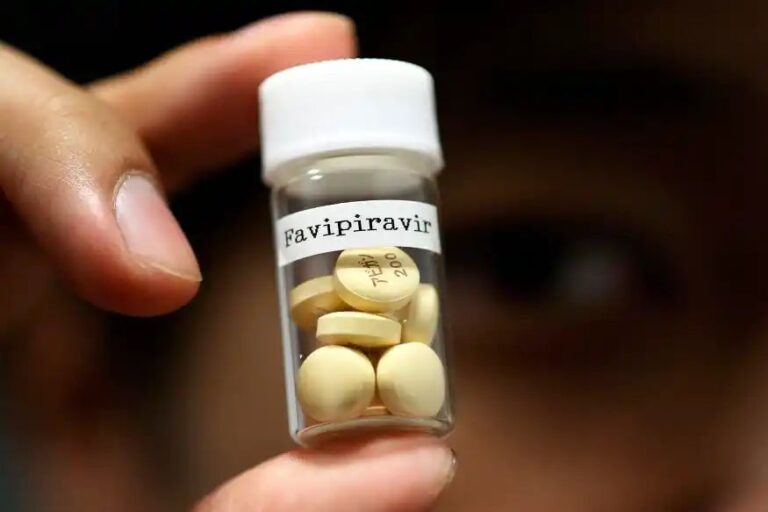
New Delhi: Mumbai-based Glenmark Pharmaceuticals has received approvals from Drug Controller General of India to manufacture and market Favipiravir, an anti-viral drug, to treat Covid-19 patients. The drug is likely to be available in the market in the next few days. What is this drug and what improvement has it shown in Covid-19 patients? News18 explains:

What is Favipiravir?

Favipiravir is an anti-viral drug and it is approved in Japan for treating influenza. It is currently being tested in 18 clinical trials for Covid-19 and results from two studies have shown a positive outcome, while data from other trials is awaited.

What is the Glenmark drug approved by the Drug Controller General of India?

Based on Phase-3 data, the company obtained approval for manufacture and marketing of antiviral drug Favipiravir, which has been branded as FabiFlu, an oral medication. The approval is for emergency restricted use only for treatment of mild to moderate Covid-19 patients. The approval’s restricted use entails responsible medication use where every patient must have signed informed consent before treatment initiation.

According to a press release issued by Glenmark on Saturday, June 20, the company successfully developed the active pharmaceutical ingredient and formulation for FabiFlu through its own in-house R&D team.

‘Glenmark filed the product for clinical trial with India’s drug regulator DCGI and became the first pharmaceutical company in India to receive approval for conducting phase 3 clinical trial on mild to moderate COVID-19 patients,’ the press release said.

What improvement has it shown in Covid-19 patients and what studies has Glenmark cited?

Glenmark claimed that Favipiravir shows clinical improvements of up to 88 per cent in Covid-19, with rapid reduction in viral load by four days. The drug will be available as a prescription-based medication for Rs 103/tablet, with recommended dose being 1800 mg twice daily on day 1, followed by 800 mg twice daily up to day 14.

In India, a randomised multi-centre study was done on Indian patients to test the drug’s efficacy and safety with standard of care vs standard of care alone in mild to moderate Covid-19, the company said. The study enrolled 150 patients. The study’s details are yet to be published in a peer-reviewed paper.

In its press release, the company cited four studies; two from China and one reach from Russia and Japan. One of the studies done on 80 patients in China studied the efficacy of Favipiravir vis-à-vis anti-retroviral drugs Lopinavir and Ritonavir. Favipiravir treatment led to a quicker reduction in viral load compared to the other drugs. In the second Chinese study, 236 patients were enrolled.

Favipiravir showed a better rate of clinical recovery on seventh day compared Umifenovir, another antiviral drug. It also led to a quicker relief from fever and cough. The observational study in Japan comprising 2,141 patients with mild to moderate symptoms showed clinical improvement using Favipiravir.

Is the government conducting trials to test the efficacy of this drug?

Yes. The Council of Scientific and Industrial Research (CSIR) had done end-to-end synthesis of Favipiravir in April. Earlier this week, CSIR got approvals from DGCI to conduct multi-centre Phase-II trials of the drug.

Government Rs 50 lakh covid cover for healthworkers extended till September

New Delhi: The government has extended the Rs 50 lakh insurance scheme for about 22 lakh healthcare providers for another three months till September as there is no respite from COVID-19 pandemic.

The scheme implemented by New India Assurance was to end on June 30, 2020 as per the announcement made by Finance Minister Nirmala Sitharaman as part of the Rs 1.70 lakh Pradhan Mantri Garib Kalyan package in March.

The insurance provides a comprehensive personal accident cover of Rs 50 lakh to a total of around 22.12 lakh public healthcare providers, including community health workers, who may have to be in direct contact and care of patients suffering from coronavirus infection and who may be at risk of being impacted by this.

Insurance Scheme for health workers in government hospitals and healthcare centres operationalised with effect from March 30, 2020, an official statement said, adding the scheme has been extended up to September.

The scheme is funded through the National Disaster Response Fund, operated by the Ministry of Health and Family Welfare.

Doctors, nurses, paramedics, sanitation workers and a few others working in hospitals under the central and state governments will be covered under the insurance scheme.

While announcing the scheme, the Finance Minister had said, safai karamcharis, ward-boys, nurses, ASHA workers, paramedics, technicians, doctors and specialists and other health workers would be covered by the special insurance scheme.

“Any health professional, who while treating COVID-19 patients, meet with some accident, then he/she would be compensated with an amount of Rs 50 lakh under the scheme,” she had said.

All government health centres, wellness centres and hospitals of the Centre as well as states would be covered under this scheme, she had said.

Glenmark launches Covid-19 drug after DCGI nod

Glenmark Pharmaceuticals on Saturday said it has launched antiviral drug Favipiravir, under the brand name FabiFlu, for the treatment of patients with mild to moderate Covid-19. The Mumbai-based drug firm had on Friday received manufacturing and marketing approval from the Drugs Controller General of India (DCGI).

FabiFlu is the first oral Favipiravir-approved medication for the treatment of Covid-19, the company said in a statement. “This approval comes at a time when cases in India are spiralling like never before, putting a tremendous pressure on our healthcare system,” Glenmark Pharmaceuticals Chairman and Managing Director Glenn Saldanha said.

The company hopes that the availability of an effective treatment such as FabiFlu will considerably help assuage this pressure, and offer patients in India a much needed and timely therapy option, he added. FabiFlu has demonstrated an encouraging response in mild to moderate Covid-19 patients during clinical trials, Saldanha said. Moreover, it is orally administered, and so it serves as a more convenient treatment option over other intravenously administered medications, he noted.

“Glenmark will work closely with the government and medical community to make FabiFlu quickly accessible to patients across the country,” Saldanha said. The drug will be available as a prescription-based medication for Rs 103/tablet, with recommended dose being 1,800 mg twice on day one, followed by 800 mg twice daily up to day 14. Favipiravir can be used for coronavirus patients with co-morbid conditions such as diabetes and heart disease with mild to moderate Covid-19 symptoms. It offers rapid reduction in viral load within four days and provides faster symptomatic and radio logical improvement, the drug maker added.

Favipiravir has shown clinical improvement of up to 88 per cent in mild to moderate Covid-19 cases, it said. The drug firm had successfully developed the active pharmaceutical ingredient (API) and the formulation for FabiFlu through its in-house R&D team. It had then filed the product for clinical trial with country’s drug regulator DCGI and became the first pharmaceutical company in India to receive approval for conducting phase 3 clinical trial on mild to moderate Covid-19 patients.

Favipiravir has been approved in Japan since 2014 for the treatment of novel or re-emerging influenza virus infections. Last month, Glenmark also announced that it is conducting another clinical trial to evaluate the efficacy of two antivirals Favipiravir and Umifenovir as a combination therapy in moderate hospitalised adult Covid-19 patients in India. India on Saturday saw another record spike of 14,516 new Covid-19 cases in a single day, pushing the tally to 3,95,048, while the death toll rose to 12,948 with 375 new fatalities, according to Union Health Ministry data.

8,000 teachers write to Amit Shah for 3 months salary

Image Source : FILE PHOTO

Around 8,000 teachers working in North Delhi Municipal Corporation, who are waiting for their salaries from last three months, write to Home Minister Amit Shah.(Representational image)

Schools were asked not to force parents to pay fee during the lockdown period which became a likely reason for non-payment of teachers’ salary for almost an equivalent amount of time. Now, around 8,000 teachers working in North Delhi Municipal Corporation, who are waiting for their salaries from last three months, have written to Union Home Minister Amit Shah regarding the same.

They had earlier appealed in the court too.

Municipal Corporation Teachers Association General Secretary Ramnivas Solanki on Friday said, “Today we have also written to Home Minister Amit Shah asking for help, in which we have apprised him that during this corona pandemic outbreak all the teachers are working for 12 hours. We are not only distributing ration to the poor people but we are also helping the migrant labourers and also in the treatment centres.”

He said, “We have been on the forefront in this fight against the pandemic. Apex court is also directing to pay the salaries of the doctors and health workers but they are ignoring the teachers while teachers are also the frontline corona warriors.”

The letter states that ‘teachers have not received the salary of March, April and May, while the month of June is also coming to an end. The arrears of the Seventh Pay Commission have not been received for the last four years. The bills of the arrears have not been paid for the last 10 years. The teacher recruitment bill of the children have not been paid for the last five years. Medical bills have not been paid for years. In such a situation, if a teacher or his/her family member has to get treatment he/she has to borrow money for that.”

Teachers are extremely disappointed as they have not received the salaries. On June 15, CAT ordered that three months’ salary and pension will be paid to all the teachers of North Corporation and pensioners within 15 days. On June 18, the High Court also directed the North MCD to pay salaries of all the teachers within a week.

(With inputs from IANS)

Galwan Valley clashes: 10 Army soldiers released by Chinese PLA after three days

By Mayank Singh

Express News Service

NEW DELHI: The Chinese Army released 10 soldiers from their captivity on Thursday, three days after the violent clashes at the Galwan Valley.

The sources informed that 10 soldiers were returned back unharmed after the Division Commander level talks. The group of 10 included two officers.

As per Army statement, four critically injured soldiers were now stable. While 18 were getting treated in Leh itself, 58 more would join duty in a week or 10 days as they had minor injuries only.

Army had clarified during the day that all soldiers were accounted for.

“It is clarified that there are no Indian Troops Missing In Action.” said Army.

The soldiers were missing since evening of Monday, June 15 when the Chinese Army soldiers attacked the Indian troops and killed 20 of them including the Commanding Officer of the local unit.

The Indian soldiers had gone for Patrolling Point 14 to verify the compliance of agreements reached between the Army Corps Commanders of both sides on June 6. The Chinese had to move back from the standoff location.

The chinese attacked Indian soldiers with rods and bamboo sticks studded with iron nails. The chinese attacking party was fully prepared with riot gears like the sticks, shield, elbow and knee guards.

While the Indian troops had their personal weapon with them but did not breach the agreement of 1996.

There was an agreement with China signed in November 1996 that neither side can open fire guns or use explosives within 2 kilometres of LAC. They carry the weapons but barrel is kept pointing down.

FM Sitharaman addresses media on Rs 50,000 crore scheme to provide jobs for migrant workers

By Online Desk

Finance Minister Nirmala Sitharaman is addressing a press conference amid surging coronavirus cases in the country.

Earlier, the finance ministry had tweeted that the press conference will be a curtain raiser for the PM Garib Kalyan Rojgar Abhiyaan,to provide employment opportunities to migrant workers.

Prime Minister Narendra Modi will be launching the scheme on June 20 to empower and provide livelihood opportunities to migrant workers who returned to their home states during the coronavirus lockdown.

Here are the key highlights from the presser:

  • What is PM Garib Kalyan Rojgar Abhiyaan?

    In an effort to provide employment opportunities to migrant workers, PM Narendra Modi will unveil a public work scheme worth 50,000 crore this week. The Centre has selected over 25,000 returned migrant labourers from 116 districts of Bihar, Uttar Pradesh, Madhya Pradesh, Rajasthan, Jharkhand and Odisha for the campaign.

  • FM Sitharaman begins addressing the media

    FM Nirmala Sitharaman addresses media in Delhi ahead of launch of ‘Garib Kalyan Rojgar Abhiyaan’ by PM Modi on 20th June.

  • 116 districts received large number of migrants

    The central and state governments have meticulously mapped the skill sets of the migrant workers who have returned in large numbers to the 116 districts in 6 states, says Union Finance Minister Nirmala Sitharaman

  • Migrant workers returned in large numbers

    We have found that migrant workers returned in large numbers to 116 districts, spread over six states – Bihar, Jharkhand, Uttar Pradesh, Madhya Pradesh, Odisha and Rajasthan, says Sitharaman

  • Jobs for migrant workers who have returned amid Covid-19 crisis

    Government to pool 25 different projects to give jobs to migrant workers who have returned amid coronavirus crisis. The government will front-load Rs 50,000 crore for the cause.

  • 25 different projects will create m ore jobs

    The government has mapped the skill sets of migrants who have returned from several states of the country. There will be 25 different projects which will create job opportunities for migrants.

  • The priority is to provide immediate relief to migrants

    The top priority of PM Garib Kalyan Rojgar Abhiyaan is to provide immediate relief to migrant workers who have gone home, says Finance Minister.

Study Ties Blood Type To COVID-19 Risk; O May Help, A Hurt

A genetic analysis of COVID-19 patients suggests that blood type might influence whether someone develops severe disease.

Scientists who compared the genes of thousands of patients in Europe found that those who had Type A blood were more likely to have severe disease while those with Type O were less likely.

Wednesday’s report in the New England Journal of Medicine does not prove a blood type connection, but it does confirm a previous report from China of such a link.

“Most of us discounted it because it was a very crude study,” Dr. Parameswar Hari, a blood specialist at the Medical College of Wisconsin, said of the report from China.

With the new work, “now I believe it,” he said. “It could be very important.”

Other scientists urged caution.

The evidence of a role for blood type is “tentative … it isn’t enough of a signal to be sure,” said Dr. Eric Topol, head of the Scripps Research Translational Institute in San Diego.

The study, involving scientists in Italy, Spain, Denmark, Germany and other countries, compared about 2,000 patients with severe COVID-19 to several thousand other people who were healthy or who had only mild or no symptoms. Researchers tied variations in six genes to the likelihood of severe disease, including some that could have a role in how vulnerable people are to the virus. They also tied blood groups to possible risk.

Most genetic studies like this are much larger, so it would be important to see if other scientists can look at other groups of patients to see if they find the same links, Topol said.

Many researchers have been hunting for clues as to why some people infected with the coronavirus get very ill and others, less so. Being older or male seems to increase risk, and scientists have been looking at genes as another possible “host factor” that influences disease severity.

There are four main blood types – A, B, AB and O – and “it’s determined by proteins on the surface of your red blood cells,” said Dr. Mary Horowitz, scientific chief at the Center for International Blood and Marrow Transplant Research.

People with Type O are better able to recognize certain proteins as foreign, and that may extend to proteins on virus surfaces, Hari explained.

During the SARS outbreak, which was caused by a genetic cousin of the coronavirus causing the current pandemic, “it was noted that people with O blood type were less likely to get severe disease,” he said.

Blood type also has been tied to susceptibility to some other infectious diseases, including cholera, recurrent urinary tract infections from E. coli, and a bug called H. pylori that can cause ulcers and stomach cancer, said Dr. David Valle, director of the Institute of Genetic Medicine at Johns Hopkins University.

Bottom line: “It’s a provocative study. It’s in my view well worth publishing and getting out there,” but it needs verification in more patients, Valle said.

Delhi Health Minister Satyendra Jain tests positive for coronavirus

Satyendra Jain, the Health Minister of the National Capital of Delhi and senior leader of the Aam Aadmi Party (AAP) has tested positive for the novel coronavirus. Jain’s samples returned positive for the infection during his second test.

Going by inputs, Satyendra Jain will continue to undergo treatment for the infection at the Rajiv Gandhi Super Speciality Hospital (RGSSH) in Delhi.

Satyendar Jain was first admitted to RGSSH on Tuesday after he complained of high fever and a sudden drop in his oxygen level. Aged 55, Jain was tested for Covid-19 on Tuesday itself but his samples returned negative for the infection.

Why is PM Narendra Modi silent, hiding on killing of soldiers: Rahul Gandhi

By IANS

NEW DELHI: Congress leader Rahul Gandhi on Wednesday again questioned Prime Minister Narendra Modi’s ‘silence’ on the India-China standoff in Galwan Valley in Ladakh and said the nation needs to know what exactly was happening there.

“Why is the PM silent? Why is he hiding? Enough is enough. We need to know what has happened. How dare China kill our soldiers? How dare they take our land?” Rahul tweeted.

The Congress too has flayed the Prime Minister: “Ever wondered why a vociferous man who never failed to question the (previous) government on every issue is now completely silent?

Because, now he cannot blame anyone else but himself for all the failures.”

Congress leader P Chidambaram too had questioned Modi’s silence on the border issue. “The PM has maintained a worrying silence since May 5. Can you imagine any other head of the government not saying a word for 7 weeks since the intrusion of foreign troops into a country?” he asked on Tuesday evening.

On Jun 10 too, Rahul Gandhi had tweeted: “The Chinese have walked in and taken our territory in Ladakh. Meanwhile, the PM is absolutely silent and has vanished from the scene.”

Twenty Indian Army men, including officers, were killed in a violent clash with Chinese People’s Liberation Army at Galwan Valley in eastern Ladakh on Monday night, the Indian Army said on Tuesday.

Coronavirus: Dexamethasone proves first life-saving drug

A cheap and widely available drug can help save the lives of patients seriously ill with coronavirus.

The low-dose steroid treatment dexamethasone is a major breakthrough in the fight against the deadly virus, UK experts say.

The drug is part of the world’s biggest trial testing existing treatments to see if they also work for coronavirus.

It cut the risk of death by a third for patients on ventilators. For those on oxygen, it cut deaths by a fifth.

Had the drug had been used to treat patients in the UK from the start of the pandemic, up to 5,000 lives could have been saved, researchers say.

And it could be of huge benefit in poorer countries with high numbers of Covid-19 patients.

About 19 out of 20 patients with coronavirus recover without being admitted to hospital. Of those who are admitted to hospital, most also recover, but some may need oxygen or mechanical ventilation. These are the high-risk patients whom dexamethasone appears to help.

The drug is already used to reduce inflammation in a range of other conditions, and it appears that it helps stop some of the damage that can happen when the body’s immune system goes into overdrive as it tries to fight off coronavirus.

The body’s over-reaction is called a cytokine storm and it can be deadly.

In the trial, led by a team from Oxford University, around 2,000 hospital patients were given dexamethasone and were compared with more than 4,000 who did not receive the drug.

For patients on ventilators, it cut the risk of death from 40% to 28%. For patients needing oxygen, it cut the risk of death from 25% to 20%.

Chief investigator Prof Peter Horby said: “This is the only drug so far that has been shown to reduce mortality – and it reduces it significantly. It’s a major breakthrough.”

Lead researcher Prof Martin Landray says the findings suggest that for every eight patients treated on ventilators, you could save one life.

For those patients treated with oxygen, you save one life for approximately every 20-25 treated with the drug.

“There is a clear, clear benefit. The treatment is up to 10 days of dexamethasone and it costs about £5 per patient. So essentially it costs £35 to save a life. This is a drug that is globally available.”

Prof Landray said, when appropriate, hospital patients should now be given it without delay, but people should not go out and buy it to take at home.

Dexamethasone does not appear to help people with milder symptoms of coronavirus – those who don’t need help with their breathing.

The Recovery Trial has been running since March. It included the malaria drug hydroxychloroquine which has subsequently been ditched amid concerns that it increases fatalities and heart problems.

Another drug called remdesivir, an antiviral treatment that appears to shorten recovery time for people with coronavirus, is already being made available on the NHS.

Presentational grey line
Analysis box by Fergus Walsh, health correspondent

The first drug proven to cut deaths from Covid-19 is not some new, expensive medicine but an old, cheap-as-chips steroid.

That is something to celebrate because it means patients across the world could benefit immediately. That’s why the top-line results of this trial have been rushed out – because the implications are so huge globally.

Dexamethasone has been used since the early 1960s to treat a wide range of conditions, such as rheumatoid arthritis and asthma. Half of all Covid patients who require a ventilator do not survive, so cutting that risk by a third would have a huge impact.

The drug is given intravenously in intensive care, and in tablet form for less seriously ill patients. So far, the only other drug proven to benefit Covid patients is remdesivir, an antiviral treatment which has been used for Ebola.

That has been shown to reduce the duration of coronavirus symptoms from 15 days to 11, but the evidence was not strong enough to show whether it reduced mortality. Unlike dexamethasone, remdesivir is a new drug with limited supplies and a price has yet to be announced.

‘No Food & Water, Only Dead Bodies’: Still Covid Positive, But This Retired NDMC Official Swears Never to Enter LNJP Hospital Again

0

‘I will die of fear here. There are dead bodies all around me. Please take me home,” a sobbing Surinder Kumar told his shocked family over a phone call from LNJP Hospital, pleading to be taken home.

Kumar, a retired NDMC official, was admitted to the Delhi hospital on June 8 after he tested positive for Covid-19. He needs regular dialysis and suspects that he caught the novel coronavirus during one of the sessions.

At the LNJP Hospital emergency ward, he was greeted by the shocking sight of bodies lying around. But Kumar’s ordeal had just started.

“The ward boy came to give him oxygen and put the mask on his head rather than his nose.

When we protested, bouncers threw us out. We didn’t even get a chance to give my father the bag which had his phones and some food,” Sandeep Lala, Kumar’s son told News18.

Over the next 24 hours, Kumar’s family made several attempts to reach out to their father, but got no information. The family alleges that the staff on duty asked them to call the helpline, but the number went either unanswered or was busy. Finally, on Day 3, Sandeep bribed a sweeper to smuggle in a mobile phone.

“I called the mobile number repeatedly, but papa didn’t take the call. I called the helpline number and was assured that he is fine, but all night I kept calling and he didn’t answer,” says Sandeep.

Surinder Kumar, meanwhile, was battling his own fear and hospital apathy on the third floor ward of the LNJP. He told News18 that he feared for his life given the conditions around him.

“Meri haalat kharab kar di LNJP waalon ne. Koi ilaj, koi vyavastha nahi thi. Sirf 2 bread dete the khane ko. Paani bhi nahi tha peene ko. Main agar 2-4 din aur ruk jaata toh main mar jaata wahan par. Wahan dead bodies ki line lag rahi thi sab jagah (LNJP worsened my health. There was no treatment and no arrangements. They gave me just two bread slices to eat and there was no water to drink either. I would have died had I spent even two more days there. Dead bodies were lined up everywhere),’ Kumar, who continued to be Covid positive said over the phone from his residence where he is self-isolating.

On June 11, after calling on the helpline from 8 am to 4 pm, Kumar’s family were finally told by the hospital that their father had run away and a missing person’s complaint had been filed.

“I was shocked. How could my 60-year-old father who is unwell run away? My brother and I reached the hospital, and had a huge altercation with the staff. One Parminder called us from Mandir Marg police station where the complaint was registered to say that they are investigating. But we were not convinced,” Sandeep told News18.

Sandeep and his brother snuck into the Covid ward to look for their father. The duo said they saw used PPE kits, filth and body bags lying all around. They went from ward to ward and finally located their father in a different ward from where he was supposed to be.

The hospital released Surinder Kumar after another round of altercation, but the family’s ordeal is far from over.

Kumar still has coronavirus symptoms. A private hospital in Okhla assured bed availability on Monday, but turned them back when the family reached there. Sandeep claims it is because they wanted to use the NDMC medical card and not pay in cash upfront.

Surinder Kumar, meanwhile, is still breathless and awaiting dialysis.

Will ask PM for more relaxation in Karnataka, says BS Yediyurappa

0

Karnataka Chief  Minister BS Yediyurappa on Monday said he would ask Prime Minister Narendra Modi for “more relaxation” and ruled out the possibility of the state government imposing further curbs as part of the COVID-19 containment.

“We have no such plans,” Yediyurappa said when asked about imposing a curfew or lockdown-like restriction going forward. “I will request the PM for more relaxation,” he added.

Under Unlock 1.0, several services and sectors such as metro, theatres, gyms, swimming polls, bars and others remained restricted.

Modi is scheduled to hold talks with chief ministers starting Tuesday. He is slated to talk to Yediyurappa on Wednesday.

“Let me tell you this…it is those coming from Maharashtra, Gujarat, Delhi and other states who are carrying the virus. We haven’t seen any trouble from locals moving about. The problem is with those coming from outside. We need to stop them and place them under quarantine,” Yediyurappa said.

“Karnataka has managed to control it better nationally. There’s no need for citizens to panic. We will do everything to make this right,” Yediyurappa said.

New quarantine policy

Karnataka decided Monday that asymptomatic travellers from Delhi and Chennai will have to spend three days in institutional quarantine followed by 11 days under home quarantine.

Till now, travellers from other states, except Maharashtra, had a 14-day home quarantine.
The 7-day institutional quarantine and 7-day home quarantine regime will continue for those coming from Maharashtra.


Coronavirus: Arvind Kejriwal Says “No Lockdown Plans” In Delhi Amid Speculation

New Delhi:

There are “no plans” for another lockdown in Delhi, Chief Minister Arvind Kejriwal tweeted today, rejecting speculation spurred by a spike in coronavirus cases in the capital. Mr Kejriwal put out the clarification shortly after an all-party meeting called by Home Minister Amit Shah to discuss the virus strategy for Delhi and its neighbouring areas.

“Many people are speculating whether another lockdown in Delhi is being planned. There are no such plans,” Arvind Kejriwal tweeted.

Delhi has more than 41,000 COVID-19 cases and is the third worst hit in the country. There have been over 1,300 deaths in the city.

Shops, market complexes and offices reopened in Delhi on June 8 and public movement was allowed with restrictions as part of the nationwide plan for phased exit from the lockdown since late March to slow the spread of the virus.

However, following a spike in virus cases in Delhi, along with complaints about a severe shortage of hospital beds, there were calls on social media last week to “relock Delhi”. There was also speculation in a section of the media that Delhi would go back into strict lockdown soon. The situation in Delhi was “horrendous, horrific and pathetic,” the Supreme Court said last week, pulling up the capital, Tamil Nadu, Maharashtra and Bengal over the handling of the outbreak.

In this morning’s all-party meeting, Amit Shah and the Lieutenant Governor of Delhi assured that there will be coronavirus testing for all in Delhi.

Yesterday, the Chief Minister held what he called an “extremely productive meeting” with the Union Home Minister on the Delhi virus crisis. After the meeting, Amit Shah tweeted that testing would be tripled and railway coaches would be set aside to cover the shortfall of hospital beds.

In a Bengaluru church, devotees attend Sunday prayers sitting in their cars

0

Bethel AG Church International Worship Center said its Worship On Wheels (WOW) initiative is a contactless, drive-in format.

The Bethel AG Church International Worship Center, near Outer Ring Road in Bengaluru, saw a host of cars entering the church on Sunday morning and parking in rows on a vast ground within its premises.

The cars are parked facing an open stage, LED screens and speakers. While the passengers did not exit the car, many rolled down the window, waiting for the Sunday prayers to commence and start worshipping sitting in their vehicles.

This new initiative by the church in Bengaluru, which is called Worship On Wheels (WOW), calls on the devotees to congregate for the Sunday mass, all while maintaining physical distancing.

The WOW initiative, as the church describes, is “a contactless, drive-in format”, where the worshippers can park their four-wheelers and two-wheelers in a three-acre plot called the Temple of God, adjacent to the church building, and sit in their vehicles and worship along with the pastor, who will be heading the service on the stage.

Worshippers coming by walk and public transport can be seated in the building.

“Church-goers will be able to attend the service from the comfort and safety of their vehicles while ensuring that they adhere to the guidelines of social distancing,” said the church on its website.

In order to avoid crowding, the church has planned different time slots: 9 am and 7 pm for four-wheelers, and 7 am and 5 pm for two-wheelers, as the sun will not be harsh on the latter, Reverend Johnson V said.

For those seated in the church, the service will be at 11 am and 1 pm, and 12 pm for those live-streaming it.

“There will be a six-feet distance between the worshipers sitting in the church or vehicle, as per the government guidelines. Everyone coming to the worship service, be it in the church or sitting vehicles, must wear masks all the time. We have thermal scanners and sanitisers at the church entrance,” Rev Johnson told TNM.

The church has also listed out other physical distancing guidelines as stipulated by the Karnataka government, including turning off the engines of their vehicles, rolling down the windows and switching off phones throughout the services.

Those who wish to partake in the Holy Communion (a ritual of offering bread and wine to worshippers) will be given pre-packed packages consisting of the communion elements. “Volunteers, who will be wearing masks and gloves, will hand out these packets to the worshippers at the entrance of the ground. These were packed in a hygienic manner,” said Rev Johnson in a video.

Devotees can drop the offerings and tithes into the buckets placed at the entrance of the gate, or online.

Common touchpoints like seating facilities, toilets, water, canteens and resource centres will not be available.

According to the pastor, worshippers will not be able to step out of the vehicle and walk around as they will be parked in a certain order. The church has asked the devotees to carry a bottle of water, too.

There will be a police force to help maintain the required norms and guidelines of the government, added Rev Johnson.

“I do not think this has been followed anywhere in Asia. The Bible mentions disciples worshipping, sitting in ships, on carts, and in different atmospheres as they did not have a church,” he said.

“Once the government announced the plan to open the churches and other religious organisations, we were waiting for the proper guidelines from the state government. As soon as we got that, we planned to do this drive-in format in the safest and contactless way to come together as a congregation. It took us over a week to plan and execute the plan,” Rev Johnson told TNM, adding that the mode of service will be followed for a few more Sundays.

The service will also be streamed live on the Church website and Facebook and YouTube.

Bollywood actor Sushant Singh Rajput commits suicide at 34

New Delhi: Noted Bollywood actor Sushant Singh Rajput reportedly committed suicide on Sunday and reports claim he was found hanging at his Bandra residence.

Thiis news of the “MS Dhoni” actor’s demise came as a shock to the Bollywood industry as this is the fourth death of a famous personality to pass away in the past two months, after Irrfan Khan and Rishi Kapoor succumbed to cancer and Wajid Khan from the Sajid-Wajid duo fell prey to the coronavirus pandemic.

He debuted in Bollywood with Kai Po Che! and was last seen in Chhichhore. He also played a main character in these movies, M.S. Dhoni: The Untold Story, PK and Kedarnath.

Youth Congress said on social media platform Twitter, “We are shocked and deeply saddened by the tragic passing away of young Bollywood actor, a soul brimming with promise and possibilities #SushantSinghRajput. Our condolences to his family, loved ones and all those who admired his work. Gone too soon.”

Sushant’s death comes just barely a week after his former manager Disha Salian committed suicide last Monday by jumping off the 14th floor of her apartment in Mumbai.

After hearing the news of passing away of his former manager Disha Salian, he said, “It’s such devastating news. My deepest condolences to Disha’s family and friends. May your soul rest in peace.”