KEY STORY
-
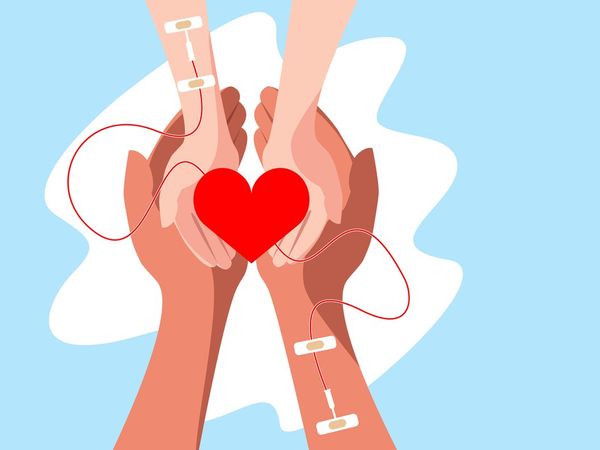
October 1 is observed as the National Voluntary Blood Donation Day in India. This day aims at spreading awareness about the importance of donating blood and the benefits associated with this noble cause. The Indian Society of Blood Transfusion and Immunohaematology first observed this day in 1975 on October 1. The COVID-19 pandemic saw a decrease in blood donation thereby hinting at the importance to donate blood. Remember, the blood you donate can be a lifesaver for someone so if you are a healthy and able human being, do not step away from this noble matter.
Tips for before donation
Here are some tips for safety and health:
-
Go for a full body checkup to ensure that you are free from ailments that may affect the process of blood donation.
-
Carefully assess your options and pick a donation date that is most convenient for you. Do not hesitate to take time because your mental health is as important as your physical health.
-
Iron is important to maintain healthy blood. Therefore, start consuming a balanced diet rich in all essential nutrients and iron-rich foods such as spinach, kale, and fish.
-
Do not forget to take proper rest and get at least 6 to 8 hours of sleep.
-
Drink water and keep your body hydrated at all times.
Tips for the day of donation
Here are some tips for safety and health:
-
Always remember to carry important documents and donor ID for identification. Also, carry documents of health history and medication list.
-
Eat well and stay hydrated on the day to provide your body with the maximum strength to get through the event.
-
Wear appropriate clothes that are not fully covering the arm and have sleeves and can be rolled up easily.
-
Practice relaxation techniques to destress your mind and calm your body.
-
Avoid eating unhealthy foods, using drugs, or consuming alcohol as it can hinder the process of blood donation.
Tips for after donation
Here are some tips for safety and health:
-
Blood donation may often result in loss of energy. To recover from the stage, make sure you cancel all prior commitments and focus on providing your body with the rest it needs.
-
Eat well and stay hydrated to refresh, re-energize, and revitalize your body.
-
Avoid getting into strenuous activities until your body is fully recovered.
-
Feeling dizzy and lightheaded is normal due to the weakness induced by loss of blood. However, be vigilant of the signs your body gives out and make sure that contact for expert help is in your reach at all times. If you experience any unprecedented discomfort or health complications, connect with help immediately.
-
Take care of the arm used for blood donation. Avoid applying pressure to the bandage and keep the area around it clean.
Disclaimer: Tips and suggestions mentioned in the article are for general information purpose only and should not be construed as professional medical advice. Always consult your doctor or a dietician before starting any fitness programme or making any changes to your diet.

KEY STORY
-
Actor Ali Fazal has earned a nomination for Best Actor at the Asia Content Awards by the Busan International Film Festival.
-
As per a statement, Ali bagged the nomination for his role of Ispit Nair in ‘Forget Me Not’, one of the four films in the ‘Ray’ anthology on Netflix. Directed by Srijith Mukherji, the story is a modern interpretation of Satyajit Ray’s story ‘Bipin Chaudhary Ka Smriti Bhram’.
-
Excited about the awards, the ‘Fukrey’ star said, “Wow! This was totally unexpected. I am so humbled to receive this9 nomination and it means a lot to be recognized by ACA.
-
A lot of great content was produced this year in Asia and to land a nomination amongst such an impressive lineup of films and actors is an honour.”
CONCLUSION
-
The 3rd Asian Contents Awards (ACA) is run by the Busan International Film Festival (BIFF)’s Asian Contents and Film Market (ACFM). The ACA aims to showcase outstanding TV, OTT, and online content from Asia.
KEY STORY
-
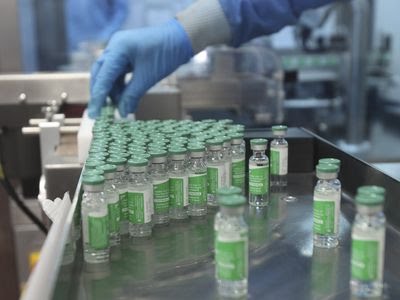
Ahmedabad-based Zydus Cadila’s three-dose Covid-19 vaccine is likely to be included in the national vaccination drive from Saturday, according to Union Health Secretary Rajesh Bhushan. Officials said negotiations between the Centre and the vaccine maker about the price and supply are in the final stages.
-
Sources said ZyCoV-D, approved by the drug regulator in August, is likely to be the most expensive Covid-19 vaccine to be procured by the government as it has to be administered in three doses and needs a special applicator instead of a syringe.
-
“ZyCoV-D will be administered on Day 0, Day 28 and Day 56 using an applicator costing Rs 25,000, which can be used for 10,000 people,” said an offi adding that the government will have to buy the equipment along with the vaccine.
CONCLUSION
-
ZyCoV D has also been approved for inoculating 12-17 year-olds. Being a needle-free vaccine, it ensures painless vaccine delivery. Nearly 1 crore doses of the vaccine are expected to be available in October.

KEY STORY
-
Chief Minister Basavaraj Bommai is expected to leave for New Delhi on October 8, for talks with Karnataka in-charge Arun Singh and party president J P Nadda, to fill the four vacancies in his cabinet. The chief minister is expected to carry a list of probables for the posts of ministers and also chairpersons of boards and corporations.
-
Bommai will also seek to meet Union Home Minister Amit Shah, if he can get an appointment. This will be Bommai’s fifth visit to the National Capital in about two months of his tenure, since he took over on July 28.
-
Sources said that while supporters of former chief minister BS Yediyurappa have been eagerly seeking the inclusion of his son B Y Vijayendra into the cabinet, there are certain leaders in Delhi who are not keen on the idea, and have opposed it.
-
Meanwhile, there are other aspirants who have contacted leaders in Delhi, and are waiting to be included in the Bommai cabinet.
Likely to meet Health Min
-
The chief minister is expected to meet Union Health Minister Mansukh Mandaviya and other central ministers to raise the state’s development issues and finances.Bommai is also expected to carry names of probable candidates for the Sindagi and Hanagal bypolls, which will be discussed at the Core Committee meeting on Sunday, and will be finalised in Delhi.
-
These two bypolls are a real test for Bommai, and he would be expected to perform and win the two seats. The bypolls are to be held on October 3, with the results to be announced on November 2 Bommai will also be participating in a conclave by a private media house and newsmagazine during his visit.
KEY STORY
-
Industries Minister Murugesh Nirani on Thursday invited Germany to collaborate with Karnataka in hosting the ‘Global Investors Meet’, from November 2 to 4, 2022.
-
The GIM would be a great platform to explore investment opportunities, the minister told a delegation led by the Consul General of Germany Achim Burkart.
-
Nirani said Karnataka and Germany share a strong relationship, especially in trade and FDI and the state is an ideal destination for investments. Karnataka is home to nearly 200 German companies, Nirani said.
KEY STORY
-
In a major boost to India’s mission to promote indigenous Covid-19 vaccines, Australia has joined the list of countries that have approved India-made Covishield for international travellers.“
-
The Therapeutic Goods Administration (TGA) has advised that the China-made Sinovac and the India-made Covishield vaccines would be considered ‘recognised vaccines’ when determining whether an incoming international traveller has been appropriately vaccinated,” Australian Prime Minister Scott Morrison told the Indian media during an online briefing.
-
The recognition of these jabs will eliminate a significant barrier for international students who are seeking educational courses in Australia.
CONCLUSION
-
Coronavirus vaccines by Pfizer, AstraZeneca, Moderna and Janssen are already recognised in Australia.
KEY STORY
-
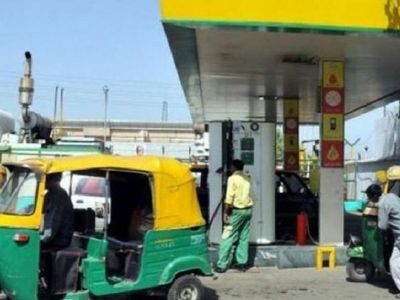
The government on Thursday hiked by 62 per cent the price of natural gas that is used to produce electricity, make fertilisers and turned into CNG to use as fuel in automobiles and cooking gas for household kitchens.
-
This is the first increase in rates since April 2019 and comes on back of firming benchmark international prices but does not reflect the spurt in spot or current price of liquefied natural gas (LNG) witnessed during the last couple of weeks.
-
The oil ministry”s Petroleum Planning and Analysis Cell (PPAC) said the rates paid for gas produced from fields given to state-owned Oil and Natural Gas Corporation (ONGC) and Oil India Ltd (OIL) will be USD 2.90 per million British thermal unit for the six-month period beginning April 1.
-
Simultaneously, the price for gas produced from difficult fields such as deepsea, which is based on a different formula, was hiked to USD 6.13 per mmBtu from the current USD 3.62 per mmBtu.
-
This is the maximum price that Reliance Industries Ltd and its partner BP plc are entitled to for the gas they produce from deepsea blocks such as KG-D6.
-
The increase in gas price is likely to result in a 10-11 per cent rise in CNG and piped cooking gas rates in cities such as Delhi and Mumbai, industry sources said.
-
It will also lead a rise in cost of generating electricity but consumers may not feel any major pinch as the share of power produced from gas is very low.
-
Similarly, the cost of producing fertiliser will also go up but as the government subsidises the crop nutrient, an increase in rates is unlikely.
-
The new formula takes into account the volume-weighted annual average of the prices prevailing in Henry Hub (US), National Balancing Point (the UK), Alberta (Canada), and Russia with a lag of one-quarter.
CONCLUSION
-
The rate at the first revision, using the new formula, came to USD 5.05 but in the subsequent six-monthly reviews kept falling till it touched USD 2.48 for April 2017 to September 2017 period.
-
Subsequently, it rose to USD 3.69 in April 2019-September 2019 before being cut in subsequent rounds to USD 1.79.

KEY STORY
-
From drinking a glass of water while sitting to enjoying a pack of chips while watching your favourite web series – our lifestyle habits literally define who we are and what we can become. But as adults, ever figured how little things could be impacting your risk of suffering from a brain stroke?
-
A brain attack, stroke can occur at any age and affects men and women alike. However, as per experts at the John Hopkins Medicine, contraceptive pills increase risk of a stroke thereby making women more prone to it than men. This is attributed to the estrogen hormone which is linked to a higher risk of stroke. However, this is not the only risk factor linked to an increase risk of brain stroke. Keep reading to learn more
-
Smoking: Be it heart health, obesity or lung function – smoking in no way can benefit your health. And as it turns out, it could be a major contributor responsible for an increased risk of stroke. Experts at John Hopkins Medicine blame this habit for making you twice as likely to suffer ischemic stroke – a condition wherein a blood clot blocks a blood vessel in the brain. Chewing tobacco and even exposure to second hand smoke can up your risk of stroke.
-
Not exercising regularly combined with alcohol intake: Exercising raises your heart rate, induces sweating, promotes weight loss and helps you stay fit and active. One simply can’t run out of reasons why working out is beneficial for health. However, if you are avoiding the idea of going for a run every morning or hitting the gym regularly, and then combine it with excessive alcohol intake, it can result in a stroke over time. More than two drinks a day can spike blood pressure and binge-drinking is associated to stroke risk.
What is binge drinking?
Binge drinking is when one ends up drinking too much alcohol in one go to get intoxicated. For women, six units of alcohol or more is classified as binge drinking; for men the same is quantified by eight drinks or more.
Drugs intake is also associated to stroke risk. Therefore, if you are getting assessed for brain stroke risk, be open to your doctor about drinking, smoking and drug habits to get the best diagnosis and treatment.
Combine no smoking habits with sensible or no drinking and regular workouts to minimize brain stroke risk. And to top it all, follow a diet that helps manage your blood pressure and cholesterol levels to prevent the slightest chance of suffering from a brain stroke in life.
Disclaimer: Tips and suggestions mentioned in the article are for general information purpose only and should not be construed as professional medical advice. Always consult your doctor or a dietician before starting any fitness programme or making any changes to your diet.
KEY STORY
-
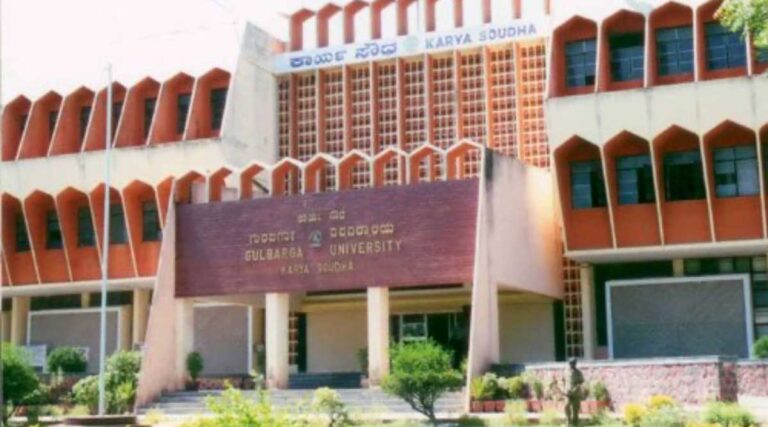
As state-run varsities are developing and restructuring curriculum to enable implementation of the new National Education Policy (NEP 2020) in Karnataka from this academic year, Gulbarga University has focussed on making students “industry-ready” during their undergraduate study in various domains.
-
According to vice-chancellor Dr Dayanand Agsar, experts behind restructuring the new curriculum as per NEP for the varsity have focussed on skill development based on local industries.
-
Each student will be equipped with a set of skills required for the job he (or she) is going to do by the time the undergraduate course is completed. Further, NEP enables students to attend classes in other colleges in case the college where they are at lacks a specific facility,” he explained.
-
Dr Asgar added that students will be graded on completing each year of the four-year course. Those completing the four-year course will get degrees with honours, he said, claiming Gulbarga University was ahead of other universities in the state as preparations of the curriculum for the first two semesters of four-year undergraduate degree courses were already completed. “Approved by the academic council and syndicate of the university, this updated curriculum will be implemented from this academic year,” he announced.
CONCLUSION
-
Dr Asgar said more than 40,000 students have taken admissions to various undergraduate courses at the varsity so far as the process had begun only for the four-year degree course as per NEP 2020.
-
Further, the department noted that 2,500 classrooms in the state higher educational institutions were upgraded to smart classrooms. “An additional funding of Rs 98 crore has also been sought from the government to enable conversion of 6,000 more classrooms to smart classes,” a senior department official said.
KEY STORY
-
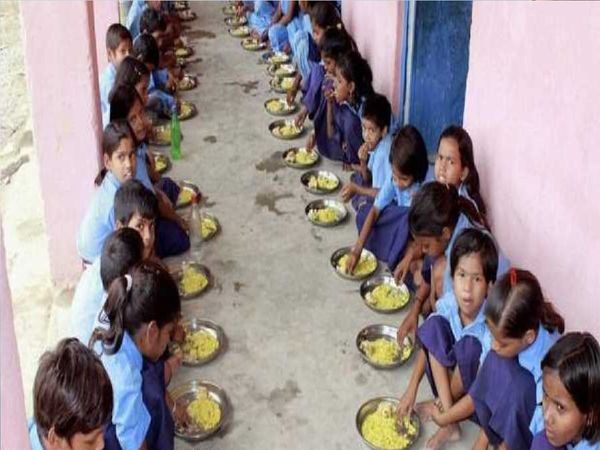
The national mid-day meal scheme in government and aided schools will now be known as PM POSHAN Scheme and will also cover students of balvatikas or pre-primary classes, the government announced Wednesday.
-
Encouraging “Tithi Bhojan” to allow people from the community to provide special food to children on occasions and festivals, using the harvest from “school nutrition gardens” for cooking mid-day meals, cooking competitions to promote ethnic cuisine and innovative menus and involvement of Farmers Producer Organizations (FPO) and Women Self Help Groups in implementation of the scheme, are among the features which have been added in the new scheme.
-
The Union Cabinet on Wednesday approved the roll-out of the ‘PM POSHAN in Schools’ scheme that will provide hot cooked meal to students of elementary classes in government and government-aided schools across the country. The decision was taken at a meeting of the Cabinet Committee on Economic Affairs (CCEA) chaired by Prime Minister Narendra Modi.
-
“Today the CCEA cleared the PM POSHAN (POshan SHakti Nirman) Scheme for providing one hot cooked meal in government and government-aided schools from 2021-22 to 2025-26, earlier known as ‘National Programme for Mid-Day Meal in Schools popularly known as Mid-Day Meal Scheme. This is a centrally-sponsored scheme which covers all school children studying in classes 1 to 8 in government, government-aided schools,” Union Education Minister Dharmendra Pradhan told reporters.
-
“Under the new scheme, mid-day meals have been extended to students studying in pre-primary or Balvatikas in addition to children studying in classes 1 to 8 in government and government-aided schools across India. This will benefit about 11.80 crore children studying in 11.20 lakh schools,” he added.
-
The CCEA has approved the continuation of the national scheme of PM POSHAN in schools for the five-year period 2021-22 to 2025-26 with the financial outlay of 2 54061.73 crores from the central government and 31733.17 crore from state governments and union territory administrations.
-
“Central government will also bear additional cost of about Rs 45000 crore on food grains. Therefore, the total scheme budget will amount to 130794.90 crore. The concept of Tithi Bhojan will be encouraged extensively. Tithi Bhojan is a community participation programme in which people provide special food to children on special occasions and festivals.
-
“Government is also promoting development of ‘School Nutrition Gardens’ in schools to give children first-hand experience with nature and gardening. The harvest of these gardens is used in the scheme providing additional micro nutrients. School Nutrition Gardens have already been developed in more than 3 lakh schools,” he said.
-
While a social audit of the scheme is made mandatory in all the districts, special provision is made for providing supplementary nutrition items to children in aspirational districts and districts with a high prevalence of Anemia.
-
“Cooking competitions will be encouraged at all levels right from village level to national level to promote ethnic cuisine and innovative menus based on locally available ingredients and vegetables. Involvement of Farmers Producer Organizations (FPO) and Women Self Help Groups in the implementation of the scheme will be encouraged. Use of locally grown traditional food items for a fillip to local economic growth will be encouraged,” Pradhan said.
-
“Field visits for progress monitoring and inspections will be facilitated for students of eminent universities and institutions and also trainee teachers of Regional Institutes of Educations (RIE) and District Institutes of Education and Training (DIET).
-
The mid-day meal scheme was launched in 1995 with the aim to provide at least one nutritional meal to elementary students. It had later become instrumental in improving enrollments in schools.
-
Explaining the structural changes in the scheme, Pradhan said that the Centre has directed the states and the UTs to switch to Direct Benefit Transfer (DBT) system for providing an honorarium to the cooks and helpers working under the scheme.
-
“The government has made some structural changes to ensure transparency. Earlier, there were instances of leakages (of money)… In the coming years, the Centre might directly transfer funds to the schools according to their requirements,” he said.
-
Earlier, the central government would allocate the funds to the states which include their share and transfer them to the mid-day meal nodal officers at the district or tehsil level. The officers then transfer them to the schools.
CONCLUSION
-
A senior Ministry official said that under the new scheme if states want to include their local vegetable or any other nutritional food or anything else such as milk or fruit, they can do so with the centre’s approval.
-
“However, it should fall within the allocated budget. Earlier, states had to bear the cost if they include any extra item,” the official said.
-
The government did not announce anything on the provision for adding breakfast in the mid-day meals which was outlined in the new National Education Policy (NEP) notified last year.
1...494495496...884Page 495 of 884