Facebook Messenger calls get support for end-to-end encryption

KEY STORY

  • Facebook Messenger is adding End-to-End Encryption or E2EE for voice and video calls. The company has also updated controls for disappearing messages. The social media giant has announced the new update in a blog post.
  • “People expect their messaging apps to be secure and private, and with these new features, we’re giving them more control over how private they want their calls and chats to be. In the past year, we’ve seen a surge in the use of audio and video calling with more than 150 million video calls a day on Messenger. Now we’re introducing calling to this chat mode so you can secure your audio and video calls with this same technology if you choose,” Ruth Kricheli, director of product management for Messenger, said in a blog post on Friday.
  • As of now, only one-on-one text chats were end-to-end encrypted and now the same is available for calls. This basically means that “nobody else, including Facebook, can see or listen to what’s sent or said.”

CONCLUSION

  • “End-to-end encryption is already widely used by apps like WhatsApp to keep personal conversations safe from hackers and criminals,” the company said. Facebook believes that E2EE is “becoming the industry standard and works like a lock and key, where just you and the people in the chat or call have access to the conversation.”
  • Apart from E2EE, Facebook Messenger has also updated the expiring message feature. The social media giant says that not all the users always want or need their messages to stick around, so the new timer controls let someone decide when their messages expire in the chat.
  • “We’ve updated this setting to provide more options for people in the chat to choose the amount of time before all new messages disappear, from as few as 5 seconds to as long as 24 hours,” Facebook said.

Sidharth Shukla and Shehnaaz Gill to enter Bigg Boss OTT house this weekend

KEY STORY

Fans eagerly anticipate the opportunity to see them on screen together. The love Jodi will now be seen in the Bigg Boss OTT house on Voot, following the release of their Silsila SidNaaz Ka. Over the weekend, the power couple will enter the house and will have a brief encounter with host Karan Johar.
It will be incredibly interesting to see this Jodi enter Bigg Boss OTT, especially with the new structure and theme – stay connected, according to a source close to the duo. SidNaaz have formed a strong bond inside the house, and it will be fascinating to observe how they interact with the other candidates and jodis. This weekend will undoubtedly be unforgettable.
So, what is SidNaaz’s motivation for entering the Bigg Boss OTT house? Are they love gurus or contestants? We are quite excited to see them together again.
Monday through Saturday at 7 p.m., and Sunday ka Vaar at 8 p.m., watch the unedited drama LIVE on the Voot App.

Karnataka: After ban on bouquets, Bommai says ‘no need for Guard of Honour at airports, other public places’

KEY STORY

After banning bouquets, shawls and garlands at government functions and replacing them with books, Karnataka Chief Minister Basavaraj S Bommai has said there is no need for the guard of honour at airports and other public places.
The CM had called bouquets as “wasteful expenditure”.
Speaking in Mangaluru, the CM said that he would soon issue an order banning guard of honour given to him and other ministers at every district and public place during their visits.
“I have said that there is no need for a Guard of Honour at airports and other public places. It is not required at the district level every time I visit. I will issue a direction soon after going to Bengaluru tomorrow,” PTI quoted Bommai as saying.
As per the government sources, Bommai asked officials in Mangaluru that there was no need for such a “pompous show”.
This comes after the Chief Minister on Tuesday said that gifting memorabilia, garlands and shawls, were an unnecessary expenditure and insisted that officials give Kannada books instead.

CONCLUSION

The Chief Secretary had issued a circular directing not to give garland, shawls, flower bouquets, fruit baskets, and memorabilia at meetings and events by the state government and the government-run institutions. All department heads and government undertakings have been asked to comply with the directions.
Meanwhile, members of the South India Floriculture Association (SIFA), flower and fruit growers, and vendors staged a protest, demanding Bommai to withdraw his order banning presenting of bouquets, flowers, garlands and other perishable items like fruit baskets at official functions.
SIFA termed Bommai’s order “unscientific” and called it a direct assault on flower-growers who are one of the worst-affected during the COVID-19 pandemic.
Twitterati was divided on the decision, with netizens taking sides with flower and fruit growers and vendors, while some hailed the decision.

My heart is full of emotion: Golden boy Neeraj Chopra pens heartfelt note after attending I-Day celebrations

KEY STORY

  • Neeraj Chopra and other Tokyo Olympics medal winners were in attendance during the flag hoisting ceremony, led by Prime Minister Narendra Modi, at the iconic Red Fort, New Delhi on Sunday morning (August 15) as India is celebrating its 75th Independence Day.
  • Independence Day remains the most important day in India’s calendar year, as the countrymen come together to celebrate the nation’s independence which was granted on August 15, 1947, after the martyred freedom fighters’ years of fight versus the British Raj. Hence, every year the PM hoists the tricolour along with the presence of other important political figures. This time around, PM Modi had also invited Neeraj-starrer India’s Olympic medal-winners in Tokyo.
  • After attending the historic event at the iconic Red Fort, New Delhi, Neeraj took to his official Twitter handle and penned a heartfelt note.
  • As a soldier and athlete for India, Neeraj wrote, “It was an honour to attend the Independence Day celebrations at the historic Red Fort today. As an athlete and a soldier, my heart is full of emotion when I see the national flag flying high. Jai Hind.”

During the ceremony, PM Modi acknowledged the presence of Tokyo 2020’s stars and said, “Aaj bhi desh ke kuch ilaako mein baadh hain, kuch piddha daayak khabre aate rehti hain…Aise samay central or state govt. ho, sab inke saath kadhi hui hai. Aaj uss beech mein, Bharat ki yuva piddi jinhone Bharat ka naam roshan kiya hai woh humare beech mein hain. Main aaj apne desh vaasiyon ko kehta hu ki humare khiladiyon ke saaman mein aaye aur taaliyon se unka samaan karre…..(We have with us our Olympic participants, athletes who have made India proud. I want the entire country to salute them).”

Apart from this, the Prime Minister also spoke at length on various other important aspects. He stated, “We must work towards our goals right away. We have no time to waste. We must change ourselves as citizens as per the changing demands of the world.” In addition, he mentioned the country’s fight versus Covid-19 and claimed, “India has fought against Covid with patience and determination. We are not dependent on any other country for vaccines.”

Karnataka will see 10-25% increase in rainfall in coming years: scientists

KEY STORY

  • Karnataka will witness 10 to 25% increase in rainfall and areas under drought or drought years will decline drastically by mid-2030 and the increase in rainfall will be accompanied by larger magnitudes in the intensity and frequency of heavy rainfall and floods, according to N.H. Ravindranath and G. Bala, authors of multiple UN IPCC (Intergovernmental Panel on Climate Change) reports and professors at IISc., Bengaluru.
  • With the latest IPCC report estimating the chances of crossing the global warming level of 1.5°C in the next decades, Prof. Ravindranath and Prof. Bala said, “A district-level multi-model projection shows that rainfall is projected to increase by 10 to 25% in districts of Karnataka even by the mid-2030s.”

Focus areas

  • Besides coastal districts of the State, regions of the Krishna and the Cauvery basins will witness heavy rainfall in the coming years and the monsoon rainfall variability between years will increase with some years receiving very high rainfall and a few recording deficient rainfall. Karnataka has already been experiencing unprecedented floods in the recent years, they said.
  • Prof. Ravindranth told The Hindu that with global warming reaching 1.5-2° Celsius in the next two decades, high rainfall and rise in sea levels would be irreversible in the coming years. Shrinking glaciers, melting of ice sheets, rising seas, species loss, and more acidic oceans would be irreversible changes, he said.
  • “One-third of the biodiversity in the Western Ghats of Karnataka will be damaged by 2050 and there will be reduction in fish production in the sea because of acidic oceans,” said Prof. Ravindranath, who is also part of the Karnataka State Action Plan on Climate Change, 2021, report, which is yet to be made public.
  • Rainfall would be high intensity and rainfall would be 50 mm to 100 mm in one day or some days and it would be difficult to forecast monsoon in advance owing to global climatic change factors, Prof. Ravindranath said.
  • Authors said with regular years of rainfall, drought years would be fewer in the coming decades. The State governments have to focus on management of floods, particularly in urban areas and cities and storage of water in dams. “Bengaluru and many cities and towns have all experienced flood events in recent years and they will only intensify in the coming decades,” they said.

    Damage to properties


  • Scientists have suggested to the government to undertake construction of railway network, bridges, building, and dams by taking into consideration changes in the climate. “Biggest problem,” according to them, “is management of water in the coming years.” Damage to public and private properties would be immense if authorities did not incorporate climate change in their policies, Prof. Ravindranath and Prof. Bala warned.
  • Chairman of Bangalore Climate Change Initiative-Karnataka chapter and former Minister B.K. Chandrashekar, who has read the report, said political parties must include climate change in their poll manifestos.

Rail routes to get Aluminum mentors by February one year from now; Here’s the reason there are better

KEY STORY

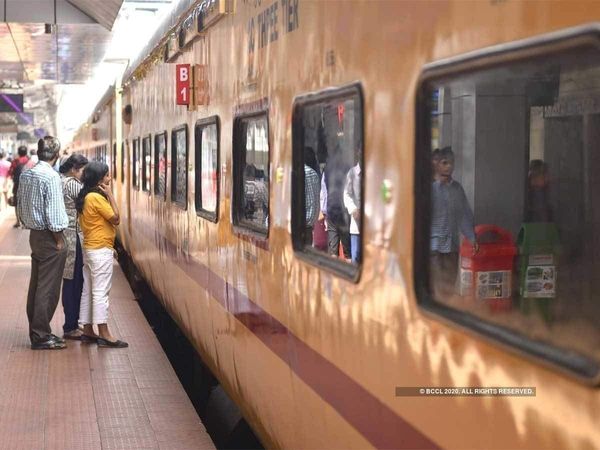
  • In major infrastructure and technology revamp mode, Indian Railways is planning to add several Aluminium coaches by February next year. The Madras Coach Factory (MCF), Raebareli, is already looking to manufacture Aluminium coaches for the trains.
  • The first set produced will consist of three Aluminium coaches. These will be hinged to Kolkata Metro by February 2021. MCF signed a deal with a South Korean firm Dawonsys, worth Rs 128 crore, to accomplish the feat. However, manufacturing got delayed due to the COVID-19 pandemic, according to a recent TOI report.
  • The coaches will be designed and manufactured in South Korea and will be exported to India, where the assembling will be executed, the national daily report added. The design for the metro coaches will likely be finalised by the end of this month.
  • A railway official was quoted in the report saying, “The South Korean firm will share the designs and once MCF approves they will be made in South Korea and brought in India in knocked down condition”. To begin with, “Dawonsys will manufacture these coaches in South Korea and slowly the transfer of technology will take place to MCF,” the official added.
  • The deal struck between the two firms also includes three AC-3 Tier Sleeper, two AC-2 Tier Sleeper, one AC-1 Sleeper, one AC Hot Buffet Car, and one AC DSLR with Drive/Guard cabin. The above-mentioned broad-gauge locomotive-hauled sleeper coaches will be able to attain 160kmph; however, designs for self-propelled coaches with the top speed of 225kmph will also be provided by the South Korean firm.
  • For the unversed, Railways currently have coaches made of stainless steel. The designs for self-propelled aluminium coaches with speeds of up to 225 kmph will help MCF manufacture Shatabdi-style aluminium coaches. The coaches will enable Indian Railways to run superior train sets in line with its aim to connect major cities with chair car train services.

    Why Aluminium coaches are better?

    • Aluminium coaches are corrosion resistant which means Railways will have coaches with an increased life of 40 years.
    • These coaches are lighter as compared to stainless steel coaches resulting in better fuel efficiency and subsequently lower haulage cost.
    • Being lighter also ensures increased speeds of the train which will cut travel time and increase average speed.
    • Aluminium coaches will be equipped with modular interiors with removable components for easy retrofitment and maintenance.
    • With reduced wear and tear of components, the life cycle cost will be low.
    • Hollow extrusion design of the coach allows for commendable crashworthiness in case of an accident which means that casualties will low in case of such an incident.
    • It takes lesser time to manufacture Aluminium coaches than stainless steel coaches.
    The Railway Board has given a green signal to the deal of making 500 aluminium coaches and will surpass the quality of Shatabdi and Rajdhani coaches in terms of interior, exterior, safety, and comfort.
    To recall, Railways had awarded a Transfer of Technology (ToT) contract to the Korean company last year for the development of capabilities for production to the commissioning of aluminium-bodied coaches. The ToT has been awarded by the Modern Coach Factory in Rae Bareli to acquire the capability to make world-class aluminium coaches.
    This ToT included development (prototyping), designing, manufacturing as well as testing of aluminium body passenger coaches of eight variants. Out of the eight variants, five variants are of broad gauge loco-hauled coaches, while three variants are of standard gauge metro coaches. These Aluminium-bodied coaches may be capable of attaining speeds of up to 250 kmph – in line with Indian Railways dream of semi-high speed train travel.

PM announces establishment of e-commerce platform for self help groups

KEY STORY

  • Prime Minister Narendra Modi on Sunday announced that the government will establish e-commerce platforms to provide a market for the products made by self-help groups (SHGs).
  • Delivering his customary address to the nation on the occasion of 75th Independence Day on Sunday, Prime Minister Modi said, “There are more than 8 crore women in the village who are associated with self-help groups, who make products. The government will prepare an e-commerce platform for their products to get a big market in the country and abroad.”
  • PM also reiterated ‘Vocal for Local’ saying that the country is moving forward with the slogan of Vocal for Local. “India has started the ‘Local for Vocal’ initiative and it is our responsibility to buy indigenous products. Our vision of plastic-free India can only be made true if we stop the use of single-use plastic completely,” noted the Prime Minister.
  • Talking about development in rural areas, PM said, “Today we see our villages changing rapidly. In past few years, facilities like road, electricity have reached villages. Today the optical fiber network is providing the power of data to villages.”
  • On the occasion of 75th Independence Day, PM Modi also announced Gati Shakti Plan for infrastructure building in the country. “In the coming days, we will launch PM Gati Shakti Plan, a 100 lakh crore infrastructure plan which will make a foundation for holistic infrastructure and give an integrated pathway to our economy, said PM Modi.

CONCLUSION

  • “Gati Shakti will help local manufacturers turn globally competitive; also develop possibilities of new future economic zones. Rs 100 lakh crore Gatishakti initiative will bring employment opportunities for youth, help in holistic infrastructure growth,” PM Modi said.
  • As a part of the celebrations Prime Minister Narendra Modi also hoisted the national flag at the Red Fort.

75th Independence Day: Liberating your brain from pressure and your body from an unfortunate way of life

KEY STORY

  • Rabindranath Tagore envisioned a free India as a place “Where the mind is without fear and the head is held high” and prayed to God to lead the people of this country on a path of truth, freedom, and knowledge. Today we celebrate our nation’s 75th Independence Day and it is overwhelming to see how far we have come as a country and as citizens of the world’s one of the most prominent nations. While we recall the sacrifices of the people who fought in the freedom struggle, we must not forget the warriors who are still battling on the frontline to beat the disease that has put humanity in shambles.
  • The COVID-19 pandemic made people aware of the importance of their health. With a rise witnessed in cases of mental health issues, the necessity of maintaining a healthy mind and body was brought to light. Informing ourselves and acting upon our shortcomings is the first step we can take towards better health.

Liberating self from stress

Here are some ways in which you can free yourself from stress:
  1. Reduce your caffeine intake to a healthy level. Coffee can have certain health benefits but excessive consumption can be harmful.
  2. Socializing and communicating with family and friends is a great way to help yourself get rid of stress and calm your mind.
  3. Try aromatherapy, the method of using essential oils and fragrances to calm the mind as a method of stress-relieving. This can help soothe the mind and both.
  4. Laughing your heart out can relax the muscle tension and relieve stress. Practice laughing as a form of therapy along with yoga and meditation for maximized results.
  5. Get the required amount of sleep. Lack of sleep can result in the development of sleep conditions such as insomnia that can add to stress and anxiety. To avoid this from happening, make sure that you get 6 to 8 hours of sleep every day.
Liberating self from an unhealthy lifestyle
Here are some ways in which you can get rid of an unhealthy lifestyle:
  1. Physical inactivity is an unhealthy habit therefore, one must start including exercise as an important part of your lifestyle as it can help strengthen the body and reduce the risk of developing various health conditions. You can start with easy physical activities such as aerobic exercises and yoga.
  2. Get rid of your unhealthy eating habits and practice sustainable eating habits to ensure the safety of the environment and future generations.
  3. Avoid or limit your alcohol and tobacco consumption to prevent further damage to the body. Your life is a gift and it must be treated with utmost respect and care.
  4. It is time for less eating out and more cooking in. Consuming take-outs regularly will not only harm your health but will also burn a hole in your pocket.
  5. Not drinking enough fluids is a common habit among people. It is time to leave the habit behind and keep your body hydrated throughout the day. To develop a habit, you can keep a reusable bottle handy and keep sipping at intervals.
Disclaimer: Tips and suggestions mentioned in the article are for general information purpose only and should not be construed as professional medical advice. Always consult your doctor or a dietician before starting any fitness programme or making any changes to your diet.

Classes 9-12 from Aug 23 in Karnataka regions with low positivity rate

KEY STORYs

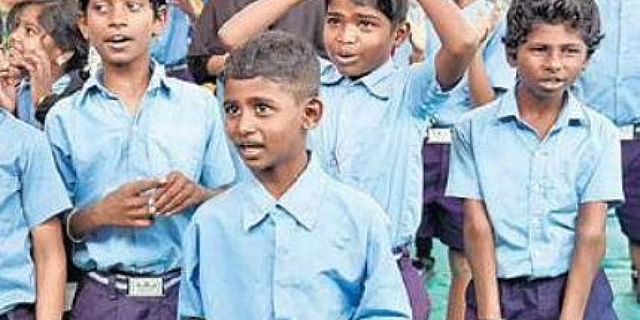
  • The government is planning to reopen schools for Classes 9 to 12 from August 23 in districts that have less than 2 per cent Covid positivity rate, said Chief Minister Basavaraj Bommai on Saturday after a Covid review meeting.
  • Detailed standard operating procedures on conducting classes will be issued soon. Also, these districts will not have any Covid-related restrictions, he added. The SOP on reopening schools will specify the number of students per class and the vaccination plan for parents, teaching and non-teaching staff. If the Covidpositivity rate goes above 2 per cent, schools have to be shut for a week and reopened only after proper sanitisation, he said.
  • No lockdown in Bengaluru
    The government is not thinking of imposing a lockdown in Bengaluru as the Covid-positivity rate is at 0.75 per cent. BBMP Chief Commissioner Gaurav Gupta has been given full powers and instructed to monitor Covid cases every day.
    “Now, beds are vacant. If 40 per cent of oxygenated beds are occupied, the government will consider taking further action to control cases,’’ Bommai said. This time, the focus is on the health of children, as there is a fear that they would be affected the most during the Covid third wave.

    Keep more beds, ICUs ready for kids, says CM

    More beds and ICUs will be reserved for paediatric care, the Chief Minister said. All the people staying in villages that are 10 km from Maharashtra and Kerala borders will be monitored closely for any spike in cases. “I have instructed officials to test and vaccinate all these people in border villages,’’ he said.
    The government will micromanage the Covid situation at the taluk level in border districts. Suitable action will be taken in taluks that report positivity rate higher than 2 per cent, even when the district is showing lower numbers, he said.
    According to experts, the second wave is on the wane. But what is worrying is that even in its last leg, the numbers are high at 1,400 to 1,800 cases per day. “Towards the end of first wave, the State was reporting only around 200 cases per day. The present situation is way more alarming,” he warned.
    The government is stressing on district-specific Covid action plan, as some have high positivity rate, some high number of deaths, while others have low testing and vaccination figures, he added. More testing and vaccination is needed in Chamarajanagar, Dakshina Kannada, Udupi, Mysuru, Hassan, Kodagu, Shivamogga and Chikkamagaluru districts, which continue to report a high number of Covid cases, he said.
    On the Kerala government approaching the high court against the decision making RTPCR-negative certificate mandatory for those entering Karnataka, Bommai said, “Because of them, neighbouring states, including Karnataka, are suffering. It’s a matter of life and livelihood. Instead of approaching court, they should have focused on improving health infrastructure and controlling cases,” he added.
    CM shuns zero traffic
    In what comes as a huge relief to motorists in Bengaluru, CM Basavaraj Bommai has refused zerotraffic privileges for himself, asking the police to consider him as a “common man”, and ensure that ambulance movement is given priority.


Legends and realities about diabetes – Combating the constant sickness with data

KEY STORY

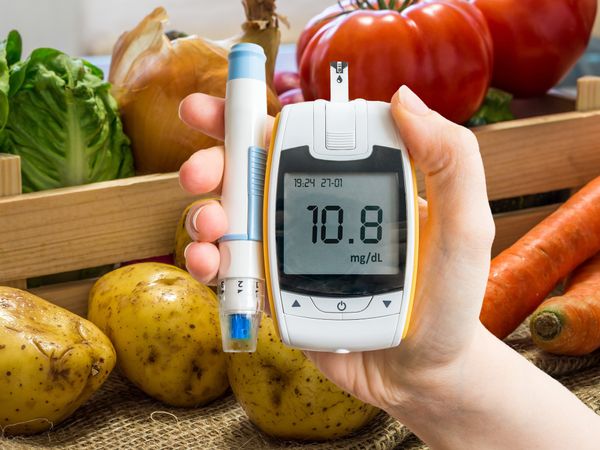
  • Diabetes is a chronic disease that causes unhealthy levels of blood sugar in the body. The common types of diabetes include type 1 diabetes, type 2 diabetes, and gestational diabetes. There is a worrisome spike being witnessed in the rise of diabetes cases and as of now, the World Health Organisation (WHO) estimates 422 million global diabetics.
  • Being one of the leading causes of death across the world, it is important to address the issue and spread awareness about the same. This should be taken up as a priority for low and middle-income countries where there is a lack of quality treatment despite the high disease prevalence.

Diabetes – Myths and facts

Here are some myths and facts about diabetes:
Myth 1: Say goodbye to sweets and desserts forever and say hello to a boring diet.
Fact:
 It is true that some level of dietary restriction must be practised, however, absolute abstinence from sweets and desserts and maintaining a monotonous diet is not required. The goal must be the consumption of a balanced diet. This is to ensure a healthy body and regulation of blood sugar levels.
Myth 2: Only fat and sugar consuming people can get diabetes.
Fact: 
Being obese, overweight or consuming sugar may increase the risk of developing diabetes, however, the above-mentioned is not the only contributing factors. Some other common risks factors for diabetes include smoking, physical inactivity, age, genetics (family history), prolonged stress, and being pregnant.
Myth 3: Type 2 diabetes is less dangerous
Fact: 
No form of diabetes is ‘less’ dangerous and must be managed with care and effort. You must not lower your guard against this dangerous disease because unhealthy management of diabetes may lead to aggravation of symptoms and may even be life-threatening.
Myth 4: Insulin and medication can take care of everything
Fact:
 Insulin and medication are a part of treatment that helps with the management of the symptoms. However, the treatment alone cannot help control the disease and other regulations such as lifestyle alteration and dietary restrictions must be practised.
Myth 5: Diabetics must avoid exercise to avoid lowering blood sugar levels
Fact:
 Diabetes must not be used as an excuse to ditch physical activity. Sports or exercise cannot cause harm to people suffering from diabetes as long as it is practised safely. Furthermore, staying physically active is one of the recommended tips for blood sugar management.
Disclaimer: Tips and suggestions mentioned in the article are for general information purpose only and should not be construed as professional medical advice. Always consult your doctor or a dietician before starting any fitness programme or making any changes to your diet.