Karnataka: Private school association favours up to 25% cut in fees

KEY STORY

  • BENGALURU: The Associated Managements of Primary and Secondary Schools in Karnataka (KAMS), an association of private schools in the state, has advised its members to reduce the School fees by up to 25% in the best interests of the students.
  • According to an advisory, the association has said schools can reduce the special development fees and the term fee, which form 10% of the whole tuition fee. It has also suggested waiver of fee for extracurricular activities and schools could consider the minimum use of computers and transport this year.


    Many members expressed desire to decrease fee: Assn

  • Overall, schools, whose fee structure is more than Rs 25,000 a year, can reduce (the fee) between 20% and 25% in the best interest of students’ continued learning and support the parents during Covid circumstances,” the advisory said.
  • According to the association, many of its members have voluntarily expressed desire to decrease the fees by more than 25% as many students have not taken admissions. “Some parents were categorical they will not take admission this year.
  • They create the wrong precedence for other kids too. At the same time, some schools are seeking complete annual fees at one go. We are asking them to take only part of the fees at one go,” said D Sashi Kumar of KAMS.
  • It has asked its members to hold talks with parents and give them some time to make admissions by paying a part of the fees.
  • Other associations like MICSA (Managements of Independent CBSE Schools’ Association) said it has left the decision to individual schools and won’t issue any advisory.
  • Fees has been a sore point this academic year with parents alleging it’s unfair that schools are charging full fees even while many of their infrastructure and other facilities have remained unused.
  • In many cases, teachers bore the brunt by not getting pay. The government has asked school managements to discuss the issue with parent bodies.

The most common weightlifting mistakes people make

Man weightlifting at the gym.

Common weightlifting mistakes could hinder your fitness progress and set you up for injury, says Joel Hardwick, ACSM EP-C, EIM2, an exercise physiologist at Piedmont Atlanta Fitness Center.
Hardwick says these are the most common weightlifting mistakes he sees at the gym:
  • Not warming up first. If you go into a workout with cold muscles, you can set yourself up for injury, he says. Start with light cardio and dynamic stretches before beginning your weightlifting routine.
  • Using poor form. “I see a lot of people ‘cheating’ with form and using momentum or other muscles to get the weight up instead of using the muscles they are targeting,” he says. Incorrect form can also set you up for an injury.
  • Lifting too quickly. Like using poor form, lifting too quickly and using momentum won’t help you get the results you want. “It’s important to go slower and give the muscle time under tension,” says Hardwick. “When you let the weight down slowly, you are increasing the time a muscle is under tension, which will help your strength and size gains.”
  • Focusing only on isolation exercises. When people focus solely on isolation moves, like a bicep curl, they won’t get the best results, compared to performing exercises that engage many muscle groups, such as a squat.
  • Choosing a weight that’s too light. “We tend to gravitate toward easier weights, but if you don’t choose a heavy enough weight that provides the proper stimulus, you won’t get the results you’re after,” he says.
  • Skipping muscle groups. “Many people just focus on the upper body and skip lower body exercises because the upper body can be more aesthetically pleasing,” he says. However, strong lower body and core muscles are essential to preventing injury and improving range of motion.
  • Ignoring the basics. Compound exercises like squats and deadlifts are vital to building strength. “People try to do complicated moves like the Hercules curl or some weird move they saw on social media, but focusing on the basics is the best way to go,” he says.
  • Pushing through pain. “Many people believe in ‘no pain, no gain,’ but if you have pain when lifting weights, you definitely need to stop,” says Hardwick. “If you have any discomfort, don’t push through it.”

What types of injuries can these mistakes cause?

When you make these weightlifting mistakes, you may increase your risk of:
Lifting weights improperly can also derail your fitness goals.
“If you get injured, it will totally halt your progress,” says Hardwick. “An injury can take days, weeks or months to heal, and some injuries require physical therapy before you can return to your exercise routine.”
How to prevent weightlifting injuries
  • Consult with a professional. “I recommend consulting an exercise professional before starting a workout routine,” says Hardwick. “You may not know what issues you have with form until someone tells you. Perhaps you’ve been performing a squat the same way your whole life, but you could be using incorrect form, which puts you at risk for injury.”
  • Learn the basics. “Learn the basic compound moves like squats and deadlifts before you start on isolation exercises,” he recommends.
  • Go slowly. “It is important to progress slowly and learn good form,” says Hardwick. Gradually increase your weight and reps as you get stronger.

Rajkummar Rao and Bhumi Pednekar start shooting Badhaai Do

Badhaai Do

KEY STORY

  • Badhaai Do, a comedy drama starring Rajkummar Rao and Bhumi Pednekar, went on floors on Tuesday. The film is a sequel to the National Award winning hit, Badhaai Ho!.
  • Pednekar took to Instagram and shared an image from the first day of the shoot in Dehradun, Uttarakhand.
  • “Poori team ko #BadhaaiDo (Congratulate the entire team). To new beginnings!” the 31-year-old actor wrote.
  • Badhaai Do is directed by Harshvardhan Kulkarni, who helmed the Gulshan Devaiah-starrer comedy Hunterrr (2015).
  • The upcoming film is written by Suman Adhikary and Akshat Ghildial, who had co-written Badhaai Ho!.

https://www.instagram.com/p/CJqRYv_Bj_s/?utm_source=ig_web_copy_link

  • Badhaai Do marks the first collaboration between Rao and Pednekar, who reportedly play a cop and a PT teacher, respectively.
  • Badhaai Ho!, the original movie, chronicled the story of a middle age couple, played by Neena Gupta and Gajraj Rao, facing unexpected pregnancy.
  • The 2018 film, also featuring Ayushmann Khurrana, Surekha Sikri, and Sanya Malhotra, was directed by Amit Ravindernath Sharma.
  • It won two National Awards: best popular film providing wholesome entertainment and best supporting actress for Sikri for her role as the cantankerous matriarch who has a change of heart.

Tata Safari to make a comeback; bookings to open this month

Tata Safari to make a comeback; bookings to open this month

Tata Safari is one of the most iconic SUVs the Indian carmaker has ever made. Obviously, the company’s decision to pull the plug on Safari last year had disappointed many fans across the country. But a few days ago, Tata motors shared a video on its social media handles, reminiscing Safari’s achievements in India and how it wished the SUV was still around. But little did we know that the carmaker had plans to resurrect the Safari brand. Tata Motors today announced that it will launch all-new Safari SUV this year. Now, just to clarify things, the company noted that it will revive the Safari brand with the SUV that has been codenamed Gravitas. Yes, what was revealed last year at the Auto Expo as Gravitas is now being christened Safari. As noted by Tata Motors, the new Safari will start reaching the showrooms this month and bookings too will commence soon.

Shailesh Chandra, President, Passenger Vehicles Business Unit, Tata Motors, said, “We are proud and elated to re-introduce our flagship SUV–Safari. The Safari, an iconic brand with a strong following, has been the most sought after SUV on Indian roads for well over two decades. In its new avatar, the Safari will appeal to the socially active, fun-loving customers who seek out unique experiences and adventure. Its design, performance, versatility, features, and long lasting build quality, reinforce the SUV lifestyle to provide unending pleasure. We are confident that the launch of the Safari will once again re-energise the market, amplifying its cult status.”

Wait for Tata Gravitas almost over; India launch in a few weeks

The all-new Safari is essentially a seven-seater Harrier and is based on the OMEGARC platform. It uses the company’s Impact 2.0 design language and looks quite similar to Harrier. However, it will get different design for the alloy wheels, a stepped-up roof to make adequate headroom for third-row passengers, faux scuff plate on the rear bumper, redesigned tail lights with different LED signature. An interesting thing to note is that Safari will be taller and longer than the Harrier although both the SUVs are likely to have the same wheelbase.
Tata Safari will be propelled by the same powerplant that powers Harrier. It is a 2.0-litre turbocharged diesel engine that makes 168 bhp and 350 Nm of peak torque. This engine comes paired to a six-speed manual gearbox as standard but buyers can also opt for the six-speed automatic gearbox.

RBI fines Bajaj Finance for use of coercive means of recovery

KEY STORY

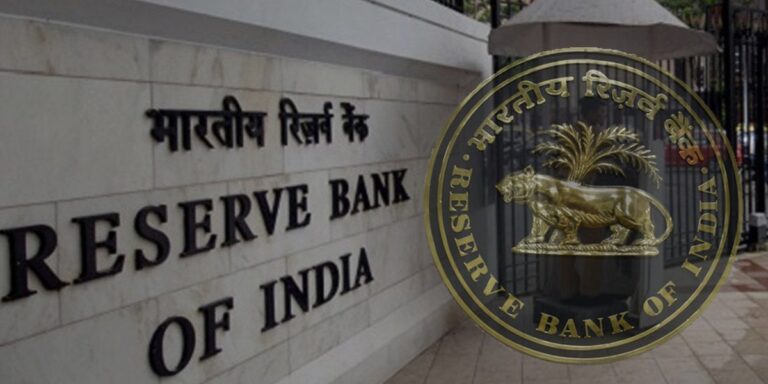
  • The Reserve Bank of India (RBI) on Tuesday imposed a monetary penalty of Rs 2.50 crore on Bajaj Finance for using coercive methods of recovery from its borrowers, and violation of general guidelines and one specific direction issued by the regulator.
  • The central bank held the consumer financier guilty of violating directions on managing risks and code of conduct in outsourcing of financial services by non-banking financial companies (NBFCs) and the fair practices code (FPC) for applicable NBFCs.
  • In addition, Bajaj Finance was also found to have violated a specific direction to ensure full compliance with FPC in letter and spirit.
    “This penalty has been imposed in exercise of powers vested in RBI under the provisions of clause (b) of sub-section (1) of section 58 G read with clause (aa) of sub-section (5) of section 58B of the Reserve Bank of India Act, 1934, taking into account the failure of the company to ensure that its recovery agents did not resort to harassment or intimidation of customers as part of its debt collection efforts and thereby failing to adhere to the aforesaid directions issued by RBI,” the regulator said in a statement on its website.
  • There were also persistent and repeated complaints about recovery and collection methods adopted by Bajaj Finance, the RBI said.

CONCLUSION

  • For the above lapses, a notice was issued to the company advising it to show cause as to why a penalty should not be imposed for such non-compliance.
  • After considering the company’s reply to the notice, oral submissions made during the personal hearing and examination of additional submissions made by it, the RBI concluded that the charge of non-compliance with the directions was substantiated and warranted imposition of monetary penalty.
  • “This action is based on deficiencies in regulatory compliance and is not intended to pronounce upon the validity of any transaction or agreement entered into by the company with its customers,” the regulator said.

Govt of India removes the word ‘Halal’ from its Red Meat Manual: Here is what it means

HIGHLIGHTS

  • Agricultural and Processed Food Products Export Development Authority (APEDA) under the commerce ministry updated the manual to remove halal from the description.

Halal Meat

  • It had earlier said that Halal Certification agencies are accredited directly by respective importing countries. No government agency has any role in this.
  • The move however is likely to make it difficult for meat exporters in India, as some of their biggest markets are in Islamic countries.

KEY STORY

  • The halal tag on food products has been a divisive topic in India and every so often has run into controversies.
  • In the wake of a barrage of complaints from several Hindu right-wing outfits and Sikh bodies, the Agricultural and Processed Food Products Export Development Authority (APEDA) has removed the word ‘halal’ from its ‘Red Meat Manual.’
  • As the debate continues, red meat exported from India will no longer be specified as ‘halal’, instead, it will be mentioned as “The animals are slaughtered to the requirement of importing country/importer.”
  • It was previously described as “The animals are slaughtered strictly according to ‘Halal’ method to meet the requirement of Islamic countries”.
  • But on Monday, the Agricultural and Processed Food Products Export Development Authority (APEDA) under the commerce ministry updated the manual to remove halal from the description.
  • It had earlier said that Halal Certification agencies are accredited directly by respective importing countries. No government agency has any role in this.
  • Halal – an Arabic word indicating what is allowed – refers to a practice of animal slaughter mandated by the Islamic tradition whereby the animal must be killed while it is conscious via a deep incision made to its neck to sever structures like the trachea, oesophagus, carotid artery and jugular vein.
  • Animals must also only be killed by a Muslim. The Islamic faith argues that the method is the most humane way of dispensing of an animal noting that it not only renders the animal immobile but reduces its pain sensitivity as well.
  • However, under the traditions of specific Hindu faiths, consumption of meat from animals that have been killed in this manner is forbidden.
  • Some high-profile companies such as McDonald’s and food-delivery service Licious, in declaring that all their meat must be halal-certified, have drawn the ire of Hindu groups who have argued that it places Hindu producers at a severe economic disadvantage.
  • Many have also stated that, in doing so, such companies are, in effect, restricting the exercise of religious freedom in a pluralistic society. There have even been calls for airline companies to stop providing halal-certified meat on their flights.

  • Various groups, including the right-wing Vishwa Hindu Parishad, had contended that the earlier wording in the manual suggested that halal certification was mandatory for all meat exports. Islamic nations form a large chunk of India’s buffalo meat exports
  •  According to some reports, India, in 2019-20, exported Rs 22,668.48 crore worth of buffalo meat with Malaysia, Vietnam, Egypt, Indonesia, Saudi Arabia, Hong Kong, the UAE, Myanmar and the UAE figuring among its main partners.
  • This however doesn’t mean that the meat is not halal certified. The move however is likely to make it difficult for meat exporters in India, as some of their biggest markets are in Islamic countries, where a halal certificate is mandatory.
  • A halal certificate implies that the meat was slaughtered as per Islamic laws and Muslims are allowed to consume it.

Controversies Abounding 

  • However, it has been attacked by other religious groups including Hindus, Sikhs and Muslims who allege that halal meat is being forced up on them.
  • Recently, the South Delhi Municipal Corporation (SDMC) had cleared a proposal that asks restaurants or shops to “mandatorily” display whether the meat being sold or served is cut using the ”halal” or ”jhatka” method, officials said on Friday.
  • The order will also be applicable to shops selling raw chicken or meat also.
  • The resolution, tabled by Chattarpur councillor Anita Tanwar last month, a copy of which states that consuming halal meat is “forbidden and against religion in Hinduism and Sikhism”.
  • Recently, a Christian group in Kerala had launched a campaign ahead of Christmas to boycott Halal meat and products saying they cannot consume food items which is against their religious ethos.
  • Last week, a bakery in Kerala’s Ernakulam was forced to remove ‘halal’ sticker by Hindu Aikya Vedi activists.
  • They had alleged that the ‘halal sign’ was discriminatory in nature and amounted to segregation of food in the name of religion which is “criminal”.

Vodafone Idea delivered highest voice quality in December 2020, reveals TRAI

HIGHLIGHTS

  • Idea retained its top spot with the telecom service provider (TSP) with a 4.9 average voice quality rating in December 2020.
  • Vodafone was in the second position in terms of delivering voice quality in December 2020 with a 4.6 average voice quality rating.
  • BSNL and Jio had the same average voice quality rating, 3.9 whereas Airtel delivered the lowest average voice quality rating, 3.1 in December 2020.
Telecom company Vodafone Idea delivered higher voice quality than Airtel, BSNL and Jio in December 2020, according to data updated by Telecom Regulatory Authority of India (TRAI) recorded by MyCall portal. According to the regulator, the My Call app provides a platform for all telecom subscribers in India to crowdsource their opinion through a feedback rating process.
According to TRAI’s data on MyCall portal on Monday, Idea retained its top spot with the telecom service provider (TSP) with a 4.9 average voice quality rating in December 2020. Idea’s 4.9 average rating recorded by TRAI was for indoor and outdoor call quality rating and was recorded on a scale of one to five in December. The operator is also said to have received a 97.59 per cent satisfactory rating in the month.
TRAI is counting Vodafone and Idea as two separate telecom companies on its MySpeed portal and My Calls portal despite the recent merger of Vodafone and Idea — Vi. Vodafone was in the second position in terms of delivering voice quality in December 2020. Vodafone received an 87.68 per cent rating and is said to have received an average 4.4 indoor call quality rating and a 3.6 average outdoor call quality rating. While Idea maintained its rank since November 2020, Vodafone experienced a dip as its rank in November was 4.6 average voice quality rating. The development was first noted by Telecom Talk.
Coming to government-owned Bharat Sanchar Nigam Limited (BSNL), the telco received an average 3.9 voice quality rating in December as against the 4.1 average ratings it received in November. Reliance Jio, which has the largest overall subscriber base in India, received an average rating of 3.9 in December as against the 3.8 average voice quality rating of November. Reliance Jio recorded a 77.81 per cent satisfactory rating in December with the operator registering an average indoor and outdoor call quality rating of 3.9.
Airtel recorded a drop in December with a 3.1 average voice quality rating as against the 3.8 average voice quality rating it received in November. The telco got an average indoor and outdoor call quality rating of 3.1 in December with a satisfactory rating of 59.46 per cent. It had received a satisfactory rating of 75.21 per cent in November.

How to take care of your mental health during exam season


HIGHLIGHTS

  • Exams start to cause anxiety when they become a test of one’s pride, parents’ pride or one’s self-esteem.
  • The immense pressure and fear for students come more from these external factors rather than writing the exam in itself.
  • The labels that are put on students cause mental pressure. Here’s how to deal with it.
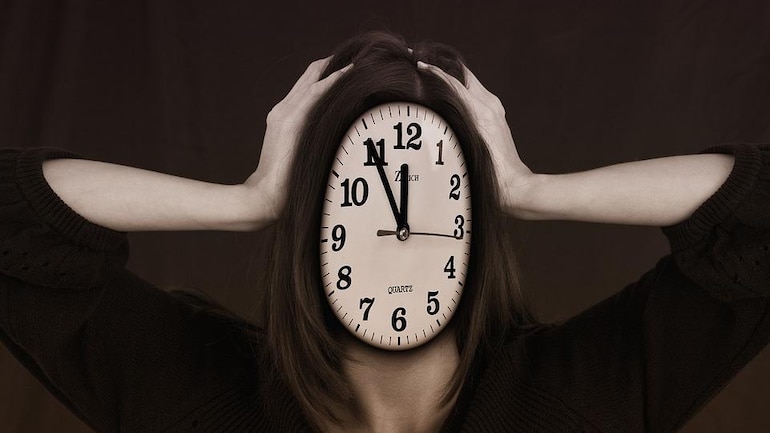
Whether we’re in a pandemic or not, exams always create a wave of anxiety. Before we talk about steps to take care of our mental health during such difficult times, let’s become aware of what causes anxiety and worry in the first place. Awareness in itself often helps reduce exam-related anxiety.
Let’s start by asking a very simple question of what an examination is. An exam is a formal assessment or a test that is given to learning about one’s level of knowledge in a particular subject. Sounds simple, doesn’t it?
However, somewhere it got complex when it started to become a test of one’s pride, parents’ pride or one’s self-esteem and whatnot.
The immense pressure and fear for students come more from these external factors rather than writing the exam in itself! From my experience, I have understood that students worry more about how their parents, teachers or peers perceive them if they scored low marks rather than how much they have learned about the subject.
Further, due to the value that “marks” hold in the eyes of society, it began to define a student. Students have started getting categorized based on their marks as “good” or “average” or as” failures”.
When labels begin to be involved, it increases the pressure on any student. No one wants to be associated with a negative label. Furthermore, expectations from parents and teachers also add on the already existing pressure.
Hence, before even writing an exam, just the possibility of these unpleasant consequences looms as a mountain of anxiety to conquer. The fear and anxiety inevitably decrease concentration and increases the difficulty in grasping concepts while learning, which adds to the anxiety, and this emotional cycle continues.
Mental health, exam season, tips for mental health, how to take care of your mental health
So how can one manage all these fears and insecurities and remain calm and composed during this exam season? Here are a few tips to take care of your mental health.

1. Understanding the cause of anxiety

Whether it is a reason mentioned in this article or something else, understand a lot of those external factors are beyond one’s control.
It is important to be aware of what we tell ourselves in such cases, cause often these are factors that will only drain our energy and make us feel helpless the more we strive to set it right. For eg, other’s perceptions/opinions about us.
Hence, it’s best to focus on what is under our control i.e., 1) gaining as much knowledge about the subject 2) being able to reproduce the same effect. Not as scary as the rest of the factors isn’t it?
2. Involve a group
Forming a study group with like-minded friends can be a great way to get through the exams! Often parents/ teachers are concerned that group study could be a source of distraction.
However, it can have its own advantages, provided the group is mutually interested and motivated to crack the preparations-
1) the group can motivate one another to reach their targets
2) It makes the environment less stressful as we are less likely to be lost in our worries when working with others. We tend to concentrate more on the task at hand.

3. Add some “Me-time”

As they say ‘All work and no play makes Jack a dull boy’. Thus, allocate some time where you can unwind and stay away from your studies. Indulge in any activity that gives you peace and happiness.
It could be something even as simple as a nice hot water bath. Indulging in a sport can further activate our brain and can reduce our stress levels too.
4. Share your stories with a friend
Having a good support system always helps in keeping us sane. When we speak about our anxieties or insecurities with a friend, we feel understood and accepted.
Furthermore, understanding that we are not alone in this difficulty also gives us a sense of belonging which adds to one’s fighting spirit.
5. Talk to your parents openly
Every parent only means well for their children. But sometimes, how they express that can seem like pressure to some children.
Having an open conversation can bring about an understanding of expectations from both sides and a middle ground can be achieved.


Birthday girl Deepika Padukone spotted on brunch date with Ranveer Singh. See pictures here

Deepika Padukone and Ranveer Singh went out on her birthday.

STORY HIGHLIGHTS

  • Actor couple Ranveer Singh and Deepika Padukone were spotted out on a brunch date on Tuesday, on the occasion of Deepika’s birthday. They were twinning in tracksuits, pictures shared online reveal.
  • While Deepika wore a brown ensemble with sunglasses, Ranveer was spotted in a grey tracksuit. Both made sure to wear masks.
https://www.instagram.com/p/CJqLlrFAFxW/?utm_source=ig_web_copy_link

https://www.instagram.com/p/CJqLcCpgctr/?utm_source=ig_web_copy_link

https://www.instagram.com/p/CJqIrk6AB-s/?utm_source=ig_web_copy_link

  • The couple recently returned from a quick New Year’s trip to Ranthambore. Sharing a collection of images and videos from the vacation, Deepika posted on Instagram, “What my New Years looked like…”
  • In the comments section of her post, Deepika advised her over 50 million Instagram followers to take a break. “An observation or compliment I receive most often from my family and friends closest to me is how I haven’t changed one bit personally despite everything I have achieved professionally. Little do they know what a huge role they have to play in it! For me, uninterrupted quality time with family and friends is absolutely essential. It keeps me grounded and rooted.It’s a reminder of where I’ve come from and everything it has taken me to get to where I am. So take that much needed break,” she wrote.
  • Deepika and Ranveer were joined in Ranthambore by her parents Prakash and Ujjala Padukone, and sister Anisha. Also in Ranthambore were Ranbir Kapoor and Alia Bhatt with their families.
  • Alia wished Deepika a happy birthday in a social media post, and wrote, “Happy Birthday DP! You are and will always be an inspiration of beauty & strength inside out! & here’s to many many more random adventures together… Love you!!!”

India likely to administer first COVID-19 vaccine on January 13

KEY STORY

  • New Delhi: India is likely to administer its first COVID-19 vaccine on January 13, suggested reports on Tuesday. Meanwhile, the Ministry of Health and Family Welfare announced that the overall burden on the country’s health delivery has declined significantly on account of coronavirus.

india coronavirus news

  • According to the reported feedback based on the dry-run, the government said it is ready to introduce COVID-19 vaccine within 10 days from date of emergency use authorisation.
  • It should be noted that Serum Institute of India’s (SII) Covidshield was approved for emergency use on January 3 while the similar permission was given to Bharat Biotech’s Covaxin a day later.
    Meanwhile, during a Health Ministry’s press briefing in New Delhi, Secretary Rajesh Bhushan informed that there are four primary vaccine stores called GMSD located in Karnal, Mumbai, Chennai and Kolkata and there are a total of 37 vaccine stores in the country. They store vaccines in bulk and distribute further, he added.

“The number of vaccines stored and temperature trackers in the facility are monitored digitally. We have this facility for over a decade in the country,” said Union Health Secretary Rajesh Bhushan
He also confirmed that healthcare workers and frontline workers would not need to register themselves as a beneficiary of COVID-19 vaccine as their data is bulk database that has been populated on the Co-WIN vaccine delivery management system in a bulk manner.

CONCLUSION

Talking about the coronavirus situation in the country, the Union Health Ministry’s Secretary stated that the number of active cases in the country has fallen below the 2.5 lakh-mark and continues to decline. He also said that the positivity rate currently stands at just 1.97 per cent.
Around 44 per cent of the total active cases in the country have moderate or severe symptoms and are being treated in hospitals. While the remaining 56 per cent cases are very mild or asymptomatic and are in home isolation.
“The overall burden on health delivery structure has declined appreciably on account of COVID-19 in India,” added the Health Secretary.