Amphan now a ‘super cyclone’; landfall on West Bengal coast on Wednesday evening

Cyclone Amphan will make landfall on West Bengal coast on May 20 evening as extremely severe cyclonic storm with wind speeds up to 195 kmph, said Centre on Monday.

“Amphan is now a ‘super cyclone’ and it is a serious issue, the only other cyclone of this magnitude was in Odisha in 1999 and it was very deadly,” said National Disaster Response Force DG S.N. Pradhan.

“When ‘Amphan’ makes landfall on May 20 it will be an extremely severe cyclonic storm,” aid Pradhan.

“Cyclone ‘Amphan’ will cause heavy to extremely heavy rainfall in coastal districts of West Bengal. West Bengal districts of East Medinipur, South and North 24 Parganas, Howrah, Hooghly, Kolkata are likely to be worst affected by cyclone,” said government.

The cyclonic storm is also likely to impact North Odisha coastal districts including Jagatsinghpur, Kendrapada, Bhadrak and Balasore districts.

Cyclone ‘Amphan’ has potential to cause extensive damage in coastal districts of West Bengal: govt

The India Meteorological Department has warned of storm surge of 4-6 meter height above astronomical tide and will inundate low lying coastal areas of WB during landfall.


PM Narendra Modi on Monday chaired a high-level meeting today to review the response measures against cyclone ‘Amphan’ developing in the Bay of Bengal. PM took full stock of the situation and reviewed the response preparedness as well as the evacuation plan presented by the NDRF.

“During the presentation of the response plan, DG NDRF (SN Pradhan) informed that 25 NDRF teams have been deployed on the ground while 12 others are ready in reserve. Twenty-four other NDRF teams are also on standby in different parts of the country,” the statement said.

The prime minister said he “reviewed the preparedness regarding the situation due to cyclone ‘Amphan’. The response measures as well as evacuation plans were discussed.”


Explained: What changes for you in the latest phase of lockdown 4.0

Lockdown 4.0 Guidelines: The Centre on Sunday (May 17) extended the lockdown for two more weeks till May 31, but gave some major relaxations, permitting almost all economic activities and significant public movement. What does the new phase of lockdown mean for the common public, the economy, and the state governments struggling for revenue?

Most things. From public transport to markets, everything has been opened in non-containment zones. All factories, manufacturing units, supply lines and offices can now function without any restrictions. Buses and private vehicles can now move about freely without any special conditions.

The government has basically obliterated the idea of zones (unless you are in a containment zone) for common people. Earlier there were graded relaxations in Red, Green, and Orange zones, with the maximum restrictions applying in the Red zones.

Now there are no Zone-wise restrictions or relaxations. Everything is applicable across the country.

The Centre’s guidelines have banned certain specific activities across the country. These include air travel — both domestic and international — and Metro rail services. The limited availability of long-distance trains for migrant workers and common public will continue.

Schools, colleges, and other educational institutions will remain closed, as would be hotels, cinema halls, malls, swimming pools and gyms.

You cannot yet go to a dine-in restaurant, but you can order a home delivery.

All social, political, and religious functions and gatherings will continue to be barred, and places of worship will remain shut.

If you have been missing sport on television, you may get lucky soon. Sports complexes and stadia have been permitted to open — but without spectators. However, don’t expect to see IPL matches on TV — that’s probably not happening, and here’s why .

But your neighbourhood parks have been allowed to open, and you can again go for your morning walks.

Please note this: The guidelines have said that barring the prohibited activities (mentioned above), ‘All other activities will be permitted.’

Which means that all services, including those of barbershops, salons and spas, domestic helps, electricians, AC repair/service people, car cleaners — and just about anything you can imagine — are now permitted.

All liquor shops, including those in market complexes, will open too.

E-commerce delivery of non-essential items, which were earlier prohibited in Red zones, have now been permitted.

Cycle-rickshaws, auto-rickshaws and taxis will also be allowed.

Even the restrictions on the numbers of passengers in vehicles has been removed — and this includes buses.

Offices can run with 100% attendance — even though the government has advised ‘work from home’ to the extent possible.

Technically, yes. The government has permitted inter-state movement of all vehicles, including both buses and private cars.

However, it has put a condition that this movement would be with the consent of the states between which the travel is being undertaken. Under the Disaster Management Act, states have full right to ignore relaxations allowed by the Centre. Thus, if a state decides to continue having its borders sealed, it can do so.

So, before embarking on this journey, wait for state-specific guidelines to be issued by the states to and from which you intend to travel — as also any states through which you intend to pass on the way.

To an extent yes, but not significantly.

Given the poor state of inter-state bus transport in many states, the major mode of transportation for migrants has always been the Railways. And rail services continue to be restricted, and buses are unlikely to fill in the huge gap between demand and supply.

This gap has been widened by the massive influx of migrants moving from the more industrialised states to states such as UP, Bihar, Jharkhand, Odisha, West Bengal, Madhya Pradesh and Rajasthan. Bihar, for example, has practically no state transport.

‘There are several other issues on the ground other than not having enough buses to carry migrants. Drivers and helpers are scared of contracting Covid-19. They just abscond on some or the other pretext. On multiple occasions we have tried to put migrants on buses during the present crisis, but have been unable to match the supply given the huge demand. So we have had to allow trucks to carry them despite the journey being very dangerous,’ said a senior official from the UP government.

Also, some states are reluctant to receive migrants given the apprehensions of a surge in Covid-19 cases after their arrival — and this has only added to the problem.

This condition was first inserted in the guidelines issued on May 1, and there has been no cogent explanation from the Ministry of Home Affairs (MHA) for this ever since. Indeed, if the whole idea of the lockdown is to avoid gatherings and ensure social distancing, that is needed more during the day than at night, when public presence outdoors thins out anyway.

An MHA official suggested this has been done on the suggestion of states.

However, a few officials from different states that The Indian Express spoke to, said they had not made any such suggestions. Delhi had, in fact, suggested that the night curfew be limited to 9 pm to 5 am.

‘Perhaps the Centre is wary of people gathering for parties at night where social distancing may be difficult to maintain. Also the availability of police resources is less during the night and largescale vigilance is not possible,’ said a senior official from UP government.

Police officers from states across Delhi, UP and Maharashtra expressed surprise that the Centre should allow offices and factories to function normally, but also lay down that the curfew would begin at 7 pm.

‘It could be a logistical nightmare for the police. At this time of the year, it’s not even fully dark by 7 pm in large parts of India. Will those who attend office, be able to finish work and reach home by 7 pm? The police will begin setting up barricades beginning 6.30 pm, and there could be chaos on the roads. It could also lead to rent-seeking on the ground,’ said a senior police officer.

States had been demanding the freedom to notify smaller Zones rather than entire districts or municipal areas, so that they get more elbow room to kickstart the economy. However, there are no restrictions in any Zone barring containment zones now — and to that extent, this devolution of power to the states is immaterial.

States such as Delhi had asked for freedom to notify wards as Red Zones instead of an entire district or municipal area, as the latter engulfed the entire state. As all of Delhi was in Red, the state government had no room to open the economy in any meaningful way.

The current devolution of power could have been beneficial to states during the last lockdown, when there were severe restrictions in Red Zones.

However, it would still be beneficial to states from the healthcare perspective — states can now concentrate resources on surveillance, contact tracing, testing and treatment in smaller zones notified by them.

Dedicated TV channel for each class in schools: Finance Minister

By Express News Service

NEW DELHI: Union Finance Minister Nirmala Sitharaman pushed for promotion of e-learning in a post Covid-19 scenario and announced that there will be dedicated TV channels for each school class and permission will be granted to 100 top universities to offer online degrees and courses.

The minister, announcing the final and fifth tranche of the economic stimulus package across various sectors, said that the government will launch PM e-Vidya, a programme for multi-mode access to digital education, which will include the existing Diskha portal for online content.

There will be one earmarked TV channel each for classes 1 to XII, exclusive use of radio and community radio, and online degree programmes. The dedicated TV channels, Swayam Prabha, will telecast recorded and live programmes for six hours on all working days with three repeat telecasts, making these 24×7 channels. She claimed that educational institutions are using technology in a big way and the government is already airing school education content through three TV channels.

“Another 12 channels are to be added. One class, one channel will also be part of this. Then there will be extensive use of radio community radio (for education purposes),” she announced.

Sitharman added that the Union HRD ministry has allowed 100 top universities in the country, chosen on the basis of ranking in the National Institutional ranking Framework, to start online degree courses from May 30 ‘automatically’.

Centre planned 2.5% of GDP on health by 2025
The Centre had set a target of spending 2.5% of the GDP on health by 2025 but the year on year increase in the sector has been too low.

New mission for early literacy soon
The Central government will also launch a new mission for early literacy and numeracy skills to overcome the learning crisis at the early school stage.

Coronavirus lockdown: Congress arranges 16 buses from Karnataka to Kerala

DHNS,

Congress has so far arranged 16 bus services from Karnataka to Kerala for Malayalis stranded in Karnataka to return home.

Kerala Opposition leader Ramesh Chennithala said in a statement that Congress leaders of Karnataka led by D K Shivakumar initiated arranging the buses on rent from the state transport corporation. In order to ensure social distancing, only 27 passengers were allowed in each bus and the service was offered free.

The buses started operating from May 11. Only seven buses were allowed permission to enter Kerala and hence the passengers in ten services were dropped at the border as informed earlier, said Ramesh.

LOCKDOWN 4.0: FULL LIST OF WHAT’S ALLOWED, WHAT’S PROHIBITED TILL MAY 31 AS MHA RELEASES NEW GUIDELINES

The Centre on Sunday extended the nationwide lockdown for two more weeks to contain the spread of COVID-19 and has issued a fresh set of guidelines to be followed for the next phase between May 18 and May 31.

The new phase comes with considerable set of relaxations outside containment zones as the ministry of home affairs (MHA) has permitted barber shops, salons and shopping complexes to open, and allowed interstate movement of passenger cars and buses.

Flights services and metro train services, however, will continue to remain prohobited despite demands to reopen. The night curfew will also stay in effect, which means that all non-essential travel will remain prohibited between 7pm and 7am.

What’s Prohibited

The following activities shall continue to remain prohibited throughout the country:

All domestic and international air travel of passengers, except for domestic medical services, domestic air ambulance and for security purposes or purposes as permitted by MHA.

Metro rail services.

Schools, colleges, educational/ training/ coaching institutions etc. will remain closed. Online/ distance learning shall continue to be permitted and shall be encouraged.

Hotels, restaurants and other hospitality services, except those meant for housing health/ police/ Government officials/ healthcare workers/ stranded persons including tourists and for quarantine facilities; and running of canteens at bus depots, railway stations and airports. Restaurants shall be permitted to operate kitchens for home delivery of food items.

All cinema halls, shopping malls, gymnasiums, swimming pools, entertainment parks, theatres, bars and auditoriums, assembly halls and similar places. Sports complexes and stadia will be permitted to open; however, spectators will not be allowed.

All social/ political/ sports/ entertainment/ academic/ cultural/ religious functions/ other gatherings and large congregations.

All religious places/ places of worship shall be closed for public. Religious congregations are strictly prohibited.

Activities Permitted Except in Containment Zones:

Inter-State movement of passenger vehicles and buses, with mutual consent of the State(s)/ UT(s) involved.

Intra-State movement of passenger vehicles and buses, as decided by the States and UTs.

Containment, Buffer, Red, Green and Orange Zones

The delineation of Red, Green and Orange Zones will be decided by the respective State and UT Governments, after taking into consideration the parameters shared by Ministry of Health & Family Welfare (MoHFW), Government of India (Gol).

Within the Red and Orange Zones, Containment Zones and Buffer Zones will be demarcated by the District authorities, after taking into consideration the guidelines of MoHFW.

In the Containment Zones, only essential activities shall be allowed. There shall be strict perimeter control to ensure that there is no movement of people in or out of these zones, except for medical emergencies and for maintaining supply of essential goods and services. Guidelines of MoHFW shall be taken into consideration for the above purpose.

In the Containment Zones, there shall be intensive contact tracing, house-to- house surveillance, and other clinical interventions, as required.

Night curfew

The movement of individuals shall remain strictly prohibited between 7.00 pm to 7.00 am, except for essential activities. Local authorities shall issue orders, in the entire area of their jurisdiction, under appropriate provisions of law, such as prohibitory orders [Curfew] under Section 144 of CrPC, and ensure strict compliance.

Protection of vulnerable persons

Persons above 65 years of age, persons with co-morbidities, pregnant women, and children below the age of 10 years, shall stay at home, except for essential and health purposes.

All other activities will be permitted, except those which are specifically prohibited.

However, in Containment Zones, only essential activities shall be allowed, as mentioned in paragraph 5 (iii) above.

Further, States/ UTs, based on their assessment of the situation, may prohibit certain other activities in the various zones, or impose such restrictions as deemed necessary.

Seven steps for last tranche of Rs 20 lakh crore package: FM Nirmala Sitharaman

FM Nirmala Sitharaman Press Conference Live Updates: Finance Minister Nirmala Sitharaman is announcing the fifth and last tranche of the Rs 20-lakh crore Covid-19 packages as part of the “Atmanirbhar Bharat Abhiyan” (Self-reliant India campaign).

On Saturday, Sitharaman unveiled the fourth set of the economic package for eight sectors — coal, minerals, defence production, civil aviation, power distribution, social infrastructure, space and atomic energy. An easing of limits on foreign direct investment in defence manufacturing, privatisation of six more airports, opening up of more airspace and allowing private sector in commercial coal mining were among key announcements made by her.

Prior to Saturday’s announcements, Sitharaman had announced relief measures for Micro, Small and Medium Enterprises (MSMEs), migrant labourers, farmers and street vendors, and the agriculture sector and allied activities. In a defining “1991 moment” for Indian agriculture, the Centre also decided to amend the Essential Commodities Act (ECA) to “deregulate” agricultural foodstuffs — including all cereals, pulses, oilseeds, onions and potatoes — and allow clamping of stock limits on these only under “very exceptional circumstances” like natural calamities and famines, which cause a “surge in prices”. A third reform announcement, complementary to the first two, was the creation of a “facilitative legal framework” for contract farming.

  • Centre provides Rs 15,000 crore to states, PPEs for health care workers
  • The government, Sitharaman said, has also taken a number of health-related steps to contain the spread of Covid-19 – Rs 15,000 crore announced for states, essential items, testing labs and kits along with rolling out of teleconsultation services, launch of Arogya Setu app and protection to health care workers with adequate PPEs.
  • Provision made for live telecast of classes for students: Nirmala Sitharaman

    On the steps taken for the education sector, the finance minister said, “The direct telecast mode use by schools will now get 12 more channels. This will also help in the rural areas. Provision has been made for live telecast of teachings. We have also tied up with private operators such as Tata Sky and DTH to air educational content.”

    Rs 3,950 crore for 2.2 crore construction workers from states: Sitharaman

    Around 2.2 crore building and construction workers received Rs 3,950 crore from the Building and Construction Workers Cess Welfare Fund distributed by states, the Finance Minister said.

What will Nirmala Sitharaman’s speech focus on today?
  • The Finance Minister will make announcements for the following sectors today: MNREGA, health (rural and urban) and education, business, de-criminalisation of Companies Act, Ease of Doing Business, Public Sector Enterprises, state govts and resources to them.


85% of train travel taken care of by Centre: Nirmala Sitharaman
  • Providing more details on the government’s efforts, the Finance Minister said, “At least 85% of the train travel costs were borned by the government. Food was also provided to the travellers. When it was possible to have workers to travel from camps to their hometowns, trains were allowed.”
  • Several benefited through Direct Benefit Transfer: Nirmala Sitharaman

    “Rs 16,394 crorehas reached 8.19 crore farmers. Twenty crore women were benefited after Rs 10,025 crore were deposited in their accounts. The building and construction workers also received their financial support due to Direct Benefit Transfer. We immediately responded to cash transfers and provided cooking gas to those in need,” Sitharaman said.

    Nirmala Sitharaman begins addressing reporters

    Quoting Prime Minister Narendra Modi while addressing reporters today, Sitharaman said: “In order to prove the resolve of the self-reliant India, land, labour, liquidity and laws, all have been emphasised in this package.” She added, “We have announced several reforms in this regard and shall continue with the same today.”


It’s ‘Comet SWAN’ Week. Here’s How You Can See The ‘Comet Of The Year’

0

Rise an hour before the Sun on Monday, look low on the northeast horizon, use binoculars, be patient.

That’s how you’ll see Comet SWAN—the probable “comet the year”—which is now visible from the northern hemisphere low in the northeast just as nautical dawn is beginning.

Monday, May 18, 2020 is probably the very best chance you’ll have to see it. However, if skies aren’t clear, the next few mornings after should also afford decent views before the fast-moving Comet SWAN disappears into the Sun’s glare.

It’s uncertain—and it only be a subtle sight—but at the time of writing it’s still the case that this week is the best time to see a comet from the northern hemisphere in years.

However, you do need to know exactly when, where and how to look because finding Comet SWAN—also known as C/2020 F8 (SWAN)—is not going to be easy for beginner stargazers.

Key dates for finding Comet SWAN

  • Monday, May 18 (before sunrise): in the constellation of Perseus, Comet SWAN is likely to be at its brightest and most visible low to the northeast (about 10º above the horizon) just as nautical dawn is starting.
  • Wednesday, May 20, 2020: Comet SWAN will be very close to the star Algol in Perseus in the pre-dawn sky.
  • Tuesday, May 26: Comet SWAN reaches perihelion (the closest it gets to the Sun) and disappears in the Sun’s glare. The view then swaps from the pre-dawn morning to the post-sunset evening sky.
  • Wednesday, June 3, 2020 (after sunset): if it’s still a going concern, Comet SWAN will pass close to Capella in Auriga in the post-sunset sky. So this is another key date to take a look.

Bengal Govt to bear travelling expenses of migrant workers: Mamata

Soumya Das,

West Bengal Chief Minister Mamata Banerjee on Saturday said on Saturday that the state government will bear the entire cost of movement of migrant workers from the state by special trains from other states.

Banerjee stated in a tweet that no migrant workers from Benga,l will be charged.

‘Saluting the toil faced by our migrant brethren, I am pleased to announce the decision of GoWB to bear the entire cost of movement for our migrant workers by special trains from other states to West Bengal. No migrant will be charged. Letter to Rly Board attached,’ tweeted Banerjee.

Chief Secretary Rajiva Sinha in a letter to Railway Board Chairman Vinod Kumar Yadav stated that the ‘entire cost’ of movement of migrant workers of the state by special trains will be borne by the state government.

‘Instructions may accordingly be issued to the concerned Railway officials that no costs may be claimed from those boarding these Shramik Special Trains, destined for West Bengal, at the station origin,’ stated Sinha.

Later in the day, the state’s Home Department stated that it will provide compensation of Rs. 2 lakh per head to the next of kin of migrant workers’ from Bengal’s Purulia district who died in the road accident in Uttar Pradesh’s Auraiya district.

‘GOWB offers its condolences over the unfortunate death of 3/4 persons today in Auraiya district in UP. They died in UP, on their way home in Purulia.Compensation@ Rs 2 lakh per head is reaching next of the kin here asap,’ tweeted the Home Department.

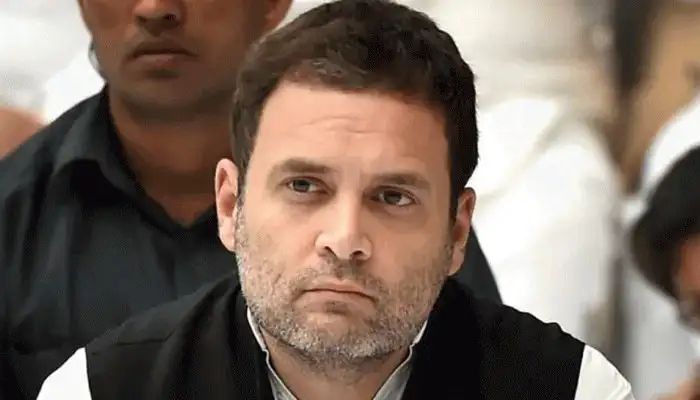
People don’t need loan, they need money: Rahul Gandhi urges Centre to rethink Rs 20 lakh crore package

New Delhi: Criticising the Narendra Modi-government’s self-reliance package announced recently, Congress leader Rahul Gandhi on Saturday said farmers and migrant labourers need cash and not loans and asked the Prime Minister to reconsider the COVID-19 economic stimulus package.

He said migrant workers who are walking home with an empty stomach, the farmers, small businessmen and other such people don’t need loans but money. “Today our people need money. PM should reconsider this package. Modi ji should think about direct cash transfer, 200 working days under MNREGA, money for farmers etc.

because all of them are the future of India,” he said while interacting with journalists of regional media via video conferencing.

He said “the money is not being given for the fear of a decline in ratings. It is being said that if the deficit is increased today, agencies will reduce the ratings of India.”

The former Congress president said that he was trying to put pressure on the government for generating demand by putting money into the accounts of the poor and vulnerable sections of society. He said he had warned the government in February but there is no point talking about it now. “It is time to think of a solution for the upcoming potential economic storm,” he said during the interaction.

Gandhi said a ‘storm’ was brewing on the economic front that will cause damage and hurt many. “The storm has not come yet, it is coming and will cause big economic damage and hurt many,” he said.

He also said that it is important to lift the lockdown intelligently without sacrificing the old and vulnerable population to the disease.

“We hear that the central government is not giving as much money to the states as they should. I think the states should be supported and they should fight this battle. Maharashtra is the center of India’s economy and needs to be supported. Rather, the government should support all states adequately. The work of the center should be of management and the work of the states – to fight the coronavirus,” he stated.

Coronavirus Lockdown: 24 Migrant Labourers Killed as Truck Collides, Over 30 Injured

New Delhi: At least 24 labourers were killed and more than 30 were injured after the truck they were travelling in collided with another in Auraiya district of Uttar Pradesh earlier this morning. The workers were coming from Rajasthan. The incident took place at around 3:30 AM on the national highway at Mihauli under Kotwali police circle.

‘The incident took place at around 3:30 AM. 23 people have died and around 15-20 have suffered injuries. Most of them are Bihar, Jharkhand and West Bengal’, said Abhishek Singh, DM Auraiya.

UP CM Yogi Adityanath has taken note of the unfortunate incident and has expressed his deepest condolences to the families of the labourers who lost their lives. ‘Chief Minister has also directed that all the injured be provided medical care immediately and the Commissioner and IG Kanpur to visit the site and give the report on the cause of the accident immediately’, said UP Additional Chief Secretary (Home) Awanish Awasthi.

Reacting over the mishap, Samajwadi Party chief Akhilesh Yadav termed the death of 24 migrant labourersas ‘indescribable’. He stated that such accidents are ‘not deaths, but murders’.

‘Indescribable sadness on the death of over 24 poor migrant labourers in UP’s Auraiya. Prayers for the injured persons. Let’s see till when the silence maintained by heartless people and their supporters justify this negligence… despite knowing everything, and seeing everything. Such accidents are not deaths, but murder,’ Yadav said in a tweet in Hindi.

BSP chief Mayawati asked CM Yogi to take action against the officers who didn’t fulfill their responsibilities.

‘Families of those who were killed or injured in this accident should be provided financial assistance. I express my condolences to the bereaved families’, the BSP supremo said.

Congress leader Rahul Gandhi, Union Defence Minister Rajnath Singh and other leaders also expressed grief over the incident.

Amid lockdown, mishaps involving labourers who are walking home have been reported from across the country.

Yesterday, two persons, including a woman, were killed and 14 others injured when a mini-truck in which they were travelling, was hit by another vehicle in the Girthan village in UP. There were 46 migrant workers in the mini-truck and were returning from Mumbai.

In Maharashtra’s Aurangabad, 16 migrant workers were killed last week, after a cargo train ran over them while they were sleeping on the tracks.

On May 14, eight labourers were killed and over 54 suffered injuries after the truck they were travelling in was hit by a speeding bus in Madhya Pradesh’s Guna.

Prior to that incident, six migrant workers were run over by a bus on a highway in Uttar Pradesh.