KEY STORY
-
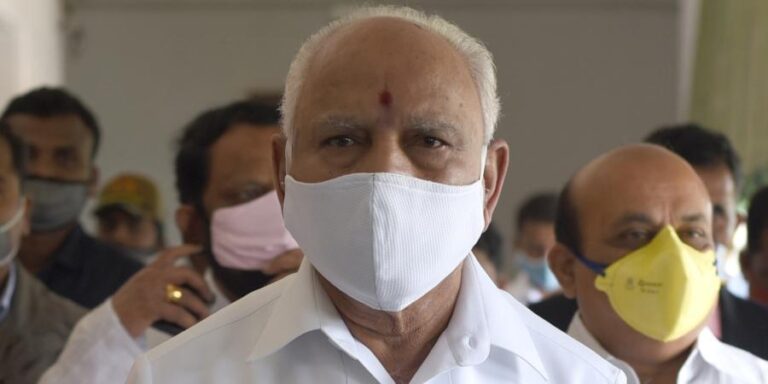
A meeting of Bengaluru MLAs, MLCs, MPs and ministers of all parties to discuss the Covid-19 situation in the State capital ended in uncertainty, after the government decided to announce new guidelines only post an all-party virtual meeting scheduled to take place on Tuesday. Governor Vajubhai Vala will head the virtual meeting, where leaders of opposition parties will also participate.
Revenue Minister R Ashoka, who chaired the meeting, as well as Chief Minister BS Yediyurappa who joined via video conference, said all suggestions had been noted and will be considered. Chief Minister BS Yediyurappa, who is hospitalised due to Covid reinfection, joined the meeting via video conference. 
-
The three-hour meeting on Monday witnessed elected representatives from Bengaluru highlighting issues plaguing citizens at a time cases are surging by the thousands. Issues of extending night curfew from 8pm, imposing Section 144 to contain gatherings, identifying additional places for cremation etc, were discussed.
-
Opposition legislators pulled up the government over the alleged shortage of beds, ventilators, medicines as well as oxygen supply. “There is no shortage of oxygen in the State but hospitals that don’t have storage facility and are dependent on cylinders are facing difficulties with supplies. We have appointed nodal officers to ensure cylinders are supplied thrice a day to such hospitals so there is no shortage,” said Ashoka.
Govt must help poor if it plans lockdown
-
 While there was consensus that lockdown is not an option, measures to cut down gatherings were discussed. “We did not oppose the government on any front but suggested that if it intends to go ahead with a clampdown, authorities must transfer Rs 25,000 to accounts of the poor and vulnerable so they don’t starve,” said Byatarayanapura MLA Krishna Byregowda.
-
Following issues raised by MLAs, the government has assured that monitoring those in home isolation, hand stamping, assigning of BU numbers for quicker access to government quota beds will be enhanced by allocating more manpower and resources. “MLAs have raised issues of medicines like Remdesivir being black marketed.
-
Our police force has already arrested the people involved. Pharmacists involved in the racket will also be arrested,” Ashoka said. Responding to allegations of bed shortage, Ashoka said that private hospitals have set aside only 10% of the total beds marked under government quota.
-
“We have 14% more beds than last time but private hospitals have handed over only 10% of beds under government quota so far. In the next one week, that will be increased to 60% and eventually to 100%,” Ashoka added.
-
Following reports of ambulances lining up outside crematoriums, the government has decided to identify open grounds and convert them into makeshift firewood crematoriums.
-
“We have also requested Cooperation Minister ST Somashekhar to help set up staggered, temporary wholesale markets in the city outskirts or in Anekal and on Tumakuru Road like last year,” Ashoka said.
KEY STORY
-
Is the second wave of COVID-19 impacting children and young adults more? Three out of four top pediatricians that ET Now spoke to say they are definitely seeing more cases of children with Covid-19 now as compared to last year.
-
Meanwhile, there is no official data out from the government on incidents of Covid-19 among children or any severity of symptoms during the second wave.
-
The Indian Council of Medical Research or ICMR says there is no evidence of the young being at greater risk in the second wave. Nevertheless, anecdotes of more children testing positive and more with severe symptoms abound.
-
“Kids are presenting with slightly varied symptoms”, says Dr. Anupam Sibal of Apollo hospitals while describing the second wave. Dr. Sibal adds that children are showing diarrhea and stomach apart from cough, cold, and fever this time around.
-
Dr. Tushar Maniar of Nanavati Hospital says kids below the age of ten years are showing fewer Covid symptoms. Those above ten typically show fever for two to three days that is managed with paracetamol. Among the symptoms to watch out that doctors flag off are:
-
Fever above 102 degrees F
-
Fast breathing
-
Passing urine less than six times a day
-
Child who is not eating adequately
-
Rashes
-
Changes in coughing patterns if already coughing
-
Irritability
-
New onset of headaches
Doctors also urge children be tested if a family member is Covid positive and not wait for symptoms to appear. Pro-active testing becomes even more important if the child has co-morbidities.
-
So why are we seeing more cases this time around? While there is no clear data on a higher incidence of Covid-19 in children in the second wave yet, medical experts point out a larger volume of overall cases leading to a higher proportion of children falling sick proportionally.
-
Easier and more widely acceptable testing and schools and play meet that children frequented before restrictions in some parts of the country.
CONCLUSION
-
Even with this, the numbers could be under-reported says Dr. Vinit Samdani of Breach Candy hospital. “For every one child testing positive there are two at home suffering”.
-
He however assures that 98% of cases with kids being Covid positive settle down in 36 hours and show only mild grade fever and running noses. Nevertheless, it is important to test on the slightest symptoms.
KEY STORY
-
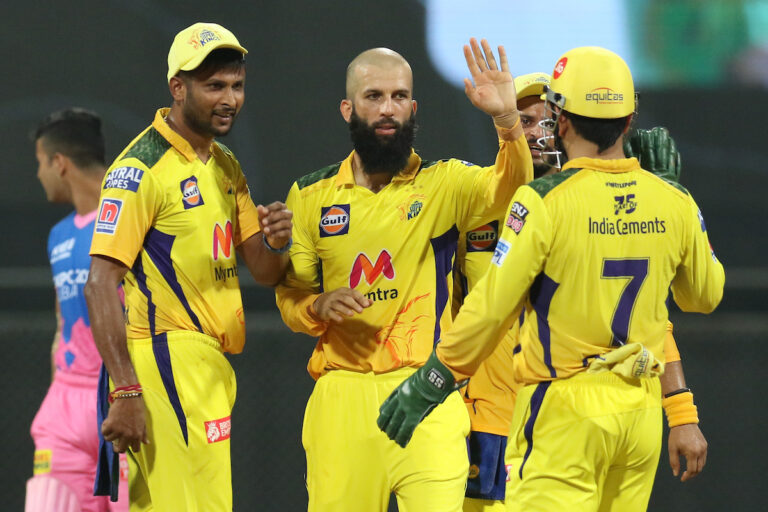
Moeen Ali’s all-round heroics powered Chennai Super Kings (CSK) to a thumping 45-run win over Rajasthan Royals (RR) in the ongoing Indian Premier League (IPL) 2021 on Monday. CSK recorded their second win on the trot to move to the second spot on the points table behind top-placed Royal Challengers Bangalore (RCB), who have three wins in a row in their first three games.
-
After scoring a crucial 26 off 20 balls during CSK’s innings, Moeen spun his magic around the Rajasthan Royals batting line-up as he bowled a game-changing spell of 3/7 in his three overs. The England spin all-rounder opened his account with the wicket of David Miller in his first over before removing both Riyan Parag (3) and Chris Morris (0) cheaply to turn the game completely in CSK’s favour.
-
Asked to chase down a challenging target of 189 runs at the Wankhede Stadium in Mumbai, Rajasthan Royals got off to a decent start with a 30-run stand between openers Jos Buttler (49) and Manan Vohra (13). Buttler kept going despite Sanju Samson (1) walking back cheaply as he put on a 42-run stand with Shivam Dube (17).
-
However, RR lost the plot after Ravindra Jadeja got rid of both Buttler and Dube in the same over and pulled CSK back into the contest. After Jadeja’s twin strikes, it was Moeen who further dented RR’s chances with his three-wicket haul as the spin duo starred with the ball for the Yellow Army.
-
After the likes of Samson, Morris and Miller failed to deliver, Rahul Tewatia (20) and Jaydev Unadkat tried to stage a fightback but their efforts were not enough to take RR over the line in the 189-run chase. Jadeja was once again excellent on the field and plucked as many as four catches to produce another electric fielding performance.
CONCLUSION
-
Earlier, RR skipper Samson had won the toss and opted to bowl first at the Wankhede. However, his decision backfired for his team as CSK posted a strong total on the board and bowled well to defend in without breaking a sweat.
-
Ruturaj Gaikwad’s struggles continued but Faf du Plessis managed to give CSK a solid start with a quickfire 33 off 17 balls. Moeen (26), Ambati Rayudu (27), and Dwayne Bravo’s cameo of 8-ball 20 helped the Yellow Army finish with 188 runs on the board which in the end, proved to be a match-winning total for the three-time champions.

KEY STORY
-
As all states across India brace to flatten the second COVID-19 wave, here is a list of the latest and final Covid guidelines of all states: Here’s the latest rules of entry, travel, lockdown, curfew across India.
Delhi: Delhi Chief Minister Arvind Kejriwal announced a six-day lockdown from 10 pm on Monday till 5 am on April 26. Metro services during this period can be availed only by the exempted category of people as per the latest govt. order on the production of the valid IDs, the circular read. During the lockdown period, travel will be allowed only up to 50 per cent seating capacity in the Metro. In addition, no standing passenger shall be allowed during the travel.
Kerala: Kerala government imposes a night curfew from April 20. Kerala government has enforced night curfew (9 pm to 6 am) from April 20 onwards as part of strengthening the Covid-19 protocols after daily cases cross 18,000 on Sunday.
Uttar Pradesh: Allahabad HC directs UP govt to put Prayagraj, Lucknow, Varanasi, Kanpur Nagar, Gorakhpur under lockdown. The Allahabad High Court has directed the Uttar Pradesh government to close all establishments barring essential services till April 26. All establishments (government or private) except financial institutions and financial departments, medical and health services, industrial and scientific establishments, essential services including municipal functions, and public transport, shall remain closed till 26th April 2021. The judiciary will, however, function at its own discretion. According to news agency ANI, workers the respective district administrations will screen migrants workers. If they are showing COVID-19 symptoms but are not infected, then the migrants need to quarantine at home for 14 days. While those asymptomatic are required to remain in home isolation for seven days. UP government has asked respective district administrations to prepare a list of all migrant workers with their addresses and mobile numbers. The officials are required to get signatures of workers against their details.
West Bengal: WB Chief Minister Mamata Banerjee said in a rally that she has requested EC to hold the next three phases of state Assembly polls on a single day. If not one day, conduct it in two days and save one day. Banerjee stressed that night curfew may not be a solution in Bengal, where “political pollution” needs to be checked first.
Chhattisgarh: Amid a rise in the number of COVID-19 cases in Chattisgarh, a night curfew has been imposed in Sukma from April 15 and will continue till April 30. The curfew will be in effect from midnight to 7 am. Chhattisgarh Chief Minister Bhupesh Baghel held a review meeting with state officials to ramp up testing in rural areas as now the CVID-19 numbers are on the rise there. Chhattisgarh has also now mandated Covid testing for anyone entering the state as the number of active cases in the province has reached 1,28,019. Maharashtra and Uttar Pradesh, and Chhattisgarh now have more than a hundred thousand active cases each.
Karnataka: One of the worst-hit states with the ongoing wave of COVID-19,Karanata State Government has introduced another rule. Karnataka has imposed a night and weekend curfew on the entire state. The night curfew will be in force from April 21 to May 4, from 9 pm to 6 am.
-
A weekend curfew shall also be enforced from April 23 at 9 pm to Monday at 6 am. Schools, colleges, educational, training and coaching institutions etc. will remain closed. Online learning and distance education shall continue.
-
All cinema halls, shopping malls, gymnasiums. yoga centres, spas, sports complexes, stadia, swimming pools, entertainment and amusement parks, theatres, bars and auditoriums, assembly halls and similar places will remain closed till May 4. Restaurants and eateries will be permitted to operate and only take home (parcel) is allowed.
-
All social, political, sports, entertainment, academic, cultural, religious gatherings, other gatherings and large congregations are also prohibited. Stadiums and playgrounds are allowed for organizing sports events and practising purposes, but without spectators.
-
All religious places/ places of worship shall be closed for the public. However, all personnel engaged in services at the place of worship shall continue to perform their rituals and duties without involving any visitors.
-
Essential services like shops, including ration shops (PDS), dealing with food, groceries, fruits and vegetables, dairy and milk booths. meat and fish, animal fodder are permitted.
-
Wholesale vegetable markets, fruit markets and flower markets shall be permitted to operate from open spaces or playgrounds strictly adhering to COVID-19 appropriate behavior. The shifting process shall be completed by April 22.
-
Lodging hotels will be open for guests as well. Standalone liquor shops and outlets, bars and restaurants are permitted for takeaway only.
-
All food processing and related industries are permitted to operate. Banks, insurance offices and ATMs are permitted. Print and electronic media permitted.
-
Delivery via e-commerce websites will also be permitted.
Maharashtra: As part of its endeavour to prevent non-essential movement with the aim to contain the spread of coronavirus, the Mumbai Police has introduced three colours-based sticker system. The police will issue these red, green, and yellow stickers to essential vehicles at checkpoints, toll booths, local police stations, etc. free of cost to vehicle owners so as to ensure strict implementation of the system.

KEY STORY
-
The second wave of the novel coronavirus in India is ‘less severe’ than the previous one, the director-general of ICMR – the country’s top medical body – said on Monday, adding that there is no change in the death rate between both waves.
-
Balram Bhargava told a virtual press briefing that a higher requirement of oxygen was found in the second wave.
-
“If you see the symptoms, severity is very less this time. In this wave, we have witnessed more cases of breathlessness while in the last wave, symptoms like dry cough, joint pain, headaches were more… Very clearly, we find that the symptoms are much less.
-
As I mentioned that the symptoms of joint ache, fatigue, muscle ache, loss of smell or sore throat are much less compared to the first wave. However, shortness of breath is higher in this wave,” he said.
-
Bhargava further said that only a marginally high proportion of COVID-19 patients are of younger age and that the average age of patients in the first wave was 50 years while in this wave, it is 49 years.
-
“More than 70 per cent were above or equal to 40 years of age. A higher number of asymptomatic individuals got admitted this year, than a higher proportion of patients admitted with breathlessness,” he said.
-
Meanwhile, VK Paul, member (Health) of Niti Aayog said that people under 30 years of age constitute 32 per cent of positive cases in the second wave.
-
“In the last pandemic wave, people under 30 years of age constituted 31% positive cases. It’s 32% this year. People, between 30-45 years of age, testing positive remain same at 21% as was last year. There’s no excess rate of young people testing positive,” Paul said.
‘RT-PCR test gold standard’
-
Dismissing apprehensions over the accuracy of the RT-PCR test, the ICMR chief underlined that it measures two or more genes in the body and there is no chance of missing the detection of a COVID-19 mutant through the test.
-
“I would like to emphasise that the RT-PCR test that we are utilising, they measure two or more genes and they never miss a test… We have always used two or more genes for testing and therefore missing is absolutely impossible… It can find any kind of mutant because it measures two or more genes at different sites,” he told ANI.
Possible reasons behind surge in COVID cases
-
Bhargava said that a “tremendous amount of laxity” regarding the pandemic and many instances of COVID-inappropriate behaviour and various unidentified mutation are the possible reasons for the spike in coronavirus cases.
-
“We have had tremendous amount of laxity, COVID19 inappropriate behaviour and various unidentified mutation, of them some are of concern —UK, Brazilian and South African variants, which have been demonstrated to have higher transmissibility,” he said.
-
He also said that the rate of transmissibility of the ‘double mutant’ found in India has not yet been established. Three main variants from the United Kingdom, South Africa and Brazil have already been found in India.
Remdesivir not a magic bullet
-
Meanwhile, AIIMS Director Dr Randeep Guleria spoke during the press briefing on the Remdesivir issue and said that the anti-viral drug is not a magic bullet. According to him, the drug could in fact cause harm if given too early or too late.
-
“In last one year of COVID management, we have learnt that two things are most important – drugs and timing of drugs. If you give them too early/late, it would cause harm. Giving cocktail of drugs on day 1 can kill your patient and would be more harmful.
-
Remdesivir should only be given to patients who are hospitalised, had fall in oxygen saturation and have infiltrates on the chest X-ray or CT-scan,” the AIIMS Director said.
-
“It’s important to understand that Remdesivir isn’t a magic bullet and isn’t a drug that decreases mortality. We may use it as we don’t have an anti-viral drug. It’s of no use if given early to asymptomatic individuals/those with mild symptoms. It’s also of no use if given late,” he added.
The AIIMS director further explained:
-
“Recovery trials showed that steroids will benefit but it’s also important to know when they’re given. If given early before your saturation (O2) falls, it has harmful effect. COVID patients who got steroids early had higher mortality than those who didn’t. It is of no use if steroids are given on day 1. They are useful only in moderate to severe illness when oxygen saturation is falling.”
-
Guleria further ruled out plasma therapy as sure-shot effective treatment, saying that studies show plasma therapy has a limited role and isn’t of much use.
-
“Less than 2% COVID patients require Tocilizumab that’s being used a lot these days. A majority of patients with mild symptoms/asymptomatic will improve with just symptomatic treatment,” he said further.

KEY STORY
-
WhatsApp users are under yet another malicious attack by perpetrators of nefarious activities online. The most recent threat comes through a link being shared on the chat platform that can let hackers gain access to the device on which it is opened.
-
The new threat link is being shared under the name WhatsApp Pink and claims that it can turn the theme of WhatsApp from its iconic green to that of pink colour.
-
The link also offers additional features to lure victims and tries to legitimise its existence by deeming the theme a new official look by WhatsApp. Several WhatsApp users have reported receiving such a link on their phones, while many have forwarded it without knowing its real purpose.
-
However, a cyber expert has warned that the link performs no actions as advertised and instead is a tool for hackers to gain access to a target device. The link can possibly lock the victims out of their WhatsApp accounts or even their smartphones in some cases.
-
The expert warns that the link is devious enough to allow the hacker to gain full access to your phone and its data.
-
Taking to Twitter, cybersecurity expert Rajshekhar Rajaharia wrote, “Beware of WhatsApp Pink!! A Virus is being spread in Whatsapp groups with an APK download link. Don’t click any link with the name of #WhatsappPink. Complete access to your phone will be lost,”

-
With the tweet, Rajaharia shared some images from the message being circulated for the WhatsApp Pink download. As seen in the screenshots, the chat app is shown in a new pink colour theme along with the words “WhatsApp launched new look officially.”
-
Needless to say, this is not an official update by WhatsApp and has only been created to dupe the audience into installing the malicious links. WhatsApp has not been bereft of such targeted attacks in the past.
CONCLUSION
-
The chat app has often been used as a playground for online threat perpetrators. Part of the problem is the unverified information that is easily spread through WhatsApp groups.
-
The most common safety tip you can follow at a time like this is not to click on any such unverified or suspicious link. Also, WhatsApp users are suggested to stick to the updates rolled out by WhatsApp only and not be on the lookout for any third-party modifications to make to the app

KEY STORY
-
Nushrratt Bharuccha plays a domestic help in the OTT anthology “Ajeeb Daastaans”. However, the Bollywood actress confesses when it comes to kitchen skills in real life, no one at home really trusts her!
-
“In my house there is a saying that if you tell Nushrratt to even microwave food, she would probably burn that, too! They don’t trust me with my kitchen or house skills at all,” the actress laughs, while opening up on the subject with IANS.
-
However, she did hone her skills at household chores for her role.
“For the film, I actually did all that at home — doing pocha (mopping) and everything,” she says.
CONCLUSION
-
The segment featuring Nushrratt is titled “Khilauna”, and it co-stars Abhishek Banerjee and child star Inayat Verma in pivotal roles. “Khilauna” is directed by Raj Mehta.
“Ajeeb Daastaans” has four segments, with the other stories directed by Shashank Khaitan, Neeraj Ghaywan, and Kayoze Irani. The anthology also stars Fatima Sana Shaikh, Jaideep Ahlawat, Konkona Sen Sharma, Aditi Rao Hydari, Shefali Shah, Manav Kaul and Tota Roy Chowdhary.
KEY STORY
-
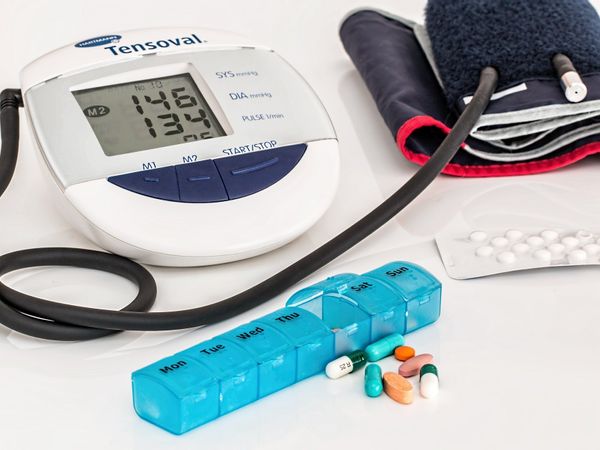
Hypertension is a condition that is marked by an elevation in blood pressure levels in the body. It is also known as high blood pressure. People suffering from hypertension may experience headaches, dizziness, shortness of breath, and chest pain after which they must be provided immediate medical attention.
-
There are two types of hypertension, namely primary hypertension and secondary hypertension. Several factors such as lifestyle, genes, and environment lead to the development of hypertension. Various methods can help with hypertension management but are lifestyle regulation one of them? Here is what you need to know about it.
Management of hypertension through lifestyle regulation
-
Lifestyle can contribute extensively to maintaining a healthy body. Alcohol consumption and smoking can cause hypertension. Therefore, adopting a healthier, cleaner lifestyle can significantly help prevent and manage hypertension. Apart from a hypertension risk, alcohol and tobacco consumption can also increase alcohol and nicotine dependency.
Added tips for hypertension management
Apart from a regulated lifestyle, you can also follow other methods for effective hypertension management. Some common methods include:
-
Diet regulation: A healthy diet can solve multiple health problems. When dealing with hypertension, adopt a diet that includes lower meat and sodium consumption and is more plant-based. You can go for diet plans such as DASH. Here DASH stands for Dietary Approaches to Stop Hypertension. The DASH diet is a lifelong approach to sensible and planned (mindful and healthful) eating that’s designed to help treat or prevent high blood pressure (hypertension).
-
Physical activity: Keep your body physically active through methods of workout, yoga, and exercises because it can contribute greatly to the prevention and management of hypertension. Adopt an exercise session of at least 30 minutes.
-
Weight management: Being overweight can lead to health conditions such as obesity, diabetes mellitus, cardiovascular diseases, and hypertension. This makes it essential to adopt healthy weight management methods to manage and prevent hypertension. This can be achieved through methods such as exercise and a controlled diet.
Bottom line
-
Stress is one of the contributing factors to hypertension. Make sure you’re adopting healthy methods of stress management. A healthy lifestyle can play a major role in aiding stress reduction. Furthermore, don’t forget to drink water and keep yourself hydrated.
Disclaimer: Tips and suggestions mentioned in the article are for general information purpose only and should not be construed as professional medical advice. Always consult your doctor or a dietician before starting any fitness programme or making any changes to your diet.
KEY STORY
-
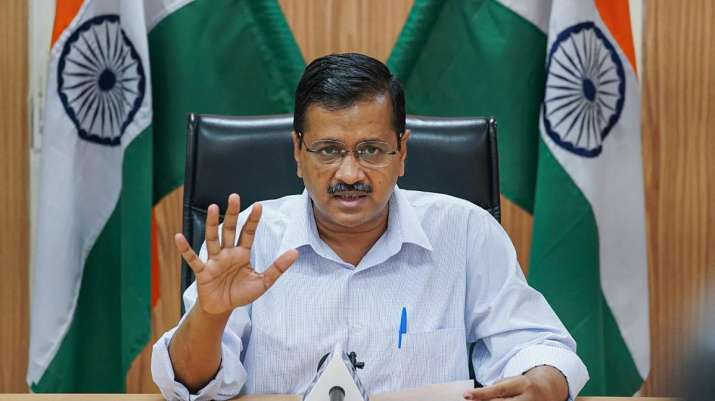
Delhi Chief Minister Arvind Kejriwal on Monday announced the imposition of a 6-day lockdown in the national capital to curb the spread of COVID-19 cases. Delhi has been reporting more than 25,000 cases for the last few days.
-
Following a meeting with Lieutenant Governor Anil Baijal, CM Kejriwal held a virtual press conference and announced the imposition of the lockdown. The Delhi lockdown will be in place from 10 pm tonight (Monday, April 19) to 6 am next Monday (April 26).
-
“Delhi is facing the fourth wave of COVID-19. I don’t say that the health system has collapsed but it has reached its limits in Delhi and is under stress. Harsh measures will have to be taken to prevent a collapse of the health system,” Kejriwal said.
-
According to the CM, Delhi recorded around 23,500 COVID-19 cases in the last 24 hours after reporting around 25,000 cases over the last 3-4 days.
-
The Delhi government has issued a detailed order on the restrictions and permissions during the lockdown. “There shall be curfew on movement of individuals (except for exemptions given below in this order) in the territory of NCT of Delhi with effect from 10:00 pm on 19.04.2021 (Monday) to 5:00 am on 26.04.2021 (Monday),” the order issued by the Delhi Disaster Management authority read.
Delhi lockdown restrictions:
-
Essential services including food services and medical services permitted
-
Weddings allowed with a gathering of only 50 people and separate passes will be issued for this purpose
-
20 people allowed for funerals/last rites and related gatherings
-
Public transport like Delhi Metro (up to 50 per cent seating capacity), public buses (up to 50 per cent seating capacity), auto and e-rickshaws (up to 2 passengers), RTV (up to 11 passengers) allowed
-
All social/political/sports/entertainment/cultural/ religious gatherings prohibited
-
Government officials allowed to move on production of valid identity card
-
Offices of Delhi government and concerned departments will remain closed except those involved in essential and emergency services like Health and Family Welfare and all related medical establishments, police, prisons, Home Guards, Civil Defence, fire and emergency services, district administration, electricity, water and sanitation, public transport (air/Railways/Delhi Metro/Buses) including all incidental services/activities that are essential for smooth functioning of all modes of public transport, disaster management
-
All other private offices/establishments, shops, shopping centres, malls, weekly markets, manufacturing units, educational and coaching institutes, cinema and theatres, restaurants and bars, auditoriums, entertainment/amusement parks, public parks and gardens, gyms, spas, barbershops, swimming pools (except for those being used for sports purposes), construction activities (except where labour are residing onsite) etc shall remain closed
-
All judicial officers and staff members of all courts of Delhi including the Supreme Court and Delhi High Court allowed to travel on production of valid ID card.
-
Pregnant women and patients with attendant going for medical treatment permitted to travel on the production of valid ID card/ doctor’s prescription/ medical papers
-
Persons going for COVID vaccination permitted to travel
-
Persons coming from/going to airports/railway stations/ISBTs permitted to travel on the production of a valid ticket
-
Electronic and Print Media persons permitted to travel
-
Officers/officials working in the offices of Diplomats of various countries permitted to travel
-
Persons holding any constitutional post permitted to travel
-
Persons/students allowed to appear in examinations permitted to travel on the production of valid admit card
-
There will be no restriction on inter-state and intra-state movement of essential goods
-
Religious places allowed to open but can’t allow visitor inside.

KEY STORY
-
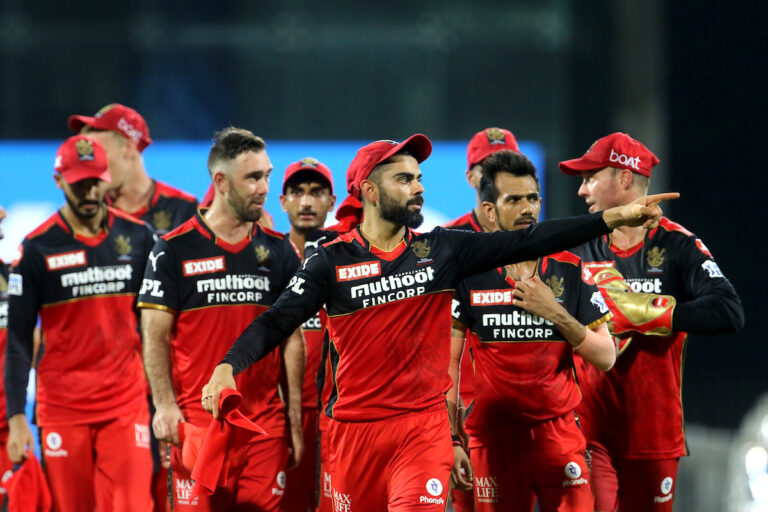
Continuing their remarkable run in the 14th season of the Indian Premier League (IPL) on Sunday, Virat Kohli’s Royal Challengers Bangalore (RCB) outclassed Eoin Morgan-led Kolkata Knight Riders (KKR) in match No.10 of the cash-rich league at the MA Chidambaram Stadium, Chennai.
-
‘Big Show’ Glenn Maxwell and South African batting icon AB de Villiers were a star turnout for the Kohli-led side as RCB defeated KKR by 38 runs to register their third straight win of the 14th season.
-
Winning the toss at the unpredictable Chepauk strip, Kohli opted to bat first although the newly appointed opener of the Bangalore giants failed to deliver the goods for his side. While Kohli departed for cheap, Devdutt Padikkal played a sedate knock of 25 off 28 balls before Maxwell and ABD shifted gears for RCB in the Powerplays.
-
Tormenting the potent bowling attack of the KKR franchise, ABD and Maxwell slammed quick-fire half-centuries as the premier batsmen laid the foundation of a massive total on a slow Chepauk deck. Maxwell top-scored for RCB with 49-ball 78 while ABD remained unbeaten on 76 off 34 balls. Asked to chase down a massive total of 204 in 20 overs, KKR opener Shubman Gill made an impressive start although the Indian batsman was removed for 21(9) by Kyle Jamieson.
-
After drawing first blood for RCB, New Zealand’s Jamieson removed Shakib Al Hasan and Pat Cummins to complete a memorable three-wicket haul. RCB spin wizard Yuzvendra Chahal also bagged two crucial wickets of Nitish Rana and Dinesh Karthik to put KKR in the driving seat.
-
Even though Shakib Al Hasan and Andre Russell staged an impressive fightback for KKR, the two-time champions succumbed to pressure to eventually lose the match by 38 runs.
With the win, the Kohli-led RCB side has completed a hat-trick of wins at the Chepauk. RCB have also regained the top spot in the IPL 2021 standings. RCB star AB de Villiers was adjudged the Man of the Match for his batting masterclass.
“It was RCB’s day with the bat, they made use of any tiny errors with the ball. But I can’t fault our efforts. We gave it absolutely everything in the field today. Tried our best in the chase but not to be,” KKR skipper Morgan said after the match.
1...607608609...884Page 608 of 884