
KEY STORY
-
People travelling to Maharashtra from Kerala, Goa, Rajasthan, Gujarat, Delhi-NCR, and Uttarakhand will have to produce a negative RT-PCR test report within 48 hours of the travel to enter the state, which is struggling to tackle the second of coronavirus.
-
The state government has declared these six states as ‘Places of Sensitive Origin’. The people who do not have a ticket reservation will not be allowed to board the train to Maharashtra from these states.
-
A new set of guidelines has been laid out by the state government for travel in long-distance trains from these states to contain the spread of the coronavirus.
-
“All passengers shall be compulsorily screened and only asymptomatic passengers shall be allowed to board the trains for Maharashtra. Social distancing should be ensured during boarding/deboarding and travel,” Maharashtra Chief Secretary Sitaram Kunte said in an order on Sunday.
-
The state government also asked the ministry of railways to provide thermal scanners at all exits in stations and strictly enforce COVID appropriate behaviour in trains.
-
“These places will be considered the places of sensitive origin from the date of this order till the time it is retracted or till COVID-19 stays notified as a disaster,” it stated.
Covid-19 SOP for passengers from these 6 states
-
Data of passengers will be shared with local disaster management authority each day, four hours before the departure from the origin of trains.
-
No unreserved ticket for Maharashtra should be issued on trains plying from these six states.
-
Railways should ensure that trains from the places of sensitive origin should come to outer platforms where it is easier to conduct thermal screening (of passengers), the order said.
-
If passengers are not carrying the RT PCR negative report, they will have to undergo a rapid antigen test at the station.

KEY STORY
-
As the single-day COVID-19 cases surged to a staggering record-high level, Prime Minister Narendra Modi on Monday chaired an important meeting to discuss the coronavirus situation in the country.
-
India on Monday recorded the highest single-day jump since the outbreak of the COVID-19 pandemic with 2,73,810 fresh COVID-19 cases, pushing the tally to 1,50,61,919. This is the fifth consecutive day when daily spike in coronavirus cases crossed the 2-lakh mark in the country which is hit by the second wave of COVID-19.
-
The death toll in the country has mounted to 1,78,769 with 1,619 people succumbing to the disease in the last 24 hours in the highest-ever single-day surge, as per the Union Health Ministry latest data.
-
The total number of active cases has mounted to 19,29,329 in the country amid a fresh spike in coronavirus infections.
PM’s 2nd meeting in 2 days
-
This is Prime Minister Modi’s second meeting on the coronavirus situation in the country, in two days. On Saturday, he chaired a meeting to review the status of preparedness to handle the COVID-19 situation and urged local administrations to be proactive and sensitive to people’s concerns.
-
The Prime Minister took stock of the availability and supply of ventilators, oxygen and medicines to fight the pandemic and called for utilising the entire national capacity across private and public sectors to produce vaccines, as several states have raised concerns about the shortage of hospital facilities and essentials like oxygen supply.
-
He directed officials to ensure close coordination with states and take all necessary measures to scale up the availability of hospital beds for COVID patients and ensure additional supply of beds through temporary hospitals and isolation centres.
PM reviews COVID situation in Varanasi
-
He also reviewed the COVID situation in Varanasi, his Lok Sabha constituency, on Sunday and stressed the importance of the vaccination.
-
During the meeting, the Prime Minister took stock of testing, availability of beds, medicines, vaccines and manpower for prevention of coronavirus and proper treatment of infected patients. He also asked the administration to ensure that safety measures like social distancing and the use of masks are followed by people.

KEY STORY
-
With various universities still holding examinations from April 19, students have united to start a twitter campaign against them. Bengaluru North University, Bengaluru City University and Visvesvaraya Technological University (VTU) had decided to go ahead with their examination schedules for affiliated colleges.
-
“The university is holding the third semester examinations from Monday in the peak of the pandemic. Initially, the university shortened the semester unceremoniously and said exams will be held in January, while the semester started on November 1. Exams were postponed 11 times until now, and are bent on taking examinations come what may,” said a BNU student.
-
Although parents and students wrote to university officials, they got no response, the student added, stating that students in the hostel were tested positive. Students have been running a twitter storm to cancel #VTUexamination. Vice-Chancellor Karisiddappa could not be reached.
CONCLUSION
-
Bengaluru City University Vice-Chancellor Lingaraju told TNIE that Monday’s exam is only scheduled to be held in one affiliated college, and will be held with SOPs in place. Those who tested positive will be given a fresh chance to write the exam, he added.
-
Meanwhile, a number of Covid cases have been reported in Bangalore University that has indefinitely put off the examination for all its students. BU Vice Chancellor, K R Venugopal said several staff members have also tested positive and students have been asked to vacate the hostels. Entry to the campus is restricted.
KEY STORY
-
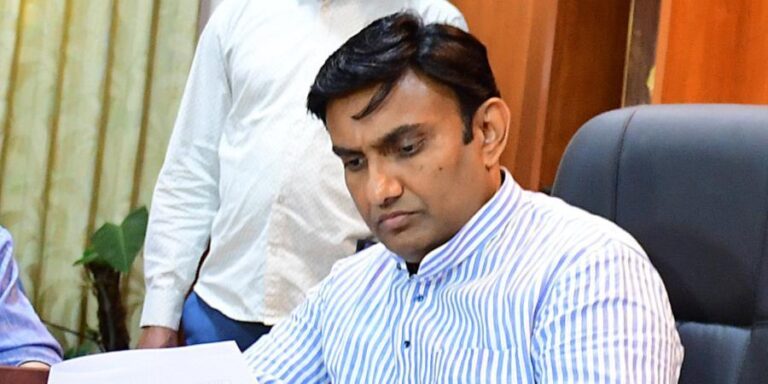
The response from private hospitals towards reserving 50 per cent beds for Covid patients has not been satisfactory, which could compel the government to initiate legal action against those failing to comply with the orders, warned Health and Medical Education Minister Dr K Sudhakar.

-
He inspected Manipal and Sakra Hospitals on Sunday and mentioned that Manipal Hospital had not provided 50 per cent of the beds. Strict instructions have been given to the hospital. Legal action will be initiated if they fail to obey the orders. Let us not land in such a situation, he said.
-
“Private hospitals are facing a shortage of infrastructure and human resources. We are considering all the issues while managing it.
-
There may be shortcomings, but we are trying to address all issues. We are prioritising the supply of oxygen, Remdesivir and other drugs. Increase in beds and temporary arrangements in hotels are being made,” said Dr Sudhakar.
-
Home Minister Basavaraj Bommai and Revenue Minister R Ashoka have held an informal meeting to review the Covid situation in Bengaluru.
-
It was discussed that tougher and more stringent measures are necessary in Bengaluru to control the second wave and these will be decided after an all-party meeting on Monday. Chief Minister B S Yediyurappa will take the decision after a detailed discussion with leaders.
BBMP notice to hospitals
-
Meanwhile, the Bruhat Bengaluru Mahanagara Palike on Sunday issued noticed to Columbia Asia Hospital, Hebbal, Baptist Hospital, Aster CMI, Hebbal, Fortis Hospital and Vikram Hospital for not reserving 50 per cent of their beds for government referred COVID patients.
-
“It has been observed that your hospital has not compiled with the directions of the government to notify and make available the mandated 50 per cent of the beds for government referred patients.

-
You are hereby directed to immediately comply for provision of the mandated number of beds within 48 hours and report the same to BBMP Commissioner, failing which action would be taken against your establishment,” an excerpt of the notice read.
-
Signed by Gaurav Gupta, BBMP Commissioner, the letter directed the hospitals to update the SAST online portal with details of all government referred patients and private patients so that the actual COVID patient bed occupancy is reflected.
-
The establishments were also directed to give information about occupancy of the beds by non-COVID patients under various categories of beds. The above information was instructed to be handed over to Chief Health Officer, BBMP immediately within 24 hours.
KEY STORY
-
All eyes are on the all-party meeting scheduled at 3 pm Monday, as the State government is set to announce more restrictions and extension of existing night curfew to contain the Covid-19 pandemic in the State.
-
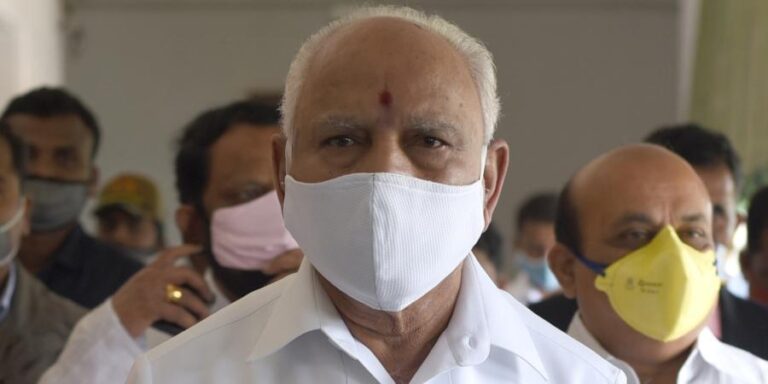
With Chief Minister BS Yediyurappa currently hospitalised for a Covid reinfection, Revenue Minister and deputy Chair for State Disaster Management Authority R Ashoka will head the all-party meeting.
-
Invitations for the meeting have been sent to MPs, MLAs and leaders of all parties to participate and provide their suggestions.
-
Even as opposition parties are preparing to raise questions over the alleged shortage of beds, medicines and oxygen, apart from delay in deciding on exam schedules, ministers seem to be of different opinion on what the outcome of the meeting is likely to be.
-
While Ashoka has insisted that there will be no lockdown as per Yediyurappa’s clear instructions, Medical Education Minister Dr K Sudhakar has insisted that the advice of the Technical Advisory Committee (TAC) needs to be implemented. The TAC has been suggesting a brief lockdown for over a month now.
-
“Personal opinions do not matter. We have to accept scientific solutions to contain the pandemic, whether or not we like it. The State and Bengaluru’s welfare is more important than our personal opinions. The Chief Minister will take the final call.
-
Implementing scientific suggestions given by the Technical Advisory Committee becomes more important than decisions due to political or other reasons. This is a pandemic and a health emergency,” said Sudhakar, speaking to reporters on Sunday.
-
Sources in the government, however, said that CM Yediyurappa is vehemently against a complete lockdown, and Ashoka confirmed the same on Sunday.
-
“There will be specific regulations and protocols for Bengaluru after the Chief Minister’s approval. He has clearly said there will be no lockdown but tough restrictions will be imposed.
-
He will take a call on whether night curfew will be extended. Last time around, thousands of people rushed to railway stations and bus stops. A lockdown will be an injustice to people’s livelihoods.
CONCLUSION
-
We should contain the pandemic but should not spoil people’s lives and livelihood. We will take action in a way that doesn’t impact the poor adversely.
There will be no lockdown,” Ashoka said, in contradiction to Sudhakar’s stance.
-
To iron out differences ahead of the all-party meeting on Monday, Ashoka, Basavaraj Bommai and Sudhakar held an unofficial meeting at Kumarakrupa Guest House on Sunday.
-
The Congress, meanwhile, is keen on opposing a complete lockdown as well, and will urge the government instead, to focus on ramping up testing, vaccination and medical facilities. The party has also asked the State government to cancel examinations, given the situation.

KEY STORY
-
In a tragic incident, a 15-year-old Class 10 student of a private school in Haryana’s Gurugram near Delhi ended her life by hanging herself at her home.
-
Her uncle has lodged a police complaint against the principal of her school, accusing him of pushing her to take the extreme step by scolding and slapping her in front of other students for wearing long earrings, keeping a mobile phone and not clipping nails.
-
As per reports, the teenager was found hanging from a ceiling fan at her house on April 9 – a day after she was reprimanded by her school principal for being “ill-mannered”. The girl’s uncle, in his complaint to the police, stated that on April 8, the girl’s parents were called to the school to meet the principal.
-
The parents were told by the principal that the girl was unmannerly as she had long nails, wore big earrings and kept a mobile phone. The principal allegedly said that he would expel the girl from the school.
-
That day, the girl, after returning home, did not talk to anyone. She didn’t even eat food. On April 9, her parents again went to the school to meet the principal and request him to not remove the girl’s name from the rolls.
-
This time, the parents took the girl’s younger brother, a student of Class 9 of the same school, along with them to the principal’s office, according to a report by The Times of India.
-
The girl’s uncle told TOI: “The principal got angry seeing them again. This time, he complained against both children (the girl and her younger brother) and asked them to be removed from school.
-
My brother tried to reason with them that they had given the girl a phone because she needed it for her online classes. But he was in no mood to listen to my brother. The principal then asked them to leave his office.”
Girl hangs self to death
-
After coming back home, the parents told the girl that they would again request the principal to not expel her from school. She said nothing in response to this, and retired to her room on the first floor of the house.
-
When she did not come out for a considerable time, her younger brother went to her room to check on her. Despite repeated knockings, she didn’t open the door. Following this, they forcibly opened the door and found her hanging from the ceiling fan. She was immediately dashed to a hospital, where medics pronounced her dead on arrival, the report stated.
Classmates accuse principal of misbehaviour
-
Over the next two days, several classmates of the deceased girl came to her house to pay their condolences. The school principal also came to her house. The girl’s classmates accused the principal of often indulging in misbehavior with them.
-
Some students claimed that the principal chided and slapped the now-deceased girl over the issue of long nails, earring and mobile phone.
-
On April 14, the girl’s uncle lodged a complaint at Bhondsi police station, accusing the principal of compelling the teenage student to take the extreme step.
-
Based on the complaint, police booked the principal for abetment to suicide under IPC Section 306 and initiated an investigation. So far, police have not recorded any arrest in the case.
KEY STORY
-
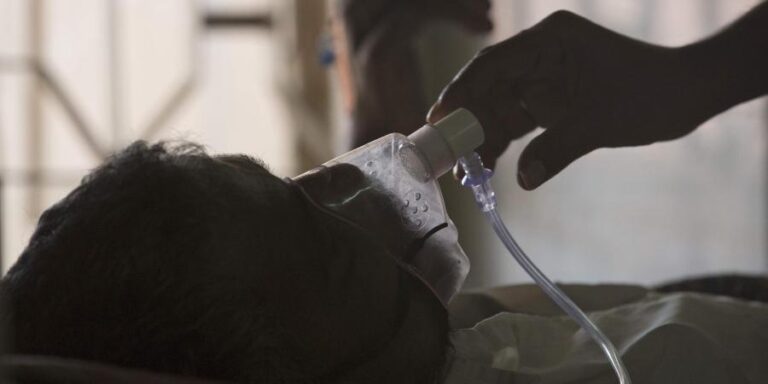
“We saw it happen in Italy, Spain and the UK, but never thought we would see a day like this in Bengaluru,” said a 59-year-old former principal with tears in his eyes as he was asked to immediately get discharged from a private hospital, as they lacked a bed with oxygen facility.
-
This seems to be the norm at most hospitals in the state. The demand for medical oxygen has reached its peak as the number of critical patients has risen.
-
Most private hospitals witnessed a grim situation on Saturday, with hospital owners and doctors helplessly trying to convince patients to move to other facilities. Some put out video messages on social media requesting the State Government to immediately arrange for medical oxygen.
-
Dr Vijay Raghav Reddy of Swastik Hospital, in a video, said, “I will be forced to shift all nine patients by evening… But I don’t even know where to shift them as all places are running out of oxygen. We may soon see people die due to lack of oxygen.”
-
At many hospitals, the sole criterion for admitting patients was the oxygen saturation level, which decided whether they get a bed or not.
-
Though Health Minister Dr K Sudhakar has been saying that the state has enough oxygen facilities, the Private Hospitals and Nursing Homes’ Association (PHANA) has written to him, pointing to an acute shortage of medical-grade oxygen and zero stock at some hospitals.
-
Patients dying in hospitals or ambulances without oxygen are being reported. Last week, two patients died due to non-availability of oxygen in and ambulance and beds in two hospitals in the city.
-
PHANA president Dr Prasanna H M said the manufacturers have either stopped supply or are not responding to demands for more stock.
-
The association warned that the situation is alarming with hospitals being nearly full with government-referred and privately-admitted patients and the number of patients needing life-saving oxygen support shooting up.
-
A senior manager from oxygen manufacturer Air Water India said, “There is no problem with production. We produce up to 100 tonnes of medical oxygen per day.
CONCLUSION
-
The problem is we have about 40 customers and all of them are big hospitals. Of late, there has been an increase in the number of dealers who supply oxygen to smaller hospitals.
-
But they have run out of oxygen now due to huge demand and they don’t have the production capacity.”
-
Chief Secretary P Ravi Kumar, however, rubbished claims that there is a shortage of oxygen in the state.
-
Also, Additional Chief Secretary, Health Department, Jawaid Akthar, promised PHANA that the government would look into the issue and ensure that medical oxygen is supplied, said Dr Prasanna.

KEY STORY
-
Yet another vulnerability has been found in WhatsApp that can allow attackers to access the sensitive information of users. India’s cyber agency, CERT-IN has alerted the WhatsApp user about multiple vulnerabilities that have been discovered in the app.
-
The loopholes in security can lead to serious breach of information. This is one of the many flaws that have unearthed recently.
-
The CERT-in report states that the vulnerability has been detected in software including WhatsApp and WhatsApp Business for Android prior to v2.21.4.18 and WhatsApp and WhatsApp Business for iOS prior to v2.21.32.The vulnerability has received a high severity rating by the cyber agency.
-
“Multiple vulnerabilities have been reported in WhatsApp applications which could allow a remote attacker to execute arbitrary code or access sensitive information on a targeted system.
-
Successful exploitation of these vulnerabilities could allow the attacker to execute arbitrary code or access sensitive information on a targeted system,” the advisory read.
-
The report stated that such vulnerabilities exist in WhatsApp due to a cache configuration issue and the absence of bound checks within the audio decoding pipeline.
-
The cyber agency recommends users update to the latest version of the app from Google Play Store and Apple App Store to prevent the flaws from affecting them. WhatsApp is yet to comment on the latest security flaw discovered by CERT-in.
-
Recently, a flaw was discovered on the messaging app that allowed stalkers to use online automated apps to track women. As per a report published in Traced, WhatsApp Online Status Tracker websites and apps were being used by stalkers, cyberattackers to stalk women and get access to their personal information.
-
The flaw also allowed cybercriminals to find out which user is texting whom. However, WhatsApp has issued a clarification on the same.
CONCLUSION
-
The Facebook-owned messaging app in a statement shared that it has blocked banned the WhatsApp accounts associated with such websites and also asked Google to remove such apps. “We provide a setting to allow people to choose who can view the time a user was ‘last seen’ within WhatsApp.
-
To help prevent abuse, we regularly work with app stores to seek the removal of apps that attempt to violate our terms of service. We have banned the WhatsApp accounts associated with such websites, requested Google to remove such apps from the Play Store, and also take legal action, as appropriate.
-
Automating WhatsApp’s features to scrape information is a violation of our terms of service and we will continue to take action to protect the privacy of our users and help prevent abuse,” a WhatsApp spokesperson said in a statement.

KEY STORY
-
Bollywood star Katrina Kaif on Saturday announced that she has finally tested negative for COVID-19 after contracting the deadly virus earlier this month.
-
The ‘Ek Tha Tiger’ star took to Instagram and shared a stunning picture at her home.
-
The actor is seen dressed in pale yellow top and matching pants as she posed for the lens looking in a different direction than the camera. The actor was seen sporting a no-make-up look, as she keeps her locks open. The photo has a date stamp of 17.4,’21.’
-
The actor also extended thanks to the people who checked up on her.
-
Katrina wrote in the caption to the post, “Shining sun emoticon negative (Shining sun emoticon) (everyone who checked up on me thank u, it was really sweet felt a lot of (love) and a yellow heart emoticon).”
-
Celebrity followers including Gauri Khan and more than 81 thousand followers liked the post while scores of fans chimed into the comments section to congratulated the ‘Namaste London’ actor on her recovery.
-
Earlier on April 6, Katrina informed she tested positive for COVID-19 on her Instagram story.
-
“I have tested positive for Covid-19. Have immediately isolated myself and will be under home quarantine. I’m following all safety protocols under the advice of my doctors,” read Katrina’s statement.
CONCLUSION
-
Recently, Vicky Kaushal, Akshay Kumar, Govinda, Paresh Rawal, Alia Bhatt, Ranbir Kapoor, and Rohit Saraf, among others had tested positive for COVID-19. Earlier, Amitabh Bachchan, Abhishek Bachchan, Arjun Kapoor, Malaika Arora, and some others were also infected with the virus.
-
On the work front, Katrina has ‘Tiger 3’, ‘Phone Bhoot’, ‘Sooryavanshi’ and a superhero movie with Ali Abbas Zafar coming up.

KEY STORY
-
Every day, something or the other is learnt anew about the COVID-19-causing novel coronavirus and its several strains. Researchers from the University of Edinburgh have published after a study that increased exposure to the sun’s rays – specifically UVA – could act as a simple public health intervention if further research establishes it causes a reduction in mortality rates.
-
Researchers from the University of Edinburg compared all recorded deaths from Covid-19 in the continental US from January to April 2020 with UV levels for 2,474 US counties for the same time period.
UVA exposure: The key factor!
-
The study found that people living in areas with the highest level of exposure to UVA rays – which makes up 95 per cent of the sun’s UV light – had a lower risk of dying from Covid-19 compared with those with lower levels. The analysis was repeated in England and Italy with the same results.
-
The researchers took into account factors known to be associated with increased exposure to the virus and risk of death such as:
-
age,
-
ethnicity,
-
socio-economic status,
-
population density,
-
air pollution,
-
temperature and
-
levels of infection in local areas.
The observed reduction in risk of death from Covid-19 could not be explained by higher levels of vitamin D, the experts said.
Only areas, with insufficient levels of UVB to produce significant vitamin D in the body, were included in the study.
What role does Nitric oxide play?
-
One explanation for the lower number of deaths, which the researchers are following up, is that sunlight exposure causes the skin to release nitric oxide.
-
This may reduce the ability of SARS Coronavirus2 – the cause of Covid-19 – to replicate, as has been found in some lab studies.
Previous research from the same group has shown that increased sunlight exposure is linked to
-
improved cardiovascular health,
-
with lower blood pressure and
-
fewer heart attacks.
As heart disease is a known risk factor in dying from Covid-19, this could also explain the latest findings.
-
The team say due to the observational nature of the study it is not possible to establish cause and effect. However, it may lead to interventions that could be tested as potential treatments.
-
The paper has been published in the British Journal of Dermatology, an official publication of the British Association of Dermatologists.
-
In September 2020, Hiroshima Uinversity researchers had proposed that their studies showed that using Ultraviolet C light with a 222 nm wavelength, which doesn’t harm living cells in the human eye and skin, effectively kills the SARS-CoV-2.
-
This is the first study in the world that proves its potency against the virus which causes COVID-19. The results were published in the American Journal of infection Control.
-
There is still so much we don’t understand about Covid-19, which has resulted in so many deaths worldwide. These early results open up sunlight exposure as one way of potentially reducing the risk of death.
-
The WHO has been also trying to raise awareness about the risks of Ultra-Violet Radiation. Small amounts of ultraviolet (UV) radiation are essential to produce vitamin D in people, yet overexposure to sunlight may result in acute and chronic health effects on the skin, eye and immune system.
-
The rise in the incidence of skin cancers over the past decades is strongly related to increasingly popular outdoor activities and recreational exposure. Experts believe that 4 out of 5 cases of skin cancer could be prevented by protecting against overexposure to sunlight.
-
The amount of UV radiation from the sun that hits the Earth’s surface depends on several factors, including the sun’s height in the sky, latitude, cloud cover, altitude, the thickness of the ozone layer and ground reflection. Reductions in the ozone layer due to human-created pollution increase the amount of UVA and UVB that reaches the surface.
1...608609610...884Page 609 of 884