KEY STORY
-
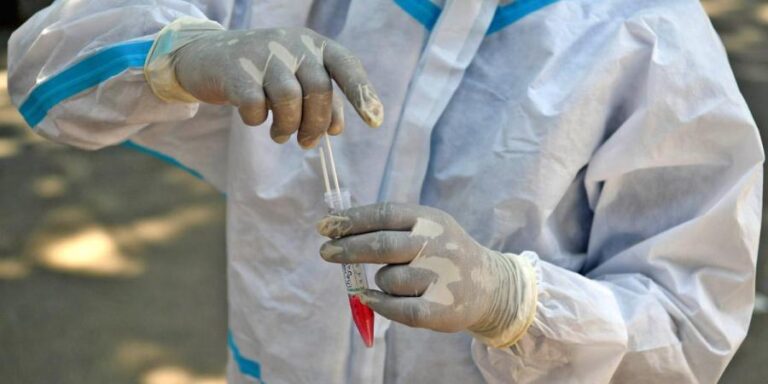
Karnataka Health Minister K Sudhakar on Saturday said coronavirus cases are on the rise in all states and it was an indication of beginning of the second wave, as he called on people to exercise caution.
-
Noting that 8 to 10 states have more active cases and there are about 2.84 lakh cases in Maharashtra, 24,000 in Kerala, and about 19,000 in Karnataka, he said, “It is clear that the second wave has begun. So if we don’t curb activities the danger is imminent.”
-
The minister urged the people to compulsorily wear masks and follow social distancing.
-
The state’s positivity rate of 1.6 per cent is more than the national average which is not a good sign, he said.
-
“We should take this seriously. More than 1 lakh tests are being conducted every day,” he was quoted as saying by his office in a release.
-
The Minister said Covid-19 containment restrictions are already in place and the government will take more stringent actions in coming days.
-
“Have requested the Chief Minister to take necessary measures to prevent spread of infection in educational institutions and CM himself will take action in this regard,” he added.
-
On vaccination coverage among health care workers and front line workers, Sudhakar said Bidar has achieved 113 percent, Dharwad 107 and Gadag has achieved 103.
-
Whereas Bengaluru Urban, Bagalkot, Davangere and Koppal have achieved 61, 64, 65 and 65 percent respectively.
CONCLUSION
-
“So far, 2,22,377 frontline warriors have been vaccinated with the first dose. 3,34,110 healthcare workers have been given the 2nd dose,” he added.
-
So far 16.18 lakh senior citizens aged above 60 years have been inoculated, 4.70 lakh people aged above 45 years with comorbidities have been vaccinated.
-
He further said in 2 to 3 days the state will receive 12 lakh more doses.

HIGHLIGHTS
-
When your film wins a National Award, it calls for a celebration. And though Varun Sharma was thrilled when he heard that the Nitesh Tiwari directorial, Chhichhore, won for the Best Hindi Film, he couldn’t help but get emotional. “The National Film Awards are the most prestigious awards and winning it for a film that will always hold a very special place in my heart is a big validation. This one is for Kammo!” says Sharma, referring to the name his character called the late actor Sushant Singh Rajput in the film.
-
Looking back, he calls Chhichhore “a learning ground and an enriching experience”. It is a film that very close to his heart. “The entire process has taught us a lot and I loved every second of it. When you work with a team of amazing actors, you feed off each other’s energies. I have made some great friends during the shoot. The conversations and the fun that we have had both on and off-camera will always remain etched in my heart. It was my dream to work with Nitesh sir and I am so glad that i got to collaborate with him on the film,” shares Sharma.
-
He reveals that while shooting the film the whole unit had a lot of fun and “made Chhichhore with a lot of heart”. He calls the way Nitesh sir crafted the film “incredible” and shooting for it felt like a vacation. “It was like reliving our college days and hostel lives. We knew that we were making something very special and hoped from the bottom of our hearts that it reaches the audience and gets received in the way that it has. We are beyond happy that the film received a lot of love across demographics. As actors, that is what we live for,” he says.
-
The film is a story about friends and their lives and starring in the lead is Singh, and Sharma can’t help remembering and thanking the late actor. “After we received the news we all spoke to each other. The film and the award belonged to Kammo, and he will always remain close to our hearts. The celebration was incomplete with a bit of hollowness but we know that he is the brightest star in the galaxy, who is revelling in the victory and is happily looking at us,” he says.

EVENT HIGHLIGHTS
-
Contrary to the economic slow-down in Covid, Delhi-based doorstep diesel delivery start-up Humsafar witnessed its biggest growth phase by adding Shapoorji, Afcons India, KMV Projects Pvt Ltd, to its list of existing clients L&T, Ferns and Petals, and more.
-
Part of this change in fortune can be attributable to Humsafar’s decision of resorting to technology to allow people to place an order using app Fuel Humsafar. “The fuel is delivered within 24 hours of order placement. During Covid, we had even waived off the minimum order clause,” shares Agarwal, whose focus is more on customer satisfaction than competition.

Humsafar delivers fuel in a geo-fenced bowser that is not an ordinary vehicle, but a fuel protector. “There is no leakage in transit, and the operations are app driven. Once the bowser reaches the buyer’s facility, the buyer uses the app to make requests for fuel and receives an OTP. When the OTP is entered, then only the bowser opens and dispenses the fuel. “Thus, there is no chance of pilferage and wastage, the way it used to happen traditionally,” shares Co-founder Mayank Agarwal, adding that their service helps in reducing the traffic congestion and related expenses.
“We only cater to static equipment and heavy machinery used for road projects, colleges, schools, banquet halls, residential societies, and cineplexes, as of now because Petroleum Rules and PESO only permit diesel as petrol is more inflammable.” Along with Sanya Goel and Dilpreet Sadana, Agarwal setup Samridhi Highway Solutions in 2016 and with Humsafar, the trio began their tech-enabled journey into the future. Between them, they own five petrol pumps – two in Delhi and three in Haryana.However, Agarwal is the most steeped into the fuel retail business as his family has been in it for 75 years.
After completing his Bachelors in Business Economics from DU and MBA in finance and minors in marketing from ICFAI, Gurugram, Agarwal worked with Glaxo SmithKline on financial research. “I joined the family business in 2012 that was more about managing petrol pumps. In two years, I learnt its traditional ways of working, but also realised that we had not focused on the customer service and satisfaction,” adds Agarwal, back then 23, and rectified this issue after starting Humsafar.
“Credit card customers had direct contact with the company, but there was no information on how the cash customers felt about our services. So, we developed software and incentivised cash customers by making a loyalty card. If they could not revisit us, we gave them a call, checked about their concerns related to staff behaviour, and solved them, so that we could keep them with us. And it was a success.”
In 2019, the government issued guidelines on authorising diesel door delivery, which Humsafar was waiting for and they jumped in. What started with a loyalty programme, became app-based in 2019. “And last year, we even started marketing the Humsafar brand of diesel bowsers, which are the mobile petrol pumps,” adds Agarwal.
Future Plans
“Going forward, we are keen to be a start-up entrenched in technology. Having supplied close to 300 bowsers in the past one year, with plans to fabricate 750 bowsers in the fiscal 2021-22, we are strengthening our engineering services and setting up regional service centres. We are the first start-up in the sector to set up a ‘Customer Satisfaction’ wing,” he adds. They are also looking at jerry cans business to cater to customers requiring 20-40 litres diesel for home gensets, etc.
Is Humsafar making any amendments to their workings now with the government taking a keen interest in electric vehicles? “This transition is a long-drawn process. It will be decades before the majority of all vehicles and machinery stop using diesel as the primary fuel. In the foreseeable future, the app-driven mobile bowsers will play a key role in fuel delivery, and the government can use the space of the existing petrol pumps as charging stations,” he concludes.
Side Trivia
Humsafar only caters to static equipment and heavy machinery used for road projects, colleges, schools, banquet halls, residential societies, and cineplexes, because Petroleum Rules and PESO only permit diesel as petrol is more inflammable.

KEY HIGHLIGHTS
-
You may have heard of sleep pattern disturbances of people who work in factories, workshops etc where rude sound is unavoidable.
-
A study suggests that night-time aircraft noise can trigger acute cardiovascular mortality.
-
It is estimated that environmental noise exposure contributes to 48 000 new cases of ischaemic heart diseases (IHD) or 156 000 DALYs in Europe each year.
Although the gains of the industrial revolution have transformed human life, they have also left an adverse impact on our health and environment. The environmental pollution (and pollutants) that we so intensely debate must also now include noise pollution as another huge threat to our cardiovascular health, reports the European Cardiovascular Review.
A Harvard Medical School publication also cites a study carried out and published by the European Heart Journal in November 2019. It claims that “Long-term exposure to traffic noise has been linked to a greater risk of heart disease.” New research reveals additional clues about this connection.
Increase in decibel levels proportionate to an elevated risk of heart problems:
Researchers studied nearly 500 adults over a five-year period and gathered traffic and aircraft noise data for each person’s home address. After adjusting for other factors that contribute to cardiovascular risk (including air pollution), they found that every 5-decibel increase in the average 24-hour noise level was associated with a 34% increase in heart attacks, strokes, and other serious heart-related problems.
By using a specialized brain imaging technique, researchers showed that higher levels of noise exposure were associated with increased activity in the amygdala, the area of the brain involved in processing stress, anxiety, and fear. Excess noise also increased inflammation in the arteries, a known trigger for cardiovascular problems.
It is estimated that environmental noise exposure contributes to 48 000 new cases of ischaemic heart diseases (IHD) or 156 000 DALYs in Europe each year.
Numerous studies link chronic exposure to such environmental noise to an increased risk of heart-related troubles. People living near the Frankfurt Airport, for example, have as much as a 7% higher risk of stroke than those living in similar but quieter neighbourhoods, according to a 2018 study that investigated health data of more than one million people. An analysis of nearly 25,000 cardiovascular deaths between 2000 and 2015 among people living near Switzerland’s Zurich Airport saw significant increases in night time mortality after airplane flyovers, especially among women, a team reported recently in the European Heart Journal.
Sequence of noise’s cardiovascular effects:
-
When sound reaches the brain, it activates two important regions – the auditory cortex, which interprets noise, and the amygdala, which manages emotional responses to it.
-
As the noise gets louder, and especially during sleep, the amygdala activates the body’s flight-or-fight response – even if the person isn’t aware of it. One can feel anxious even while asleep and not realise its full impact.
-
Once initiated, this stress response releases hormones such as adrenaline and cortisol into the body. Some arteries constrict, others dilate, blood pressure rises, digestion slows while sugars and fats flood the bloodstream for quick use by the muscles.
-
The cascading stress response also prompts the creation of harmful molecules that cause oxidative stress and thereby, dramatic changes to the endothelium, the inner lining of arteries, and blood vessels.
-
This lining can go from a healthy state to one that’s “activated”, and inflamed, with potentially serious ramifications.
-
The person affected lands up with a range of cardiovascular illnesses, including high blood pressure, plaque build-up in the arteries, obesity, and diabetes.
A recent study by Halonen et al. involving over 8 million people in London, assessed the effects of long-term exposure to road traffic noise on both all-cause and cardiovascular mortality and on hospital admissions for cardiovascular disease. The study, which looked at both younger and older subjects, showed that long-term exposure to road traffic noise was associated with an increased risk of all-cause mortality and cardiovascular mortality and morbidity in the general population; showing a prevalence of stroke particularly high in the elderly.
According to the European Cardiology Review, noise pollution can affect sleep patterns and the latter is known to be associated with increased cardiovascular morbidity and mortality. Studies on people and mice show that the endothelium doesn’t work as well after just a few days of nighttime airplane noise exposure, suggesting that loud noise isn’t a concern only for people already at risk for heart and metabolic problems. Healthy adults subjected to train recordings as they slumbered had impaired blood vessel function almost immediately, according to a 2019 study.
Thankfully, there is a growing recognition of the connections between noise pollution and reduced physical health. A 2018 report by the WHO noted that each year, western Europeans are collectively losing more than 1.6 million years of healthy life because of traffic noise. This calculation is based on the number of premature deaths caused directly by noise exposure as well as the years lived with noise-induced disability or illness.
And that number is likely to grow. In 2018, 55%of people lived in cities, and by 2050 that count is expected to reach nearly 70%, the United Nations estimates.
What is the acceptable level of noise?
Estimates suggest that roughly a third of people in Europe and the US are regularly exposed to unhealthy levels of noise, typically defined as starting around 70 to 80 decibels. For comparison, normal conversation is typically about 60 dB, cars and trucks range around 70 to 90 dB, and sirens and airplanes can reach 120 dB or more. The WHO has identified a threshold of >55 dB as a level of noise that is associated with health problems and very large numbers of individuals across the whole age spectrum are affected by traffic noise in cities in the developed world.
Policy changes around noise pollution:
-
Some governments have begun considering night time flight bans
-
Corporate set-ups are incentivising quieter technologies
-
Civic authorities are issuing fines for noise complaints
What individuals can do:
-
Ensure that bedrooms are as quiet as possible
-
Retrofit windows or hang noise-reducing curtains
-
If one can afford, move to quieter neighbourhoods
-
Cheaper solutions may be wearing earplugs at night
-
Moving bedrooms to a quieter part of the house
A word of caution: Just because you are considering a noisy environment as the new normal or are unfazed by noise, does not mean your heart is fine with that. If you have habituated to it psychologically, it doesn’t cancel out the negative health consequences.
KEY STORY
-
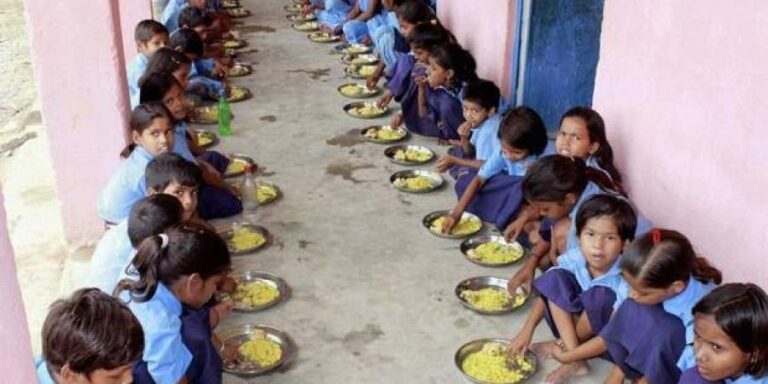
Karnataka’s education department is batting for an extension of the midday meal scheme through the summer holidays for more than 55 lakh students.
-
They comprise nearly 90 per cent of the 61.24 lakh students enrolled in Classes 1 to 10 in state board schools.A large number of these beneficiaries are from government lower primary and higher primary schools.
-
The department has already sought permission from the Government of India (GoI) to extend the programme beyond the designated tenure of April 10. “A substantial amount for the scheme comes from the Central government for beneficiaries till Class 8. We are requesting the GoI to extend it till May. We are yet to receive a reply,” a top department official told The New Indian Express.
-
The cost of 60 per cent of the food and transportation is covered by the Central government, for students till Class 8. The State government foots the bill for the remaining 40 per cent of the food cost, besides the entire cost of food and transportation for students of Classes 9 and 10.
-
On an average, the State and Centre incur a cost of Rs 4.13 per day per student of Classes 1 to 5, and Rs 6.18 per day per student of Classes 6 to 10, who require higher nutritional intake. Part of the expenditure is rice, dal, vegetables, oil, salt, (cooking) fuel and condiments. Ever since the Unlock phases began, post lockdown, the government resorted to supplying dry ration kits to students.
CONCLUSION
-
After the high court’s intervention, the government had to clear its 108-day backlog of pending midday meals that were to be given to students, but were denied to them in June and July 2020, and August to October 2020.Dry ration kits worth Rs 4.97 per student per day are being given to students of Classes 1 to 5 and kits worth Rs 7.45 per student per day to students of Classes 6 to 10.
KEY STORY
-
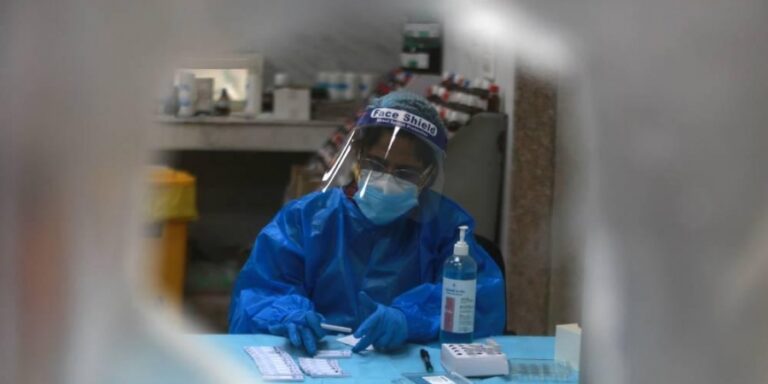
With the number of daily new Covid-19 cases increasing every day, the infection rate in Karnataka has edged past the national figure.
-
The R-Naught (R-0) value, which represents the average number of people that a single infected person can transmit that disease to, stands at 1.66 for the state as of March 24, while the national figure is 1.53. The R-Naught value has crossed the 1 mark in 19 states across the country.
-
Epidemiologists and virologists now fear that second coronavirus surge could be worse than the first and stress that the government needs to pay immediate attention to containment measures.
-
The case fatality rate too may see a rise because of the burden on the health care system with rising cases, they add.
-
Dr Giridhara Babu, Professor of Epidemiology at the Public Health Foundation of India and member of the Covid Techincal Advisory Committee explained, “An R-0 of 1.65 means that for every 10 people infected, a further 16.5 will be infected by them. This is not a good situation to be in.”
-
Experts say there are many reasons for this surge. While some point out that there have been significant changes in the virus itself, with data showing the growing presence of more infectious strains, others argue that people not following Covid-appropriate behaviour is the main reason.
-
However, renowned virologist Dr V Ravi, who is the nodal officer for genome sequencing of SARS-CoV-2 at NIMHANS, and is part of the international scientific advisory board for Russia’s Sputnik vaccine, says the data available is not enough to say that the rise in cases is due to the “double mutation variant” and refers to a “variant of concern”.
-
Even a study, published recently by NIMHANS in the scientific journal MedRxiv, found four major SARS-CoV-2 variants circulating in Bengaluru.
-
Of them, the B.1.36 variant has the highest prevalence, he pointed out. “The variant was seen in 45 per cent of the swab samples which NIMHANS subjected to genomic sequencing. The B.1.36 type cannot be called a variant yet, as its significance is yet to be studied,” Dr Ravi, who spearheaded the study, said.
Permit vaccination for anyone aged 18 and above, experts tell govt
-
However, Dr Babu said that it’s clear that the UK variant has reached the level of community spread in Punjab. “In addition, it may have spread to many other states. In Maharashtra, where the government itself has admitted that 15-20 per cent of samples sent for genome sequencing are of the new double mutant variety, there are several worrying clusters in that state where mutant viruses are spreading at a fast rate.”
-
Meanwhile, the experts say that a lockdown may not be a solution but instead, the government should now impose specific curbs on any kind of gatherings, be it election campaigns or celebration festivals and fairs.
-
The number of people in indoor gatherings should be reduced, open markets should be provided and schools, which can do away with exams, can also be closed, they suggest. The government should also ramp up the vaccination drive and permit inoculation for any person who is 18 years old and above, they added.
-
“People need to act responsibly so that we don’t have to see a lockdown-kind of situation. Also, the government should put in all efforts to stop any superspreader events from being held,” Dr Babu said.
-
“Emergency use authorisation must be given to all internationally available vaccines with established efficacy and safety. In other words, Pfizer, Moderna, Johnson and Johnson, Novavax and the Russian and Chinese vaccines must be accepted and utilized even as bridge studies for these vaccines are being conducted. This is done with Covishield too,” he said.
KEY STORY
-
Karnataka was one of the states where the COVID-19 situation had come under control in the past few months but the state is once again witnessing an increase in the new cases. The cases had remained under the 1000-mark for a long time. But it has now breached the 2,500-mark as well.
-
The increase in the COVID-19 cases comes as a big worry for the officials as they had done well to control the spread of the infection. There was a time when Karnataka had even recorded over 10,000 cases per day, and the officials worked hard to bring the numbers below 1,000. The state is once again bracing up for a big challenge going ahead.
-
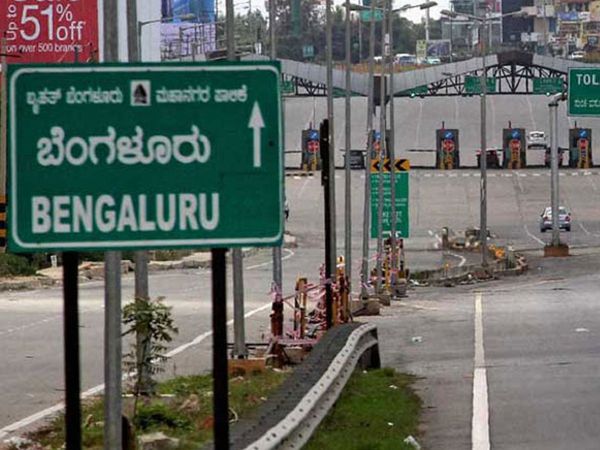
Amid this, the government has announced that travellers from other states will need RT-PCR negative reports to enter Bengaluru. Bengaluru is the worst-hit city in Karnataka. Earlier, people coming from only 3 states has to submit negative reports.
-
“Nearly 1,400 cases have been reported in Bengaluru (on Wednesday), which is the highest in the last 4 months. There is a spike in cases everyday. It is increasingly found in passengers arriving in the city from other states,” Karnataka Health Minister K Sudhakar said yesterday (March 25).
-
“As of now, restriction is for Maharashtra, Kerala, Punjab and Chandigarh. But now going forward, it is applicable to all states.”
CONCLUSION
-
Meanwhile, the number of new COVID-19 cases remained over 2,500 in Karnataka as the state reported 2,566 cases today (March 26). The recoveries were also on the high side – 1,207 people recovered from the infection.
-
The addition of 2,566 cases has taken the state’s tally to 9,81,044. Out of these, 9,48,988 people have recovered from the infection. There are 19,553 active cases in the state.
KEY STORY
-
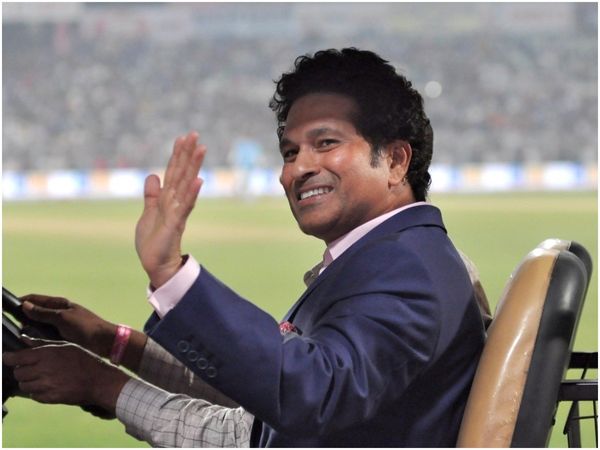
While it was believed that India was battling hard versus the COVID-19 pandemic with the cases being limited and recoveries being higher, the second wave of the novel coronavirus is now challenging the citizens with a rapid spike in cases. Maharashtra remains one of the worst-affected states with plenty of positive cases, including that of Sachin Tendulkar.
-
Tendulkar, who is easily regarded as one of the most complete batsmen to have played the gentlemen’s game, shared the news on social media via his official Twitter handle on Saturday morning (March 27).
-
He wrote, “I have been testing myself and taking all the recommended precautions to ensure Covid is kept at bay. However, I’ve tested positive today following mild symptoms. All others at home have tested negative.
-
I’ve quarantined myself at home and am following all protocols as advised by my doctors. I want to thank all the healthcare professionals who are supporting me and many others across the country
Take care all of you.”
-
Tendulkar was last seen on the cricket field during the recently-concluded Road Safety World Series in Raipur. The Master Blaster led the eventual winners India Legends and ended as the side’s leading run-getter.
-
Having gone through various tests during the course of the tournament, it has come as a surprise as the former cricketer has tested positive for the virus.
-
All other members of his family have tested negative whereas his son Arjun Tendulkar has recently joined the Mumbai Indians (MI) camp ahead of the forthcoming IPL 2021 edition, from April 9. He is currently in quarantine and will join his teammates only after the end of his isolation period.
-
Tendulkar, who retired from all forms of the game with over 34,000 runs and 100 international tons, has already received several messages on his latest Twitter post as his avid fans are praying for his speedy recovery.

KEY STORY
-
Civil aviation minister, Hardeep Singh Puri, on Thursday inaugurated the sixth airport of Andhra Pradesh. The Kurnool airport in Orvakal was inaugurated virtually. Flight operations will commence on 28 March under the Regional Connectivity Scheme – Ude Desh Ka Aam Nagrik (RCS-UDAN), Ministry of Civil Aviation said in a statement.
-
“Direct flight operations to Bangalore, Vishakhapatnam and Chennai will bring the region closer to the major hubs in the South India. These routes were approved by the MoCA under the UDAN 4 bid process last year,” it said. The government of India and the government of Andhra Pradesh will share the Viability Gap Finance (VGF) towards operations on an 80:20 basis, the statement read.
-
“PM @narendramodi Ji’s vision ‘Hawai Chappal se Hawai Jahaaz Tak’ continues to be implemented across the country. Delighted to virtually join CM Andhra Pradesh Sh @Ysjagan Garu, ministers & MPs at the inauguration of Kurnool airport today,” tweeted Hardeep Sigh Puri.
-
“It is the 6th operational airport in the state & 57th airport under the UDAN scheme in India. We have earmarked Rs 1100 crore for aviation & airport infrastructure at Visakhapatnam, Tirupati, Vijayawada, Kadapa & Rajahmundry in Andhra Pradesh,” said Puri.
-
Andhra Pradesh now has 6 airports, in Kadapa, Visakhapatnam, Tirupati, Rajahmundry and Vijayawada and the sixth airport in Kurnool. Kurnool is the judicial capital of Andhra Pradesh and a historical hub of the country.
-
The flight operations at Kurnool airport will commence on 28th March 2021 under the Regional Connectivity Scheme – Ude Desh Ka Aam Nagrik (RCS-UDAN).
-
Direct flight operations to Bangalore, Vishakhapatnam and Chennai will bring the region closer to the major hubs in South India. These routes were approved by the MoCA under the UDAN 4 bid process last year.
-
The Government of India and the Government of Andhra Pradesh will jointly share the VGF towards the operations on an 80:20 basis. Till date, 56 unserved and underserved airports (including 5 heliports+ 2 water aerodrome) with 325 routes have been operationalised under UDAN across the length and breadth of India.
-
Kurnool is the judicial capital of Andhra Pradesh and a historical hub of the country. The place is famous for its mighty caves and temples. The city of Kurnool lies on the banks of the Tungabhadra River and, Nallamalas mountain hill range runs parallel. Moreover, Famous tourist spots include Nallamala Forest, Ahobilam, Belum Caves, Mahanandi, Mantralayam, Orvakal, Sangameshwaram, Kethavaram and Kalva Bugga. This air connectivity will fulfill the aspirations of the people of Kurnool and provide impetus to the local economy and tourism.
-
Famous tourist spots like Nallamala Forest, Ahobilam, Belum Caves, Mahanandi, Mantralayam, Orvakal, Sangameshwaram, Kethavaram and Kalva Buggam, are in Kurnool. “This air connectivity will fulfill the aspirations of the people of Kurnool and provide impetus to the local economy and tourism,” the ministry said.
KEY STORY
-
The government on Friday extended the validity of motor vehicle documents like driving licence (DL), registration certificate (RC) and permits till June 30, 2021, in view of the ongoing COVID-19 pandemic.
-
In an advisory to states, the Ministry of Road Transport and Highways (MoRTH) said it is extending the validity of fitness, permit, driving licence, registration and other documents whose extension of validity could not be granted due to lockdown and which had expired since February 1, 2020, or would expire by March 31, 2021.
-
The advisory stated, “Taking into consideration the grim situation still continuing due to conditions for prevention of spread of COVID-19 across the country, it is advised that the validity of all of the above-referred documents whose extension of validity could not be, or was not likely to be, granted due to lock-down and/or COVID -19 and which had expired since 1st of Feb, 2020 or would expire by 30th June 2021, the same may be treated to be valid till 30th June, 2021.”
-
“Enforcement authorities are advised to treat such documents valid till 30th June 2021. This will help out citizens in availing transport-related services. It may be the last advisory in this regard,” it read further.
CONCLUSION
-
All the states and Union Territories have been requested to implement this advisory in letter and spirit so that the citizens, the transporters, and various other organizations, which are operating under this difficult time, may not get harassed and face difficulties, said the ministry.
-
It is worth noting that the Ministry had earlier issued advisories dated March 30, 2020, June 9, 2020, August 24, 2020, and December 27, 2020, in connection with extension of validity of documents related to the Motor Vehicles Act, 1988, and
Central Motor Vehicle Rules, 1989.
1...631632633...884Page 632 of 884