HIGHLIGHTS
-
Graduation colleges run by the state government under the Higher Education Department across Karnataka including those in Bengaluru, are facing a severe shortage of teachers. The shortage is so acute that students have had to stage protests over the issue. For years, permanent faculty for these colleges have remained low and guest lecturers are being recruited on a yearly basis to make up for the shortage.
-
Final year students from the Maharani’s Arts, Commerce and Management College for Women resorted to protests earlier this week by sitting in front of their college gate, stating that although they have seven subjects as part of the course, only two subjects are being taught for the last three months since the college reopened after the COVID-19 lockdown.
-
“From the time college has restarted, we have been asking our principal when the guest lecturers will start to teach. Constantly, we are being told that it will happen this day or that day. Till today, it hasn’t happened, so we couldn’t wait anymore,” said Bhavana (name changed on request).
-
The students fear that they will be forced to attend the exams without being taught. When asked about why the situation was so dire, Manjunath T, Principal, Maharani’s Arts and Commerce College, suggested that efforts were being made to hire more teachers on an ad-hoc basis.
-
“We need 70 lecturers but only 28 have been given. Government has only allowed 50% of those who taught last year to teach this year. We will try our best to complete the syllabus with the time remaining. The students need not protest as we also wish for their benefit and we will solve all of their problems. This problem is not restricted to our college but across 400 colleges in the state,” he told TNM.
-
Students of Government Arts College in Bengaluru said that they are also facing a similar problem.
-
“We don’t have lecturers for multiple subjects. We are currently having combined classes with other sections and other streams, just so they can engage the classes,” Shanti, a second-year student said.
-
The situation is no better in districts away from cities like Bengaluru and Mysuru.
-
Amar, a student of Government First Grade College in Dharwad said, “In the previous years, we used to have guest faculty but this year, there is no guest faculty. The lecturers are struggling to take classes and we are not having practical classes. At this pace, the syllabus cannot be completed before exams.”
-
Similarly, Eranna, a student of Sarladevi College in Ballari said that while usually, 130 guest faculty members are hired every year to make up for the low number of permanent faculty. This year, they have not been appointed. This has resulted in students having to attend a single or two classes in a day on average.
-
The Hindu on Sunday reported that while 14,000 such guest faculty were to be hired, only 7,000 have been hired. The report stated that the Finance Department is yet to approve the Higher Education Department’s proposal to hire the other 7,000.
‘Hire permanent faculty’
Niranjanaradhya VP, Senior Fellow and Programme Head, Universalisation of Equitable Quality Education Programme, Centre for Child and the Law, at National Law School of India University said that the current policy of hiring ad-hoc faculty is the problem.
“The problem really is that we are not making permanent recruitment. Whenever there are vacancies, permanent appointments need to be made. Only then, we can do justice to students. Contractual appointments won’t serve any purpose as there is no job security and because of that, they don’t show much interest. What research shows is that when there is permanency in a job, automatically the job satisfaction goes up, making them engage with students in a full-fledged way,” he told TNM.
“Permanent appointments are key to smoothen this process and it also increases the quality of teaching. The government should stop this ad hoc arrangement. I feel that we must do away with this contractual appointment as it doesn’t help the learning process. This is a neo-liberal model of hire and fire where they don’t want to provide social security and sectors like education and health are not a priority for the government now, unlike earlier. After 1990, education became open for privatisation and commercialisation,” he added.
HIGHLIGHTS
-
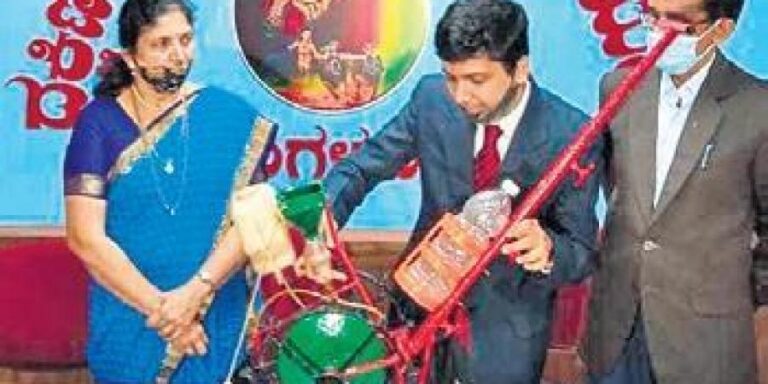
Rakesh Krishna K, 16, from Bannur in Puttur taluk of Dakshina Kannada, who has been chosen for Pradhan Mantri Rashtriya Bala Puraskar in the category of innovation, interacted with Prime Minister Narendra Modi on a virtual platform on Monday. He was one among the five chosen out of 32 awardees from the country to interact with the PM.
-
The PM was keen to know about Rakesh’s innovation ‘Seedographer’ and its benefits to the farming community. Rakesh said his prototype could help the farming community by drastically cutting down the time and expenditure on labour, besides carrying out sowing in a systematic and effective manner, thereby increasing the harvest. Modi acknowledged his contribution saying: “At such a young age, you have achieved something that astonishes the people.”

KEY HIGHLIGHTS
-
The 26th of January is celebrated as the Republic Day of India
-
It marks the day when the Indian constitution came into force
-
Here is all you need to know about your right to proper healthcare, as per the Indian constitution
The 26th of January, every year, is observed as the Republic Day in India. 26th January 2021, marks the 72nd Republic Day of the country. This was the day in 1950 when the Constitution of India was enforced, granting the people of the country certain rights, and a list of duties they must follow as citizens of the country. One right, however, that remains of utmost importance this year, when the world has struggled with the COVID-19 pandemic, is the right to healthcare.
The right to healthcare, specifically, is not a part of the fundamental rights listed in the constitution of India. However, this in no way means that the constitution of India does not safeguard the interests of its citizens when it comes to healthcare.
The Constitution of India on the right to health care
The Constitution of India incorporates provisions to ensure that everyone is entitled to attainable standards of physical and mental health. According to article 21 of the Constitution, every person has a guarantee of protection of life, and personal liberty – which ensures that people stay safe and sound. According to a study, the Supreme Court of India has also said that the right to live with human dignity, derived from directive principles of state policy also includes the protection of health, as something the state must ensure for its citizens. Further, it has also been held that the right to health is integral to the right to life and the government has a constitutional obligation to provide health facilities.
Furthermore, based on various verdicts given by the apex court of the country, failure of a government hospital to provide a patient with timely medical treatment results in the violation of the patient’s right to life. The court also says that states are liable to maintain healthy standards of living.
Public interest litigations, citing article 21 of the Indian Constitution have also been filed in response to violations of the right to health. These include pollution hazards, drug hazards, inhuman conditions in after-care homes, on the health rights of mentally-ill patients, on patients in cataract surgery camps, and many others.
Exercising your rights, but following your duties
While exercising your right to healthcare is absolutely correct, we must not forget that we also have duties towards the country and the general public. For instance, when one person smokes in public, they encroach upon another person’s right to health, as they are making them smoke passively. Similarly, when one person litters and causes unhygienic conditions, it leads to the whole community facing the consequences of it, in terms of the diseases it attracts. While one should consciously exercise their rights, they should also ensure they are dutiful, and try to move towards a healthier world, overall.

KEY HIGHLIGHTS
-
Abu Dhabi: The World Health Organisation has recognised the holy city of Medina in Saudi Arabia as a healthy city after it met all the global standards required by the organisation to be a healthy city, local media reported.
-
Medina has become the first large city with a population exceeding two million people to be recognised as such by WHO.
-
According to WHO, “a healthy city is one that is continually creating and improving those physical and social environments and expanding those community resources, which enable people to mutually support each other in performing all the functions of life and developing to their maximum potential.”
-
The healthy cities programme in the city featured a strategic partnership with Taibah University to record all government requirements and procedures in line with global regulations, evidence and procedures, and record them on an electronic platform for the organisation’s review.
-
It has established specialised charitable societies and supported them with quality projects in partnership with government agencies.
- Dr. Abdul Aziz Al Sarani, Taibah University rector and committee chairman in the region, said that the programme was a preventive scheme aimed at improving the environmental, social and economic aspects affecting health.
-
The coordinator of the WHO healthy cities programme in Medina, Ahmed bin Obaid Hammad, said the organisation’s recommendation for Medina to be a local and international training centre is the biggest achievement of the city’s programme and “we are all proud of it”.
KEY HIGHLIGHTS
-
Varun Dhawan and Natasha Dalal are now married
-
Their wedding festivities are taking place in Alibaug
-
It is being said that the newlyweds will host a wedding reception on January 26
Their ‘happily ever after’ beings now! Varun Dhawan and Natasha Dalal have sealed the deal and are now a married couple. Their wedding was an intimate event and was attended by their families, close friends and a few celebs from the film industry.
Varun and Natasha’s wedding festivities are happening at The Mansion House, which is a luxurious 25-room resort in Alibaug. Yesterday was their sangeet ceremony. It is being said that the newlyweds will also host a wedding reception, which will be held on January 26.
Ever since Varun’s uncle, Anil Dhawan, confirmed his wedding, fans have been eagerly waiting to know every detail about the do. However, not much has been known about the ceremonies and only one photo of Varun with his squad has managed to find its way to the web yet. It has been reported that the couple had a no-phone policy at their wedding.

Prior to the sangeet ceremony, Varun also had a bachelor party, which was hosted near the wedding venue. As per a report, it was also shared that Varun had a minor accident while he was on his way to the bachelor party. Fortunately, nobody got hurt and the car, too, got saved without any damage.
Meanwhile, among the celebs who were included in the guest list, some are Karan Johar, Salman Khan, Katrina Kaif, Alia Bhatt, Arjun Kapoor and Manish Malhotra among others. It will be interesting to see how these celebs dressed in their traditional best for the wedding. While we wait for the photo, you can go to their social media feeds to take cues from their other traditional looks.

KEY HIGHLIGHTS
-
Belly fat is the excess weight that develops around your abdomen over time
-
Yoga is a very useful medium for weight loss and can help you shed the extra pounds quickly
-
Here are a few yoga postures that are good for belly fat reduction
Belly fat poses several risks for both men and women. Carrying extra weight, especially around the belly, can be risky. Belly fat is not only the extra layer of fat on your belly but also the extra amount of fat on your internal organs. This is a dangerous phenomenon and has numerous health risks. It increases the risk of kidney and liver problems, cardiovascular disease, hypertension, diabetes and also premature death in severe cases. There are a number of reasons that result in excess belly fat such as the number of calories you consume, your workout routine and the number of calories you burn, your age, your sleeping patterns, and other factors like stress, alcohol consumption and lifestyle.
In order to lose belly fat, you have to eat in small portions, increase physical activity, eat a healthy diet, replace sugary food and drinks with healthier options, sleep on time and improve your lifestyle. Yoga is one way you can lose the extra kilos around your belly quickly. It is the safest and most effective option. You can either practice yoga at home or outdoors, whatever suits your preference. Yoga postures that help in reducing your belly fat are also beneficial for your entire body as they strengthen your abdominal muscles, increase your physical activity and make you feel better both inside out.
Yoga poses to reduce belly fat
-
Bhujangasana- This pose is also known as the cobra pose. It works on relaxing your lower back and also strengthens your abdominal muscles. This posture is very beneficial when it comes to losing the extra fat around your belly. Hold this pose for 25-30 seconds and practice it at least 10 times for best results.
-
Dhanurasana- This posture is also known as the bow pose. It strengthens your abs and also cuts off the extra kilos around your abdomen. It helps in reducing fat quickly. Hold this pose for at least 60 seconds to see results.
-
Kumbhakasana- This pose is also known as the plank. It is a well-known pose and it’s best known to burn your tummy fat and tone your abdominal muscles. It strengthens your abs by exerting pressure on them. Hold this pose for as long as you can and make sure your practice it every day.
-
Naukasana- This posture is known as the boat pose. It is the best yoga pose to strengthen your core muscles. It burns the extra fat on your side and front tummy. It works great for your abdominal muscles. Hold this pose for 60 seconds to see results.
-
Ustrasana- This pose is also known as the camel pose. It is a slightly difficult pose but it’s very beneficial for your belly fat. It reduces your tummy fat very quickly. Hold this pose for up to 10 minutes to notice the change.

KEY HIGHLIGHTS
-
Rahul Dravid is being hugely credited for Team India’s success against Australia
-
He served as the coach of India A and U-19 teams from 2015 to 2019
-
The likes of Rishabh Pant, Shubman Gill and many others first played under Dravid’s tutelage
As soon as Team India clinched the Border-Gavaskar Trophy for the second time in a row, the Twitterati was in all praise for Rahul Dravid, the former India A and U-19 coach. In the absence of seniors players, a number of youngsters stepped up in the team’s success. And interestingly, every young player in the side had spent time with Dravid at various levels.
Rishabh Pant, India’s highest run-scorer in the series, was coached by Dravid at ‘A’, U-19 level and in IPL while Shubman Gill was part of the Dravid-coached U-19 team which won the World Cup in 2018. Mohammed Siraj, Hanuma Vihari, Navdeep Saini, Washington Sundar and Prithvi Shaw also played under Dravid’s guidance before they made it to the national team.
While the fans are in awe of Dravid’s contributions, the ICC Hall of Famer has said that not him, but the players deserve all the praise. “Ha ha, unnecessary credit, the boys deserve all the praise,” he told The Sunday Express.
Dravid served as the coach of India A and U-19 teams from 2015 to 2019. He left the job in 2019 and took over as the Head of Cricket at NCA.
India vs Australis series result
The first-ever Asian team to win a Test series against Australia Down Under, India returned to the country for a full-fledged series after two years. They lost the ODI series but won the T20I series.
The visitors made a horror start to the Border-Gavaskar Trophy as they lost the opening Test after being bowled out for 36 in the second innings. Playing under stand-in captain Ajinkya Rahane, India made a remarkable comeback in the Boxing Day Test to level the series.
An injury-riddled India earned a draw in the third Test and won the final Test to clinch the series 2-1. Rishabh, who trained under Dravid for long, was India’s highest run-scorer (274 runs) in the Test series.

HIGHLIGHTS
-
A so-called configuration change at the back-end forced some Facebook users to log out of their accounts unexpectedly, according to the social network.
-
The problem started on Friday and went on till Saturday for Facebook users before it got resolved.
-
“On January 22, a configuration change caused some people to be logged out of their Facebook accounts. We investigated the issue and fixed it. We’re sorry for the inconvenience,” Facebook said in a statement on Saturday.
-
The affected Facebook users on Reddit reported they were receiving “sign-in” prompts from their Facebook apps, but they had not signed out.
-
“We’re looking into reports of people being logged out and having to log in again to access their Facebook accounts. We’re working to resolve this issue as quickly as possible. Thank you for your patience,” Facebook tweeted.
-
According to Engadget, the iPhone users appeared most affected by the log-out issue.
-
The users on the iOS app were having difficulty logging back into their accounts when using two-factor authentication.
-
“Based on social media posts, many of the people with two-factor authentication enabled were eventually able to log back in, but the SMS codes were very slow to send, and some have had to upload pictures of their ID to regain access”.
-
It was a “configuration change”, admitted Facebook in a later tweet, thanking engineers “who fixed the issue and patiently tried to explain the cause to us to no avail”.

HIGHLIGHTS
-
Salaries of central government employees are expected to go up this year as the Centre is expected to reinstate the 4 per cent Dearness Allowance (DA) hike that was put on hold in 2020. It was earlier reported that the DA hike may be restored as early as January, but the government has not yet formally announced anything yet.
-
It seems now that a decision on reinstating the additional four per cent DA will be taken closer to July 2021. The DA hike was put on hold in April 2020 in the wake of the economic crisis triggered by the deadly coronavirus pandemic.
-
The Centre had decided to put the DA hike on hold till July 2021. While there are chances that it could be reinstated earlier, a formal confirmation from the government is awaited.
-
The DA hike is likely to benefit roughly 50 lakh central government employees and over 60 lakh pensioners. As of now, DA is given to central government employees and pensioners at the rate of 17 per cent.
-
Last year, the central government had approved a four per cent DA hike in line with the formula, based on recommendations from the 7th Central Pay Commission.
-
Central government employees and pensioners can expect to receive 21 per cent DA starting this year after the government makes a formal announcement to restore the 4 per cent additional hike.
-
Many workers’ associations have urged the government to restore the 4 per cent DA hike for eligible employees and pensioners in view of the rising cost of living and inflation.
-
It is worth mentioning that the central government announced a hike in dearness allowance twice a year to compensate employees and workers for higher costs due to inflation. The four per cent DA hike that has been put on hold was proposed in January 2020 and it was approved in March 2020.
-
However, it was put on hold a month later in April 2020 as the pandemic depleted government revenues. While central government employees can hope to receive the four per cent DA hike by July, there is no clarity whether the Centre will announce an additional DA hike for this year.

HIGHLIGHTS
-
Soon after taking oath in office, US President Joe Biden took steps for immigration reforms, underlining that the move would boost American economy, create jobs and attract and retain the best talent from across the world.
-
On the day one of his presidency on Wednesday, Biden sent a comprehensive immigration bill to Congress which proposes major overhauls to the system, including granting legal status and a path to citizenship to tens of thousands of undocumented immigrants and other groups and reduce the time that family members must wait outside the US for green cards.
-
Called as the US Citizenship Act of 2021, the legislation modernises the immigration system, and also proposes to eliminate the per country cap for employment-based green cards, a move that would benefit thousands of Indian IT professionals whose current wait period for legal permanent residency runs into several decades.
-
The immigration bill marks a symbolic break with the restrictionist immigration policies that have defined the last four years under the rule of Trump and therefore ushering in what Biden promises to be a more welcoming era for immigrants in the US.
-
Moreover, the immigration bill is expected to benefit hundreds and thousands of Indian IT professionals in the US, whose current wait period for legal permanent residency runs into several decades.
-
One of the highlights of the immigration bill is that it allows undocumented immigrants to obtain legal status and eventually, citizenship. To qualify for this, they would have to have been present in the US on or before January 1, 2021, unless granted a waiver on humanitarian grounds.
-
Initially, they would be able to obtain a work permit and travel abroad with the assurance that they would be permitted to re-enter the country. After five years, they would be able to apply for a green card if they pass background checks and pay taxes.
Per-country visa cap
-
Another thing in the immigration bill is that it reforms the family-based immigration system by recapturing unused visas to clear the backlog, eliminating the lengthy waits, and it increases their per-country visa caps. The bill also eliminates the bars and other provisions that have kept families apart.
No religious discrimination
-
The ‘No Ban Act’ in the bill prohibits discrimination based on religion and limits presidential authority to issue future bans. Indian IT professionals, most of whom are highly skilled and come to the US mainly on the H-1B work visas, are the worst sufferers of the current immigration system which imposes a seven percent per country quota on allotment of the coveted Green Card or permanent legal residency.
-
Biden’s bill also increases the diversity visa program from 55,000 visas to 80,000 per year. US tech companies like Apple, Google and Microsoft employ a huge number of IT professionals from countries like India and China.
-
The Trump administration had extended the freeze on H-1B visas along with other types of work visas and green cards until March 31. The H-1B visa is a non-immigrant visa that allows US companies to employ foreign workers in specialty occupations that require theoretical or technical expertise.
1...684685686...884Page 685 of 884