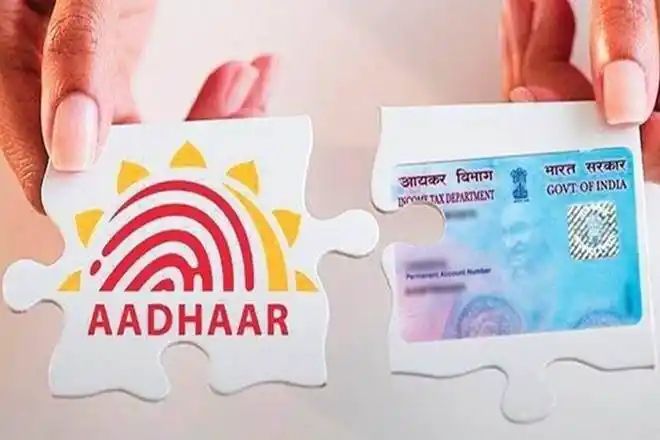
PAN Card-Aadhaar Card Linking Deadline extended till March 31; Check details

The last date for PAN-Aadhaar linking has been extended by the government. As per the notification, the PAN Card-Aadhaar Card linking last date has been extended till March 31, 2021. The previous deadline for linking PAN and Aadhaar was June 30, 2020. The extension in PAN-Aadhaar link deadline comes as good news for those PAN cardholders who have not yet reportedly linked their PAN with Aadhaar. They now get a few more months to complete the process, which takes just a few minutes.

If you already have the PAN card and are eligible to obtain Aadhaar number or you have already acquired one, then you are required to intimate the Aadhaar number to the Income Tax department.

Your PAN Aadhaar linking needs to be completed else the PAN will become ‘inoperative’.

Once the PAN becomes inoperative, one will not be able to undergo several transactions where PAN is required to be quoted mandatorily. The income tax department has specified 18 financial transactions where quoting of PAN is mandatory by the individual. In such cases, the transactions could be carried out only when the PAN and Aadhaar are linked thus making the PAN re-active.

To link Aadhaar with PAN card, one may go to the e-filing website of the income tax department. One may use log-in credentials or even without logging, the linking of Aadhaar and PAN can be done. The income tax department has made it clear that for filing of ITR, Aadhaar and PAN linkage is mandatory unless specifically exempted.

For PAN-Aadhaar linking, you must ensure that name, date of birth and gender mentioned by you are same on both PAN and Aadhaar. The Aadhaar number and the name on Aadhaar card should be exactly the same as printed on the Aadhaar card.

PAN and Aadhaar can also be linked through SMS to 567678 or 56161 through your registered mobile number. The format of the SMS is: UIDPAN<SPACE><12 Digit Aadhaar Number><SPACE><10 Digit PAN> For Example: UIDPAN 100023456789 XXYZ0123X.

As per income tax rules, PAN Aadhaar linking is mandatory. For new PAN seekers, the Income Tax Department allows the creation of Aadhaar-based instant PAN on the e-filing website. ‘Aadhaar-based instant PAN allotment service is to allot PAN in near-real time. You are required to quote a valid Aadhaar number issued by Unique Identification Authority of India (UIDAI) and is not linked with any PAN. The e-KYC data of that Aadhaar number is exchanged with the Unique Identification Authority of India(UIDAI). After due process of e KYC data in Income-tax database, you get a PAN,’ the Income Tax Department says on its website.
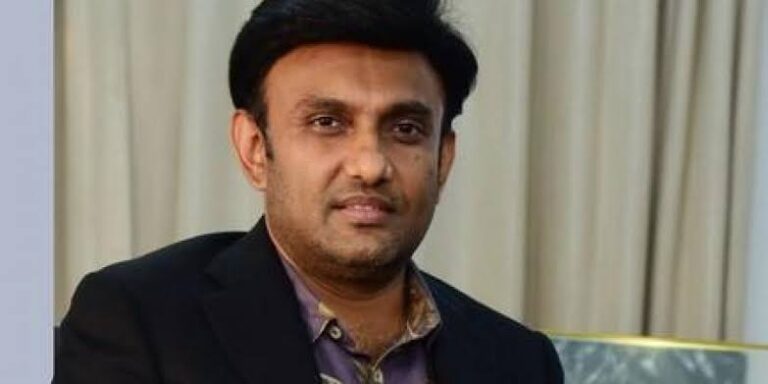
Karnataka minister K Sudhakar’s wife, daughter test positive for COVID-19

0

Bengaluru: Karnataka Medical Education Minister K Sudhakar’s wife and daughter have tested positive for COVID-19. Fortunately, the samples of the MLA and his two sons have returned negative for coronavirus.

“Test results of our family members have come. Unfortunately, my wife and daughter have tested positive for #Covid19 and are undergoing treatment. My two sons and myself have tested negative. I am grateful to everyone for their best wishes and prayers,” Sudhakar tweeted.

Notably, the Kerala minister’s father P N Keshava Reddy tested positive for COVID-19 on Monday.

He was admitted to hospital after complaining of fever and cough.

Earlier, a domestic help of Sudhakar had tested positive for the deadly contagious disease and was admitted to a hospital.

Sudhakar, an MLA from Chikkaballapura, was quarantined along with three other ministers in April for coming in contact with a journalist who had tested positive for COVID-19.

Parents do ‘tweetstorm’ to oppose Karnataka ban on online classes

0

Parents of students from various private schools took to Twitter on Sunday to bring to the government’s attention that they want online classes to resume for their wards, and want the ban on online classes revoked.

Karnataka Education Department had passed an order last week banning all virtual classes (live and recorded) for classes up to standard 5. The government is currently consulting with an expert committee to draw up guidelines on online classes for school students.

Parents tweeted, saying the government should work on ensuring access, instead of banning classes. Parents also noted that the government had not done any forward planning and paid attention to the issue during April and May, when schools were shut.

“Setting up the committee after denying everyone education is just a means to hide the incompetence of the ministry. Why deny access to everyone? Work on ensuring access” one tweet read.

“Instead of working on ensuring access during April and May, the minister has chosen to ban education altogether in June. Couldn’t he have setup the committee in April. Why wake up only in June and now hiding behind the committee?”


Teachers too joined the tweetstorm pledging their support for online classes. Quite a few schools have laid off or cut salaries of teachers since the government has told parents that they need not pay fees for now, till classes resume.


Over the last few weeks, many have opposed online classes as it would adversely affect those students who do not have access to a laptop, mobile phone or internet. With most parents working from home, many who have laptops and mobiles are unable to spare it for their wards. To combat this, the government had proposed to have televised classes for students as most children have TV in their homes. Moreover, schools were trying to complete the syllabus through online classes, thereby making students glued to the screens for hours.

Rajesh Bhat, who is part of the All India Save Education campaign, says that educational institutions are trying to put pressure on the government. “Private international schools badly want online classes (to continue). Many schools have bought software paying lakhs of rupees from software developers. Now, the ban on online classes have affected them. Many schools have not gotten admissions after the ban on online classes.”

Education Minister Suresh Kumar had told TNM that the ban is only temporary and the committee was looking at curtailing hours of learning and cutting down the syllabus.

However, if the government does not make its position clear by next week, it could spell more trouble for schools and agitate parents who want online classes to resume.

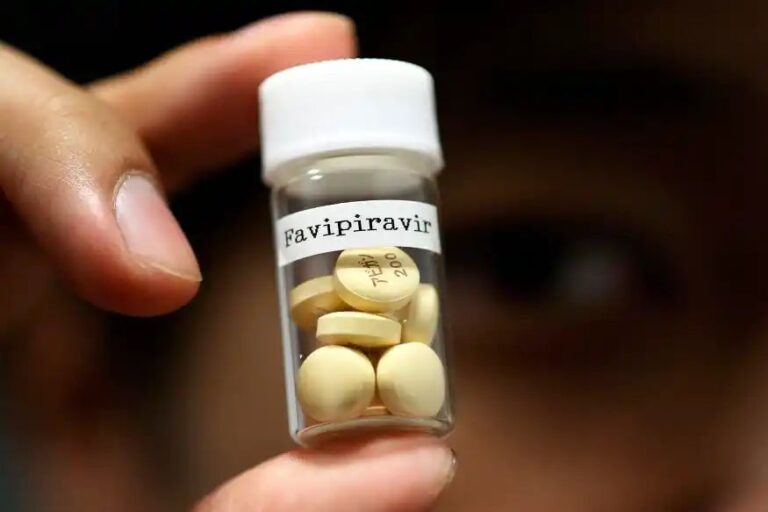
Favipiravir: All You Need to Know About the New Covid-19 Medicine and its Effects on Patients

New Delhi: Mumbai-based Glenmark Pharmaceuticals has received approvals from Drug Controller General of India to manufacture and market Favipiravir, an anti-viral drug, to treat Covid-19 patients. The drug is likely to be available in the market in the next few days. What is this drug and what improvement has it shown in Covid-19 patients? News18 explains:

What is Favipiravir?

Favipiravir is an anti-viral drug and it is approved in Japan for treating influenza. It is currently being tested in 18 clinical trials for Covid-19 and results from two studies have shown a positive outcome, while data from other trials is awaited.

What is the Glenmark drug approved by the Drug Controller General of India?

Based on Phase-3 data, the company obtained approval for manufacture and marketing of antiviral drug Favipiravir, which has been branded as FabiFlu, an oral medication. The approval is for emergency restricted use only for treatment of mild to moderate Covid-19 patients. The approval’s restricted use entails responsible medication use where every patient must have signed informed consent before treatment initiation.

According to a press release issued by Glenmark on Saturday, June 20, the company successfully developed the active pharmaceutical ingredient and formulation for FabiFlu through its own in-house R&D team.

‘Glenmark filed the product for clinical trial with India’s drug regulator DCGI and became the first pharmaceutical company in India to receive approval for conducting phase 3 clinical trial on mild to moderate COVID-19 patients,’ the press release said.

What improvement has it shown in Covid-19 patients and what studies has Glenmark cited?

Glenmark claimed that Favipiravir shows clinical improvements of up to 88 per cent in Covid-19, with rapid reduction in viral load by four days. The drug will be available as a prescription-based medication for Rs 103/tablet, with recommended dose being 1800 mg twice daily on day 1, followed by 800 mg twice daily up to day 14.

In India, a randomised multi-centre study was done on Indian patients to test the drug’s efficacy and safety with standard of care vs standard of care alone in mild to moderate Covid-19, the company said. The study enrolled 150 patients. The study’s details are yet to be published in a peer-reviewed paper.

In its press release, the company cited four studies; two from China and one reach from Russia and Japan. One of the studies done on 80 patients in China studied the efficacy of Favipiravir vis-à-vis anti-retroviral drugs Lopinavir and Ritonavir. Favipiravir treatment led to a quicker reduction in viral load compared to the other drugs. In the second Chinese study, 236 patients were enrolled.

Favipiravir showed a better rate of clinical recovery on seventh day compared Umifenovir, another antiviral drug. It also led to a quicker relief from fever and cough. The observational study in Japan comprising 2,141 patients with mild to moderate symptoms showed clinical improvement using Favipiravir.

Is the government conducting trials to test the efficacy of this drug?

Yes. The Council of Scientific and Industrial Research (CSIR) had done end-to-end synthesis of Favipiravir in April. Earlier this week, CSIR got approvals from DGCI to conduct multi-centre Phase-II trials of the drug.

Government Rs 50 lakh covid cover for healthworkers extended till September

New Delhi: The government has extended the Rs 50 lakh insurance scheme for about 22 lakh healthcare providers for another three months till September as there is no respite from COVID-19 pandemic.

The scheme implemented by New India Assurance was to end on June 30, 2020 as per the announcement made by Finance Minister Nirmala Sitharaman as part of the Rs 1.70 lakh Pradhan Mantri Garib Kalyan package in March.

The insurance provides a comprehensive personal accident cover of Rs 50 lakh to a total of around 22.12 lakh public healthcare providers, including community health workers, who may have to be in direct contact and care of patients suffering from coronavirus infection and who may be at risk of being impacted by this.

Insurance Scheme for health workers in government hospitals and healthcare centres operationalised with effect from March 30, 2020, an official statement said, adding the scheme has been extended up to September.

The scheme is funded through the National Disaster Response Fund, operated by the Ministry of Health and Family Welfare.

Doctors, nurses, paramedics, sanitation workers and a few others working in hospitals under the central and state governments will be covered under the insurance scheme.

While announcing the scheme, the Finance Minister had said, safai karamcharis, ward-boys, nurses, ASHA workers, paramedics, technicians, doctors and specialists and other health workers would be covered by the special insurance scheme.

“Any health professional, who while treating COVID-19 patients, meet with some accident, then he/she would be compensated with an amount of Rs 50 lakh under the scheme,” she had said.

All government health centres, wellness centres and hospitals of the Centre as well as states would be covered under this scheme, she had said.

Glenmark launches Covid-19 drug after DCGI nod

Glenmark Pharmaceuticals on Saturday said it has launched antiviral drug Favipiravir, under the brand name FabiFlu, for the treatment of patients with mild to moderate Covid-19. The Mumbai-based drug firm had on Friday received manufacturing and marketing approval from the Drugs Controller General of India (DCGI).

FabiFlu is the first oral Favipiravir-approved medication for the treatment of Covid-19, the company said in a statement. “This approval comes at a time when cases in India are spiralling like never before, putting a tremendous pressure on our healthcare system,” Glenmark Pharmaceuticals Chairman and Managing Director Glenn Saldanha said.

The company hopes that the availability of an effective treatment such as FabiFlu will considerably help assuage this pressure, and offer patients in India a much needed and timely therapy option, he added. FabiFlu has demonstrated an encouraging response in mild to moderate Covid-19 patients during clinical trials, Saldanha said. Moreover, it is orally administered, and so it serves as a more convenient treatment option over other intravenously administered medications, he noted.

“Glenmark will work closely with the government and medical community to make FabiFlu quickly accessible to patients across the country,” Saldanha said. The drug will be available as a prescription-based medication for Rs 103/tablet, with recommended dose being 1,800 mg twice on day one, followed by 800 mg twice daily up to day 14. Favipiravir can be used for coronavirus patients with co-morbid conditions such as diabetes and heart disease with mild to moderate Covid-19 symptoms. It offers rapid reduction in viral load within four days and provides faster symptomatic and radio logical improvement, the drug maker added.

Favipiravir has shown clinical improvement of up to 88 per cent in mild to moderate Covid-19 cases, it said. The drug firm had successfully developed the active pharmaceutical ingredient (API) and the formulation for FabiFlu through its in-house R&D team. It had then filed the product for clinical trial with country’s drug regulator DCGI and became the first pharmaceutical company in India to receive approval for conducting phase 3 clinical trial on mild to moderate Covid-19 patients.

Favipiravir has been approved in Japan since 2014 for the treatment of novel or re-emerging influenza virus infections. Last month, Glenmark also announced that it is conducting another clinical trial to evaluate the efficacy of two antivirals Favipiravir and Umifenovir as a combination therapy in moderate hospitalised adult Covid-19 patients in India. India on Saturday saw another record spike of 14,516 new Covid-19 cases in a single day, pushing the tally to 3,95,048, while the death toll rose to 12,948 with 375 new fatalities, according to Union Health Ministry data.

8,000 teachers write to Amit Shah for 3 months salary

Image Source : FILE PHOTO

Around 8,000 teachers working in North Delhi Municipal Corporation, who are waiting for their salaries from last three months, write to Home Minister Amit Shah.(Representational image)

Schools were asked not to force parents to pay fee during the lockdown period which became a likely reason for non-payment of teachers’ salary for almost an equivalent amount of time. Now, around 8,000 teachers working in North Delhi Municipal Corporation, who are waiting for their salaries from last three months, have written to Union Home Minister Amit Shah regarding the same.

They had earlier appealed in the court too.

Municipal Corporation Teachers Association General Secretary Ramnivas Solanki on Friday said, “Today we have also written to Home Minister Amit Shah asking for help, in which we have apprised him that during this corona pandemic outbreak all the teachers are working for 12 hours. We are not only distributing ration to the poor people but we are also helping the migrant labourers and also in the treatment centres.”

He said, “We have been on the forefront in this fight against the pandemic. Apex court is also directing to pay the salaries of the doctors and health workers but they are ignoring the teachers while teachers are also the frontline corona warriors.”

The letter states that ‘teachers have not received the salary of March, April and May, while the month of June is also coming to an end. The arrears of the Seventh Pay Commission have not been received for the last four years. The bills of the arrears have not been paid for the last 10 years. The teacher recruitment bill of the children have not been paid for the last five years. Medical bills have not been paid for years. In such a situation, if a teacher or his/her family member has to get treatment he/she has to borrow money for that.”

Teachers are extremely disappointed as they have not received the salaries. On June 15, CAT ordered that three months’ salary and pension will be paid to all the teachers of North Corporation and pensioners within 15 days. On June 18, the High Court also directed the North MCD to pay salaries of all the teachers within a week.

(With inputs from IANS)

Galwan Valley clashes: 10 Army soldiers released by Chinese PLA after three days

By Mayank Singh

Express News Service

NEW DELHI: The Chinese Army released 10 soldiers from their captivity on Thursday, three days after the violent clashes at the Galwan Valley.

The sources informed that 10 soldiers were returned back unharmed after the Division Commander level talks. The group of 10 included two officers.

As per Army statement, four critically injured soldiers were now stable. While 18 were getting treated in Leh itself, 58 more would join duty in a week or 10 days as they had minor injuries only.

Army had clarified during the day that all soldiers were accounted for.

“It is clarified that there are no Indian Troops Missing In Action.” said Army.

The soldiers were missing since evening of Monday, June 15 when the Chinese Army soldiers attacked the Indian troops and killed 20 of them including the Commanding Officer of the local unit.

The Indian soldiers had gone for Patrolling Point 14 to verify the compliance of agreements reached between the Army Corps Commanders of both sides on June 6. The Chinese had to move back from the standoff location.

The chinese attacked Indian soldiers with rods and bamboo sticks studded with iron nails. The chinese attacking party was fully prepared with riot gears like the sticks, shield, elbow and knee guards.

While the Indian troops had their personal weapon with them but did not breach the agreement of 1996.

There was an agreement with China signed in November 1996 that neither side can open fire guns or use explosives within 2 kilometres of LAC. They carry the weapons but barrel is kept pointing down.

FM Sitharaman addresses media on Rs 50,000 crore scheme to provide jobs for migrant workers

By Online Desk

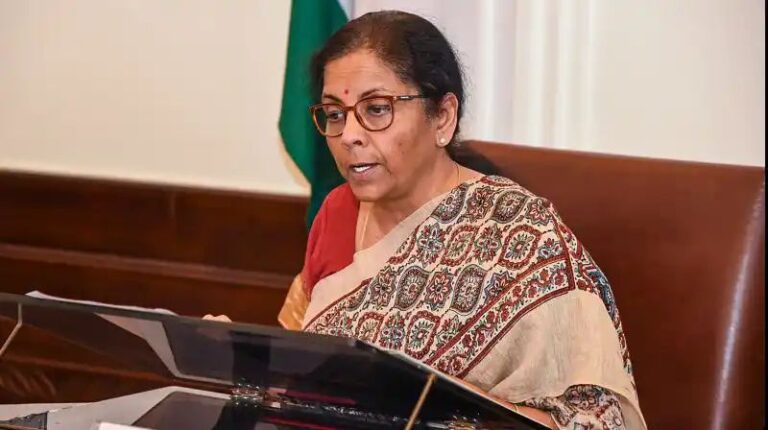
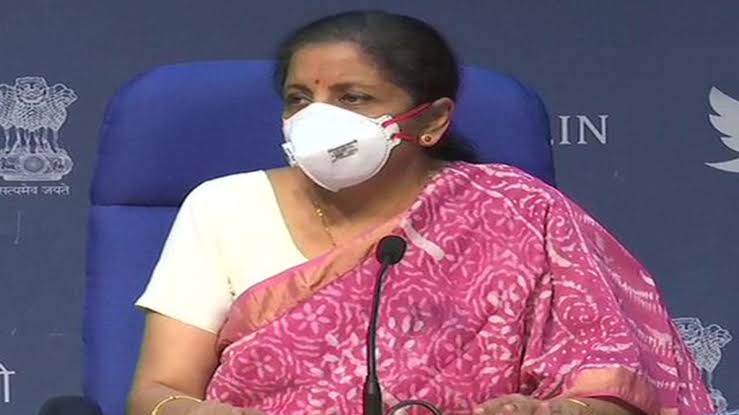
Finance Minister Nirmala Sitharaman is addressing a press conference amid surging coronavirus cases in the country.

Earlier, the finance ministry had tweeted that the press conference will be a curtain raiser for the PM Garib Kalyan Rojgar Abhiyaan,to provide employment opportunities to migrant workers.

Prime Minister Narendra Modi will be launching the scheme on June 20 to empower and provide livelihood opportunities to migrant workers who returned to their home states during the coronavirus lockdown.

Here are the key highlights from the presser:

  • What is PM Garib Kalyan Rojgar Abhiyaan?

    In an effort to provide employment opportunities to migrant workers, PM Narendra Modi will unveil a public work scheme worth 50,000 crore this week. The Centre has selected over 25,000 returned migrant labourers from 116 districts of Bihar, Uttar Pradesh, Madhya Pradesh, Rajasthan, Jharkhand and Odisha for the campaign.

  • FM Sitharaman begins addressing the media

    FM Nirmala Sitharaman addresses media in Delhi ahead of launch of ‘Garib Kalyan Rojgar Abhiyaan’ by PM Modi on 20th June.

  • 116 districts received large number of migrants

    The central and state governments have meticulously mapped the skill sets of the migrant workers who have returned in large numbers to the 116 districts in 6 states, says Union Finance Minister Nirmala Sitharaman

  • Migrant workers returned in large numbers

    We have found that migrant workers returned in large numbers to 116 districts, spread over six states – Bihar, Jharkhand, Uttar Pradesh, Madhya Pradesh, Odisha and Rajasthan, says Sitharaman

  • Jobs for migrant workers who have returned amid Covid-19 crisis

    Government to pool 25 different projects to give jobs to migrant workers who have returned amid coronavirus crisis. The government will front-load Rs 50,000 crore for the cause.

  • 25 different projects will create m ore jobs

    The government has mapped the skill sets of migrants who have returned from several states of the country. There will be 25 different projects which will create job opportunities for migrants.

  • The priority is to provide immediate relief to migrants

    The top priority of PM Garib Kalyan Rojgar Abhiyaan is to provide immediate relief to migrant workers who have gone home, says Finance Minister.

Study Ties Blood Type To COVID-19 Risk; O May Help, A Hurt

A genetic analysis of COVID-19 patients suggests that blood type might influence whether someone develops severe disease.

Scientists who compared the genes of thousands of patients in Europe found that those who had Type A blood were more likely to have severe disease while those with Type O were less likely.

Wednesday’s report in the New England Journal of Medicine does not prove a blood type connection, but it does confirm a previous report from China of such a link.

“Most of us discounted it because it was a very crude study,” Dr. Parameswar Hari, a blood specialist at the Medical College of Wisconsin, said of the report from China.

With the new work, “now I believe it,” he said. “It could be very important.”

Other scientists urged caution.

The evidence of a role for blood type is “tentative … it isn’t enough of a signal to be sure,” said Dr. Eric Topol, head of the Scripps Research Translational Institute in San Diego.

The study, involving scientists in Italy, Spain, Denmark, Germany and other countries, compared about 2,000 patients with severe COVID-19 to several thousand other people who were healthy or who had only mild or no symptoms. Researchers tied variations in six genes to the likelihood of severe disease, including some that could have a role in how vulnerable people are to the virus. They also tied blood groups to possible risk.

Most genetic studies like this are much larger, so it would be important to see if other scientists can look at other groups of patients to see if they find the same links, Topol said.

Many researchers have been hunting for clues as to why some people infected with the coronavirus get very ill and others, less so. Being older or male seems to increase risk, and scientists have been looking at genes as another possible “host factor” that influences disease severity.

There are four main blood types – A, B, AB and O – and “it’s determined by proteins on the surface of your red blood cells,” said Dr. Mary Horowitz, scientific chief at the Center for International Blood and Marrow Transplant Research.

People with Type O are better able to recognize certain proteins as foreign, and that may extend to proteins on virus surfaces, Hari explained.

During the SARS outbreak, which was caused by a genetic cousin of the coronavirus causing the current pandemic, “it was noted that people with O blood type were less likely to get severe disease,” he said.

Blood type also has been tied to susceptibility to some other infectious diseases, including cholera, recurrent urinary tract infections from E. coli, and a bug called H. pylori that can cause ulcers and stomach cancer, said Dr. David Valle, director of the Institute of Genetic Medicine at Johns Hopkins University.

Bottom line: “It’s a provocative study. It’s in my view well worth publishing and getting out there,” but it needs verification in more patients, Valle said.