UP madrasa will teach nationalism too: Minister

KEY STORY 

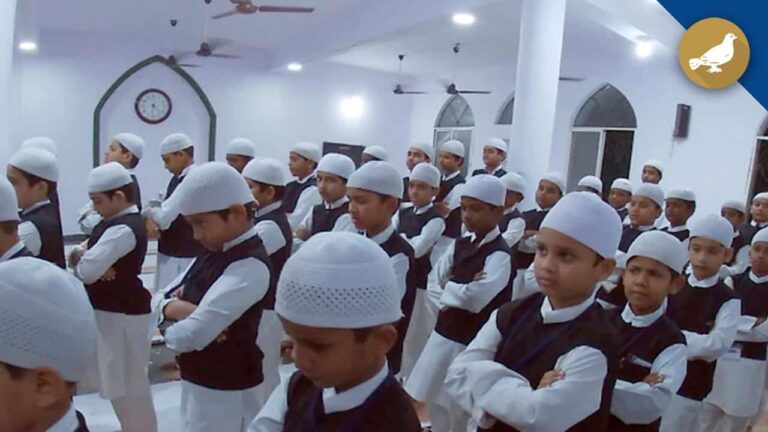
  • The madrasa education syllabus in Uttar Pradesh will be based on the Centre’s New Education Policy, complete with issues of nationalism and sans tales of terrorists, state’s Minority Affairs Minister Dharampal Singh said on Saturday.
  • Singh, who also holds the portfolio of UP’s Animal Husbandry Department, said the government will also build a cow shelter in each of the municipalities across the state to protect cows.
  • The minister made the remarks while addressing a press meet at Indian Veterinary Research Institute (IVRI) in Bareilly. The minister had won the last assembly elections from the Aonla seat in Bareilly.
  • “The education in madrasas will be given according to the new National Education Policy. Nationalism will be taught to students in madrasas of the state. There will be no talks of terrorists,” he said.
  • Students will also be imparted commercial education, the minister added.
  • The minority affairs minister also said the Yogi Adityanath government will reclaim all illegally grabbed waqf land and properties and utilise them for the welfare of minorities.
  • “The properties of waqf worth crores of rupees which have been encroached will be cleared using bulldozers. The reclaimed land will then be used for minority welfare,” he said.
  • Singh also said the state government will work to secure cows.
  • He said an order in consultation with Chief Minister Adityhanath will be sent to all districts to identify encroached government land, which, he said, would be cleared and used to grow fodder for cows.
  • “A major cow shelter will be made in every municipality of the state. The cows in the shelter will not be allowed to roam free. Cows of superior breeds with high milk yield will also be kept in cow shelters,” Singh said.
  • Items of daily use would be made using milk and cow dung and urine and would be sold in markets, he said, adding the money will be used to run cow shelters.
  • Answering a question on the damage to crops by stray cattle, Singh also blamed farmers for abandoning cows and buffaloes after they stop giving milk and said the problem will be solved by keeping all stray cattle in cow shelters.
CONCLUSION
  • Talking about his assembly constituency Aonla, the minister said a report has been sent to the state government to make Aonla a new district.

Wearing mask is always safer: Aaditya Thackeray

KEY HIGHLIHTS

  • Pune: On the first day of the removal of COVID restrictions in Maharashtra, State Tourism and Environment Minister Aaditya Thackeray on Saturday urged people to follow the mask advisory.
  • “Today is the first day of all the Covid restrictions in Maharashtra being lifted . While the covid numbers are low, I urge everyone to still take all due care and precaution. Wearing a mask is always safer, don’t feel awkward wearing one for your own safety,” tweeted Thackeray”on saturday.
  • Earlier, he inaugurated the ‘Alternate Fuel Conclave (AFC)’ in Pune to promote clean mobility. The event was jointly organised by the Maharashtra Industrial Development Corporation (MIDC), Maharashtra Pollution Control Board (MPCB) and the Mahratta Chamber of Commerce Industries and Agriculture (MCCIA).
  • The Maharashtra Government on Thursday announced that all COVID-19 related restrictions including the wearing of masks in public places were to be withdrawn from April 2. The Disaster Management Act as well as the Infectious Diseases Prevention Act which were invoked with the emergence of the COVID-19 pandemic were withdrawn in a cabinet meeting chaired by Chief Minister Uddhav Thackeray.

Delhi receives no rain in March after 4 years

Highlights

  1. The national capital has witnessed a “dry March” after a gap of four years as no rainfall occurred throughout the month.
  2. An IMD official told IANS that in the past 120 years, such a dry March month was only seen 12 times. The last time it was in 2018, when the city received no rain during the month of March in Delhi.
  3. According to the weather department. the normal rainfall during the month of March is 15.9 mm. However, during March, 0.0 mm rainfall was recorded. The actual rainfall was -100 per cent below normal than the long period average.
  4. In terms of temperature, the highest maximum was 39.2 degrees Celsius recorded on March 30. The all-time record of maximum temperature for the month is 40.6 degrees Celsius recorded on March 31, 1945.

Karnataka CM Bommai announces Rs 5 cr for police welfare

HIGHLIGHTS

  • Karnataka Chief Minister Basavaraj Bommai announced Rs 5 crore grant for the Police Welfare Fund on Saturday. Participating in the Police Flag Day celebrations, Bommai said crime could only be controlled if the police functioned without any compromise with crime and criminals. “The state government is proud of its police force and I wish it rises to the top spot in the country,” he said.
  • He said maintaining peace and order in society and ensuring the security of people was the duty of the police department. “Discipline, efficiency and integrity is important. Our police force is known for its conscience, impartiality and humanitarian qualities,” Bommai said.
  • Hailing the role of forensic laboratories in crime detection and nabbing criminals, he said police stations with forensic, narcotics and cyber labs had been opened in Bengaluru. “Stations in Hubballi and Ballari too are being upgraded,” he said, announcing upgrade of forensic labs in Shivamogga and other places.
  • He siad the intelligence wing of the police would also be strengthened by a new training system and additional staff.
  • Taking note of the initiatives taken for the welfare of the police personnel, he said better health services, bandobast allowance, promotions, approval for construction of 10,000 houses and Rs100 crore grant for their health services were among them.
  • “The government has fully utilised the central grant for police modernisation. A huge modernisation programme is needed to prevent cyber crimes and drug running. We need to change the situation where crime leads the law to a situation where the law is ahead of the crime and criminals,” Bommai said.
  • Hailing the police for setting a record in seizure of narcotics, he said criminals were being punished under the new rules. “The war against narcotics should go on relentlessly. Awareness should be created among school and college students against drug addiction,” he said.
  • Bommai also instructed the DCs and SPs of all districts to take necessary measures to ensure peaceful celebration of ‘Hosathodaku’. “Festivals should be celebrated without any disruption in law and order,” he said.
CONCLUSION
  • On a question about a campaign by some pro-Hindu outfits against halal meat, Bommai said officials had been instructed to hold peace meetings in their areas to ensure peaceful celebration of the festival.

Political situation favours BJP but no early polls, say Karnataka BJP leaders after meeting with Amit Shah

KEY STORY

  • The BJP is not considering early elections in Karnataka, party general secretary CT Ravi said after a meeting of the BJP’s core committee in Karnataka on Friday night. The core committee meeting of the Karnataka BJP unit was chaired by Union Home Minister Amit Shah.
  • “The current political situation is in favour of the BJP as the party has won four of the five states where elections were held recently. The Congress is in a shambles. If we work at the ground level, then we can win more than 150 seats in Karnataka,” the BJP general secretary said after the meeting.
  • “Our party is always ready for polls but the elections will take place only after a year in April 2023. Amit Shahji has given us instructions to prepare a road map for the next year,” he said.
  • Both Ravi and state BJP president Nalin Kumar Kateel said that no discussion of a cabinet expansion or change of leadership in the government and party was held at the meeting.
  • “We have been directed to create a road map for the next one year. We will also work on the ground and attract leaders from other parties. A small team is being created to bring leaders from other parties into the BJP and a decision will be taken in conjunction with the party chief,” Ravi said.
  • “Discussions were held on the present political situation and we are confident that the BJP will not fall short of the majority mark. He (Shah) has guided us on the measures to be taken to cross the 150-mark. We will prepare a road map,” he said.
  • “The programmes of the Modi government are reaching the people through direct benefit schemes. The beneficiaries are with the party and the government and we will work at the ground level to mobilize support for the party,” Ravi said.
  • BJP state president Nalin Kumar Kateel, who faces the prospect of being replaced by a new party leader in the run-up to the state polls, said that decisions on cabinet changes and other aspects concerning the party will be taken following a visit by BJP national president J P Nadda to Bengaluru in the third week of April.
  • “A target to obtain 150 seats has been set. The discussions were about holding elections after the full term of the government. Many organizational issues were discussed like the creation of page committees,” Kateel said.
  • “There was no discussion on holding elections before the term of the government. The organizational issues were discussed with the next elections in mind. There were no discussions on leadership,” he added.
  • When asked if Karnataka ministers and the state unit of the party were pulled up by the Union home minister for not sufficiently emphasizing the development activities of the Narendra Modi-led government in the last one year, the two leaders said that no such thing happened at the meeting.
Conclusion
Party sources said the BJP would be prepared for any eventuality including the possible exit of MLAs who joined the party from the Congress and the JDS to help it come to power in 2019.

States start easing COVID-19 curbs as cases decline: Here are the new rules and what experts have to say

KEY STORY

  • With a significant decline in the COVID-19 cases over the past few weeks, the Brihanmumbai Municipal Corporation (BMC) has said that no fine will be imposed for not wearing face masks in public places in Mumbai from April 1.
  • This came after the Maharashtra government announced that all COVID-related curbs, including the wearing of masks, would be lifted from April 2.
  • Besides Maharashtra, Delhi has also decided to do away with the mandatory wearing of face masks in public places, while West Bengal has announced that all curbs related to the viral disease would be lifted in the state.
  • As the number of COVID-9 cases declines across the country, it is expected that some other states may follow suit in the coming days.
  • Take a look at changes in COVID-19 rules in Maharashtra, Delhi and West Bengal, and what experts have to say:
Maharashtra
The Maharashtra government announced on Thursday that it will withdraw all COVID-19 related restrictions including the wearing of masks in public places from April 2. The decision was taken at a cabinet meeting chaired by Chief Minister Uddhav Thackeray, Health Minister Rajesh Tope told reporters.


“From Gudhi Padwa (Marathi New Year which falls on April 2 this time), all COVID-19 related restrictions under the Epidemic Diseases Act and Disaster Management Act will be withdrawn,” Tope said. Wearing of face mask will be voluntary from April 2, he added.
The Health Minister also advised the citizens to adhere to COVID appropriate behaviour.
Soon after this, the BMC announced to lift the mask mandate in Mumbai. However, the civic body has urged citizens to use the mask voluntarily as the pandemic is not completely over.
At the beginning of the contagion in 2020, the BMC had deployed its clean-up marshals in public places for effective enforcement of the mask mandate, which continued for two years.
“At present, as the infection and spread of coronavirus are under control, the restrictions imposed due to Coronavirus infection are being relaxed. Hence, if a citizen does not wear a mask in the Greater Mumbai area, the penalty of Rs 200 won’t be charged,” the BMC release stated.
Delhi
After Delhi recorded a significant decline in the number of fresh COVID-19 cases over the last few days, the Delhi Disaster Management Authority (DDMA) decided on Thursday that there will be no fine for not wearing face masks at public places in the national capital.
The decision was taken at a meeting of DDMA, chaired by Lt Governor Anil Baijal. Currently, there is a fine of Rs 500 for not wearing masks at public places in Delhi.

Here’s what experts have to say about the lifting of COVID-19 curbs:

Experts have given mixed reactions to Maharashtra and Delhi lifting mask mandate. While few experts supported the decision, urging that the vulnerable groups must continue to take precautions, others said the “move was not wise” and should have been done in a “phased manner”.
“It is a good time to do away with masks,” Dr Anurag Agrawal, Director of the Institute of Genomics and Integrative Biology, Delhi, told news agency PTI.
Dr Raman Gangakhedekar, former head scientist of the Epidemiology and Communicable Diseases Division at the Indian Council of Medical Research, also said, “I will not say that this is an improper decision (to make masks voluntary).”
Meanwhile, Dr Suranjit Chatterjee, a senior consultant at Apollo hospital here said, “While it has been observed that many people have already stopped wearing masks, amid a fall in COVID-19 cases, I would say it should have been done in a gradual manner.”
After Hijab Row, Protests Over Halal Meat Spark Violence In Karnataka

KEY STORY

  • After the confrontation over Muslim students wearing hijabs on campus, the latest flashpoint in Karnataka seems to be halal meat.
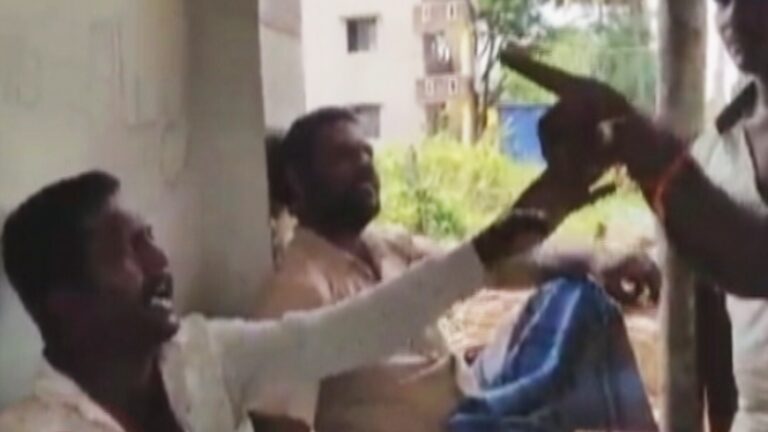
  • Right-wing protests against halal meat traditionally consumed by Muslims took a violent turn in Shivamogga district’s Bhadravati where five men were arrested for assaulting a man in a chicken meat shop and another at a restaurant.
  • District police chief B M Lakshmi Prasad said, “According to the complaint, five men went to a meat shop and demanded non-halal meat. When they were not given the meat and the shop was being shut down, they hit a boy on his head. Similarly, another case was registered in connection with the events in Janata Hotel. The group reached the shop and told the owner that they shouldn’t be selling halal meat anymore.
  • A customer had an argument with the group and one person was assaulted. A case has been registered at the Old Town Police Station. In both cases, the same five people were named as accused. All the five have been arrested.”
  • These aren’t the only cases: right wing groups are reportedly approaching vendors in different parts of the state against the sale of halal items.
  • Chief Minister Basavaraj S Bommai has said the state government will look into the ‘halal’ meat issue as “serious objections” have now been raised against it. “The halal issue has just started. We have to study it. It’s a practice that is going on. Now serious objections have been raised about it. I will look into it,” Mr Bommai has told the media.
  • C T Ravi, national general secretary of the ruling BJP, earlier tweeted, “No more HALAL PRODUCTS for Hindus. Let us fight unitedly against Economic JIHAD !!!”
  • The issue has snowballed into a political row, with the Opposition saying that the state government is responsible for protecting all communities.
  • H D Kumaraswamy, leader of the Janata Dal Secular and former chief minister, told reporters, “Those who have called for boycott of halal mutton, what is the response of this government? No specific decision has been taken by this government on such issues. Where will they stand (on such issues) in the future? They have to protect all communities. By protecting one community, they cannot run the government.”
  • Targeting right-wing outfits, Congress MLA Rizwan Arshad said, “They are filled with poison. They are poisoning this society. It is a free country. If anyone wants to buy halal meat, they will buy it. If he doesn’t want to buy, he won’t. Who are they to tell anybody to buy or not buy or force anybody to sell or not sell. It is these people who are the jihadists. The BJP and Sangh Pariwar and the right wing organisations are the jihadists.”
  • The issue has also sparked a voice of concern from Biocon chief Kiran Mazumdar-Shaw.
  • Saying that Karnataka has always forged inclusive economic development, she has warned in a Twitter post that such “communal exclusion” would destroy “our global leadership” in the sphere of information technology and biotechnology. Ms Mazumdar-Shaw has appealed to Chief Minister Bommai to resolve this “growing religious divide”.

CONCLUSION

In a subsequent tweet, the Biocon chief said “vested interests are hijacking the issue” but expressed confidence that the Chief Minister will resolve the matter peacefully.
The hijab and halal issues are taking centre stage as Karnataka approaches the Assembly elections due in a year’s time.

Panel to study politically backward classes in Karnataka

KEY STORY

  • The Karnataka government will constitute a commission to identify and study politically backward classes and give it a time-frame to submit a report. Once the report is submitted, the government will take legal action, Law Minister JC Madhuswamy said.
  • An all-party meeting was convened to discuss issues related to the provision of reservation to backward classes and for local bodies elections, including Taluk and Zilla Panchayat polls. Speaking to reporters after the meeting, Madhuswamy said the recent judgment in a case related to the Maharashtra government, the Supreme Court had directed that specific political backwardness and empirical data is mandatory to give reservation to OBCs in local bodies elections.
  • That is the reason for constituting the commission, he said. Karnataka is due to go for polls with reservation of president and vice-president of municipalities, and also Zilla and Taluk Panchayat polls. “Our government is not willing to conduct polls without reservation. We want to give priority to backward class people. We are constituting a commission to identify backward classes and give them terms of reference, including collecting empirical data.
  • Once we get the data or report, we want to implement it as per law. All these years we mentioned backwardness in education and job reservation. Since the Supreme Court is stressing on it, there is a need to check if these sections are politically backward or not. Once it is established, reservation can be provided as per the Supreme Court order,” he said.

CONCLUSION

  • Speaking on the amendment that has given power to states to fix reservation, he said the State government is looking at the possibility of crossing 50 per cent, and providing political reservation for backward classes. At present, there is 18 per cent reservation for Schedule Caste and Schedule Tribes in education and jobs, and 24.1 per cent reservation in various welfare schemes.
  • “If we get to know that these people have to be given reservation of 24.1 per cent, we will be left with hardly 25 per cent out of 50 per cent threshold, which might be difficult for us to accommodate. So we have sought the opinion of the Advocate-General and when we get both these reports, we will fix reservation for constituencies. If necessary, we will file an affidavit in the Supreme Court,’’ he said.

Court directs police to probe sedition charges against KSE

KEY STORY

  •  A special court directed Doddapete police in Shivamogga district to investigate a complaint against Karnataka Rural Development and Panchayat Raj Minister KS Eshwarappa for sedition and promoting enmity between different groups.
  • The special court ordered trial against sitting as well as former MLAs and MPs, and came on a private complaint filed by Riyaz Ahamed, a Shivamogga resident and Peace Organisation member. Ahamed had approached Doddapete police and higher authorities with his complaint, which was not acted upon.
  • So he approached the special court with a private complaint. Ahamed alleged that after the murder of Hindu activist Harsha on February 20 this year, Eshwarappa and BJP leader Channabasappa started publicly stating that the murder was a result of political and religious causes, even before police could start investigations.

CONCLUSION

  • This was done with the intention of creating enmity between Hindus and Muslims and resulted in rioting on February 21. Ahamed alleged that Eshwarappa’s actions amounted to causing disharmony and outraging religious feelings.

Halal row: Karnataka asks intellectuals to teach those who do not respect Constitution, court order

  1. KEY STORY

  • Amid the raging halal row with some right wing organisations asking Hindus not to use halal meat during ‘Hosa Tadaku’ festival in the state, Karnataka Home Minister Araga Jnanendra on Thursday said intellectuals who give sermon on secularism should teach those who did not respect the Constitution and honour the court verdict on hijab.
  • The Minister’s comment came as a section of Muslims had called for a statewide bandh against the Karnataka High Court verdict on hijab, which dismissed the petition of Muslim girl students from Udupi Government Girls’ Pre University College, who wanted the head scarf to be allowed along with the school uniform inside classrooms.
  • The girls who petitioned the High Court had contended hijab was their essential religious practice and challenged the Government order which banned any cloth that could disturb peace, harmony and public order.
  • Jnanendra wondered as to why the BJP was blamed by some for the anti-Halal campaign, which is related to faith and sentiments and individual choices.
  • The Minister also blamed intellectuals for lecturing only the Hindus and not the others.
  • He said, “Secularism flows in our blood. They (intellectuals) should teach those who do not respect the Indian Constitution and say that the court verdict is not applicable to them. Such people (violators) have to be told that you should not function this way in this country, this we say, sincerely. Nobody hates you and we have to live like brothers only.”
  • The Minister said the government has a limited role to play on the issue pertaining to halal, which is left to the wisdom of people.
  • Jnanendra said the ‘Boycott halal food’ campaign is not a law and order situation but something related to faith and sentiments, “which everyone knows.”
  • He was confident that situation would improve in the coming days.

CONCLUSION

  • A day after the Ugadi festival, which will fall on April 1, a section of Hindus who eat non-vegetarian food, organise ‘Hosa Tadaku’ where they cook meat.
  • The Bajrang Dal, Vishwa Hindu Parishad and various Hindu outfits have been running a door-to-door campaign asking people not to use Halal meat.
  • They have been distributing leaflets as well.