KEY STORY
-
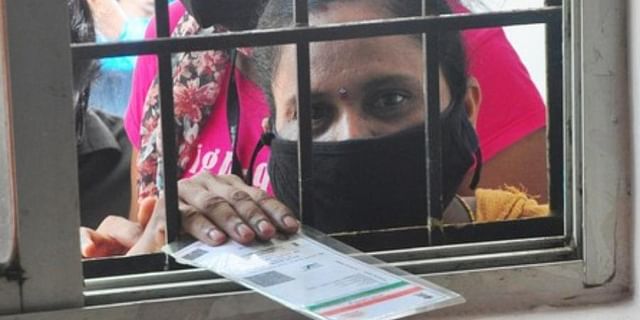
Today is the last day for people to get their PAN cards linked with their Aadhar number. Linking the two documents after March 31 will lead to a penalty, according to the Central Board of Direct Taxes (CBDT).
-
The linking process is simple and takes few minutes to complete. There are many ways of doing this. However, the most common method is through the Income Tax e-filing portal.
-
Here are the steps to do it through the portal:
> Open the Income Tax e-filing portal- https://incometaxindiaefiling.gov.in/
> Register on the portal. The PAN number will be the user id.
> Log into the portal by entering your user id, password and date of birth.
> A pop-up window will appear, prompting you to link your PAN with Aadhaar.
> In case the window doesn’t appear, go to ‘Profile Settings’ on the Menu bar and click on ‘Link Aadhaar’.
> Information such as name, date of birth, and gender will already be mentioned as per the PAN card details.
> Verify the PAN details on the screen with the ones mentioned on Aadhaar.
> If there is a mismatch, you need to get the same corrected in either of the documents.
> If the details match, enter your Aadhaar number and click on the “link now” button.
> A pop-up message will inform you that your Aadhaar has been successfully linked to your PAN.
Other methods of linking PAN with Aadhar:
> People can also visit the following websites for the linking process- https://www.utiitsl.com/ and https://www.egov-nsdl.co.in/
>Through SMS: Type the following message UIDPAN<space><12 digit Aadhaar><space><10 digit PAN>. The message can be sent to 567678 or 56161.
>Visiting nearby PAN service centres: The linking process can also be done manually by visiting the nearby PAN service centre. A form named ‘Annexure-I’ needs to be filled and submitted along with a copy of the PAN card and Aadhaar card. This will be a paid service.
KEY STORY
-
The state government will write to the Union government requesting for reduction in toll plaza fare across the state, Public Works Minister C C Patil told the Legislative Council on Wednesday.
-
Replying to a query by MLC C N Manje Gowda, the minister said, “The toll fee is decided based on the construction cost of the road. There is a demand for reduction in toll fee. However, we will write to the Union government and discuss this,” he said.
-
The minister assured the members of addressing issues pertaining to VIP lanes after a few MLCs, including the chairperson, expressed their displeasure about the VIP lanes at several toll plazas.
-
Another member Marithibbe Gowda brought up the issue of the ambulances facing problems at the tolls. “We have seen ambulances stuck in the toll plaza for more than 10 minutes. There are no marshals appointed at the tolls, sometimes there will be no one to open the gates,” he said.

KEY STORY
-
Despite being a low-scoring affair, the Kolkata Knight Riders (KKR) vs Royal Challengers Bangalore (RCB) showdown in the Indian Premier League (IPL) 2022 turned out to be an enthralling contest. The match went to the last over despite RCB only chasing a paltry target of 129 runs. While there were those who hailed Shreyas Iyer’s captaincy in the match, former India cricketer Wasim Jaffer highlighted a few flaws too.
-
The Knight Riders weren’t expected to remain in the game after they could only post a total of 128 runs on the board. However, the likes of Tim Southee and Umesh Yadav delivered the goods from the word go and bagged 3 of RCB’s wickets for just 17 runs. While Southee bagged the big wicket of Bengaluru skipper Faf du Plessis, Virat Kohli and Anuj Rawat were removed by Umesh Yadav.
-
The Knight Riders, fighting extreme odds, found a way back into the game David Willey, Shahbaz Ahmed and Sherfane Rutherford played patient knocks to guide RCB home. During the middle overs, KKR seemed to have lost the plot a little bit. Wasim Jaffer, who has turned into an active pundit of the game, feels Shreyas Iyer made a few captaincy errors that could’ve been prevented.
-
“I was surprised that Shreyas Iyer did not bowl Nitish Rana when there were two left-handers there and Chakravarthy was clearly struggling against them. One or two overs from Rana would have meant that Russell wouldn’t have had to bowl. He could have bowled Venkatesh Iyer earlier if Russell was struggling. Things could have been a little bit different if he had saved Chakravathy’s over there and used it for right-handers.
-
“Umesh Yadav and Tim Southee made a match out of it by getting RCB 17/3 in the powerplay. KKR would have had a better chance if Chakravarthy had bowled better,” Jaffer said on ESPNCricinfo.
-
Chakravarthy, who has arguably been KKR’s go-to bowler over the last couple of seasons, gave away 33 runs in 4 overs while only picking up 1 wicket. Jaffer feels the mystery spinner struggles a bit while facing left-handers, hence, avoids giving ample air to the ball.
CONCLUSION
-
“It feels like Varun Chakravarthy struggles a bit bowling to the left-handers. He started bowling from around the stumps and then came over the wicket, but his length was on the shorter side. It helped the batters to pull him. He was probably scared to throw the ball in the air or in front of the batters. Had he gone for 20-25 runs or had taken a wicket at that stage, it would have been interesting.”
-
Kolkata took the game to the last over where Dinesh Karthik’s heroics guided Bengaluru to their maiden victory of the season. Despite the defeat KKR drew plenty of plaudits for the fight they showed.

KEY STORY
-
After a long gap of two years – thanks to the COVID-19 pandemic – the Supreme Court will start physical hearing of cases from April 4. Chief Justice of India NV Ramana, on Wednesday, said that the physical hearing of cases will commence on Monday.
-
“Monday onwards we are opening fully, physically. Monday and Friday, we will provide advocates with virtual hearing if they ask for such options,” said CJI Ramana.
-
The Supreme Court Bar Association welcomed the announcement and expressed its gratitude for the decision. Currently, the apex court has been holding virtual hearings of cases on Monday and Friday. On Tuesday, Wednesday and Thursday, the court hearings have been taking place in physical forms.
On January 2, the Supreme Court took a decision to shift the hearing to virtual form in light of the surge in COVID-19 cases in the country driven by the Omicron variant. It had suspended the hybrid hearing of cases in light of the COVID-19 scare.
At one point in January, four SC judges, five percent of SC staffers were down with COVID-19
That month, four Supreme Court judges and almost 5 percent of its staff members (about 150 staffers) tested positive for COVID-19. The Supreme Court has 32 judges and about 3000 staff members.
“In view to contain the spread of the highly contagious coronavirus infection and a sudden upsurge in the cases of Omicron variant of the coronavirus, it is reiterated that the entrants to the Supreme Court premises, i.e. the registry staff, staff of the coordinate agencies, advocates and their staff etc, particularly those who may be showing any symptom(s) similar to those notified for Covid-19 infection(s), may kindly get themselves tested at such facility,” SC had said in a circular.
KEY STORY
-
The Supreme Court on Wednesday asked the Centre and the Karnataka government to clear stand on export of extracted iron ore in the state saying either it has to be consumed or sold.
-
A bench headed by Chief Justice N V Ramana asked Solicitor General Tushar Mehta to seek instructions on the issue and file response by April 8.
-
The top also directed the Central Empowered Committee, appointed by SC, and the monitoring committee to submit a status report indicating the approximate available quantity of iron ore on ground.
-
“There is no meaning of keeping extracted iron on the ground. Either it has to be consumed, sold or taken off the ground. Let us first clear the ground then we will see what to do. By virtue of that, the state government and development fund may get some money,” said the bench, also comprising Justices Krishna Murari and Hima Kohli.
-
The apex court had earlier refused to lift the ban on export of iron ore pellets from Karnataka-based miners.
CONCLUSION
-
While private miners had sought lifting of ban on iron ore exports, the Supreme Court-appointed Central Empowered Committee (CEC) had ruled out any possibility of allowing export of iron ore pellets from Karnataka.
-
The apex court has been passing orders since 2009 in a PIL filed by NGO, ‘Samaj Parivartana Samudaya’, which had alleged various irregularities in mining activities in the state.
KEY STORY
-
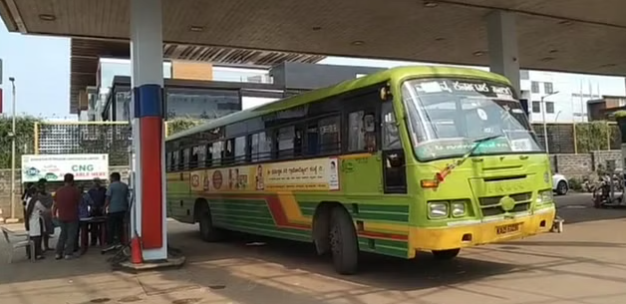
As diesel price for bulk users rose by over Rs 20 per litre, buses of North Western Karnataka Road Transport Corporation (NWKRTC) are lately depending on retail pumps in Hubballi city for refuelling.
-
Following the increasing price of crude oil in the international market (113.9 dollars per barrel as of Tuesday), the oil companies in the country have been regularly revising retail prices for the last one week throughout the country. They also hiked the price of bulk users over Rs 20 per litre which is burdening the bulk users, especially state-run transport companies.
-
NWKRTC, which is running under loss post lockdown and Covid-19 pandemic, is hit by the price rise. The corporation is operating in six districts and it requires lakhs of litres of diesel every day, but they are not being supplied with the required quantity of fuel.
-
Diesel price in the retail outlets in Hubballi is Rs 87.9 per litre as of Tuesday, but it is being sold at around Rs 108 to the NWKRTC depots. Sources said, they are getting only 80 to 90 percent supply and they are short of 10 to 20 percent fuel every day. Therefore few buses are asked to get fuel from retail outlets.
CONCLUSION
-
In 2013-14, a similar situation prevailed following the diesel price hike. Now, for the last two three days buses are seen on the retail petrol pumps. “The oil supplying companies are asking the retail pumps not to give fuel to buses, therefore pumps are fearing to give diesel. But the central office advised us to get refills outside as the price is less,” said an officer.
-
Gurudatta Hegde, managing director, NWKRTC said following the Rs 20 hike in fuel price they are suffering a Rs 60 lakhs burden every day and Rs 18 crores in a month. They also requested the government not to hike prices for the public transport companies which are serving people.

KEY STORY
-
An all-party meeting will be held on March 31 to discuss the issue of providing reservation to other backward classes (OBC) in local bodies, Rural Development and Panchayat Raj Minister K S Eshwarapa said on Monday.
-
Eshwarappa was responding during a debate on the demands for 2022-23 in the Assembly.
-
He said Chief Minister Basavaraj Bommai, Law Minister J C Madhuswamy, Advocate General Prabhuling Navadgi and others will take part in the all-party meeting along with floor leaders. “Let us discuss how we can represent Karnataka’s case to ensure that reservation is provided for OBCs. The government will not hold elections until the reservation is ensured,” he stressed.
-
Meanwhile, MLAs, cutting across party lines, raised concerns about the quality of the Jal Jeevan Mission (JJM) works being taken up by the state government. The government aims to provide tap water connections to ensure drinking water for all homes in rural areas in the state. However, the government was merely looking at number of connections without ensuring sustainable water supply, the MLAs said.
KEY STORY
-
Sanju Samson-led Rajasthan Royals (RR) thrashed Kane Williamson’s Sunrisers Hyderabad (SRH) in match No.5 of the Indian Premier League (IPL) 2022 at the Maharashtra Cricket Association Stadium on Tuesday. Batting first in their campaign opener against the 2016 IPL champions, Samson-starrer Rajasthan Royals managed to set up a massive total in the 20-over contest.
-
With the comfortable win, Samson & Co. have opened their account in the league phase of the cash-rich league. RR have taken the top spot in the league standings after defeating SRH on Tuesday. RR are followed by Delhi Capitals, who upstaged Mumbai Indians (MI) in their IPL 2022 opener. 2014 runners-up Punjab Kings (PBKS) are occupying the third spot after their thrilling win over Royal Challengers Bangalore (RCB) in match No. 3 of the IPL 2022.
-
Points table
All 10 teams have played their respective opening matches of the 15th season. While RR defeated SRH in their IPL 2022 opener, debutants Gujarat Titans (GT) led by Hardik Pandya battled past new entrants Lucknow Super Giants (LSG) in their IPL 2022 opener. Two-time champions KKR upstaged defending champions Chennai Super Kings (CSK) in the curtain-raiser of IPL 2022 on Saturday.

Purple Cap standings
Delhi Capitals’ Kuldeep Yadav is the current leading wicket-taker in the IPL 2022. Spinner Kuldeep helped DC register a stunning win over MI in the IPL 2022. Chennai Super Kings (CSK) star bowler Dwayne Bravo and Yuzvendra Chahal have also scalped three wickets each so far in the IPL 2022.

Orange Cap standings
RCB skipper Faf du Plessis is leading the Orange Cap standings after playing a sublime knock of 88 against Punjab Kings. The RCB skipper is followed by Ishan Kishan, who scored 81 against DC in Mumbai’s IPL 2022 opener.

On Wednesday, Royal Challengers Bangalore will lock horns with Kolkata Knight Riders in match No.6 of the IPL 2022.

KEY STORY
-
The BA.2 sub-variant of Omicron was estimated to be more than half or 54.9% of the coronavirus variants circulating in the United States as of March 26, the U.S. Centers for Disease Control and Prevention (CDC) said on Tuesday.
-
A resurgence of COVID-19 cases in parts of Asia and Europe has raised concerns that another wave could follow in the United States. Despite the rise of the highly transmissible BA.2 sub-variant, health experts in the United States believe that a new wave of infections appears unlikely as overall infections are declining from January’s record highs.
-
As of March 26, the seven-day moving average of U.S. COVID-19 cases was 27,895, up about 4% from a week earlier.
-
Last week, top U.S. infectious disease official Dr. Anthony Fauci said that although he does not expect a major surge, he would not be surprised to see a rise in cases owing to the increasing dominance of the BA.2 sub-variant.
Most people in the United States are now considered to be in low COVID transmission, according to new CDC guidelines introduced last month that emphasized hospital capacity over case counts.
-
The CDC estimates that BA.2 made up 39%, revised up from 34.9%, of circulating variants in the country for the week ended March 19, according to a CDC model that estimates proportions of circulating variants. The CDC has in the past revised its estimates as it gets more data.
KEY STORY
-
The All India Council for Technical Education (AICTE) has extended the moratorium on setting up new engineering institutes for two more years with certain exceptions, according to its chairman Anil Sahasrabudhe.
-
The move comes after a government-constituted panel had recommended continuation of the ongoing moratorium. The AICTE had imposed a moratorium of two years on granting approvals for new colleges in 2020.
-
“The AICTE has extended its moratorium on establishing new engineering institutes up to two years with certain exceptions,” Sahasrabudhe said.
-
The exceptions include state government proposal to start new polytechnic in conventional, emerging, multidisciplinary, vocational areas including PPP mode; any industry having a minimum annual turnover of Rs 5,000 crore (in preceding three years) registered as trust, society, company established under Section 8 of the Companies Act, 2013; and philanthropical organisations existing for over 25 years and running other educational institutes having a minimum enrolment of 10,000 students and NIRF (if applicable) ranking up to 100 in the preceding year.
-
The technical education regulator had constituted a committee in 2018 under the chairmanship of BVR Mohan Reddy, chairman of Board of Governors, Indian Institute of Technology, Hyderabad on short-term and medium-term perspective plan for engineering education.
-
The committee observed that the capacity utilisation (intake capacity vs enrolment) in undergraduate and postgraduate levels was 49.8 per cent during 2017-18 and had recommended that no new capacity be approved by the AICTE starting from the academic year 2020 and the creation of new capacity can be reviewed every two years thereafter.
-
“More than 40 per cent of the essential requirements already demanded by the council from its approved institutions are NEP compliant. It is pertinent to mention that in the previous academic year, the council took a step forward to diminish the subject barrier by including a total of 14 subjects studied in various school education boards across the country to make them eligible for pursuing technical education courses offered by the council,” Sahasrabudhe said.
-
“The same gained quite a traction across the academia in the country. To clear the perception of Multiple Entry Multiple Exit (MEME) and bridge courses, the council in its approval handbook this year has included an eligibility table depicting course wise subject eligibility for admission to various branches of engineering and technology,” he said.
-
The New Education Policy (NEP) envisages that all higher education institutions (HEIs) should evolve into autonomous universities by the year 2040 with individual enrolment of above 3,000.
-
“Consequently, the AICTE has facilitated merger of institutions without restriction of intake and has granted autonomy to the PGDM standalone institutions under its purview.
CONCLUSION
-
“The council had last year announced technical education courses in Indian languages. Consequently, in the last year alone we granted approval to 19 institutes and universities to conduct 26 technical courses in six Indian languages (Bengali, Hindi, Kannad, Marathi, Tamil and Telugu) in 10 states,” Sahasrabudhe said.
-
“In order to facilitate the smooth conduct of these courses, various translated books in Indian languages are being made available to the institutions. We have kept a target of implementation of printing of study materials in 12 Indian languages,” he said.
1...397398399...883Page 398 of 883
