State hikes income limit for housing schemes

KEY STORY

  • In a major decision, Karnataka Chief Minister Basavaraj Bommai on Wednesday announced a hike in the income limit for beneficiaries to become eligible for housing schemes. “The income limit in rural areas will be hiked from Rs 32,000 per annum to Rs 1.2 lakh. In urban areas, it will be hiked from Rs 87,600 to Rs 2 lakh. Orders are being issued,” Bommai told the Assembly.
  • This, he said, was a demand from lawmakers cutting across party lines. The hike will make more people eligible for housing schemes, potentially earning brownie points for the ruling BJP ahead of the 2023 Assembly elections. Housing is generally a priority area for any government.
  • Earlier, Bommai said the BJP government had constructed 3.08 lakh homes in the past two years. “We have sanctioned five lakh new homes – four lakh in rural areas and one lakh in urban areas,” he said.
  • In addition, 18 lakh houseless beneficiaries have been added under the PMAY (Rural). “Finance is a challenge. We will provide funds in a phased manner,” he said.
  • According to Bommai, successive government sanctioning houses have resulted in a pile-up. “One government sanctions, another builds. There are many sanctioned houses whose construction is not complete,” he said.
  • When the Siddaramaiah-led Congress came to power in 2013, there were 8.4 lakh pending homes. “By 2018-19, there were 15.84 lakh pending homes,” he pointed out.
  • Karnataka implements six affordable housing schemes—Basava Vasati Yojane, Dr BR Ambedkar Nivas Yojane, Devaraj Urs Yojane, Vajpayee Nagara Vasati Yojane, Pradhan Mantri Avas Yojana (PMAY) urban and PMAY rural.

Railways to not resume senior citizens’ concession

KEY STORY

  • The ministry of railways, which did away with concessions for senior citizens in March 2020, will not be restoring them yet, in an attempt to shore up finances — a move that is likely to be unpopular with tens of thousands of older passengers who benefited from the discount before the pandemic.
  • “Due to challenges posed by Covid-19, total passenger revenue generated during 2020-2021 is less compared to 2019-2020 (pre- Covid period). Cost of granting concessions weighs heavily on railways, hence extending the scope of concessions to all categories of passengers, including senior citizens is not desirable at present,” railway minister Ashwani Vaishnaw stated on Wednesday in a written reply to a question in Parliament. Previously, railways offered 50% discount to female passengers and 40% to male passengers across all classes. The minimum age for availing this was 58 years for women and 60 years for men. The cost of the discount worked out to ₹1,600 crore a year, 80% of the ₹2,000 crore railways incurred on all concessions.
  • During the pandemic, and as it restored services gradually, MoR discontinued all but 15 of the 53 concessions it offered — four for the differently abled, and 11 for students and patients. Shree Prakash, former Member Traffic of Railways said, “The decision of railways to not restore senior citizens’ concessions is a retrograde step. Financially this step may help the ministry in a small manner, but overall, this decision will affect the volume of passenger travel, which is already affected, by train.”

CONCLUSION

  • Another former railway official who did not wish to be named said MoR could consider continuing with the concession in some classes, perhaps Third AC.
  • Shailesh Goyal, former member of National Railway Users Consultative Council said: “Senior citizens were waiting for their concession to restart for the last two years but they are dismayed with the ministry’s decision. Not all universities and colleges have re- opened completely. Hence, instead of reinstating students’ concessions, the ministry should recommence concessions for senior citizens.”

Poll debacle: Sonia Gandhi appoints 5 leaders to suggest organisation changes in state units

KEY STORY

  • Congress president Sonia Gandhi on Wednesday appointed five senior leaders to analyse “the post-poll situation” and suggest organisational changes in the five states that faced assembly elections recently, people familiar with the development said.
  • The announcement, underlining a sense of urgency amid unprecedented electoral crisis, came barely a day after Gandhi ordered state unit chiefs in the five states —Uttar Pradesh, Punjab, Uttarakhand, Manipur and Goa — to resign.
  • All India Congress Committee (AICC) general secretary Ajay Maken, who was also part of the party’s Punjab poll campaign, has been entrusted to suggest organisational changes in the state unit. Former Union minister Jitendra Singh will suggest organisational changes in party’s Uttar Pradesh unit, while Rajya Sabha MP Rajani Patil, party’s Rajya Sabha chief whip Jairam Ramesh and general secretary Avinash Pandey will analyse the electoral loss in Goa, Manipur and Uttarakhand, respectively, people cited above said.
  • The Congress failed to win any of the five states in this round of assembly elections, results of which were announced on March 10.
  • According to a communication from Congress general secretary KC Venugopal, these leaders will hold talks with “MLA candidates and important leaders” before suggesting changes.
  • One of the five leaders told HT that they will also look into what went wrong in the poll management and the road ahead. Another leader said Gandhi might not wait for the Congress’s organizational elections, due in August this year, to make wholesale changes in these states after the Congress Working Committee (CWC) authorized her to make “necessary and comprehensive changes”.
  • “These announcements show how the party high command is wasting no time to revive the party and also send a signal to the G23 (a group of leaders who have demanded change in the party leadership) that the leadership is taking necessary steps,” a senior Congress leader said requesting anonymity.
  • On Wednesday, many Congress lawmakers from Punjab targeted Maken during their meeting with the party chief.
  • Lok Sabha MP Jasbir Singh Gill told Gandhi that the entire onus lies on Punjab in-charge Harish Chowdhary and Maken and alleged that the party tickets were “sold to undeserving candidates”. Another MP questioned the party’s decision to send Maken to Punjab and said, “Maken can’t even win his election in Delhi, how can he win in Punjab?”
  • Senior party leader and former Union minister Manish Tewari told Gandhi that he was barred from campaigning extensively and it sent a “wrong signal to Hindu voters”. While he spoke against the strategy of appealing to certain sections of the Punjab society and alienating others, at least three MPs targeted leader of the Opposition in Rajya Sabja, Mallikarjun Kharge.

CONCLUSION

  • They maintained that Kharge, who led a committee to look into Punjab affairs in 2021, came with the sole aim of removing Captain Amarinder Singh from the chief minister’s post and did not listen to the cross-section of the party to analyse other problems.
  • Congress leaders said that the selection of five leaders to suggest organisational changes comes after the state in charges submitted their reports on the poll debacle, which were discussed during the CWC meeting on Sunday.
  • “The need of the hour is to bring in young faces in each state. We have to wait and see how the changes take place. But Sonia Gandhi’s quick actions will send a message to Congress voters and workers that the party is serious about a revival,” a leader considered close to the Gandhi family said, also wishing not to be named.

We will see: SC on plea challenging Karnataka HC’s verdict on hijab

KEY STORY

  • The Supreme Court on Wednesday declined to grant an urgent hearing on a plea challenging the Karnataka High Court order, which dismissed all petitions seeking direction for permission to wear hijab in classrooms and held that wearing of hijab by Muslim women does not form a part of essential religious practice in Islamic faith.
  • Senior advocate Sanjay Hedge, representing the petitioners, mentioned the plea before a bench headed by Chief Justice N.V. Ramana. Hedge said there is urgency in the matter, as several girls have to appear in exams. The bench, also comprising Justices A.S. Bopanna and Hima Kohli, said others have also mentioned and the court will look into the matter. Hedge insisted that exams are starting and there is urgency in the matter.
  • The bench said it needs time and it will post the matter for hearing. After brief submissions, the bench said the court may list it after Holi vacations. “Give us time, we’ll post the matter”, said the bench.
  • The plea filed through advocate Adeel Ahmed and Rahamathullah Kothwal said the high court order creates an unreasonable classification between the non-Muslim female students and the Muslim female students and thereby is in straight violation of the concept of secularism which forms the basic structure of the Indian Constitution. The petitioners are Mohamed Arif Jameel and others.
  • The plea said: “The impugned order is also in sheer violation of the Article 14, 15, 19, 21 and 25 of the Indian Constitution and also violates the core principles of the International Conventions that India is a signatory to.”.
  • It further added, “Being aggrieved by the impugned Government Order, as it is in violation of Indian constitution, the petitioner had approached the Hon’ble High Court by way of a Public Interest Litigation (PIL) Petition challenging the validity of the same.
  • “The High Court vide the impugned order has sought to curtail the fundamental right of Muslim student-women by upholding the impugned Government Order which bars Muslim women from wearing the hijab and pursue their education. It is hereby submitted that the right to wear a hijab is an ‘essential religious practice’ and falls within the ambit of the right of expression guaranteed by Article 19 (1) (a), the right to privacy and also the Freedom of Conscience under Article 25 of the Constitution. The same cannot be infringed upon without a valid ‘law’.”

CONCLUSION

  • Another plea, filed by two Muslim students, Manan and Niba Naaz, through advocate Anas Tanwir, said: “The petitioners most humbly submit that the High Court has erred in creating a dichotomy of freedom of religion and freedom of conscience wherein the court has inferred that those who follow a religion cannot have the right to conscience.”
  • The plea contended that the high court failed to note that the Karnataka Education Act, 1983, and the Rules made there under, do not provide for any mandatory uniform to be worn by students.

Opposition calls for priority to girls’ education

KEY STORY

  • While Opposition leaders in the State have called upon all students and parents to respect the order of the High Court of Karnataka, they have demanded that the State Government prioritise girls’ education.
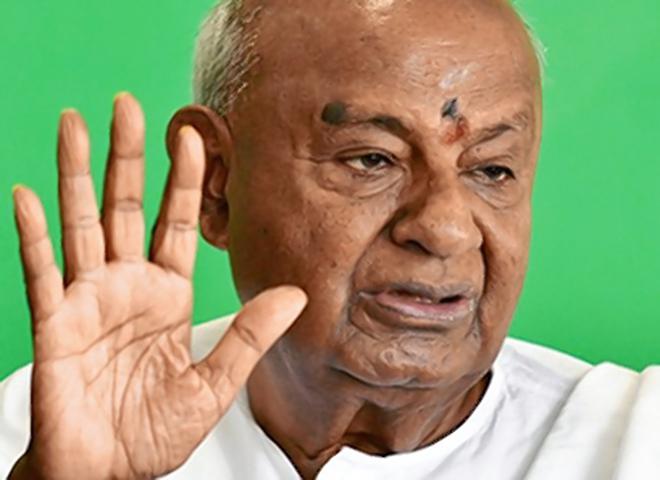
  • Meanwhile, former Prime Minister and JD(S) supremo H.D. Deve Gowda has said that the matter is “not solved and has only been aggravated”.
  • “It is a unanimous judgment by a three-judge Bench led by the Chief Justice himself. However, agitations and protests are still going on in the State. The matter has not been solved but is only further aggravated. Now it is important what steps the State Government takes, it should hold mutual discussions with all political parties and try to resolve the dispute,” he said, speaking to a news agency outside Parliament. To question, he said he would appeal to the girls to go to schools if the schools have opened and the Government takes necessary steps to ensure their safety.
  • N.A. Haris, Congress MLA, said it was wrong to interpret the High Court order as a “ban on hijab” in classrooms. “The High Court order has only upheld the authority of the College Development Committees to prescribe a uniform. Even now the Government can and should show a generous attitude and allow hijabs along with uniforms,” he said, adding the High Court order would also be challenged in the Supreme Court.

CONCLUSION

  • Leader of Opposition in the assembly and Congress leader Siddaramaiah said he would respond in detail only after reading the full text of the judgement, but appealed to all students to obey the order and asked the state government to prioritise education of the girls. Congress leader Priyank Kharge said more responsibility lies with the state government. “The government should organise bridge classes and its priority now must be to ensure all students write the upcoming exams rather than hijabs, saffron shawls and other religious symbols,” he said.
  • JD(S) leader H.D. Kumaraswamy said while everyone must follow the High Court order, the Government must immediately take corrective measures to bring the education sector in the state back on track. “Violence and riots in campuses have had a negative impact on the children. There is anxiety. All these need to be set right,” he said, adding he would discuss the issue in the Assembly on Wednesday.

UGC amends PhD admission norms

KEY STORY

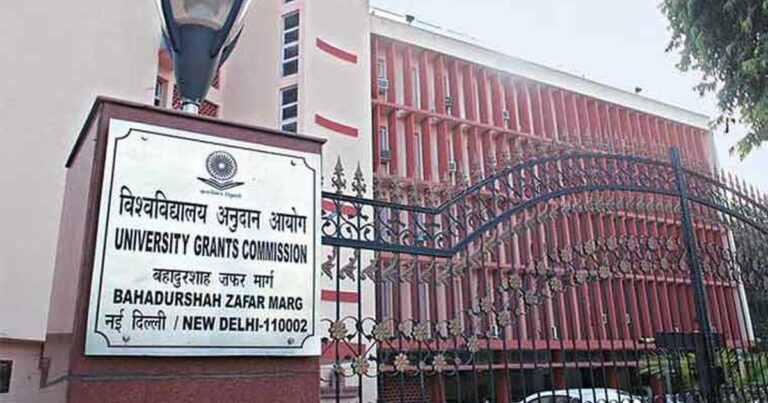
  • Holders of four-year undergraduate degrees with a minimum CGPA (Cumulative Grade Point Average) of 7.5 will be eligible for admission to PhD programmes, according to revised norms proposed by the University Grants Commision (UGC).
  • In its latest draft of amendments to the UGC (Minimum Standards and Procedures for Award of Ph.D Degree) Regulations, 2016, the UGC has also proposed to reserve 60% of the available seats for National Eligibility Test (NET)/ Junior Research Fellowship (NET-JRF) qualified candidates in all higher education institutions.
  • The draft UGC (Minimum Standards and Procedure for Award of Ph.D. Degree) Regulations, 2022, was approved during the 556th commission meeting held on March 10. HT has reviewed a copy of the document. The changes are in line with the National Education Policy, 2020 (NEP 2020).
  • The draft regulations are likely to be released for public suggestions on Thursday, said UGC officials familiar with the development.
  • According to the document, while there will be a status quo in terms of the procedure of admissions, the draft guidelines revised the eligibility criteria after the discontinuation of MPhil degree under NEP 2020, and introduction of four-year undergraduate programmes (FYUP).
  • Under the NEP 2020, universities and colleges will now offer 4-year undergraduate degrees with multiple exit and entry options. Several universities, including the Jawaharlal Nehru University and Delhi University, have already decided to adopt these programmes from this year. After completing a four-year degree programme, the students will receive honours with a research undergraduate degree.
  • According to the new proposed norms, candidates having a four-year bachelor’s degree with research with minimum 7.5 CGPA will be eligible for admission to PhD programmes, along with first and second year post graduate students (after completing a four-year programme).
  • Confirming the development, UGC chairperson Jagadesh Kumar said, “The four-year undergraduate programme is beneficial to students in several ways. Those who are interested in research can do either multidisciplinary research or focus on a single discipline in their final year. Those who do well in the 4-year undergraduate program will be eligible to join in a PhD programme. I believe that this will enhance the research ecosystem in our country.”
  • Besides, candidates who have cleared M.Phil with at least 55% marks in aggregate will continue to remain eligible. “The MPhil degree shall be de-specified from the Academic year 2022-23 onwards. MPhil degree awarded till the date of notification of these regulations shall remain valid,” the document stated.
  • The document further stated that 60% of the total vacant seats of the academic year shall be filled from NET/JRF qualified students. “The remaining 40% through the university/common entrance test qualified students on the basis of interviews conducted by the concerned institute,” it said.
  • Presently, there is no such fixed criteria for universities and colleges. NET/JRF qualified students do not have to appear for an entrance test and are admitted on the basis of viva (spoken examinations) or interviews. Others have to undergo the test and the weightage assigned against interview/viva is 70:30.
  • Under the amended regulations, the minimum duration for completion of PhD has been revised from three years to two years while the maximum duration remained unchanged at six years. The UGC has also provided for leaves for research scholars to undertake research expeditions, research missions, and exchange programmes.

CONCLUSION

  • The proposed regulations also extend a 5% relaxation in eligibility criteria to the economically weaker sections (EWS). The document further stressed on the areas of research and recommended that topics that are “socially relevant, locally need-based,and nationally important” to adding value to society should be encouraged.
  • Several amendments have been proposed in the role and obligations of research supervisors and co-supervisors, the biggest of them being that they will be allowed to guide two international students on a supernumerary basis.
  • Besides, under the amended regulations, the quality assessment of PhD degrees should be the responsibility of higher education institutions and they will be free to evolve guidelines in this regard.

Hijab verdict: We feel betrayed, govt pressurised court, say students who challenged ban

KEY STORY

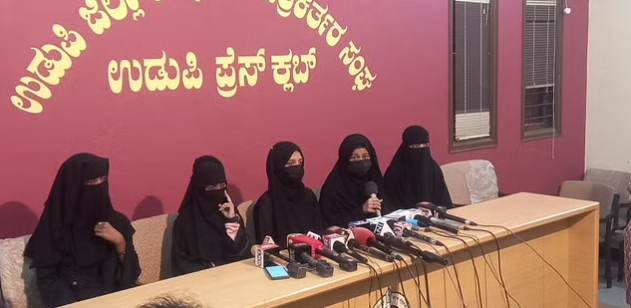
  • Almas A H, one of the six students from Women’s Government PU College, Udupi, who had challenged the ban on hijab inside classrooms before the High Court of Karnataka, said that she feels betrayed by the verdict of the High Court, which observed that wearing hijab is not an essential religious practice.
  • ”The Karnataka government pressurised the High Court to get this verdict in its favour,” she alleged.
  • Almas further said that as all of the six petitioners feel it is important to wear hijab inside the classrooms, they have decided not to come to college from Wednesday. ”Though we have not decided yet about reaching out to the Supreme Court, we will consult our lawyers for legal advice,” she said, adding that earlier they had hoped that they will get justice from the court.
  • Another student Aliya Assadi argued that by this verdict, the court has denied constitutional rights to them. “Now that we have our parents’ support for our cause, we will focus on our studies as well,” she said. However, she did not mention how they will continue their education without attending classes from Wednesday.

CONCLUSION

  • Aliya also said they feel bad that a matter that should have been solved within the college campus was blown out of proportion to earn ‘political mileage’. Aliya also said that they had made a lot of sacrifices to brave these troubles since the row began.
  • Five student-petitioners of the Government PU College except Shifa were present at the press meet.

Hijab row verdict: Eight Yadgir second PU students walk away from exam

KEY STORY

  • Following the Karnataka High Court’s verdict in the hijab case, eight Second PUC students belonging to the minority community chose not to write their preliminary examination, as the college authorities did not allow them entry wearing hijab, at Kembhavi town of Yadgir district on Tuesday.
  • “Eight students, who came to the Government Junior College at Kembhavi town before the pronouncement of judgment on hijab by the High Court, requested the college authorities to allow them to sit in a room till the award of the judgment. The college authorities obliged and later conveyed to them the court’s judgment. As the college authorities told the students that they won’t be allowed for the exam (English paper) with their hijab on, they decided to return home, saying ‘they will not write the exam without hijab’,” Deputy Director of PU Education Chandrakant Hilli told TNIE.

Education, religion are like two eyes: Father of Muslim girl who was heckled by saffron men

KEY STORY

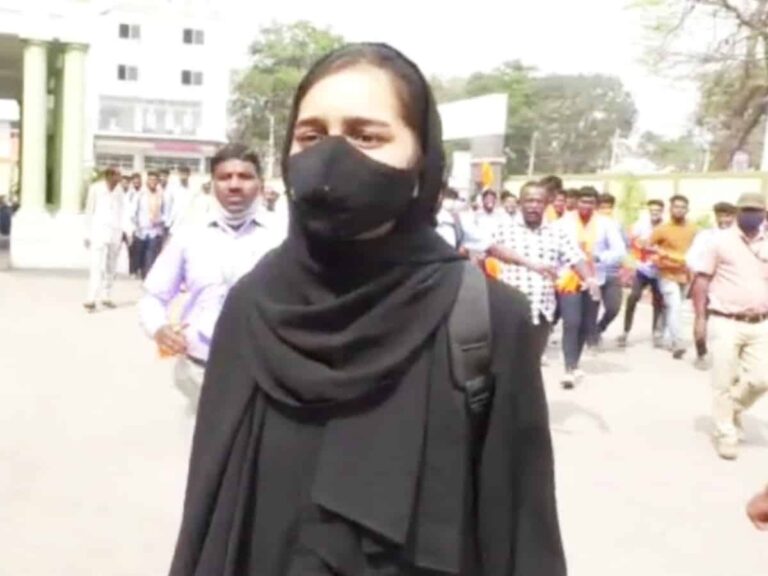
  • Following the High Court verdict in the hijab case, Mohammed Husain Khan, father of Mandya student Muskan Khan, said that education and religion are like two eyes, and both need to be taken into confidence to lead a peaceful life.
  • Muskan was heckled by saffron-clad students chanting ‘Jai Shri Ram’ a few weeks ago on her college premises, and the lone girl student had replied with chants of ‘Allah hu Akbar’.
  • Muskan had earlier noted that she has faith in the Constitution and the court, and would respect the latter’s verdict. On Tuesday, however, she declined to react to the court verdict.Meanwhile, her father told reporters that religious leaders of their community will decide their next course of action.
  • “After the heckling incident, my daughter has not attended college and she has to face her exams from March 24. We will meet the principal soon and discuss the next steps and also take suggestions from our religious leaders,” he said.

Alleged disproportionate assets: ACB raids 18 officers in 75 locations in Karnataka

KEY STORY

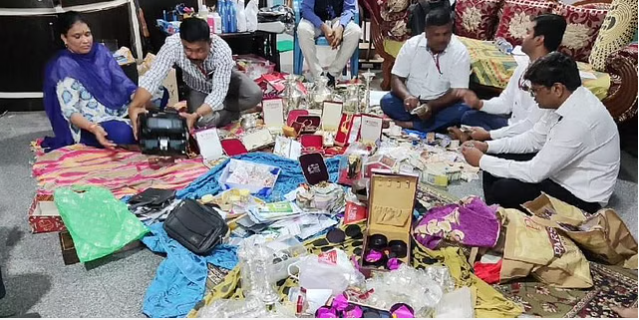
  • The Anti-Corruption Bureau (ACB) on Wednesday began one of its biggest operations in the State and raided 18 officers over alleged disproportionate assets (DA). According to the Additional Director  General, ACB, Seemant Singh, a team of 100 ACB officers accompanied with 300 staff are conducting searches at 75 locations.

    The officers against whom raids are being conducted include:

    Gnanendrakumar, additional commissioner, Transport and Road Safety, Bengaluru,
    Rakesh Kumar, Town Planning, Bangalore Development Authority (BDA),
    Ramesh Kankatte, regional forest officer, Social Forestry, Yadgir, Basavaraj Shekar Reddy Patil, executive engineer, Kaujalagi division,
    Gokak, Basava Kumar S Annigeri, sheristedar, DC office, Gadag,
    Gopinath N Malagi, project manager, Nirmiti Kendra, Vijayapura,
    BK Shivakumar, additional director, Industries & Commerce, Bengaluru,
    Shivanand P Sharanappa Khedagi, RFO, Badami,
    Manjunath, assistant commissioner, Ramanagaram,
    Srinivas, general manager, Social Welfare Department, Maheshwarappa, district environmental officer, Davangere,
    Krishnan, Agricultural Produce Market Committee (APMC), Haveri,
    Chaluvaraj, inspector, Excise, Gundlupete Taluka,
    Girish, assistant engineer, National Highway Subdivision,
    Balakrishna HN, inspector, Vijayanagara police station,  Mysuru,
    Gavirangappa, assistant executive engineer (AEE), Public Works Department (PWD), Chikamagaluru,
    Ashok Reddy Patil, AEE, Krishna Bhagya Jala Nigam Ltd, Devadurga, Raichur and Daya Sunder Raju, AEE, Karnataka Power Transmission Corporation (KPTCL), Dakshina Kannada.

    The searches are on.