
Huge difference in positivity rate among districts in Karnataka

KEY STORY
-
While the number of positive cases reported in the State has been increasing, analysis by the State COVID-19 War Room shows that there is a huge difference in the positivity rate across different districts.
-
Bengaluru Urban, with 10.39%, recorded the highest positivity rate as on January 8, while Haveri reported the lowest on the same day with 0.2%. The average positivity rate of Karnataka on Saturday stood at 6.77%.
-
On Saturday, five districts reported a positivity rate over 5%. These districts are Bengaluru (Urban), Bengaluru (Rural), Shivamogga, Mandya and Mysuru district. Meanwhile, four districts recorded a positivity rate of less than 1% . These are Bagalkot, Gadag, Raichur and Haveri.
-
H.M. Prasanna, President of Private Hospitals and Nursing Homes Association (PHANA), however, said that the positivity rate in other districts too would increase shortly. “Many people have gone to their native places during the weekends due to the curfew and the trend will change by next week,” he predicted.
-
In some districts, there is a huge difference in Rapid Antigen Tests (RAT) positivity rate and RT-PCR positivity rate. For instance, in Ramanagaram, the RT-PCR positivity rate is 0.93%, while for RAT it is 12.32%. The overall positivity rate in this district is however 1.88%.
CONCLUSION
-
Munish Moudgil, who is in-charge of the State War Room, said that RAT is for symptomatic people and hence patients are more likely to be COVID positive when they undergo this test, while RT-PCR is done for both symptomatic and asymptomatic.
-
An official in the Department of Health and Family Welfare said that the RAT positivity rate could be higher as they have several false negative results
Kannada to be made must in pre-primary, primary classes: Karnataka Education Minister

KEY STORY
-
Measures will be taken to implement Kannada at pre-primary and primary classes in all private schools, Primary and Secondary Education Minister BC Nagesh has said.
-
During a meeting on the National Education Policy 2020 (NEP), he said strict measures will be taken to make Kannada compulsory across the state.
-
The proposed mandatory implementation of Kannada as part of NEP in degree courses had run into trouble with the Karnataka High Court shooting down the government order a few months ago.
-
NEP is due to be implemented in phases for pre-primary schools in the coming academic year, with multiple meetings taking place to discuss its implementation.
COVID-19 infected children, adolescents witnessing high-fever, shivering, says expert
KEY STORY
-
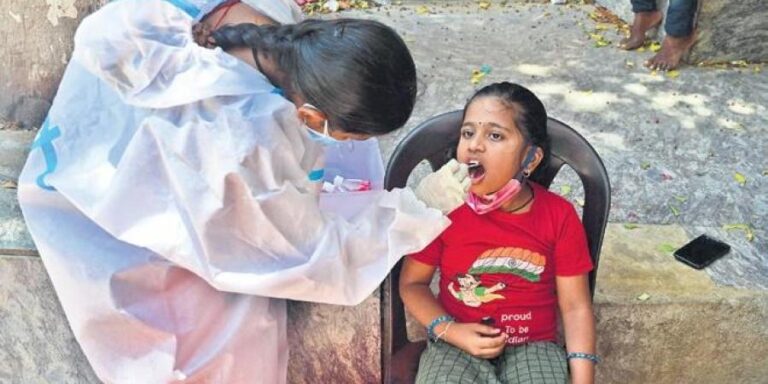
High fever and shivering are the common symptoms found in COVID-19 infected children and adolescents in the age group of 11-17 years, informed Dr Dhiren Gupta, Paediatric Pulmonologist at Sir Gangaram Hospital in Delhi on Sunday.
-
Speaking to ANI, Dr Gupta who has been treating COVID-19 infected children and adolescents said, “Children and adolescents between the age group of 11 to 17 years who are infected with coronavirus infection are witnessing high fever and shivering.”
-
According to the health expert, COVID-19 infected infants under two years of age are also witnessing high fever and shivering and some of them even require hospitalization.
“I have treated around nine infants infected with COVID-19, of which one required ventilation support. As is the case with other patients, infants required hospitalization because of high-grade fever,” Dr Gupta said.
-
He further informed that the severity of the infection in adults is lesser as compared to that of delta variant of coronavirus while the same cannot be said for the infants.
“As per my experience, babies with less than two years of age belong to a high-risk group and the infection severity in them is almost same as that of delta variant. While those in the age bracket of 11- 18 years are having more symptoms but their case is not as severe as that of the delta,” he added.
Speaking on the manifestations of the Omicron variant of COVID-19, the health expert said, “This time, we have found that the virus primarily affects the upper respiratory tract of the patient. Thus, the infection exhibits symptoms like cold, headache, nasal discharge and fever with shivering.”
-
Comparing the symptoms exhibited by coronavirus infection during the second wave to that of now, Dr Gupta said, “Contrary to the second wave, it is not very common for the Omicron patients to lose the sense of taste and smell. Only two to three per 10 patients are complaining about the loss of taste and smell. This also demonstrates that there is an overlapping between the clinical features of Omicron and delta.”
-
The health expert also stated that the Omicron symptoms in vaccinated and healthy people are less severe than those who are unvaccinated, especially with comorbidities.
“The patients who are taking some immunosuppressant, they’re predisposed to the lung involvement, that is, pneumonia. Till now, I have come across three patients who have developed pneumonia. They required steroids for the treatment,” he added.
Focus on Covid appropriate behaviour, accelerate vaccine drive: PM Modi at Omicron review meeting [Highlights]

KEY STORY
-
Amid a spurt in coronavirus cases, Prime Minister Narendra Modi chaired a meeting on Sunday with particular focus on the preparedness in wake of rise in Covid-19 infections fueled by the Omicron variant.
-
The prime minister emphasised on the need to ensure effective usage of masks and physical distancing measures as a new normal to control the coronavirus spread. PM Modi also stressed the need for effective implementation of home isolation for mild/asymptomatic COVID cases and to disseminate the factual information to the community at large.
-
PM held a video conference meeting with Union Home Minister Amit Shah, Health Minister Mansukh Mandaviya and officials of the ministry of home affairs and MoHFW to assess the COVID-19 pandemic situation, ongoing preparedness of health infrastructure and logistics, status of the vaccination campaign in the country and the emergence of new Covid-19 variant Omicron and its public health implications for the country, the Prime Minister’s Office (PMO) informed while giving details of the meeting.
-
The prime minister stressed ensuring adequate health infrastructure at the district level. He asked officials to maintain coordination regarding this with the states.
-
He directed to accelerate the COVID vaccine drive for adolescents in mission mode.
“The presentation brought attention to India’s consistent efforts towards the vaccination campaign, with 31% adolescents aged 15-18 years having been administered with the 1st dose so far within 7 days. PM noted this achievement and urged to further accelerate the vaccine drive for adolescents in mission mode,” the PMO said.
-
The PM also exhorted that precaution COVID vaccine dose for healthcare workers, front line workers should also be taken up in mission mode.
-
PM Modi said a meeting with chief ministers of states to be convened to discuss state-specific scenarios, best-practices and the public health response in view of rising COVID cases.
-
Tweeting about his COVID meeting, PM Modi said he had a detailed conversation with ministers and officials on the prevailing pandemic situation and vaccination drive.
“Had extensive discussions on the prevailing COVID-19 situation. Reviewed the preparedness of healthcare infrastructure, the vaccination drive, including for youngsters between 15 and 18, and ensuring continuation on non-COVID healthcare services,” PM Modi tweeted.
-
The meeting was attended by Shah, Mandaviya, Minister of State for Health & Family Welfare Bharati Pravin Pawar, Dr VK Paul, Member (Health) NITI Aayog, Cabinet Secretary Rajiv Gauba, Union Home Secretary AK Bhalla, Secretary (MoHFW) Rajesh Bhushan, Dr Balram Bhargava, DG ICMR and other officials of Civil Aviation, External Affairs ministries.
`I`m a Muslim and…`, says Gauahar Khan as she lashes out at netizen criticising different family laws

KEY STORY
-
Actress Gauahar Khan hit back at a netizen on Twitter for criticising different family laws and advocating the Uniform Civil Code, especially for the Muslim community of the country. The netizen said that people outside India aren’t aware that the country has separate family laws for Hindus and Muslims.
-
She said that Hindus have to abide by secular code but Muslims ‘can have 4 wives’ or ‘ban education’ for their daughters.
-
She wrote, “Outside world doesn’t know that India still has separate family laws for Hindus&Muslims. Hindus have to abide by secular code. Muslims can have 4 wives &ban education for their wives &girls in name of Sharia. #UniformCivilCode has to apply to ALL Indians.”
-
To this, Gauahar Khan replied, “Hey loser! I’m a Muslim, and nobody can ban us from having our rights, India is secular, it’s a democracy, not a dictatorship like u would desire! So stay put in the comfort of your American status, n stop inciting hate in my country!”
Hey loser ! I’m a Muslim , and no body can ban us from having our rights , india is secular, it’s a democracy, not a dictatorship like u would desire ! So stay put in the comfort of your American status , n stop inciting hate in my country ! https://t.co/wvTTA8ZLMe
— Gauahar Khan (@GAUAHAR_KHAN) January 9, 2022
-
On Saturday, supporting the eviction of Umar Riaz, Bigg Boss 7 winner, Gauhar Khan, had replied to a tweet that was upset over Umar’s eviction.
-
“Sorry to say, but he was evicted because he was extremely aggressive. Not once but on many occasions. I’m surprised he wasn’t evicted before. Karan has been extremely aggressive too. What’s actually unfair is that multiple chances are given to many offenders. It’s a mental game,” wrote Gauhar in response to, “Umar was a clear winner. Is that why he was evicted? Public winner Umar Riaz.”
-
For the unversed, the actress had made her film debut in ‘Rocket Singh: Salesman of the Year’ in 2009 and then went on to star in several movies such as ‘Game’, ‘Ishaqzaade’, ‘Fever’, ‘Badrinath Ki Dulhania’ and ‘Begum Jaan’.
-
She also emerged as the winner of the reality TV show Bigg Boss 7 in 2013.
-
The actress was last seen in the ZEE5 film ’14 Phere’ co-starring Vikrant Massey and Kriti Kharbanda.
Karnataka schools may resume Vidyagama if COVID situation worsens, draft guidelines created
KEY STORY
-
The resumption of the Vidyagama programme is on the cards with the education department drafting an outline for alternate education for this academic year, should the COVID situation get worse in the state.
-
The department has created draft guidelines, said the commissioner of public instruction Vishal R, talking to TNIE. “It has been created so people are aware of what needs to be done in case the Technical Advisory Committee gives its approval and a shutdown is declared subsequently.”
-
The department of public instruction has asked all schools in Bengaluru to stop classes from pre-primary to class 9. Following this, there were demands for alternate methods of teaching which were not necessarily the online or virtual mode.
-
The department’s draft guidelines advise all district implementation officers of the education department to give necessary instructions to school heads for implementing Vidyagama.
-
The move is to keep children from being victims of social ills such as child marriage and child labour, and prevent further dropouts.
-
Students will be divided into three groups — those with no gadgets and hence will be taught only offline, those with phones but no internet, and those with internet and gadgets. Kids from the last two categories will be allowed to attend online classes if they’re unable to participate offline.
-
Each teacher will mentor a cohort of 20-25 students. The groups will meet for four hours a day anywhere between daily to once a week. The schedule for the next week will be provided and students will be guided for self study. Doubts will be cleared.
-
A self-help group volunteer will help the teacher in conducting classes.
-
The volunteer’s gadget can be used to effectively teach concepts to students during the classes.
-
Teachers are expected to maintain a ‘child profile’ to maintain a progress log of students.
-
Local organisations are to be roped in at rural areas to provide sanitisers and masks to students.
INTERVIEW | Expecting third Covid wave to peak by mid-February in Karnataka: Sudhakar

KEY STORY
As the number of new Covid-19 cases continues to surge, Health Minister Dr K Sudhakar says travellers coming from high-risk countries and neighbouring states which have high case load are the main reason for it. He also said they are expecting the third wave to peak by mid-February. Excerpts from an interview:
What are the main reasons for the sudden surge?
We have 38,507 active cases in the state of which 32,157 are in Bengaluru Urban district. So, about 83.5 per cent of the active cases are in Bengaluru. Travellers coming from high-risk countries and neighbouring states which have high case load are the main reason for the surge in Karnataka. To check this, we have decided to further strengthen screening of inter-state travellers at entry points like railways stations and bus stations similar to airports. We will also request the Railway Ministry to make screening of travellers mandatory at boarding points.
When is the wave likely to peak and how long is it likely to take for the situation to come under full control?
The upsurge of infection is happening in cities where Omicron is the prevalent strain. The steeper the rise, the shorter the wave is likely to be, as seen in other countries. Like in the UK and Denmark, it is receding now. In South Africa, too, it stayed for a month. But we can’t say anything clearly as it depends on our population density, vaccination coverage, etc. We are expecting the third wave to peak by mid-February.
So, how prepared are we to handle the situation?
After the pandemic hit us, the health infrastructure has been significantly ramped up in the state. We have augmented our capacity, especially in critical care. The number of ICU beds in Karnataka before Covid was only 725. Currently, the state has 3,877 ICU beds in government medical colleges and government hospitals — an increase of 5-6 times. There were 4,847 oxygenated beds before Covid. This has now increased to 28,447, and regular beds have increased from 41,378 to 50,629. Pre-Covid, government hospitals and medical colleges had an oxygen capacity of 320 MT, which we augmented to about 1,200 MT. During the second wave, oxygen logistics was a huge challenge — the number of cylinders before Covid was 2,180, but has increased to 13,588 cylinders now. The number of oxygen concentrators has gone up from 585 before Covid to 6,511.
Is there an increase in hospitalisation after the surge?
Presently, the hospitalisation rate is around 4-5 per cent. However, even if the rate of hospital admissions is lower compared to the second wave, the Omicron variant, which is highly transmissible and spreads faster than the Delta variant, may lead to a rise in admissions in absolute numbers, burdening the critical health infrastructure for a few days or weeks. But people need not unnecessarily panic as most cases, especially those fully vaccinated, don’t need hospitalisation.
When will we be able to achieve 100 per cent double-dose vaccination?
The first dose coverage stands at 98.8% and the second dose coverage is about 80.8%. I think people had become complacent about the second dose after the second wave subsided. With a surge in cases now, more people are coming forward to get the second dose. We should be able to achieve 100% coverage in the next few weeks.
Why is there a delay in setting up genome sequencing labs in the districts?
Our government had proposed to set up six genome sequencing labs in Bengaluru, Mysuru, Shivamogga, Hubballi, Mangaluru, and Vijayapura. Genome sequencing can be conducted only in labs approved by Indian SARS-CoV-2 Genomic Consortia (INSACOG) as it requires expert facilities and lab equipment. We also need trained personnel including technicians, scientists and data entry operators to run the labs. We have received approval for four labs at Kalaburgi Institute of Medical Sciences, Mysore Medical College and Research Institute, Belagavi Institute of Medical Sciences, and the Bowring and Lady Curzon Medical College and Research Institute, and all necessary equipment have been installed.
Is there any strategy to ensure we test specifically for Omicron instead of the current system of sending samples for genome sequencing from cluster cases?
We need to understand that genomic sequencing is not like the RT-PCR test and not all Covid-positive samples are suitable for it. Due to several factors, sequencing takes about 5-8 days. The sequence requires over 300 samples to initiate the process. Only Covid-positive swab samples with Cycle Threshold (CT) value below 25 qualify for genomic sequencing, as the viral load will be higher in those with low CT value. Considering these factors, it will be difficult to do targeted testing for Omicron. However, all those coming from high-risk countries are being tested for the variant.
The Congress is holding a padayatra from January 9 despite the government prohibiting political rallies and events. Your views?
The government is not against the padayatra. It is their democratic right to hold protests. But the Congress should rethink whether it is appropriate to hold the padayatra when Covid cases are surging and the third wave is looming. Can’t they postpone and hold the protest after two months? That is all we are asking.
Is there any possibility of imposing a lockdown if the positivity rate/cases continue to increase?
As of now, there is no such proposal. Our ultimate aim is to keep the fatality rate low. We will do whatever it takes to achieve that.
Symptoms of Omicron variant not as ‘mild’ as you think. Here’s what experts say

KEY STORY
-
While there’s a general consensus that an infection caused by Omicron is milder than Delta, some experts feel that symptoms of the new variant of concern are nothing to sneeze at.
-
Speakig to CNN, Dr Shira Doron, an epidemiologist and infectious disease physician at Tufts Medical Center in Boston, says those with minor illness due to coronavirus can feel quite “uncomfortable” and may develop the dreaded “long Covid”, or when symptoms persist for months and may damage the vital organs.
-
In recent days, as the Omicron variant sends cases skyrocketing worldwide, more and more testimonies have piled up of people being diagnosed with mild Covid infection but still feeling like death. Even people who are fully vaccinated or have taken booster shots are susceptible.
-
“When we or when the CDC or the NIH says ‘mild,’ we really mean it didn’t make you sick enough to go to the hospital,” Dr Doron told CNN. “But when you get a flu-like illness that puts you in bed, that’s not mild to you.”
-
Dr Doron thinks the “mild” term that experts throw around may need to be redefined. Moreover, calling the disease “mild” may lull people into not taking Covid-19 seriously, which could only lead to more cases and put further strain on the healthcare system.
-
Although the patient may be feeling crappy, the symptoms are a positive sign as they indicate that their body’s immune system is fighting the virus. Such symptoms aren’t dangerous and do not require medical care or hospitalisation, Dr Doron says.
CONCLUSION
-
Dr William Schaffner, professor of infectious diseases at Vanderbilt University Medical Center, stresses that those with minor symptoms should not ignore it and get tested for Covid. “So they know to watch for worsening symptoms that need medical care. A test will also tell them if they need to isolate themselves so they don’t spread the coronavirus to others,” he told CNN.
-
The doctor also added that people shouldn’t skip vaccines or boosters just because Omicron has become the dominant variant and causes less severe illness as compared to the strains that came before. The unvaccinated who contract an Omicron infection can still end up in the ICU and “never get back their lives”, according Dr Claudia Hoyen of UH Rainbow Babies and Children’s Hospital in Cleveland.
Maharashtra Imposes Lockdown-Like Curbs; Shuts Schools, Colleges, Salons, Spas | Full List of Restrictions Here

KEY STORY
-
The Maharashtra government has decided to bring back lockdown-like curbs in view of rising COVID cases. A night curfew will be imposed from Monday, January 10, barring movement of people in groups of 5 or more from 11 pm to 5am.
-
Schools, colleges and coaching institutes will remain closed till February 15, with a few exceptions, a government order read.
Here’s the full list of fresh restrictions imposed by Maharashtra Govt on Saturday:
-
Swimming pools, gyms, spas, beauty salons, zoos, museums and entertainment parks to remain closed.
-
Hair cutting salons and malls to operate at 50% capacity.
-
Hotels, restaurants, cinema halls, auditorium to operate at 50% seating capacity till 10 pm.
-
Home delivery of food to be allowed as per usual hours.
-