Cold wave likely to grip Northwest India till January 3, says IMD

KEY STORY

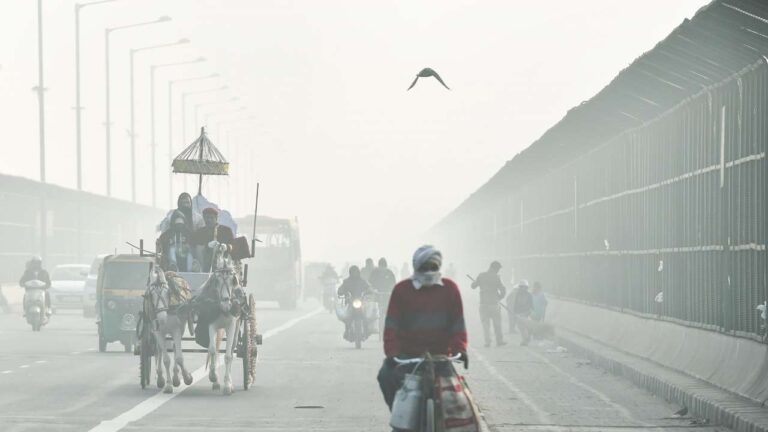
  • Parts of Northwest India are in for a chilly New Year as the India Meteorological Department (IMD) has predicted a cold to severe cold wave over the region from Friday, December 31 to Monday, January 3.
  • The IMD on Thursday stated that Delhi, Uttar Pradesh, parts of Punjab and Haryana, and Rajasthan, will experience a cold wave over the next four days. Madhya Pradesh is also likely to experience a cold wave till Sunday, January 2.
  • The IMD has also predicted dense fog during the night and early morning over Uttar Pradesh for the next five days and in East and Northeast India for the next two to three days.
  • Additionally, a fall in minimum temperatures by 2-4 degrees Celsius is likely over Central India during the next three days, followed by a 2-3 degrees Celsius rise in the subsequent two days. East India will also experience a fall in minimum temperatures by 3-5 degrees Celsius during next three days.
  • According to the press release, Punjab, north Rajasthan, west Uttar Pradesh and Haryana on Thursday recorded minimum temperatures in the range of 2-6 degrees Celsius. A fall of 3 to 5 degrees Celsius in minimum temperatures was seen in the region as well as Madhya Pradesh in 24 hours.

CONCLUSION

  • The IMD records a cold wave when the minimum temperature is equal to or less than 10 degree Celsius at a weather station in the plains, and is 4.5 degrees to 6.4 degrees below the normal temperature for that period. A cold wave may also be recorded at a station in the plains when the minimum temperature is less than or equal to 4 degree Celsius.
  • For hilly regions, a cold wave is declared when the minimum temperature is less than or equal to 0 degree Celsius and the minimum temperature is 4.5 degrees to 6.4 degrees below the normal.

Centre to send SMS reminders to eligible elderly population for precautionary dose of COVID vaccine

KEY STORY

  • The Ministry of Health and Family Welfare (MoHFW) on Thursday informed that the Union Government will send an SMS alert to the eligible elderly population to remind them for taking the precautionary dose of COVID-19 that starts from January 10.
  • This comes amid the country facing a sharp increase in daily COVID-19 infections as there has been a massive surge in new Omicron variant cases.
  • The Union Health Ministry further stated that the precautionary dose of the COVID-19 vaccine is primarily to mitigate the severity of infection, hospitalisation, and death.
  • In his sudden address to the nation, Prime Minister Narendra Modi had on December 25 announced the next steps of vaccination for children and booster doses for adults in the wake of the Omicron surge.
  • “January 10 onwards India will begin to administer ‘precautionary’ doses to frontline workers and citizens above the age of 60, the prime minister had said.
  • According to the Centre, approximately 90 per cent of the adult population in the country has been vaccinated against COVID-19 with the first dose.
    “Approximately 90 per cent of the adult population in India has been vaccinated against COVID-19 with the first dose. On average, India reported more than 8,000 cases per day last week. Overall case positivity rate stands at 0.92 per cent. From December 26 onwards, the country has been reporting 10,000 daily cases,” said Luv Aggarwal, Joint Secretary, Union Health Ministry during a media briefing.

    ‘COVID positivity rate over 10% in 8 districts’

    Aggarwal further said that the weekly COVID positivity rate of more than 10 per cent is being noted in eight districts including six districts of Mizoram, one from Arunachal Pradesh, and Kolkata in West Bengal.
    “The weekly case positivity rate is between 5-10 per cent in 14 districts of the country. There are 961 cases of Omicron variant of coronavirus in India, out of which 320 patients have recovered,” he added.
Schools to stop online classes once students are vaccinated

KEY STORY

  • A few Central board schools, who are still relying on online classes to teach students, have decided to suspend remote learning once their students are vaccinated. The schools are planning a vaccination drive in the first week of January for students of classes X, XI and XII.
  • While most schools started offline classes in a phased manner since August 23, many schools did not make the shift as they were worried that their schools could become COVID-19 clusters as children were not vaccinated.
  • Mansoor Ali Khan, member, Board of Management, Delhi Public Group of Schools, said they would try to complete both doses of vaccination for students above 15 years by February.
  • “All these days, we were reluctant to stop our online classes despite having offline classes as well as we were worried about our students’ health. But after the students are vaccinated, we will stop online classes and will channelise all our teaching resources to offline classes,” he said. He added that offline classes would be more effective in bridging the learning gap among students.
  • D. Shashi Kumar, general secretary, Associated Managements of Primary and Secondary Schools in Karnataka said that after students are vaccinated, parents need to ensure that they give consent to students attending classes. “In a few schools, parents are still reluctant and do not want to send their children for offline classes with the increase in number of Omicron cases. But once students are vaccinated, parents need to cooperate and ensure that their children attend offline classes,” he said.

CONCLUSION

  • An official of the Department of Primary and Secondary Education said that schools are supposed to conduct both offline and online classes at the moment. “However, once students are vaccinated, we will review the need to conduct both types of classes,” the official added.
  • Parents too feel that they would be reassured to send their children to school after they are jabbed. Surekha R., the parent of a class ten student said, “A few parents are not convinced of vaccinating their children. But we will urge the management to ensure that they start offline classes and that bridge courses are conducted so that students pick up their lost skills,” she said.

Karnataka UG-PG students may soon get maternity leave

KEY STORY 

  • Students pursuing undergraduate and postgraduate courses in Karnataka may soon get maternity/childcare leave facilities after the University Grants Commission (UGC) nudged universities on the issue.
  • The Higher Education Department responded positively after the UGC asked universities to frame guidelines to extend maternity/childcare leave facilities at UG and PG level, a move academicians feel will help “women students to pursue higher education”.
  • The department will discuss the issue at the next meeting of Karnataka State Higher Education Council, which has vice chancellors of all the state-run universities as its members.
  • On Dec 14, the UGC issued a communication stating: “The women candidate may be provided maternity leave/child care leave once in the entire duration of M.Phil/PhD for up to 240 days.”
  • The circular requested “all higher education institutions to frame appropriate rules/norms with regard to granting maternity leave to the women students enrolled in their respective institutions/affiliated colleges and also provide all relaxations/exemptions relating to attendance”.
  • Vice Chancellors of several state-run universities have responded positively on the issue. According to them, the implementation of the National Education Policy (NEP), where exit options are available, will make the implementation of maternity/childcare leave possible.
  • Prof Karisiddappa, Vice Chancellor of Visvesvaraya Technological University (VTU) said the move “will encourage women students to pursue higher education”. “The multiple entry and exit options available with NEP will make the implementation easier,” he said.
  • However, some of the universities have decided to place the issue before the academic council and syndicate meetings. “As the communication is from the UGC, it is not necessary to decide at the government level. The universities can decide by placing it in the academic council and syndicate meetings,” said a vice chancellor of a state-run university.
  • The Karnataka Government College Teachers Association has also welcomed the move.
  • T M Manjunath, president of the association, said it will “definitely help women students to continue their higher education”.

Ahead of Karnataka polls, Kharge takes dig at PM Modi via Twitter

KEY STORY

  • Launching a frontal attack on Prime Minister Narendra Modi, Senior Congress leader and Opposition leader in the Rajya Sabha Mallikarjun Kharge tweeted on Wednesday, “As state election campaigns begin, PM Modi has again begun asking votes in the name of ‘double engine’ jumla. Modiji, let me remind you that the BJP govt in Karnataka is known as a ‘40% commission’ govt. Please let the voters know what the commission split is for each engine?’’
  • Kharge later told The New Indian Express, “We have not made the allegation against the double engine government, it is the contractors who have written directly to the PM. What action has been taken? The Prime Minister has to find out and respond.”


Karnataka sees 37.1% jump in fresh Covid cases, cluster outbreaks rise

KEY STORY

  • Amid fears of a third Covid wave, the state saw a 37.10 per cent jump in Wednesday’s Covid cases at 566 as compared to Tuesday’s tally of 356. This is the first time since early October that the state has recorded over 500 cases a day. With Wednesday’s numbers, total Covid cases have gone up to 30,05,798 since the beginning of the pandemic.
  • Bengaluru contributed a major chunk of Wednesday’s cases with 400 people testing positive. The state also saw six deaths, taking the toll to 38,324. Also, five new Omicron cases were confirmed in the state, taking the tally of this new Covid variant to 43. A 22-year-old woman and a 24-year-old man travelling from the US, a 53-year-old man travelling from Dubai, a 61-year-old man coming from Ghana and a 41-year-old travelling from Mumbai were found to have Omicron, the health department reported on Wednesday.
  • Cluster outbreaks were reported in Kolar and Mandya. At Morarji Desai School in Kolar, 10 students tested positive and at a private nursing college in Bangarpet, four students are Covid-positive. At the school, after a student reported symptoms of fever, she was tested and the result came positive. Later, all the 252 students were tested, of which ten are positive. The school has now been declared a containment zone.
  • At a village in Maddur taluk of Mandya district, five primary class students at the Hallikere Government School tested positive. Initially, one student tested positive and after that all the 50 students were made to give swab samples, of which four are positive. Health officials rushed to the spot and sanitised the school premises before sealing it for a few days. Taluk health officials said there is no need to worry as the students are asymptomatic and isolated.

‘Safety a big concern’

Sr inivas Alavilli, head, civic participation, Janaagraha said, “Cities are flooded by private and personal
vehicles. The number of pedestrians is dwindling by the day. More peopl e want to cycle, but safety is a major concern.
Unless we shift a lot of people from private vehicles to walking, cycling and enable public transport, our cities are going to see never-ending traffic jams. This Bill will address the rights of cyclists and pedestrians and could not have come at a better time.”

Omicron and Delta circulating simultaneously, leading to tsunami of cases: WHO chief worried for health systems

KEY STORY 

  • A “tsunami” of Omicron and Delta Covid-19 cases will pile pressure on health systems already being stretched to their limits, the World Health Organization warned on Wednesday.
  • The WHO said the Delta and Omicron variants of concern were “twin threats” that were driving new case numbers to record highs, leading to spikes in hospitalisations and deaths.
  • The WHO said new global cases had risen by 11 percent last week, while the United States and France both registered record daily case numbers on Wednesday.
  • “I am highly concerned that Omicron, being more transmissible, circulating at the same time as Delta, is leading to a tsunami of cases,” WHO chief Tedros Adhanom Ghebreyesus told a press conference.
  • “This is and will continue to put immense pressure on exhausted health workers, and health systems on the brink of collapse.”
  • He said the pressure on health systems was not only due to new coronavirus patients, but also large numbers of health workers falling ill with Covid.

Moral shame’

The WHO reflected on the fight against Covid-19 in 2021 and hoped that next year would see an end to the acute stage of the pandemic — but warned that it would rest on greater vaccine equity.
The WHO wanted 40 percent of the population in every country fully vaccinated by the end of the year and has a target of 70 percent coverage by the middle of 2022.
Tedros announced that 92 of the WHO’s 194 member states were going to miss the 40 percent target.
“This is due to a combination of limited supply going to low-income countries for most of the year and then subsequent vaccines arriving close to expiry and without key parts like the syringes,” he said.
“It’s not only a moral shame, it cost lives and provided the virus with opportunities to circulate unchecked and mutate. In the year ahead, I call for leaders of government and industry to walk the talk on vaccine equity.
“While 2021 has been hard, I ask everyone to make a New Year’s resolution to get behind the campaign to vaccinate 70 percent by the middle of 2022.”
Misinformation and populism
Tedros slammed the attitude of richer countries accusing them of hogging the weapons to combat Covid-19 — and leaving the back door open for the virus.
“Populism, narrow nationalism and hoarding of health tools, including masks, therapeutics, diagnostics and vaccines, by a small number of countries, undermined equity, and created the ideal conditions for the emergence of new variants,” he said.
Meanwhile disinformation had been a constant distraction in 2021, hampering efforts to beat the pandemic.
“In the huge waves of cases currently seen in Europe and in many countries around the world, misinformation which has driven vaccine hesitancy is now translating to the unvaccinated disproportionally dying,” he said.
Tedros lamented that while there were 1.8 million recorded deaths in 2020, there were 3.5 million in 2021 — and the true number would be much higher

Belagavi: Alert as water gushes out of Maharashtra dam

KEY STORY 

  • A massive amount of water flowed out of Radhanagari dam, near Kolhapur, due to a technical snag which resulted in the sudden opening of one of the dam’s gates. As a result of the abrupt release of a large quantity of water, said to be in thousands of cusecs, a high alert was sounded in areas around Bhogawati river in Kolhapur district.
  • The released water from Radhanagari led to a massive rise in the level of Bhogawati river. The authorities were able to avert a major disaster and save property around Bhogawati river, according to sources. Authorities ordered an investigation to ascertain whether it was a man-made disaster or due to a technical snag.

How to register 60+ adults for booster shot, children between 15-18 for COVID-19 vaccine on coWIN app – Details

KEY STORY

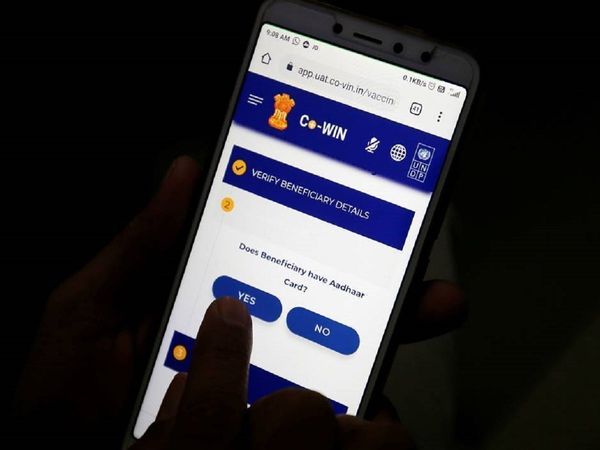
  • Two days after Prime Minister Narendra Modi announced that children in the age group of 15-18 will be allowed COVID-19 vaccines, the government on Monday elaborated on how to register children for vaccines on the CoWIN platform. Dr RS Sharma, CoWIN platform Chief said that children in the age group of 15-18 years will be able to register on the CoWIN app from January 1.
  • “We’ve added an additional (10th) ID card for registration – the student ID card because some might not have Aadhaar or other identity cards (to ensure registration of children for the vaccine on CoWIN app),” he said.
  • According to initial reports, the registration of children on CoWIN app will be almost similar to the registration of adults on the platform. Children between the age group of 15-18 will be able to book an appointment on the CoWIN app or walk into any vaccination centre and get vaccinated after producing the necessary supporting documents
  • Over the weekend, PM Modi announced that children between the age group of 15-18 will also be able to get themselves vaccinated. The decision was taken in light of the threat of Omicron that is looming large across the globe. With the changed norms, all those who are born before 2007, will be able to get their vaccine from January 1.

Registration for adults for booster doses on CoWIN:

Replying to a question on how to register people above 60 years of age for booster doses on the CoWIN platform, Sharma said that the process, for registering citizens above 60 for COVID-19 booster dose will be exactly the same. “If you are above 60 years of age and have taken both doses and the gap between the second dose and the day you are registering is more than 9 months (39 weeks) then you are eligible,” he said.
According to Sharma, while registering, the CoWIN platform will ask whether the individual has any comorbidities or not. “If you say yes, you will be able to book and have to show the comorbidities certificate from a registered doctor at the vaccination centre and then you can get jabs,” he said.

15 Omicron patients discharged in Karnataka; Health department treads cautiously

KEY STORY

  • In a great relief to the Karnataka Health department, which is in a battle mode in taking preventive measures to ensure the new SARS-CoV2 variant Omicron doesn’t spread across the state, as many as 15 students affected with the Omicron variant have fully recovered and been discharged from the designated hospitals. The data is confirmed by the Union Health ministry.
  • The rest of the patients are also in good stead and none are showing any severe symptoms. However, the Karnataka state government has already initiated measures to tackle the possible Omicron variant implications in the state. The department has made arrangements for 7,051 ICU beds in the state and 30,000 beds with an oxygen facility. Earlier, the number of ICU beds was 3,860.
  • Karnataka was the first state to report Omicron variant cases in the country. One was a South African national with an international travel history and another was a local doctor without travel history. The case without travel history panicked people and authorities as it gave clues on the presence of the new variant in the community.
  • However, the doctor recovered from the infection and in fact, he came on live on social media to explain that he is hale and hearty at the designated hospital. Later, as many as seven Omicron variant, positive cases were found last Saturday taking the tally to 38 in the state.

CONCLUSION

  • According to data available, eight states — Delhi, Maharashtra, Kerala, Gujarat, Rajasthan, Telangana, Tamil Nadu and Karnataka — have reported 93 per cent of all 538 cases of Omicron reported in India. Maharashtra has seen the most number of discharges at 42. As many as 30 Omicron tested positive patients have recovered and were discharged in Rajasthan, followed by Delhi (23) and Karnataka (15).
  • The Karnataka government, though relieved that Omicron affected persons are not showing severe symptoms, is taking no chances and imposed a ban on nightlife during the New Year celebrations in the state.