KEY STORY
-
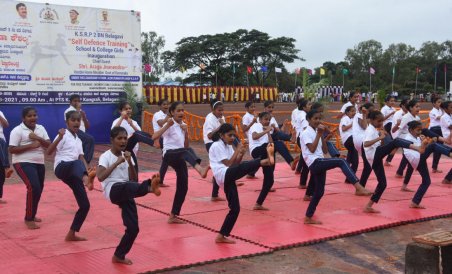
More than four lakh girl students studying at various government high schools and pre-university colleges in the state will be trained in self-defence techniques through special classes starting from the first week of this month.
-
The government has released Rs 2 crore for the training under the Samagra Shikshana Karnataka (earlier known as Samagra Shikshana Abhiyana) project.
-
The SSK has issued a circular directing all government schools and pre-university colleges to commence self-defence classes from the first week of this month.
-
The headmasters of schools and the school development monitoring committees have been told to identify the resource persons or training institutes at the local level, to train the girl students. The trainers will be paid Rs 200 per session. All girl students in 4,245 government high schools and 441 government PU colleges will benefit from this.
-
“We have implemented this self-defence training mainly to help girl students get stronger physically and mentally. Self-defence does not mean only teaching karate,” said an official from SSK.
-
“This self-defence programme includes increasing self-confidence among girl students and encouraging them to pursue higher education,” he added.
-
As explained in the circular, the schools and colleges have to conduct two classes per week (45 minutes each) and a total of 20 sessions in three months.
-
SSK has also instructed schools and colleges to conduct health check-ups for students before putting them on training. In case students have health issues, such students should be exempted from the training, the circular said.
CONCLUSION
-
“When girl students are on self-defence training, teachers must plan other extracurricular classes for boys,” said an official. The training will be implemented under the Rani Lakshmi Bai self-defence training programme.
-
Schools and colleges have to upload photographs and videos of the self-defence training on the Shagun portal.

KEY STORY
-
As India’s COVID-19 cases continue to rise, Union Health Secretary Rajesh Bhushan on Saturday wrote to the chief secretaries of all States and Union Territories regarding measures to deal with a possible surge in cases. He also advised them to initiate the process of setting up makeshift hospitals and constituting special teams to monitor patients in home isolation. The Union Health Secretary also said that all states and UTs should operationalise control rooms at district or sub-district level and revisit the COVID-19 dedicated health infrastructure.
-
India today reported 22,775 fresh COVID-19 cases even as the Omicron tally rose to 1431. As per Health Ministry data, the heavily mutated strain of COVID-19 has so far been detected in 23 states and Union Territories.
-
In his letter, Bhushan asked the states to initiate the creation of field or makeshift hospitals and urged them to consider leveraging hotel rooms and other accommodations linked with the COVID-19 dedicated hospitals in the government and private sector to cater to patients having mild to moderate symptoms.
CONCLUSION
-
“A large number of positive cases may be eligible for home isolation. These cases would require effective follow-up and a clearly defined mechanism for prompt shifting to a health facility in case of deterioration in their health situation,” he added said. The letter also urged states to amp up their home isolation protocols and to constitute special teams to monitor all home isolation cases.

KEY STORY
-
Amid a sharp spike in cases of new Omicron COVID-19 variant in the country, the Central government on Friday issued a new directive to all the States and Union Territories in a bid to contain the virus spread.
-
Union Health Secretary Rajesh Bhushan and Indian Council of Medical Research (ICMR) DG Dr Balram Bhargava has written to chief secretaries of all states/UTs asking them to set up round-the-clock functional RAT (rapid antigen tests) booths at different locations, engage medical and paramedical staff and encourage the use of home test kits.
-
“Any individual presenting with fever with/without cough, headache, sore throat, breathlessness, body ache, the recent loss of taste or smell, fatigue, and diarrhea should be considered as a suspect case of COVID-19 unless proven otherwise,” the health ministry said in its new directive.
-
Earlier today, official sources warned saying that the reason behind the spike is the Omicron variant which has started replacing its predecessor Delta in India and the world.
-
“The trend of an increasing number of COVID-19 cases shows that it is due to Omicron, which is replacing Delta in India and globally as well,” ANI quoted the sources as saying.
Omicron tally crosses 1,000 in India
-
As many as 309 new cases of highly transmissible COVID-19 variant were detected in the last 24 hours, taking the country’s overall tally of the new mutant variant to 1,270 cases, according to the Union Health Ministry.
-
Of the total, 374 infected persons have been discharged, it added.
-
With 450 cases, Maharashtra remains the worst affected by the new variant, followed by Delhi (320), Kerala (109), Gujarat (97), Rajasthan (69), Telangana (62), Tamil Nadu (46), Karnataka (34), Andhra Pradesh (16), Haryana and Odisha 14 each, while West Bengal has reported 11 cases so far.

KEY STORY
-
Union Health Minister Mansukh Mandaviya on Sunday said that learning from the fight against COVID-19 should be used to tackle the spread of the Omicron variant of coronavirus.
-
Mandaviya held a virtual meeting with state health ministers and principal secretaries and additional chief secretaries of states and UTs to review public health preparedness for COVID-19 and vaccination progress.
-
“We have to put up a strong fight against COVID earlier and this learning must be used to re-focus on efforts against Omicron variant,” he said at the meeting.
-
The meeting was held in view of the rising cases of the Omicron variant and the recent decisions to roll-out vaccination for the age group 15-18 years and precautionary dose for identified vulnerable categories.
-
Stressing on the need to ensure smooth implementation of new vaccination guidelines, states and UTs were advised to ensure orientation of vaccinators and vaccination team members for vaccination of 15-18 years old and identification of dedicated session sites for their vaccination.
-
The vaccination of children aged between 15 to 18 years will be rolled out on Monday.
-
Mandaviya also asked states and UTs to take necessary measures, including setting up separate vaccination centres, to avoid mixing-up of COVID-19 vaccines during administration of shots to those in 15-18 age group.
States, UTs advised to ramp up infrastructure to manage high surge
The Union Health Minister noted at the very outset that globally, countries are experiencing three to four times the surge in COVID-19 cases in comparison to their earlier peaks. The Omicron variant being highly transmissible, a high surge in the case can overwhelm the medical system.
He advised states and UTs to leave no stone unturned in ramping up infrastructure to manage a high surge so that “India escapes unscathed from this episode of COVID-19”.
Mandaviya said in this regard that irrespective of the COVID variants, measures for preparedness and protection remain the same. He urged states to re-invigorate their teams to work at the ground level and strengthen monitoring and containment mechanisms.
This was followed by a comprehensive and detailed discussion on various aspects of COVID management including ramping up of hospital infrastructure; increased testing; stringent restrictive measures for breaking the chain of transmission; and stress on COVID-appropriate behaviour among the masses.
States were also advised to prepare a weekly plan to catch up and exceed the average national vaccination coverage and review the implementation of this plan on a daily basis with special emphasis in five poll-bound states of Punjab, Goa, Uttarakhand, Uttar Pradesh and Manipur.

KEY STORY
-
Chief Minister Basavaraj Bommai on Saturday told senior officials that the State Government cannot just sit back and impose restrictions due to the pandemic, and expressed that there is a need to face it with various strategies.
-
“We have to work with greater vigour to tackle it,” the CM told officers, asking them to cut down on wasteful expenditure in their respective departments.
-
Addressing senior officials on the first day of this year, Bommai stated that 2022 would be a challenging year from both the economic and administrative perspectives. He said they have to prepare for a probable third Covid wave, while looking at pushing the economy forward as well.
-
“We can’t just sit back imposing restrictions. We need to face it with various strategies and work with greater vigour to tackle it,” he added.
-
Further, the CM urged officials to cut down on wasteful and unnecessary expenditure in their respective departments.
CONCLUSION
-
He said that as for the revenue-generating departments, he wants them to raise efficiencies to improve the state’s finances.
-
“We should face the challenge with a positive attitude. Good thinking leads to good work,” Bommai advised, adding that there was least interference in the administration in the last five months.
-
Chief Secretary P Ravikumar, DG&IGP Praveen Sood and other senior officials were present.

KEY STORY
-
Amid spike in COVID-19 and Omicron variant cases in the state, Karnataka Chief Minister Basavaraj Bommai on Friday said the government will take certain “important decisions” in the days to come, and put in place necessary health infrastructure to deal with the situation that might arise.
-
“It is increasing across the country, the Centre has identified Karnataka also as one among the eight states. We have already taken certain precautions,” Bommai said in response to a question on the increase in COVID-19 and Omicron cases in the state.
-
Speaking to reporters here, he said looking at cases in the days to come, health infrastructure such as beds, oxygen, medicines, ICU have to be put in place.
-
“In the days to come we will take certain important decisions,” he added.
-
The central government on Thursday had said that Maharashtra, West Bengal, Tamil Nadu, Delhi, Karnataka and Gujarat are emerging as states and UTs of concern on the basis of weekly COVID-19 cases and positivity rate.
-
In the letter, Union Health Secretary Rajesh Bhushan asked Delhi, Haryana, Tamil Nadu, West Bengal, Maharashtra, Gujarat, Karnataka and Jharkhand to be vigilant in view of the recent increase in domestic travel and various events such as marriages, festive celebrations, and vacations having either recently concluded or underway.
-
Witnessing a spike for the second consecutive day, Karnataka on Thursday reported 707 new COVID-19 cases and three deaths, taking the total number of infections to 3,006,505 and the toll to 38,327.
CONCLUSION
-
Twenty-three more cases of the Omicron variant of the coronavirus have been detected in Karnataka, State’s Health Minister K Sudhakar said on Friday. This takes the State’s tally to 66.
-
“Twenty-three new cases of Omicron confirmed in Karnataka today, of which 19 are international travellers from the USA, Europe, Middle-East and Africa,” Sudhakar said in a tweet.
-
The country’s first two such cases were detected in the State on December 2.

KEY STORY
-
The Karnataka government’s bold decision to offer engineering education in Kannada medium has failed to take off, with not a single student opting to study courses in the vernacular in the highly competitive field.
-
Initially, three students had opted to pursue engineering in Kannada medium, but sources at the Karnataka Examination Authority (KEA) told DH that they backed out, apprehensive over their career prospects.
-
The government had reserved 90 seats at three colleges to offer technical courses in Kannada: SJICT college in Chikkaballapura, MIT in Mysuru and BKIT in Bhalki of Bidar district.
-
But all of them reported ‘zero admissions’ on Dec 31, 2021 – the last date for admission.
-
Ramya S, Executive Director of KEA, said “during the first round of seat allotment, three students had opted to study the course in Kannada medium”. “But none of them have reported to the colleges,” she added.
-
The 90 seats will remain vacant for the entire academic year as the medium cannot be changed even if the government considers reallocating these seats.
-
The Visvesvaraya Technological University (VTU) had also prepared the curriculum in Kannada and had trained faculties to teach engineering in Kannada.
-
However, students developed cold feet and chose to opt out at the last minute, saying they were worried about lack of job opportunities in the future.
-
“I opted for Kannada medium, but later I became worried about job opportunities and changed to English medium,” one of the students told DH.
-
Students were worried that the move could even hamper their dream of flying to other countries for higher education or for job purposes.
CONCLUSION
-
Prof GT Raju, principal, SJCIT Chikkaballapura, said, “Two students were allotted seats in our college but they cancelled the seats later.”
-
Raju said the situation can change if the state government promotes Kannada medium education by providing reservations in government recruitment.
-
“If it is done, we will definitely get good admissions next year,” he said.
KEY STORY
-
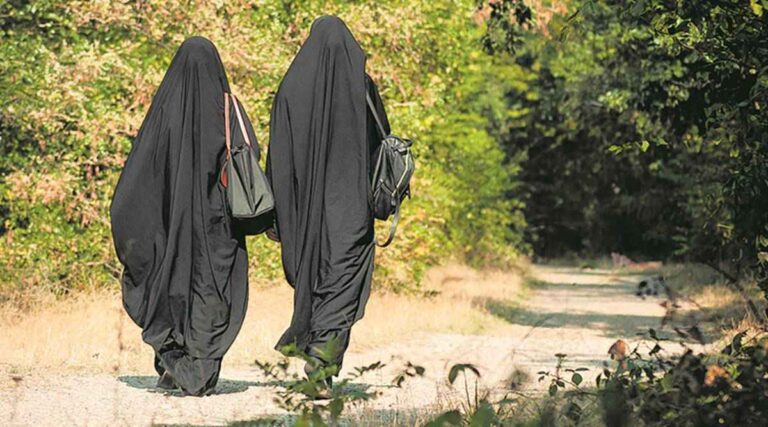
Six girls, studying in first and second PU in Government Women’s PU College, have accused the principal of not allowing them to wear ‘Hijab’ (headscarf) and attend classes.
-
For past three days we have been visiting college daily and returning home without attending the classes,” the students charged. College principal Rudra Gowda had reportedly told the students that they will not be allowed to wear hijab inside the classrooms.
-
The students also complained of being discriminated. “We are not allowed to talk in Urdu, Arabic and Beary languages. While other girls were allowed to speak in Tulu, Konkani and Kannada languages, the students alleged.
-
The ‘aggrieved’ students feared that they might face attendance shortage.
-
Our parents also tried to meet the principal. But the principal was not ready to talk to them. He is insisting that hijab is not allowed inside the classrooms,” the students said.
-
Members of Campus Front of India and SDPI urged principal to allow the students to attend classes with the hijab.
-
“If the six girl students are not allowed to attend classes, we will stage a protest against these ‘fascists’,” Udupi SDPI president Nazeer Ahmed warned.
CONCLUSION
-
Principal Gowda clarified that there were more than 60 Muslim girl students studying in the college.
-
“Barring these six students, none of them wear hijab,” he said. The principal said the parents had agreed to adhere to the college rules during a meeting.
-
Udupi Deputy commissioner Kurma Rao told DH that he had asked Deputy Director of PU department (DDPU) to submit a report on the incident at the earliest.

KEY STORY
-
With the World Health Organization (WHO) and governments across the world warning and preparing for increased hospitalisations due to the Omicron variant (B.1.1.529) of Covid-19, a doctor at Delhi’s Lok Nayak Jai Prakash Narayan Hospital (LNJP) said that most of those infected did not intensive medical support and their oxygen levels remained stable.
-
The remarks seem to be a sliver of hope as a few other Prilimanry from countries like the United Kingdom and South Africa too have observed that the illness due to Omicron was moderate or ‘mild’. However, all have also cautioned about the lack of extensive data and the need for more study into the variant.
-
“Till now, we’ve received 360 patients out of which 110 were Omicron affected. 89 of these patients have been discharged. All are stable. Not a single patient required ICU support because their oxygen saturation level was perfectly normal,” news agency ANI quoted Dr Suresh Kumar, medical director of LNJP.
-
Notably, this was not the first time the doctor has made the observation. On December 22, when Delhi had reported over 30 Omicron cases, he said that patients who were fully vaccinated (with two doses) did not have any major complications and did not require admission in the intensive care unit (ICU), according to a report by ANI.
-
Meanwhile, on Friday, the Union ministry of health and family welfare said that 320 Omicron cases have been reported from the national capital of which 57 have been discharged or recovered. Also, the total caseload due to the new variant stood at 1,270 in the country. Maharashtra added the maximum to the national tally with 450 cases.
-
In its latest press conference regarding the pandemic, the WHO reiterated its warning on hospitalisations due to the variant. “Right now, Delta and Omicron are twin threats that are driving up cases to record numbers, which again is leading to spikes in hospitalisations and deaths,” said Tedros Adhanom Ghebreyesus, the director-general of the UN health body. “I am highly concerned that Omicron being more transmissible, circulating at the same time as Delta – is leading to a tsunami of cases,” he further said.
-
Several countries, including the United States, the UK and several European nations, have reported surges in their daily Covid-19 infections. Lastly, France, where the infections have spiked, said on Friday that the Omicron has become the predominant variant in the country, the AFP reported.

KEY STORY
-
Omicron, the new mutant variant of coronavirus, has begun replacing the Delta strain in the country in terms of the number of infections, the official sources said on Friday.
-
This comes amid the country facing a sharp spike in the cases of the Omicron variant. A total of 23 States and UTs have reported the Omicron cases in India so far.
-
As many as 309 new cases of highly transmissible COVID-19 variant were detected in the last 24 hours, taking the country’s overall tally of the new mutant variant to 1,270 cases, according to the Union Health Ministry.
-
Of the total, 374 infected persons have been discharged, it added.
-
With 450 cases, Maharashtra remains the worst affected by the new variant, followed by Delhi (320), Kerala (109), Gujarat (97), Rajasthan (69), Telangana (62), Tamil Nadu (46), Karnataka (34), Andhra Pradesh (16), Haryana and Odisha 14 each, while West Bengal has reported 11 cases so far.
-
According to a study, published in the journal Cell, the Omicron variant is largely resistant to antibodies from people who recover from COVID-19 infection, and those vaccinated with two doses of the Pfizer vaccine.
CONCLUSION
-
However, a third dose of the Pfizer vaccine, and mixing Pfizer and AstraZeneca preventives may protect well against the variant.
-
“Our cell culture studies suggest that most antibodies currently available for COVID-19 therapy will be ineffective against Omicron,” PTI quoted first author Markus Hoffmann from German Primate Center as saying.
1...437438439...883Page 438 of 883