KEY STORY
-
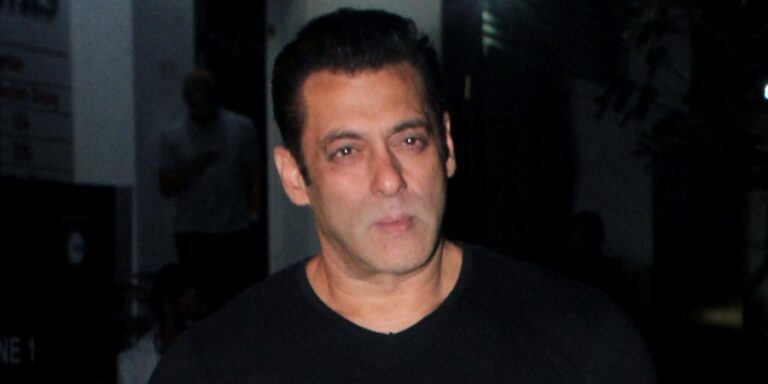
Bollywood superstar Salman Khan on Monday filed an application before a court here demanding that contempt action be initiated against actor Kamaal R Khan for continuing to make defamatory remarks despite an undertaking not to do so.
-
The application was submitted in a defamation suit filed by Salman seeking to restrain Kamaal R Khan from directly or indirectly making and uploading videos or any other content on the actor, his business ventures and films/projects.
-
When the defamation suit was heard last month, Kamaal R Khan’s advocate Manoj Gadkari told the court that his client would not make any further defamatory posts or remarks against Salman till the next date of hearing.
-
Salman had filed a defamation complaint against Kamaal R Khan over the latter’s review of the just-released Hindi film ‘Radhe’.
-
On Monday, Salman’s advocate Pradip Ghandy told Additional Sessions Judge C V Marathe that despite the assurance, Kamaal R Khan continued to publish defamatory tweets.
CONCLUSION
-
“This is contempt of court,” Ghandy argued.
-
An application was then submitted seeking contempt action against Kamaal R Khan.
-
The court heard arguments on the application and posted it for further hearing on June 11.
-
The court said till then the earlier statement made by Khan’s advocate Manoj Gadkari will continue.

KEY STORY
-
WhatsApp is introducing a new feature that will allow you to log into WhatsApp quickly according to a report by WABetaInfo. The new feature which is in development is called Flash Calls and is currently in the WhatsApp beta for the Android 2.21.11.7 update. Flash Calls will allow users to quickly get verified while logging into WhatsApp via an automatic verification over a call.
How does it work?
-
WhatsApp will call your phone number using this automatic verification method, and then automatically end the call. The platform will then verify the last phone number in your phone’s log is equal to the number that gives you the 6-digit code. The report states that the phone number will be different each time which will ensure a safe experience while verifying your account.
-
WhatsApp will need your permission to make and manage calls and access to your phone’s log during this process. The call history won’t be used by WhatsApp for other purposes.

Not for iOS
-
It is important to note that iOS smartphone users won’t be getting the feature as Apple doesn’t offer any public API to read the call history. The report further states that this feature is optional and users will still be able to verify themselves using the existing methods.
New voice-message playback speeds
WhatsApp has also introduced a new feature that allows users to choose between multiple playback speeds while playing an audio file. The new options will allow you listen to longer voice messages easily and can also be used to skip through large messages to get to a particular point. This helps make the most of long voice messages, where it can sometimes be time-consuming to go through the entire message without skipping on any details.
The latest WhatsApp update for Android and iOS changes that with the introduction of WhatsApp’s new Fast Playback speeds. There are two new playback speeds offered in the feature, taking the number of playable speeds to three. These include 1X, the default, original playback speed, along with 1.5X and 2X, which let you play the file at 50% or 100% faster speeds.
KEY STORY
-
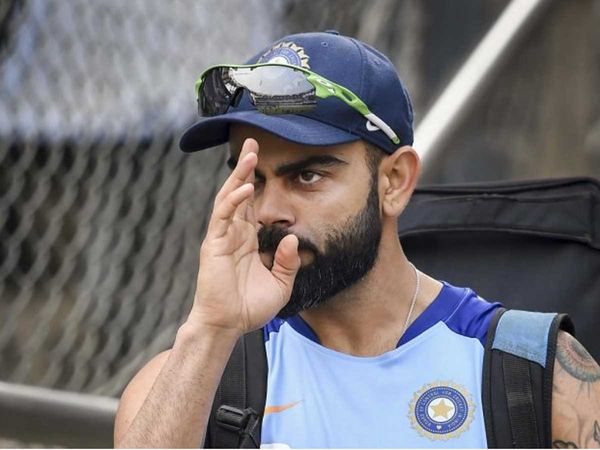
The Indian players will get a 20-day break from the bubble life in the UK after the completion of the World Test Championship final in Southampton. While the cricketers will disperse on June 24, they are set to return to the bubble for the five-Test series against England around July 14.
-
Speaking to ANI, sources in the know of developments in the team management said it will be a welcome break as the team has to not only spend time in the bubble for the Test series against England, but will also straightaway move to the IPL bubble in the UAE post the Test series.
-
“The group will head off for the break on June 24 after the final against New Zealand and then regroup again around July 14 to prepare for the Test series against England which gets underway from August 4,” the source said.
-
Asked if this meant the cricketers could head to any place which has low or negligible COVID-19 cases, the source said it has to be within UK so that there are no issues in regrouping after the break.
-
“See, it is simple. The boys need to switch off and relax, but we cannot ignore that COVID-19 is still not completely gone. So, the travel plans have to be made in such a way that the boys and the families that are in UK don’t get stuck somewhere while taking the break. Imagine going to some other country and then that place gets a travel ban due to a sudden rise in cases. You don’t want your players or their families stuck. So, we are looking at places in the UK,” the source explained.
-
Living in the bio-bubble isn’t easy and skipper Virat Kohli also spoke about this before the team left for England.
CONCLUSION
-
“I feel like after you are done with WTC, I think it is a great opportunity to refresh and restructure, hopefully, if things are okay, just for the guys to be normal and disconnect again, to understand that we have the pressure of a five-match series. Like in Australia, if we had to contest in a bubble for that long period, it would have been tough,” said Kohli.
-
“Just the fact that we had the freedom to go out and access the kind of things there, it gave us space to refresh and reset. I think it is absolutely fine, it will give us time to refresh and prepare for a long series. That kind of setup is important before you go to a lengthy series. The challenge in England can be daunting, so we want to have the time before that series,” he added.

KEY STORY
-
It is the sunny season already and it’s time to soak in the incredible vitamin D. Despite the desperate want to enjoy the sun, not all of us are blessed with sun-friendly skin. With a change in seasons also comes the need to change the skincare routine.
-
This is important to ensure the smooth and adaptive transition of the skin from one season to another. Hyperpigmentation and pimples are the most common issues faced by people during summers. Here is what you need to know about the conditions, their causes, and methods to deal with them.
Hyperpigmentation – Its definition, causes, and treatment tips
-
In simple terms, the formation of dark spots on the skin is known as hyperpigmentation. It may occur on the body in the forms of both small and large patches. The cause of hyperpigmentation is the increase in the level of melanin (the pigment that gives colour to the skin) in the skin. Some common types of hyperpigmentation include post-inflammatory hyperpigmentation, sunspots, and melasma.
Tips to treat hyperpigmentation this summer
Here are some ways to treat hyperpigmentation:
-
Use sunscreens with SPF 30 and above.
-
Use clothes and other accessories to block sunlight.
-
Avoid prolonged outdoor sessions in the sun.
-
Use lightening creams that are dermatologically tested.
-
Use home remedies such as aloe vera, papaya, and apple cider vinegar.
Pimples – Its definition, causes, and treatment tips
Also known as zits, pimples are pustules that are caused due to the clogging and infection in the oil glands (also known as the sebaceous glands). This leads to inflamed spots on the skin that are filled with pus. Ranging in severity, some common types of pimples include blackheads, whiteheads, cysts, and nodules.
Tips to treat pimples this summer
Here are some ways to treat pimples:
-
Always keep your skin moisturized.
-
Keep your body hydrated throughout the day.
-
Avoid popping, scratching, or shaving zits.
-
Adopt a consistent skincare routine.
-
To prevent the pimples from growing further infectious, consult a dermatologist.
Disclaimer: Tips and suggestions mentioned in the article are for general information purpose only and should not be construed as professional medical advice. Always consult your doctor or a dietician before starting any fitness programme or making any changes to your diet.

KEY STORY
-
A day after Prime Minister Narendra Modi announced that free COVID-19 vaccines will be provided to states and union territories for the eligible population aged 18 years and above, the Union Ministry of Health and Family Welfare on Tuesday issued revised guidelines for the implementation of the National COVID Vaccination Program.
-
The ministry’s guidelines explain in detail the points mentioned by PM Modi during his address to the nation on Monday evening.
-
During his speech, the PM declared that the Government of India was reverting to central procurement of COVID-19 vaccines from manufacturers after complaints from state governments that they were facing difficulties with regard to funding, procurement and logistics for vaccines.
-
The PM, importantly, also stated that the Centre will procure 75 per cent of the vaccine manufacturers’ monthly production which will then be given to states for free. These vaccines will be administered to the eligible population free of cost at government vaccination centres.
-
The rest 25 per cent can continue to be procured by private hospitals for providing vaccines to citizens on a paid basis, the PM noted.
The revised guidelines issued by the health ministry are as follows and these come into effect from June 21:
-
Government of India will procure 75% of the vaccines being produced by the manufacturers in the country. The vaccines procured will continue to be provided free of cost to States/UTs as has been the case from the commencement of the National Vaccination Programme. These doses will be administered by the States/UTs free of cost to all citizens as per priority through Government Vaccination Centres.
-
In respect of the vaccine doses provided free of cost by Government of India to the States, vaccination will be prioritized as the following: Health Care Workers, Front Line Workers, Citizens more than 45 years of age, Citizens whose second dose has become due, Citizens 18 years & above.
-
Within the population group of citizens more than 18 years of age, States/UTs may decide their own prioritization factoring in the vaccine supply schedule.
-
Vaccine doses provided free of cost by Government of India will be allocated to States/UTs based on criteria such as population, disease burden and the progress of vaccination. Wastage of vaccine will affect the allocation negatively.
-
Government of India will provide States/UTs advance information of vaccine doses to be supplied to them. States/UTs should similarly, further allocate doses well in advance to districts and vaccination centers. They should also put in the public domain the information about the above availability at district and vaccination center level, and widely disseminate it among the local population, maximizing the visibility and convenience of citizens.
-
In order to incentivize production by vaccine manufacturers and encourage new vaccines, domestic vaccine manufacturers are given the option to also provide vaccines directly to private hospitals. This would be restricted to 25% of their monthly production. States/UTs would aggregate the demand of private hospitals keeping in view equitable distribution between large and small private hospitals and regional balance. Based on this aggregated demand, Government of India will facilitate supply of these vaccines to the private hospitals and their payment through the National Health Authority’s electronic platform. This would enable the smaller and remoter private hospitals to obtain timely supply of vaccines, and further equitable access and regional balance.
-
The price of vaccine doses for private hospitals would be declared by each vaccine manufacturer, and any subsequent changes would be notified in advance. The private hospitals may charge up to a maximum of Rupees 150 per dose as service charges. State Governments may monitor the price being so charged.
-
All citizens irrespective of their income status are entitled to free vaccination. Those who have the ability to pay are encouraged to use private hospital’s vaccination centres.
-
To promote the spirit of “Lok Kalyan”, use of non-transferable Electronic Vouchers which can be redeemed at private vaccination centers, will be encouraged. This would enable people to financially support vaccination of Economically Weaker Sections at private vaccination centres.
-
The CoWIN platform provides every citizen the facility of conveniently and safely pre-booking vaccination appointments. All government and private vaccination centers would also provide onsite registration facility, available both for individuals as well as groups of individuals, for which detailed procedure is to be finalized and published by States/UTs, in order to minimize any inconvenience to citizens.
-
States may also optimally utilize the Common Service Centres and Call Centres to facilitate prior booking by citizens.
KEY STORY
-
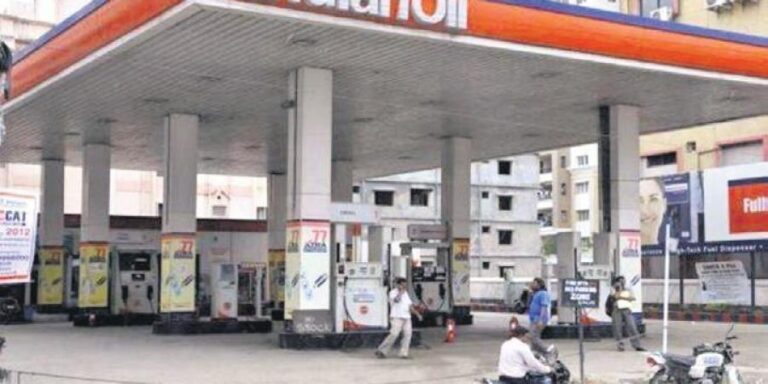
Petrol prices in several districts in Karnataka breached the sensitive Rs 100 per litre-mark on Monday after touching a record high in several states including Rajasthan, Madhya Pradesh, Maharashtra and Andhra Pradesh. At Sirsi in Uttara Kannada district, fuel prices were perhaps the highest in the state with petrol at Rs 103.51 and diesel at Rs 93.21 per litre.
-
In Bengaluru, fuel prices rose by 29 paise, but remained below the Rs 100-mark, at Rs 98.49 for petrol and Rs 91.41 per litre of diesel. Balaji Rao, president of Bengaluru Petroleum Dealers’ Association told TNIE that in another 10 days, the price will cross `100 per litre in Bengaluru too.

-
He explained that there are multiple reasons for the fuel hike including the lockdown, the rise in dollar price and also the dip in the economy, in which fuel sales is a large contributor. Earlier, India purchased some of the fuel from Iran in rupees. Now, with the Iran issue, the cost has escalated and also because India is buying in dollars from other OPEC countries, he said.
-
“Since there is a lockdown and movement is less, the rising fuel cost has had little impact so far. It will hit hard when the lockdown is lifted and movement to offices becomes regular. The rise in cost of other items along with fuel cost will have a major impact on the monthly home budgets,” said Pradeep K, a factory manager, who is working from home in Bengaluru.
-
For those in the districts, who are already badly hit by the pandemic and the lockdown, the spiralling fuel price is burning a deep hole in their pockets. Though their physical movement outside is restricted, the petrol and diesel prices will have a cascading effect on the prices of essential commodities.
Bizmen, cabbies worry about fuel prices; want govt to cut excise duty
-
“The increase of prices of petroleum products will have a direct impact on the livelihood of the common man. Hence, the government should immediately cut excise duty and ensure that fuel prices are brought down,” said Sham Orekundy, an interior decorator in Davanagere. Stock and bullion trader Rohit S Jain suggested that the government bring down excise duty and issue oil bonds for the time being.
-
In Davanagere, petrol price rose to Rs 100.17 from Rs 99.88 and diesel to 92.82 from Rs 92.54 on Monday. In Chitradurga, petrol price went up from Rs 99.90 to Rs 100.16 and diesel from 92.55 to 92.81. In Ballari, petrol price was at Rs 100.08 per litre.
-
Thimmanna, who sells fried foods on his two-wheeler in Davanagere, said, “I have no choice but to increase the price of my items, which people might not accept. If I have to survive, the prices have to be increased.” DS Sagar who owns an IOC fuel station in Davangere, said pump owners too are facing the heat. “Our working capital and bank credit will also become less with every passing day as we have to pay more to procure petroleum products. Also, variable costs for transportation, workers’ salaries have increased,” he pointed out.
-
In Karwar, petrol price touched Rs 100.17 and diesel was being sold at Rs 92.91 per litre. Though there are not many vehicles on the roads, locals say the price hike is too much. “We have to think twice before taking our vehicles out. But we need to make a living and this is a very critical time,” said Sandeep Sagar, a resident of Karwar.
-
“We just don’t not know how to react,” said Gopal Krishna Hegde from Yellapur in Uttara Kannada district. Vendors fear that prices of perishable commodities will increase further. “Already, we are paying a higher price for vegetables and meat. It will further increase due to hike in diesel prices,” said Datta Ram, a retailer in Karwar. Abhishek Rao, a hotelier, said, “This is nothing but “munafa khori” (profiteering). They just want to make money. The pandemic has led to a hike of about 40 per cent in our food prices. The fuel price hike will add to another 5-10 per cent increase.”
-
On Monday, fuel prices in Hubballi-Dharwad went up by about 29 paise. While petrol is being sold at Rs 98.35, diesel now costs Rs 91.30 per litre. Already, prices of vegetable, fruits and other food items are on the rise due to restricted selling hours and short supply. Transportation costs could further push up their prices, many feel. Shivamogga too saw the highest ever prices of fuel with petrol at Rs 99.88 and diesel Rs 92.6 per litre.Ashwini, a housewife, said it has become very difficult for common people to make both ends meet amidst the lockdown when people in many families have lost jobs.
-
Slamming both the Central and State Governments, T Manjunath, a resident, said that it has become unmanageable to take cars out. In Hassan, petrol price was at Rs 98.31 and diesel at 91.12 per litre on Monday. Autorickshaw and cab drivers said they are facing tough times as fuel prices are increasing, but fares have remained unchanged. Hitting out at the government, Belagavi industrialist S N Shet said the fuel price hike and rising rate of inflation will have an adverse impact on various other sectors besides trade in essential commodities. The surge was witnessed in Belagavi too where the price of petrol rose to Rs 98.36 and diesel to Rs 91.32 per litre.
-
Businessman Somashekhar Khadbadi said the problems for the common man will only worsen further due to the rising inflation once the situation returns to normal. It will become even more difficult for small businesses which are on the verge of closure, he noted. A Revenue Department employee in Kalaburagi, Vishwanath, said people are forced to fork out more for petrol despite the price rise as they cannot depend on city buses or autorickshaw all the time. On Monday, petrol was being sold in the city at Rs 98.30 and diesel at Rs. 91.20 per litre.

-
In Kolar, farmers said fuel price rise will have a direct impact on them. Farmers are already suffering huge losses due to the lockdown as there is no demand for their produce, said Sreenath, who owns CMR Mandi, a wholesale business. In Kolar, diesel was priced at Rs 91.37 and petrol at 98.39 per litre on Monday. In Mysuru, petrol price rose to Rs 98.05 and diesel to Rs 91.01 per litre. “Apart from fuel, soaring vegetable prices and fruits during the lockdown have fuelled anger. Though the prices of farm produce have remained low for farmers, middlemen are making a killing while while consumers are feeling the pinch,” said farmers’ leader Kuruburu Shantakumar.
KEY STORY
-
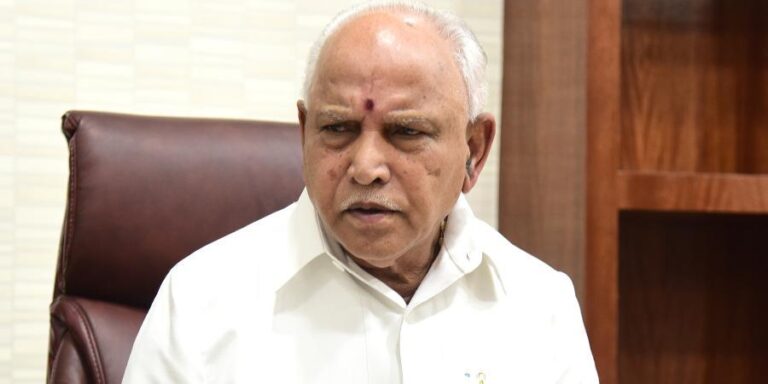
A day after he said he would resign from the Chief Minister’s post if the BJP central leadership asked him to, BS Yediyurappa shot down a supposed signature campaign in support of him, and told his party MLAs to stop politicking and to work towards fighting the pandemic.
-
The trigger was a statement by chief minister’s political secretary MP Renukacharya that he had collected the signatures of 65 party MLAs to support Yediyurappa’s continuation as CM.
-
Many senior leaders of the party slammed Renukacharya, saying such campaigns would look like the party is facing factionalism. Also, many MLAs, whose signature was on the letter, denied that they had signed any such document.
-
Renukacharya, who was at the Chief Minister’s residence on Monday morning, said, “I have the signatures of 64-65 MLAs. There is nothing to hide. A copy of the letter in Kannada will be sent to the state unit of the party, while the English version will go to party National President JP Nadda, Prime Minister Narendra Modi and Home Minister Amit Shah.”
-
Union minister Pralhad Joshi, RDPR minister KS Eshwarappa and others denied that there was such a signature campaign.“There is no campaign ‘for’ or ‘against’ Yediyurappa. Such acts have no value in BJP. Who is Renukacharya to collect signatures? Decisions in the party are taken by the central leadership and we all are loyal to the party,” lashed out Eshwarappa.
-
Most scathing was Dharwad West MLA Arvind Bellad, whose name has been doing the rounds as probable CM candidate. He said, “The last time signatures were collected was when MLAs hadn’t received funds from Eshwarappa’s RDPR ministry.
-
Some 64-65 MLAs had signed, but the matter was written on one page and signatures were collected on another. I hope those signatures are not being misused. We will get clarity in the legislature party meeting.”
Focus on Covid fight: BSY to MLAs
-
Renukacharya responded, “Why would I antagonise the man who is declaring himself as the next chief minister? The letter for RDPR funds was submitted to the chief minister long back. The signatures I have now are to pledge support and loyalty to Yediyurappa. It is not a sign of rebellion.”
-
Meanwhile the CM tweeted, “At a time COVID19 pandemic has brought miseries to people making them suffer, every BJP MLA should return to their respective constituencies and prioritise managing the pandemic and helping people. It is my request that nobody should indulge in signature campaigns or make political statements and instead focus on helping people,” Yediyurappa said in a tweet.
KEY STORY
-
The Directorate General of Health Services, under the Union health ministry, has revised patient treatment guidelines in an order dated May 27. The guidelines dropped recommendations of repurposed drugs such as hydroxychloroquine, ivermectin and favipiravir as treatment for mild to moderate Covid-19 patients


KEY STORY
-
The Karnataka Common Entrance Test for various vocational courses, including engineering, is scheduled to be conducted on August 28 and 29.
-
“The CET exam will take place on August 28 and 29. Each subject will carry 60 marks,” Deputy Chief Minister C N Ashwath Narayan said at a press conference on Tuesday.
-
The Maths and Biology exams will be held on the first day while Physics and Chemistry on the second day.
-
Registration will commence from June 15, he said, adding that the PUC marks will not be taken into account.
-
Narayan further said students will be required to score a minimum mark to clear the entrance test.
KEY STORY
-
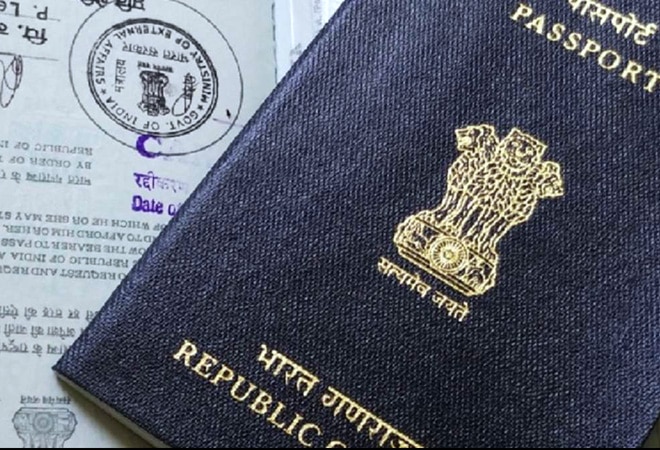
Vaccine certificates from CoWIN will now be linked to passports for people planning international travel for education, work opportunities or as part of the Indian contingent for the Tokyo Olympics, the government announced on Monday. The new rule also provisioned for early administration of the second dose of Covishield in specific cases where the travel dates fall before the period of the 84-day gap.
-
The move comes as a relief for various representations of people, like students seeking higher education abroad, facing bottlenecks in undertaking international travel. The Centre in its guidelines to states and Union Territories allowed such individuals to take their vaccine shots after completing 28 days of their first dose.
Who all are eligible to take an early second dose of vaccine?
-
Students who have to undertake foreign travel for the purposes of education.
-
Individuals taking up jobs in foreign countries.
-
Athletes, sportspersons and accompanying staff of the Indian contingent attending the International Olympic Games be held in Tokyo.
-
“Taking note of the several representations received by the Ministry for allowing administration of second dose of Covishield for such persons who have only taken first dose of Covishield and are seeking to undertake international travel for educational purposes or employment opportunities or as part of India’s contingent for Tokyo Olympic games, but whose planned travel dates fall prior to completion of the currently mandated minimum interval of 84 days from the date of first dose, the Ministry has written to states/UTs to facilitate vaccination of such persons,” the Health Ministry statement read.
-
Among Indian vaccines, only Covishield has been approved under the WHO’s Emergency Use Listing (EUL) so far.
CONCLUSION
-
“If passport was not used at the time of administration of first dose, the details of the photo ID Card used for vaccination will printed in the vaccination certificate and mention of the passport in the vaccination certificate is not to be insisted upon,” it said, adding that wherever necessary, the competent authority may issue another certificate linking the vaccination certificate with the passport number of the beneficiary.
-
The ministry said that the facility shall be available to those who need to undertake international travel for these specified purposes in the period up to August 31.
1...559560561...883Page 560 of 883