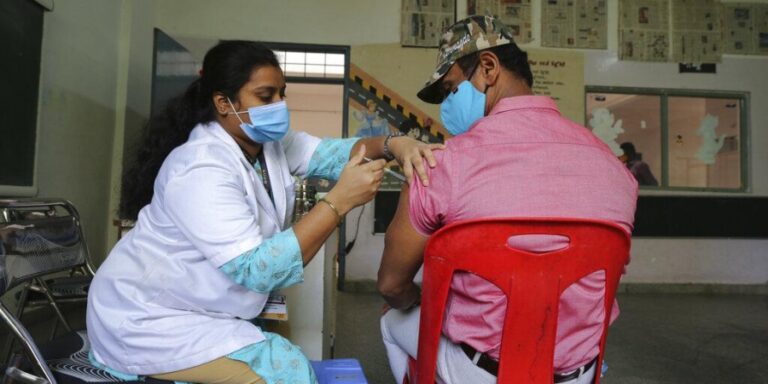
Bhumi Pednekar and Kapil Sharma come together to supply oxygen in Karnataka amid COVID crisis

KEY STORY

  • Bollywood star Bhumi Pednekar has been relentless in helping people across the country during the second wave of the COVID-19 crisis. Now, she partners with Kapil Sharma to help aid patients in Karnataka that’s battling the virus.
  • Bhumi, who has teamed up with Sri Sri Ravi Shankar’s Mission Zindagi initiative, will now join hands with Kapil to provide oxygen supply for people in Karnataka. The programme will send oxygen buses outside COVID hospitals in Hoskote, Devanahalli, Doddaballapur, Nelamangala-1 & Nelamangala-2 to help aid those in need.
  • Bhumi says, “Our country is currently witnessing the second wave of this deadly virus which has now penetrated rural India. With so many cases coming from smaller towns and villages where medical assistance and aid might be limited, the need of the hour is to provide oxygen to the patients. Through Mission Zindagi, we are focusing our attention towards rural India and are starting with some districts in Karnataka.”
  • She explains, “Our buses would be installed with oxygen concentrators that would provide tertiary care to patients outside district hospital emergencies while they wait for a bed. Our buses will help share the load of hospitals in smaller towns where the cases are now rising. I’m glad we collaborated with Kapil on this leg of the mission as he is well-loved by many. I want to do my bit to ensure that as many COVID-19 patients get the help that they critically need and I’m thankful to Gurudev for being a beacon of hope at this time of crisis.”
    Kapil Sharma says, “As Humans, we have to support each other right now. I’m also doing my bit. It is my honour to associate with the extraordinary work that Gurudev & BJS (Bharatiya Jain Sanghatana) are doing. With Bhumi, who is doing exemplary work towards COVID relief, this initiative with Mobile oxygen Buses, we have now started supporting people in Karnataka & planning to take this to more states as well.”

Viral WhatsApp message about three blue ticks, government accessing your messages is fake

KEY STORY

  • As the ongoing tussle between WhatsApp and the Indian government over intermediary guidelines intensifies, a viral message claiming government will record conversations of users causes panic among users.
  • The message is being widely circulated on WhatsApp and has been drafted in such a way that any user will fall for it, but you should not. The Press Information Bureau too has warned users against the same. WhatsApp had never rolled out three blue ticks and the government can not access the messages or calls of people.
  • The message which carries a total of nineteen points written in capital letters claims to inform users about the new WhatsApp rules. It says that the new communication rule “will be implemented from tomorrow”.
  • The viral message claims that WhatsApp will introduce three blue ticks which will notify that the government has taken note of the message and if the two of the three ticks turn blue and one turns red, it would mean that the government can take action against you.
  • If two of three blue ticks turn red and one remains blue, it would mean that the government is checking your information and if you get three red ticks, it would mean has started legal proceedings against you, and you will get summoned by court soon.

  • Before you start reading the entire message, do note that it is completely fake and has been sent to create panic among users. No calls will be recorded, no recordings will be saved as claimed. Neither will your phones be connected to the ministry system. The viral message also turns preachy a bit and advises users to not send wrong messages to anyone, which you anyway should not.
  • The message also claims that if you send anything against the government you will be dragged to court. Whoever has drafted the message seems like a good storyteller and has spent a lot of time in creating something that would mislead users and create panic amongst users. You should not believe any message or any message claiming to be an announcement until the government makes it official. You can always rely on the verified government handles for the announcements related to the government.
  • PIB too has tweeted about the viral message doing the rounds on WhatsApp. “Fake News Alert ! Messages circulating on Social Media reading ‘WhatsApp info regarding tick marks’ is Fake. No! The Government is doing no such thing. The message is Fake,” the tweet says.

Delhi Govt to Give Rs 5 Lakh to Kin of COVID Patients Who Died Due to Lack of Oxygen

KEY STORY

  •  The Delhi government has announced that it will provide a compensation of up to Rs 5 lakh to the kin of COVID-19 patients who died due to lack of oxygen. The Aam Aadmi Party (AAP) government has formed a committee of six doctors to prepare the framework of the compensation.
  • The committee will decide the framework based on which a maximum compensation of Rs 5 lakh will be given.

CONCLUSION

  • It will have the right to examine any documents related to oxygen supply, stock, and storage from the hospital concerned.
  • This committee will send its report to the Principal Secretary (Health), Delhi, on a weekly basis.
  • This amount will be an add-on to the already-announced Rs 50,000 compensation to families of those who died due to COVID-19.

Overuse of antibiotics, secondary infection behind worsening COVID-19 pandemic in India: ICMR study

KEY STORY

Antibiotics overuse and superbugs could be the reason behind the worsening COVID-19 crisis in India.
A study conducted by ICMR across 10 hospitals including two (Sion and Hinduja) in Mumbai showed that more than half of the COVID-19 patients who get a secondary bacterial or fungal infection die.
According to a report by TOI’s Malathy Iyer, many patients required strong antibiotics to ward off superbugs. These superbugs cannot be treated with usual antibiotics.

Overuse of antibiotics and antifungals cause of concern

Drug-resistant variants of Klebsiella pneumonia, Acinetobacter baumannii, and Pseudomonas aeruginosa were amongst the most common bacterial infections, the report said.
Antibiotics are prescribed to COVID-19 patients who end up staying in the hospital for a longer period to protect them against hospital-acquired infection.
Overuse of antibiotics and antifungals may be behind the surge in rare infections such as black fungus or mucormycosis.
According to Dr Amitabh Malik, Chief- ENT, Paras Hospital, Gurugram, human bodies are constantly attacked by different bacteria and fungi; however, they are kept under control by the immune system.

‘Compromised immune system breeding ground for fungal, bacterial infections’

  • When the immune system is compromised due to heavy and unreasonable use of steroids, diabetes, or cancer treatment; it provides a breeding ground for these fungi and bacteria to grow and multiply rapidly.
  • “Most diabetic patients suffering from COVID-19, who are being given steroids, have a high chance of being affected by the black fungus. To prevent it, people should stop the misuse of steroids,” he said.
  • Over the past few weeks, India has been reporting several cases of black fungus.
  • On Thursday, the Delhi government declared ‘Black Fungus’ (Mucormycosis) an epidemic in the national capital.

There are more than 600 cases of black fungus in the national capital.

Remove GST on life-saving medicines, equipment used in COVID fight: Priyanka Gandhi to government

KEY STORY

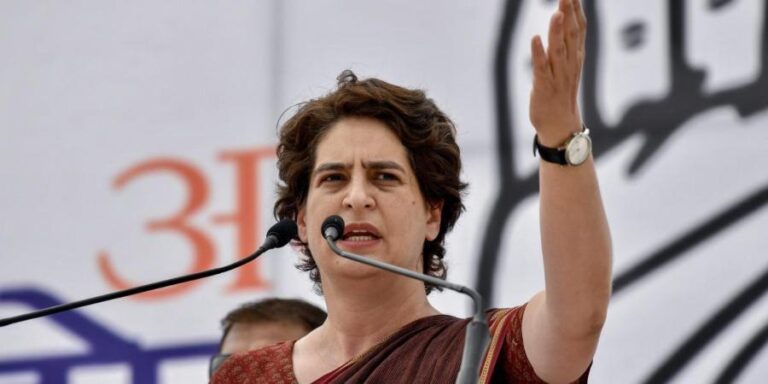
  • Congress leader Priyanka Gandhi Vadra on Friday urged the Centre to remove GST on all life-saving medicines and equipment being used in the fight against COVID-19, asserting that charging tax on such items amid the pandemic amounts to “cruelty”.
  • Her appeal to the government came ahead of the GST Council meeting, which decides on taxes on goods and services, later on Friday.

Recovering GST on COVID-related products from people who struggled for ambulances, beds, ventilators, oxygen, medicines, vaccines during the pandemic amounts to “cruelty and insensitivity”, Priyanka Gandhi said in a tweet in Hindi. “Today, in the GST Council, the government should remove GST on all life-saving medicines and equipment being used in the fight against COVID,” the Congress general secretary said.

CONCLUSION

She also attached a list of items being commonly used in the fight against coronavirus and the rate of GST charged on them.

ICC announces playing conditions for World Test Championship final between India and New Zealand

KEY STORY

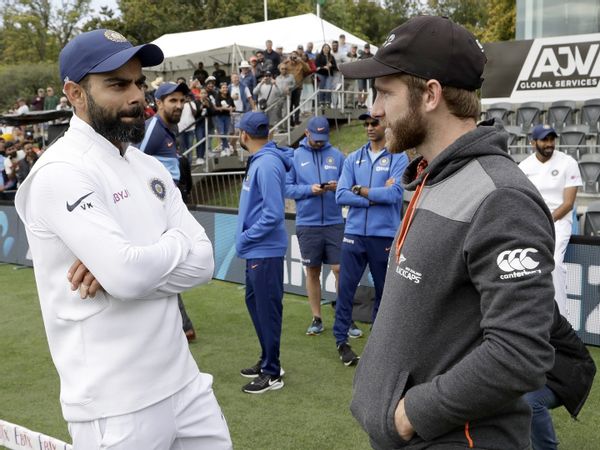
  • The International Cricket Council (ICC) on Friday announced the playing conditions for the ICC World Test Championship Final featuring India and New Zealand at the Hampshire Bowl in Southampton next month.
  • The playing conditions confirm that a draw or a tie will see both teams crowned as joint winners as well as the allocation of a Reserve Day to make up for any lost time during the regular days of the Final – scheduled to be played from 18 to 22 June, with 23 June set aside as the Reserve Day. Both of these decisions were made in June 2018, prior to the commencement of the ICC World Test Championship.
  • The Reserve Day has been scheduled to ensure five full days of play, and it will only be used if lost playing time cannot be recovered through the normal provisions of making up lost time each day. There will be no additional day’s play if a positive result is not achieved after five full days of play and the match will be declared a draw in such a scenario.
  • The playing conditions are available on the page here and explain the calculations of playing time.
  • In the event of time being lost during the match, the ICC Match Referee will regularly update the teams and media about the way in which the Reserve Day may be used. The final decision on whether the Reserve Day needs to be used will be announced at the scheduled start of the last hour on the fifth day.
  • The match will be played using Grade 1 Dukes cricket balls.
  • The final will also see the implementation of the following changes to international playing conditions that came into effect with the ongoing ICC Men’s Cricket World Cup Super League series between Bangladesh and Sri Lanka:
  • Short Runs – The Third Umpire will automatically review any call of a ‘short run’ by the On-field Umpire and communicate the decision to the On-field Umpire prior to the next ball being bowled.
  • Player Reviews – The fielding captain or the dismissed batsman may confirm with the Umpire whether a genuine attempt has been made to play the ball prior to deciding whether to initiate a player review for LBW.
  • DRS Reviews – For LBW reviews, the height margin of the Wicket Zone has been lifted to the top of the stumps to ensure the same Umpire’s Call margin around the stumps for both height and width.

Has work from home caused you to have a bad posture – 5 yoga poses to help correct posture and alignment

  • Before the pandemic, work from home seemed too good to be true. However, when we happened to experience it in reality, this notion took a huge blow. Being restricted to desk jobs, people were required to sit and work for a prolonged period of time. Gradually, people began experiencing the repercussions of a desk stricken job due to lack of exercise.
  • The problem of a bad posture is one of the complaints that emerged largely. Exercises revolving around outdoor or gym activity may not be possible at the moment, however, one can always opt for home-friendly yoga exercises. Apart from helping the posture, yoga can also provide several other health benefits to the body.

Yoga for good posture

Here are some yoga postures that can help you correct and align your posture:

Bridge pose


It is also known as Setu Bandha Sarvangasana. You can execute this pose in the following steps:
  • Lie down straight on your back on a yoga mat.
  • Place your hands parallelly straight to your body.
  • Lift your knees and lie down in a relaxed position.
  • Lift your hips upward and so your posture resembles that of a bridge.
  • Return to the initial position and repeat.

Downward facing dog pose

It is also know as Adho Mukha Svanasana. You can execute this pose in the following steps:
  • Start from a plank position and breathe.
  • Lift your hips upward so it’s arched outwards and your face is downward.
  • Stretch our body in the same position and hold.
  • Return to the original position and repeat.

Cobra pose

It is also known as Bhujangasana. You can execute this pose in the following steps:
  • Lie down straight on your stomach.
  • Rest your palms beneath your shoulders.
  • Spread your fingers evenly and pull your chest up.
  • Arch it upwards and hold the position and breathe.
  • Return to your initial position and repeat.

Plank pose

Plank is a popular exercise that can benefit the posture as well as strengthen the muscles. You can execute this pose in the following steps:
  • Lie down on your stomach on a yoga mat.
  • Put your palms flat on the ground with your toes touching the mat.
  • Lift yourself and hold the position.
  • Make sure that your body is straight and parallel to the floor.
  • Stay in the position as long as you can.

Shoulder opener

You can execute this pose in the following steps:
  • Stand straight and relax your muscles.
  • Take your palms backwards and put them together.
  • Stretch your shoulders back as much as you can.
  • Bring it to the initial position and repeat.
Disclaimer: Tips and suggestions mentioned in the article are for general information purpose only and should not be construed as professional medical advice. Always consult your doctor or a dietician before starting any fitness programme or making any changes to your diet.

Covid positivity rate in 16 Karnataka districts higher than state average

KEY STORY

  • While Bengaluru has been Karnataka’s Covid-19 hotspot, a worrisome trend is now surfacing. The seven-day positivity rate in at least 16 of the 31 districts is higher than that of the state’s average of 19.28 per cent.
  • This data from the state Covid-19 war room indicates that more people are proportionately testing positive in those districts even as the positivity rate of Bengaluru Urban district has been found to be among the lowest.
  • The top five districts with the highest positivity rate, calculated between May 19 and 25, are Mysuru (41.32 per cent), Uttara Kannada (32.98 per cent), Hassan (29.93 per cent), Tumakuru (29.33 per cent) and Koppal (29.21 per cent).As per the data, Bengaluru Urban’s positivity rate in the same period is among the lowest at 13.58 per cent. Only four other districts have lower rates than Bengaluru’s — Haveri (13.48 per cent), Bagalkot (11.67 per cent), Kalaburagi (10.20 per cent) and Bidar (2.58 per cent).
  • Shivamogga and Vijayapura have the same test positivity rate as the state’s average in this period. Only, 12 districts have a positivity rate lower than the state’s average.Uttara Kannada District Health Officer Dr Sharath Nayak said that last week, the district clocked 900 to 1,000 cases per day.
  • “We tested around 2,000 primary contacts and 500 symptomatic people. For each positive case, we try to test around 15 people,” Uttara Kannada DHO Dr Sharath Nayak said.For Tumakuru, which is close to Bengaluru, officials observe that the case load and positivity rate mirror that of the state capital.
  • “Before lockdown, 60,000 to 70,000 people were moving between Bengaluru and Tumakuru on a daily basis. The Covid spread was rampant,” said Tumakuru DHO Dr M B Nagendrappa.The same reason applies in Mysuru, which has seen heavy movement to and from Bengaluru. District health officials of Mysuru and Hassan were not reachable for comment. In Koppal, the rate of infection spread is still high. District Surveillance Officer Dr Nanda Kumar said the impact of fewer cases will be visible after the lockdown.

CONCLUSION

  • Top Of The Table
    Mysuru 41.32%
    Uttara Kannada 32.98%
    Hassan 29.93%
    Tumakuru  29.33%
    Koppal — 29.21%
    State average 9.28%

Karnataka lockdown may have to be extended beyond June 7 as active Covid cases still high

KEY STORY

  • The ongoing lockdown may have to be continued beyond June 7 if the number of active Covid cases does not decline significantly in the coming days, experts say.
  • Karnataka’s active Covid infections form the heart of a new analysis by scientists at the Indian Institute of Science (IISc), who point out that actual active case numbers are higher than the projected figures. The actual cases need to be lower if the surge is to be contained.
  • On May 27, the active caseload should have been less than 3.88 lakh. In actuality, it was 4.02 lakh.
  • “What we are seeing is that the number of active cases as they stand today is much higher than the number cases we projected would happen in a worst-case scenario,” explained Professor Sashikumar Ganesan, Chairman, Department of Computational and Data Sciences at the IISc.
    What exactly is the worst-case scenario? No lockdown.
  • “This suggests that something has gone wrong with the lockdown and consequently, Karnataka will have to extend the lockdown to contain the surge,” Professor Ganesan explained, adding that the next three to four days are crucial to making this determination.
  • The analysis reveals details about where the lockdown is particularly ineffective.
  • In their ‘S2’ scenario, which modelled the stringent lockdown of 2020, the scientists found that only two districts, Kalaburagi and Bidar, were maintaining effective lockdowns.
  • “This is evinced by the fact that the real active caseload in both these districts is much lower than the projected numbers of the worst-case scenario,” he said.
  • Bengaluru Urban came in third, with a 75% effectiveness in the lockdown. The performance of the other districts was abysmal. The worst was Haveri with only a four percent effective lockdown.
  • The noted epidemiologist, Dr Giridhara R Babu, pointed out that lockdowns are only effective if associated containment measures are robust.
  • “In the initial part of the lockdown, there were many relaxations. The four-hour curfew window every morning results in crowds at public spaces. There is no proportionate increase in the testing being done overall including such potential super-spreader sites.
  • A single person infected can potentially spread it to family members and other contacts resulting in sustained transmission,” he said.

CONCLUSION

  • The failed opportunity to vaccinate a large number of people early this year is another reason why active cases are not declining as they should, said Subramanian Sivakumar, CEO of Pratian Technologies, which analyses Covid-19 data.
  • “The lockdown is only suppressing the R0. The way to reduce cases is through vaccination. But with Karnataka doing an average of 1.17 lakh vaccinations daily, the state may require seven months to reclaim the situation,” he said.

Karnataka II PUC exams may go online

KEY STORY

  • The Department of Pre-University Education is exploring the possibility of holding II PUC exams through online mode amid the second wave of the pandemic.
  • Officials are working on the feasibility of conducting tests online after several stakeholders flooded the department with suggestions for the same.
  • The department also received suggestions for slashing the duration of exams to 90 minutes, conducting exams only for major subjects and sticking to multiple-choice questions (MCQs). However, department sources said they are by and large considering holding exams via online mode.
  • “Infrastructure is the major challenge to hold online examinations. But we can collaborate with engineering colleges and PU colleges that have ready infrastructure,” said an official.
  • The department had successfully delivered online question papers during 2019 supplementary exams. “We have realised that it is not a big task,” the official said.
  • In the meantime, teachers and students are also ready for online exams.
  • Dr Supreeth B R, Secretary and principal of Oxford Independent PU college, Bengaluru, said, “Online mode of examination is 100% possible; only that the department has to keep separate portals ready for each subject.” He added that there is a software to “check malpractice”.
  • Prof Ninge Gowda, president of Karnataka State Pre University College Teachers Association, said, “When we have managed classes online, examinations are no big deal.”
    The way ahead
    * Collaborate with colleges that have infrastructure to accommodate students
    * Utilise services of faculties at degree and engg colleges to monitor students taking online exams from homes
    * Create dedicated portal for each subject
    * Provide only MCQs which will be easier during online mode
    * Co-ordinate with network providers and electricity dept for uninterrupted supply
    * Reduce exam duration to 90 minutes