
KEY STORY
-
Gauahar Khan has reacted to a troll comment on her latest Instagram post. Earlier in the day, Gauahar shared a video in which she and her husband Zaid Darbar were seen goofing around. Gauahar was seen laying down while Zaid rested his legs on her.
Taking to the comments section, the troll said, “True Islam the women is a domination of man and always at his feet.” Gauahar responded, “No loser, it’s called comfort, friendship, love n companionship. In Islam the woman is described at not above nor below a man, it’s next to him, so she can be close to his heart. Learn n explore before u talk some bullsh*t.”

Gauahar Khan responds to a troll.
-
On Tuesday, Gauahar had shared pictures from the Mumbai airport to reveal she and her husband Zaid are headed to an undisclosed location. In the pictures, the couple posed with the masks and face shields at the airport before they shared a picture ahead of their boarding. She and Zaid also shared a boomerang video from within the flight.
On Friday, Gauahar shared pictures of her Eid ensemble and said that she is finally feeling like a newlywed bride. “Finally getting time n opportunity to feel like a newly wedded bride . #Ramadan2021 I allowed myself to be OKAY ! Been thru a roller coaster ride of emotions last 2 months . But u have to allow urself to be Okay , to eventually actually be good ! Trust me , be good to urself ! #NewBride #SelfLove,” she had said.
Gauahar and Zaid met in July last year at a supermarket. They tied the knot on December 25, 2020, after a whirlwind romance. Earlier this year, she shared their wedding video in which she called Zaid her person. “I feel like I have my person. I always wanted someone whom I could call my person, my human. Someone whom I can share everything with and talk about everything in life. Someone I can fall back on,” she had said.

KEY STORY
-
Vitamin D deficiency is not so rare in the Indian subcontinent, despite India being a tropical country with ample sun beating down upon the terrain. We all know that Vitamin D can be produced by the body in response to skin’s exposure to sunlight, but can also be obtained through diet and supplements.
-
If you are not spending enough time outdoors, chances are you are also Vitamin D-deficient. Often a person will overcompensate for this lack by supplementing.
-
But are you aware that having too much Vitamin D can leave you with a toxicity experience? What are the signs warning of this and what is the recommended dosage of vitamin D to avoid this?
-
A new study by the University of Chicago Medicine researchers, who published their findings in the medical journal JAMA Open Network, studied 3,000 patients who had their vitamin D levels tested within two weeks before a COVID-19 test.
-
Vitamin D can be produced by the body in response to skin’s exposure to sunlight, but can also be obtained through diet and supplements.
-
Most people don’t get enough vitamin D, so supplements are common.
However, it’s also possible for this vitamin to build up and reach toxic levels in your body which is known as vitamin D toxicity. According to the Mayo Clinic (US), Vitamin D toxicity, also called hypervitaminosis D, is a rare but potentially serious condition that occurs when you have excessive amounts of vitamin D in your body.
In India, the Indian Council of Medical Research (ICMR)recommends a daily supplement of 400 IU/day of vitamin D for Indians under situations of minimal exposure to sunlight. The US Recommended Dietary Allowance (RDA) for most adults of 600 IU of vitamin D a day, as per Mayo Clinic.
In the US, most people need around 10mcg of vitamin D a day, including pregnant and breastfeeding women.
Babies younger than one year old need between 8.5 and 10mcg daily.
Since sunlight is not available all around the year in places where winters are harsh. it is recommended that everyone takes a 10mcg supplement of vitamin D in the winter to protect against a deficiency.
Sometimes the dosage may be referred to in International Units (IU). The equivalent of 10mcg in IU is 40IU.
What are the symptoms of vitamin D toxicity?
Vitamin D toxicity is usually caused by large doses of vitamin D supplements — not by diet or sun exposure. Excessive sun exposure can cause other health problems, not vitamins toxicity. Ingesting Vitamin-D-rich foods also cannot cause toxicity as the body regulates the amount of vitamin D produced by sun exposure, and even fortified foods don’t contain large amounts of vitamin D.
A study published in the US National Library of Medicine National Institutes of Health on vitamin D toxicity noted: “Although vitamin D toxicity is rare, the health effects can be serious if it is not promptly identified.
“Confusion, apathy, recurrent vomiting, abdominal pain, polyuria, polydipsia, and dehydration are the most often noted clinical symptoms of vitamin D toxicity.
Vitamin D Toxicity – Additional symptoms:
-
Nausea
-
Vomiting
-
Frequent urination
-
Appetite loss
-
Thirst
-
Dehydration
-
Constipation
-
Muscle weakness
Disclaimer: Tips and suggestions mentioned in the article are for general information purposes only and should not be construed as professional medical advice. Always consult your doctor or a professional healthcare provider if you have any specific questions about any medical matter.

KEY STORY
-
The Ministry of Electronics and Information Technology (Meity), in a communication dated May 18, has asked WhatsApp to withdraw its controversial policy and given it a seven days ultimatum to respond.
-
Union IT Minister Ravi Shankar Prasad, in his letter to WhatsApp, said if the government gets no satisfactory response from the tech firm, necessary action in consonance with law will be taken.
-
Meanwhile, the Facebook-owned messaging firm said a majority of the users have already accepted the new terms of service and that it hasn’t deleted any accounts or limited functionality of the users post May 15 deadline.
-
India has hit out at Whatsapp’s new privacy policy by calling it differential in nature, which undermines the sacrosanct privacy policy of the country, data security and user choices, causing harm that rides the interests of the citizens.
-
It added that the deferment of the policy implementation does not absolve WhatsApp from respecting the values of informational privacy, data security and user choice for Indian users. “As you’re doubtlessly aware, many Indian citizens depend on WhatsApp to communicate in everyday life.
-
It is not just problematic, but also irresponsible for WhatsApp to leverage this position to impose unfair terms and conditions on Indian users, particularly those that discriminate against Indian users vis-à-vis users in Europe,” said the letter.
-
Whatsapp, in a statement, said that it will continue to engage with the government and that the policy update will not impact the privacy of personal messages for anyone.
“Our goal is to provide information about new options we are building that people will have, to message a business on WhatsApp, in the future. While the majority of users who have received the new terms of service have accepted them, we appreciate some people haven’t had the chance to do so yet. No accounts were deleted on May 15 because of this update and no one in India lost functionality of WhatsApp either. We will follow up with reminders to people over the next several weeks. We’re grateful for the important role WhatsApp plays in people’s lives and we’ll take every opportunity to explain how we protect people’s personal messages and private information,” the messaging service giant added.
-
Earlier during the hearing of a PIL in Delhi High Court, Centre alleged that WhatsApp’s new privacy policy violated the country’s Information Technology Act, 2020.
-
WhatsApp said in a statement that it will send weekly reminders to its users and persuade them to accept the new terms and conditions, under which the user details, chats with business groups can be shared with the group companies including Facebook.
-
Kazim Rizvi, the founding director at public policy think tank, ‘The Dialogue’ said it is incumbent upon the Indian Parliament to draft a law which protects user privacy while also taking into consideration India’s economic realities.
CONCLUSION
-
“WhatsApp or any other platform should not be singled out, such decisions must be norm based to ensure legal consistency. We’re witnessing the use of evolving business models by various platforms hitting the market.
-
WhatsApp’s new privacy policy is a known industry practice. Thus, State action on such an issue should be to regulate such practices as a whole for the market after conferring with relevant stakeholders and not single out a player with executive action,” he added.

KEY STORY
-
In a great gesture, Indian cricket team captain Virat Kohli has come forward to help former Indian women’s team cricketer K.S Sravanthi Naidu for the treatment of her ailing mother. Kohli has donated Rs 6.77 lakhs for the treatment of Sravanthi’s mother, S.K Suman, who has been infected by COVID-19 and is currently undergoing treatment at a hospital.
-
BCCI South Zone convenor and the sister of former BCCI President Shivlal Yadav, N. Vidya Yadav, had tweeted seeking help for Sravanthi. She had tagged Kohli in her tweet, responding to which the Indian captain decided to make a contribution. Sravanthi has reportedly already spent Rs 16 lakh for the treatment of her parents, who tested positive for COVID-19.
-
Vidya thanked Kohli for his amazing gesture and also thanked Team India’s fielding coach R Sridhar, who she said took up the issue with the Indian skipper. “Honestly, I was amazed at his spontaneous gesture. Such a great gesture from such a great cricketer,” Vidya told Sportstar.
“I am also grateful to the Indian fielding coach R. Sridhar who also took up the issue with Kohli,” she added.
-
Kohli and his wife Anushka Sharma had earlier donated Rs 2 crore and started a fund-raiser to procure oxygen and other important medical equipment for those suffering in the second wave of the ongoing coronavirus pandemic. Kohli and Anushka’s fun-raiser managed to collect over Rs 11 crore in a week’s time.
CONCLUSION
-
Kohli and Anushka had started the campaign with an aim to raise Rs 7 crore but the overwhelming response from people saw the fun collect over Rs 11 crore. The funds were donated to Act Grants for COVID-19 relief.
-
Kohli will be next seen in action during the upcoming World Test Championship (WTC) final against New Zealand in Southampton. The summit clash is scheduled to get underway from June 18.

KEY STORY
-
Karnataka government has announced a panel today on May 19, 2021, to frame norms for the next academic year. The panel will oversee the assessment models, online education, offline education, teacher training methodology etc. The aim of the selected panel would be to build a high-end education system in Karnataka. The committee will comprise eminent educationists, representatives from the Indian Institute of Science, NIMHANS, child specialists etc.
-
The guidelines for primary and secondary education for the year 2021-22 will be created by the panel decided by the state government. The Karnataka Education Minister said that the panel would look into the pragmatic utilization of budgetary resources and many other related issues to the prevailing education system.
-
The implementation of the National Education Policy, NEP 2020, will be on the top of the agenda during the ensuing academic year.
CONCLUSION
-
The panel created by the Karnataka government will not only create the guidelines but will also look into the effective execution of the same. School children will also get textbooks in two month time.
-
Karnataka Education Minister S Suresh Kumar further added that the teacher recruitment would be expedited. Also, the government-aided school teachers who died on COVID 19 duty will get financial assistance from the Teachers Benefit Fund.
KEY STORY
-
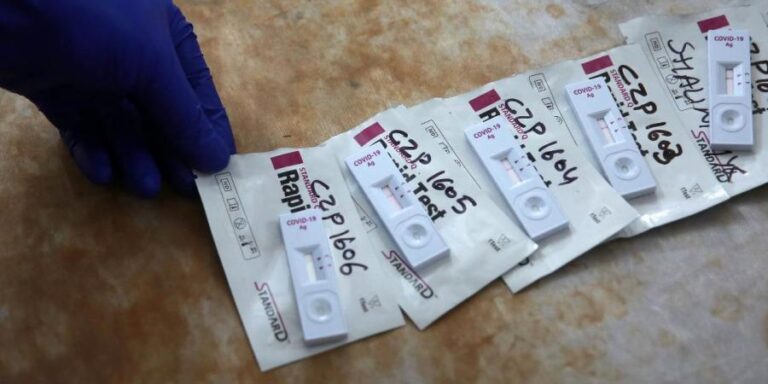
The ICMR on Wednesday issued an advisory for the use of a home testing rapid antigen testing kit ‘Coviself’, developed by Mylab Discovery Solutions, for those with the symptoms of coronavirus.
-
Using the kit, people can collect their own nasal swab and check the results within minutes.
-
The health research body, however, said that this kit should only be used by symptomatic people and close contacts of lab confirmed cases while its indiscriminate use is discouraged.
-
For using the kit, users will need a mobile app, that works as a comprehensive guide for the testing procedure and will provide a positive or negative test result to the patient, said the advisory.
-
“Presently, CoviSelf Covid19 OTC Antigen LF device manufactured by Mylab Discovery Solutions, Pune, Maharashtra has been validated and approved,” said ICMR.
-
It added that all users are advised to click a picture of the test strip after test procedure and data in the app of the mobile phone will be centrally captured in a secure server which is connected with the ICMR Covid-19 testing portal, where the information will be stored.
-
However, it assured that patient confidentiality will be “fully maintained”.
-
Also, as per the health research agency, all individuals who test positive may be considered as true positives and no repeat testing is required.
CONCLUSION
-
However, those with symptoms who test negative have been recommended to undergo RTPCR test immediately as “RATs are likely to miss few positive cases presenting with a low viral load.”
-
It was also asserted that those testing negative, should treat themselves as suspected cases while awaiting their RTPCR test results, and should follow home quarantine guidelines.
KEY STORY
-
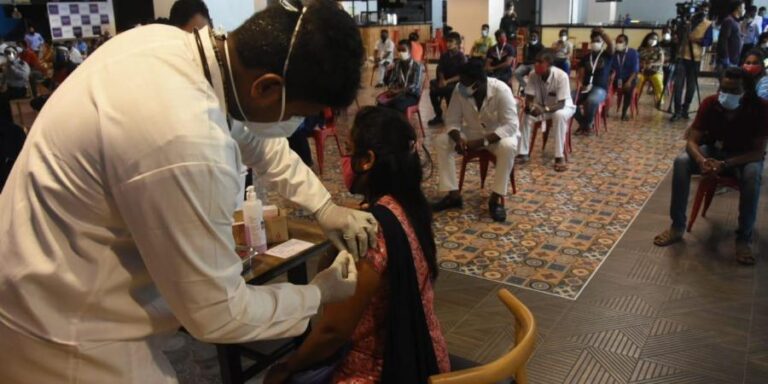
COVID-19 vaccine can be administered three months after a patient has recovered from the viral infection, the health ministry announced on Wednesday.
-
In another revision to vaccination terms, the goverment released a fresh set of guidelines based on the recommendations by National Expert Group on Vaccine Administration for COVID-19 (NEGVAC), on Wednesday.
-
If a person is infected by coronavirus after having recieved the first dose of the vaccine, the second dose would be deferred by three months following the “clinical recovery from COVID-19 illness,” the Union Health Ministry shared today.
-
The government added that lactating women are advised to get the vaccine, and that no screening by Rapid Antigen Test is required for any vaccine recipients.
-
Meanwhile, the vaccination for pregnant women is still being deliberated upon by the National Technical Advisory Group on Immunization (NTAGI), it said.
-
The communique has been sent to all the states and Union Territories, the centre said.
-
The recommendations arrive when the country conducted more 20 lakh COVID-19 tests across the country in a span of 24 hours, which is a global record and the highest ever done in a single day.
CONCLUSION
-
Meanwhile, the daily positivity rate has declined to 13.31 per cent, the Union Health Ministry said.
-
India’s COVID-19 daily recoveries exceeded the number of daily new cases for the sixth consecutive day.
-
Cumulative recoveries have surged to 2,19,86,363 with 3,89,851 patients recuperating in a day.
KEY STORY
-
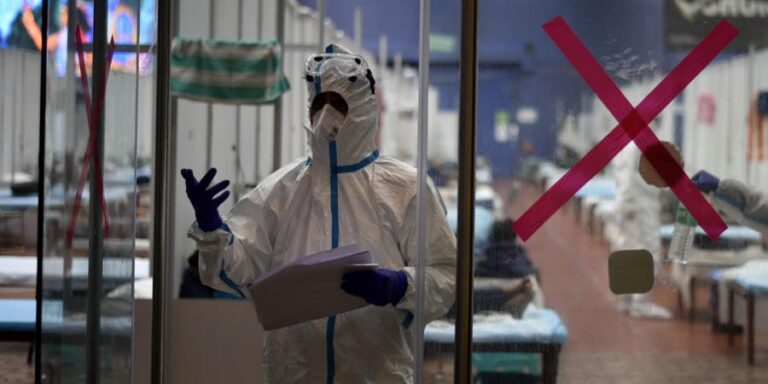
Places of worship are no longer just a space for devotion and community gatherings — going beyond these confines, they are turning into places of healing. Cutting across faiths, community halls in Karnataka are being turned into Covid Care Centres to help the local populations.
-
As the number of Covid cases continues to surge, the State endowment department is offering to open all community halls located next to temples to treat patients. The Wakf Board, too, has turned Haj Bhavan into a CCC.
-
Endowment Minister Kota Srinivas Poojary said they have informed DCs to utilise community halls. To begin with, the Sabha Bhavan next to Kukke Subramanya Temple in Dakshina Kannada will be developed into a CCC, where an oxygen unit will be included. “As all our temples are closed for the public, our community halls can be utilised for treatment,” he said. The endowment department runs over 34,000 temples.
CONCLUSION
-
A department official said this service is for the people, irrespective of caste and religion. “All Class A temples have big community halls and can be used for Covid treatment,” he added.The Wakf Board and minorities department, too, have asked DCs to utilise their space as CCCs. In Bengaluru, Byatarayanapura MLA Krishna Byregowda helped set up a CCC at Haj Bhavan with a 140-bed high oxygen flow facility.

KEY STORY
-
To help citizens who have lost their livelihoods and incurred losses due to the COVID19 second wave lockdown, the Karnataka government announced an economic relief package on Wednesday.
-
Chief Minister BS Yediyurappa said at a cost of Rs 1250 crores, financial compensation, food security and moratorium has been extended to the most vulnerable sections of the citizenry in the State to mitigate the adverse impact of the lockdown. Karnataka has been under corona curfew since April 24.
-
“The economic relief package is to help farmers, unorganised sector workers and comes at a cost of more than Rs 1250 crores. Despite the financial crunch we are facing we are announcing this package,” BS Yediyurappa said. Rs 10,000 compensation has been announced for floriculture and horticulture farmers for losses due to the lockdown. Some 20,000 floriculture farmers and 69,000 horticulture farmers are expected to benefit out of this announcement, the Chief Minister said.
-
“Licensed and registered auto drivers and cab drivers will be given Rs 3000 financial assistance. About 2.10 lakh persons are estimated to benefit out of this. Rs 3000 will also be transferred to the bank accounts of construction workers registered with construction workers welfare board,” BS Yediyurappa said.
-
Rs 2000 financial assistance has also been announced for unorganised sector workers like barbers, washermen, mechanics, leather workers, carpenters, tailors, coolies, ragpickers, household helps and street vendors. An estimated 3.04 lakh persons from the unorganised sector and 2.2 lakh street vendors registered with Atmanirbhar funds are set to benefit from the announcement, the chief minister said.
-
Artists and artist groups registered with Kanada and culture department will receive Rs 3000. Schedule for repayment of loans availed by farmers and self-help groups from cooperative societies, land banks etc have been extended by three months.
-
Apart from distributing five-kilo rice for each beneficiary already registered under Pradhan Mantri Garib Kalyan Yojana and antyodaya scheme for May and June months free of cost, the State government will include an additional 30 lakh beneficiaries under this scheme and spend Rs 180 crore so benefits are extended to them.
CONCLUSION
-
Those who have applied for BPL ration cards but haven’t received it yet will be given free 10 kilo rice for May and June while those awaiting APL cards will be given subsidized 10 kilo rice at Rs 15 per kilo.
-
The Karnataka government last year during the first COVID19 lockdown had announced an economic relief package of Rs 1610 crore which included electricity subsidies for MSMEs, citizens and small businesses apart from financial assistance to vulnerable sections.
KEY STORY
-
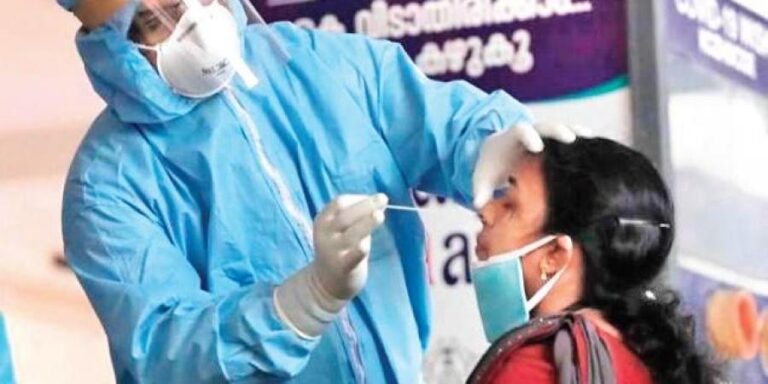
After a sharp spiral, the number of fresh Covid-19 cases in Karnataka seems to be coming down. But are the figures hiding something? Officials in the health department seem to be under pressure from the State Government to show a reduction in number of cases.
-
While Karnataka tops the list of eight states contributing to the high number of active cases, sources in the Health Department have confirmed that officials in the districts have been strictly told to keep the numbers to a minimum and also not to test asymptomatic patients.

-
According to the sources, medical officers in the districts have been told not to collect samples from asymptomatic patients and, if collected, the district Deputy Commissioners have been directed to take disciplinary action against the officer in charge.
-
“We have been told not to collect samples even if there are requests from asymptomatic primary or secondary contacts,” said an officer on condition of anonymity.
-
The officials have also apparently been told to compulsorily display a board stating that “Covid test is being done only for symptomatic patients’’.
-
Labs in some of the districts have also been told not to collect samples from asymptomatic patients, the source said. The targets set by the department for the districts, which used to be high during the previous wave and even till April, has now been scaled down to 200 at district hospitals, 75 at taluk hospitals, 25 at CHCs and only 10 at PHCs.
-
Frontline doctors at PHC told that though there is no official communication on reducing tests, but they have been told to test only symptomatic patients, primary and secondary contacts. “There is less pressure now to meet targets for testing,” said a doctor from a PHC at Chikkaballapur. “As we have to do more quality testing, the number has come down from 250-300 to 150-200 per day,” said another doctor at a PHC in Bengaluru.
-
However, experts continue to warn that Karnataka may be inviting a third wave sooner with reduction in the number of tests. Data from Health Department shows that the state has reduced tests from 1.9 lakh a month ago to only about 93,000 for two consecutive days on Monday and Tuesday. In April, about 1.72 lakh tests were being conducted, the highest being 1.9 lakh in a day.
CONCLUSION
-
Dr Giridhara R Babu, member of Technical Advisory Committee (TAC) warned there have been several evidences that the number of asymptomatic patients testing positive have been high in the earlier wave and this wave too. One needs to be careful about not testing this population, he said.
-
Dr C N Manjunath, another TAC member and nodal officer for testing, suggested door-to-door survey and extensive use of Rapid Antigen Test could be done to detect infections early. However, Health Commissioner Dr Thrilok Chandra said, “We have not told to stop testing asymptomatic patients. We have made it mandatory to test even the primary contacts. Also, if you look at our testing numbers, nearly 50-60% of them are asymptomatic. This is not true.”
1...578579580...883Page 579 of 883