KEY STORY
-
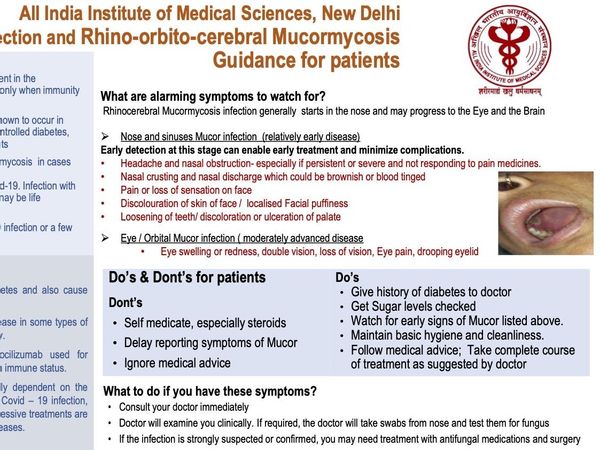
AIIMS’ latest guidelines call for the identification of high-risk patients in the Covid ward to detect and treat patients of deadly mucormycosis on time.
-
The guidelines also list out signs for which patients and their caretakers must keep a lookout for early detection of mucormycosis so that medical staff is alerted on time and timely treatments save lives.
-
AIIMS’s Dr Rajendra Prasad Centre for Ophthalmic Studies Wednesday night released guidelines for early detection and prevention of mucormycosis in AIIMS’s Covid Ward.
Who are the “high-risk” patients in the Covid ward?
The AIIMS pamphlet online says many patients with Mucor are noted to be RTpcr +ve at >10 days from onset. This may represent immunocompromise related persistence of COVID infection.
According to doctors, cases of mucormycosis, also known as black fungus, are being seen among Covid patients who were administered steroids to treat symptoms, and particularly among those who are suffering from diabetes and cancer. Medical experts have pointed to strong links between diabetes and infection.
Also, Covid-19 has a tendency to worsen diabetes and also precipitate diabetes in previously normal individuals.
The “high risk” Covid patients physicians have been asked to identify are:
-
Patients with uncontrolled diabetes, diabetic ketoacidosis, and diabetics on steroids or tocilizumab
-
Patients on immunosuppressants or anticancer treatment, and patients with a chronic debilitating illness
-
Patients on high dose steroids and/or long duration of steroids or tocilizumab
-
Severe Covid cases
-
Patients on oxygen support—nasal prongs, by mask, or on a ventilator
Ophthalmologists have been asked to conduct a baseline examination of these high-risk patients, followed by weekly examinations till the time of discharge.
The guidelines also stress on follow-up examination, depending on the patient’s condition either every two weeks for six weeks, or once every month for three months.
What do patients and their caretakers need to look out for?
Mucormycosis has a typical set of symptoms:
-
Abnormal black discharge or crusty dryness, or bleeding from the nose
-
Nasal blockage
-
Headache or eye pain
-
Swelling around the eyes, double vision, redness of the eye, loss of vision, difficulty in the closing eye, inability to open the eye, prominence of the eye
-
Facial numbness or tingling sensation, difficulty in chewing or opening the mouth
The AIIMS COVID Portal too has a complete brochure on Mucormycosis, recognition of onset and treatment by doctors.
Therein are listed sentinel signs/symptoms to be monitored in patients admitted to the COVID-19 wards.
Nose and sinuses showing mucor infection are the relatively early stages of the infection, it says; adding that timely detection at this stage can enable early treatment and minimize complications.
At the moderately advanced stage comes the Eye/Orbital mucor infection.
Intracranial infection is considered a very advanced disease when cavernous sinuses are involved and cranial nerve palsies occur.
Patients’ relatives or caretakers are advised to help the patient consciously conduct regular self-examinations. These include a full face examination in daylight for facial swelling—especially of the nose, cheeks, around the eyes—or black discolouration, hardening, and pain on touch; as well as oral and nasal examinations using a torch to check for blackening and swelling inside the mouth or nose.
If a patient identifies any of these signs, what must they do?
They must immediately consult an ENT doctor or ophthalmologist for their treatment, and not self-medicate with steroids, antibiotics or antifungal drugs. Apprise the doctor about your medical conditions. Mention your blood sugar levels history, immunosuppressive treatments if any, etc.
Strict control and monitoring of blood sugar should be maintained.
No self-medication with steroids, antibiotics, anti-fungal.
Get an MRI CT scan with contrast – paranasal sinuses and orbit, if the doctor advises.
Please note: Stay vigilant even weeks after recovering from COVID-19 as Mucor infection may occur during COVID-19 infection, or after a few weeks of apparent recovery from it.
Disclaimer: Tips and suggestions mentioned in the article are for general information purpose only and should not be construed as professional medical advice. Always consult your doctor or a dietician before starting any fitness programme or making any changes to your diet.

KEY STORY
-
The Indian Premier League (IPL) remains the most lucrative property of the Board of Control for Cricket in India (BCCI) and the organisers are keen to avoid huge losses they would incur if the 2021 season of the league doesn’t get completed.
-
The BCCI has reportedly now approached the England & Wales (ECB) Cricket Board to make certain changes to the schedule of 5 Tests between India and England in order to make space for the remainder of IPL to be held between the World Test Championship final and the start of the Test series.
-
An official word from the BCCI hasn’t come on the matter but former England captain Michael Atherton wrote about the proposition from the Indian board in ‘The Times’. In the article, Atherton confirmed that only informal discussions have taken place between the two boards so far.
-
“The Board of Control for Cricket in India has enquired about the possibility of moving the final Test of the English summer in order to make room to complete the postponed Indian Premier League,” the report said.
-
“Informal discussions have been had between the respective boards as cricket continues to grapple with a schedule ravaged by Covid.”
-
The World Test Championship final between India and New Zealand will take place in Southampton from June 18 to 22 while Virat Kohli & Co. will play its first Test against England starting August 04. The Indian cricket team has a 6-week gap between the two assignments and during this period they will be staying in the United Kingdom.
-
The BCCI is reportedly looking to have the England Test series start early (in the final week of July) and reduce the gap between subsequent matches to open up a bigger window in September for the remaining 31 matches of IPL 2021. If the changes are made, the BCCI can organise the remainder of the T20 league either in England or in UAE.
ECB expected to hold its ground
-
According to Atherton, however, the ECB is unlikely to make changes in the schedule despite BCCI’s request.
-
“At this late stage it is hard to see the ECB acceding to any potential change and it is expected to hold its ground. The fifth Test of the India series is due to be held at Emirates Old Trafford between September 10-14. Lancashire have already pre-sold three full days, and with a fair wind between now and then, would expect to sell the match out completely.
-
“Moving the game at this late stage to earlier in the season would create logistical headaches for Lancashire, the ECB and the England team, not to say those spectators who have spent money and planned to attend,” he explained in the article.
-
Atherton also expects such changes to affect ECB’s ‘The Hundred’ plans and hence altering the schedule at this point in time could lead to plenty of chaos for the England & Wales Cricket Board.
CONCLUSION
-
“It is easy to understand why India would enquire to see if the schedule can be changed. They complete the World Test Championship final against New Zealand on June 22 and are not due to play the first Test against England until the first week of August, six weeks later,” Atherton wrote.
-
“From India’s perspective, it would suit them to move the end of the Test series to an earlier date at the end of July, to allow more space for a completion of the IPL in September.”
KEY STORY
-
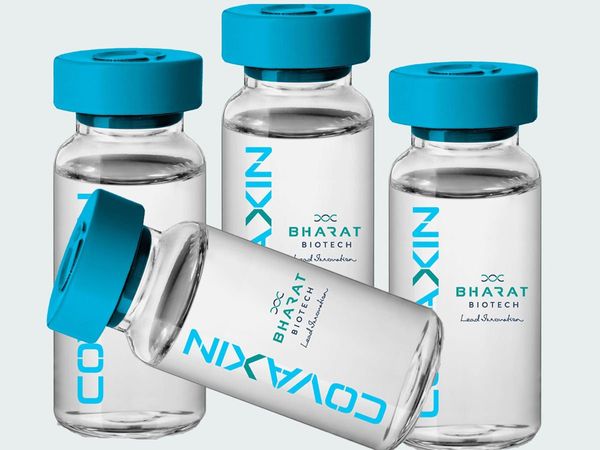
As India’s COVID vaccination drive is being hobbled by supply shortages, Bharat Biotech, which is producing the COVAXIN vaccine, on Thursday announced that it has ramped up its vaccine manufacturing capacities at Chiron Behring Vaccines, Ankleshwar in Gujarat. The vaccine production at the additional facility would enable the company to ramp up Covaxin production by additional 200 million doses.
-
Bharat Biotech said that with its additional units manufacturing the Covaxin vaccine, the company would be able to produce 1 billion doses per annum.
-
COVAXIN, India’s indigenous COVID-19 vaccine by Bharat Biotech, is developed in collaboration with the Indian Council of Medical Research (ICMR)- National Institute of Virology (NIV).
-
Bharat Biotech issued a statement on increasing the COVAXIN production: Here’s what it stated:
-
“Bharat Biotech a leader vaccine innovation, developing vaccines infectious diseases, announced today, the quick ramp up of additional manufacturing capacities for COVAXIN, India’s 1st indigenous Covid 19 vaccine at CHIRON BEHRING Vaccines, Ankleshwar Gujarat, a Wholly owned subsidiary Of Bharat Biotech.
-
The company plans to produce 200 million doses of COVAXIN per annum the GMP facilities that are already operational the production of vaccines based on inactivated Vero Cell platform Technology, under stringent levels of GMP and biosafety. Product availability at Ankleshwar to commence from Q4 2021.
-
Bharat Biotech had already deployed multiple production lines at its Hyderabad and Bengaluru campuses, adding Chiron Behring to this line up of high containment BSL rated GMP facilities that are required to manufacture COVAXIN.”
CONCLUSION
-
India in January 2021 had approved two vaccines against COVID disease. The Drugs Controller General of India had approved Covishield – the Oxford-AstraZeneca vaccine manufactured by Serum Institute of India (SII) and Bharat Biotech’s Covaxin.
-
The Hyderabad-based company is providing COVAXIN dose for Rs 150 to the Centre and Rs 400 to state governments. The company has set the price of India’s first indigenous COVID-19 vaccine for private hospitals at Rs 1,200.
KEY STORY
-
Ace singer Arijit Singh’s mother Aditi Singh passed away at AMRI Hospital, Dhakuria on Wednesday at 11 pm. She was 52 when she breathed her last. She was admitted with COVID and was put on ECMO. The 34-year-old singer’s mother tested negative for COVID-19 on May 17, however, she succumbed to a cerebral stroke.
-
The family left with the body around 5 am on Thursday. The ‘Agar Tum Sath Ho’ singer became a household name after the romantic number crooned by him titled ‘Tum Hi Ho’, became a massive hit.
-
Songs including ‘Kabira’, ‘Suno Na Sangemarmar’, ‘Mast Magan, Raat Bhar’, ‘Humdard’ and ‘Samjhawan’ have been equally loved by fans.
KEY STORY
-
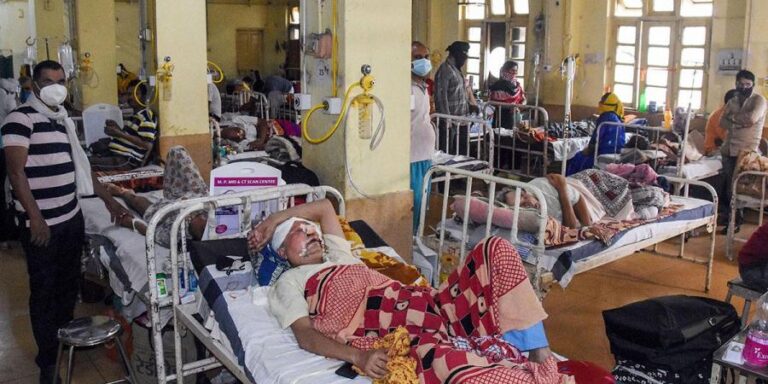
The Centre has asked states to notify mucormycosis, a deadly fungal disease being reported in many Covid patients during or after the infection, under the Epidemic Disease Act, 1897, making it mandatory for hospitals to report its every single case.
-
In a letter written to states on Wednesday, Lav Agarwal, Joint Secretary in the Union Health Ministry, said that all government and private health facilities along with medical colleges should follow guidelines issued by the ministry in ICMR on screening, diagnosis, and management of mucormycosis, also called black fungus disease.
-
The Centre also said that it should be mandatory for all these facilities to report all suspected and confirmed cases of the disease to the health department in the states through district level chief medical officers and subsequently to the Integrated Disease Surveillance Programme of the Health Ministry.
-
Rajasthan, on Wednesday, had become the first state to do so already even before the nudge by the Centre, after recording over 100 cases of the disease, which is fatal for nearly 50% patients and causes severe damage to the brain, face, lungs, and eyes in others.
-
In most states in India, the disease is being reported in alarming numbers in Covid patients during or after the infection, as it gets triggered by the use of steroids, a life-saving treatment for severe and critically-ill coronavirus patients, in order to suppress hyperactive immune response.
-
It is also being seen in Covid patients who are put on oxygen support through liquid medical oxygen cylinders or oxygen concentrators, probably due to impure oxygen—contaminated with mucor — reaching the lungs because of non-adherence to safety measures.
-
Doctors believe that the Covid patients with the history of diabetes or those with compromised immunity are particularly susceptible to this disease that often needs immediate advanced surgery to cure the damaged body part.
-
Removal of the eye in its patients is also often required in order to save life when the eye socket gets infected.
CONCLUSION
-
The problem in many states has worsened due to shortage of amphotericin B, a crucial drug injected to treat some serious fungal diseases. Owing to its acute scarcity and skyrocketing demand, the Centre has started allocating it to states through a quota system since the beginning of this month.
-
The Centre has said that five more companies, in addition to six which are currently manufacturing the drug, have been given approval to make amphotericin B while some Indian firms have also placed orders for the import of 5 lakh vials of the medicine.

KEY STORY
-
An enormous chunk of ice bigger than Rhode Island has broken off an Antarctic ice shelf, according to the European Space Agency. The floating mass covers more than 1,600 square miles, making it the largest iceberg in the world, agency officials said.
-
The iceberg, dubbed A-76, calved off the Ronne Ice Shelf into the Weddell Sea. The European Space Agency’s twin Copernicus Sentinel-1 satellites spotted the giant slab of ice breaking away on May 13.
-
The U.S. National Ice Center — which is operated by the National Oceanic and Atmospheric Administration, the Navy and the Coast Guard — confirmed the calving event the following day and recorded the position of A-76 in the Weddell Sea.
-
“Iceberg A-76 calves from the western side of the Ronne Ice Shelf in the Weddell Sea and is currently the largest iceberg in the world,” the organization tweeted Friday.
-
The finger-shaped iceberg is roughly 105 miles long and 15 miles wide, according to the European Space Agency. Its total area is more than 70 times that of Manhattan, New York.
-
It’s not uncommon for an ice shelf to shed, and calving events occur naturally as these sprawling frozen platforms advance and contract. In recent decades, however, scientists have said climate change is causing worrisome changes across the Antarctic region.
-
Global warming can, for instance, accelerate an ice shelf’s retreat and cause it to collapse, according to the National Snow and Ice Data Center.
-
The European Space Agency said the largest iceberg title was previously held by a chunk of ice known as A-23A. That iceberg, which covers an area just under 1,500 square miles, is also currently afloat in the Weddell Sea.
-
While A-76 is huge, it’s only about one-third the size of the biggest iceberg in recorded history. That designation belongs to an iceberg named B-15 that calved off of Antarctica’s Ross Ice Shelf 21 years ago. The B-15 iceberg covered more than 4,200 square miles when it broke away, according to NASA’s Earth Observatory.
CONCLUSION
-
Icebergs get their names based on where and when they were first observed. Antarctica is divided into quadrants, with the letters A, B, C and D used to denote the different regions. A sequential number is then assigned to each newly identified iceberg. As such, A-76 was spotted in the Bellingshausen/Weddell Sea quadrant and was the 76th iceberg tracked by the U.S. National Ice Center.
-
An iceberg that forms from another already-named iceberg is then given a sequential letter at the end of its name

KEY STORY
-
Social media giant Facebook said it has received 40,300 requests from the Indian government for user data in the second half of 2020.
-
This was 13.3 per cent higher from the January-June 2020 period when India had made 35,560 total requests, according to the Facebook’s latest Transparency Report.
-
The US-based company restricted access to 878 items in India during the second half of 2020 in response to directions from the IT Ministry for violating Section 69A of the Information Technology Act, 2000, including content against security of the state and public order.
-
According to the report, India made 40,300 total requests in the July-December 2020 period, of which 37,865 were legal process requests and 2,435 were emergency disclosure requests.
-
The number of total requests made by India ranked second to the US, which had made 61,262 requests during the July-December 2020 period.
-
Globally, government requests for user data increased by about 10 per cent to 191,013 in the second half of 2020 from 173,592 in the first half of 2020.
-
Information related to 62,754 users/accounts were requested in India, and some data was produced for 52 per cent of the requests.
“Facebook responds to government requests for data in accordance with applicable law and our terms of service. Each and every request we receive is carefully reviewed for legal sufficiency and we may reject or require greater specificity on requests that appear overly broad or vague,” the report said.
Facebook said that during the July – December 2020 period, it had “restricted access in India to 878 items in response to directions from the Ministry of Electronics and Information Technology for violating Section 69A of the Information Technology Act, 2000, including content against security of the state and public order”.
Of these, 10 were restricted temporarily, it added.
“We also restricted access to 54 items in compliance with court orders. In response to an order from Justice Alexandre de Moraes of Brazil’s Supreme Court related to 12 profiles and Pages of supporters of Brazilian President Bolsonaro, we restricted access globally to this content, including in India,” it added.
Facebook noted that while it respects the law in countries where it operates, it “strongly” opposes extraterritorial legal demands such as the one resulting in these restrictions.
-
The social media giant also released its Community Standards Enforcement Report for the first quarter of 2021.
CONCLUSION
-
As per the Community Standards Enforcement Report, content actioned on adult nudity and sexual activity increased to 31.8 million in first quarter of 2021 from 28.1 million pieces of content in the preceding quarter.
-
The report found that prevalence of hate speech content was between 0.05 per cent and 0.06 per cent of views in the first quarter of 2021, which marks a decrease from the fourth quarter of 2020.
KEY STORY
-
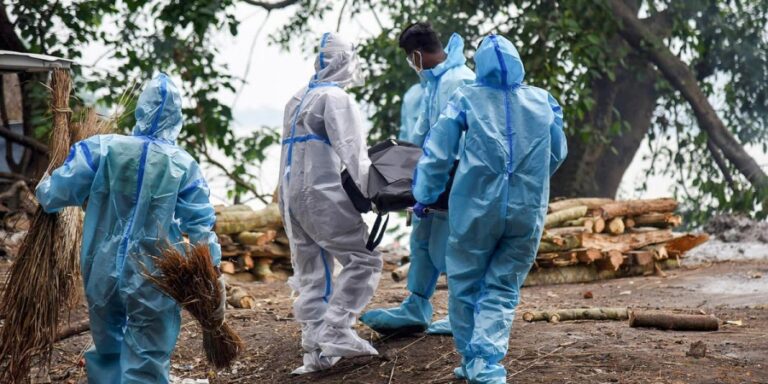
The Indian Medical Association has said that eight doctors have succumbed during the second Covid-19 wave in Karnataka. A total of 329 doctors have died of the disease across the country in the second wave.
-
“In Karnataka, 61 doctors lost their lives to the infection in the first wave. In the second wave, some of them died as they could not get access to beds and treatment on time … they are corona warriors, who were exposed to the infection, while treating patients,” said Dr Srinivasa S, PRO, IMA, Bengaluru and Chairperson, IMA standing committee for child health.
-
While one PG student from Dakshina Kannada succumbed to Covid in the second wave, two doctors from Hubballi also died.
CONCLUSION
-
And, one doctor each from Channapatna, Chamarajanagar, Vijayapura, Kalaburagi and Mysuru also succumbed. Dr Srinivasa said after the IMA state branch wrote to the government seeking reservation of beds for health workers, 10% of the beds in each district was reserved to them.
KEY STORY
-
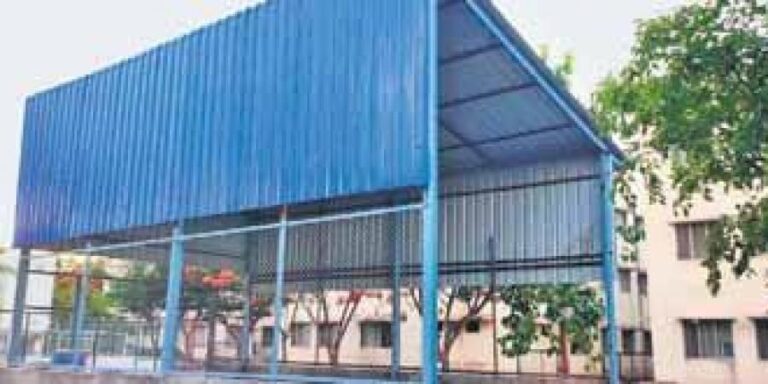
The first set of three medical oxygen plants being readied in Karnataka on behalf of the Defence Research and Development Organisation (DRDO), are likely to commissioned by this month-end. The National Highway Authority of India (NHAI) has completed work on two structures inside which they will be housed, while a third is getting ready.
-
These plants will help generate oxygen in a cost effective way. Speaking to TNIE, General Manager (Technical) and Project Director, NHAI, S P Somashekar said the concrete structures, spanning 600 sq feet, were completed at the ESI Hospital at Koppal Institute of Medical Sciences and ESI Hospital in Kalaburagi. “The third one at C V Raman Hospital in Bengaluru is getting ready and we will hand them over by this weekend,” he said. “They will house an oxygen tank and compressor apart from electrical equipments. They can generate up to 1,000 litres of oxygen per minute, “ he added.
-
A DRDO spokesperson told TNIE that medical oxygen plant technology is being used, which has been developed by DRDO for generating oxygen onboard its light combat aircraft, Tejas. “The system can cater to 190 patients at a flow rate of 5 litres per minute and charge 195 cylinders per day.”
-
Though it was announced that 500 such plants were to be readied within three months across the country, the actual number could be lesser with non-availability of sites cited as a reason, said a source. State Deputy Director of Medical Health, Dr Selvaraj said, “A total of 31 pressure swing adsorption technology plants have been approved as of now. They will totally produce 22,500 litres of oxygen per minute.”
FIFTH OXYGEN EXPRESS CHUGS INTO K’TAKA
-
The fifth Oxygen Express entered the inland container depot in Whitefield on Thursday carrying 160 tonnes of the gas, the highest such consignment brought in a single train so far. Altogether eight cryogenic cylinders carried 20 tonnes each. According to release, the train reached ICD at 1.05 am from Tatanagar in Jharkhand.
KEY STORY
-
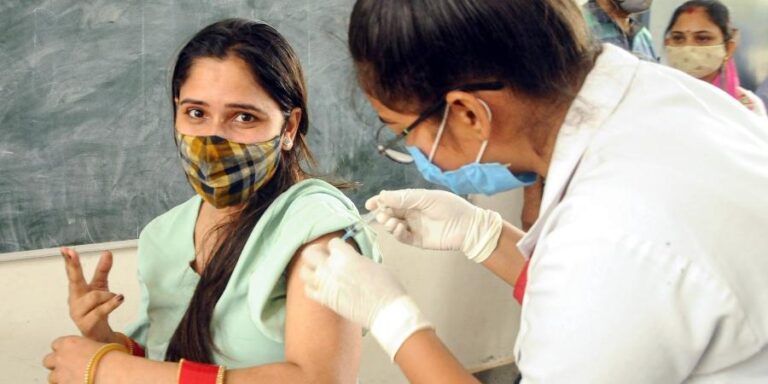
COVID-19 vaccination, which was suspended soon after it began for the 18-44 age group, will restart on May 22. Nodal officers will have to be appointed by BBMP Commissioner and Deputy Commissioners to hand out eligibility certificates to two groups listed by the government— frontline workers and priority groups.
-
Frontline workers listed in the letter written by the National Health Mission Director Arundhathi Chandrashekar include those working in crematoria, graveyards and burial grounds, immediate family members of health workers, teachers on Covid-19 duty, government transport staff, autorickshaw and cab drivers, electricity and water supply staff, postal employees, road-side vendors, security and housekeeping staff of offices, judicial officers, caretakers of elders and patients, child protection officers, media, suppliers of goods to hospitals, oil industry, and people with disabilities and mental health issues along with one attendant.
CONCLUSION
-
Priority groups include construction workers, telecom and Internet service providers, airline staff, bank staff, petrol bunk employees, film industry workers, advocates, hotel and hospitality sector, railway employees, garment factory workers, forest department staff, those wroking in NHAI and GAIL, sports persons representing the state and country and HAL employees.
1...577578579...883Page 578 of 883