World Osteoporosis Day 2020: 5 Things You Can do to Prevent This Disease

Osteoporosis, which literally translates to “porous bones” from Latin, is a debilitating bone disease. Bones have two parts, the hard outer shell called cortical or compact bone, and the comparatively softer inner part called trabecular bone. Trabecular bone is naturally like a honeycomb and has small empty spaces. If you have osteoporosis then these gaps become larger, making the bones weak and brittle.

World Osteoporosis Day: What you can do to prevent bone loss?

World Osteoporosis Day is observed every year on 20th October to spread awareness about this disease, which is usually associated with old age but is highly preventable if you take precautions against it when you’re young.

Symptoms of osteoporosis

While osteoporosis affects all genders, studies show that women are more at risk of developing it especially after they hit menopause. Usually, osteoporosis has no symptoms in the earliest stages. In fact, most people don’t even get diagnosed with the disease until they get a fracture and have to get an x-ray done, which reveals whether your bone density is okay or not.
Having a family history of osteoporosis increases your risks of getting the disease, so whether you have symptoms or not, you should get yourself screened. In case symptoms do show up, it’s likely to be receding gums, weakened grip strength and weak or brittle nails. If you have severe osteoporosis then getting a fracture at the slightest trauma (like a hard sneeze) is likely to be a key symptom. Persistent back or neck pain and losing height as you age are also likely symptoms of severe osteoporosis.

Risk factors of osteoporosis

The following are some of the common risk factors of osteoporosis:
Having a family history of osteoporosis or fractures
    • Increasing age
    • Female gender, along with being menopausal
    • Low or no calcium, vitamin D, protein and other minerals in diet
    • Low or no physical activity
    • Smoking, as it reduces bone density faster
    • Alcohol abuse, as it hinders the formation of new bones and increases fall risks
    • Thyroid disorders like hypothyroidism and hyperthyroidism
    • Use of corticosteroids or other medications

Prevention of osteoporosis

Osteoporosis is a highly preventable disease, especially if you take adequate steps against it from an early age. This means the adoption of the following preventive measures during your childhood and all the way until you grow old – preventing osteoporosis is a lifelong target.
1. Get minerals: Your bone density and health depends on minerals like calcium, iron, phosphorus, as well as vitamin D and protein. Eat plenty of milk, cheese, paneer, yoghurt, chicken, fish, vegetables, nuts and seeds to ensure you have sufficient amounts of these in your diet. You should also consult your doctor about calcium and vitamin D supplements if you are at risk of osteoporosis.
2. Work out: Your bone health is intricately linked to muscular health – hence the use of musculoskeletal health. Regular moderate to vigorous exercise, especially weight training, is known to improve musculoskeletal strength and prevent osteoporosis.
3. Avoid smoking and drinking: If there are any two lifestyle habits that increase the risk of osteoporosis, it’s smoking and excess alcohol consumption. Quit smoking and your bones will thank you for it. Women should not consume more than one drink per day and men should limit themselves to two drinks per day.
4. Maintain a healthy weight: Excessive weight gain and obesity can affect your bone health negatively and lead to early bone degradation. This can, in turn, lead to osteoporosis. Start exercising and maintain a healthy diet to get in shape if you are overweight or obese.
5. Get screened: If you have enough of the risk factors, especially a family history of osteoporosis and being female, you should get screened at an early age for osteoporosis. Ask your doctor if you can get a dual x-ray absorptiometry (DXA) done.

Seasonal change: Should you change you skincare routine too?

The month of October is when the weather begins to change in most parts of the country, especially in the northern belt. The days become pleasant and nights get cooler, as the temperatures begin to dip. As such, your skin may show some changes, too, owing to the fact that there is less humidity in the air around this time.
For nourishment, one needs to feed the skin through masks and moisturisers. It is important to ensure that your masks are made with hydrating ingredients that nourish your skin.
For dry and chapped skin: Use shea butter, almond oil, chamomile, sandalwood and palma rosa.
* For oily and acne-prone skin: Use tea tree, basil, lemon, monoi oil, mango butter, raspberry seed oil, thyme, and charcoal.
* For sensitive skin: Use natural glucan gum, lavender, neroli, geranium
* For aging skin: Use collagen, plant peptides, argan, palma rosa, sandalwood, patchouli, cypress, and myrrh.
Additionally, cleansing exfoliation and peels work on skin renewal, too. Exfoliation helps to remove the dead skin cells and promote new cell generation. Skin exfoliation, which includes face and body, must be done twice a week. This removes dead cells and detoxifies the skin.
Exfoliation masks and peels can be easily made at home using kitchen ingredients.

Coconut oil along with coffee powder and rice powder

Together, these make a powerful exfoliation peel that works on skin firmness and tightening. Coconut oil is a rich source of fatty acids and works on hydration of the skin. Coffee has antioxidants that slow the aging process. Rice flour is readily available in supermarkets and works on skin’s firmness.
Take the following ingredients in a bowl and mix well:
– 1 teaspoon of coffee powder
– 1 teaspoon of coconut oil
– ½ teaspoon of rice powder
Using your fingers, apply the mask on the face and the neck. Leave for 10 minutes. Rinse the mixture off using warm water. For best results use once a week.
Apply sunscreen “with high SPF”, because “every day, our skin is under attack from damaging radicals that break down elastin and natural supply of collagen and cause damage and premature ageing”.
“During the changing season, one is more prone to catching infections. Drink lots of warm water to release all toxins from the body. Keep essential oils with antibacterial properties handy with you,” .

Delhi govt’s ‘Red Light On, Gaadi Off’ campaign to fight pollution begins from October 21

KEY STORY

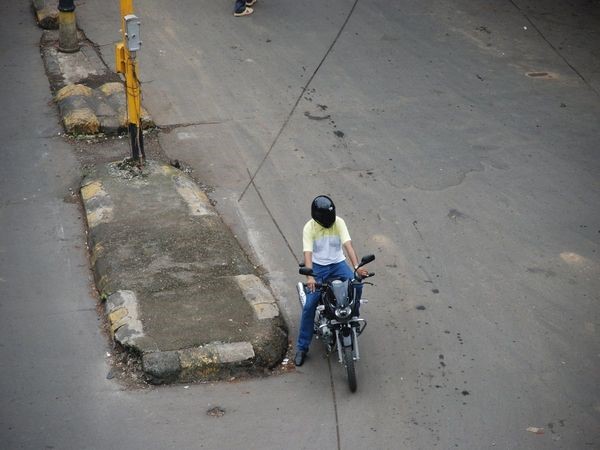
  • New Delhi: The Delhi government announced last week that it has come up with a campaign against air pollution. Delhi Chief Minister Arvind Kejriwal announced the ambitious “Red Light On, Gaadi off” campaign which will lead to a reduction in the level of air pollution.
  • Ahead of the campaign, Aam Aadmi Party (AAP) MLA Raghav Chadha urged citizens to take part in it and requested them to switch off their engines while waiting at red lights.
  • The AAP MLA said that the northern part of the country struggles with high levels of pollution every year and the campaign is a way to tackle the same.
  • He added that he hopes that the entire country will join hands to support CM Kejriwal in his endeavour against air pollution.

    Environment marshals, traffic cops deployed at signals

    • As per the government, the campaign will kickstart from tomorrow and environment marshals, as well as traffic cops, will be deployed at traffic signals to ensure efficient implementation.
    • Delhi environment minister Gopal Rai said that the campaign intends to raise awareness among drivers about the importance of turning the ignition off while waiting for the traffic to move.
    • He said that the campaign is a step towards curbing levels of air pollution in the country.
    • While talking to the media on Monday, Rai said,

“This will be an awareness campaign and drivers will not be penalised for it. We will urge drivers, who care about the growing pollution in the city, the health of their children and their elderly parents, to do their bit in controlling vehicular emissions. Doing so will be completely voluntary. The awareness campaign will continue till November 15.”

Delhi’s Air Quality Continues To Remain ‘Poor’, May Turn ‘Very Poor’ By Tomorrow: Government

KEY STORY

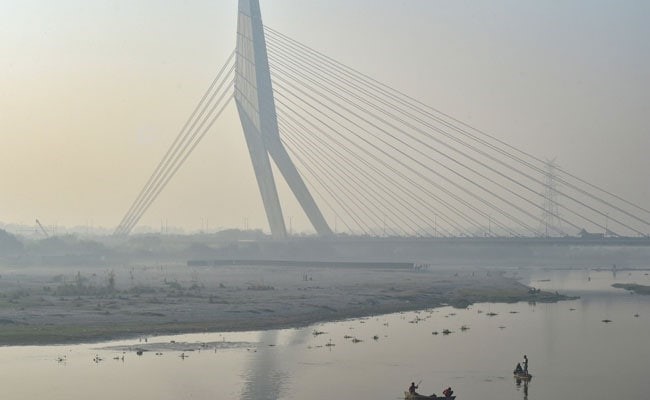
  • New Delhi: Pollution levels dipped slightly in the national capital this morning due to favourable wind speed, though the air quality was still in the “poor” category.
  • The Ministry of Earth Sciences’ air quality monitor, SAFAR, said the air quality index (AQI) was likely to slip to the “very poor” category by Wednesday due to a change in the wind direction and a reduction in the wind speed.
  • The city recorded an air quality index (AQI) of 227 at 9 am on Tuesday. The 24-hour average AQI was 244 on Monday. It was 254 on Sunday and 287 on Saturday.
  • An AQI between 0 and 50 is considered ‘good’, 51 and 100 ‘satisfactory’, 101 and 200 ‘moderate’, 201 and 300 ‘poor’, 301 and 400 ‘very poor’, and 401 and 500 ‘severe’.
  • Calm winds and low temperatures allow the accumulation of pollutants, while high wind speed helps in their dispersion.
  • Expecting further deterioration in the air quality in the coming days, the Supreme Court-mandated Environment Pollution (Prevention and Control) Authority (EPCA) on Monday asked Uttar Pradesh and Haryana governments to be ready to close thermal power plants that do not meet the standards laid down in 2015.
  • In separate letters, EPCA chief Bhure Lal asked the two state governments to review the preparedness for closing thermal power plants and to inform the pollution watchdog about it, as well as the steps that will be taken to ensure compliance with the necessary shutdown during the peak winter period.
    SAFAR said a change in surface wind direction is expected by early Wednesday which is “likely to bring calm surface wind conditions, leading to low ventilation and deterioration of AQI”.
  • “Very poor AQI is predicted for Wednesday and Thursday,” it said.

CONCLUSION

  • The stubble fire count around Haryana, Punjab, and neighbouring regions stood at 1,090 on Monday. The share of farm fires in Delhi’s PM2.5 pollution stood at 10 per cent.
    “Though transport-level wind direction is favourable, an increase in the wind speed and local surface winds led to a decrease in stubble (burning) contribution in Delhi’s PM2.5,” SAFAR said.
  • The share of stubble burning in Delhi’s PM2.5 pollution stood at 17 per cent on Sunday. It was 19 per cent on Saturday, 18 per cent on Friday, around one per cent on Wednesday and around three per cent on Tuesday, Monday and Sunday.
  • On Monday, Delhi Chief Minister Arvind Kejriwal requested Union Environment Minister Prakash Javadekar to hold monthly meetings with the CMs of Delhi, Punjab, Haryana and UP to curb air pollution, saying there is a lack of political will to address the problem of stubble burning.
  • In a virtual press briefing, he said the affected states have been unable to find a solution to stop stubble burning and prevent air pollution. “I believe pollution due to stubble burning can be controlled in a short span of time. But a lack of political will is visible in doing that.”
  • Environment Minister Gopal Rai said the Delhi government will deploy 2,500 environment marshals across the city to generate awareness about its recently launched anti-pollution campaign, “Red Light On, Gaadi Off”.
  • He also said a meeting of environment ministers of Delhi, Punjab, Haryana, Rajasthan and Uttar Pradesh with the Centre must be held every 15 days to discuss matters pertaining to pollution and stubble burning. Such meetings will help in improving coordination between the states, he said.

PM Narendra Modi to address nation at 6 pm today

KEY STORY

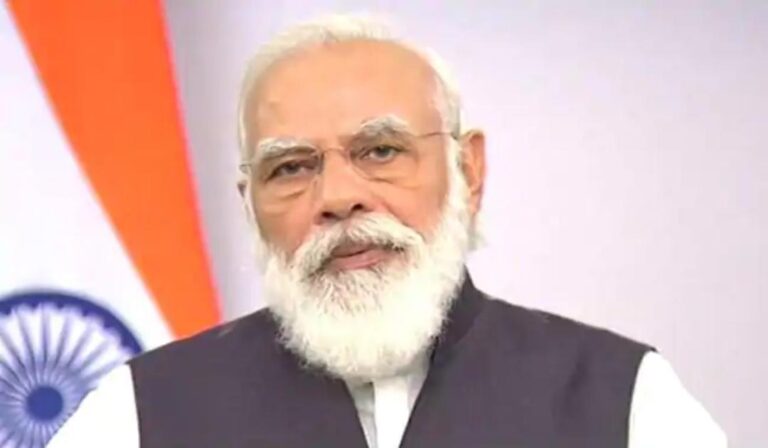
  • New Delhi: Prime Minister Narendra Modi has tweeted that he will address the nation at 6 pm today. “Will be sharing a message with my fellow citizens at 6 pm this evening,” PM Modi wrote in his tweet, urging citizens to tune in.
  • The Prime Minister did not specify but many speculated he would speak on the coronavirus situation in the country on the verge of a series of festivals and the approaching winter.
  • This will be his seventh address to the nation since he announced a strict lockdown in March-end to check the spread of the coronavirus. Since June, the nation has been exiting the restrictions in phases in order to reopen the economy.
  • Experts have raised concerns that alongside the unlock rules, the festival season may lead to a surge in infections.
  • India’s COVID-19 tally is close to 76 lakhs but for the first time in nearly three months, the country has recorded less than 50,000 new cases in a day. The health ministry reported 46,790 fresh cases in the last 24 hours, which takes the overall cases to 75,97,063.

  • The government recently said the country has crossed its coronavirus peak as its daily average cases have tapered against a high of more than 90,000 daily cases logged in mid-September.
  • PM Modi said India has one of the highest recovery rates because it was one of the first countries to adopt a flexible lockdown. He added that the country is already working on putting a well-established vaccine delivery mechanism in place.

    “Today we are seeing a decline in the number of cases per day and in the growth rate of cases. India has one of the highest recovery rates–88 per cent. This happened because India was one of the first countries to adopt a flexible lockdown when the total cases were just a few hundred,” the PM said.

Karnataka: PUC lecturer candidates withdraw protest after eight days following written assurances

KEY STORY

  • BENGALURU: After eight days of continuous sit in at the department premises, the PUC (Pre-university college) lecturers candidates finally called off their protest on Monday. This was after they were assured a deadline for their appointment letters both by the minister and by an MLC.
  • MLC KT Srikante Gowda, who is also the President-Karnataka PU College Principal’s Association, had called up the primary and secondary education minister Suresh Kumar in the presence of the students and was assured of soon giving the appointment letters.

Protest, Agitation

  • Kumar who is undergoing treatment for COVID-19 at his residence said that his health did not permit him to step out and hence could not meet the protesting teachers.
  • “I have been a 100 percent the teachers’ side,” he said adding, “To give the appointment letters is not just my responsibility its my duty. Yet, as a minister, I cannot announce the date, as the model code of conduct is in place.”
  •  MLC KT Srikantegowda, who claimed to be announcing on the behest of the minister, said that he will say it on the behest of the minister November second week.

CONCLUSION

  • He also assured in written that the appointment letters will be given by the said duration. “We have been assured by the minister on his social media account, and by the MLC in person and in writing and trust them on their word. Hence we have temporarily called off the protest,” said a student.
  • In the meantime, the joint director of pre university department, ordered the dispersal of the protesters due to COVID-19 spread and the hindrance they were causing to the day to day functioning of the department.
“Despite the deputy chief minister’s intervention, the protesters have remained on the site and the number of protesters are increasing every passing day, and COVID-19 SOP is not being followed. The candidates are gathering in groups and are causing a risk to their own health and that of the employees and visitors of the department. Thereby, causing a hindrance to the day to day functioning of the department work by officials and staff. While also causing an impediment towards the cleanliness of the compount,” said the official.

Identify under-repair freezers at vaccine stores, Centre tells Karnataka

KEY STORY

  • The Centre on September 10, wrote to Karnataka to identify its under repair equipment at its vaccine stores across the state so as to ready cold chain capacity for storing Covid vaccines in the future.
  • Karnataka has 3,677 ice line refrigerators, 3,395 deep freezers, 10 walk in coolers and two walk in freezers.
  • The state maintained that while this is adequate for existing routine immunisation programmes for storing vaccines like polio, measles rubella among others, it has to identify the under-repair equipment and apprise the Centre on equipment required based on the number of Covid doses that the Centre allocates to the state.
  • The state has 2,900 cold chain points. As many as 10.52 lakh children upto the age of 16 are vaccinated under routine immunisation programmes every year. But the health department is unsure of how many vaccine doses it can store at any given point of time.
  • We haven’t calculated what the maximum cold storage capacity is for vaccines in the state. However, what the Centre says in its letter to us is to use the same distribution network that we used for other vaccines, for example, Polio.
  • But we need more storage space for Covid vaccines,” Dr Rajani Nageshrao, Deputy Director, Immunisation, Department of Health and Family Welfare said.
  • On October 6, a meeting was scheduled to be held with the Government of India to discuss the state’s preparedness in vaccine storage.
  • While a small ice line refrigerator has a capacity of 140 litres and a large size refrigerator can store 300 litres, it is unknown how many of the state’s refrigerators are small and how many are large sized.

CONCLUSION

  • If one were to assume all refrigerators and coolers can store a minimum 140 litres then the total storage capacity of the state would be 5,16,180 litres.
  • If we assume all refrigerators and coolers can store a maximum 300 litres then the total storage capacity of the state would be 11,06,100 litres.
    “Since walk in freezers and deep freezers are maintained at a temperature of – 15°C to – 25°C, no vaccines are stored in them except oral polio vaccine, which will remain potent only if stored at temperature not higher than – 20°C.
  • Cool packs that are required to pack the vaccines with during transportation are also stored in deep freezers,” she said.
    All other vaccines are stored between 2°C and 8°C. The Covid vaccine may need a temperature beyond what is provided in a simple refrigerator, as in a deep freezer or an ice line refrigerator.

Society will decide on mosque-temple issue ‘in appropriate time’: C T Ravi

KEY STORY

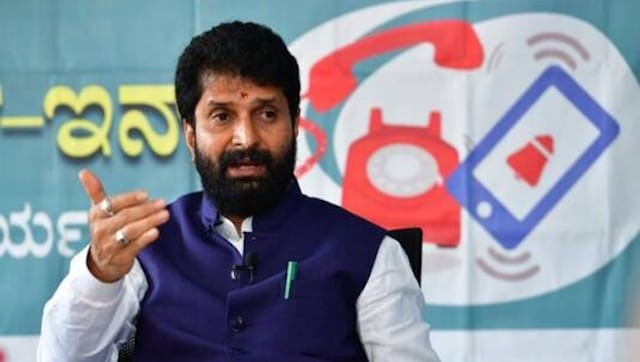
  • BJP national general secretary C T Ravi stated on Tuesday that the society itself would take a stand about temple-mosque issue in Mathura and Kashi, in appropriate time.
  • “BJP alone cannot give answer to all such issues. Ram Mandir issue in Ayodhya has the background of a struggle for 500 years, and the temple is being constructed now. Now, the society itself is gaining the strength to take suitable stand on Mathura-Kashi issue,” he said.
  • Refusing to comment much on BJP MLA Basanagouda Patil Yatnal’s statement about leadership change in State Government and making an MLA from North Karnataka as the chief minister, Ravi clarified that there is no question of leadership change.

CONCLUSION

  • B S Yediyurappa is our unanimous choice and the party’s parliamentary board also endorsed that. Nobody should give statement without responsibility, and Yatnal’s statement would be discussed in a suitable platform,” he noted.
“No discussion is going on in the party regarding Congress leaders Vinay Kulkarni and M B Patil coming to the BJP. We do not believe in political untouchability, but no decision would be taken without consulting the local unit of the party,” Ravi added.

IPL 2020, CSK vs RR: RR ace ‘battle of survival’, leave MS Dhoni’s CSK on brink of elimination with 7-wicket win

KEY HIGHLIGHTS

  • It was  a special occasion for CSK skipper Dhoni, who became the first cricketer to play 200 IPL games in the tournament history. In addition, he became the first-ever player in the history of T20 cricket to play 200 matches in the same league.
  • At the coin toss, Dhoni-led CSK opted to bat first at the Sheikh Zayed Stadium, Abu Dhabi. The CSK innings never got going as the new pair of Sam Curran and Faf du Plessis lasted only for 3 overs.
  • Du Plessis was the first one to bite the dust as he walked back for 10 with Shreyas Gopal striking early. Shane Watson and Ambati Rayudu remained inconsistent and couldn’t add much to the score.

CSK met RR in match 37 of IPL 2020. Photo credits: IPL

  • On the other hand, Curran played a few shots but was dismissed for a 25-ball 22. Barring Ben Stokes, all the RR bowlers kept it tight as Rahul Tewatia, Karthik Tyagi and Jofra Archer returned with one scalp apiece.

  • CSK depended on Dhoni-Ravindra Jadeja to bail them out of crisis and post a competitive total. However, they never managed to accelerate.
  • Dhoni managed a run-a-ball 28 whereas Jadeja top-scored with 36 off 30 balls. With only five boundaries in the last ten, with no six at all, CSK managed 125 for 5.
  • In reply, RR were off to a disastrous start. Ben Stokes perished off Deepak Chahar’s delivery as he got an inside edge.
  • The left-hander had given a flourishing start but failed to get a move on. Robin Uthappa premeditated a scoop, as Josh Hazlewood shortened the length, which gave a simple catch to Dhoni. In addition, Sanju Samson’s miseries continued as he flicked only to see Dhoni complete a sharp low-catch.
  • While it seemed like the match was swinging in CSK’s favour, their low-total couldn’t prove to be too much. Captain Smith and Jos Buttler, coming out at No. 5, took over the responsibility to see off seamers Chahar and Hazlewood.
  • From thereon, Buttler attacked the likes of an erratic Shardul Thakur and leg-spinner Piyush Chawla.

  • Smith joined the party later as he played the anchor’s role to perfection. The duo were involved in an unbeaten 94-run stand, for the fourth-wicket, as RR romped past CSK by 7 wickets with 15 balls to spare.
  • With seven defeats from 10 games, the story is almost over for Dhoni’s camp. While mathematically they still have a chance, they need a few miracles to sneak into the playoffs after this loss. RR, meanwhile, take the fifth spot with 8 points.

Karnataka government mulling over reopening colleges in November, says Deputy CM Ashwath Narayan

KEY STORY

  • The Karnataka government is preparing to re-open colleges for UG and PG students from next month and a decision on it would be taken keeping in mind the safety of students and teachers in view of Covid-19 pandemic, Deputy Chief Minister Ashwath Narayan said on Monday.
  • Amid the uncertainty over reopening of schools and colleges, shut since the national Covid-19 lockdown began in March, he said a final decision on when to start the regular courses for undergraduate and post-graduate students will be taken shortly.
  • At present, online classes are being conducted for the students.
    “The government is preparing to start the offline graduate classes from November. Shortly a decision will be taken after discussing with Chief Minister B S Yediyurappa and other officials concerned,” Narayan, who holds the higher education portfolio, said.
  • He said the guidelines have already been issued by the Centre for re-opening schools and colleges and accordingly, preparations were afoot.
    Conceding that there will be challenges galore and any hasty decision was uncalled for, Narayan maintained, “We have to ensure the safety of students and teachers.
  • The virus is very much amidst us. Hence, we need to take the decision after much deliberation.”

CONCLUSION

  • Narayan was talking to reporters after attending the centenary convocation of the Mysore University in which Prime Minister Narendra Modi participated through video conferencing.
  • The Deputy Chief Minister expressed his happiness over the ‘success’ of online classes, saying the digital learning and teaching has been going in the state beyond expectations. He asked students to take maximum advantage of it.
  • On the new National Education Policy (NEP), he said the state government was gearing up to implement it in stages.
  • “The task force constituted to recommend the implementation of NEP has already submitted its first report. The new education policy will be implemented in a phased manner by 2021 after making all the arrangements,” he said.