Karnataka to tap satellite services for better internet coverage

KEY HIGHLIGHTS

  • With the Karnataka government laying stress on taking industries ‘Beyond Bengaluru’, the state is planning to have satellite services for better internet facilities in rural and remote area over the next two years. The government is committed to providing better internet connectivity even to the last person, IT-BT Minister Dr C N Ashwathnarayan said.
  • During an interaction with TNIE, he said, “The government is giving top priority to internet connectivity. For many citizen-oriented services including banking, agriculture, health care, education or governance, information technology has become indispensable even in remote areas. If we want to progress or empower people, connectivity should be given topmost priority,’’ he stressed.
  • He said software technology parks across Bengaluru have satellite internet connections, but there are challenges as regards connectivity elsewhere. “In Karnataka, there is 90% 4G coverage, but there are challenges in rural areas. This is because telecommunication was not under any department in the state.
  • Now, it has been included under the Information Technology and Biotechnology Department,” he said. Further, he said they have come up with a single window system so that telecom service providers can get the required clearances. “We have policies to help them and all these are done in consultation with them,’’ he said. “During Covid time, we have conducted many meetings with telecom and internet service providers,” he added.
CONCLUSION
“Covid has shown that  IT companies can be managed at any place from any place. Telecom companies are also coming up with their satellite services,” he said. Many of them are coming forward to provide satellite services at remote places. This will, in turn, encourage IT companies to set up shop anywhere across the state, even in backward districts like Yadgir, Raichur or Chamarajanagar. The State Government is committed to providing it on priority,” he added.

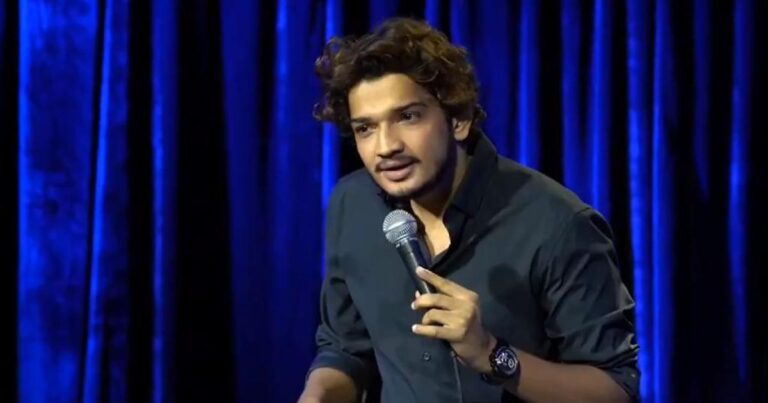
500 Threatened to Set Themselves on Fire’: Munawar Faruqui’s Goa Show Cancelled

KEY STORY 

  • A show by comedian Munawar Faruqui’s  that was scheduled to take place in Goa’s capital Panaji on Monday, has been cancelled, organisers of the event have said.
  • As per a report by Hindustan Times, the Hindu Janjagriti Samiti alleged that Faruqui “has made vulgar jokes about Hindu Gods” and he should not be allowed to perform in Goa.
  • “There are elections in Goa and shows like these could create acrimony in the state”, the Hindutva group’s spokesperson Jayesh Thali was quoted as saying.
  • The organisers, LVC Comedy Club, released a statement on social media saying that over 500 people had threatened to set themselves on fire if the show was allowed to take place.

  • “Yep, that’s not a joke, that’s actual conversation I had today, along with signed documents. Post talking to the local police, there’s not much that can be done to avoid an incident of that nature. So this show won’t be happening on Monday. It was two sold-out shows, but well”, the statement read.
  • The Comedy Club also apologised to those who bought tickets and assured them that they will be issued a refund.
  • Earlier in November, the Hindu Janjagriti Samiti had submitted a complaint to the North Goa additional collector and the management of the mall where the show was scheduled to take place, The Times of India reported. They alleged that Faruqui has a “history of making derogatory remarks against Hindu gods and culture”.
  • Constantly being targeted by Hindutva groups since his arrest in January, Faruqui has cancelled shows in Raipur, Surat, Ahmedabad, Vadodara and Mumbai.

Sand policy | Lack of focus on ecological issues irks activists

KEY STORY

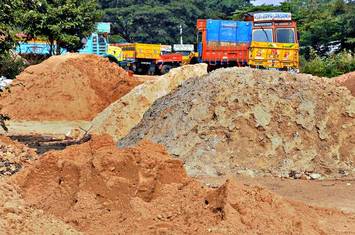
  • The new sand policy, cleared by the State Government during the last Cabinet, has drawn criticism from environmentalists on the grounds that little thought has gone into conservation of natural resources and conceiving a scientific approach in promoting alternatives and sustainable use of sand.
  • It is perceived to have focused on only price fixation apart from delineating the revenue sharing arrangement and legalizing the extraction process through licensing.
Unbridled extraction
“The message is that sand extraction will continue unabated and opening up local streams and waterbodies for local work is akin to issuing blanket permission for sand mining anywhere,” said U.N. Ravikumar, an environmentalist who has been advocating alternative and sustainable technology for over three decades.
Expressing concern over the absence of an environmental perspective in the policy, Mr. Ravikumar said unbridled sand extraction not only has a negative effect on ground water recharge, it will also lead to erosion of river banks and cause flooding apart from wreaking havoc on the aquatic life forms and their habitat
Small streams and rivers
The new rules allow sand extraction from local streams, tanks and lakes. This leeway is expected to harm waterbodies if the officers fail to regulate the activities. Though the rule says the extraction from local sources is allowed for community works, housing works and government works, chances of misusing the provision by the powerful lobby cannot be ruled out.
Akhilesh Chipli, an environmentalist in Sagar taluk, said allowing extraction in local streams would pose a threat to rivers themselves. “Small streams finally join rivers. If streams are disturbed, rivers are also affected gradually. Under the guise of helping villagers, the government is damaging local waterbodies and this should not be allowed,” he added. Mr. Ravikumar said streams and rivers – like Arkavathi and Gundal near Gundlupet – which were once thought to be perennial, now have only intermittent flow as a result of reckless sand mining and deforestation.
No mechanism in place
Though the guidelines and the policy states that the quantity of extraction will be monitored, there is no mechanism in place and the gram panchayats will be happy to issue licenses as sand extraction is viewed as a source of revenue generation, according to Mr. Ravikumar. Advocating alternative methods that have evolved in the construction field, Mr. Ravikumar said there was also scope for recycling of building debris.
Patta lands
The government, in the new rules, banned the extraction of sand in patta land. However, it allows the district sand committees to take a decision on granting permission to extract sand from such lands. Activists point out that when the district committee is authorized to take a decision, the ‘ban’ does not hold significance. Those into sand mining are powerful people with the support of elected representatives. For them getting clearance from the district committee is not a difficult task, according to activists.

You won’t be able to book, cancel train tickets during these hours for next 7 days. Details here

KEY STORY 

  • The Ministry of Railways on Sunday said the Passenger Reservation System ( PRS) of the India Railways will remain shut for six hours during lean business hours at night time for the next seven days. This will be done to enable the upgradation of system data and updating of new train numbers as part of the Railways’ efforts to normalise passenger services to pre-Covid levels in a phased manner.
  • “As part of Railways’ efforts to normalize passenger services and revert back in a phased manner to the pre-covid levels of service, the Railways Passenger Reservation System ( PRS) will be shut down for 0600 hours during the lean business hours of the night for next 7 days. This is to enable upgradation of system data and updating of new train numbers etc,” the Ministry statement added.
  • The PRS shutdown will commence at 2330 hrs and end at 0530 hrs during the intervening night of November 14 and November 15 and continue every night during the same hours until November 21-22.
  • “Since huge amount of past (old train numbers) and current passenger booking data are to be updated in all Mail, Express trains, this is being planned in a series of carefully calibrated steps and implemented during night hours in order to minimize impact on ticketing services,” it further said.

CONCLUSION 

  • Services that utilise PRS system such as ticket reservation, current booking, cancellation, and enquiry services will remain unavailable during these 6 hours, from 2330 hours to 0530 hours, on these seven nights, the Ministry informed.
  • During the period, railway personnel will ensure the advance charting for the trains to start during the affected timings. Except for the PRS services, all other enquiry services including 139 services will continue uninterrupted.


MCA’s Bandra-Kurla Complex to host preparatory camp for India Test specialists

KEY STORY 

  • Mumbai Cricket Association’s (MCA) Bandra-Kurla Complex will be hosting a preparatory camp for India’s Test specialists ahead of the two-match series against New Zealand.
  • Sources within the MCA confirmed to ANI that a camp will indeed be hosted at the BKC ahead of the series. The decision for allowing 100 per cent capacity for the Wankhede Test will be given by the government by November 20.
  • “We will also be hosting a preparatory camp at the Bandra-Kurla Complex from Monday to give the players a proper chance to get ready for the series,” the source said.
  • All the Test specialists including Ajinkya Rahane, Cheteshwar Pujara, Umesh Yadav, Mayank Agarwal, Shubman Gill, Wriddhiman Saha and Umesh Yadav will be part of that camp.
  • Earlier, MCA had written to the Maharashtra government to allow a 100 per cent crowd for the second Test of the two-match series between India and New Zealand, beginning December 3.

CONCLUSION 

  • New Zealand will play a T20I series and then follow it up with two Test matches. The T20Is will be played on November 17 in Jaipur, November 19 in Ranchi and November 21 in Kolkata.
  • The two Tests will be played in Kanpur (November 25-29) and Mumbai (December 3-7).

Inter-state and infrastructure issues to be discussed in Southern CM’s Conclave: Basavaraj Bommai

KEY STORY

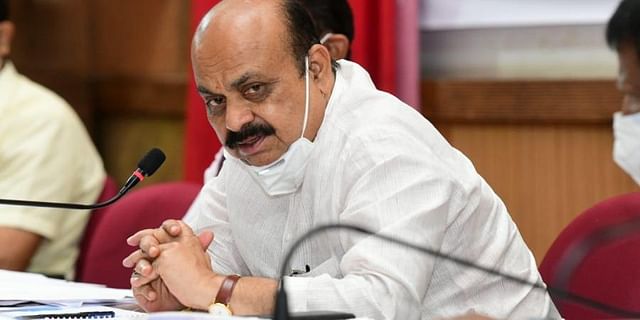
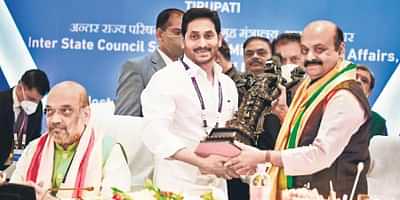
  • Karnataka Chief Minister Basavaraj Bommai on Sunday said various important topics, including inter-state issues, railways and other infrastructure projects would be discussed in the Chief Ministers’ Conclave, which will be chaired by Union Home Minister Amit Shah at Tirupati later in the day.
  • “The topics for discussion is the minor irrigation project related to Palar river, railways related issues and other infrastructure projects,” he told reporters after paying tribute to the country’s first Prime Minister Jawaharlal Nehru on his birth anniversary, which is celebrated as Children’s Day.
  • To a query on whether other water sharing issues would be discussed, Bommai said that since most issues related to irrigation projects are pending in courts and tribunals, it may not be taken up at the conclave.
  • Speaking about Nehru, Bommai said that his role in building the nation after Independence was immense.
  • “As the first Prime Minister of India, Nehru had laid foundation for a strong nation through his five-year plan. He was the best leader. He had visited various countries to bring India into the international map,” he said.

CONCLUSION

  • Bommai also called upon people to work towards building the nation, “which will be the true tribute to Pt Nehru.”
  • He also said that many organisations named after Nehru are working for the development and progress of the nation.

Karnataka CM Basavaraj Bommai to other states: Give us our share of water

KEY STORY 

  • Many issues that have eluded solution for many years can be resolved if we work with the spirit of cooperation,” Chief Minister Basavaraj Bommai said in his address at the 29th meeting of the Southern Zonal Council held in Tirupati on Sunday which was chaired by Union Home Minister Amit Shah.
  • It is inevitable for southern states to work with the true spirit of cooperative federalism as enunciated by Prime Minister Narendra Modi as the states are geographically interconnected. The states need to come together and work together, only then the country can develop, he added.
  • The Southern Zonal Council offered a good forum for resolving issues related to inter-state water sharing, transport connectivity, health etc in a spirit of consensus, he added. He raised several issues that needed coordination with other states. Karnataka has already conveyed its stand on river-linking projects in Godavari, Cauvery and other river basins to the Centre. Karnataka should get its share of surplus water in the Cauvery, Krishna and Pennar river basins, he said.  He objected to Tamil Nadu taking up the Cauvery-Vaigai-Gundar link works even before the allocation of surplus waters to other states.
Centre must not approve TN water project: Bommai
Bommai said Tamil Nadu’s Cauvery-Vaigai-Gundar link works have no legal sanction and urged the Centre not to approve the project. He reiterated Karnataka’s demand to the Centre not to accord legal clearance to major permanent irrigation projects taken up by neighbouring states in violation of verdicts of Water Disputes Tribunals.
Telangana has no right to take up the Palamaru Ranga Reddy and Nakkalagandi lift-irrigation projects from the Srisailam reservoir in Krishna basin to draw a large quantum of surplus water, Bommai said. He also opposed the construction of Rajiv Gandhi Sangam Banda barrage by Telangana. Such a permanent project to draw surplus waters would deprive Karnataka of its rightful share, he said, expressing Karnataka’s readiness to take up a joint survey.
A joint survey should also be conducted on the impending submergence of villages in Karnataka and Andhra Pradesh due to the construction of Gundravulu reservoir by Andhra Pradesh across Tungabhadra river. Andhra should share the details it has submitted to the Tribunal and clearances it has obtained from the Centre regarding the project, he demanded.
On sharing Krishna waters, he said Andhra and Telangana have no clearance for any projects other than the ones approved for utilising the already adjudicated quantum of waters. Bommai appealed for a speedy response on concluding an agreement with Telangana, Puducherry, Tamil Nadu, Andhra Pradesh and Kerala on boosting interstate transport services.
He stressed the need for better coordination among home departments of southern states to effectively prevent and combat crime and strengthen communication networks in border areas. “Karnataka is at the forefront of harnessing renewable energy sources. It is the only state which has met the targets set by the Centre. The Union government should remove inter-state tariff disparities in the interest of drawing investment,” he added.
The state government has created a Core DBT (Direct Benefit Transfer) Forum to ascertain the identities of beneficiaries. In its budget, Karnataka has already announced linking all centrally sponsored schemes to the DBT Forum to prevent the use of fake documents and eliminate fake beneficiaries.

Centre releases Rs 8,453 crore funds to local bodies of 19 states to strengthen health systems

KEY STORY

  • The Union government has released Rs 8,453.92 crore as health sector grant for rural and urban local bodies of 19 states in an attempt to improve the healthcare system at the grassroot levels.
  • The Department of Expenditure under the Finance Ministry released these grants as per recommendations of the 15th Finance Commission, a finance ministry statement said. These grants are meant to strengthen health systems and plug the critical gaps in the healthcare system at the primary level, it said.
  • Health grants to the remaining nine states will be released after their proposals are received from the respective states through the Ministry of Health and Family Welfare.
  • In its report for the period from 2021-22 to 2025-26, the 5th Finance Commission had recommended a total grant of Rs 4,27,911 crore to local governments. The grants recommended by the commission include health grants of Rs 70,051 crore. Of this, Rs 43,928 crore are meant for rural local bodies and Rs 26,123 crore for urban local bodies.
  • The commission has also identified interventions that will directly lead to strengthening the primary health infrastructure and facilities in both rural and urban areas and has earmarked grants for each intervention.
  • These interventions include support for diagnostic infrastructure to the primary healthcare facilities in rural areas (Rs 16,377 crore), block-level public health units in rural areas (Rs 5,279 crore), construction of buildings at sub centres, primary health centres (PHCs) and community health centres (CHCs) in rural areas (Rs 7,167 crore).

CONCLUSION

  • The statement said rural and urban local bodies can play a key role in the delivery of primary health care services especially at the ‘cutting edge’ level and help in achieving the objective of universal health care.  Strengthening the local governments in terms of resources, health infrastructure and capacity building can enable them to play a catalytic role in epidemics and pandemics too.
  • Involving Panchayati Raj institutions and urban local government as supervising agencies in these primary health care institutions will strengthen the overall primary health care system and involvement of local governments will also make the health system accountable to the people, it added.


Children’s day 2021: Inculcating healthy eating habits in kids

KEY STORY 

14 November is observed as Children’s Day to celebrate the birth anniversary of Pandit Jawaharlal Nehru and the existence of children. Children play an important role in determining the future of a country and to ensure a bright future, it is essential to work towards nourishing and providing the children with the facilities and opportunities to flourish with good health. When it comes to health and wellbeing, diet is an integral factor. With good eating habits, a healthy body comes naturally.
Healthy eating habits in kids
Health starts at home. Here are some healthy eating habits that you must inculcate in your kids:
Never skip breakfast: Prepare your kids today to fight the shortcomings of tomorrow. Breakfast is considered to be an important meal of the day and in a hectic lifestyle, it might be difficult to catch a break for breakfast every morning. However, inculcating a habit for breakfast during growing stages will allow your kids to squeeze in a healthy morning meal every day.
 Water is the most important beverage: As surprising as it sounds, most people do not have a habit of drinking water. It is extremely essential to stay hydrated and it is a habit that must be inculcated since childhood. Substituting water with sodas, juices, or other beverages during meals is a common habit. Apart from adding to the unhealthy sugar intake, this habit also puts the teeth at risk of developing cavities. Therefore, it is important to limit the intake of these beverages and drink water as the main beverage.
 Make cooking fun: Make your kids a part of the meal preparation process so they feel included and can get a good idea of what they are eating. Cooking can add an element of fun during meals. Furthermore, inculcating cooking habits in kids during their growing years will prevent them from associating cooking with a tedious job thereby encouraging more home-cooked meals and fewer take-outs.
Healthy snacks are good: Snacks can help beat annoying hunger pangs in the middle of the day. Kids are active human beings who tend to get tired and hungry easily. While some parents refrain from giving their kids snacks fearing that they will lose appetite for their meals, healthy snacking can be a good eating habit and can add to the kids’ health by enhancing daily nutrition intake. Don’t associate
desserts and sweets with rewards: “You will get the dessert only after you’re done eating your vegetables.” It is a common habit to associate sweets and desserts with rewards which often tricks the kids into believing that vegetables are bad foods and desserts are good foods. This makes the consumption of certain foods forced and prone to be avoided by children. To avoid this from happening, stop using sugary treats as rewards and make them a part of their meals so they don’t get a choice.
Disclaimer: Tips and suggestions mentioned in the article are for general information purpose only and should not be construed as professional medical advice. Always consult your doctor or a dietician before starting any fitness programme or making any changes to your diet.

Role of universities to change after NEP: VC’s

KEY STORY

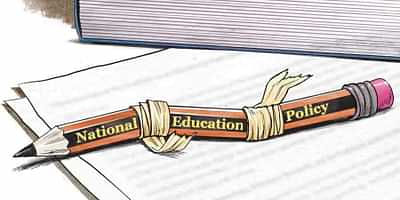
  • What will be the role of universities after colleges become autonomous degree awarding institutes is a common question in the academic circles. Vice chancellors from various universities believed the role of their institutes will change, be it in terms of mode of imparting education or the kind of education they will impart.
  • At the NEP conclave organised by International Skill Development Corporation, on Saturday, vice chancellors believed that greater focus would be on imparting skills, as also on making students employable. Campuses are likely to shrink but they will also house facilities for holistic development of students, such as a Yoga centre, they opined.
  • Bengaluru City University Vice Chancellor Lingaraju Gandhi said the focus will also be on employment in addition to knowledge creation and generation. Gandhi believed that public universities will be compelled to see changes in governance structure, academic programs and adoption of technology while NEP will bring changes in curriculum, pedagogy and assessment. Universities will also play a role of imparting values and that will take a central role.
  • Venugopal KR, Bangalore University Vice Chancellor said universities will be forced to start undergraduate courses with post graduate courses being sandwiched between UG and PhD. Digital will take the centre stage. He said BU which is at the forefront of NEP implementation has already setup future  infrastructure with the giving of 15 acres to Yoga centre and 5 acres to NAAC.
CONCLUSION
YSR Murthy, vice chancellor of RV University believed there would be a hybrid learning system and the curriculum would be in pace with technological changes with greater focus on skills that will be constantly updated, teaching would be experiential, peer based and self learning and teachers would don the role of facilitators for creating a learning experience in class.
He added campuses will see a reboot and have to stay relevant in their role, while agreeing that physical universities are likely to shrink.