
KEY STORY
-
Asserting his government’s commitment to the development of the Kalyana Karnataka region, Chief Minister Basavaraj Bommai said he would keep his promise of providing ₹3,000 crore special grants to Kalyana Karnataka Region Development Board (KKRDB) in the next budget.
-
“I had promised to provide ₹3,000 crore grants to KKRDB, and I would keep my word. The action plans for the funds are being prepared. I will shortly hold meetings with people’s representatives from the region and finalise the action plans, and allocate the funds in the next budget. Unlike the previous years, I would release the entire amount in the same year and ensure that the amount would be spent at the earliest possible,” Mr. Bommai said adding that Article 371(J) of the Constitution (which gave Special Status to Kalyana Karnataka) would be meaningful when its benefits would reach every person.
-
He was delivering the inaugural address at the 36th State Conference of Karnataka Union of Working Journalists at Basavarajappa Appa Memorial Hall in Kalaburagi on January 4. Among those present were Industry Minister Murugesh Nirani, Union Minister of State for Chemicals and Fertilisers Bhagawanth Khuba, Lok Sabha member from Kalaburagi Umesh Jadhav and Sharanabasappa Appa who is the head of Sharana Basaveshwara Samsthana.
-
The promises he made during his address included filling the 14,000 posts lying vacant in different departments in the region, including 5,000 posts in Education Department, within six months and constituting KKRDB by appointing all the members within two days.
-
Recalling the assertion of freedom of the press by the Indian media even during tough times like Emergency, Mr. Bommai commended journalists for their resolute fight against suppression of their voice.
-
“Media has always done a good job by highlighting the problems in society as well as in governance. There have been attempts to suppress the freedom of the press, like during the Emergency. But, Indian media stood firm and asserted its freedom, despite all odds,” Mr. Bommai said.
-
“After the advent of liberalisation, globalisation and privatisation policies, everything began to be seen in terms of profit and loss. There is little space for human values. There is a dire need of preserving and nurturing human values, and the media has a greater role to play in this regard. Watchful media can create an informed citizenry. This would lead to great changes,” Mr. Bommai said.
-
Referring to the difficulties and hardships being faced by media houses, the Chief Minister said that his government is more concerned about small media houses operating in rural areas and is committed to helping them.

KEY STORY
-
Ahead of the crucial meeting scheduled to be held on Tuesday evening to decide on the stringent measures to contain the surge of fresh cases of Covid-19, Health, Medical Education minister Dr K Sudhakar on Tuesday revealed that the CM-led committee along with the experts will discuss various issues including closure of schools and holding of upcoming events.
-
Addressing media persons in Bengaluru, Dr Sudhakar said, “The meeting will discuss on various issues including holding of events where thousands of people gather.”
-
Asked whether the government will ban the padayatra organised by the Karnataka Congress, the minister said, “The CM will decide on it after discussing the pros and cons of such events. But all of us have to follow whatever decisions are taken by the state government in the interest of the public health.”
-
Adding that several states including neighbouring Telangana have already shut schools, Dr Sudhakar revealed, “The issue of closing of schools is also on our list of agenda for discussion. I have already discussed with the CM on a few points and finally those points will be discussed with others and a final decision will be taken during the meeting.”
-
The minister revealed that the state’s positivity rate which stood at 0.04 per cent a few days ago reached 1.6 per cent on Monday.
-
“On Monday alone we have reported 1,290 cases, of which 90 per cent cases are from Bengaluru alone. This surge has to be considered as the third wave,” the minister said.
CONCLUSION
-
When asked whether it will be a complete lockdown in Bengaluru, the minister replied, “I request everyone not to use the term lockdown. We are returning to normalcy with great difficulty and if we enforce it again, the livelihood of many will be affected. However keeping all of this in mind and based on our experience of handling the first and second wave, we will take some crucial decisions.”
-
Acknowledging that 90 per cent cases in India are being reported from major cities, the minister clarified that the surveillance steps at the airports in Bengaluru, Mangaluru will be further intensified.

KEY STORY
-
PAN card holders are advised to link their Permanent Account Number (PAN) with their Aadhaar card number by 31st March 2022. Failing to do this by given deadline will not only lead to their PAN card becoming invalid but it would require a fee of ₹1,000 for PAN Aadhaar linking. The problem of the PAN card holder won’t end here only as the individual won’t be able to invest in mutual funds, stocks, open a bank account, etc. where furnishing a PAN card is must.
-
Apart from this, if the person furnishes the PAN Card, which is no more valid, then under Section 272N of the Income Tax Act 1961, the Assessing Officer may direct that such person shall pay, by way of penalty, a sum of ten thousand rupees.
-
Speaking on the importance of PAN Aadhaar link deadline; Amit Gupta, MD at SAG Infotech — a SEBI-registered income tax solution provider company said, “Earlier, the rules pertaining to the Aadhaar PAN linking had no provision of penalty. According to the new law, failure to link the two IDs would result in the PAN becoming invalid, which further means that one cannot perform financial transactions requiring PAN details. These include filing an income tax return and opening a bank account.
-
Also, the said individual might have to pay a higher TDS amount, plus a penalty of ₹10,000 will be imposed as per section 272B of the Income Tax Act, if the person fails to quote PAN as and when needed.” He said that furnishing an invalid PAN would also lead to the penalty of ₹10,000. So, it’s important for a PAN card holder to seed its PAN card with its Aadhaar card and avoid any kind of penalty after failing to meet PAN Aadhaar linking deadline.
-
PAN card holders are also advised to note that failing to meet PAN Aadhaar linking deadline, they will have to pay up to ₹1,000 penalty for late seeding of PAN with Aadhaar. As per the newly inserted Section 234H of Income Tax Act (in March 2021 via Finance Bill), “Without prejudice to the provisions of this Act, where a person is required to intimate his Aadhaar number under sub-section (2) of section 139AA and such person fails to do so on or before such date, as may be prescribed, he shall be liable to pay such fee, as may be prescribed, not exceeding one thousand rupees, at the time of making intimation under sub-section (2) of section 139AA after the said date.”

KEY STORY
-
If you are planning a long road trip via expressways, it is advisable to keep all the documents related to your vehicle in order. The National Highways Authority of India (NHAI) is testing a new system, which will tell authorities if a vehicle has valid registration, pollution certificates and other documents.
-
The new system is called Advanced Traffic Management System (ATMS) and all the expressways in the country will soon be integrated into it. It is not only capable of capturing a photo of the number plate of the vehicle, but will also alert the authorities if travellers are not wearing seat belts.
The ATMS will be linked to the vehicle database of the transport department (RTOs).
Here is everything you need to know about ATMS:
• The NHAI is currently testing the system on Delhi-Meerut Expressway, Eastern Peripheral Expressway and some other places.
• It will identify those vehicles, which do not have valid papers. The data will be shared with local traffic police for issuing challans.
• All this will be made possible by capturing the number plate of a vehicle. This will tell ATMS about the insurance of the vehicle, its age, pollution certificate and CNG kit testing certificate since the system will be linked to RTO database.
-
According to NHAI officials, this system will help in reducing traffic jams and road accidents. Instead of placing barricades, the traffic policemen will issue challans only to those vehicles which will be flagged by the system.
• The challans will be issued without stopping the vehicles. It will be the responsibility of the local traffic police to collect the amount later.
• In case of commercial vehicles, the system will also check for valid fitness certificate.
• They also said that the technology will help identity those vehicles which have been used in some crime, or been involved in accidents.
• The ministry of road transport has made ATMS mandatory on all new expressways and national highways being built. The system is also being installed on existing roads, like the Delhi-Agra expressway.
-
Initially, the project was meant to make the Fastag experience more seamless by calculating the distance between vehicles. But, in a recent meeting between officials of the road transport ministry and NHAI, some experts suggested to link it with the database of the road transport department.

KEY STORY
-
Home Minister Araga Jnanendra has said imposing lockdown would be inevitable if the public did not cooperate with the State Government by following COVID appropriate behaviour.
-
Speaking to mediapersons in Chikkamagaluru on January 3, the Minister said if cases of COVID-19 increase, the government would have to take tough decisions to avoid further spread of the infection. It is the duty of the government to protect people’s lives.
-
Referring to the Congress party’s padayatra on the Mekedatu issue, the Minister said the party should postpone the event considering the prevailing situation. “The opposition party has the freedom to organise such events. However, they did nothing on the project when they were in power,” he said.
-
He dismissed speculation suggesting a reshuffle of the cabinet and change in the CM as rumours.
-
Mr. Jnanendra, who is also the Minister in-charge of the district, was in Hassan to launch a vaccination drive for children in the 15-18 age group.
KEY STORY
-
Amid a spike in Covid-19 cases in Karnataka and its borders, chief minister Basavaraj Bommai on Sunday asked people to cooperate with the government in containing the spread of the disease and avoiding a lockdown. He said the officials of districts bordering Maharashtra have been directed to be extra cautious as the neighbouring state is witnessing a spike in cases.
-
“Our stand is very clear. In the past, lockdown was imposed. The same should not happen again. For this, we are taking stringent measures. People have to cooperate with us,” Bommai told reporters in Bengaluru.
-
The statement comes as daily increase in Covid-19 cases in Bengaluru is inching towards the 1,000 mark. On Sunday, Bengaluru reported 923 new Covid cases and three deaths. Karnataka on Sunday added 1,187 new cases to the state’s overall infection count. In comparison, Bengaluru reported 1,033 new cases on Saturday, 832 on Friday, 707 on Thursday and 566 on Wednesday.
-
According to the health department bulletin, while the positivity rate for the day stood at 1.08%, the case fatality rate (CFR) was 0.50 per cent. There were 275 discharges on Sunday.
-
Of the six deaths reported in the state, three are from Bengaluru Urban, and one each from Tumkur, Dakshina Kannada and Uttara Kannada. After Bengaluru Urban, Dakshina Kannada accounted for the second-highest number of new cases with 63 .
-
Regarding extending the night curfew or imposing tough rules, he said it would be decided either on Monday or Tuesday. “We have to see how coronavirus is spreading. We saw it increasing in a big way in Bengaluru. We will take a call keeping that in mind,” he said.
-
Bommai said he has directed the officials to be cautious in the districts such as Belagavi, Vijayapura and Bidar bordering Maharashtra, which is witnessing a rise in cases. He added that those entering Karnataka would have to be fully vaccinated and they should also possess a negative RT-PCR test report. “These measures will cause trouble to the travellers but we are doing it keeping in view the public health of people of Karnataka, especially Belagavi,” Bommai said.
-
Keeping in mind the oxygen shortage last time, the government has now contacted the oxygen plants to supply life-saving to the state. “These plants have been asked to start operations in preparation for the spike in the cases. Also. I have directed the officials to add 4,000 more ICU beds in the state. We are also making preparations for adequate medicines,” he said.
-
Stating that the government was also focusing on the vaccination drive, the chief minister said vaccinating teenagers from 15-18 years would start from Monday. Booster doses would be given to those who have co-morbidities, he added.
-
Karnataka revenue minister R Ashoka said the spike in infections in Karnataka was a serious issue. “Bengaluru is in the Red Zone according to the list declared by the Union government. It is important to sound an alert in Bengaluru. We can save people’s lives if we impose more restrictions in Bengaluru and reduce the number of hospitalisations,” he said.
CONCLUSION
-
He said that the government is mulling to announce ‘some tough rules’ in coming days. “We will convene a meeting and announce some tough rules before January 7 when the night curfew will be lifted,” Ashoka said.
-
He added that the experts’ committee would convene a meeting before January 7. “We will implement the recommendations of the committee in toto because we have seen the sufferings and deaths last time,” the minister said.

KEY STORY
-
WITH CASES of the Omicron variant of corona virus rising sharply, Union Health Minister Mansukh Mandaviya Sunday told states they have collectively utilised only over 17 per cent of the Rs 23,123 crore Emergency Covid-19 Response Package II (ECRP-II) to ramp up medical infrastructure approved by the Union Cabinet last August.
-
Mandaviya’s review meeting with state health ministers and senior officials in the state health departments came in the backdrop of India reporting 27,553 new cases in the last 24 hours and the cumulative active caseload touching 1.22 lakh. Just a week back, on December 26, India had reported just 6,531 cases, and the active case load was 75,841.
-
The Union Health Minister said other countries were witnessing “3-4 times the surge in Covid-19 cases in comparison to their earlier peaks” and noted that in India too, a “high surge in cases can overwhelm the medical system”. “…therefore, states (should) leave no stone unturned in ramping up infrastructure to manage a high surge so that India escapes unscathed from this episode of Covid-19,” Mandaviya said in the meeting.
-
“States/Union Territories were exhorted to expedite the physical progress under ECRP-II in terms of ICU beds, oxygen beds, Paediatric ICU/HDU beds. States/UTs were also urged to effectively use IT tools for tele-medicine and tele-consultation, including training and capacity building of human resources, timely availability of ambulances, the readiness of states to operationalise COVID facilities for institutional quarantining, and effective and supervised monitoring of those in home isolation,” the Union health ministry said.
-
In August last year, the Union Cabinet had approved a new Rs 23,123 crore India Covid-19 Emergency Response & Health System Preparedness Package: Phase-II (ECRP-II). According to the approved plan, and basis the inputs received by states given their experience on the second wave, the Centre approved the plan for creation of 23,056 ICU beds.
-
Under the plan, seven states were to set up more than 1,000 beds each: Uttar Pradesh (4,007), Karnataka (3,021), Maharastra (2,970), West Bengal (1,874), Tamil Nadu (1,583), Madhya Pradesh (1,138), and, Andhra Pradesh (1,120).
-
The rural parts of the country were one of the worst-hit during the peak of the ferocious second wave of the pandemic. Significantly, six states will get 60 per cent of the 75,218 beds that were to be set up to augment the three-tier healthcare system up to the village level. These six states, that will add more than 5,000 beds, at primary health care centres, secondary healthcare centres, and community health care centres in rural parts of the country, are Uttar Pradesh (11,770), Bihar (9,920), Andhra Pradesh (9,596), Odisha (8,206), Assam (7,320), and Jharkhand (5,798).
-
On December 15, during the review meeting on augmentation of medical oxygen supply, Union Health Secretary Rajesh Bhushan had informed the states that ECRP-II funds had been sanctioned for installation of 958 liquid medical oxygen storage tanks and medical gas pipeline systems in 1,374 hospitals. Also, 14,000 oxygen concentrators were being provided under the scheme.
-
Mandaviya discussed “critical bottlenecks in medical infrastructure” in the states, the health ministry said. “He urged the states to reinvigorate their teams to work at the ground level and strengthen monitoring and containment mechanisms. This was followed by a comprehensive and detailed discussion on various aspects of Covid management including ramping up of hospital infrastructure; increased testing; stringent restrictive measures for breaking the chain of transmission; and stress on Covid-appropriate behaviour among the masses,” the health ministry said.
CONCLUSION
-
A day before the roll-out of vaccines for the 15-18 years age group, Mandaviya asked states to ensure the orientation of vaccinators and team and the identification of dedicated session sites. The states were also asked to plan for distribution of Covaxin well in advance and publish sessions for at least 15 days to provide sufficient visibility, it being the only vaccine to be administered in this age group.
-
“To avoid the mixing-up of vaccines during administration, separate CVCs, separate session sites, separate queue (if at same session where adult vaccination is ongoing) and separate vaccination team (if at same session site) are to be strived for,” Mandaviya said, according to the health ministry.

KEY STORY
-
Maharashtra on Sunday reported 11,877 fresh COVID-19 cases, 2,707 more than the day before, and 50 Omicron infections, the state health department said in a bulletin.
-
The state reported nine fatalities, which increased the overall COVID-19 toll to 1,41,542.
-
Maharashtra is now left with 42,024 active cases, the bulletin said. Of the new 11,877 cases, 7,792 are from Mumbai, it said.
-
However, as per the Mumbai civic body, the number of new cases detected in the city on Sunday was 8,063.
-
The Mumbai region including satellite cities and neighbouring districts reported 10,394 infections — nearly 90 per cent of the total cases in the state.
-
The Brihanmumbai Municipal Corporation (BMC) data showed the city had reported 809 cases on December 27, which meant the tally jumped by almost 10 times as on Sunday.
On Saturday, Maharashtra had reported 9,170 cases.
-
More than ten ministers and at least 20 MLAs in Maharashtra have tested positive for coronavirus so far, Deputy Chief Minister Ajit Pawar had said on Saturday.
-
Of the 50 new Omicron infections, 36 patients are from Pune Municipal Corporation areas, eight from Pimpri Chinchwad Municipal Corporation limits, two each from Pune rural and Sangli, and one each from Mumbai and Thane.
Maharashtra has so far reported 510 such cases of which 193 patients recovered.
-
The bulletin said 1,22,975 tests were conducted in the last 24 hours, taking the cumulative tests conducted in Maharashtra to 6,92,59,618. Until a day before, the state had conducted a total of 6,91,36,643 tests.
-
With 2,069 more patients being discharged, the overall count of recoveries in Maharashtra went up to 65,12,610, it said.
The Mumbai civic body conducted 47,410 tests in the last 24 hours, as per the bulletin.
-
With the spike in cases in Mumbai, city civic chief Iqbal Singh Chahal on Sunday sought to allay apprehensions, saying 89 per cent of the infections are asymptomatic. He also said that 90 per cent of beds are lying vacant.
He urged people to strictly adhere to COVID-19 protocols.
-
Mask is mandatory in the public domain and citizens should refrain from going to crowded places. All of us must join hands to tide over this new wave of the COVID pandemic, he stressed.
-
“Today 8,063 new COVID cases have been detected in Mumbai out of which 89 per cent were found to be totally asymptomatic and total number of active cases in Mumbai are now 29,819.
“However, out of 8,063 new cases today, only 503 have been hospitalised out of which 56 cases have been put on oxygenated beds. As of today, 90 per cent of hospital beds in Mumbai are vacant,” he said in a statement.
-
Mumbai did not see any COVID-19 fatality during the day, keeping the toll unchanged at 16,377, the bulletin said, adding that 89 per cent of the cases reported, or 7,176, are asymptomatic.
“There is no reason to panic but at the same time all of us have to be extremely cautious and exercise extreme Covid appropriate behaviour,” Chahal said.
-
As per the bulletin, 578 persons were discharged in Mumbai in the last 24 hours, taking the recovery count to 7,50,736, which is 94 per cent of the overall tally, while 503 people are hospitalised, including 56 on oxygen support.
Of the 30,565 beds available for the treatment of the infection, only 3,059 are occupied, it said.
-
The Mumbai data showed that the caseload doubling time was 183 days, the growth rate in cases between December 26 and January 1 stood at 0.38 per cent. The civic body has sealed 203 buildings. There are nine containment zones.
CONCLUSION
-
In the rest of Maharashtra, the Pune region recorded 931 cases, Nagpur 112, Kolhapur 75, Latur 67, Aurangabad 50, and Akola 31.
Nashik, Kolhapur, Latur, Nagpur, Akola, Aurangabad regions did not report any death. The Pune region recorded eight fatalities and Mumbai region one.
Maharashtra’s COVID-19 figures: Fresh cases 11,877; Total cases 66,99,868; Deaths nine; Total fatalities 1,41,542; Active case 42,024; tests conducted 1,22,975; cumulative tests 6,92,59,618.
Meanwhile, Maharashtra CMO tweeted that COVID-19 vaccination for children in the age group of 15-18 years will be launched at nine dedicated centres in Mumbai along with the national drive for this age group.
KEY STORY
-
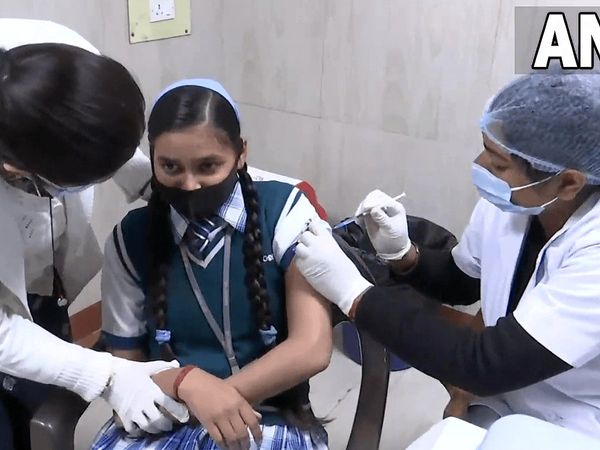
The vaccination of children between 15 to 18 years of age against COVID-19 began on Monday at various hospitals and inoculation centres across the country. Bharat Biotech’s Covaxin is the only COVID-19 vaccine that will be administered to children in the age group of 15-18 years, according to guidelines issued by Union Health Ministry.
-
“For all those aged 15 years or more, option for vaccination would only be available for Covaxin as this is the only vaccine with Emergency Use Listing (EUL) for the age-group 15-17,” the ministry had said in its guidelines
-
While making the announcement on December 25, Prime Minister Narendra Modi said this will reduce the worries of children going to schools and colleges and their parents, and boost the fight against the pandemic, adding that the move is also likely to aid in normalisation of teaching in schools.
-
The estimated population to be covered in this category is seven to eight crores.
-
All those aged 15 years or more can register themselves for vaccination on Co-WIN portal. Beneficiaries can self-register online through an existing account on Co-WIN or can also register by creating a new account through a unique mobile number.
CONCLUSION
-
The beneficiaries can also be registered onsite by the verifier/vaccinator in facilitated registration mode, the guidelines read. Appointments can be booked online or onsite (walk-in).
-
Union Health Minister Mansukh Mandaviya on Saturday requested people to register eligible children in their families for the vaccination.

KEY STORY
-
To ensure uninterrupted power supply, Gulbarga Electricity Supply Company (GESCOM) is replacing defunct transformers to fix the problem within 24 hours of receiving complaints, GESCOM Managing Director Rahul Pandve has said.
-
Addressing presspersons in Kalaburagi on Friday, Mr. Pandve said that during the last one year, GESCOM had received complaints about transformer burnout from Kalaburagi, Yadgir, Bidar, Raichur, Ballari and Koppal districts and replaced nearly 3,212 transformers within 24 hours.
-
To aid consumers and attend to their complaints immediately, GESCOM has now added WhatsApp number to its list of consumer grievances redressal systems. “Consumers can register their grievances through WhatsApp directly with GESCOM officials and staff. Further, complaints will be forwarded to the officials of the area concerned for redressal,” he added.
-
A dedicated toll-free number, 1912, is allotted to electricity call centres for handling power supply-related complaints which will then be forwarded to field personnel for timely action and rectification.
CONCLUSION
-
The officials and staff have been directed to address complaints of farmers within the stipulated time. Mr. Pandve said that strict action will be initiated against the staff who demand money from farmers while addressing their complaints. GESCOM has replaced 196 iron electricity poles with cement ones in the city. The iron electricity poles, interrupting wires and overhead lines near hospitals, schools and parks will be removed immediately.
-
Replying to a question, Mr. Pandve said that 3,548 farmers have benefited through reliable power supply to their pumpsets under the Ganga Kalyana Scheme. And, nearly 400 applications are pending for power supply to irrigation pumpsets under the scheme, Mr. Pandve said and added that GESCOM is also encouraging consumers to switch from counter to online payment mode for paying bills.
KEY STORY
-
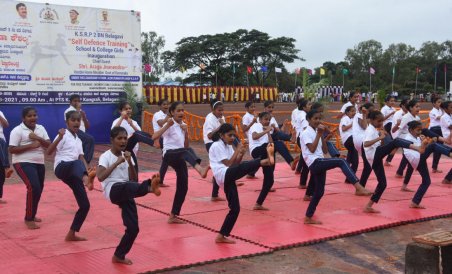
More than four lakh girl students studying at various government high schools and pre-university colleges in the state will be trained in self-defence techniques through special classes starting from the first week of this month.
-
The government has released Rs 2 crore for the training under the Samagra Shikshana Karnataka (earlier known as Samagra Shikshana Abhiyana) project.
-
The SSK has issued a circular directing all government schools and pre-university colleges to commence self-defence classes from the first week of this month.
-
The headmasters of schools and the school development monitoring committees have been told to identify the resource persons or training institutes at the local level, to train the girl students. The trainers will be paid Rs 200 per session. All girl students in 4,245 government high schools and 441 government PU colleges will benefit from this.
-
“We have implemented this self-defence training mainly to help girl students get stronger physically and mentally. Self-defence does not mean only teaching karate,” said an official from SSK.
-
“This self-defence programme includes increasing self-confidence among girl students and encouraging them to pursue higher education,” he added.
-
As explained in the circular, the schools and colleges have to conduct two classes per week (45 minutes each) and a total of 20 sessions in three months.
-
SSK has also instructed schools and colleges to conduct health check-ups for students before putting them on training. In case students have health issues, such students should be exempted from the training, the circular said.
CONCLUSION
-
“When girl students are on self-defence training, teachers must plan other extracurricular classes for boys,” said an official. The training will be implemented under the Rani Lakshmi Bai self-defence training programme.
-
Schools and colleges have to upload photographs and videos of the self-defence training on the Shagun portal.

KEY STORY
-
As India’s COVID-19 cases continue to rise, Union Health Secretary Rajesh Bhushan on Saturday wrote to the chief secretaries of all States and Union Territories regarding measures to deal with a possible surge in cases. He also advised them to initiate the process of setting up makeshift hospitals and constituting special teams to monitor patients in home isolation. The Union Health Secretary also said that all states and UTs should operationalise control rooms at district or sub-district level and revisit the COVID-19 dedicated health infrastructure.
-
India today reported 22,775 fresh COVID-19 cases even as the Omicron tally rose to 1431. As per Health Ministry data, the heavily mutated strain of COVID-19 has so far been detected in 23 states and Union Territories.
-
In his letter, Bhushan asked the states to initiate the creation of field or makeshift hospitals and urged them to consider leveraging hotel rooms and other accommodations linked with the COVID-19 dedicated hospitals in the government and private sector to cater to patients having mild to moderate symptoms.
CONCLUSION
-
“A large number of positive cases may be eligible for home isolation. These cases would require effective follow-up and a clearly defined mechanism for prompt shifting to a health facility in case of deterioration in their health situation,” he added said. The letter also urged states to amp up their home isolation protocols and to constitute special teams to monitor all home isolation cases.

KEY STORY
-
Amid a sharp spike in cases of new Omicron COVID-19 variant in the country, the Central government on Friday issued a new directive to all the States and Union Territories in a bid to contain the virus spread.
-
Union Health Secretary Rajesh Bhushan and Indian Council of Medical Research (ICMR) DG Dr Balram Bhargava has written to chief secretaries of all states/UTs asking them to set up round-the-clock functional RAT (rapid antigen tests) booths at different locations, engage medical and paramedical staff and encourage the use of home test kits.
-
“Any individual presenting with fever with/without cough, headache, sore throat, breathlessness, body ache, the recent loss of taste or smell, fatigue, and diarrhea should be considered as a suspect case of COVID-19 unless proven otherwise,” the health ministry said in its new directive.
-
Earlier today, official sources warned saying that the reason behind the spike is the Omicron variant which has started replacing its predecessor Delta in India and the world.
-
“The trend of an increasing number of COVID-19 cases shows that it is due to Omicron, which is replacing Delta in India and globally as well,” ANI quoted the sources as saying.
Omicron tally crosses 1,000 in India
-
As many as 309 new cases of highly transmissible COVID-19 variant were detected in the last 24 hours, taking the country’s overall tally of the new mutant variant to 1,270 cases, according to the Union Health Ministry.
-
Of the total, 374 infected persons have been discharged, it added.
-
With 450 cases, Maharashtra remains the worst affected by the new variant, followed by Delhi (320), Kerala (109), Gujarat (97), Rajasthan (69), Telangana (62), Tamil Nadu (46), Karnataka (34), Andhra Pradesh (16), Haryana and Odisha 14 each, while West Bengal has reported 11 cases so far.

KEY STORY
-
Union Health Minister Mansukh Mandaviya on Sunday said that learning from the fight against COVID-19 should be used to tackle the spread of the Omicron variant of coronavirus.
-
Mandaviya held a virtual meeting with state health ministers and principal secretaries and additional chief secretaries of states and UTs to review public health preparedness for COVID-19 and vaccination progress.
-
“We have to put up a strong fight against COVID earlier and this learning must be used to re-focus on efforts against Omicron variant,” he said at the meeting.
-
The meeting was held in view of the rising cases of the Omicron variant and the recent decisions to roll-out vaccination for the age group 15-18 years and precautionary dose for identified vulnerable categories.
-
Stressing on the need to ensure smooth implementation of new vaccination guidelines, states and UTs were advised to ensure orientation of vaccinators and vaccination team members for vaccination of 15-18 years old and identification of dedicated session sites for their vaccination.
-
The vaccination of children aged between 15 to 18 years will be rolled out on Monday.
-
Mandaviya also asked states and UTs to take necessary measures, including setting up separate vaccination centres, to avoid mixing-up of COVID-19 vaccines during administration of shots to those in 15-18 age group.
States, UTs advised to ramp up infrastructure to manage high surge
The Union Health Minister noted at the very outset that globally, countries are experiencing three to four times the surge in COVID-19 cases in comparison to their earlier peaks. The Omicron variant being highly transmissible, a high surge in the case can overwhelm the medical system.
He advised states and UTs to leave no stone unturned in ramping up infrastructure to manage a high surge so that “India escapes unscathed from this episode of COVID-19”.
Mandaviya said in this regard that irrespective of the COVID variants, measures for preparedness and protection remain the same. He urged states to re-invigorate their teams to work at the ground level and strengthen monitoring and containment mechanisms.
This was followed by a comprehensive and detailed discussion on various aspects of COVID management including ramping up of hospital infrastructure; increased testing; stringent restrictive measures for breaking the chain of transmission; and stress on COVID-appropriate behaviour among the masses.
States were also advised to prepare a weekly plan to catch up and exceed the average national vaccination coverage and review the implementation of this plan on a daily basis with special emphasis in five poll-bound states of Punjab, Goa, Uttarakhand, Uttar Pradesh and Manipur.

KEY STORY
-
Chief Minister Basavaraj Bommai on Saturday told senior officials that the State Government cannot just sit back and impose restrictions due to the pandemic, and expressed that there is a need to face it with various strategies.
-
“We have to work with greater vigour to tackle it,” the CM told officers, asking them to cut down on wasteful expenditure in their respective departments.
-
Addressing senior officials on the first day of this year, Bommai stated that 2022 would be a challenging year from both the economic and administrative perspectives. He said they have to prepare for a probable third Covid wave, while looking at pushing the economy forward as well.
-
“We can’t just sit back imposing restrictions. We need to face it with various strategies and work with greater vigour to tackle it,” he added.
-
Further, the CM urged officials to cut down on wasteful and unnecessary expenditure in their respective departments.
CONCLUSION
-
He said that as for the revenue-generating departments, he wants them to raise efficiencies to improve the state’s finances.
-
“We should face the challenge with a positive attitude. Good thinking leads to good work,” Bommai advised, adding that there was least interference in the administration in the last five months.
-
Chief Secretary P Ravikumar, DG&IGP Praveen Sood and other senior officials were present.
KEY STORY
-
Amid spike in COVID-19 and Omicron variant cases in the state, Karnataka Chief Minister Basavaraj Bommai on Friday said the government will take certain “important decisions” in the days to come, and put in place necessary health infrastructure to deal with the situation that might arise.
-
“It is increasing across the country, the Centre has identified Karnataka also as one among the eight states. We have already taken certain precautions,” Bommai said in response to a question on the increase in COVID-19 and Omicron cases in the state.
-
Speaking to reporters here, he said looking at cases in the days to come, health infrastructure such as beds, oxygen, medicines, ICU have to be put in place.
-
“In the days to come we will take certain important decisions,” he added.
-
The central government on Thursday had said that Maharashtra, West Bengal, Tamil Nadu, Delhi, Karnataka and Gujarat are emerging as states and UTs of concern on the basis of weekly COVID-19 cases and positivity rate.
-
In the letter, Union Health Secretary Rajesh Bhushan asked Delhi, Haryana, Tamil Nadu, West Bengal, Maharashtra, Gujarat, Karnataka and Jharkhand to be vigilant in view of the recent increase in domestic travel and various events such as marriages, festive celebrations, and vacations having either recently concluded or underway.
-
Witnessing a spike for the second consecutive day, Karnataka on Thursday reported 707 new COVID-19 cases and three deaths, taking the total number of infections to 3,006,505 and the toll to 38,327.
CONCLUSION
-
Twenty-three more cases of the Omicron variant of the coronavirus have been detected in Karnataka, State’s Health Minister K Sudhakar said on Friday. This takes the State’s tally to 66.
-
“Twenty-three new cases of Omicron confirmed in Karnataka today, of which 19 are international travellers from the USA, Europe, Middle-East and Africa,” Sudhakar said in a tweet.
-
The country’s first two such cases were detected in the State on December 2.

KEY STORY
-
The Karnataka government’s bold decision to offer engineering education in Kannada medium has failed to take off, with not a single student opting to study courses in the vernacular in the highly competitive field.
-
Initially, three students had opted to pursue engineering in Kannada medium, but sources at the Karnataka Examination Authority (KEA) told DH that they backed out, apprehensive over their career prospects.
-
The government had reserved 90 seats at three colleges to offer technical courses in Kannada: SJICT college in Chikkaballapura, MIT in Mysuru and BKIT in Bhalki of Bidar district.
-
But all of them reported ‘zero admissions’ on Dec 31, 2021 – the last date for admission.
-
Ramya S, Executive Director of KEA, said “during the first round of seat allotment, three students had opted to study the course in Kannada medium”. “But none of them have reported to the colleges,” she added.
-
The 90 seats will remain vacant for the entire academic year as the medium cannot be changed even if the government considers reallocating these seats.
-
The Visvesvaraya Technological University (VTU) had also prepared the curriculum in Kannada and had trained faculties to teach engineering in Kannada.
-
However, students developed cold feet and chose to opt out at the last minute, saying they were worried about lack of job opportunities in the future.
-
“I opted for Kannada medium, but later I became worried about job opportunities and changed to English medium,” one of the students told DH.
-
Students were worried that the move could even hamper their dream of flying to other countries for higher education or for job purposes.
CONCLUSION
-
Prof GT Raju, principal, SJCIT Chikkaballapura, said, “Two students were allotted seats in our college but they cancelled the seats later.”
-
Raju said the situation can change if the state government promotes Kannada medium education by providing reservations in government recruitment.
-
“If it is done, we will definitely get good admissions next year,” he said.
KEY STORY
-
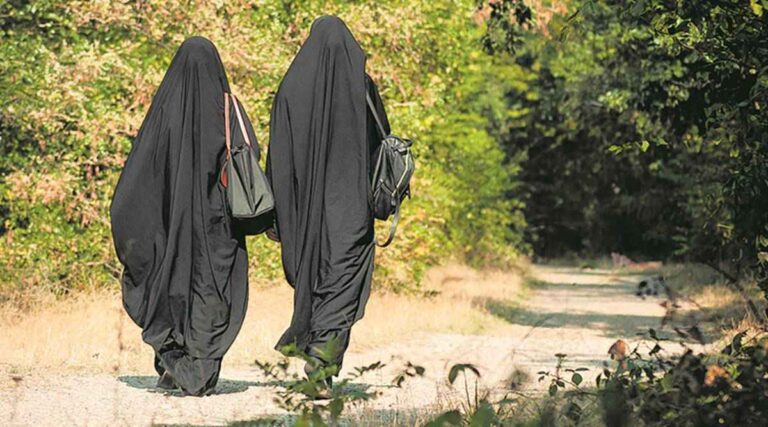
Six girls, studying in first and second PU in Government Women’s PU College, have accused the principal of not allowing them to wear ‘Hijab’ (headscarf) and attend classes.
-
For past three days we have been visiting college daily and returning home without attending the classes,” the students charged. College principal Rudra Gowda had reportedly told the students that they will not be allowed to wear hijab inside the classrooms.
-
The students also complained of being discriminated. “We are not allowed to talk in Urdu, Arabic and Beary languages. While other girls were allowed to speak in Tulu, Konkani and Kannada languages, the students alleged.
-
The ‘aggrieved’ students feared that they might face attendance shortage.
-
Our parents also tried to meet the principal. But the principal was not ready to talk to them. He is insisting that hijab is not allowed inside the classrooms,” the students said.
-
Members of Campus Front of India and SDPI urged principal to allow the students to attend classes with the hijab.
-
“If the six girl students are not allowed to attend classes, we will stage a protest against these ‘fascists’,” Udupi SDPI president Nazeer Ahmed warned.
CONCLUSION
-
Principal Gowda clarified that there were more than 60 Muslim girl students studying in the college.
-
“Barring these six students, none of them wear hijab,” he said. The principal said the parents had agreed to adhere to the college rules during a meeting.
-
Udupi Deputy commissioner Kurma Rao told DH that he had asked Deputy Director of PU department (DDPU) to submit a report on the incident at the earliest.

KEY STORY
-
With the World Health Organization (WHO) and governments across the world warning and preparing for increased hospitalisations due to the Omicron variant (B.1.1.529) of Covid-19, a doctor at Delhi’s Lok Nayak Jai Prakash Narayan Hospital (LNJP) said that most of those infected did not intensive medical support and their oxygen levels remained stable.
-
The remarks seem to be a sliver of hope as a few other Prilimanry from countries like the United Kingdom and South Africa too have observed that the illness due to Omicron was moderate or ‘mild’. However, all have also cautioned about the lack of extensive data and the need for more study into the variant.
-
“Till now, we’ve received 360 patients out of which 110 were Omicron affected. 89 of these patients have been discharged. All are stable. Not a single patient required ICU support because their oxygen saturation level was perfectly normal,” news agency ANI quoted Dr Suresh Kumar, medical director of LNJP.
-
Notably, this was not the first time the doctor has made the observation. On December 22, when Delhi had reported over 30 Omicron cases, he said that patients who were fully vaccinated (with two doses) did not have any major complications and did not require admission in the intensive care unit (ICU), according to a report by ANI.
-
Meanwhile, on Friday, the Union ministry of health and family welfare said that 320 Omicron cases have been reported from the national capital of which 57 have been discharged or recovered. Also, the total caseload due to the new variant stood at 1,270 in the country. Maharashtra added the maximum to the national tally with 450 cases.
-
In its latest press conference regarding the pandemic, the WHO reiterated its warning on hospitalisations due to the variant. “Right now, Delta and Omicron are twin threats that are driving up cases to record numbers, which again is leading to spikes in hospitalisations and deaths,” said Tedros Adhanom Ghebreyesus, the director-general of the UN health body. “I am highly concerned that Omicron being more transmissible, circulating at the same time as Delta – is leading to a tsunami of cases,” he further said.
-
Several countries, including the United States, the UK and several European nations, have reported surges in their daily Covid-19 infections. Lastly, France, where the infections have spiked, said on Friday that the Omicron has become the predominant variant in the country, the AFP reported.

KEY STORY
-
Omicron, the new mutant variant of coronavirus, has begun replacing the Delta strain in the country in terms of the number of infections, the official sources said on Friday.
-
This comes amid the country facing a sharp spike in the cases of the Omicron variant. A total of 23 States and UTs have reported the Omicron cases in India so far.
-
As many as 309 new cases of highly transmissible COVID-19 variant were detected in the last 24 hours, taking the country’s overall tally of the new mutant variant to 1,270 cases, according to the Union Health Ministry.
-
Of the total, 374 infected persons have been discharged, it added.
-
With 450 cases, Maharashtra remains the worst affected by the new variant, followed by Delhi (320), Kerala (109), Gujarat (97), Rajasthan (69), Telangana (62), Tamil Nadu (46), Karnataka (34), Andhra Pradesh (16), Haryana and Odisha 14 each, while West Bengal has reported 11 cases so far.
-
According to a study, published in the journal Cell, the Omicron variant is largely resistant to antibodies from people who recover from COVID-19 infection, and those vaccinated with two doses of the Pfizer vaccine.
CONCLUSION
-
However, a third dose of the Pfizer vaccine, and mixing Pfizer and AstraZeneca preventives may protect well against the variant.
-
“Our cell culture studies suggest that most antibodies currently available for COVID-19 therapy will be ineffective against Omicron,” PTI quoted first author Markus Hoffmann from German Primate Center as saying.
1...218219220...442Page 219 of 442