Cold wave likely to grip Northwest India till January 3, says IMD

KEY STORY

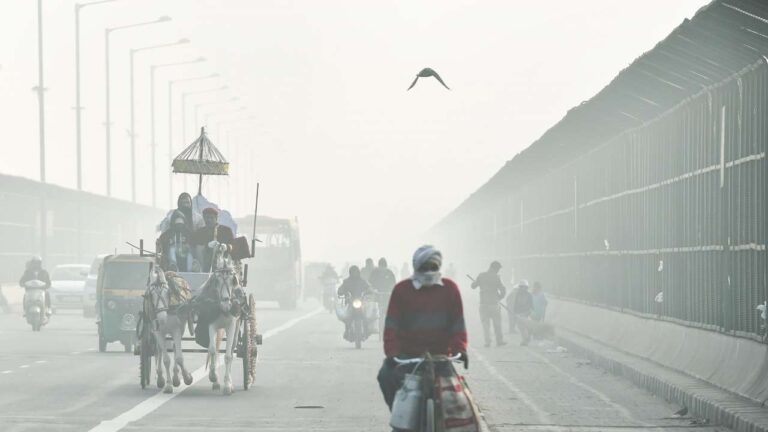
  • Parts of Northwest India are in for a chilly New Year as the India Meteorological Department (IMD) has predicted a cold to severe cold wave over the region from Friday, December 31 to Monday, January 3.
  • The IMD on Thursday stated that Delhi, Uttar Pradesh, parts of Punjab and Haryana, and Rajasthan, will experience a cold wave over the next four days. Madhya Pradesh is also likely to experience a cold wave till Sunday, January 2.
  • The IMD has also predicted dense fog during the night and early morning over Uttar Pradesh for the next five days and in East and Northeast India for the next two to three days.
  • Additionally, a fall in minimum temperatures by 2-4 degrees Celsius is likely over Central India during the next three days, followed by a 2-3 degrees Celsius rise in the subsequent two days. East India will also experience a fall in minimum temperatures by 3-5 degrees Celsius during next three days.
  • According to the press release, Punjab, north Rajasthan, west Uttar Pradesh and Haryana on Thursday recorded minimum temperatures in the range of 2-6 degrees Celsius. A fall of 3 to 5 degrees Celsius in minimum temperatures was seen in the region as well as Madhya Pradesh in 24 hours.

CONCLUSION

  • The IMD records a cold wave when the minimum temperature is equal to or less than 10 degree Celsius at a weather station in the plains, and is 4.5 degrees to 6.4 degrees below the normal temperature for that period. A cold wave may also be recorded at a station in the plains when the minimum temperature is less than or equal to 4 degree Celsius.
  • For hilly regions, a cold wave is declared when the minimum temperature is less than or equal to 0 degree Celsius and the minimum temperature is 4.5 degrees to 6.4 degrees below the normal.

Centre to send SMS reminders to eligible elderly population for precautionary dose of COVID vaccine

KEY STORY

  • The Ministry of Health and Family Welfare (MoHFW) on Thursday informed that the Union Government will send an SMS alert to the eligible elderly population to remind them for taking the precautionary dose of COVID-19 that starts from January 10.
  • This comes amid the country facing a sharp increase in daily COVID-19 infections as there has been a massive surge in new Omicron variant cases.
  • The Union Health Ministry further stated that the precautionary dose of the COVID-19 vaccine is primarily to mitigate the severity of infection, hospitalisation, and death.
  • In his sudden address to the nation, Prime Minister Narendra Modi had on December 25 announced the next steps of vaccination for children and booster doses for adults in the wake of the Omicron surge.
  • “January 10 onwards India will begin to administer ‘precautionary’ doses to frontline workers and citizens above the age of 60, the prime minister had said.
  • According to the Centre, approximately 90 per cent of the adult population in the country has been vaccinated against COVID-19 with the first dose.
    “Approximately 90 per cent of the adult population in India has been vaccinated against COVID-19 with the first dose. On average, India reported more than 8,000 cases per day last week. Overall case positivity rate stands at 0.92 per cent. From December 26 onwards, the country has been reporting 10,000 daily cases,” said Luv Aggarwal, Joint Secretary, Union Health Ministry during a media briefing.

    ‘COVID positivity rate over 10% in 8 districts’

    Aggarwal further said that the weekly COVID positivity rate of more than 10 per cent is being noted in eight districts including six districts of Mizoram, one from Arunachal Pradesh, and Kolkata in West Bengal.
    “The weekly case positivity rate is between 5-10 per cent in 14 districts of the country. There are 961 cases of Omicron variant of coronavirus in India, out of which 320 patients have recovered,” he added.

Schools to stop online classes once students are vaccinated

KEY STORY

  • A few Central board schools, who are still relying on online classes to teach students, have decided to suspend remote learning once their students are vaccinated. The schools are planning a vaccination drive in the first week of January for students of classes X, XI and XII.
  • While most schools started offline classes in a phased manner since August 23, many schools did not make the shift as they were worried that their schools could become COVID-19 clusters as children were not vaccinated.
  • Mansoor Ali Khan, member, Board of Management, Delhi Public Group of Schools, said they would try to complete both doses of vaccination for students above 15 years by February.
  • “All these days, we were reluctant to stop our online classes despite having offline classes as well as we were worried about our students’ health. But after the students are vaccinated, we will stop online classes and will channelise all our teaching resources to offline classes,” he said. He added that offline classes would be more effective in bridging the learning gap among students.
  • D. Shashi Kumar, general secretary, Associated Managements of Primary and Secondary Schools in Karnataka said that after students are vaccinated, parents need to ensure that they give consent to students attending classes. “In a few schools, parents are still reluctant and do not want to send their children for offline classes with the increase in number of Omicron cases. But once students are vaccinated, parents need to cooperate and ensure that their children attend offline classes,” he said.

CONCLUSION

  • An official of the Department of Primary and Secondary Education said that schools are supposed to conduct both offline and online classes at the moment. “However, once students are vaccinated, we will review the need to conduct both types of classes,” the official added.
  • Parents too feel that they would be reassured to send their children to school after they are jabbed. Surekha R., the parent of a class ten student said, “A few parents are not convinced of vaccinating their children. But we will urge the management to ensure that they start offline classes and that bridge courses are conducted so that students pick up their lost skills,” she said.

Karnataka UG-PG students may soon get maternity leave

KEY STORY 

  • Students pursuing undergraduate and postgraduate courses in Karnataka may soon get maternity/childcare leave facilities after the University Grants Commission (UGC) nudged universities on the issue.
  • The Higher Education Department responded positively after the UGC asked universities to frame guidelines to extend maternity/childcare leave facilities at UG and PG level, a move academicians feel will help “women students to pursue higher education”.
  • The department will discuss the issue at the next meeting of Karnataka State Higher Education Council, which has vice chancellors of all the state-run universities as its members.
  • On Dec 14, the UGC issued a communication stating: “The women candidate may be provided maternity leave/child care leave once in the entire duration of M.Phil/PhD for up to 240 days.”
  • The circular requested “all higher education institutions to frame appropriate rules/norms with regard to granting maternity leave to the women students enrolled in their respective institutions/affiliated colleges and also provide all relaxations/exemptions relating to attendance”.
  • Vice Chancellors of several state-run universities have responded positively on the issue. According to them, the implementation of the National Education Policy (NEP), where exit options are available, will make the implementation of maternity/childcare leave possible.
  • Prof Karisiddappa, Vice Chancellor of Visvesvaraya Technological University (VTU) said the move “will encourage women students to pursue higher education”. “The multiple entry and exit options available with NEP will make the implementation easier,” he said.
  • However, some of the universities have decided to place the issue before the academic council and syndicate meetings. “As the communication is from the UGC, it is not necessary to decide at the government level. The universities can decide by placing it in the academic council and syndicate meetings,” said a vice chancellor of a state-run university.
  • The Karnataka Government College Teachers Association has also welcomed the move.
  • T M Manjunath, president of the association, said it will “definitely help women students to continue their higher education”.

Ahead of Karnataka polls, Kharge takes dig at PM Modi via Twitter

KEY STORY

  • Launching a frontal attack on Prime Minister Narendra Modi, Senior Congress leader and Opposition leader in the Rajya Sabha Mallikarjun Kharge tweeted on Wednesday, “As state election campaigns begin, PM Modi has again begun asking votes in the name of ‘double engine’ jumla. Modiji, let me remind you that the BJP govt in Karnataka is known as a ‘40% commission’ govt. Please let the voters know what the commission split is for each engine?’’
  • Kharge later told The New Indian Express, “We have not made the allegation against the double engine government, it is the contractors who have written directly to the PM. What action has been taken? The Prime Minister has to find out and respond.”


Karnataka sees 37.1% jump in fresh Covid cases, cluster outbreaks rise

KEY STORY

  • Amid fears of a third Covid wave, the state saw a 37.10 per cent jump in Wednesday’s Covid cases at 566 as compared to Tuesday’s tally of 356. This is the first time since early October that the state has recorded over 500 cases a day. With Wednesday’s numbers, total Covid cases have gone up to 30,05,798 since the beginning of the pandemic.
  • Bengaluru contributed a major chunk of Wednesday’s cases with 400 people testing positive. The state also saw six deaths, taking the toll to 38,324. Also, five new Omicron cases were confirmed in the state, taking the tally of this new Covid variant to 43. A 22-year-old woman and a 24-year-old man travelling from the US, a 53-year-old man travelling from Dubai, a 61-year-old man coming from Ghana and a 41-year-old travelling from Mumbai were found to have Omicron, the health department reported on Wednesday.
  • Cluster outbreaks were reported in Kolar and Mandya. At Morarji Desai School in Kolar, 10 students tested positive and at a private nursing college in Bangarpet, four students are Covid-positive. At the school, after a student reported symptoms of fever, she was tested and the result came positive. Later, all the 252 students were tested, of which ten are positive. The school has now been declared a containment zone.
  • At a village in Maddur taluk of Mandya district, five primary class students at the Hallikere Government School tested positive. Initially, one student tested positive and after that all the 50 students were made to give swab samples, of which four are positive. Health officials rushed to the spot and sanitised the school premises before sealing it for a few days. Taluk health officials said there is no need to worry as the students are asymptomatic and isolated.

‘Safety a big concern’

Sr inivas Alavilli, head, civic participation, Janaagraha said, “Cities are flooded by private and personal
vehicles. The number of pedestrians is dwindling by the day. More peopl e want to cycle, but safety is a major concern.
Unless we shift a lot of people from private vehicles to walking, cycling and enable public transport, our cities are going to see never-ending traffic jams. This Bill will address the rights of cyclists and pedestrians and could not have come at a better time.”

Omicron and Delta circulating simultaneously, leading to tsunami of cases: WHO chief worried for health systems

KEY STORY 

  • A “tsunami” of Omicron and Delta Covid-19 cases will pile pressure on health systems already being stretched to their limits, the World Health Organization warned on Wednesday.
  • The WHO said the Delta and Omicron variants of concern were “twin threats” that were driving new case numbers to record highs, leading to spikes in hospitalisations and deaths.
  • The WHO said new global cases had risen by 11 percent last week, while the United States and France both registered record daily case numbers on Wednesday.
  • “I am highly concerned that Omicron, being more transmissible, circulating at the same time as Delta, is leading to a tsunami of cases,” WHO chief Tedros Adhanom Ghebreyesus told a press conference.
  • “This is and will continue to put immense pressure on exhausted health workers, and health systems on the brink of collapse.”
  • He said the pressure on health systems was not only due to new coronavirus patients, but also large numbers of health workers falling ill with Covid.

Moral shame’

The WHO reflected on the fight against Covid-19 in 2021 and hoped that next year would see an end to the acute stage of the pandemic — but warned that it would rest on greater vaccine equity.
The WHO wanted 40 percent of the population in every country fully vaccinated by the end of the year and has a target of 70 percent coverage by the middle of 2022.
Tedros announced that 92 of the WHO’s 194 member states were going to miss the 40 percent target.
“This is due to a combination of limited supply going to low-income countries for most of the year and then subsequent vaccines arriving close to expiry and without key parts like the syringes,” he said.
“It’s not only a moral shame, it cost lives and provided the virus with opportunities to circulate unchecked and mutate. In the year ahead, I call for leaders of government and industry to walk the talk on vaccine equity.
“While 2021 has been hard, I ask everyone to make a New Year’s resolution to get behind the campaign to vaccinate 70 percent by the middle of 2022.”
Misinformation and populism
Tedros slammed the attitude of richer countries accusing them of hogging the weapons to combat Covid-19 — and leaving the back door open for the virus.
“Populism, narrow nationalism and hoarding of health tools, including masks, therapeutics, diagnostics and vaccines, by a small number of countries, undermined equity, and created the ideal conditions for the emergence of new variants,” he said.
Meanwhile disinformation had been a constant distraction in 2021, hampering efforts to beat the pandemic.
“In the huge waves of cases currently seen in Europe and in many countries around the world, misinformation which has driven vaccine hesitancy is now translating to the unvaccinated disproportionally dying,” he said.
Tedros lamented that while there were 1.8 million recorded deaths in 2020, there were 3.5 million in 2021 — and the true number would be much higher

Belagavi: Alert as water gushes out of Maharashtra dam

KEY STORY 

  • A massive amount of water flowed out of Radhanagari dam, near Kolhapur, due to a technical snag which resulted in the sudden opening of one of the dam’s gates. As a result of the abrupt release of a large quantity of water, said to be in thousands of cusecs, a high alert was sounded in areas around Bhogawati river in Kolhapur district.
  • The released water from Radhanagari led to a massive rise in the level of Bhogawati river. The authorities were able to avert a major disaster and save property around Bhogawati river, according to sources. Authorities ordered an investigation to ascertain whether it was a man-made disaster or due to a technical snag.

How to register 60+ adults for booster shot, children between 15-18 for COVID-19 vaccine on coWIN app – Details

KEY STORY

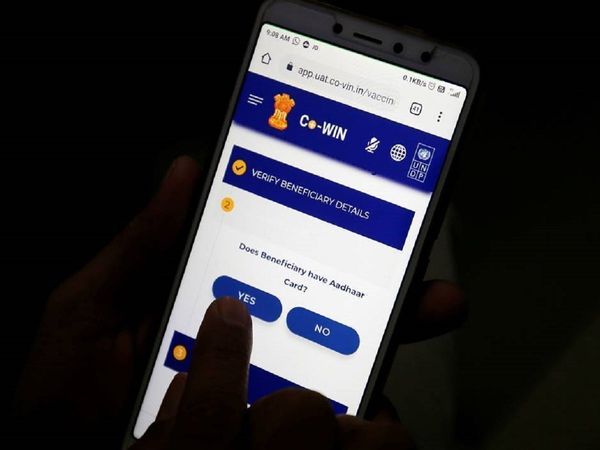
  • Two days after Prime Minister Narendra Modi announced that children in the age group of 15-18 will be allowed COVID-19 vaccines, the government on Monday elaborated on how to register children for vaccines on the CoWIN platform. Dr RS Sharma, CoWIN platform Chief said that children in the age group of 15-18 years will be able to register on the CoWIN app from January 1.
  • “We’ve added an additional (10th) ID card for registration – the student ID card because some might not have Aadhaar or other identity cards (to ensure registration of children for the vaccine on CoWIN app),” he said.
  • According to initial reports, the registration of children on CoWIN app will be almost similar to the registration of adults on the platform. Children between the age group of 15-18 will be able to book an appointment on the CoWIN app or walk into any vaccination centre and get vaccinated after producing the necessary supporting documents
  • Over the weekend, PM Modi announced that children between the age group of 15-18 will also be able to get themselves vaccinated. The decision was taken in light of the threat of Omicron that is looming large across the globe. With the changed norms, all those who are born before 2007, will be able to get their vaccine from January 1.

Registration for adults for booster doses on CoWIN:

Replying to a question on how to register people above 60 years of age for booster doses on the CoWIN platform, Sharma said that the process, for registering citizens above 60 for COVID-19 booster dose will be exactly the same. “If you are above 60 years of age and have taken both doses and the gap between the second dose and the day you are registering is more than 9 months (39 weeks) then you are eligible,” he said.
According to Sharma, while registering, the CoWIN platform will ask whether the individual has any comorbidities or not. “If you say yes, you will be able to book and have to show the comorbidities certificate from a registered doctor at the vaccination centre and then you can get jabs,” he said.

15 Omicron patients discharged in Karnataka; Health department treads cautiously

KEY STORY

  • In a great relief to the Karnataka Health department, which is in a battle mode in taking preventive measures to ensure the new SARS-CoV2 variant Omicron doesn’t spread across the state, as many as 15 students affected with the Omicron variant have fully recovered and been discharged from the designated hospitals. The data is confirmed by the Union Health ministry.
  • The rest of the patients are also in good stead and none are showing any severe symptoms. However, the Karnataka state government has already initiated measures to tackle the possible Omicron variant implications in the state. The department has made arrangements for 7,051 ICU beds in the state and 30,000 beds with an oxygen facility. Earlier, the number of ICU beds was 3,860.
  • Karnataka was the first state to report Omicron variant cases in the country. One was a South African national with an international travel history and another was a local doctor without travel history. The case without travel history panicked people and authorities as it gave clues on the presence of the new variant in the community.
  • However, the doctor recovered from the infection and in fact, he came on live on social media to explain that he is hale and hearty at the designated hospital. Later, as many as seven Omicron variant, positive cases were found last Saturday taking the tally to 38 in the state.

CONCLUSION

  • According to data available, eight states — Delhi, Maharashtra, Kerala, Gujarat, Rajasthan, Telangana, Tamil Nadu and Karnataka — have reported 93 per cent of all 538 cases of Omicron reported in India. Maharashtra has seen the most number of discharges at 42. As many as 30 Omicron tested positive patients have recovered and were discharged in Rajasthan, followed by Delhi (23) and Karnataka (15).
  • The Karnataka government, though relieved that Omicron affected persons are not showing severe symptoms, is taking no chances and imposed a ban on nightlife during the New Year celebrations in the state.

MLC polls, anti-conversion Bill on BJP meet agenda

KEY STORY

  • The party performance in the State Legislative Council elections from local bodies constituencies, preparations for Zilla and Taluk Panchayat polls and the push for the Anti-Conversion Bill are among the issues that are likely to come up for discussion during the BJP state core committee and state executive committee meetings in Hubballi on Tuesday and Wednesday.
  • Senior BJP leaders, including Chief Minister Basavaraj Bommai, National General Secretary in charge of Karnataka Arun Singh, former Chief Minister BS Yediyurappa and others are attending the meetings. “We will discuss issues related to party organisation and other developments. The meeting, which is held once every two months, will take important decisions,” Chief Minister Basavaraj Bommai told reporters in Bengaluru. Coordination between the party and government is good, he said. The government will come up with more programmes and go to elections on the basis of its good work, the CM said.
  • Responding to a question on speculation over leadership change, the CM termed it a media creation. Asked if cabinet expansion will be discussed during party meetings, Bommai said it is an internal matter of the party, and the high command would take a call on that.  In the past few days, many senior leaders including Arun Singh, BS Yediyurappa and BJP state president Nalin Kumar Kateel have rubbished speculation over leadership change.
  • BJP State General Secretary and MLC N Ravi Kumar said during the meetings that they would discuss various issues related to strengthening of the party organisation. BJP performance in the council elections, especially in Belagavi, Mysuru, Hassan and Chikkamagaluru constituencies, are likely to be discussed in detail. In Belagavi, BJP candidate Mahantesh Kavatagimath was defeated by party leader Ramesh Jarkhiholi’s brother Lakhan Jarkiholi. In four of five two-member constituencies, Congress managed to get more votes compared to BJP. The Anti-Conversion Bill that was passed in the assembly, but was not tabled in the Council, is also likely to come up for discussion.

15-18-year-olds will be vaxxed against Covid in schools, colleges: Bommai

KEY STORY

Learning from its experience of drawing adults and eligible population to vaccination centres and achieving a 100 per cent vaccination target, the government has decided that it will take no chances with the health of children and senior citizens.
Chief Minister Basavaraj Bommai told TNIE on Monday that all teenagers in the age group of 15-18 will be vaccinated at schools and colleges to reduce the possibility of children missing their vaccinations. Discussions have been held with the education and health departments along with the medical fraternity, he added.
On giving booster doses to those aged above 60, the chief minister said that people from the target population will initially be called to vaccination centres. “We have data on people who are in this age group and also those with comorbidities. Apart from vaccination centres, booster doses will also be given at their doorsteps, based on their age and comorbidities,” he added.
Bengaluru Urban has achieved 100 per cent vaccination coverage, while in the entire Bruhat Bengaluru Mahanagara Palike limits, which also include some of the villages on the fringes, there is a gap of 10 per cent, Bommai said.
Directing officials to take up the door-to-door vaccination drive aggressively, he requested people to come forward and take the vaccination. The paediatric association, which is working with the government, supported the chief minister’s statement on vaccinating teenagers at schools and colleges. An association member said,
“Those aged 15-18 go to schools and PU colleges. Educational institutions have complete data on these children and vaccinating them will not be a challenge. Interactions with schools have indicated that they are keen to set up vaccination centres. With this, monitoring the health of children and ensuring their vaccination can be streamlined.”
Covaxin only option in 15-18-year age group
New Delhi: The vaccine option against Covid-19 for children in the age group of 15-18 years, who will be inoculated from January 3, will only be Covaxin, according to new guidelines issued by the Union Health Ministry on Monday. Teenagers in this age group will be able to register on the CoWIN portal from January 1
Another cluster in B’luru apartment
Bengaluru: Another cluster has emerged in Bengaluru with 21 Covid-19 cases being reported from an apartment complex in Rajajinagar in over a week. Officials have sealed their flats along with the floors above and below

States, UTs advised to train vaccinators for inoculation of children aged 15-18 years

KEY STORY

  • Union Health Ministry has advised states and Union territories to train vaccinators for the administration of vaccines to children aged 15-18 years.
  • The ministry also advised that dedicated centres can be established for the same, and only Covaxin will be administered with a proper training, ANI reported, citing sources.
  • COVID-19 vaccination of children in the age group of 15-18 years will be started from January 3 next year. The estimated population to be covered in this category is seven to eight crores.
  • Making the announcement on Saturday, Prime Minister Narendra Modi said this will reduce the worries of children going to schools and colleges and their parents, and boost the fight against the pandemic, adding that the move is also likely to aid in normalisation of teaching in schools.
  • Bharat Biotech’s Covaxin will be the only COVID-19 vaccine that will be administered to children between 15 to 18 years age group from next month, according to new guidelines issued by Union Health Ministry.
  • “For all those aged 15 years or more, option for vaccination would only be available for Covaxin as this is the only vaccine with Emergency Use Listing (EUL) for the age-group 15-17,” the ministry said in its guidelines issued on Monday.

CONCLUSION

The guidelines will come into effect from January 3 and will be reviewed from time to time.
All those aged 15 years or more will be able to register on Co-WIN. Beneficiaries can self-register, online through an existing account on Co-WIN or can also register by creating a new account through a unique mobile number, this facility is available for all eligible citizens presently.
Such beneficiaries can also be registered onsite by the verifier/vaccinator in facilitated registration mode, the guidelines read. Appointments can be booked online or onsite (walk-in).

Delhi CM Arvind Kejriwal condemns ‘police brutality’ on resident doctors during protest over NEET 2021 counselling

KEY STORY

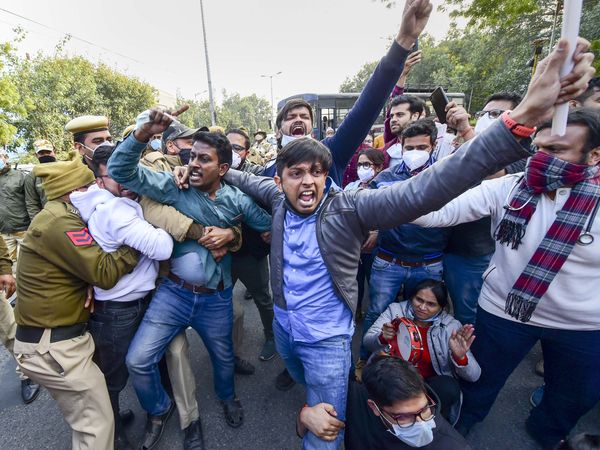
  • Chief Minister Arvind Kejriwal on Tuesday wrote to Prime Minister Narendra Modi condemning the alleged ‘police brutality’ on resident doctors in the national capital over the delay in National Eligibility Entrance Test postgraduate (NEET PG) counselling 2021.
  • Several resident doctors across India began a protest march on Monday and continued their agitation even today and warned to pull back “all healthcare services” from Wednesday.
  • “Doctors have been protesting for several days. These are the people who risked their lives during the Covid-19 outbreak to serve citizens. The pandemic is still raging. They should be in hospitals and not on the streets. We strongly condemn the police brutality inflicted on them. I request the Prime Minister to accept their demands at the earliest,” Kejriwal said in his tweet.

  • The Federation of All India Medical Association (FAIMA) has called for complete pull out from all healthcare services across India from 8 am on December 29 “in protest against brute force by Delhi Police against doctors”.
  • The protest comes at a time when India is grappling with a resurgent Covid-19 outbreak due to the Omicron variant, which is reportedly resistant to the vaccine and has a spike protein worse than the Delta strain that wreaked havoc across the country during the second wave of the pandemic from April-June this year.
  • The Federation of All India Medical Association (FAIMA) has called for complete pull out from all healthcare services across India from 8 am on December 29 “in protest against brute force by Delhi Police against doctors”.

CONCLUSION

  • Union Health Minister Mansukh Mandaviya met representatives of the protesting doctors at Nirman Bhavan in Delhi today and requested them to call off their strike “in public interest”.
  • Doctors have also sought an official apology from the Delhi Police over their “stern action” during Monday’s march to Supreme Court.
  • “We want respect. This is now our foremost demand. We want an apology from the police over their brutality on our fellow doctors,” a protesting doctor told news agency IANS.

Delhi Schools, Colleges closed with immediate effect as Government sounds Yellow Alert over rising cases

KEY STORY

  • Delhi Schools have been closed again. Delhi Government today sounded the yellow alert, kickingi into place a seriers of restrictions to manage COVID-19 spread in the city. Within the restrictions, the government has included shutting down of schools and colleges in the city. The move comes after Delhi Government today issued Yellow Alert, as case positivity touched 0.5%.
  • With the yellow alert, the schools are to be shut down in the capital again. A meeting was called today after the positivity rate remained at 0.5% for the second consecutive day today. In accordance to the Graded Response Action Plan, GRAP measures suggested, the government has now decided put in place the restrictions under the GRAP Yellow Alert.  Along with schools and colleges, all academic institutions would also be closed. Apart from that, all cinema halls would also be closed while malls would be permitted to operate in a odd-even manner. Offices would fucntion as per the mandates, with maximum 50% capacity.
  • The city recorded as many as 331 new cases on Monday, which pushed the positivity rate above the 0.5%. As per GRAP, the city was to call on Yellow Alert on the situation, prompting the shutting down of schools.

CONCLUSION

  • “Although COVID-19 cases are rising in Delhi and positivity rate has breached the 0.5 per cent mark but hospitalisations are very low and fatality rate is negligible. Any decision about implementation of ‘Yellow’ alert restrictions will be taken after further discussions,” an officer had noted on Monday.
  • Taking the call, the government would be releasing the details, which would decide to shut the schools as a preventive measure. This comes a day after Delhi Government announced winter vacations in Delhi from January 1 to January 15. No online or offline learning activities are allowed in schools during this period.

COVID-19: Karnataka imposes night curfew for 10 days from Dec 28 as Omicron triggers alarm – details here

KEY STORY

  • In view of a possible third wave of coronavirus pandemic amid a surge in cases of the new variant Omicron, the Karnataka government has decided to impose a 10-day-long night curfew in the state starting December 28.
  • According to Karnataka Health Minister K Sudhakar, the night curfew will be imposed between 10 pm to 5 am.
  • “From December 28 onwards, for about ten days, to begin with, we would like to watch by calling a night curfew, invoking Section 144, from night 10 pm to the next morning 5 am,” PTI quoted the Karnataka Health Minister as saying.
  • The health minister further announced that the state government has completely banned all kinds of New Year-related parties and gatherings. “There will be no functions, parties in the external premises, especially for those celebrating with DJs and large gatherings, they have been completely banned in Karnataka,” he said.
  • He said that eating joints, hotels, and pubs are allowed to operate with only 50 per cent of their seating capacity.

Karnataka’s Omicron tally rises to 38

As many as seven more cases of Omicron variant were reported in Karnataka on Saturday, taking the tally of new mutant stain in the state to 38, informed Sudhakar.
Of these seven, two had travelled from Delhi, one had arrived from the United States of America, one each from Zambia, the United Kingdom, United Arab Emirates, and another is a primary contact of the UK traveller.
 

Senior Minister Ashoka dismisses talk of leadership change in Karnataka

KEY STORY

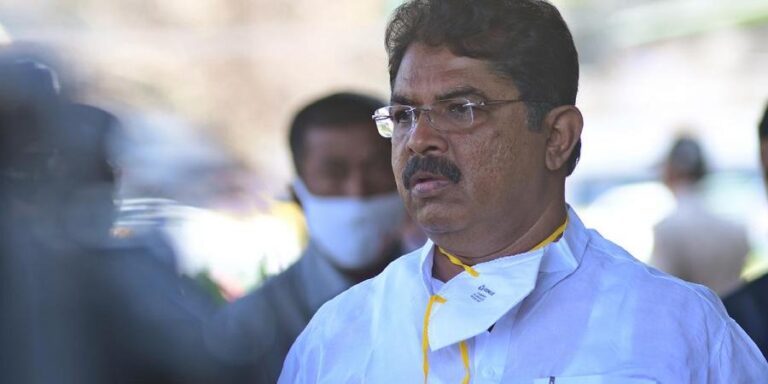
  • Seeking to put an end to speculation about possible leadership change in Karnataka, Revenue Minister R Ashoka on Friday said the BJP would face the next election under the leadership of Chief Minister Basavaraj Bommai.
  • There were rumours in some quarters in recent times that Bommai may go abroad for knee operation.
  • “We will face the next election under his (Bommai) leadership. There is no doubt about it. He is 100 per cent our leader,” Ashoka told reporters. The minister dismissed as “mischief” the rumours of Bommai going abroad for his knee operation.
  • He said doctors have advised him that he will be cured here in India without operation

India vs South Africa: Will Virat Kohli & Co. change 5 bowler combination? Vice captain KL Rahul responds

KEY STORY

  • India’s newly appointed vice-captain KL Rahul has hinted at sticking with the five bowlers combination during the upcoming series against South Africa. The first Test is set to begin on Boxing Day (December 26) at the SuperSport Park in Centurion. Under the captaincy of Virat Kohli, India has persisted with the five-bowlers combination on more occasions than not.
  • In the last three games of the away tour to Australia and the entire series in England earlier this year, India opted for this combination which has proved to be extremely successful. However, with the arrival of new head coach Rahul Dravid and injury to star all-rounder Ravindra Jadeja, there are doubts whether Kohli will stick with the combination against the Proteas.
  • In a pre-match press conference, Rahul said, “I think most teams have started playing five bowlers and every team wants to pick up 20 wickets and that’s the only way you can win a Test match. We have used this tactic and it has helped us in away games.”
  • He further stressed on the importance of the five-bowlers combination to assist in managing workload especially with the quality of bowlers present in India’s ranks. “In every Test match that we have played away from India, it has helped us. So, workload also becomes slightly easier to manage that way with five bowlers and when you have that kind of quality, you might as well use them,” said Rahul.
  • If India decides to play with five bowlers, it is likely to confirm both Ravichandran Ashwin and Shardul Thakur’s place in the playing XI who will have increased responsibility to deliver the goods with the bat.
  • Rahul was elevated to the role of vice-captain after Rohit Sharma’s withdrawal from the squad due to a hamstring injury. Rohit was named as Kohli’s deputy for the first time in the longest format of the game ahead of this series. The Indian white-ball skipper had replaced Ajnkya Rahane in the role amid increased scrutiny over his place in the team.


COVID-19: India records over 100 new Omicron cases, highest single-day rise so far; tally reaches 358

KEY STORY

 India on Friday witnessed the highest single-day spike of the new Omicron variant of coronavirus with more than 100 infections of the new mutant variant reported in the last 24 hours in the country, as per the latest bulletin by the Ministry of Health and Family Welfare (MoHFW).
Maharashtra has recorded the highest number of 88 cases of the Omicron variant, followed by Delhi with 67, Telangana 38, Tamil Nadu 34, Karnataka 31, and Gujarat 30.
Meanwhile, the Union Health Ministry has informed that a total of 6,650 new COVID-19 cases, 7,051 recoveries, and 374 deaths were reported in the country in the last 24 hours. With this, the death toll has surged to 4,79,133, while the active cases stand at 77,516.
A total of 3,42,15,977 COVID-19 patients have successfully recovered from the illness in the country so far, the health ministry said.
Statewise tally of COVID-19
S. No.
Name of State / UT
Active Cases*
Cured/Discharged/Migrated*
Deaths**
Total
Change since yesterday
Cumulative
Change since yesterday
Cumulative
Change since yesterday
1
Andaman and Nicobar Islands
6
3
7573
1
129
2
Andhra Pradesh
1326
32
2060400
164
14486
3
3
Arunachal Pradesh
18
3
55030
7
280
4
Assam
2249
20
611530
132
6153
1
5
Bihar
83
4
714228
13
12094
6
Chandigarh
97
2
64567
13
1078
7
Chhattisgarh
302
9
993619
28
13596
1
8
Dadra and Nagar Haveli and Daman and Diu
3
2
10684
2
4
9
Delhi
684
60
1416846
57
25103
1
10
Goa
429
37
175951
17
3518
11
Gujarat
668
31
818129
78
10108
2
12
Haryana
318
20
761992
26
10062
13
Himachal Pradesh
420
46
224178
80
3871
14
Jammu and Kashmir
1319
11
334456
118
4518
3
15
Jharkhand
236
35
344316
9
5142
16
Karnataka
7146
21
2958117
318
38301
2
17
Kerala***
27283
1236
5155142
3427
45861
323
18
Ladakh
201
5
21617
19
218
19
Lakshadweep
7
1
10355
51
20
Madhya Pradesh
191
11
782859
19
10531
21
Maharashtra
11578
547
6500375
615
141392
17
22
Manipur
192
4
123494
11
1999
1
23
Meghalaya
80
3
83212
2
1481
24
Mizoram
1713
134
138006
245
535
25
Nagaland
83
31389
2
702
1
26
Odisha
1665
18
1043391
172
8448
1
27
Puducherry
146
127348
8
1880
28
Punjab
314
9
587142
24
16636
1
29
Rajasthan
245
27
946125
12
8961
30
Sikkim
82
3
31979
3
409
1
31
Tamil Nadu
6889
90
2698628
689
36707
8
32
Telangana
3596
14
672637
190
4018
1
33
Tripura
58
10
84110
16
829
1
34
Uttarakhand
220
36
337062
3
7415
35
Uttar Pradesh
236
20
1687645
12
22915
36
West Bengal
7433
9
1601845
519
19702
6
Total#
77516
775
34215977
7051
479133
374
*** For Kerala, as per State media bulletin: 54 deaths reported on 23rd December +269 deaths declared as per appeal G.O.(Rt) No.2110/2021/H&FW
*(Including foreign Nationals)
**( more than 70% cases due to comorbidities )
#States wise distribution is subject to further verification and reconciliation
#Our figures are being reconciled with ICMR
PM reviews preparedness amid Omicron surge
Amid a surge in Omicron cases, Prime Minister Narendra Modi on Thursday chaired a high-level meeting and reviewed the efforts to combat the new COVID-19 strain.
He emphasised the need to be “satark” and “saavdhan” in view of the new variant. Fight against the pandemic is not over and the need for continued adherence to COVID safe behaviour is of paramount importance even today, the prime minister said.
“In view of the new variant, we should be ‘satark’ (alert) and ‘saavdhan’ (cautious),” he added.

‘Night curfews won’t help, don’t need booster doses against Omicron’, says top epidemiologist

KEY STORY

  • The night curfews are back as test positivity rates spike in some parts of India. Restrictions have also returned for large gatherings. But will these restrictions really help in halting the spread of Omicron, the Covid-19 variant that infects at a much higher rate than the Delta? Experts believe it is unlikely that restrictions will curb the spread of Omicron. Moreover an Omicron wave will not have much impact.
  • ” This particular wave is unlikely to be of any harm to us for several reasons”, says leading epidemiologist Dr JP Muliyil who is also a member of the NTAGI that has to decide on booster doses and children’s vaccines in India.
  • Dr Muliyil explains that the Omicron is manifesting as a very mild flu and enumerates the reasons that the Omicron may not be a big concern. First is the fact that it infects the upper respiratory tract unlike the Delta that impacted the lungs. Secondly, he believes eighty percent of people in India have already been exposed to Covid and the vaccines that have been given are working like booster doses. While preparation for large number of infections is necessary, there is no need for major restrictions he believes.
  • “These efforts are only going to inconvenience people and have no impact on the speed at which it travels”, he says. Meanwhile,the focus of additional doses of the Covid 19 vaccine are likely to be restricted to the elderly, vulnerable and immunocompromised.