Maharashtra govt announces new COVID-19 guidelines – Check details

KEY STORY

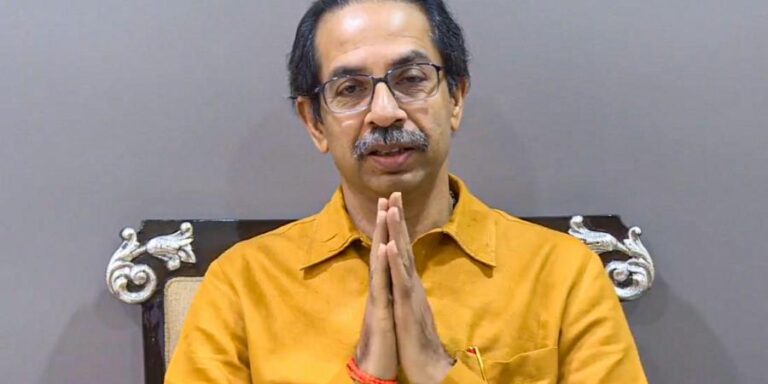
  • A day after Chief Minister Uddhav Thackeray held talks with the members of the state COVID-19 task force, the Maharashtra government announced new COVID-19 guidelines.
  • With Christmas festivities, weddings, and New Year’s receptions likely to increase the risk of contamination, the Disaster Management Act, 2005 has decided to impose some additional restrictions on the entire state which will be in effect from midnight today.
  • As per the new directive, a gathering of more than 5 persons in public places across the state is prohibited from 9 pm to 6 am.
  • Only 100 people will be allowed in indoor weddings and not more than 250 in outdoor weddings.

    Restaurants, gyms, cinema halls to operate at 50 per cent capacity

    Restaurants, gyms, spa, hotel, theatre and cinema halls will now operate at 50 per cent capacity and as per the state government, all of them will have to declare their full potential as well as 50 per cent capacity.
    For other social, political, religious events also the number of attendees should not be more than 100 and in open space, this number should not be more than 250 or 25 per cent of the capacity of the space whichever is less.
    In case of other social, political or religious functions and gatherings, where the presence of attendees is generally continual throughout the function, the total number of attendees should also not exceed 100 for enclosed spaces and 250 for open to sky spaces, or 25 per cent of the capacity of such spaces, whichever is less.
    Further restrictions should be considered in the future: CM
    In the case of sports events or competitions, these may be held with the number of spectators not exceeding 25 per cent of the seating capacity of the venue, the notification read.
    The number of patients is doubling, especially in Europe as well as in the United Kingdom, due to the Omicron variant.
    The current nature of the restrictions is preliminary and if they are not imposed now, it may be time to impose more stringent restrictions in the future, the notification read and urged people to follow the rules and use masks properly.
    Any shop, establishment, mall, event, gathering where a member of the public has a right to come and get services must be manned by fully vaccinated persons and all visitors, customers for such places shall be fully vaccinated.
No discussion, solutions for North Karnataka, rues Opposition

KEY STORY

  • A huge protest by Congress members, demanding time to discuss developmental issues of North Karnataka, brought down the curtains on the two-week winter session with Water Resources Minister Govind Karjol responding on the issue. It was expected that the session  would devote time to discuss developmental issues of backward North Karnataka and come up with solutions for regional imbalance. But a half-day discussion in the Assembly did not throw up any solutions.
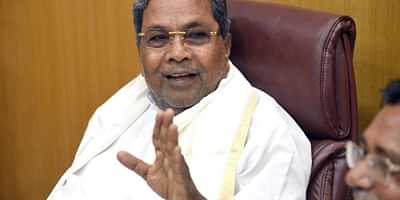
  • Taking part in the discussion earlier, Opposition leader Siddaramaiah alleged that then deputy PM L K Advani had rejected the demand for special status to Hyderabad-Karnataka region. But in 2013, PM Manmohan Singh gave special status (Article 371J) .
  • To address regional imbalance, CM S M Krishna formed the Prof Nanjundappa Commission, and Congress governments have released Rs 29,942 crore since 2007-08, he said. Listing the BJP’s failure to keep its election manifesto promise, he said the party claimed to have release Rs 1.5 lakh crore for irrigation projects but had released only Rs 33,835 crore. He also claimed that in 2013, BJP promised to spend Rs 50,000 crore on irrigation but spent Rs 51,217 crore through their five-year rule.
  • When Siddaramaiah demanded more time to discuss the Mahadayi, Tungabhadra  and other irrigation projects of North Karnataka, Speaker Vishweshwar Hegde Kageri declined, saying the House was to be adjourned after the first session, which led to the protest.
  • Karjol said that the Congress government was responsible for drought and underdevelopment in the region for many decades as it had not agreed to give Rs 2 crore to complete the Koyna Dam to supply water to North Karnataka.

Seven-day home isolation for contacts of COVID-positive international arrivals in Karnataka

KEY STORY

  • Soon after the Union Health Ministry asked the states to reactivate COVID war rooms and enhance restrictions and surveillance in the backdrop of rising cases of Omicron, the state government has now directed that the health officials to ensure compulsory seven day home quarantining of all primary and secondary contacts of patients of International arrivals.
  • “Though the overall infection in Karnataka is under control, obedience of quarantine by contact of patients and international arrivals will ensure we keep numbers low. Hence the government of Karnataka is focusing on preventive side with contact tracing and quarantine,” said a note from Munish Moudgil, Director, State War Room for COVID-19.
  • Speaking to The New Indian Express, he explained that two category of persons will be quarantined for 7 days. One, all international arrivals from At Risk countries and all contacts of all patients that irrespective of any international country arrival if they test positive then it is mandatory for any person in contact with them to home quarantine for seven days.
  • The state government has asked the health officials, deputy commissioners and district surveillance officials to steadfastly track, trace and quarantine primary and secondary contacts of persons within 24 hours of reporting of COVID positive cases. “The primary contacts should be tested on the first day and again on the eighth day and home quarantined for seven days from the date of COVID positive reporting,” he said
  • He also said that team of health department officials, ASHA workers, volunteers and BBMP teams are tracking such contacts and ensuring home quarantine. Meanwhile, there will be increased surveilance of such people by the voulnteers by visiting their homes to ensure complaince.

Congress’s plan to target Bommai govt goes sine die

KEY STORY 

  • The Winter Session of the Karnataka legislature that was adjourned sine die on Friday had enough ingredients for fireworks but the Basvaraj Bommai administration seems to have been let off easy by the Siddaramaiah-led Congress.
  • The sensational Bitcoin scam and the ‘40 per cent commission’ charge — issues handed to the Opposition on a platter — did not make any noise. There is disappointment within the Congress camp and party legislators blame it on “bad floor management”.
  • Congress, the principal opposition party, had built some momentum in the run-up to the Legislature session. On December 12, a day before the session started, senior officials got into a huddle to chalk out a plan to defend the government on the kickbacks allegation.
  • The Opposition’s plan was to attack the government on its handling of farmers’ issues due to floods, followed by the development of north Karnataka and then corruption issues. The plan went haywire, one MLA said, blaming the eruption of the Kannada-Marathi issue that ate into legislative business hours.
  • The Congress started off on a promising note by raising corruption allegations against Urban Development Minister Byrathi Basavaraj. “When the border issue came up and the state needed a united voice, we had to reprioritise,” the MLA, who is a former minister, said.
  • Congress was also under pressure to ensure there was a discussion on the floods and north Karnataka. At the same time, a section of MLAs told the party leadership that “some political messaging” should be delivered through the session by attacking the government.
  • “Very cleverly, the BJP introduced the Anti-conversion Bill that we had to oppose. Unfortunately, the session wasn’t long enough to cover all issues,” the Congress leader said.
  • Leader of the Opposition Siddaramaiah wrote to Speaker Vishweshwar Hegde Kageri last week, asking him to extend the session by one more week.

CONCLUSION

  • Even on the Anti-conversion Bill, Congress could not put the government on the mat. In fact, Karnataka Congress president DK Shivakumar, who tore the supplementary agenda the day the Bill was tabled, skipped the Assembly the next day when it was passed. “For Shivakumar, the upcoming padayatra on the Mekedatu is more important, politically,” a source close to Shivakumar said.
  • The only time the ‘40 per cent kickbacks’ issue came up was when senior Congress MLC CM Ibrahim raised it in the upper house. His demand for a house committee probe was rejected by the government.


Karnataka asked to focus on Covid clusters amid Omicron scare

KEY STORY

  • Karnataka has been told to focus on the increase in clusters with the highly transmissible Omicron variant being detected, and also manage the Covid-19 situation effectively.
  • Union Health Secretary Rajesh Bhushan reviewed the public preparedness of states for fighting Covid-19 and the Omicron variant along with the progress of vaccination with Health Secretaries and National Health Mission (NHM) MDs of states and UTs via video conference on Thursday. Following this, a five-fold strategy including instructions on containment measures, testing and surveillance, clinical management, Covid-safe behaviour and vaccination strategies were advised.

    Send cluster samples for genome sequencing, State told

    “As regards Karnataka, we were told to pay attention to the increase in the number of clusters. We have been told to implement stringent measures in these areas and also to look at containment measures in the clusters,” said Arundathi Chandrashekar, Managing Director, National Health Mission, who attended the meeting. According to a senior doctor from the Technical Advisory Committee, several studies have shown that cluster size is positively related to the presence of individuals with high viral load.
  • It is important to contain the clusters as the size and duration (how long the cases remain positive) are largely dependent on the viral load and contagiousness. Transmission can occur even in low viral load cases which can go undetected by RAT tests and may need a change of testing strategy with RT-PCRs,” he said. The Centre has also asked the state to ensure that samples of all cases in clusters are sent for genome sequencing. “Procedures for this have already been put in place.
  • We are also considering involving new labs for faster genome sequencing results. It is being taken into consideration already,” Arundathi added. While the Centre has asked states to consider night curfews, restrictions on large gatherings, notifying containment zones and buffer zones in case of clusters of positive cases, Health and Medical Education Minister Dr K Sudhakar told TNIE, “Containment measures like night curfew will be decided based on the prevailing situation and recommendation of the Technical Advisory Committee. As of now, considering the potential threat of large gatherings and public celebrations during New Year’s Eve, we have imposed certain restrictions,” he said.
  • Arundathi stressed that the state has been appreciated for keeping the positivity rate at the lowest and also for the pace of vaccination. “We have also been told to increase the speed of vaccination for covering the second dose, focus on districts with poor vaccination rates and increase door-to-door campaigns to achieve this. We are on the right track and are focusing on all of these,” she added.
  • Meanwhile, Dr Sudhakar also said that the state has enhanced surveillance for effective tracing, tracking and quarantine of primary and secondary contacts and triaging of infected persons to ensure early screening and timely treatment. “The critical care infrastructure, including ICU beds and oxygen generation plants, which is augmented significantly during the first and second wave, will be utilised if more cases require hospitalisation. We are prepared,” Dr Sudhakar stressed.


No cold wave in most parts of India till January 5: IMD

KEY STORY 

  • According to the Indian Meteorological Department (IMD), it is likely that most parts of India will not witness cold wave conditions till January 5, 2022. However, in Odisha, a cold wave in isolated pockets may occur in the next 24 hours, the IMD said.
  • The IMD added that western disturbances are likely to remain active and, hence, rain can be expected in several parts of the country in the last week of December and the first week of January.
  • As a result of the western disturbances, the minimum temperature in many parts of the country is likely to stay above the normal level over the next two weeks.

This comes even as the minimum temperature in Delhi settled at four degrees Celsius and the IMD issued a five-day yellow warning for Hyderabad amid a dip in mercury on Tuesday.
On Thursday, the higher reaches of Kashmir received fresh snowfall while the minimum temperature registered a significant improvement across the valley.
Meanwhile, in parts of Rajasthan, the minimum temperatures have risen, as of Thursday, after the state experienced severe cold conditions earlier this week.

A day after 2 back-to-back tremors, another earthquake in Chikkaballapur

KEY STORY 

  • A day after witnessing back-to-back earthquakes, Chikkaballapur taluk reported yet another earthquake at 2.16 pm on Thursday, with a magnitude of 3.6 on the Richter scale.
  • The National Centre for Seismology said the tremors were reported at a depth of 18 km with the epicentre at Settigere. Tremors were also felt in the adjoining villages of Sadenahalli and Beeraganahalli.
  • While the district administration clarified that it was a mild earthquake, the intensity was more than the two tremors (3.1 and 3.3) recorded in the taluk on Wednesday.
  • Caught off guard, hundreds of villagers ran out of their houses and refused to go back inside, fearing that they may collapse.
  • The Karnataka State Natural Disaster Monitoring Centre (KSNDMC) said there was neither any damage nor casualty.
  • “The intensity was moderate and the tremors may have been felt up to a radius of 20 to 30 km from the epicentre. This type of earthquake does not create any harm to the local community, although there may be slight shaking observed locally as the region falls under hard rock granitoid and gneissic terrain of seismic zone II. The community need not panic,” Manoj Rajan, director of KSNDMC, said.

  • Rajan said, “This is hydroseismicity caused due to the monsoon. Some settlements might have taken place. We cannot tell the exact reason. Similar tremors have been reported in Chittoor of Andhra Pradesh as well. A team of scientists will visit Chikkaballapur and we will recommend the National Geophysical Research Institute to take up studies in the region.”

Karnataka sees ‘triple talaq’ cases over dowry, birth of girl child

KEY STORY 

  • Bengaluru resident Mumtaz (name changed) underwent domestic abuse by her husband who kept pestering her for dowry. When she resisted, she was physically assaulted and the husband later “divorced” her through triple talaq.
  • The incident took place even as Parliament enacted the Muslim Women (Protection of Rights on Marriage) Act, 2019, which prohibits Triple Talaq.
  • There have been at least 51 cases of triple talaq reported until now in the state since 2019 and they are under various stages of hearing in courts.
  • This year alone, fifteen cases have been reported, according to data furnished by the government in the ongoing legislature session, with the majority of them being reported in Bengaluru Urban.
  • Details of the cases also show that the majority of the cases are related to dowry.
  • In some instances, triple talaq has been resorted to when the women gave birth to girl children. In one case in Bengaluru Urban, a woman was divorced through triple talaq and her marriage of 19 years ended. The couple have five daughters.
  • According to the complaint, the husband “divorced” her for giving birth to girl children.
  • Domestic violence and dowry-related cases have become more pronounced during the pandemic.
  • Geeta Menon, secretary, Sthree Jagriti Samithi, said Muslim and Dalit women are especially vulnerable as outside of patriarchy they also have to deal with caste hierarchies and poverty as well.

CONCLUSION

  • “Domestic violence cases have risen in general across all communities during the pandemic. Lockdown primarily forced couples and children to be at home, increasing the severity of pent up frustration that was there before,” she said.
  • As for the prohibition of triple talaq, Geeta said the legislation was good but it does not translate into better lives for women unless there are mechanisms of support, including support from within the community


Three Omicron cases in Karnataka had only one dose, two had boosters

KEY STORY

  • At least three of the state’s Omicron cases had taken only one dose of a vaccine, while two contracted the virus despite being protected by booster shots.
  • Among the single-dosers is the 20-year-old sister and primary contact of a returnee from the United Kingdom, who landed in the city on December 12.
  • She developed symptoms of the disease on December 15 and tested positive at a private lab on the same day.
  • The BBMP found that the patient had taken only one dose of Covaxin on May 25.
  • Her clinical symptoms were nevertheless mild such as a sore throat,” said Dr Thrilok Chandra, special commissioner (BBMP).
  • According to Dr Arundhathi Chandrashekar, director, National Health Mission, there are multiple reasons for why people only take one dose, such as experiencing an adverse effect after the first dose or having suffered a Covid-19 infection which would have interrupted the second dose.
  • Health officers who checked the medical records of the case found no previous infection.
  • “It is possible that she may have had a prior infection and not reported this to avoid stigma,” added another BBMP officer.
  • Other single-dosers include a 27-year-old man who arrived in Mangaluru from Ghana on December 16.
  • He had taken his first dose of the Moderna vaccine on November 19. The last case is an 18-year-old woman who had one dose of Covishield on September 6. Both were described as not having symptoms.

CONCLUSION

Among two people who had booster doses is a 42-year-old man from Kerala who had finished two doses of Covishield by July 30.
He subsequently took a booster shot on December 11. He arrived from the United Kingdom at Kempegowda International airport on December 17. He was also stated to be asymptomatic.
A 49-year-old woman who travelled to Bengaluru from Denmark on December 17 was found to have had not only two doses of the Prizer vaccine, but also a booster dose of the Moderna vaccine. She was found to be positive on arrival, but without symptoms.
“Boosters provide no guarantee that they will stop a person from contracting Covid-19. Vaccines ultimately reduce the effects of the disease rather than prevent infection,” said D Randeep, Commissioner, Department of Health and Family Welfare.

Omicron: Karnataka asks districts to step up surveillance

KEY STORY

  • The primary and secondary contacts of Covid positive patients are henceforth required to be identified by the BBMP and respective district health officials within 24 hours of reporting of the Covid positive case, said Health Secretary T K Anil Kumar in a circular.
  • The primary contacts should be tested on day 1 and again on day 8, and home quarantined for 7 days from the date of Covid positive reporting, he said.
  • Similarly the international travelers from high-risk countries need to be quarantined for seven days from the date of their arrival, until the follow-up and repeat RT-PCR test on day 8. If the primary/secondary contacts test positive, they are to be treated and managed as per the state Covid protocol.
  • At present the healthcare personnel – public health inspecting officers, community health officers and ASHAs, who are doing contact tracing, quarantine watch and home isolation watch, shall continue doing them.
  • The districts and BBMP shall post dedicated and full-time persons separately for contact tracing and quarantine/home isolation watch immediately, the circular said. The tracing, tracking and quarantine activity conducted has to be reported in the contact tracing application and quarantine watch application, which shall be activated, with necessary reorientation, it added.
  • Further, all Covid-19 positive persons need to be triaged by a medical officer of the PHC and team on ground as per prevailing instructions (physical triaging). Over and above, this tele-triaging (over phone) shall be re-initiated at state-level and triaging information would be recorded in the index application (in the BBMP) and in the state line list (in the rest of the districts).
  • Wherever necessary, and to match the demand on ground, further additional teams should carry out the above mentioned activities. They have to be deployed by the BBMP/district administration in consultation with the state nodal officers.

CONCLUSION

  • Central War Room (CWR), BBMP, along with zonal and assembly constituency level war rooms and all district war rooms need to be re-activated and made fully functional to closely monitor and supervise the activities.
  • The integrated testing app shall be rolled out on a pilot basis in the BBMP limits and if found feasible would be considered for a larger roll out.
  • With a view to be well prepared to handle any anticipated spike in Covid cases and respond effectively, the BBMP and all district authorities are instructed to ensure the compliance of the above instructions, said Kumar, in his order.

Karnataka reduces tax on ATF, giving relief to airlines

KEY STORY

  • In  a big relief to airlines, the state government on Wednesday reduced the tax on Aviation Turbine Fuel (ATF) from the existing 28% to 18%, with effect from January 1, 2022.
  • A notification slashing the tax rate was issued by the Finance Department. The reduction could give a boost to airlines struggling under the pandemic-imposed restrictions. Last week, the Indian Oil Corporation (IOC) had reduced ATF prices, and this could further help airlines recover part of their losses.
  • The reduced ATF price and taxes are also expected to help airlines operating out of the Kempegowda International Airport (KIA), currently the third busiest in the country. There has been widespread demand from airlines and other stakeholders in the aviation industry to reduce the tax. Seven states have already reduced the VAT to under 4%.
  • Union Civil Aviation Minister Jyotiraditya Scindia had recently urged 22 state governments to reduce the VAT to a range of 1-4% and thus give an impetus to the struggling aviation industry.
  • Currently, Karnataka levies three kinds of rates on ATF. While the tax is 1% for flights under the Regional Connectivity Scheme, airplanes weighing under 40,000 kg are levied 5% and all other aircraft are under the 28% tax category.
  • The Kanara Chamber of Commerce and Industry (KCCI) had recently sought a reduction to as low as 1%.

CONCLUSION

  • In a letter to Chief Minister Basavaraj Bommai, KCCI president Isaac Vas had drawn attention to such concessions extended to airlines by other state governments, particularly with the opening of new airports around the Mangaluru International Airport.
  • Air passengers, most of whom have already booked their tickets for Christmas and New Year, will not benefit as the reduced tax is effective only after January 1, 2022.


Complete irrigation work in North Karnataka quickly: MLAs

KEY STORY

  • Highlighting pending irrigation projects and other development work in North Karnataka, legislators called for implementation of the third phase of the Upper Krishna Project (UKP), while urging the State Government to put pressure on the Centre to issue gazette notification on the same and expedite the land acquisition process.
  • Congress’ MB Patil said the land acquisition process has been vitiated due to confusion over the guidance value. The government should clear this, he said.
  • Former CM H D Kumaraswamy said in the last 11 years, only 22,309 acres had been acquired out of the needed 1.33 lakh acres.

CONCLUSION

  • Also, the majority of the Rs 13,320 crore released for the project, has been spent on building main canals, but not distributaries.  He further charged that only some contractors had benefited from the project, and not farmers.

Four of family test positive for Omicron in Bengaluru

KEY STORY

  • With a Covid-19 cluster of four new cases of the Omicron variant emerging in Bengaluru, the state’s tally with the new variant has risen to 23 on Wednesday.
  • The new cluster has been detected at the Raheja Residency apartment complex in Koramangala, Bengaluru. The spread began with a 26-year-old woman, who returned from the UK recently, testing positive for Covid-19. Health officials said she had tested negative at the airport but developed symptoms later on, due to which she got herself tested again and was found to be positive. Her samples were taken and sent for genome sequencing.
  • Her family members too developed symptoms in the intervening period and were tested as primary contacts. All their samples too were sent for genome sequencing. The family of four, apart from the 26-year-old woman, includes her 50-year-old mother, 56-year-old father and 20-year-old sister.
    ‘Secondary contacts have tested negative’
All their genome sequencing results came positive for the Omicron variant on Wednesday. “She, along with her family members, tested positive with Omicron and have been shifted to a hospital. They have mild symptoms. Their secondary contacts all tested negative,” said Dr Thrilok Chandra, Special Commissioner (Health), Bruhat Bengaluru Mahanagara Palike (BBMP).
A BBMP source said that in the first and second wave too, the apartment complex had seen many outbreaks, and three weeks ago, a cluster was reported after many people attended a birthday party. “There are thousands of people living in the apartment complex and we have been requesting them time and again to isolate foreign returnees in separate rooms till they test negative,” the source said.

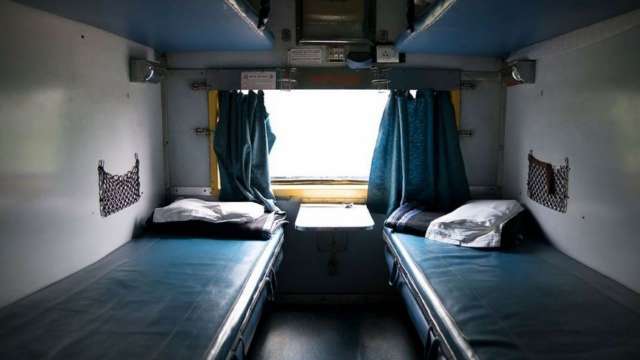
No need to carry sheets, blankets anymore; Railways to provide disposable bedrolls in these trains

KEY STORY

  • Your train journey is going to be easier in the winter as the Indian Railways is giving big relief to the passengers. You will not need to carry heavy blankets and sheets with you during the journey anymore. Railways is now going to start the facility of disposable bedrolls.
  • Notably, due to the coronavirus pandemic, Indian Railways had stopped the service of bedrolls in trains.
  • Under this special service, passengers will get a disposable bedroll for Rs 150. This facility is being provided to long-distance passengers. According to the information given by the Railways, at present, this facility will be available only in select trains like Mumbai-Delhi Rajdhani Express, Mumbai-Delhi August Kranti Rajdhani Express, Golden Temple Mail and Paschim Express.
  • For this special facility, passengers will have to pay Rs 150 for the kit that will also include things like face masks along with the blanket. Here is what you will get in this railway kit.
  • Bed Sheet White(20 GSM) 48 x 75
  • Blanket Grey/Blue (40 GSM) 54 x 78
  • Inflatable Air Pillow White – 12 x 18
  • Pillow Cover WHITE
  • Face Towel/Napkin WHITE
  • Face Mask
This step of the railways will facilitate the travel of passengers as the passengers will not have to travel carrying the burden of blankets and sheets.

Omicron-led third COVID-19 wave may peak in February, subside in a month, say scientists

KEY STORY

  • The third wave of COVID-19 in India is likely to peak in February 2022. However, according to projections by scientists, the Omicron-driven surge is likely to be milder than the second wave, possibly subsiding within a month. As per the Sutra model which tracks the country’s COVID-19 trajectory, the daily caseload is expected to rise as Omicron begins to displace Delta as the dominant variant. However, the projections indicate that cases will dip significantly by April and drop to present levels by May.
  • The Sutra model was created by M Vidyasagar of IIT Hyderabad and Maninda Agrawal of IIT Kanpur. The two are also members of the National COVID-19 Supermodel Committee. “Third wave is likely to arrive early next year in India. It should be milder than the second wave due to a large-scale immunity present in the country now,” Vidyasagar had told news agency ANI last week.
  • The post-Omicron projections put forth as of December 10 had suggested a slightly different trajectory, indicating that daily infections would peak (with more than 1.5 lakh cases per day) by the end of January. Based on this estimation, cases would drop to existing levels by the end of March. The best-case scenario in contrast indicated that a peak would be reached in mid-February (with approximately 1 lakh cases per day). Cases were projected to subside to existing levels by April in this case.
  • According to Vidyasagar however, it is “extremely unlikely” that there will be more cases than seen during the Delta-led second wave. The scientist cited India’s ongoing vaccination drive as well as the fact that serosurveys indicate that only a tiny fraction of the population has not come in contact with the Delta variant. While India had begun vaccinating people in January this year, it was only from March 1 that the inoculation drive was opened to the general populace. To date, India has administered nearly 139 crore doses of vaccine. Of these, 55.83 crore individuals are fully vaccinated.

CONCLUSION

  • Experts however emphasise that much remains unknown when it comes to the Omicron variant. First detected in mid-November, it has since spread to at least 90 countries and has now become the dominant strain in the US and some other nations. On Tuesday, the Union Health Ministry asked the states to activate war rooms and track COVID-19 trends. The Omicron variant, officials said, was three times more transmissible than Delta.
  • Even in a worst-case scenario, however, experts predict that the daily caseload will remain below 1.7 to 1.8 lakh per day. It must be noted that at the peak of the second wave, India had set global records with a case tally of more than 4 lakh per day. According to the scientists, the worst-case scenario they have simulated would entail a total loss of immunity conferred due to vaccination and maximum loss of naturally induced immunity. They also assumed that community transmission of Omicron has already started.

No recommendation by GST Council to bring petroleum products under new tax regime

KEY STORY

  •  The GST Council has not recommended bringing petroleum products under the reformed taxation regime even as certain representations have been made to the government to include petrol and diesel in GST, Parliament was informed on Tuesday.
  • Excise duty on petroleum products is calibrated from time to time for generating resources for infrastructure and other developmental items of expenditure, Minister of State for Finance Pankaj Chaudhary said in a written reply to the Rajya Sabha.
  • The change in duties takes into account relevant factors such as international product prices, exchange rate, tax structure, inflation and keeping in view the prevailing fiscal situation, the minister said.
  • “Certain representations have been received to bring petrol and diesel under GST (goods and services tax). Article 279 A (5) of the Constitution prescribes that the Goods and Service Tax Council shall recommend the date on which the goods and services tax be levied on petroleum crude, high-speed diesel, motor spirit (commonly known as petrol), natural gas and aviation turbine fuel (ATF), ” the minister said
  • Citing the CGST Act, the minister said the inclusion of these products in GST will require the recommendation of the GST Council. “So far, the GST Council, in which the states are also represented, has not made any recommendation for inclusion of these goods under GST,” Chaudhary said further.

CONCLUSION

  • He said the government keeps a close watch on the factors affecting the international fuel prices and makes interventions by way of calibrating excise duty rates on these products as and when required.
  • “Government has, with effect from, 4th November, 2021, reduced Central Excise Duty (including cesses) on petrol by Rs 5 per litre and on diesel by Rs 10 per litre to provide relief to the consumers,” he added.

Director-level jobs, nice salary, no work: How the loan app scam operates

KEY STORY

  • When Hemanth and his friend Chiranjeevi approached the police earlier with a cheating complaint against a company that had recently hired them, little did they know that they would become part of a massive mobile loan app scam with alleged links to Chinese nationals.
  • The two men, both in their early 30s, had put up their CVs on job recruitment sites earlier this year, and were surprised when an HR manager reached out to them with a deal that seemed too good to be true. They were offered ‘director’ posts and an assured salary with little else to do. All that was required of them was to submit their personal documents, including their Aadhaar and PAN cards. They didn’t even have to report to an office.
  • However, after two months of not receiving even a single rupee from their employer, the duo approached the police in November. The Central Crime Branch (CCB) police, which took charge of the case, unearthed a network of 52 companies that were allegedly fleecing customers by offering loans with high interest rates and processing fees via apps. At the helm of this network was Licorise Technology Pvt. Ltd., a firm in Munnekolala, Marathahalli, that was allegedly employing out-of-work BPO employees as loan recovery agents.
  • The firm was allegedly operating at many levels: offering short-term loans on various mobile applications like Cash Master and Crazy Rupees; hiring former BPO employees to work as recovery agents, and setting up benami companies in the names of employees.
  • The accused offered micro-loans of as little as ₹1,000 with interest rates as high as 15- 20% of the total loan amount. The interest rates were also compound on a weekly or fortnightly basis. They also charged high processing fees, almost half of the loan granted.
  • The apps, once installed by the borrowers, would allow access to all of their phone contacts, gallery and other sensitive information. The management ran a full-fledged ‘call centre’ with 50 to 80 employees whose job it was to convince people to download the apps and apply for a loan. By downloading the apps, clients gave them access to their contacts and other information.\
  • So far, the CCB has announced that it has arrested Licorise Technology’s HR manager Kamaraj More, 25, and team leader Darshan Chavan, 21, for making threat calls to debtors. CCB officials refused to divulge details on the other suspects and people higher up in the firm’s management.
  • The call centre executives were offered salaries based on the percentage of loan recovered from clients who had downloaded the apps. “They were asked to get the dues from clients by hook or by crook using coercion, abuse and blackmail if necessary,” a police officer said.
  • Defaulters were humiliated in front of friends and acquaintances with messages going out that the victim had “cheated” someone. Others had their pictures morphed and shared on social media as blackmail.

    Benami companies

    Licorise allegedly floated multiple benami firms and bank accounts using documents of employees. “The accused were handling U.P. and Bihar clients from the Munnekolala office. Loan payments and other transactions were routed to multiple accounts belonging to companies like ‘Fesolovo Pvt. Ltd., Leadbolt Pvt. Ltd., and Zeter Pvt. Ltd., which Licorise had floated using Aadhaar and PAN cards of Hemanth and Chiranjeevi,” said a senior official.
    Even though the bank accounts opened on their behalf showed transactions running into lakhs of rupees, the duo was informed that the companies were running into losses. The CCB uncovered 52 such firms.

    The Chinese angle

    When CCB Economic Offences Wing carried out a raid in November, they said that the firms had tie-ups with registered non-banking financial companies (NBFCs) for loan disbursal. “These companies did not even offer loans. They get loans granted from NBFCs, cheated customers. Any windfall was transferred out of the country to China,” said a CCB official at the time.
    Another official said that the CCB was looking for the handlers who are suspected to be from China. “The accused told the police that they had been hired by a Chinese national through online interviews and were getting instructions on phones and messages,” he said.

Compensation for crop loss hiked drastically, says Karnataka CM

KEY STORY

  •  Chief Minister Basavaraj Bommai has said the government has decided to drastically hike compensation given to the farmers suffering crop losses due to floods. He was responding to various flood-related issues raised in the Legislative Assembly by members from different constituencies, which were badly hit by floods.
  • Currently, the government was giving Rs 13500 compensation per hectare of crops in the irrigated lands which got damaged, said Bommai, adding that this compensation had been increased to Rs 25500 per hectare land. The compensation had been increased suddenly by Rs 11500 per hectare, said Bommai. For the crops sown and damaged in dry lands, Bommai said, the government had decided to double the current compensation of Rs 6800 per hectare land given to the affected farmers.
  • In the floods that occured in the state, Bommai said, the crops sown in 12.69 hectare land got damaged and the government would deposit compensation of every affected farmer in his bank account. The government would have an additional burden of Rs 1200 crore with the fresh quantum of compensation fixed for crop loss. The government had been releasing Rs 18,000 per hectare for horticulture crops and the same had been freshly fixed at Rs 28,000 per hectare, said Bommai.

    Rs 926 crore crop loss compensation credited to farmers’ accounts: R Ashok

    BELAGAVI: Revenue Minister R Ashok informed the Assembly that Rs 926.43 crore has been credited directly to accounts of farmers who had been hit by recent calamity.
    Replying to the discussion on the crop loss and house damages due to incessant rains and flooding, the minister said, crop loss was reported in around 12.52 lakh hectares, so joint survey would be conducted to ensure disbursement of compensation at the earliest.
    The State government had submitted the memorandum to the Union government twice seeking financial help. Initially the Centre did seek Rs 841.57 crore and later for Rs 128.92 crore. The Central teams have already visited the calamity-hit areas twice and conducted the survey of the loss, he added.
    Detailing about the damaged houses, the minister said, 23,716 houses were damaged due to incessant rains and flooding and already released Rs 332.87 crore as the compensation. Five lakh rupees was being paid for completely collapsed houses, largely damaged houses have got Rs 3 lakh and that for partially damaged houses are getting Rs 50,000.
    Each acre of damaged coffee plantation have got Rs 18,000 and a total of Rs 38.80 crore has been disbursed as crop loss compensation, he said and added, human casualties reported during the calamity was 62 and that animal was 945. Damage was found in 3,306 bridges and 995 lakes used for minor irrigation.
    The Union government is expected to release Rs 5,270 crore under the 15th Finance Plan, but Chief Minister Basavaraj Bommai has submitted seeking more funds to Centre, Ashok stated.

Anti-conversion Bill: It is only for political gains, says Shivakumar

KEY STORY

  • In the backdrop of the debate on the anti-conversion Bill, KPCC President DK Shivakumar said that the children of at least 21 Union Ministers are studying in Christian educational institutions as per a documentary made by a private organisation. The Bill has been brought unconstitutionally for political gains, he charged.
  • “There are no instances to prove that someone has been converted through such institutions. Christians have been there in the country for centuries, running various institutions including hospitals and schools, but they never converted people forcibly anywhere,” he claimed.
  • The Mughals ruled for centuries, but the population of Muslims remained unchanged. The British and Portuguese also ruled India, but they never did anything to convert Indians and the population of Christians never increased in the country, he added.

CONCLUSION

  • Shivakumar said the Congress party will oppose the Bill which, he said, was against the Constitution. Several people hailing from different religions from abroad join ISKCON and other congregations every year and participate in bhajans, Shivakumar said, adding that they all will feel awkward if such legislations are enacted. India has been a secular nation where there is scope for people of all religions to live with respect. Efforts were being made to disturb peace, he said.

Congress MLAs walk out over land grab row

KEY STORY

  • Pandemonium prevailed in the Assembly on Monday with Congress members staging a walkout after Speaker Vishweshwar Hegde Kageri did not entertain an adjournment motion moved by Opposition Leader Siddaramaiah to discuss the alleged involvement of Urban Development Minister Byrathi Basavaraj in a land grab case.
  • After the Speaker commenced the Question Hour, Congress MLAs jumped into the well holding placards seeking Byrathi’s resignation. On Saturday too, Congress members had protested in the well forcing the Speaker to adjourn the House.
  • The JDS members, at the same time, wanted a discussion on the defacing of freedom fighter Sangolli Rayanna’s statue and the burning of the Kannada flag in Maharashtra. They stood up and raised slogans, resulting in chaos.  Kageri assured Siddaramaiah of considering his argument after the Question Hour. But the Opposition Leader wanted the question hour to be cancelled.
  • Chief Minister Basavaraj Bommai said holding question hour is a unanimous decision taken by all parties. Siddaramaiah shot back, saying question hours have been cancelled in the past to make way for important discussions. Amid the din, Kageri continued with the Question Hour and only BJP and JDS members raised their queries. Winding up, the Speaker allowed Siddaramaiah to speak, but the treasury benches protested, citing that the House was not in order. Kageri requested Congress members to go back to their seats, but they continued their protest.

CONCLUSION

  • “How can I run the House if members do not cooperate,” Kageri said, adjourning the House. When it reconvened after lunch, Congress members continued to protest. Kageri refused to entertain Siddaramaiah’s motion and Congress MLAs walked out.
  • In the Council too, Congress members rushed to the well asking Chairman Basavaraj Horatti to accept their notice to discuss the land grab case. Horatti said as the case is in court, he will seek the government’s advice to know whether the House can take up the matter for discussion.