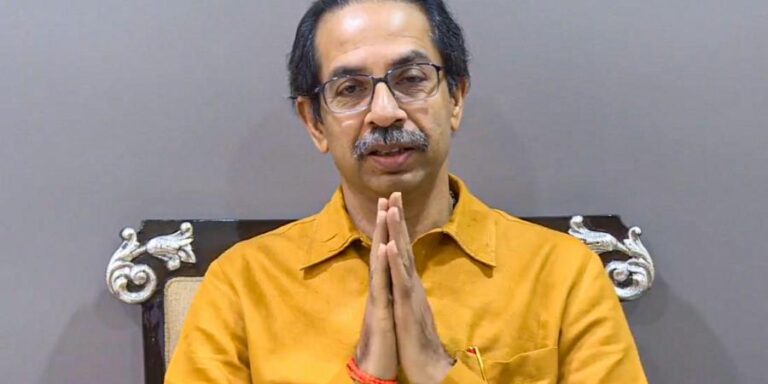
Maharashtra govt announces new COVID-19 guidelines – Check details

KEY STORY

  • A day after Chief Minister Uddhav Thackeray held talks with the members of the state COVID-19 task force, the Maharashtra government announced new COVID-19 guidelines.
  • With Christmas festivities, weddings, and New Year’s receptions likely to increase the risk of contamination, the Disaster Management Act, 2005 has decided to impose some additional restrictions on the entire state which will be in effect from midnight today.
  • As per the new directive, a gathering of more than 5 persons in public places across the state is prohibited from 9 pm to 6 am.
  • Only 100 people will be allowed in indoor weddings and not more than 250 in outdoor weddings.

    Restaurants, gyms, cinema halls to operate at 50 per cent capacity

    Restaurants, gyms, spa, hotel, theatre and cinema halls will now operate at 50 per cent capacity and as per the state government, all of them will have to declare their full potential as well as 50 per cent capacity.
    For other social, political, religious events also the number of attendees should not be more than 100 and in open space, this number should not be more than 250 or 25 per cent of the capacity of the space whichever is less.
    In case of other social, political or religious functions and gatherings, where the presence of attendees is generally continual throughout the function, the total number of attendees should also not exceed 100 for enclosed spaces and 250 for open to sky spaces, or 25 per cent of the capacity of such spaces, whichever is less.
    Further restrictions should be considered in the future: CM
    In the case of sports events or competitions, these may be held with the number of spectators not exceeding 25 per cent of the seating capacity of the venue, the notification read.
    The number of patients is doubling, especially in Europe as well as in the United Kingdom, due to the Omicron variant.
    The current nature of the restrictions is preliminary and if they are not imposed now, it may be time to impose more stringent restrictions in the future, the notification read and urged people to follow the rules and use masks properly.
    Any shop, establishment, mall, event, gathering where a member of the public has a right to come and get services must be manned by fully vaccinated persons and all visitors, customers for such places shall be fully vaccinated.
No discussion, solutions for North Karnataka, rues Opposition

KEY STORY

  • A huge protest by Congress members, demanding time to discuss developmental issues of North Karnataka, brought down the curtains on the two-week winter session with Water Resources Minister Govind Karjol responding on the issue. It was expected that the session  would devote time to discuss developmental issues of backward North Karnataka and come up with solutions for regional imbalance. But a half-day discussion in the Assembly did not throw up any solutions.
  • Taking part in the discussion earlier, Opposition leader Siddaramaiah alleged that then deputy PM L K Advani had rejected the demand for special status to Hyderabad-Karnataka region. But in 2013, PM Manmohan Singh gave special status (Article 371J) .
  • To address regional imbalance, CM S M Krishna formed the Prof Nanjundappa Commission, and Congress governments have released Rs 29,942 crore since 2007-08, he said. Listing the BJP’s failure to keep its election manifesto promise, he said the party claimed to have release Rs 1.5 lakh crore for irrigation projects but had released only Rs 33,835 crore. He also claimed that in 2013, BJP promised to spend Rs 50,000 crore on irrigation but spent Rs 51,217 crore through their five-year rule.
  • When Siddaramaiah demanded more time to discuss the Mahadayi, Tungabhadra  and other irrigation projects of North Karnataka, Speaker Vishweshwar Hegde Kageri declined, saying the House was to be adjourned after the first session, which led to the protest.
  • Karjol said that the Congress government was responsible for drought and underdevelopment in the region for many decades as it had not agreed to give Rs 2 crore to complete the Koyna Dam to supply water to North Karnataka.

Seven-day home isolation for contacts of COVID-positive international arrivals in Karnataka

KEY STORY

  • Soon after the Union Health Ministry asked the states to reactivate COVID war rooms and enhance restrictions and surveillance in the backdrop of rising cases of Omicron, the state government has now directed that the health officials to ensure compulsory seven day home quarantining of all primary and secondary contacts of patients of International arrivals.
  • “Though the overall infection in Karnataka is under control, obedience of quarantine by contact of patients and international arrivals will ensure we keep numbers low. Hence the government of Karnataka is focusing on preventive side with contact tracing and quarantine,” said a note from Munish Moudgil, Director, State War Room for COVID-19.
  • Speaking to The New Indian Express, he explained that two category of persons will be quarantined for 7 days. One, all international arrivals from At Risk countries and all contacts of all patients that irrespective of any international country arrival if they test positive then it is mandatory for any person in contact with them to home quarantine for seven days.
  • The state government has asked the health officials, deputy commissioners and district surveillance officials to steadfastly track, trace and quarantine primary and secondary contacts of persons within 24 hours of reporting of COVID positive cases. “The primary contacts should be tested on the first day and again on the eighth day and home quarantined for seven days from the date of COVID positive reporting,” he said
  • He also said that team of health department officials, ASHA workers, volunteers and BBMP teams are tracking such contacts and ensuring home quarantine. Meanwhile, there will be increased surveilance of such people by the voulnteers by visiting their homes to ensure complaince.

Congress’s plan to target Bommai govt goes sine die

KEY STORY 

  • The Winter Session of the Karnataka legislature that was adjourned sine die on Friday had enough ingredients for fireworks but the Basvaraj Bommai administration seems to have been let off easy by the Siddaramaiah-led Congress.
  • The sensational Bitcoin scam and the ‘40 per cent commission’ charge — issues handed to the Opposition on a platter — did not make any noise. There is disappointment within the Congress camp and party legislators blame it on “bad floor management”.
  • Congress, the principal opposition party, had built some momentum in the run-up to the Legislature session. On December 12, a day before the session started, senior officials got into a huddle to chalk out a plan to defend the government on the kickbacks allegation.
  • The Opposition’s plan was to attack the government on its handling of farmers’ issues due to floods, followed by the development of north Karnataka and then corruption issues. The plan went haywire, one MLA said, blaming the eruption of the Kannada-Marathi issue that ate into legislative business hours.
  • The Congress started off on a promising note by raising corruption allegations against Urban Development Minister Byrathi Basavaraj. “When the border issue came up and the state needed a united voice, we had to reprioritise,” the MLA, who is a former minister, said.
  • Congress was also under pressure to ensure there was a discussion on the floods and north Karnataka. At the same time, a section of MLAs told the party leadership that “some political messaging” should be delivered through the session by attacking the government.
  • “Very cleverly, the BJP introduced the Anti-conversion Bill that we had to oppose. Unfortunately, the session wasn’t long enough to cover all issues,” the Congress leader said.
  • Leader of the Opposition Siddaramaiah wrote to Speaker Vishweshwar Hegde Kageri last week, asking him to extend the session by one more week.

CONCLUSION

  • Even on the Anti-conversion Bill, Congress could not put the government on the mat. In fact, Karnataka Congress president DK Shivakumar, who tore the supplementary agenda the day the Bill was tabled, skipped the Assembly the next day when it was passed. “For Shivakumar, the upcoming padayatra on the Mekedatu is more important, politically,” a source close to Shivakumar said.
  • The only time the ‘40 per cent kickbacks’ issue came up was when senior Congress MLC CM Ibrahim raised it in the upper house. His demand for a house committee probe was rejected by the government.


Karnataka asked to focus on Covid clusters amid Omicron scare

KEY STORY

  • Karnataka has been told to focus on the increase in clusters with the highly transmissible Omicron variant being detected, and also manage the Covid-19 situation effectively.
  • Union Health Secretary Rajesh Bhushan reviewed the public preparedness of states for fighting Covid-19 and the Omicron variant along with the progress of vaccination with Health Secretaries and National Health Mission (NHM) MDs of states and UTs via video conference on Thursday. Following this, a five-fold strategy including instructions on containment measures, testing and surveillance, clinical management, Covid-safe behaviour and vaccination strategies were advised.

    Send cluster samples for genome sequencing, State told

    “As regards Karnataka, we were told to pay attention to the increase in the number of clusters. We have been told to implement stringent measures in these areas and also to look at containment measures in the clusters,” said Arundathi Chandrashekar, Managing Director, National Health Mission, who attended the meeting. According to a senior doctor from the Technical Advisory Committee, several studies have shown that cluster size is positively related to the presence of individuals with high viral load.
  • It is important to contain the clusters as the size and duration (how long the cases remain positive) are largely dependent on the viral load and contagiousness. Transmission can occur even in low viral load cases which can go undetected by RAT tests and may need a change of testing strategy with RT-PCRs,” he said. The Centre has also asked the state to ensure that samples of all cases in clusters are sent for genome sequencing. “Procedures for this have already been put in place.
  • We are also considering involving new labs for faster genome sequencing results. It is being taken into consideration already,” Arundathi added. While the Centre has asked states to consider night curfews, restrictions on large gatherings, notifying containment zones and buffer zones in case of clusters of positive cases, Health and Medical Education Minister Dr K Sudhakar told TNIE, “Containment measures like night curfew will be decided based on the prevailing situation and recommendation of the Technical Advisory Committee. As of now, considering the potential threat of large gatherings and public celebrations during New Year’s Eve, we have imposed certain restrictions,” he said.
  • Arundathi stressed that the state has been appreciated for keeping the positivity rate at the lowest and also for the pace of vaccination. “We have also been told to increase the speed of vaccination for covering the second dose, focus on districts with poor vaccination rates and increase door-to-door campaigns to achieve this. We are on the right track and are focusing on all of these,” she added.
  • Meanwhile, Dr Sudhakar also said that the state has enhanced surveillance for effective tracing, tracking and quarantine of primary and secondary contacts and triaging of infected persons to ensure early screening and timely treatment. “The critical care infrastructure, including ICU beds and oxygen generation plants, which is augmented significantly during the first and second wave, will be utilised if more cases require hospitalisation. We are prepared,” Dr Sudhakar stressed.


No cold wave in most parts of India till January 5: IMD

KEY STORY 

  • According to the Indian Meteorological Department (IMD), it is likely that most parts of India will not witness cold wave conditions till January 5, 2022. However, in Odisha, a cold wave in isolated pockets may occur in the next 24 hours, the IMD said.
  • The IMD added that western disturbances are likely to remain active and, hence, rain can be expected in several parts of the country in the last week of December and the first week of January.
  • As a result of the western disturbances, the minimum temperature in many parts of the country is likely to stay above the normal level over the next two weeks.

This comes even as the minimum temperature in Delhi settled at four degrees Celsius and the IMD issued a five-day yellow warning for Hyderabad amid a dip in mercury on Tuesday.
On Thursday, the higher reaches of Kashmir received fresh snowfall while the minimum temperature registered a significant improvement across the valley.
Meanwhile, in parts of Rajasthan, the minimum temperatures have risen, as of Thursday, after the state experienced severe cold conditions earlier this week.

A day after 2 back-to-back tremors, another earthquake in Chikkaballapur

KEY STORY 

  • A day after witnessing back-to-back earthquakes, Chikkaballapur taluk reported yet another earthquake at 2.16 pm on Thursday, with a magnitude of 3.6 on the Richter scale.
  • The National Centre for Seismology said the tremors were reported at a depth of 18 km with the epicentre at Settigere. Tremors were also felt in the adjoining villages of Sadenahalli and Beeraganahalli.
  • While the district administration clarified that it was a mild earthquake, the intensity was more than the two tremors (3.1 and 3.3) recorded in the taluk on Wednesday.
  • Caught off guard, hundreds of villagers ran out of their houses and refused to go back inside, fearing that they may collapse.
  • The Karnataka State Natural Disaster Monitoring Centre (KSNDMC) said there was neither any damage nor casualty.
  • “The intensity was moderate and the tremors may have been felt up to a radius of 20 to 30 km from the epicentre. This type of earthquake does not create any harm to the local community, although there may be slight shaking observed locally as the region falls under hard rock granitoid and gneissic terrain of seismic zone II. The community need not panic,” Manoj Rajan, director of KSNDMC, said.

  • Rajan said, “This is hydroseismicity caused due to the monsoon. Some settlements might have taken place. We cannot tell the exact reason. Similar tremors have been reported in Chittoor of Andhra Pradesh as well. A team of scientists will visit Chikkaballapur and we will recommend the National Geophysical Research Institute to take up studies in the region.”

Karnataka sees ‘triple talaq’ cases over dowry, birth of girl child

KEY STORY 

  • Bengaluru resident Mumtaz (name changed) underwent domestic abuse by her husband who kept pestering her for dowry. When she resisted, she was physically assaulted and the husband later “divorced” her through triple talaq.
  • The incident took place even as Parliament enacted the Muslim Women (Protection of Rights on Marriage) Act, 2019, which prohibits Triple Talaq.
  • There have been at least 51 cases of triple talaq reported until now in the state since 2019 and they are under various stages of hearing in courts.
  • This year alone, fifteen cases have been reported, according to data furnished by the government in the ongoing legislature session, with the majority of them being reported in Bengaluru Urban.
  • Details of the cases also show that the majority of the cases are related to dowry.
  • In some instances, triple talaq has been resorted to when the women gave birth to girl children. In one case in Bengaluru Urban, a woman was divorced through triple talaq and her marriage of 19 years ended. The couple have five daughters.
  • According to the complaint, the husband “divorced” her for giving birth to girl children.
  • Domestic violence and dowry-related cases have become more pronounced during the pandemic.
  • Geeta Menon, secretary, Sthree Jagriti Samithi, said Muslim and Dalit women are especially vulnerable as outside of patriarchy they also have to deal with caste hierarchies and poverty as well.

CONCLUSION

  • “Domestic violence cases have risen in general across all communities during the pandemic. Lockdown primarily forced couples and children to be at home, increasing the severity of pent up frustration that was there before,” she said.
  • As for the prohibition of triple talaq, Geeta said the legislation was good but it does not translate into better lives for women unless there are mechanisms of support, including support from within the community


Three Omicron cases in Karnataka had only one dose, two had boosters

KEY STORY

  • At least three of the state’s Omicron cases had taken only one dose of a vaccine, while two contracted the virus despite being protected by booster shots.
  • Among the single-dosers is the 20-year-old sister and primary contact of a returnee from the United Kingdom, who landed in the city on December 12.
  • She developed symptoms of the disease on December 15 and tested positive at a private lab on the same day.
  • The BBMP found that the patient had taken only one dose of Covaxin on May 25.
  • Her clinical symptoms were nevertheless mild such as a sore throat,” said Dr Thrilok Chandra, special commissioner (BBMP).
  • According to Dr Arundhathi Chandrashekar, director, National Health Mission, there are multiple reasons for why people only take one dose, such as experiencing an adverse effect after the first dose or having suffered a Covid-19 infection which would have interrupted the second dose.
  • Health officers who checked the medical records of the case found no previous infection.
  • “It is possible that she may have had a prior infection and not reported this to avoid stigma,” added another BBMP officer.
  • Other single-dosers include a 27-year-old man who arrived in Mangaluru from Ghana on December 16.
  • He had taken his first dose of the Moderna vaccine on November 19. The last case is an 18-year-old woman who had one dose of Covishield on September 6. Both were described as not having symptoms.

CONCLUSION

Among two people who had booster doses is a 42-year-old man from Kerala who had finished two doses of Covishield by July 30.
He subsequently took a booster shot on December 11. He arrived from the United Kingdom at Kempegowda International airport on December 17. He was also stated to be asymptomatic.
A 49-year-old woman who travelled to Bengaluru from Denmark on December 17 was found to have had not only two doses of the Prizer vaccine, but also a booster dose of the Moderna vaccine. She was found to be positive on arrival, but without symptoms.
“Boosters provide no guarantee that they will stop a person from contracting Covid-19. Vaccines ultimately reduce the effects of the disease rather than prevent infection,” said D Randeep, Commissioner, Department of Health and Family Welfare.

Omicron: Karnataka asks districts to step up surveillance

KEY STORY

  • The primary and secondary contacts of Covid positive patients are henceforth required to be identified by the BBMP and respective district health officials within 24 hours of reporting of the Covid positive case, said Health Secretary T K Anil Kumar in a circular.
  • The primary contacts should be tested on day 1 and again on day 8, and home quarantined for 7 days from the date of Covid positive reporting, he said.
  • Similarly the international travelers from high-risk countries need to be quarantined for seven days from the date of their arrival, until the follow-up and repeat RT-PCR test on day 8. If the primary/secondary contacts test positive, they are to be treated and managed as per the state Covid protocol.
  • At present the healthcare personnel – public health inspecting officers, community health officers and ASHAs, who are doing contact tracing, quarantine watch and home isolation watch, shall continue doing them.
  • The districts and BBMP shall post dedicated and full-time persons separately for contact tracing and quarantine/home isolation watch immediately, the circular said. The tracing, tracking and quarantine activity conducted has to be reported in the contact tracing application and quarantine watch application, which shall be activated, with necessary reorientation, it added.
  • Further, all Covid-19 positive persons need to be triaged by a medical officer of the PHC and team on ground as per prevailing instructions (physical triaging). Over and above, this tele-triaging (over phone) shall be re-initiated at state-level and triaging information would be recorded in the index application (in the BBMP) and in the state line list (in the rest of the districts).
  • Wherever necessary, and to match the demand on ground, further additional teams should carry out the above mentioned activities. They have to be deployed by the BBMP/district administration in consultation with the state nodal officers.

CONCLUSION

  • Central War Room (CWR), BBMP, along with zonal and assembly constituency level war rooms and all district war rooms need to be re-activated and made fully functional to closely monitor and supervise the activities.
  • The integrated testing app shall be rolled out on a pilot basis in the BBMP limits and if found feasible would be considered for a larger roll out.
  • With a view to be well prepared to handle any anticipated spike in Covid cases and respond effectively, the BBMP and all district authorities are instructed to ensure the compliance of the above instructions, said Kumar, in his order.